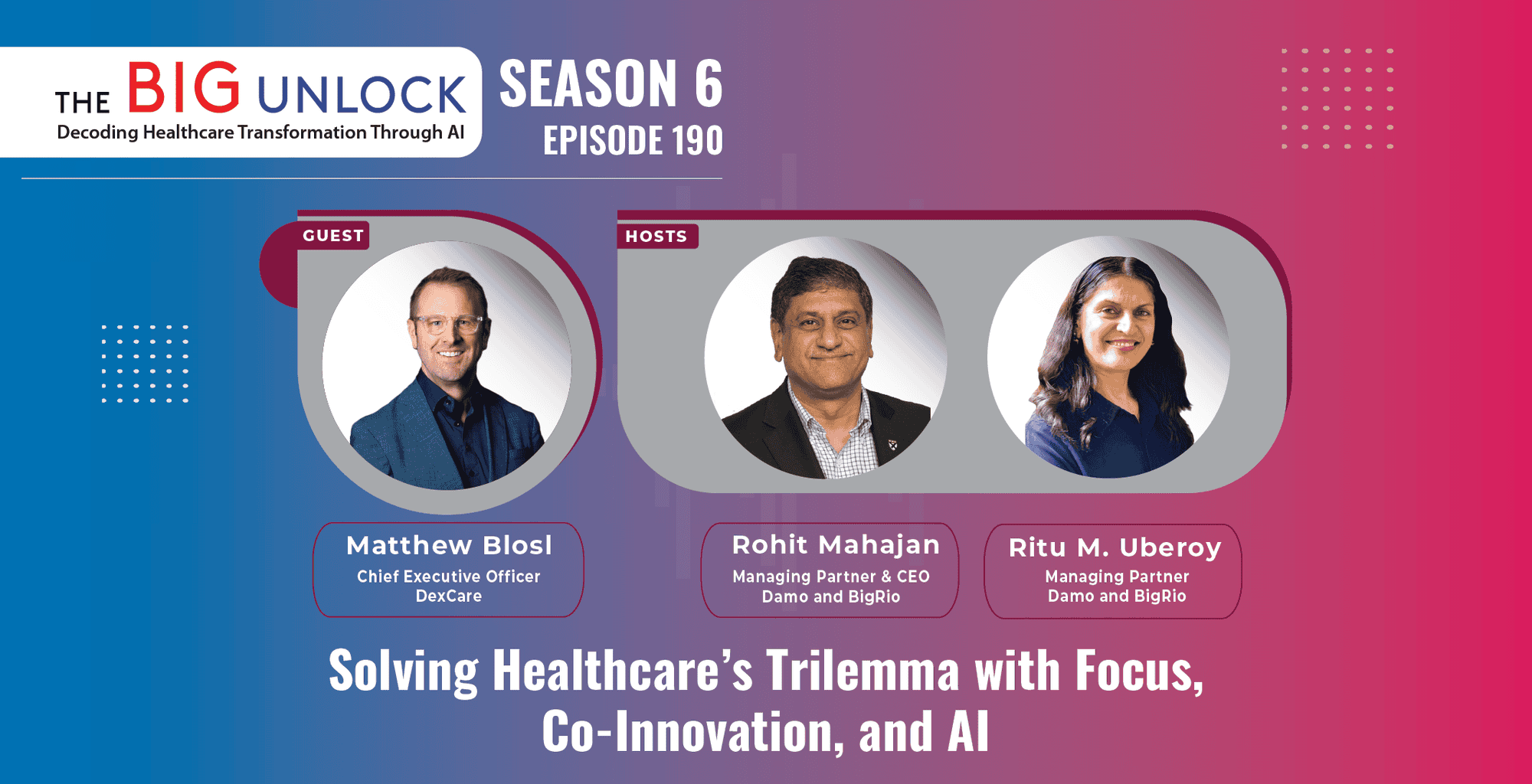
Season 6: Episode #190
Podcast with Matthew Blosl,
Chief Executive Officer, DexCare
Share
In this episode, Matthew Blosl, CEO of DexCare, discusses how he helps high-growth healthcare technology companies navigate critical inflection points by pairing disciplined focus with a culture that embraces failure as a path to innovation. He describes DexCare’s journey from a Providence Health incubated initiative to a scaled care orchestration platform that helps health systems address a “trilemma” of rising patient demand, clinician shortages, and margin pressure.
Matt explains DexCare’s co-innovation model, where every health system becomes an innovation partner rather than a one-size-fits-all implementation, enabled by modern data and AI capabilities. He outlines a pragmatic AI roadmap: first improving internal operations, then enhancing existing products, and finally accelerating true product innovation, while warning that AI can easily drive teams off-mission without strong focus. Matt also points out how fast things are shifting in healthcare and encourages leaders to rethink how they run their organizations and come together more often to tackle the challenges ahead. Take a listen.
Video Podcast and Extracts
About Our Guest
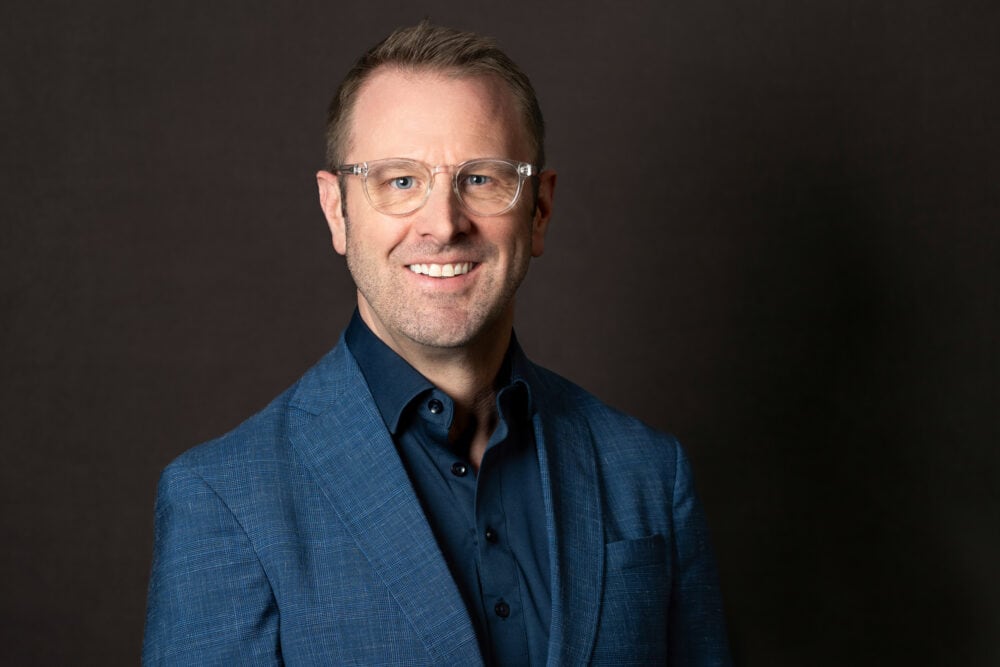
Matthew Blosl is Chief Executive Officer and a board member of DexCare, the leading digital platform for orchestrating patient demand and care access. With over 20 years of executive leadership experience in technology-driven organizations, Blosl is recognized for building high-performing teams, scaling commercial operations, and driving strategic growth that delivers measurable customer and enterprise value.
Prior to joining DexCare, Blosl held a senior leadership role at Experity, where he led commercial initiatives that significantly expanded the company’s market presence and helped secure its leadership position in the urgent care space. Throughout his career, he has fostered cultures of operational excellence and innovation, consistently delivering results in high-growth environments.
Blosl holds a degree in engineering from the University of Michigan and completed his business education at Stanford Graduate School of Business. He brings a powerful combination of technical rigor and strategic acumen to his leadership, grounded in a passion for transforming healthcare access and outcomes.
At DexCare, Blosl is leading the company into its next phase of growth, focused on expanding platform innovation—including the introduction of AI-driven capabilities—and deepening adoption across leading U.S. health systems. Under his leadership, DexCare continues to transform how patients find and access the right care, at the right time, with the right provider.
Recent Episodes

Ritu: Hi everyone. Welcome to our next episode of The Big Unlock podcast. We are in Season Six now with 180+ episodes, and today we are welcoming Matt Blosl to our podcast. He is the CEO at DexCare. Welcome once again to all our listeners. My name is Ritu M. Uberoy. I am the co-host here at The Big Unlock podcast and Managing Partner at BigRio and Damo Consulting. Welcome to the podcast.
Rohit: Super excited to be here with Ritu and with Matt. I’m Rohit Mahajan, CEO and Managing Partner at BigRio and Damo Consulting, and the co-host of this podcast. Over to you, Matt.
Matt: Great, thank you. Yes, I’m Matt Blosl, CEO of DexCare. I’m very familiar with not only this space in healthcare but also with high-growth companies. DexCare is my seventh venture private-equity-backed company, and I’m excited to talk about everything we have going on here at DexCare.
Ritu: Great. So we’ll jump right in. Matt, our listeners always love an origin story, so we would like to hear how you got to where you are today. And also, very interestingly, like you mentioned, this is your seventh gig. But something different here is that, as you said in our intro call, DexCare had already gone through a very steep growth curve when you came in. Usually, it’s the other way around, where you’re helping the company grow into that phase. So how has it been different for you this time, and what lessons have you learned or what do you think the difference has been?
Matt: Yeah, it’s interesting. When I reflect on my career, I’ve typically not been the founder of businesses. I’ve come in usually at some inflection point. DexCare is a unique story in that it was incubated within Providence Health, then spun out, and then had three to four years of hyper growth. The company got to a point that many high-growth companies do, where they reach an inflection point. What it takes to get from an idea on a napkin to a certain point requires one kind of skill set, and then taking it from point B to point C often requires a different viewpoint.
So for me, coming into DexCare was a very familiar point—well-established business, great clients, a lot of growth—but taking the next step in maturing the business requires looking at things differently. That’s what I’ve done at DexCare and throughout the last 15–20 years: coming into a well-established business and figuring out how to get it to the next level.
Rohit: So Matt, this is super interesting. Could you share your interest in healthcare—what got you started—and talk a little about your story and journey to where you are today?
Matt: Yeah, it’s interesting. I don’t know that it’s the typical story. I spent most of my career not in healthcare. My wife is a physician, so I always said I didn’t need to go into healthcare. Then about 12 years ago, a private equity firm tapped me on the shoulder and asked me to help scale a healthcare technology business.
During the mutual diligence process, I remember telling them multiple times that if they wanted somebody with healthcare experience, I was not the guy. They said they needed someone to build and scale the business, and that they already had enough domain expertise within the company. I didn’t fully understand that then, but I understand it now. Once a company reaches a certain size, like we were at 200 people, you have plenty of domain expertise. What you often lack is the foundational experience needed to take the company to the next level.
I spent seven years building and scaling that company, and we had a successful exit. Between that company, Asparity, and DexCare, I went outside healthcare for two years. When the DexCare opportunity came up, I was excited to return to healthcare, which is something I never thought I would say.
Healthcare is extremely complex, and because of that complexity, it is farther behind other industries from a technology perspective. For someone who likes messy situations and messy industries, it is a good fit because there is a lot that needs to happen. And it feels good to see the impact of the work. I spent seven years building a company in the urgent care sector and saw the direct results. Providers could see more patients and patients were more engaged. I was with that business through COVID and saw the impact our software had on providers and patients.
So I realized I had been missing that feeling in my career. All the hard work you do every day is not only technology. The downstream effect of the work makes you feel like you are making an impact.
Ritu: Yeah, you are genuinely making a difference and I think that is really good. So Matt, it was interesting that you mentioned Providence and how it was spun out of Providence. In our earlier chat, you mentioned this culture of co-innovation where you always worked with your customers to innovate rather than building something and then trying to sell it to them. That was a very interesting and different perspective. We would love to hear more about that co-innovation culture and how you fostered that at DexCare.
Matt: It’s interesting because typically when you think about co-innovation or even customization, that is usually seen as a negative attribute within a SaaS business. Ideally, you build a piece of software and there is as little customization or configuration as possible. Ideally, you take it out of the box and plug it in with every client. That is not realistic in my opinion, certainly within healthcare, but especially for us focusing on large health systems. A one size fits all product will not work. You will not get mass adoption and you will not get full benefit from it.
What is really cool about where we are from a technology perspective is that you can do customization at scale or innovation at scale. Often when you think about innovation, you think of it as a one-time event. You innovate a product and then sell it to all customers. What we are able to do now, and the mentality we have taken at DexCare, is that every single client is innovation. We are innovating for that health system. They all have different priorities, workflows, system capabilities, and data capabilities. We look at innovation on an individual level, coming in and helping innovate using our core platform but making it applicable to their environment.
This is a mindset shift, because often people think this is a barrier to scale. We have proven that is not the case, especially with advancements in technology and artificial intelligence. We can move and process data faster than ever before. We are leaning into this not as a disadvantage but as an advantage, not just for our customers but as a competitive advantage for the company. And I still have to explain that because investors see individual installs at different clients and assume the economics cannot be great. We have proven that is not the case.
Ritu: Okay, great answer. This ties into my next question. With the rapid changes in technology, and even previously, most times technology innovation at a company gets bogged down or does not succeed, not because of the technology itself, but because of cultural issues. People are resistant to change or are entrenched in their ways of thinking. It is interesting that you said you have done innovation at scale and you innovate for every single client. How do you make sure that this culture permeates the company from the ground up and that everybody is bought into that vision? Otherwise, this cannot succeed if people are holding on to old ideas or want to do the same thing each time.
Matt: First, I will point out that this is a journey. I would never suggest that we are at the end point of that. It is a never-ending journey, but yes, it comes down to the people and the leadership. That was something here at DexCare that is interesting because we came out of Providence and took on the second-largest health system in the country, Kaiser Permanente. So in the early years of the company, it was really about staying in pace with our existing customers because they were so large and complex that innovation was pushed to the side. We didn’t have to innovate then. We had a great core product that solved a key problem within health systems, so we focused on taking this product to market at scale.
When you get to the point where we are now, at an inflection point with a great foundation, the question becomes how do we build upon that. That requires a culture shift. There have been a lot of things I have tried to bring to DexCare to do that. One, it comes down to leadership. I tell the team all the time that I want us to fail more. A lot of times that is a head-scratching message, but it is true. If we are not failing, we are not pushing the envelope. You need to fail in a controlled way, and as long as we take an intentional, data-driven approach to the bets we make, not every bet will work out. Creating an environment where that is acceptable sounds easy, but how you show up every day matters. Even taking the little failures and celebrating those helps people realize that failure is progress. You learn more from failures than successes.
When I advise companies, I encourage them to be intentional about creating a culture of learning, and part of learning is failing. Many leadership teams say they support that, but do they really? How they show up each day determines that. So for me, it starts with leadership discipline.
The other important thing at DexCare is that we have had to fill experience gaps. Often companies hire for today’s need because they have a role to fill or capacity to add. In reality, especially for key positions, I look to fill experience gaps, meaning hiring someone who knows where we need to be in two or three years. They have seen it and been through the cycles. They understand what innovation looks like and what failure looks like. If you can get people who have done it before, they can push the innovation envelope because they bring perspective to the team. That is important in creating an innovation culture.
So the two big things that come to mind are leadership mentality and getting key people who have been through it before.
Rohit: That’s definitely a recipe for success, no doubt about it. So Matt, I would like to chime in. You were previously mentioning the infusion of AI across the board in your approach — with your clients and also the product and services the company is offering. Tell us a little more about what DexCare does, how it helps clients, and how you thought about infusing AI into the entire approach and the product and services.
Matt: This is a conversation I have in some capacity every day because AI is an inflection point. It’s arguably the largest one we’ve seen, and it’s evolving at the most rapid pace we’ve ever seen. Before I talk about DexCare, I’ll talk about health systems in general because it’s important to keep that in perspective. You can’t pick up the paper any day without seeing the gold rush of companies doing AI this, AI that.
What’s interesting within healthcare is that there is still a lot of apprehension around AI. Many health systems have set up AI governance committees, so there’s still a degree of education that needs to happen. While AI enables us to do things we’ve never done before, it will take time for health systems and healthcare in general to get comfortable with the risk associated with it. This is real — when you take it to the point of treating patients or using patient data, there is real risk. So it needs time to prove itself. Technology is ready today, but mass adoption will take longer. Health systems are still trying to understand what AI means to their business.
The second thing I’m hearing a lot is that even once AI gives us the data or insight, that’s only part of it. We still need to change the workflow — how we schedule a patient, treat a patient, follow up with a patient. Just having the insight is the starting point. Healthcare is slow to change and very complex. AI can deliver great things, but we need to partner with clients to help them understand what they need to do differently once they have that intelligence. That takes time and is complicated, and there needs to be empathy for what goes beyond the technology.
So how does that translate to DexCare? I don’t look at AI as a project off to the side. It’s quickly becoming standard infrastructure — like a new coding language. The tendency is to chase the next new thing AI enables. At DexCare, we started by asking: how do we just do what we already do, better? More efficiently, with more impact, now that we have this capability?
We took an internal look first: how can we use AI for internal operations? How do we use it to write code better, communicate with customers better? Then we looked at our existing products. Before going off to build new things, what does AI offer to make our current products better? We have a roadmap that goes well into next year that doesn’t necessarily add incremental revenue, but it innovates within our existing products.
Then comes the third part: true innovation. This has completely changed the game. What used to take six months to rapid prototype or build an alpha version, I now have teams doing over a weekend. It scares me — in a good way — because I’m thinking, how do I harness that? I used to expect updates in months. Now they come back in days with an initial version. So we’ve had to rethink our entire product development process — how we go from an idea to shipping product. It has completely changed. Because of the rapid pace, we can fail more, which means we can innovate more.
Going back to co-innovation — clients have very limited time. We’re one of hundreds or thousands of vendors coming to them with ideas. Historically, it’s been a struggle to get mindshare for co-innovation. Now, because we can take ideas and prove or disprove them quickly, it unlocks new opportunities. We can sit with clients, understand their challenges in a one-hour meeting, and come back with a prototype within weeks. It has dramatically condensed the timeline for what we can do.
Ritu: Yeah, that’s what we’re hearing across all clients — both kinds of projects where you’re improving existing things and also thinking completely out of the box for brand-new solutions, like voice agents or agentic AI. Those are the two themes we’re hearing a lot from customers.
Matt: The other lens we’re using at DexCare — and I see this with other companies too — is focus. I’ve been using that word a lot with our teams. We have what we call the three F’s at DexCare: Focus, Fearless, and Fast. Focus is really important because AI enables you to become massively unfocused very quickly. For us, there is enough opportunity staying in the lane we live in — care orchestration. How do we match a patient with the right provider and deal with all the complexity on both sides? There is so much we can innovate within that space that it’s easy, especially with AI, to start drifting outside that lane.
We’re trying to stay focused and take care orchestration to a level our clients and the industry never thought possible. That discipline has benefited us. I talk to other companies that are doing many different things, and at the end of the day, it’s like multiple businesses under one roof. For us, we want to revolutionize orchestration within health systems and don’t have a desire right now to go outside that lane.
Focus is really important. AI can be your worst enemy because it can make you unfocused quickly — and it wouldn’t even cost much to do so. So we’re trying to stay focused on our core mission and value proposition, and use the technology disruption as an advantage, not a distraction.
Ritu: Great. So Matt, you also spoke about the trilemma in today’s world. I thought that was an interesting term, and I think our listeners would like to hear more. If you can tell us a little more about the trilemma, that would be great.
Matt: Yeah, the trilemma is a phrase we coined at DexCare that describes the environment we operate in. From a macroeconomic and administrative perspective, the trilemma is: more patients, fewer doctors, and thinner margins.
The stat we use is that 11,000 people enter the Medicare/Medicaid market every day. At the same time, we have fewer doctors. The projected number of providers leaving practice over the next decade is astounding. And then margins are thinner — so more patients, fewer doctors, and less money.
Going back to care orchestration — the lane we play in — the trilemma is the problem, or opportunity, we’re addressing for health systems. How do we help them get the right patient to the right provider, knowing more patients are coming, expectations are changing, and providers are fewer?
And within “fewer doctors,” there’s another complexity: unused capacity. That’s an interesting challenge. You need more doctors, yet you have unused capacity because of complexity — where data lives, workflows, decision trees. So it feels like fewer doctors are available, even though you’re not using the ones you have to their fullest.
Then the “less money” part — every client I talk to is being challenged to do more with less because of the macroeconomic environment. Margins are thin and getting thinner. That’s why the ROI around DexCare resonates — much of it is efficiency, which is exactly what they need.
The trilemma is something we talk about every day. It’s an easy way to calibrate with someone new: we don’t start with features. We start with the trilemma — more patients coming, staffing issues, and economic strain. From there, it becomes easy to see how the DexCare platform can help.
Rohit: So before we finish the podcast, Matt, we’re coming close to the end of this session. We’d love to have you on again, of course. But for now, any insights or thoughts you’d like to share with the audience? When you look into the future, what do you see coming our way? Any parting thoughts?
Matt: And that’s the best part of that event — everyone in healthcare is there. It’s a nice mix of people from across the healthcare technology ecosystem. I was trying to describe to the company some of my takeaways, and it goes back to something I mentioned earlier: the pace at which things are happening. That’s what everyone was talking about. A lot of the problems or opportunities we’re facing aren’t new, but the pace of change is unlike anything we’ve seen before. It’s exciting and daunting at the same time.
What that pace means is that everyone is rethinking their business. Whether it’s health systems, technology solution providers, or investors — everyone is reassessing what they do and how they do it. It’s fascinating to step back and see that there isn’t a single model to follow. Everyone is reinventing themselves right now.
And because of that, the opportunity to collaborate is incredibly strong. That’s why I enjoy getting out into the market — we’re all rethinking how we operate. Co-innovation really works in this environment because health systems are reevaluating their businesses, and so is everyone else.
With the rate of change and the trilemma we talked about, it’s an exciting time to be doing what we’re doing. I think we’ll see evolution in healthcare over the next two to three years that we haven’t seen in a decade or more. I encourage everyone to lean into collaboration. There’s enough opportunity for all of us. We need to lock arms and figure out, as an industry, how to make care easier to access and better to deliver.
It’s an exciting time to be in healthcare. I never thought I’d be here, but I feel very fortunate because of everything happening in the industry.
Rohit: Amazing. Thank you, Matt, for sharing those insights.
Matt: Yeah, absolutely. Thank you for having me.
————
Subscribe to our podcast series at www.thebigunlock.com and write us at [email protected]
Disclaimer: This Q&A has been derived from the podcast transcript and has been edited for readability and clarity.
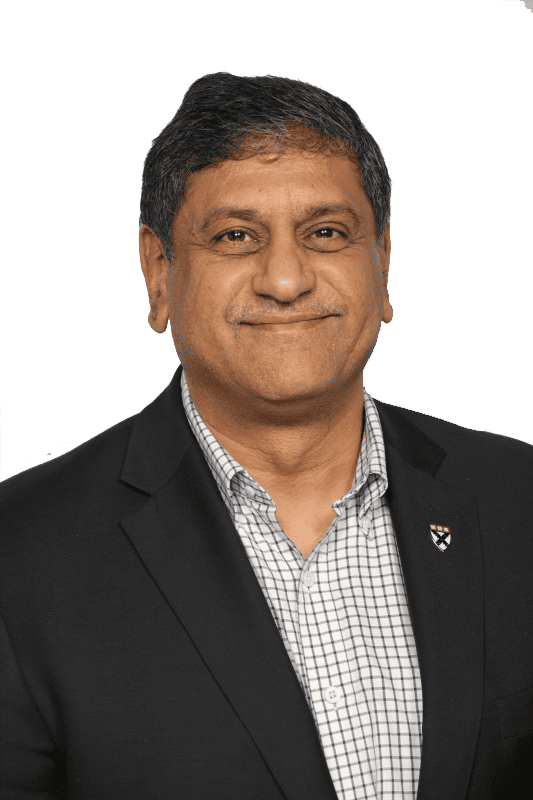
Rohit Mahajan is an entrepreneur and a leader in the information technology and software industry. His focus lies in the field of artificial intelligence and digital transformation. He has also written a book on Quantum Care, A Deep Dive into AI for Health Delivery and Research that has been published and has been trending #1 in several categories on Amazon.
Rohit is skilled in business and IT strategy, M&A, Sales & Marketing and Global Delivery. He holds a bachelor’s degree in Electronics and Communications Engineering, is a Wharton School Fellow and a graduate from the Harvard Business School.
Rohit is the CEO of Damo, Managing Partner and CEO of BigRio, the President at Citadel Discovery, Advisor at CarTwin, Managing Partner at C2R Tech, and Founder at BetterLungs. He has previously also worked with IBM and Wipro. He completed his executive education programs in AI in Business and Healthcare from MIT Sloan, MIT CSAIL and Harvard School of Public Health. He has completed the Global Healthcare Leaders Program from Harvard Medical School.

Ritu M. Uberoy has over twenty-five years of experience in the software and information technology industry in the United States and in India. She established Saviance Technologies in India and has been involved in the delivery of several successful software projects and products to clients in various industry segments.
Ritu completed AI for Health Care: Concepts and Applications from the Harvard T.H. Chan School of Public Health and Applied Generative AI for Digital Transformation from MIT Professional Education. She has successfully taught Gen AI concepts in a classroom setting in Houston and in workshop settings to C-Suite leaders in Boston and Cleveland. She attended HIMSS in March 2024 at Orlando and the Imagination in Action AI Summit at MIT in April 2024. She is also responsible for the GenAI Center of Excellence at BigRio and DigiMTM Digital Maturity Model and Assessment at Damo.
Ritu earned her Bachelor’s degree in Computer Science from Delhi Institute of Technology (now NSIT) and a Master’s degree in Computer Science from Santa Clara University in California. She has participated in the Fellow’s program at The Wharton School, University of Pennsylvania.
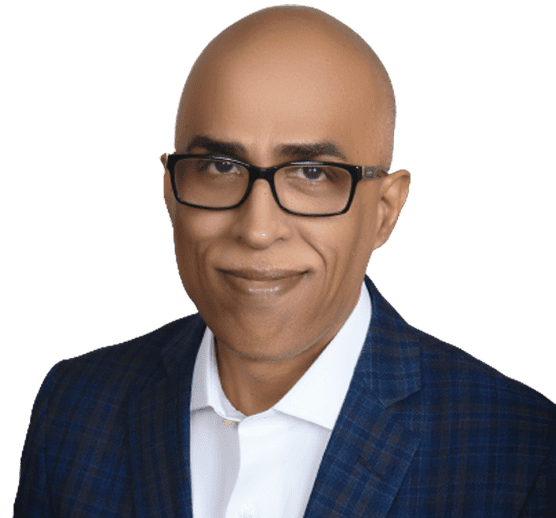
Paddy was the co-author of Healthcare Digital Transformation – How Consumerism, Technology and Pandemic are Accelerating the Future (Taylor & Francis, Aug 2020), along with Edward W. Marx. Paddy was also the author of the best-selling book The Big Unlock – Harnessing Data and Growing Digital Health Businesses in a Value-based Care Era (Archway Publishing, 2017). He was the host of the highly subscribed The Big Unlock podcast on digital transformation in healthcare featuring C-level executives from the healthcare and technology sectors. He was widely published and had a by-lined column in CIO Magazine and other respected industry publications.
Stay informed on the latest in digital health innovation and digital transformation