Season 7
In this episode, Dr. Ben Long, Director of Hospital Medicine at Magnolia Regional Health Center and Weston Blakeslee, VP of Commercial Excellence & Enablement at DrFirst, break down a critical industry starting point – the reality that one in five new prescriptions is never filled and half of all refills are eventually abandoned. Sharing the results of their peer-reviewed study published in PLOS Digital Health, Dr. Long and Weston offer a grounded blueprint for how resource-constrained community health systems can conquer chronic heart failure readmissions.
The core theme of the conversation underscores an industry-wide shift from reactive, episodic care silos toward a proactive, connected population health management. While automated SMS nudges provide real-time cost transparency and essential medication education, the ultimate force multiplier lies in pairing those digital touchpoints with frontline, nursing-led care navigation. By connecting digital prescribing insights with real-world human validation, this “trust-first” design bridges the gaps between discharge and the home medicine cabinet. Take a listen.
This guest appearance was facilitated through conversations initiated at ViVE.
About Our Guest
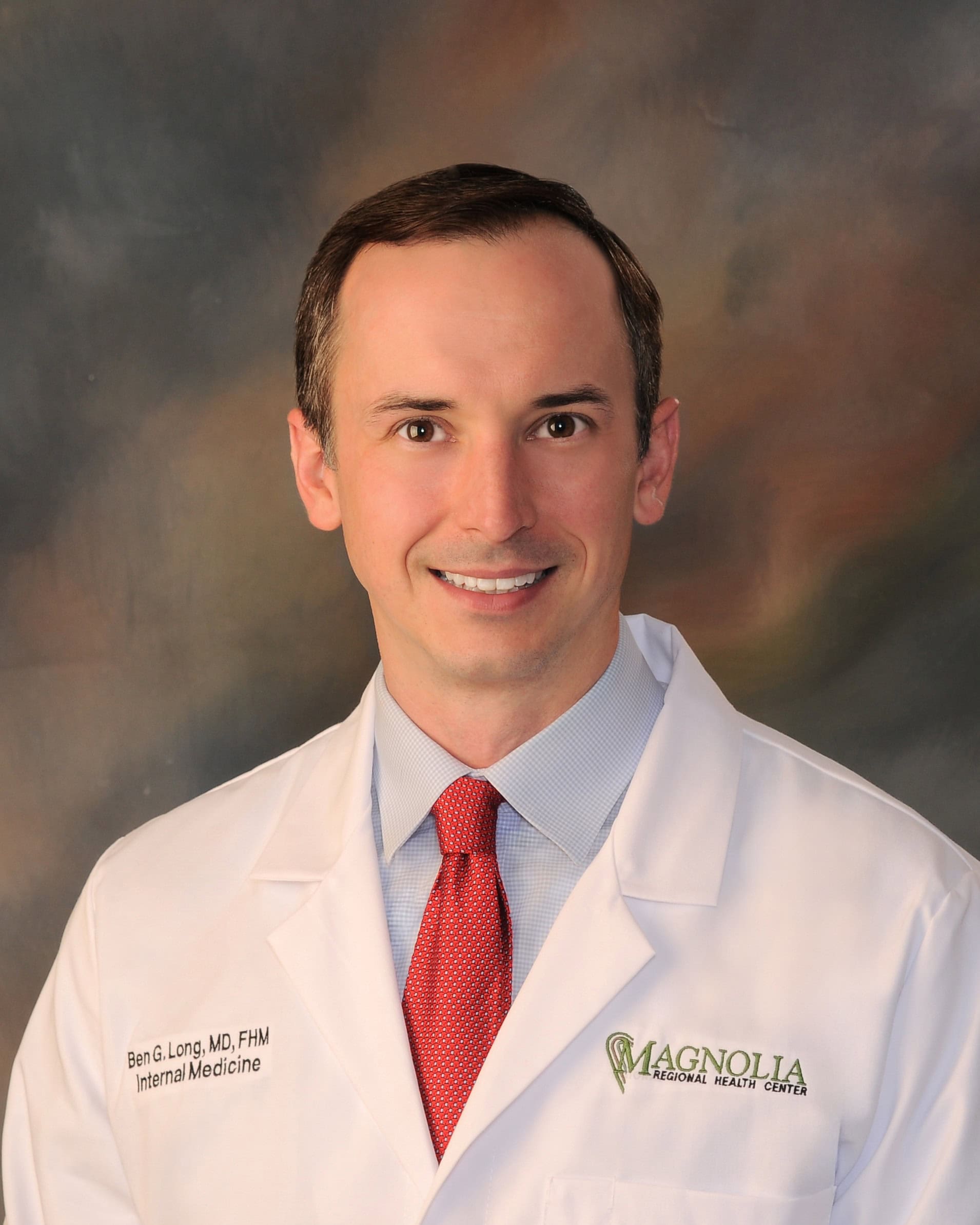
Ben Long, MD, is Director of Hospital Medicine at Magnolia Regional Health Center in Corinth, Mississippi. Dr. Long is board certified in Internal Medicine and holds the roles of Associate Clinical Professor of Internal Medicine and Director of Quality and Safety Curriculum. He earned his Doctor of Medicine degree from University of Mississippi Medical Center and completed his internship and residency at Medical University of South Carolina. Magnolia Regional Health Center has honored Dr. Long with the following awards: Quality Physician Award (2022), Safety Award (2023), and Change Agent of the Year Award (2024).
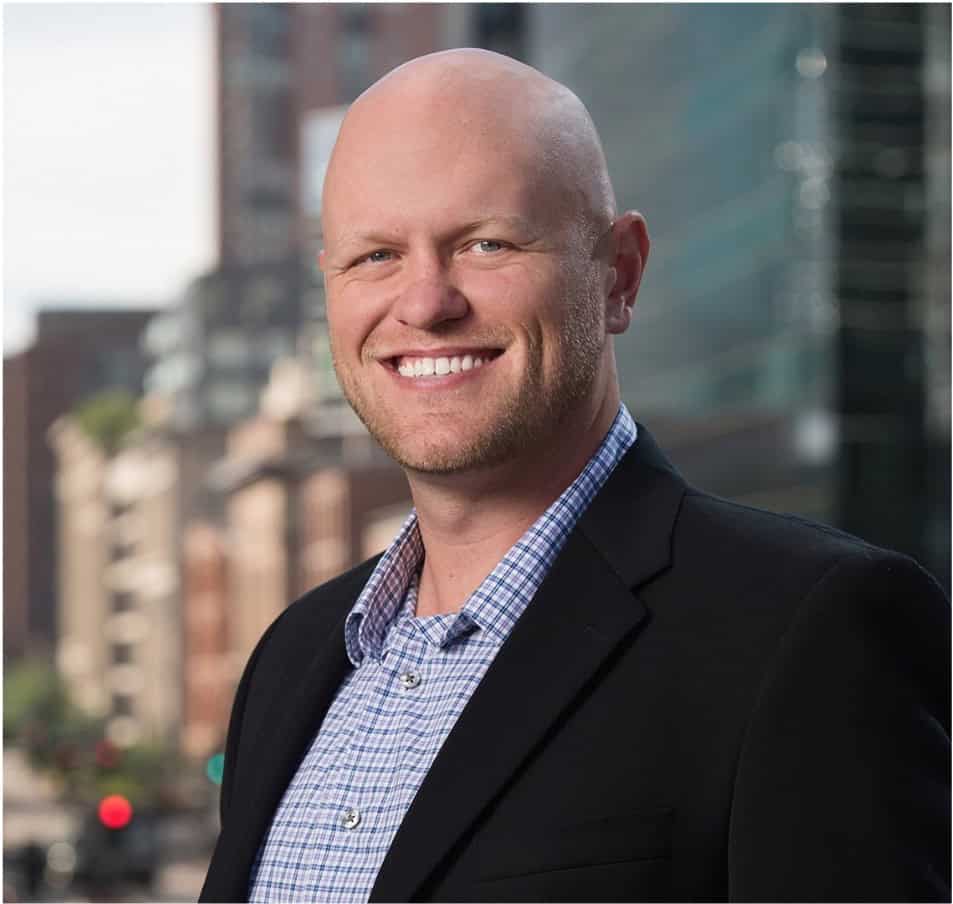
Weston Blakeslee, Ph.D., is VP of Commercial Excellence & Enablement at DrFirst, where he leads initiatives that measure the value of the company’s solutions through improvements in clinician productivity and clinical outcomes. He oversees strategy for electronic health record partners, hospitals and health systems, and medication access organizations. He also designs and publishes peer-reviewed clinical studies that document improvements in clinical quality for DrFirst clients.
Before joining DrFirst, Wes served as Chief Clinical Officer of RxRevu/Arrive Health, where he led clinical product strategy. He holds a bachelor’s degree in Biochemistry from the University of Colorado at Boulder and a Ph.D. in Pharmacology from the University of Colorado-Anschutz Medical Campus. He brings 17 years of experience in life sciences and healthcare technology, with a focus on evidence-based medicine, clinical decision support, health economics and outcomes research.
Recent Episodes
Ritu: Hello, listeners. A very warm welcome to the Big Unlock Podcast Season Seven. Today we’re very excited to have Weston Blakeslee and Dr. Ben Long with us. My name is Ritu Oberoi, and I’ll be your host today. Today’s episode brings together two leaders tackling healthcare transformation from complementary angles — clinical care and digital innovation. Dr. Ben Long is on the front lines at Magnolia Regional Health Center, delivering care while navigating the realities of modern clinical workflows. Weston Blakeslee from DrFirst is rethinking how medication management and patient engagement can be streamlined through smarter technology. Together they offer a grounded and forward-looking perspective on what it really takes to move from fragmented digital tools to truly connected, patient-centered care. With that introduction, I’ll hand it over to them for a short intro and then we can get started. Thank you both for joining us today.
Ben: Thank you so much for having us. We’re very excited to talk about digital health transformation and improving clinical care. As you mentioned, my name is Ben Long. I’m a hospitalist — internal medicine by training. I serve as the Associate Chief Medical Officer at Magnolia Regional Health Center, and I’m really motivated by innovations in care, quality improvement, and patient safety. That’s what led me to partner with my good friend Wes here. Wes, do you want to tell them who you are?
Wes: Thanks, Ben, and it’s a pleasure to be here. I really hope our listeners get some positive anecdotes and stories out of what we’re able to share today. I’m Wes Blakeslee, VP of Commercial Enablement at DrFirst. I’m a pharmacologist by training and spent my first five years developing heart failure therapeutics, so this particular population has always been near and dear to my passion for medication management. We were fortunate to partner with Dr. Long and his team and achieve some really positive outcomes from digital interventions in this population. I’ve been with DrFirst for about five and a half years, and my team partners with all of our clients to make sure that any digital interventions we launch are actually achieving the right clinical outcomes — which is part of the peer-reviewed study that Dr. Long and I collaborated on and published in January of this year in PLOS Digital Health.
Ritu: Welcome to the podcast once again. I’m glad you mentioned that study — we were really excited to read it and understand more about what you were doing. Let’s start there. Dr. Long, from the front lines at Magnolia Regional, take us back to the moment when you realized that heart failure readmissions wasn’t just a discharge planning problem but actually a medication follow-through problem. What surprised you enough to change the care model, and how did it all begin?
Ben: Thanks for that question. Before diving into any data, it’s really important to understand the setting. Magnolia Regional Health Center is a 200-bed acute care hospital in rural northeast Mississippi — a medically underserved population with high disease prevalence, particularly cardiovascular disease. Our patients face significant barriers that influence their outcomes: socioeconomic challenges including transportation and cost, limited access to specialty care, and more. That context really matters when we think about medication adherence. We know medications improve outcomes — that’s well established in the literature — but less attention has been given to how we help people not just comply, but become genuinely engaged in their care. For conditions like congestive heart failure, that’s critical, because all of these advances in medicine are helping people live longer, but they’re not living longer free from disease. As a system, we have to adapt to being better chronic care managers. And non-adherence is a real issue for both patients and providers in heart failure — it has a meaningful impact on outcomes and on the overall cost to our healthcare system. About one in five new prescriptions are never filled — what we call prescription abandonment — and about half of refills are eventually abandoned as well. DrFirst has been instrumental in helping us gain visibility into what is happening with patients and their medications over time. Wanting to improve that was our starting point.
Ritu: That’s a really good introduction to the problem and your study. But tell us more — given that this is an older, underserved population that may not engage with technology, how did you find that text reminders alone weren’t enough? And how did you arrive at the idea of nurse navigators and handing off to humans? I’d love to hear a story or anecdote if you have one.
Ben: It really came from familiarizing ourselves with our population. That took intentional work — understanding the individual problems over time that could be attributed as root causes of these patients’ outcomes. It took time, experience, and familiarity with these individuals. Too often we’re tempted to make a sweeping generalization about a population and then generalize a solution for them — and what happens is the change winds up being a change, not an improvement. It’s one part implementation science, as quality improvement often is, and one part really knowing the population you’re serving. Our population is older, largely Medicare-covered, rural, facing the socioeconomic barriers I mentioned — and understanding their patterns of how they access care and where our care planning along the continuum falls through was essential. One of the things DrFirst really emphasizes is eliminating care silos. For me, working in the hospital, that resonated deeply, because that is how our system functions. Throughout much of the country we have episodic care that is very good at being reactive — when the patient has an acute need, we stand ready to meet it. I’ve heard it described this way: the US healthcare system allows people to travel toward a cliff, even allows them to fall off, but has a really expensive ambulance waiting at the bottom. That’s obviously an incomplete and perhaps unfair characterization, but the point is that we have to adapt to being more proactive in meeting patients’ needs — especially as we drive down mortality rates with improvements in therapeutics, because then we have to manage the morbidity associated with more chronic diseases. We’ve seen a similar shift in oncology, where cancer has largely become a chronic disease and that has dramatically changed how we approach those patients. I think about heart failure the same way. How do we engage with patients more proactively? How do we help them with education and eliminate barriers? We’re looking for solutions that are widely accessible, lower cost, and far-reaching — because that equals higher value. That’s how we began thinking about what better looks like for this population.
Ritu: Thank you, Dr. Long. My next question is for Wes. DrFirst sits at the intersection of prescribing, adherence, and patient engagement. What are some of the friction points in the medication journey that you’ve solved, and which ones do you think AI will help address?
Wes: Our goal is always to build solutions that help providers and patients — giving clinicians like Dr. Long technology that extends their care to their patients. We’ve had a long strategy of ensuring we have a solution that can intersect every step of the prescription journey: from the initial prescribing decision, to real-time prescription benefit and medication cost, to prior authorization avoidance, to making sure patients don’t simply forget their medications by giving them education on why adherence matters and nudging them to fill their prescriptions. That was really the genesis of this study. Dr. Long and I have been collaborating for about five years on many different initiatives — this was simply the most recent one we published. To his point, we need to be intentional about the technology we build. It can’t add steps to an already cumbersome system. Every new technological innovation we bring to the table has to be thoughtful. On AI — it’s the hottest topic in healthcare tech right now. We’ve employed versions of AI for a long time in the form of machine learning, but generative AI is a different matter. The machine learning aspects of our work go through extensive quality control and are very narrowly trained, which allows for much greater accuracy in the high-throughput recommendations we surface. Generative AI is still a nascent field and does produce hallucinations — not because it’s not useful, but because it pulls from such a wide dataset. In the context of patient care, any generative AI solution must have very rigorous quality control to ensure the data and recommendations surfaced are clinically accurate. That is one of the next frontiers we’re exploring, and having long-term partners like Dr. Long and his team at Magnolia gives us the opportunity to refine our technology while helping them solve real-world problems at the same time.
Ritu: Rohit, would you like to ask a question?
Rohit: Hello, Dr. Long and Weston — good to meet you both. This has been a fascinating conversation. As you mentioned, generative AI will add new dimensions to products and services, including voice agents, which we’re seeing deployed widely in the provider space. Dr. Long, being in a rural setting, what are some of the other challenges you’re seeing at your health system beyond medication adherence and cardiac care? And what other initiatives do you have in the pipeline around innovation?
Ben: Thank you for asking that, because rural healthcare is underrepresented in studies, in conversation, and in policymaking — and I suspect the majority of the country looks a lot like Magnolia Regional Health Center. When we innovate and design systems to improve quality and safety, it’s very important that work as perceived matches well with work as done — those frontline realities matter. What comes to mind is the lack of interoperability, which connects directly to the care silos we talked about earlier. And I want to unpack that beyond just the obvious silo of hospital versus non-hospital. Think about the state of primary care in this country — we know it’s necessary, and we know it has eroded due to provider shortages and the increasing complexity of what’s being asked of those providers. We have a sicker, more complex population and people are being asked to do more with less. A very real everyday example for us: a patient is seen in the hospital, and we have a capable electronic system that communicates well within our own walls — but not necessarily with the independent primary care office that might be in northeast Mississippi, northwest Alabama, or southern Tennessee. We can send prescriptions to an independent pharmacy and they receive them fine, but medication dose changes or discontinuations, when multiple streams are flowing into the same pharmacy or occasionally multiple pharmacies, represent a real hazard for the patient. Automation will only get you so far. At some point, good care — especially for population management like heart failure — is hand-to-hand combat. You have to actually engage with that patient. That’s why being proactive matters so much: reaching the patient outside of the acute moments, outside of the brick and mortar, before they’re clinically declining. That’s what changes outcomes. We’ve tried to combine digital solutions with well-proven efforts like nursing-led care navigation — figuring out how to easily reach patients, and then what to do when we reach them. A lot of that looks like: “Can we go through your medicine cabinet together?” You can’t do that with a patient in the hospital. The pharmacy can tell you a prescription was filled, but we really have no idea whether the patient is taking their medications unless we connect directly. DrFirst’s technology helps us triangulate across insurance claims data, pharmacy fill data, and electronic prescriptions — but that picture isn’t complete until you connect the dots with the patient directly. That gives us the opportunity to educate, catch adverse events and side effects, and identify any unintended consequences of care. Our question is always: can we do this in a way that is replicable? If we can do it in an under-resourced place like rural northeast Mississippi, with an older population that has largely been characterized as unlikely to engage with digital tools — and prove that wrong — then I believe it can be done anywhere.
Wes: A couple of things to add, Ben. On the interoperability challenge — what makes the DrFirst and Magnolia collaboration so powerful is that on the healthcare technology side, we have all the data points to follow prescriptions from the writing event all the way to the fill event. But what really matters is how that affects patient outcomes. And as Ben mentioned, for a rural system, Magnolia has one of the most impressive informatics teams I’ve seen in my entire healthcare career. Being in a rural setting does not mean you can’t connect the dots on important outcomes and tie them to technological interventions. They’ve proven that.
Rohit: That’s great to know. Thank you.
Ritu: That leads directly into my next question, Wes. Healthcare technology often optimizes for workflow efficiency but not always for trust. What does trust-first design look like in clinical workflows and patient-facing tools, and what has been your focus there?
Wes: It starts with a simple concept: many healthcare providers measure their day in clicks. The way electronic health records were designed, the number of clicks and keystrokes is enormous, and the cognitive load and administrative burden become unsustainable. And connecting the dots all the way to the patient — we all have our smartphones with us nearly every waking hour. Patients are constantly inundated with text messages, emails, and app notifications. At the end of the day, we’re all patients too. So the simple form of trust-first design is to intentionally make every step of the process easier. In the intervention Dr. Long and I recently published, we wanted to test how SMS nudges — with education, fill reminders, and cost information — would actually improve medication adherence and reduce readmission rates. In both areas, we achieved impressive results. Over a five-year study timeframe — two and a half years pre-intervention and two and a half years post — we gained a lot of very positive learnings from relatively simple concepts. The backend technology is certainly not simple, but the ideas we’re testing are. Sometimes it doesn’t take an incredibly sophisticated intervention to get really positive outcomes. Starting simple and intentional with provider and patient workflows, rigorously testing and adjusting them — and then the final step that most healthcare tech companies don’t do, but that we pride ourselves on with partners like Magnolia, is clinical validation. That’s the most important part. With Ben’s team having such a sophisticated reporting capability specifically around this congestive heart failure population, we were able to demonstrate real impact.
Ritu: Time has flown by and we’re almost at the end of the podcast. Any closing thoughts, forward-looking statements, or crystal ball predictions you’d like to share with the listeners?
Ben: As healthcare leaders, we’re uniquely positioned to identify the gaps — between departments, between discharge and pharmacy, between prescribing and filling. Basically, the gaps that exist between our intentions to care for people and what actually happens. Digital tools are not the solution by themselves, but when aligned with clinical insight and operational execution, they become force multipliers. Our goal moving forward is not just to send more text messages — it’s to build systems that ensure patients actually receive the care that we prescribe. I think that’s the kind of leadership and innovation our healthcare system needs. The Big Unlock Podcast shines a spotlight on a lot of the successes happening around the country. We are often inundated with what we get wrong, but focusing on and celebrating what we get right is valuable and helps us learn as a system. I hope to keep doing that throughout my career.
Wes: To summarize Ben’s point, which I completely agree with — internally we call it the tech-plus-touch approach. You’re not going to have a technological solution for everything, but you need to empower both clinicians and patients to make their lives easier so they can do the right thing, and then celebrate those wins. Clinical validation at the end of that process is the key step we’ve been focused on for a very long time. As new innovations come to the forefront, we want to be intentional about those interventions and connect the dots from an interoperability standpoint to how providers are actually using them. Our Chief Medical Officer, Dr. Colin Banas, has a saying I always carry with me: “You can’t manage what you can’t measure.” We want to know what we’re measuring well before we embark on any intervention. And we need to make sure the people using the technology are using it properly and efficiently, and that it’s actually driving toward measurable outcomes — so we can celebrate those wins and iterate from there.
Ritu: Tech plus touch — I love that. Thank you both so much for being on our podcast today. It’s been a pleasure having you.
Rohit: Thank you, Dr. Long. Thank you, Weston. Great to be here.
Ben: Thank you all so much. We really appreciate it.
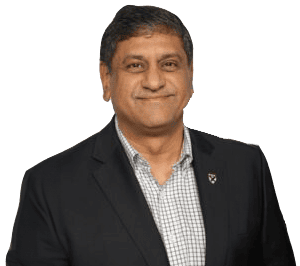
Rohit Mahajan is an entrepreneur and a leader in the information technology and software industry. His focus lies in the field of artificial intelligence and digital transformation. He has also written a book on Quantum Care, A Deep Dive into AI for Health Delivery and Research that has been published and has been trending #1 in several categories on Amazon.
Rohit is skilled in business and IT strategy, M&A, Sales & Marketing and Global Delivery. He holds a bachelor’s degree in Electronics and Communications Engineering, is a Wharton School Fellow and a graduate from the Harvard Business School.
Rohit is the CEO of Damo, Managing Partner and CEO of BigRio, the President at Citadel Discovery, Advisor at CarTwin, Managing Partner at C2R Tech, and Founder at BetterLungs. He has completed executive education programs in AI in Business and Healthcare from MIT Sloan, MIT CSAIL and Harvard School of Public Health. He has completed the Global Healthcare Leaders Program from Harvard Medical School.
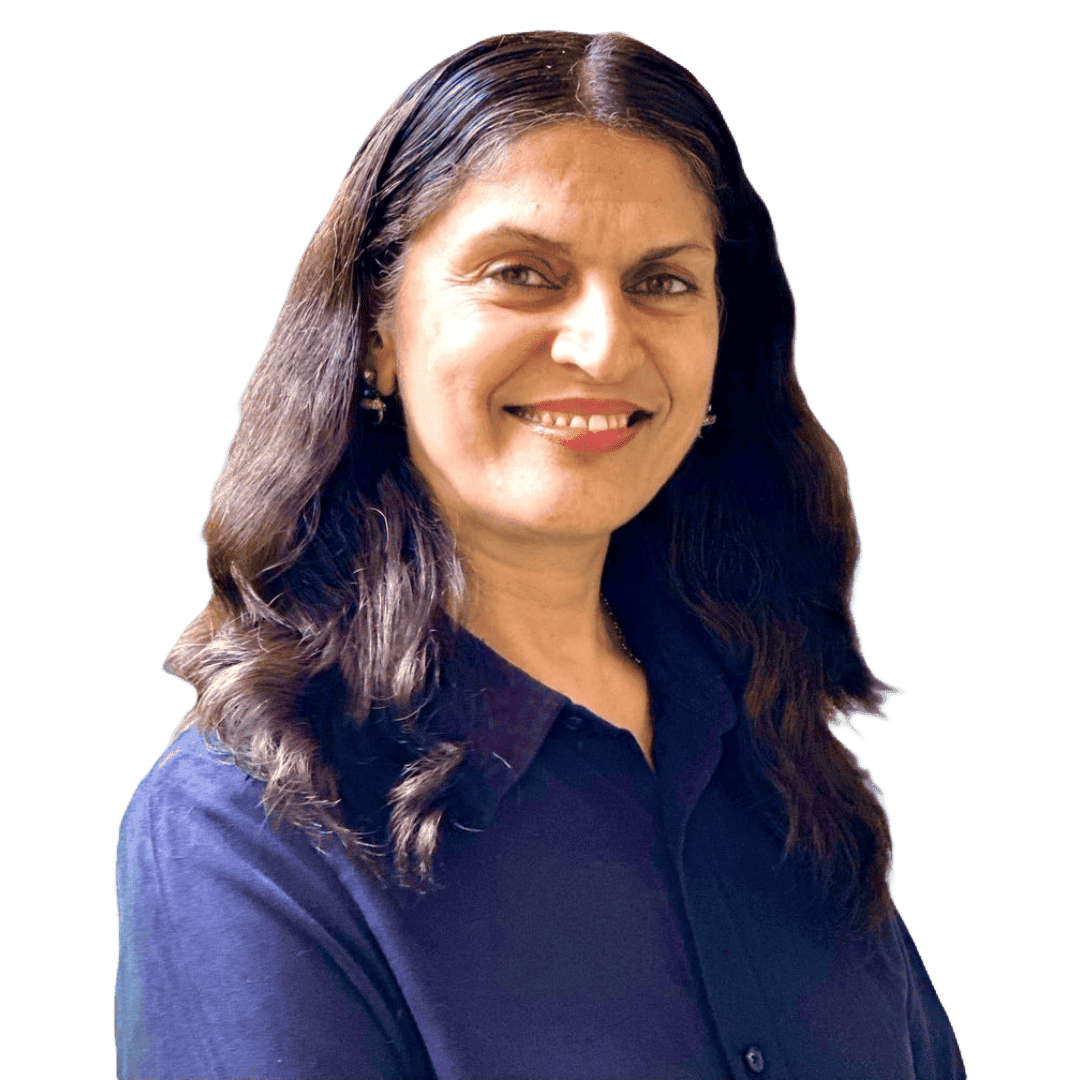
Ritu M. Uberoy is a healthcare AI strategist, technology executive, educator, and author dedicated to advancing the responsible adoption of Artificial Intelligence across healthcare delivery, digital health, and life sciences. With more than twenty-five years of leadership experience spanning the United States and India, she is recognized for helping healthcare organizations move beyond experimentation to achieve scalable clinical, operational, and business transformation through AI.
She leads AI innovation initiatives, including the AI Center of Excellence at BigRio, where she works with health systems, healthcare technology companies, and life sciences organizations to operationalize Generative and Agentic AI solutions responsibly. Her work focuses on aligning AI innovation with clinical workflows, governance frameworks, workforce readiness, and patient trust—ensuring technology augments human judgment in high-consequence healthcare environments.
Ritu is the co-author of Generative AI: Unlocking the Next Chapter in Healthcare, a practical guide for healthcare executives navigating enterprise AI adoption. She also hosts The Big Unlock podcast, engaging global healthcare leaders on AI transformation and digital innovation. An active educator and speaker, she conducts executive workshops and participates in global forums like HIMSS, ViVE, Women in Tech, AI-Powered Women, RAISE, and more, shaping the future of AI-driven healthcare. Ritu holds advanced degrees in Computer Science and completed specialized AI programs at Harvard and MIT.
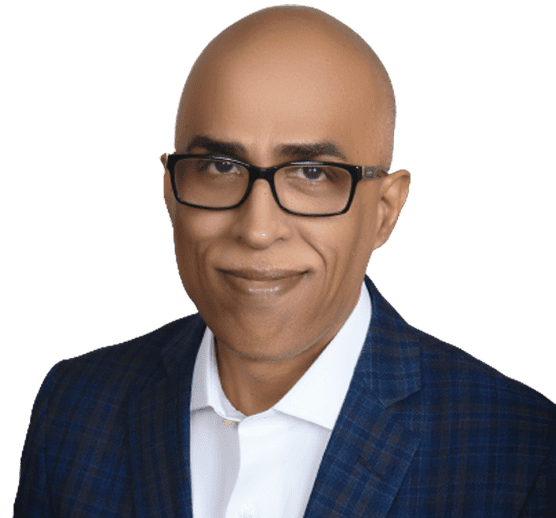
Paddy was the co-author of Healthcare Digital Transformation – How Consumerism, Technology and Pandemic are Accelerating the Future (Taylor & Francis, Aug 2020), along with Edward W. Marx. Paddy was also the author of the best-selling book The Big Unlock – Harnessing Data and Growing Digital Health Businesses in a Value-based Care Era (Archway Publishing, 2017). He was the host of the highly subscribed The Big Unlock podcast on digital transformation in healthcare featuring C-level executives from the healthcare and technology sectors. He was widely published and had a by-lined column in CIO Magazine and other respected industry publications.
Stay informed on the latest in digital health innovation and digital transformation