Season 7
In this episode, Naomi Fried, PhD, Founder and CEO of PharmStars, shares how stronger collaboration between startups and pharmaceutical companies is accelerating healthcare innovation. Drawing on leadership roles at Biogen, Kaiser Permanente, Boston Children’s Hospital, consulting work with large pharma companies, and collaboration across the digital health ecosystem, she explains why the most successful innovations are built around customer needs rather than technology alone.
Naomi discusses how PharmStars helps digital health startups, including those developing AI-powered solutions, understand the pharmaceutical industry, refine their value proposition, and build lasting partnerships with global pharma companies. She highlights AI as one of the most exciting areas of innovation, with the potential to improve patient care, support clinicians, and create new opportunities for life sciences organizations. However, Naomi emphasizes that technology alone is never enough. Successful innovators listen more than they pitch, understand customer pain points, and build trusted relationships.
Naomi also talks about the importance of clinician workflows, internal champions, and continuous product evolution. Whether leveraging AI, software, or medical devices, her message is clear: lasting innovation comes from solving meaningful problems, adapting to customer needs, and building partnerships that create real-world impact. Take a listen.
About Our Guest
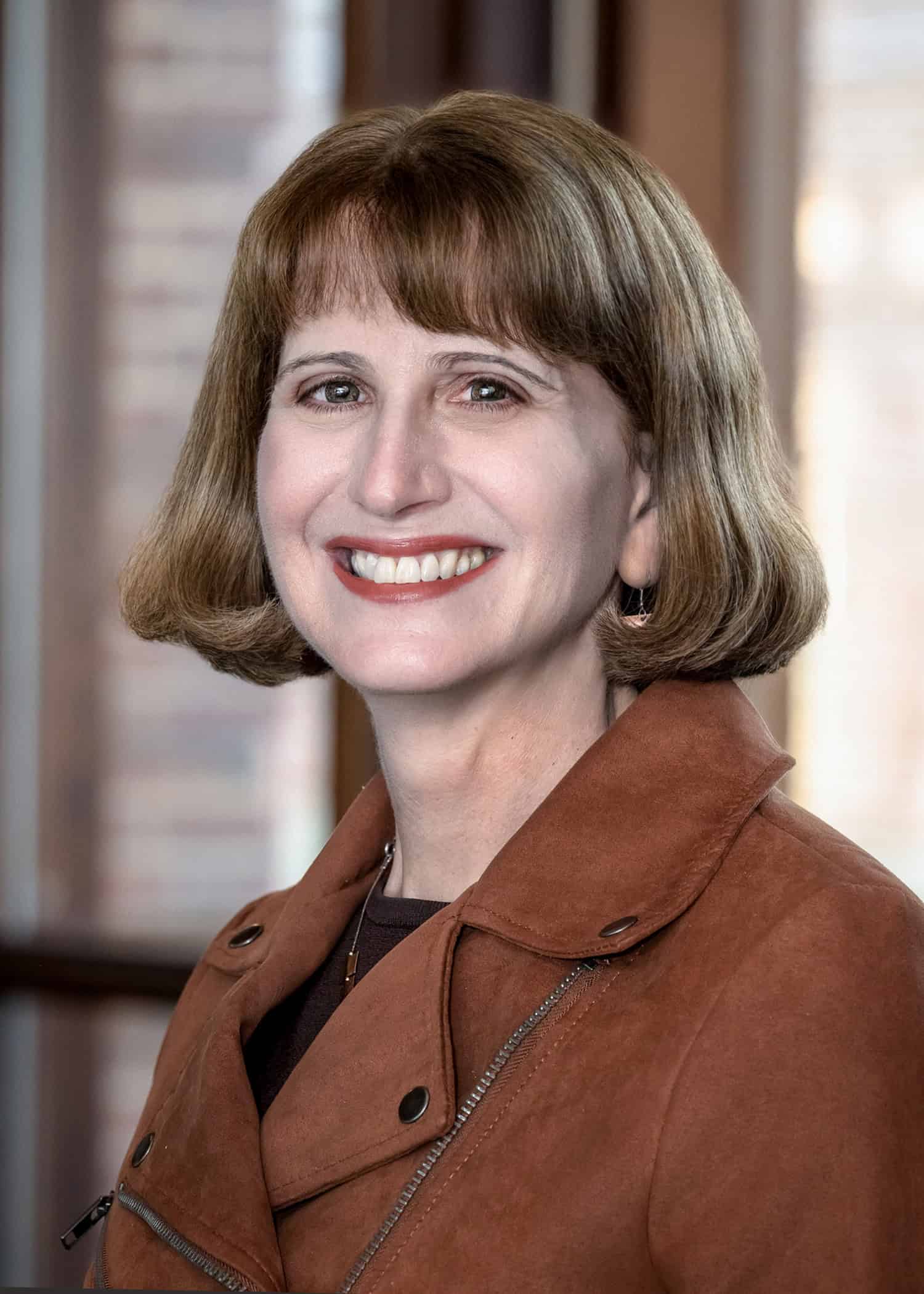
Naomi Fried, PhD, is the founder and CEO of PharmStars. An internationally recognized thought leader in healthcare innovation, Naomi brings over two decades of expertise in digital health strategy and innovation, as well as an entrepreneurial spirit.
Naomi is also the co-founder and general partner of PharmStars Ventures Fund, a venture fund which invests in PharmStars alumni companies. Previously, she was a general partner at the venture fund, Ambit Health Ventures, which invested in early-stage digital health and medical device startups. Naomi has served on a variety of startup boards of directors and advisory boards. Before founding PharmStars and Ambit, Naomi led a boutique consulting firm, Health Innovation Strategies, which advised pharma on digital health strategy and innovation activities.
Previously, Naomi was Biogen’s first VP of Innovation and External Partnerships, where she developed their “innovation beyond the molecule” strategy to deliver non-pharmacological value to patients and providers. Before her time at Biogen, Naomi served as the first Chief Innovation Officer at Boston Children’s Hospital and also the first VP of Innovation and Advanced Technology at Kaiser Permanente.
Naomi has been a member of the Governor of Massachusetts’ Innovation Council and the Board of the American Telemedicine Association. Her awards include Healthcare IT News’ “Health Information Technology (H.I.T.) Men and Women of the Year Award, Innovators.” Naomi was named “The Emerging Executive of the Year” in 2014 by the Massachusetts Technology Leadership Council and one of Medical Marketing and Media’s 40 “Healthcare Transformers” in 2016.
Naomi received her PhD in Materials Science from MIT and her BS in Chemistry, summa cum laude, from the University of California, Berkeley. When not working, Naomi can be found dancing up a storm in Zumba classes or lifting weights.
Recent Episodes
Ritu: Hello, listeners. Welcome to Season Seven of the Big Unlock Podcast. My name is Ritu Oberoi, and I’ll be your host today. We are really excited to have Naomi with us. Naomi Fried is one of healthcare’s most respected innovation leaders. She’s the founder and CEO of PharmStars, where she’s helping pharma companies engage more effectively with digital health startups to accelerate innovation and improve patient outcomes. Prior to PharmStars, Naomi served as Chief Innovation Officer at Boston Children’s, where she helped establish one of the nation’s leading pediatric digital health innovation programs. Her unique perspective across providers, startups, and life sciences gives her a front-row view into what it really takes to move healthcare innovation from promising pilots to meaningful impact. Welcome, Naomi.
Naomi: Thank you, Ritu. It’s a pleasure to be here. Thank you for having me.
Ritu: Would you like to add anything to that introduction?
Naomi: Sure, happy to share a little more about how I ended up founding PharmStars. My roots actually start out working with digital health startups a long time ago, then advising venture capitalists, and then I was the first Vice President of Innovation and Advanced Technology at Kaiser Permanente. I became really intrigued with how innovation happens in large healthcare organizations. After five years there, I moved to the East Coast and, as you mentioned, became the first Chief Innovation Officer at Boston Children’s Hospital, where we built a fabulous program helping doctors and nurses advance innovation. From there I was recruited to Biogen, and this is the most relevant part of how I ended up at PharmStars. I thought moving to Biogen would be an easy transition, since I’d been in healthcare innovation in large organizations for a long time. But I wasn’t prepared for how different the pharmaceutical industry was. When I got to Biogen, I discovered I didn’t fully understand how the company was organized, and I certainly didn’t understand how this very complicated product — a drug — actually worked. It was a very steep learning curve, and it made me appreciate how hard it is for someone outside of pharma to understand what’s happening inside of it. But I also fell in love with the potential for digital solutions to transform every part of the pharmaceutical value chain, from drug discovery through development, commercialization, and beyond the molecule for patients. That became my life’s mission, and I went on to advise other pharmaceutical companies on digital health strategy. I had a real aha moment, Ritu, when I was working with a large pharmaceutical company. They told me they were looking for a particular type of innovation, and I found a startup doing exactly what they wanted. We got everybody into the room, and we just weren’t getting anywhere. I could see connections weren’t being made, that people weren’t understanding each other. I realized I was watching the pharma-startup gap in action — that fundamentally different way that health tech companies and biopharma operate. That gap is what we set out to solve through PharmStars. We bridge the pharma-startup gap, bringing these two groups together. That was really the motivation for founding PharmStars five years ago.
Ritu: Thank you for sharing that, Naomi — really interesting to hear your perspective. That leads to my next question. PharmStars sits at the intersection of pharma companies and digital health startups, and you’ve worked on both sides — Kaiser, Biogen, and now PharmStars. What in your mind are the biggest misconceptions each group has about the other, and what separates successful partnerships from those that never move beyond the initial stage?
Naomi: Great question. Going back to the pharma-startup gap, the elements of it are that tech startups and big pharma speak a different language. They have very different cultures — I don’t have to explain that — but they also move at different speeds. They have different appetites for risk. They operate in different regulated environments. The real challenge is understanding each other, and to bridge that gap you have to understand where the other side is coming from. That’s why at PharmStars we focus on educating startups about how pharma works. Our program is called Pharma University, and it has two key components for startups. One is literally teaching them about pharma — how drugs are developed, how pharma companies are organized, the regulations they need to be concerned with, their business models. The second is personalized mentoring by former pharma executives. I think that education and understanding of the other side is what really helps build a successful relationship. You also need communication and the ability to connect — those are table stakes. That’s another way we help our startups: at the end of PharmStars, they present to our pharma members and then have one-on-one meetings with them. We always coach our startups that they have to be able to clearly explain what pharma problem they’re solving — stepping into the other side’s shoes is essential to building a relationship and getting a deal done. On the pharma side, we hope they can understand the pressures and needs of startups too. Startups want to move quickly, which isn’t something pharma typically does. They’re not heavily staffed — they won’t have a general counsel, just a lawyer they work with. Understanding that they’re operating in very different worlds matters. But when startups and pharma come together to work on innovation, the patient always benefits, the outcomes are tremendous, and it’s genuinely synergistic. We’re very excited about bringing these groups together and bridging that gap.
Ritu: I think you’re doing excellent work with PharmStars. We’ve actually applied twice ourselves, so we’ve gone through the entire website and understand the program, and it’s absolutely brilliant — really amazing what you’ve put together. We’re happy to spread the word and encourage more people to apply.
Naomi: Thank you. At this point we’ve run ten cohorts, we’re about to start our eleventh, and a hundred and twelve startups have come through the program. Because they learn product-market fit, they go on to be very successful selling to pharma — our first thirty-five startups alone have done over a hundred deals with pharma companies. Another statistic we’re very proud of is that our startups have collectively raised over a billion dollars in funding. Really understanding what your client needs is transformative for a business.
Ritu: I absolutely agree, and that leads right into the next question. We’re seeing huge pharma companies investing heavily in digital health, AI, and patient engagement technologies. Looking ahead, where do you see the greatest opportunity for startups to create value for pharma beyond the traditional patient support or adherence programs that everybody is already doing?
Naomi: Great question. There are opportunities for digital health startups across the entire pharma value chain. In the very early stages of drug discovery, people are applying AI and we’re seeing real acceleration in identifying targets for new drugs. But I think the biggest area of opportunity is still in clinical trials, because that is the slowest and most expensive part of drug development — solutions that can help pharma there are genuinely still needed. If you look in particular at Phase 3 trials, which are the longest and most expensive, finding patients, keeping them in the trials, anticipating issues, and helping with data management — it’s incredibly complicated to run a clinical trial, and that’s where I think the biggest opportunity is. There are certainly opportunities on the commercial side in marketing too, and we’ve seen some really exciting solutions there. But I’m personally most excited about the clinical trial phase, and also what we call the “beyond molecule” part of the pharma value chain — once the patient is actually taking the drug, digital tools that help with adherence or monitoring the condition. There’s a lot of opportunity there. I’m very excited about how digital and AI are helping pharma take what is a very slow and very expensive process and hopefully make it faster, cheaper, and bring more drugs to market more quickly.
Ritu: That’s something we’ve been hearing consistently across all our conversations — everyone is now having to move at warp speed. Even healthcare, traditionally one of the slowest adopters, is now learning to talk in weeks or days rather than years because the pace of innovation is so rapid.
Naomi: In pharma, time is genuinely money, Ritu, because you have a patent clock that’s ticking. If it takes fourteen years to bring your drug to market, you might have only five years left to actually sell it and recoup an investment that’s usually a couple billion dollars. Every month you can bring your drug to market earlier translates into millions and millions of dollars in additional revenue. So for pharma, anything that can shorten that drug development cycle and move the line between developing the drug and actually selling it is really important.
Ritu: When we talk to C-suite leaders across health systems, one recurring challenge is the gap between innovation and adoption — startups have promising technologies, but when they move into clinical settings they often fail to scale. In your mind, what can entrepreneurs do differently to design solutions that fit naturally into provider and patient workflows, especially in a slow-moving environment like Phase 3 trials?
Naomi: I think in the pharma world we also suffer from the problem of pilots that get started but never scale to adoption. This goes back to the fundamentals of the project: are you solving an important problem? Can you demonstrate value? Do you have clear metrics you’re aiming to achieve in the pilot, so you can convince people it’s worth scaling and that broad adoption makes sense? We advise our startups to think carefully about the pilot — to plan and discuss with their business partners what success looks like, and ideally to map out what happens next if the pilot goes well. Leaving the adoption question to a future conversation is not always advisable. Of course you can’t resolve every adoption issue in advance, but anticipating that adoption will need to happen and thinking through how it will happen ahead of time is very advantageous.
Ritu: That’s good advice — thank you for sharing that. Let’s change tracks a little. I would love to hear your origin story — how you came into science and how you landed here. What was that unique combination of skills that brought you to where you are?
Naomi: I studied chemistry as an undergrad and then got a PhD in material science and engineering at MIT. I started working at a startup in Kendall Square back when it looked very different than it does now. I was employee number four at a small startup on the tech side. Our startup was having a conversation with Boston Scientific about a possible partnership, and I found the business conversation so interesting. Even though I’d trained in science and technology, this business side was fascinating to me. When I moved to California for my husband’s job, I had the opportunity to get involved with a startup being spun out of Stanford School of Medicine — in what we used to call the e-health space, even before there was “digital health.” The technology was developed by a physician at Stanford to help doctors and nurses get quick answers to questions that came up while treating patients. This was before Google, before WebMD — a genuinely novel tool. I thought this was really cool — I loved the idea of using technology to help patients and doctors, and that was my real transition into healthcare. From there I worked with startups, went on to Kaiser, and the rest is sort of history. That transition from science to business happened organically. I never thought I’d end up in healthcare, but I fell in love with the idea and became excited about how digital solutions can help patients and doctors. Even now through PharmStars, we see all sorts of digital health solutions — medical devices, software, AI — and there are some really cool ways that patients, clinicians, and pharma can all benefit. I love what I do now.
Ritu: That’s amazing. Before we get to the latest PharmStars cohort, I want to dig a little deeper — when we ask physicians why they became doctors, we sometimes hear the most amazing answers. Did you always know you wanted to study chemistry, or when did that realization come?
Naomi: No, I didn’t know what I was going to do, basically, through most of high school. Then I took a chemistry class, I think my junior year, and I just thought, this is so cool. I fell in love with it — there’s no other way to describe it. I decided I wanted to study chemistry because it was so interesting. I went to UC Berkeley and started studying chemistry, which I really enjoyed, and I got into total organic synthesis — figuring out conceptually how to build molecules on paper. I think I like puzzles and putting things together. I did some lab work, but what I found was that in the lab — which was obviously where my future would be — we were making micrograms of things and then analyzing them, and I thought, this isn’t very practical. I’m a really practical person. I love chemistry, I love thinking about process, but this was getting too esoteric for me. So I took an engineering class — material science engineering — and thought, this is better, this is more my speed, this is applying chemistry to the real world. I got interested in metallurgy and extraction of metals, and that’s what I did my PhD in. So I’ve been on this path of trying to do practical things, and I guess I ended up wanting to help people have better health. That’s where I landed.
Ritu: Thank you for sharing that, Naomi. Now we would love to hear about your current cohort and what the theme is this time.
Naomi: Thank you for asking. We’re on our eleventh cohort now, and we’re open and looking for digital health startups that want to engage pharma as clients. We’re focused on the theme of digital innovations in immunology. These themes are always selected by our pharma members, who meet with startups and hear their pitches at the end of each cohort. Immunology is actually a really broad topic. Pharma is working a lot on immune-mediated diseases — allergy, asthma, and similar conditions — so if startups have digital solutions supporting those conditions, that’s of great interest. Immuno-oncology is also a really important and growing area for pharma, with a lot of unmet needs and digital opportunity. And then there are advanced therapies based on impacting the immune system, which is incredibly complex and affects many organs — so this theme is very broad. Immunology patients also often deal with chronic conditions and flares, so solutions around patient monitoring, patient identification, and diagnosis are all of interest to pharma, and therefore to PharmStars. It’s a very broad and exciting area, and we hope we’ll see a lot of startups apply. Our accelerator is virtual, which means startups from around the world can apply. It’s a ten-week boot camp where startups attend class virtually for most of the program, with an in-person launch event and an in-person showcase at the end. We’ve had amazing startups from about thirty-nine countries participate so far, so it’s a great gateway for international startups to find their way to global US pharma companies.
Ritu: That’s an incredible opportunity, thank you for clarifying that. I’m sure we have listeners from all over the world, so hopefully this reaches someone who applies. Let’s go back a bit to your time at Boston Children’s and Kaiser, where you were evaluating and scaling a lot of healthcare innovations. What lessons from that experience still guide how you assess startups today? And what qualities do you think the most successful healthcare innovators share?
Naomi: That’s a big question. At Kaiser Permanente, my team was innovation and advanced technology, and we were identifying emerging technologies from outside Kaiser and assessing fit with the organization. It was very important there to understand what doctors were actually looking for — to make sure solutions worked well, solved the problem, and didn’t cost the doctor more time. They needed to work within the clinician’s actual workflow. When I moved to Boston Children’s Hospital, our innovation acceleration program had a different mission — to enhance the innovation culture itself. We were helping doctors identify problems and actually building a lot of the solutions for them. We had a digital health innovation lab and funding to support it, and we did a lot to help doctors develop their own ideas, which was really exciting. There were also a lot of startups at the time who wanted to bring their innovations into the organization, and one thing I always advised them was that they would need an internal champion. Navigating even a hospital like Boston Children’s — which isn’t the largest in the country, but is certainly complex — requires finding someone inside the organization who wants to use your solution, who will be your champion and guide you through getting funding and approval, and help your product actually get used and tested. That was really important advice. To answer your question about what qualities successful startups share — the theme throughout is really understanding your client’s needs and building a genuine relationship with them, with very open communication. Listening matters enormously. Startups are very excited about their solutions, and they’ll go into a meeting wanting to do all the talking and all the pitching — but it’s really important to listen first. What does the client or potential customer actually need? We coach our startups to do a lot of research before that first meeting — to understand, in the case of pharma, what their pipeline looks like and what their pain points are, and to speak directly to that. Beyond listening, deals are relationships. The startups that are really successful understand that and build relationships that go beyond “here’s the solution, how much will you pay me” — they ask, how is it going, how can I help, what will make this successful for you? We really advise people to build relationships. The successful startups I see listen, they have a solution, they step into their client’s shoes and talk about their client’s problems, and they build genuine trust. People want to work with people they trust. People want to work with people they like. Beyond the obvious things — passion, great communication skills, love of technology — I think it really comes down to your ability to build a relationship and connect with the client.
Ritu: Great advice, thank you for sharing that. We were at another accelerator program recently, and one of the key insights they offered was that most successful startups have pivoted at least once. Has that been your experience as well? Because listening, as you said, and pivoting seem closely related.
Naomi: I think that’s exactly right. If you’re listening, chances are you’ll hear how to change and improve your product. We get a lot of startups into our program who are already selling their solution successfully elsewhere in healthcare — to providers, to payers — and they believe there might be a pharma opportunity, and we agree with them, which is why we accept them into the program. They’re not really pivoting their product, because the product is already built, but they are pivoting the application — how they package it, how they explain it, and what problem they say they’re addressing. I’d say maybe forty or fifty percent of the startups in our program aren’t pharma-first. They’re coming from elsewhere, but they’re recognizing that pharma needs their solution too, and that’s what we help them with — understanding the pharma industry, positioning their solution, and successfully selling it. So pivoting is just part and parcel of this. I’d be shocked if the product and the explanation any startup started with is exactly where they are a couple of years later, assuming they’re still in business.
Ritu: Thank you, Naomi. As usual, the time has flown by and we’re almost at the end of the podcast. Thank you for being our guest. Would you like to offer any closing thoughts for our listeners before we wrap up?
Naomi: Well, Ritu, first of all, thank you for having me on The Big Unlock — this is an awesome podcast and I’m honored to have been your guest. I just want to again invite startups to apply for our upcoming eleventh cohort. Our virtual accelerator will run in the fall of 2026. We’ll accept ten startups from around the world with a focus on digital innovations in immunology. It’s an opportunity to learn about pharma, to be mentored, and we also invest in our startups through the PharmStars Venture Fund. It’s a great accelerator, and I appreciate the opportunity to share it with you and your audience today.
Ritu: Great. Thank you so much, Naomi.
Naomi: Thank you.
—
Subscribe to our podcast series at www.thebigunlock.com and write us at info@thebigunlock.com
Disclaimer: This Q&A has been derived from the podcast transcript and has been edited for readability and clarity.

Ritu M. Uberoy is a healthcare AI strategist, technology executive, educator, and author dedicated to advancing the responsible adoption of Artificial Intelligence across healthcare delivery, digital health, and life sciences. With more than twenty-five years of leadership experience spanning the United States and India, she is recognized for helping healthcare organizations move beyond experimentation to achieve scalable clinical, operational, and business transformation through AI.
She leads AI innovation initiatives, including the AI Center of Excellence at BigRio, where she works with health systems, healthcare technology companies, and life sciences organizations to operationalize Generative and Agentic AI solutions responsibly. Her work focuses on aligning AI innovation with clinical workflows, governance frameworks, workforce readiness, and patient trust—ensuring technology augments human judgment in high-consequence healthcare environments.
Ritu is the co-author of Generative AI: Unlocking the Next Chapter in Healthcare, a practical guide for healthcare executives navigating enterprise AI adoption. She also hosts The Big Unlock podcast, engaging global healthcare leaders on AI transformation and digital innovation. An active educator and speaker, she conducts executive workshops and participates in global forums like HIMSS, ViVE, Women in Tech, AI-Powered Women, RAISE, and more, shaping the future of AI-driven healthcare. Ritu holds advanced degrees in Computer Science and completed specialized AI programs at Harvard and MIT.

Paddy was the co-author of Healthcare Digital Transformation – How Consumerism, Technology and Pandemic are Accelerating the Future (Taylor & Francis, Aug 2020), along with Edward W. Marx. Paddy was also the author of the best-selling book The Big Unlock – Harnessing Data and Growing Digital Health Businesses in a Value-based Care Era (Archway Publishing, 2017). He was the host of the highly subscribed The Big Unlock podcast on digital transformation in healthcare featuring C-level executives from the healthcare and technology sectors. He was widely published and had a by-lined column in CIO Magazine and other respected industry publications.
Stay informed on the latest in digital health innovation and digital transformation