Season 7
In this episode, Dr. Michael Hasselberg, Chief Transformation and Digital Officer at Nebraska Medicine, makes a compelling case for sustainable digital transformation in healthcare. Sustainable digital transformation requires more than technology, it demands the right organizational structure. By unifying IT, innovation, and strategy under a single transformation office, health systems can move from isolated pilots to enterprise-wide impact.
Drawing from his journey across telehealth, mobile apps, VR, and AI, Dr. Hasselberg emphasizes that true transformation is about redesigning systems to deliver the right care at the right time. Nebraska Medicine deploys nearly one new generative AI tool per month, automating capacity management, discharge workflows, and revenue cycle operations. He also highlights the value of real-world innovation units where new technologies are tested with live patients before system-wide deployment.
Dr. Hasselberg’s most provocative insight: the next frontier of AI readiness isn’t a new technology, it’s application rationalization. He argues that to lead in AI and innovation, health systems must simplify their tech stack. Take a listen.
About Our Guest
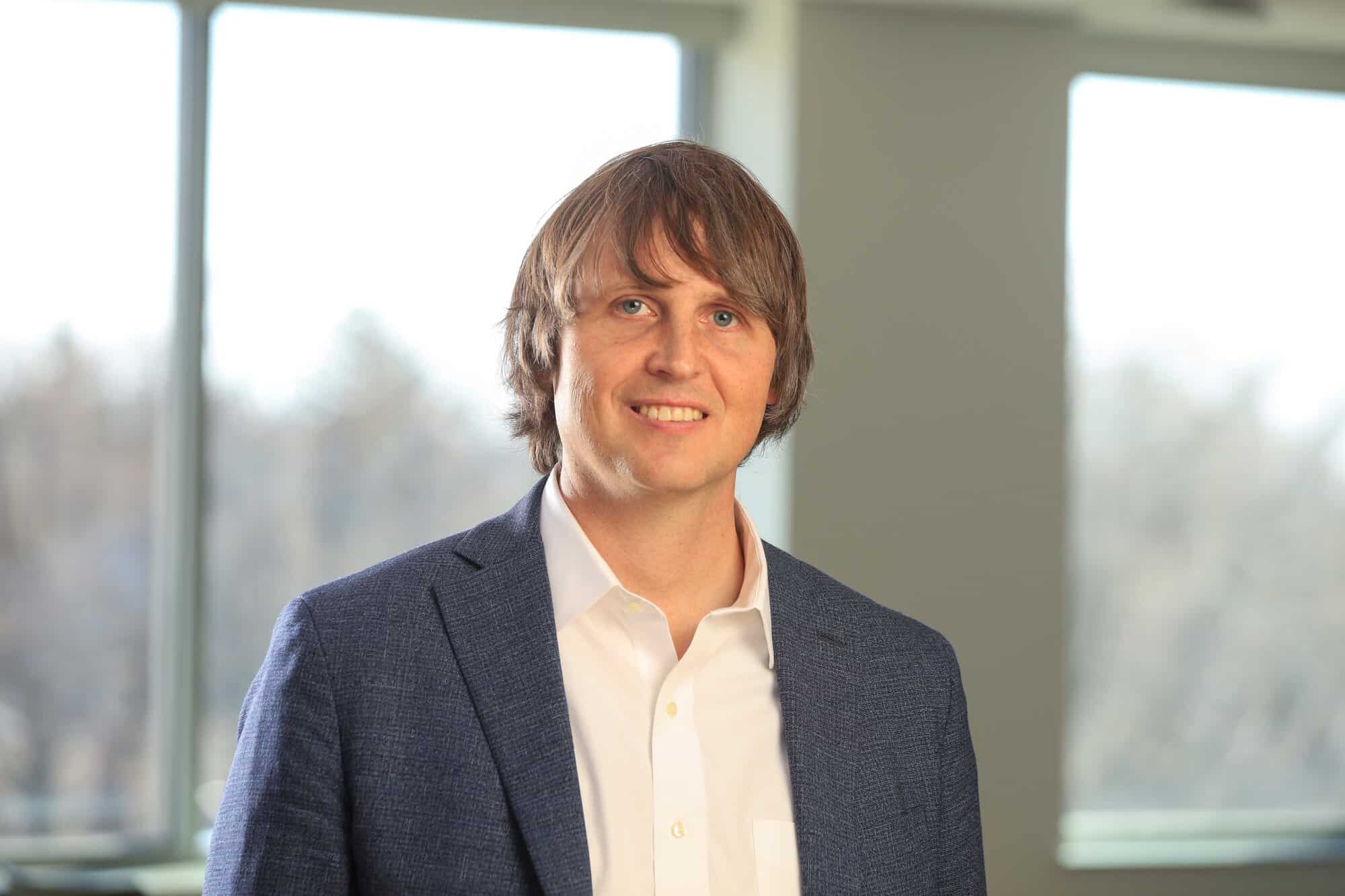
Michael Hasselberg, PhD, RN, PMHNP-BC, is the chief transformation and digital officer for Nebraska Medicine, where he leads information technology, the strategy enablement office, and the innovation team. In this role, he drives enterprise efforts to modernize care delivery and accelerate digital transformation, aligning technology, clinical operations and strategic growth initiatives. His work focuses on scaling solutions that improve patient outcomes, enhance clinician experience and strengthen health system performance. Dr. Hasselberg is also a professor of family medicine in the University of Nebraska Medical Center’s College of Medicine and volunteer professor in the College of Nursing.
Before joining Nebraska Medicine, Dr. Hasselberg spent more than two decades at the University of Rochester (UR) in New York where he held faculty appointments in psychiatry, nursing, and data science. His last role was serving as UR Medicine’s first chief digital health officer and co-director of the UR Health Lab. Dr. Hasselberg earned his Bachelor of Science in nursing at Binghamton University, Master's degree as a psychiatric mental health nurse practitioner from UR and then went on to earn a PhD degree in health practice research from UR.
His expertise expands health and technology as a Robert Wood Johnson Foundation Clinical Scholar Fellow and committee member for the National Academies Standing Committee on Primary Care. He has also been an advisor on digital transformation to government agencies, industry, venture, and health systems across the country.
Recent Episodes
Ritu: Hello listeners, a very warm welcome to the Big Unlock Podcast. My name is Ritu, and I’m the managing partner at Damo Consulting and co-host of the Big Unlock Podcast along with Rohit. We are extending a very warm welcome today to Dr. Michael Hasselberg. He’s been on the Big Unlock Podcast before — in 2022, season four, episode 138.
Welcome back. Dr. Hasselberg is the Chief Transformation and Digital Officer at Nebraska Medicine, where he is leading enterprise-wide efforts to modernize care delivery through digital innovation and operational transformation. He has a background in emergency medicine, public health, and informatics, and brings a uniquely systems-oriented perspective to scaling technology in complex health environments. Today he’s joining us on the Big Unlock Podcast and we are really excited to have this conversation. With that I’ll give it to Rohit for his introduction, and then it’s all yours, Dr. Hasselberg. Welcome once again.
Rohit: Thank you. Welcome, Michael, to the podcast — really nice to have you again. I am CEO of Damo and co-host of the Big Unlock Podcast. Short intro from our side; over to you.
Michael: It’s great to be back, and a lot has happened since we last talked in 2022, so I’m excited to dive in with both of you.
Ritu: Almost seems like a different era. Seriously. So, Dr. Hasselberg, we always love to start with an origin story because our listeners like to hear unique stories about how people got into healthcare and how they got to where they are today. If you’d like to start with that, we’d love to hear your story.
Michael: Sure. First and foremost, I’m a nurse, and very proud of being a nurse. I went on to become a psychiatric nurse practitioner very early in the psychiatric nurse practitioner movement. When I graduated, there weren’t actually any jobs for psych NPs in the city of Rochester. So, my first job as a nurse practitioner was about an hour and a half to two hours away from Rochester, where I drove every day to a very rural community in New York State where I was the only psychiatric prescriber for about six counties.
I managed the outpatient psychopharmacology clinic and the jails and the nursing homes. It was a pretty transformative experience that made me very passionate about serving vulnerable communities. The patients I served were so grateful that I was willing to drive that far every day to provide care. That experience became my underlying “why” for the rest of my career — how can we find more efficient ways to get healthcare out to communities that weren’t getting the care they deserved.
From there I finished a traditional research PhD, and after that I was tasked with developing a telehealth infrastructure for psychiatry at the University of Rochester. This was well before telehealth was widely reimbursed in the States. We built a very large telehealth infrastructure across New York State, and eventually reached a point where I couldn’t grow it further because I couldn’t graduate clinicians fast enough to take on more patients on the other end.
That’s when I really leaned into innovation. I started thinking about whether we could use technology without needing a clinician on the other end to deliver care. I got into the world of mobile apps and started working with the engineering school and computer science department to develop mobile apps for behavioral health. Then I moved from mobile apps into virtual reality when the first Oculus Quest headset came out — affordable, powerful, and untethered — and started developing mindfulness and meditation applications for VR headsets.
By that point I had different layers of digital interventions: apps, telehealth, VR headsets, and in-person care. I got really interested in data science and started thinking about whether I could use big data to risk-stratify patients to the right level of care at the right time in the right place. That drew me into machine learning and data science about seven or eight years ago.
Then COVID hit and every health system had to go digital overnight. I was put into a new position as Chief Digital Health Officer at Rochester to lead that digital transformation strategy. About two to three years ago, when the world was introduced to generative AI, our innovation team at Rochester got early access to some of those foundation models in a secured, private way. I was pretty blown away by their power. Around that time — 2022, when we last spoke — I was making comments in national forums that with the advent of generative AI, it had never been easier for health systems to develop their own AI tools in-house to solve their own problems, rather than relying entirely on vendors.
That’s when I got to meet Dr. Michael Ash, who was serving as the Chief Transformation Officer at Nebraska Medicine. Dr. Ash is a very innovative, entrepreneurial, visionary thought leader from a technology standpoint. We started exchanging ideas, and he was eventually named incoming President and CEO of Nebraska Medicine. He invited me to Omaha as a visiting professor to see the health system, and I fell in love with Nebraska, Omaha, and the organization. It was a very hard decision because I love Rochester through and through, but I took the leap to join Nebraska Medicine in Dr. Ash’s former role as Chief Transformation and Digital Officer.
Ritu: Wow, that’s a great recounting of the entire story — thank you. Really interesting for our listeners to hear as well. One thing I picked up on is that your title emphasizes transformation, not just Chief Digital Officer. What’s the difference, and where do most health systems fall short when trying to bridge that gap?
Michael: One of the things that excited me about Nebraska Medicine is that they are, I would argue, more mature and out ahead in terms of their leadership structure. They are very nimble in regards to the number of chiefs who report directly to the CEO and president. There are six chiefs — the Chief Transformation and Digital Officer being one — along with the Chief Operating Officer, Chief Financial Officer, Chief Medical Officer, Chief Nursing Officer, and then a combined Chief Legal and People Officer.
What excited me about Nebraska to do transformation at scale is that it goes well beyond just technology. In my role I’m accountable for three main verticals. First, IT — the Chief Information Officer reports up to me. Second, our innovation and venture arm, which we can dig into deeper if listeners are interested, because we’re doing some really cool things there. And third, the strategy office — we have a VP of Strategy Enablement and an entire strategy office that looks at markets, guides acquisitions, and evaluates joint ventures.
The strategy office is also where our AI efforts and engineers sit. Having strategy, innovation, and IT all underneath essentially a transformation office means we’ve got the right ingredients to do transformational work at scale. That’s what’s really exciting for me and why I took the leap to Nebraska. I think we’re very well positioned structurally to not only improve the lives of all Nebraskans, but to become the gold standard for the rest of the country on what the future of healthcare looks like.
Ritu: That’s a really good answer. Having those three things — IT, innovation, and strategy — reporting into you is directly related to the next question. A recurring issue we hear from Chief AI Officers and Chief Digital Officers is a lack of operational ownership for digital initiatives, which leads to most pilots failing or fading into obscurity. Having those three arms under you and being fully responsible must be doing a lot to ensure the success of these initiatives. We’d love to hear more about the venture arm — what’s your approach to developing new technologies and incubating ideas?
Michael: One of the really exciting things is that we already have a commitment from the health system, the university, the state, and our philanthropists to build a $2.2 billion Hospital of the Future. It’s already underway — we’ve got a hole in the ground, construction has started, and the doors will open on our main campus in about five years. We know that with healthcare and technology changing so quickly, it’s really hard to answer the question: what will the hospital room of the future look like five years from now?
To prepare ourselves to answer that question, we’ve already made significant investments in our innovation ecosystem — hundreds of millions of dollars into our Edge District. The Edge District is focused on two things: what I’d call inside-out innovation, where our researchers are developing new intellectual property that we look to potentially commercialize and spin out as startups; and outside-in, where local startups that want to get into healthcare and understand healthcare problems can get involved.
On the university side, we’ve also made significant investments in simulation and education for our future leaders. We have a program called iEXCEL, which I believe is one of the largest, if not the largest, simulation centers in the entire country. They’re using very frontier technology — we’re leaning heavily into holograms. We actually have a hologram theater where we can create holograms nearly the size of a room of hearts and organs that students can interact with as they’re learning anatomy and surgery. Of course, we also have simulation rooms and surgical simulation suites in that building.
But the really unique and exciting element is our Innovation Design Unit and Bridge Program, which sits inside Nebraska Medicine itself. We’ve built a 17-bed med-surg unit that can scale up to an ICU if needed, and it has all the bells and whistles of technology. The unit itself is modular and all glass — touch the glass and it frosts over. When we hire staff to work in the Innovation Design Unit, we look at their behavioral profiles during interviews: are they agile, knowing that how they deliver care and the technology they use is going to be constantly changing and iterating?
There’s literally a bridge off that unit to our Bridge Program — a small mockup of the unit where our engineers, data scientists, and clinicians bring in vendors or build new technology, test it in that environment, and then nurses and physicians can come over, play with it, and test it before we bring it live with patients in the Innovation Design Unit. The learnings from those technologies are informing exactly what we’re going to put into Project Health, our new Hospital of the Future. I’ve been to innovation programs around the country at some of the leading health systems, and I have never seen anything like this.
Ritu: Amazing. So, these holograms are like digital twins?
Michael: Yes, exactly. It sits on the university side, and essentially as we’re training students, we can input radiology images and the system creates a hologram of that organ from the image. Students can interact with the hologram as they’re learning anatomy and how to perform surgery.
The other exciting thing is that Nebraska is a rural state and the University of Nebraska has four campuses, one of which is in a rural part of the state where a new medical school cohort is starting up. The university has worked hard on how to transmit these holograms remotely out to that campus, so faculty specialists in Omaha can continue to support and teach those students at a distance using this forward-thinking technology. Really special and unique — and it’s what I love about being part of an academic health system, really partnering with the university side to educate our future clinicians so they’re ready to function in a hospital of the future that is digitally enabled and AI-augmented.
Rohit: With so much innovation going on, how do you prioritize and allocate resources? And if you’d like to share any success stories — and maybe some failures from a learning perspective as well?
Michael: The maturity of our structure really drives this. We have purposely placed AI — specifically our AI engineers, data analytics, and data scientists — in our strategy office, which keeps the projects we take on aligned with the most important priorities of the health system. Starting from our board metrics down to what we call our Delta projects, and then into our OKR projects.
When a new use case gets submitted, we have a very rigorous evaluation process, and where a proposal scores most points is strategic alignment to our top priorities. Within the strategy office we have a team of process engineers who, when a use case is submitted, deeply examine what problem is trying to be solved and what workflows are involved. The process engineers work closely with our enterprise architects and solution architects in IT to ask: do we already have a technology on our stack that could address this problem? If not, we work through the build-versus-buy question.
I’d argue we are more of a build shop, and that hasn’t always been the case in healthcare. We build about one new generative AI tool per month in-house. We now have 28 tools we’ve built ourselves, deployed at scale — and those AI use cases, which are aligned with our biggest health system priorities, each get what we call a Delta team. The Delta team includes operators, clinicians, informaticists, and technologists. We make sure that from build through deployment, the initiative is properly resourced to be successful and to scale. Once it’s scaled and running, the Delta team moves to the next project, and the tool is maintained as an operational program within the health system.
We’ve had a ton of success focusing on back-office work: throughput, clinical capacity. We’ve built AI tools that identify which patients in our hospital are ready for discharge and automate notifications to nurses — “this patient is ready, here are the orders needed to move them to the discharge lounge and out of the hospital.” Very similar tools around transfers: identifying which patients at rural hospitals across the state are appropriate to transfer to us, and when a patient is with us, identifying when they’re ready to transfer back. Just through automating capacity management, we’ve created over 30 net-new beds in our hospital — not by building new beds, but by automating the processes.
We’ve also automated a lot of scheduling and surgical optimization, getting the right patients in to see our surgeons at the right time. In the revenue cycle we’ve had a lot of success automating denials management, prior authorizations, and registry reporting — freeing up nurses from manually extracting data to submit to registries so the AI can do that extraction instead.
An example of something that started with significant resistance: a faculty member — a brilliant heart surgeon — went to a conference, met with an AI vendor, and came back convinced he needed their specific tool to help identify structural heart defects to get the right patients to him more efficiently. He was adamant: “The vendor says it’s plug-and-play, fully integrated into the EHR, and I needed it yesterday.” I had to spend a lot of time with him to take a step back and ask: what is the problem you’re actually trying to solve?
Once we fully understood that, I told him we have tools in-house and a data science team that I believed could not only build the same solution, but build it better because it would be personalized to his workflow. He was very hesitant and said, “I’ve heard this before — I don’t have six months to a year for you to build something.” We got past that. We were able to build a solution in less than a month, and he and his service line are very happy because it not only solves his problem, it’s tailored exactly to his workflow.
Ritu: Those are really good examples. We were bracing for the usual ambient documentation and scribe story, so it’s nice to hear about different applications.
Michael: Something people don’t know about Nebraska: when I think of the two most transformative technologies in healthcare to date, on the patient side no one would question that telemedicine has been the most transformative. And Nebraska Medicine was the birthplace of telemedicine — it started here in the Department of Psychiatry, in partnership with the Bell Telephone Company, in the 1950s. Most people don’t know that.
On the provider side, no question — ambient documentation is the most transformative technology. We were the first digital scribe pilot site in the country, in partnership with Nuance and Rush in Chicago, co-developing that technology. The two most transformative technologies in healthcare, and Nebraska was at the forefront of both. I could absolutely talk about our successes with ambient documentation, but I did want to highlight that we were one of the first, working with Nuance years ago as they were developing that technology.
Ritu: Great information — the listeners will love hearing that. We’re almost at the end; time has flown by. We’d love to hear what you see coming down the pipeline in the next one to two years that could be as transformative as ambient documentation.
Michael: I can tell you, and this may not be the sexy answer listeners are hoping for: the biggest transformative project I’ve kicked off as the new Chief Transformation Officer at Nebraska is actually a cleanup project. I’ve just launched application rationalization, and it is not an IT-driven project — it’s a health system strategic initiative.
Over the years, partly as a result of our innovative culture, we’ve had significant application sprawl. Our technology stack is very, very complex. My argument is that if we really want to continue to be leaders in AI and innovation, we have to simplify our tech stack. It will create more standardized workflows across the system, and it will free up my technologists, informaticists, and innovators — who right now are spread really thin managing so many applications.
We’re very excited, and I believe we’re going to be able to cut two-thirds of the applications on our stack over the next couple of years. That will create more efficiencies, unlock more innovation, and set us up even better from a data enablement standpoint to continue leaning into AI. Not the sexy answer, but it’s like spring cleaning — and we’ve got a lot of it to do.
Rohit: I’d add that it’s also an opportunity to infuse the remaining applications with more AI.
Michael: A hundred percent. We’re going to lean into our core applications and their functionality, and every vendor right now is introducing AI capabilities. I want to lean into my core platforms, and to do that I’ve got to remove the noise. This is a health system-level strategy, not an IT-driven initiative. We’ve already been able to identify and retire several applications, so we’re well underway.
Ritu: We’re almost at the end of the podcast. I’m sure listeners have a lot to unpack, and we’ve learned a lot of new and interesting things about Nebraska as well. Thank you so much for sharing, Dr. Hasselberg, and thank you once again for being on our podcast.
Michael: I loved it — this was a lot of fun. Hopefully you’ll invite me back in about four years, right around the time we’re opening our Hospital of the Future. Technology will have changed quite a bit by then.
Ritu: That sounds great — we’ll definitely be there for that. Thank you so much for being on our podcast.
Michael: Thank you. Alright, have a great one.
————
Subscribe to our podcast series at www.thebigunlock.com and write us at info@thebigunlock.com
Disclaimer: This Q&A has been derived from the podcast transcript and has been edited for readability and clarity.
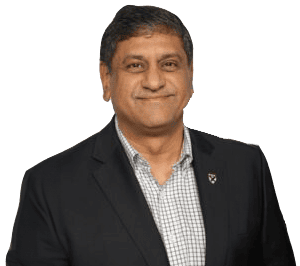
Rohit Mahajan is an entrepreneur and a leader in the information technology and software industry. His focus lies in the field of artificial intelligence and digital transformation. He has also written a book on Quantum Care, A Deep Dive into AI for Health Delivery and Research that has been published and has been trending #1 in several categories on Amazon.
Rohit is skilled in business and IT strategy, M&A, Sales & Marketing and Global Delivery. He holds a bachelor’s degree in Electronics and Communications Engineering, is a Wharton School Fellow and a graduate from the Harvard Business School.
Rohit is the CEO of Damo, Managing Partner and CEO of BigRio, the President at Citadel Discovery, Advisor at CarTwin, Managing Partner at C2R Tech, and Founder at BetterLungs. He has completed executive education programs in AI in Business and Healthcare from MIT Sloan, MIT CSAIL and Harvard School of Public Health. He has completed the Global Healthcare Leaders Program from Harvard Medical School.
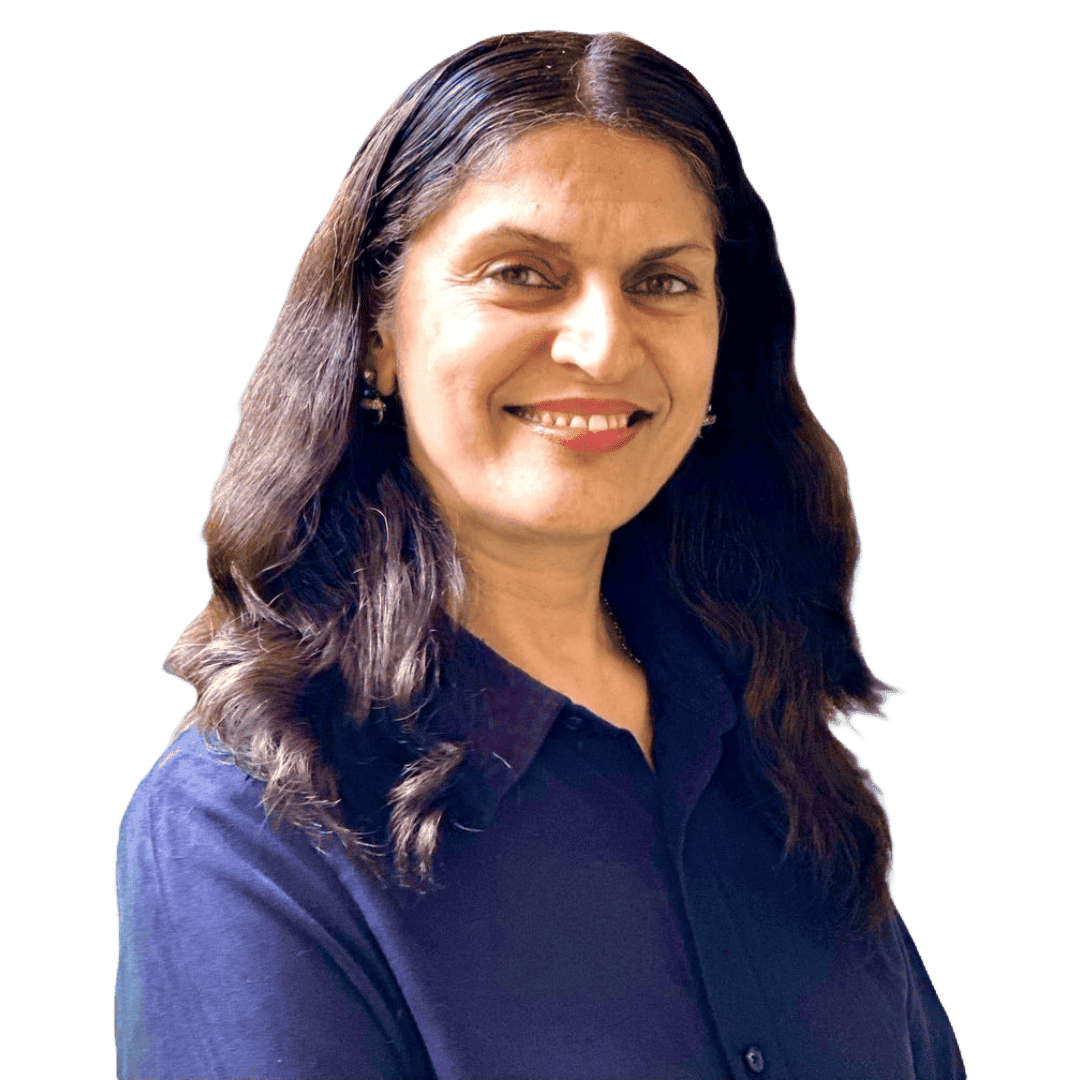
Ritu M. Uberoy is a healthcare AI strategist, technology executive, educator, and author dedicated to advancing the responsible adoption of Artificial Intelligence across healthcare delivery, digital health, and life sciences. With more than twenty-five years of leadership experience spanning the United States and India, she is recognized for helping healthcare organizations move beyond experimentation to achieve scalable clinical, operational, and business transformation through AI.
She leads AI innovation initiatives, including the AI Center of Excellence at BigRio, where she works with health systems, healthcare technology companies, and life sciences organizations to operationalize Generative and Agentic AI solutions responsibly. Her work focuses on aligning AI innovation with clinical workflows, governance frameworks, workforce readiness, and patient trust—ensuring technology augments human judgment in high-consequence healthcare environments.
Ritu is the co-author of Generative AI: Unlocking the Next Chapter in Healthcare, a practical guide for healthcare executives navigating enterprise AI adoption. She also hosts The Big Unlock podcast, engaging global healthcare leaders on AI transformation and digital innovation. An active educator and speaker, she conducts executive workshops and participates in global forums like HIMSS, ViVE, Women in Tech, AI-Powered Women, RAISE, and more, shaping the future of AI-driven healthcare. Ritu holds advanced degrees in Computer Science and completed specialized AI programs at Harvard and MIT.
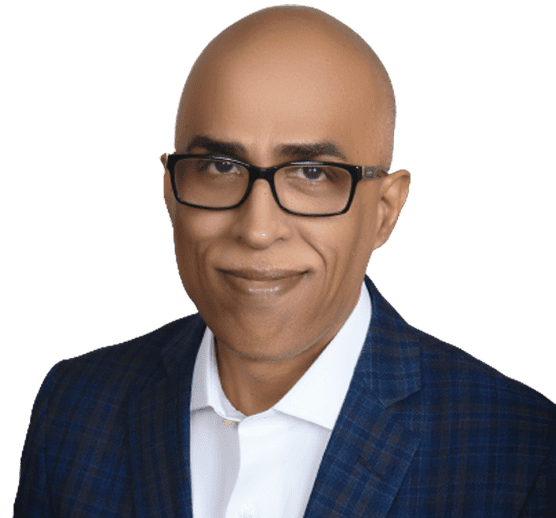
Paddy was the co-author of Healthcare Digital Transformation – How Consumerism, Technology and Pandemic are Accelerating the Future (Taylor & Francis, Aug 2020), along with Edward W. Marx. Paddy was also the author of the best-selling book The Big Unlock – Harnessing Data and Growing Digital Health Businesses in a Value-based Care Era (Archway Publishing, 2017). He was the host of the highly subscribed The Big Unlock podcast on digital transformation in healthcare featuring C-level executives from the healthcare and technology sectors. He was widely published and had a by-lined column in CIO Magazine and other respected industry publications.
Stay informed on the latest in digital health innovation and digital transformation