In this episode, Zaw Thet, CEO and Co-founder of Exer AI, explores how AI-powered computer vision can make human movement measurable and transform the delivery of musculoskeletal and movement health. He explains how Exer uses ordinary cameras and AI to assess movement across orthopedics, neurology, rehabilitation, telehealth, and at-home care, providing clinicians with objective insights while improving clinical efficiency and access.
The conversation highlights how AI can improve patient outcomes and help clinicians deliver more personalized care at scale. Zaw also discusses the growing role of continuous monitoring, combining movement data with signals from wearables to identify risks earlier, particularly for older adults and fall prevention. He emphasizes that scaling healthcare AI requires clinical validation, regulatory compliance, proprietary data, and patience to move from innovation to real-world adoption.
Zaw expects AI to create a more efficient healthcare system but cautions against removing humans from clinical decision-making too quickly. As generative AI expands, human oversight, accountability, and patient safety will remain essential to scaling AI responsibly. Take a listen.
About Our Guest
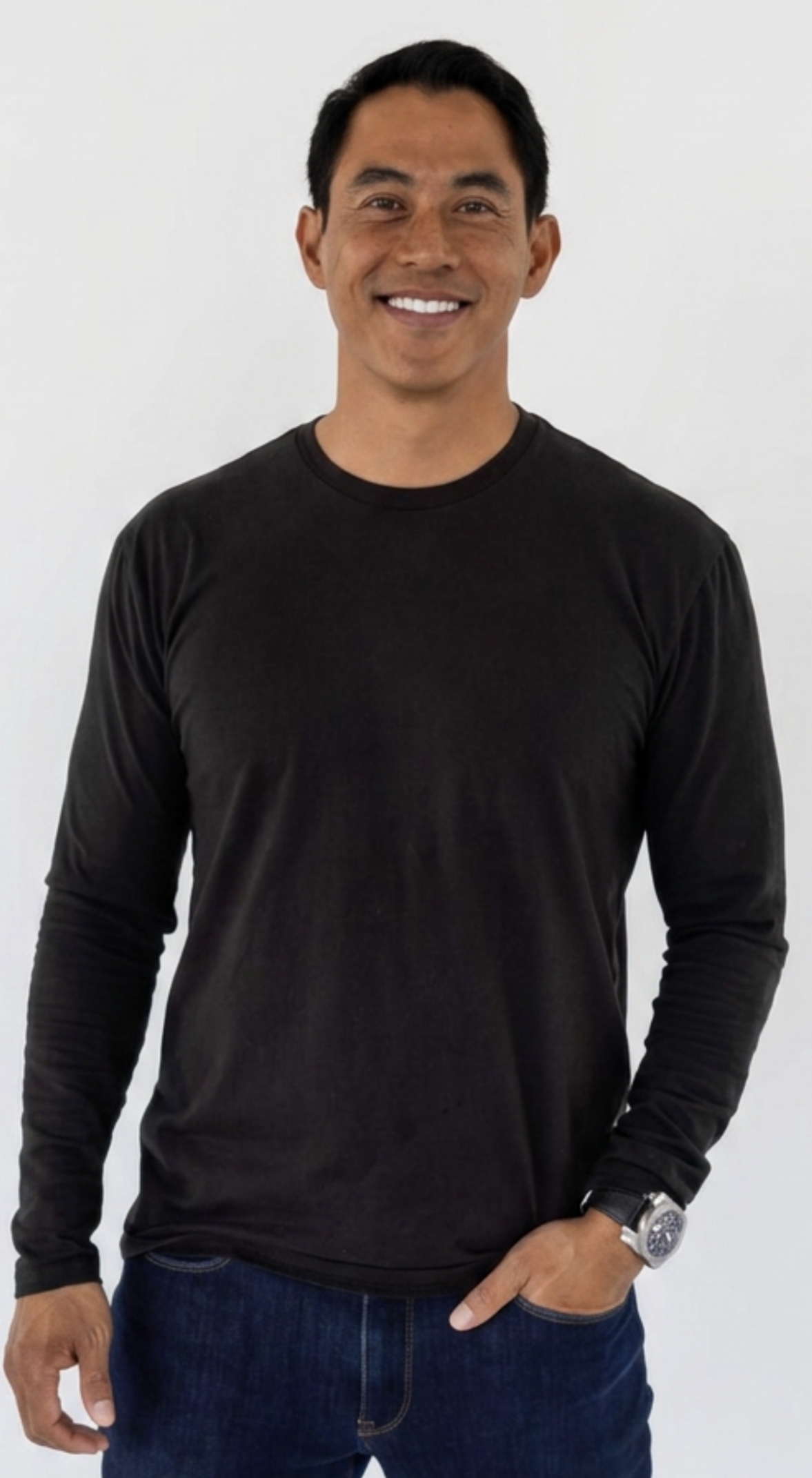
Zaw Thet is a veteran entrepreneur / investor who has been at the forefront of new technology and starting tech companies since the age of 19. He is currently the CEO and Co-Founder of Exer, a digital health company using AI/CV to diagnose and improve patients' motion health. Previously, Zaw was a Founding GP at Signia Venture Partners, where he led investments across 3 funds, and the CEO and Co-Founder of 4INFO, one of the first and largest mobile advertising platforms in the world prior to its acquisition.
Zaw studied Political and Computer Science at Stanford, where he was a President's Scholar. He received his MBA from the Stanford Graduate School of Business, where he was a Soros Fellow.
Recent Episodes
Ritu: Hello, listeners. Welcome to Season Seven of The Big Unlock Podcast. My name is Ritu Oberoi, and I’m managing partner at Damo Consulting and your host today along with Rohit. Today we are really excited to welcome Zaw Thet to our podcast. Zaw is the co-founder and CEO of Exer AI, a digital health company using computer vision and AI to assess, coach, and improve human movement. Zaw brings an unusual combination of experience as a serial entrepreneur, investor, and operator, having previously been a founding partner at Signia Venture and CEO and co-founder of ForInfo. His current work with Exer sits at the intersection of musculoskeletal health, physical therapy, sports performance, and AI-powered care delivery. Welcome, Zaw — really excited to have you here today.
Zaw: Thank you so much for having me. When you say all of those things out loud, it makes me blush that I’ve been doing this now for twenty-five to twenty-seven-plus years. It’s a pleasure to be here.
Rohit: Thank you, Ritu. I’m Rohit Mahajan, CEO and co-host of the Big Unlock Podcast. Welcome, Zaw, to the podcast. We really appreciate the friendship and are looking forward to an engaging discussion.
Ritu: Great. Zaw, tell us about Exer, which is built on the idea that movement itself can become measurable through ordinary cameras — without wearables or any extra hardware. What does that unlock in healthcare that we previously just couldn’t do when movement assessment depended mainly on in-person observation or wearing devices?
Zaw: Thank you again for having me. To explain why human motion matters, I need to rewind to about eight years ago when we decided to start the company. As an investor looking across multiple digital health disciplines and companies, I was considering the different potential applications for AI — this was before ChatGPT, Claude, or any of the current LLMs and large models were out there. What we were really looking at was discrete sets of data, because I believe all AI is based on the moat around the data it has been trained on. What became very evident as we talked to people across multiple disciplines was that there was a ton of data in the chart. All the companies looking at EKGs or blood panels were essentially training on the same types of data. There was a lot of early AI starting to emerge around anything related to the back office of health system operations — revenue cycle management, administration, prior authorization. There was also a lot around digital scribing, whether ambient scribes listening from the room or simple dictation tools like Nuance. But what became clear was that in all the imaging being done — X-rays, CT scans, MRIs — actually seeing dynamic human motion was something that really didn’t exist. It existed in gait labs with multi-million-dollar cameras and sensor rigs, but deploying that on the edge or in clinical settings for a mass amount of patients wasn’t possible. What we heard over and over again was that even though the data didn’t exist yet and people didn’t fully know what it would mean, it would be really helpful to capture human motion in a clinical environment, at a patient’s home, or over telehealth, and understand what that means for different diseases. That’s the basis on which Exer was formed — with the understanding that a lot of research would be needed to validate all the different algorithms for assessments and phenotyping across different disease types. That’s how we got started, and it has obviously evolved a lot since then.
Ritu: You’re not just building another healthcare app — you actually want to turn the camera into a scalable clinical and coaching tool for movement health. How does real-time AI coaching change patient engagement and outcomes compared with traditional home exercise programs or simply telling patients what to do?
Zaw: A lot of people in the early days mistook us for a PT company because many of the assessments are around fundamental human motions — a hinge, a squat, a pull, a gait walk. But no one had really thought about how to apply that to clinical settings as a whole. When we first started, the feedback we got from people was: if you want to make this work inside of very large health systems — and we’re now inside twenty-five of the top fifty health systems in the US — how do you deliver a platform, not a single-point solution? A platform meaning it doesn’t just apply to one department but applies to orthopedics, neurology and neurosurgery, primary care, PM&R, pain and spine, and so on. The second was: how do you actually deliver on the three legs of the stool? How do you deliver demonstrably better patient outcomes, better clinical efficiency — actually taking time that would normally be spent by a clinician, nurse, PA, or MA and making that more effective so they can scale across more patients — and potentially increase new revenue streams for a hospital where they may not currently be capturing that care in-house? Those were the two primary drivers. The other requirements were par for the course: regulatory approval as a Class 2 medical device, SOC 2 and HIPAA compliance, and clinical validation through peer-reviewed publications. The way we approached it was to build two different parts of AI. One is the neural net that allows us to see the human body without a gait lab — just using a phone or iPad. The other is delivery across multiple points of care, primarily in-clinic in outpatient settings, with telehealth and at-home options as well. Then we built a research arm across multiple disciplines. I’ll give you a quick example. Total knee surgery is probably the most common orthopedic surgery in the US, with over a million done every year. The current standard of care: you visit your orthopedic surgeon, they assess your knee, determine you’re a candidate, schedule surgery for three months out, and send you for a long leg X-ray — a static image taken while you’re standing straight with your kneecaps together. That image is used to measure the angle from hip to knee to ankle, but it doesn’t capture how you actually walk — whether you have a bit of varus or valgus. None of that is captured by an X-ray today, even though research has shown it’s not a great predictor of surgical outcomes. Instead, imagine having an iPad in the clinic room. When the patient agrees to total knee surgery, a medical assistant can assess their gait in under twenty seconds and understand their circumduction patterns and how the knee loads at maximum weight-bearing — all of that populated directly into Epic or whatever the EMR is before the doctor even comes into the room. That assessment is repeated pre-surgery, checked immediately post-operatively to confirm alignment with the angles the surgeon intended, and tracked again three months later as ligaments relax. That’s just one example in orthopedics of how this is already being deployed today.
Ritu: Wow, that’s an amazing example. A static picture really can’t tell you that much compared to seeing movement on an iPad. How does the telehealth part work — if the patient is at home and you’re doing a remote appointment, are you just recording them on a normal browser and still getting all the information?
Zaw: Telehealth and at-home work typically over a web browser — the easiest approach. It’s done inside any modern browser, Chrome, Safari, and so on, using the same basic tools. It’s a little different because the clinician is on the telehealth call with the patient, and it can be a bit harder for the patient to set up in their home environment. But especially for anything upper body, we can capture it well. One of the big telehealth use cases is in neurology. We can track 22 discrete points on the hand, which makes this very powerful for orthopedic and post-operative visits — especially for destination hospitals like Mayo Clinic where patients have flown in and don’t want to travel back just for a follow-up. We can track where they are on their recovery curve: whether the hand is achieving full range of motion is very difficult to assess even on physical exam using a goniometer for each finger joint. Our platform allows that to be done instantaneously. Another great example is tremors on the neurology side. Because we can see the full body, we can track how a medication is affecting a tremor as a patient is titrating different drugs, as well as other balance and ataxia measures. That’s how the telehealth piece works, and there’s also an at-home option that works over a browser or as an app on the patient’s phone.
Rohit: How did you get started in this space, and are there any prior ventures in healthcare you’d like to share with the audience?
Zaw: I don’t come from a traditional healthcare background — I come from a software startup and tech background, though I do come from a family of physicians; both of my parents are physicians. Like every good first-generation immigrant, I was supposed to become a doctor, an engineer, or maybe a lawyer as a third option — and I chose a different path. When I went out to Stanford in the late ’90s during the first dot-com boom, in the early days of eBay and before Google even existed, I saw an opportunity. I’d always been interested in technology, and what I found was my true calling: solving big problems in society using technology, where you can scale the impact to millions of people. When I first considered medicine, I loved the mission and purpose and the ability to help people — that has always driven me. But I wanted to deliver that at scale. The problem with a one-to-one ratio between time spent with someone and help given is that you can only help that one person. My superpower, I guess, was the ability to build big platforms where instead of helping one person I could hopefully help a thousand. That’s the big vision we had when we got into healthcare — I saw a lot of inefficiencies and maybe I was a little too naive, thinking this is a big problem that needs fixing. I didn’t realize how complicated it was eight years ago. I joke that I still don’t have a full healthcare license — more like a green card — and I’m learning every single day. But what I found was that the ability to deliver precision medicine at scale is especially critical given the severe shortages of doctors, nurses, and PAs alongside an ever-aging population that only increases demand on the healthcare system. Those two things are fundamentally broken and won’t fix each other. Yet somehow healthcare still works — survival rates for cancer and cardiac events in the US keep going up. The medicine is getting better and we are helping people, but it’s a broken system. My hope was that Exer could be one component of fixing it — allowing clinicians and providers to deliver better medicine at scale, working with them and not against them. That was a core tenet from early on.
Ritu: Exer has so many applications across physical therapy, senior care, orthopedics, and sports. So far, which market has been the strongest, and which do you think becomes the biggest long-term opportunity?
Zaw: People always asked us this, especially in the early days. When we had our first demo running in 2018, no one had ever seen anything like it, and everyone wanted a better golf swing — or tennis serve, baseball or lacrosse. We looked at all of those early on and said we could build a consumer company doing very specific sports applications, or we could start where the science is really hard. If we can prove we can do this for the top doctors in the US, and that’s where the research originates, then we have the opportunity at a later point to go anywhere we want. Think of Amazon starting by just selling books — that’s sort of the first inning we think we’re still in today. We focused on healthcare and on delivering a platform to health systems and providers rather than selling directly to consumers. Maybe that was the harder route, but it also meant we didn’t have to spend enormous amounts on marketing or raise hundreds of millions of dollars, and it let us keep the team lean — because healthcare just takes a long time regardless of how much money you throw at it. Our secret advantage is that we now have four-plus years and hundreds of thousands of patients who have run through IRBs and clinical studies, giving us a very proprietary data set that no one else has — where clinicians and researchers are using Exer to record not the video but just the body points as they move, tied back to all the clinical data from the chart. We understand what a gait shuffle looks like: does it mean arthritis, stenosis, or Parkinson’s? To do all of that and also do golf would have been very difficult. We’ve stayed in our lane, and we’re going to be there for a while because there’s still a lot to do in healthcare before we get to the, quote-unquote, fun stuff.
Ritu: This leads nicely into the next question. We’re talking about continuous functional monitoring, and wearables are having a big moment. We’ve talked to clinicians and doctors about how outdated the annual physical is. How do you see this tying into more continuous monitoring of patients and catching problems earlier?
Zaw: I think it ties in really well. We’ve been fans of working and partnering with companies that are more device-specific — consumer companies like Whoop or Oura Ring, medical-grade companies like SensorBio, and data coming off a watch like a Garmin or Apple Watch. There is a lot of room in this space for continuous monitoring. It’s already happening at a certain level for patients at home managing diabetes, for example. The challenge on the continuous monitoring side is filtering through all the noise — there are a lot of signals potentially coming from these devices, and knowing what matters most is the hard problem. That will get solved, but probably not by a company like us at Exer. Where Exer comes in is that a big component of that annual physical is a movement screen — especially for a senior population 65 and over, where you’re looking for issues and particularly fall risk, which is related to gait and balance. Falls are the number one cause of death and the number one cost to our healthcare system for people over 65. If we can prevent that, if we can get ahead of that curve — instead of checking someone every 12 months, doing a movement screen once a month — all of their wearable data is being pumped in at the same time. Low blood pressure that may cause fainting comes from the wearable; arthritis in the right knee that could cause a fall comes from us. That is definitely the future of medicine, and it will get there over time.
Rohit: The AI landscape is changing so fast. Could you give us some thoughts on how to keep up, and how you’re thinking about incorporating new developments into your offering for clients?
Zaw: It’s moving at a phenomenal pace. When we first started, we were really one of the first true AI companies in healthcare. Because of the research and time it takes to be clinical-grade and deployed inside health systems, we’ve had to be very patient. Now you’re seeing algorithms coming out left and right — some just based on large LLM models, some based on real data. You have companies like Open Evidence helping physicians find information faster. It is a brave new world and very hard to keep track of. I get the email digests from Silicon Valley and look at the top developments. For patients, most of these things are happening without them seeing it. There are starting to be some patient-facing applications that are genuinely interesting — like scribing your own doctor visits, then feeding that recording into an LLM to better understand what was discussed. It’s probably better than playing Google Doctor. But for the most part, most of the AI patients see in healthcare is behind the scenes. Exer is actually one of the exceptions — when you come in for a visit, you’re being assessed, and there’s a playback feature that’s one of the most-used things after an assessment: the clinician pulls it up, goes through it with the patient. It looks like a skeleton moving, so the patient can see what they’re doing without any actual video. Some patients even like that — it removes concerns about how their hair looked or what they were wearing. As a business owner using these tools all day, they’re phenomenal for making a business punch above its weight. A ton of our customer support is now handled by AI agents. Our developers are at least two to three times more productive because a lot of junior developer tasks — QA, code checks — are all being done by AI. There are countless ways to incorporate AI into your business, and it will only keep evolving. We tend to find one we like, stick with it, and try not to switch as often as possible.
Ritu: We’re almost at the end, Zaw. Any closing thoughts or crystal ball predictions for the next year?
Zaw: I’m a big optimist — I wouldn’t be doing this if I didn’t believe we can change the world for the better. That said, I do think there’s some potential backlash coming that we need to be aware of, especially in healthcare around the use of AI. I’m already hearing early pushback from systems, particularly around generative AI where the AI is generating content and having a patient interaction without any human in the loop at all. The capability is really good, but a small percentage of the time it halluccinates or sends inappropriate information, and we’re starting to see the first lawsuits around that. I don’t think that means it will go away, but for anything without a human in the loop there’s going to be a period of pushback about whether this can scale directly to consumers and who bears liability when it sends something incorrect. A lot of that will get sorted out in the next couple of years. At Exer, thankfully, there’s always a human in the loop because we provide support to clinicians, not replace them. In the end, I think we’re obviously going to end up with a much better and more efficient system. That’s my crystal ball.
Ritu: You raised very good points. The ability of generative AI to hallucinate leads to real ethical questions — the moment you remove the human from the loop and cede that control, it needs to be fail-proof, which it isn’t yet.
Zaw: We’re going to have agents watching agents watching agents, and then maybe a human to check at the end. Who will guard the guardians — that’s right. Well, thank you both for having me. I really appreciate it.
Ritu: Thank you so much, Zaw. Thank you for being on our podcast.
—
Subscribe to our podcast series at www.thebigunlock.com and write us at info@thebigunlock.com
Disclaimer: This Q&A has been derived from the podcast transcript and has been edited for readability and clarity.

Rohit Mahajan is an entrepreneur and a leader in the information technology and software industry. His focus lies in the field of artificial intelligence and digital transformation. He has also written a book on Quantum Care, A Deep Dive into AI for Health Delivery and Research that has been published and has been trending #1 in several categories on Amazon.
Rohit is skilled in business and IT strategy, M&A, Sales & Marketing and Global Delivery. He holds a bachelor’s degree in Electronics and Communications Engineering, is a Wharton School Fellow and a graduate from the Harvard Business School.
Rohit is the CEO of Damo, Managing Partner and CEO of BigRio, the President at Citadel Discovery, Advisor at CarTwin, Managing Partner at C2R Tech, and Founder at BetterLungs. He has completed executive education programs in AI in Business and Healthcare from MIT Sloan, MIT CSAIL and Harvard School of Public Health. He has completed the Global Healthcare Leaders Program from Harvard Medical School.

Ritu M. Uberoy is a healthcare AI strategist, technology executive, educator, and author dedicated to advancing the responsible adoption of Artificial Intelligence across healthcare delivery, digital health, and life sciences. With more than twenty-five years of leadership experience spanning the United States and India, she is recognized for helping healthcare organizations move beyond experimentation to achieve scalable clinical, operational, and business transformation through AI.
She leads AI innovation initiatives, including the AI Center of Excellence at BigRio, where she works with health systems, healthcare technology companies, and life sciences organizations to operationalize Generative and Agentic AI solutions responsibly. Her work focuses on aligning AI innovation with clinical workflows, governance frameworks, workforce readiness, and patient trust—ensuring technology augments human judgment in high-consequence healthcare environments.
Ritu is the co-author of Generative AI: Unlocking the Next Chapter in Healthcare, a practical guide for healthcare executives navigating enterprise AI adoption. She also hosts The Big Unlock podcast, engaging global healthcare leaders on AI transformation and digital innovation. An active educator and speaker, she conducts executive workshops and participates in global forums like HIMSS, ViVE, Women in Tech, AI-Powered Women, RAISE, and more, shaping the future of AI-driven healthcare. Ritu holds advanced degrees in Computer Science and completed specialized AI programs at Harvard and MIT.

Paddy was the co-author of Healthcare Digital Transformation – How Consumerism, Technology and Pandemic are Accelerating the Future (Taylor & Francis, Aug 2020), along with Edward W. Marx. Paddy was also the author of the best-selling book The Big Unlock – Harnessing Data and Growing Digital Health Businesses in a Value-based Care Era (Archway Publishing, 2017). He was the host of the highly subscribed The Big Unlock podcast on digital transformation in healthcare featuring C-level executives from the healthcare and technology sectors. He was widely published and had a by-lined column in CIO Magazine and other respected industry publications.
Stay informed on the latest in digital health innovation and digital transformation