By Ritu M. Uberoy
Co-Host, The Big Unlock Podcast
When I think about AI’s role in healthcare, I keep coming back to the experience of the people using it. Does it give a nurse more time with a patient? Help a physician make a more informed decision? Make it easier for someone to get the care they need?
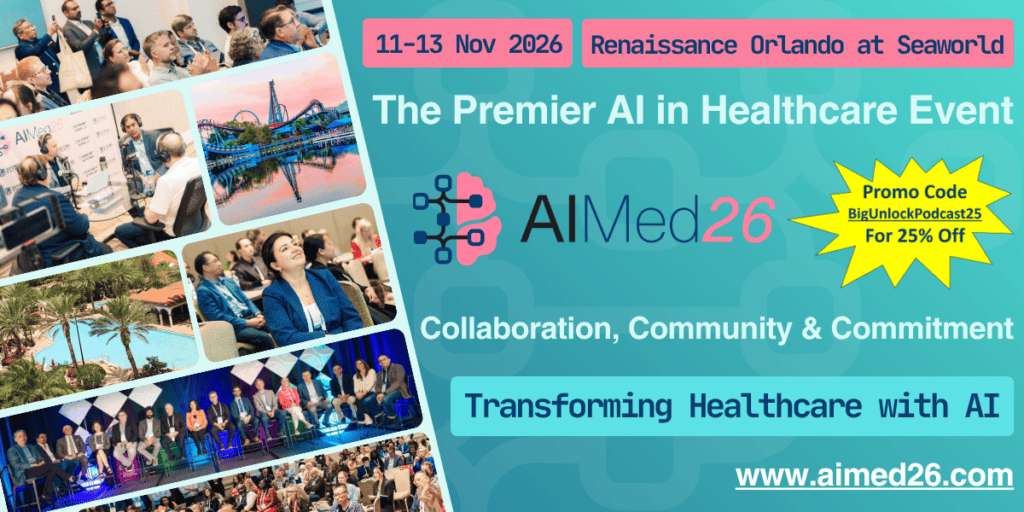
Those are the questions I’ll be taking to AIMed 2026, where Rohit Mahajan and I will be attending as co-hosts of The Big Unlock Podcast. The event takes place November 11–13 at the Renaissance Orlando at SeaWorld, bringing together clinicians, healthcare leaders, researchers and innovators.
I’m looking forward to listening, asking questions and meeting the people working through the everyday realities of bringing AI into healthcare.
Through The Big Unlock, we have the opportunity to explore how leaders approach change across their organizations. For me, the most useful conversations get into the details: what needed to change in the workflow, how teams were involved, what proved difficult and how leaders determined whether an initiative was making a difference.
AIMed’s clinician-led approach makes it a particularly relevant setting for those discussions.
The program includes a focus on AI in nursing and operations, with discussions addressing administrative workload, workforce challenges, and financial value.
I’m interested in how organizations are evaluating the full effect of these tools on staff. A task may become faster, but does that translate into a more manageable working day? Does AI reduce the effort required to find information, or introduce another output someone needs to check?
I want to hear how frontline teams help shape these decisions, and what happens when their experience differs from the original business case.
AIMed’s agenda includes conversations about disagreements between clinicians and AI, clinician authority, and patients’ understanding of who is making decisions about their care.
These questions deserve careful attention as organizations consider broader uses of AI.
Human oversight needs to work within the realities of clinical practice. People need enough time, information, and authority to question an output, recognize uncertainty, and intervene. Patients also need explanations they can understand.
I’m looking forward to hearing how organizations are translating those expectations into clear responsibilities and practical safeguards.
The program’s emphasis on organizational readiness brings strategy, infrastructure, governance, and culture into the implementation conversation.
I’m especially curious about the learning and change management involved. How are leaders helping employees develop confidence with AI? How do teams learn when to use it, when to question it, and when to escalate? Who takes responsibility for monitoring performance after implementation?
These are the details I hope we can explore with attendees. Sharing the difficult parts of implementation can be just as valuable as sharing the successes.
Rohit and I look forward to meeting fellow attendees and hearing what you are learning in your own organizations.
If you’ll be at AIMed 2026, we would love to connect, whether you’re redesigning a workflow, building your team’s AI capabilities, or evaluating the results of an implementation.
The question I’ll be asking is simple: What has changed for the people delivering and receiving care?
I look forward to hearing your answers.
“HLTH brings together the brightest minds in healthcare to drive real-world transformation through AI, data, and workflow innovation. The energy, collaboration, and actionable insights here are truly reshaping the future of care at scale.”
– Rohit Mahajan, Co-host of The Big Unlock Podcast
Recent Events
Stay informed on the latest in digital health innovation and digital transformation