By Ritu M. Uberoy
Co-Host, The Big Unlock Podcast
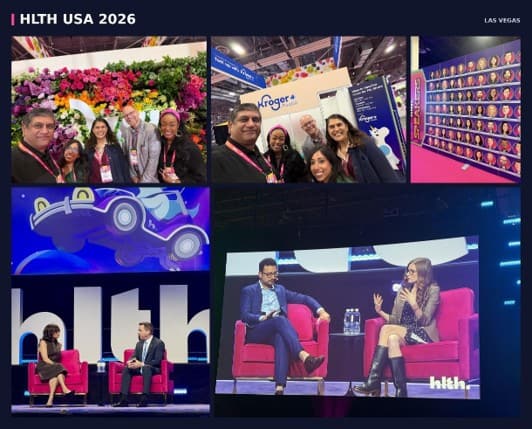
Before heading to HLTH USA 2026 in Las Vegas with my co-host Rohit Mahajan, I wrote about a question I wanted to explore: How do we turn healthcare innovation into something people can benefit from in their everyday lives? Two sessions gave me different ways to think about that question. One was about the price of healthcare. The other was about what it takes to build a healthy habit.
In Fixing Healthcare’s Price Problem, Chris Klomp and Nancy G. Brown discussed one of the most difficult issues in healthcare. What stayed with me was Chris’s point about leadership. Bringing together people who already agree is relatively easy. The harder work is earning enough trust among people who disagree that they can act on a shared goal. He made the case for treating healthcare as a bipartisan issue.
I kept thinking about what that means for affordability. A patient trying to understand what a visit will cost, a clinician helping someone choose a treatment they can afford, and a policymaker trying to change incentives each see a different part of the problem. Those perspectives matter when we decide what to fix first and how to tell whether the change helped. For me, that’s where trust becomes practical. People need to see that their concerns shape the decisions being made.
In a session moderated by Betty Pio, Arianna Huffington and Dr. Rachel Batterham explored how advances in obesity science, including GLP-1 medicines, fit alongside the daily realities of food, movement, sleep, stress, and social connection. I appreciated the space they made for both medical innovation and the practical support people need in their everyday lives.
Arianna described microsteps as actions small enough to feel doable. I liked the simplicity of that idea. A plan can sound entirely reasonable in a clinic and feel much harder when someone gets home from a long shift. A short walk after lunch or a few minutes to wind down before bed may be a more realistic place to begin. The question I took away was simple: How can we make the next step easier for the person who has to take it? LinkedIn
I think that same question applies to healthcare AI. When we talk about deploying an AI tool, I want to know whose day it will change and what will get easier. Can a patient get to the right person without repeating their story? Can a care team follow up without searching across multiple systems? Does a clinician get time back for a conversation that needs their attention?
Those are the kinds of questions Rohit and I will continue to ask on The Big Unlock Podcast. Thank you to everyone who took the time to connect with us at HLTH. I’d love to hear what stayed with you, especially an idea you can see putting into practice.
“HLTH brings together the brightest minds in healthcare to drive real-world transformation through AI, data, and workflow innovation. The energy, collaboration, and actionable insights here are truly reshaping the future of care at scale.”
– Rohit Mahajan, Co-host of The Big Unlock Podcast
Recent Events
Stay informed on the latest in digital health innovation and digital transformation