Season 7 | Episode 200
In this episode, Dr. Stephen K. Klasko, former CEO of Jefferson Health, Executive in Residence at General Catalyst, Board Chair at DocGo, Teleflex, and one of healthcare’s most provocative voices, challenges the industry to rethink its fundamental assumptions and move toward a more sustainable, patient-centered future. He argues that despite years of discussion around value-based care and digital transformation, true disruption has been limited because stakeholders remain unwilling to fundamentally change existing business models.
Dr. Klasko argues that the healthcare system is broken, fragmented, expensive, and inequitable and that true disruption, like what Uber did to taxis or Amazon to retail, will demand that some players fail. He makes the case that the annual physical visit is a farce, and that continuous health narratives powered by wearables and AI companions are the future of proactive, personalized care.
On the tech-provider collaboration front, Dr. Klasko identifies – founder ego, misaligned incentives, and EHR-era skepticism as the biggest barriers. He advocates for co-developing solutions, sharing equity, and building genuine partnerships. Dr. Klasko’s message to healthcare leaders is unambiguous: stop turning things around 360 degrees and start making real, uncomfortable changes. Take a listen.
This guest appearance was facilitated through conversations initiated at Health Tech Summit by Cornell Tech.
About Our Guest
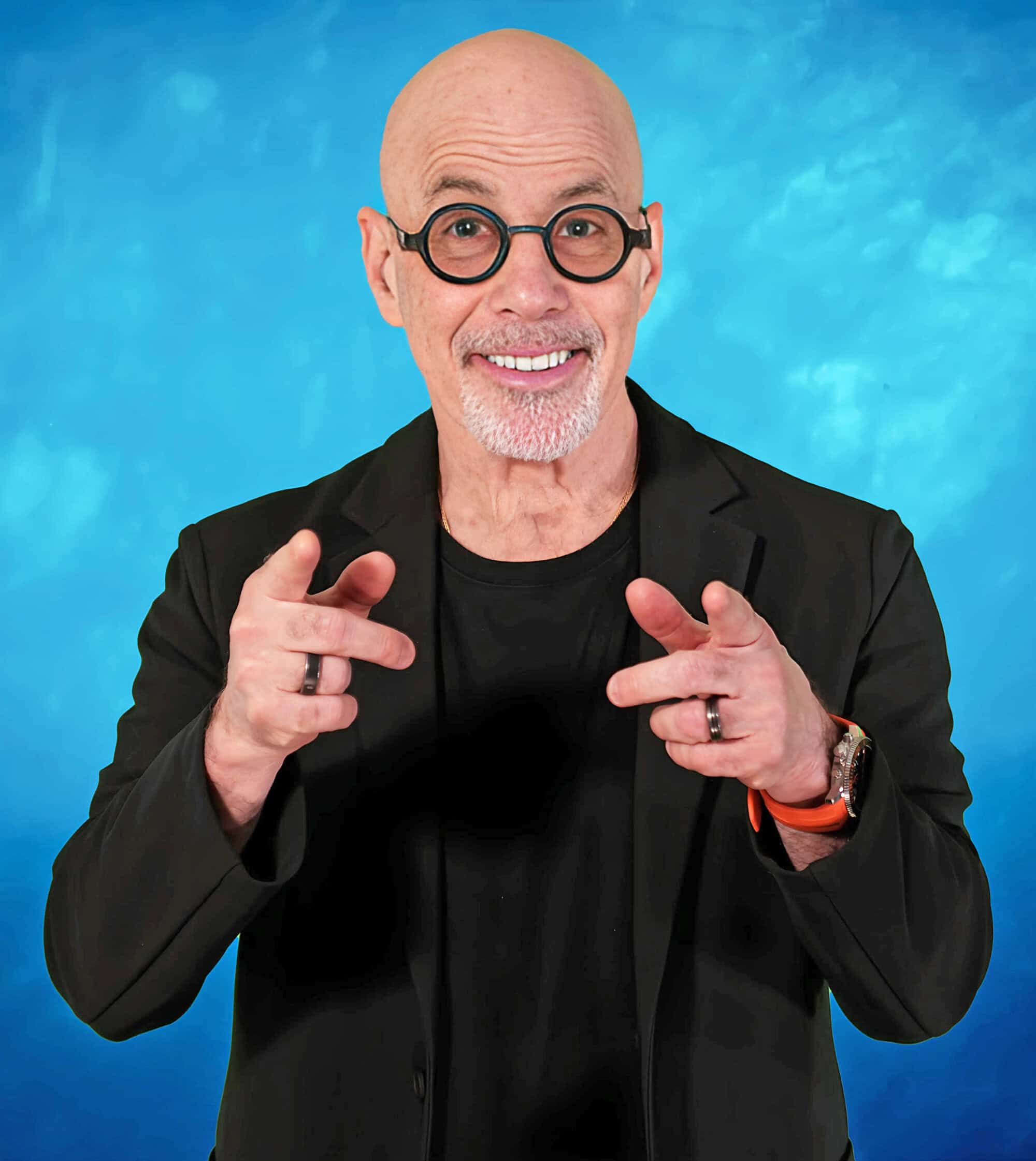
Dr. Stephen Klasko's professional history has been about not just disrupting healthcare but demolishing its sacred cows and rebuilding from scratch. As president and CEO of Thomas Jefferson University and Jefferson Health, he orchestrated a 567% revenue growth from $1.5 billion to $10 billion in nine years, while pulling off a merger of a 200-year-old health science university with a design school to reimagine "the human design experience in healthcare" starting at home. In a single year, he was named the #2 most influential person in healthcare and Fast Company's "Top 25 most creative people in business." He co-authored "Unhealthcare: A Manifesto for Health Assurance" with Hemant Taneja of General Catalyst—a battle cry against an industry he believes is fundamentally broken.
Now leading that change through his work at General Catalyst and DocGo, Klasko has spent his career proving that the biggest threat to healthcare innovation isn't technology, it's the traditionalists defending a dying system. Where others see academic medicine and Silicon Valley as opposing forces, he has built his legacy proving that they're the only combination powerful enough to save healthcare from itself.
As a DJ and doctor, he looks forward to 2026, when we, as the dreamers and designers of healthcare, can do an "ERAS tour"—Empathy, Radical collaboration, Access, and Swift care—and, as Sia sang, find the "courage to change."
Recent Episodes
Ritu: Hello everyone. Welcome to the Big Unlock Podcast. My name is Ritu and I’m your co-host today along with Rohit. I’m the managing partner at Damo Consulting and host of the Big Unlock Podcast. Really happy to have our listeners here today and to welcome Dr. Klasko to the podcast.
He’s one of the most provocative voices re-imagining the future of healthcare. In 2024, Becker’s Hospital Review named him as one of the great leaders in healthcare. He’s been recognized by Fast Company as one of the most creative people in business, by Modern Healthcare as the number two most influential person in healthcare, and by Ernst & Young as Entrepreneur of the Year.
Former CEO of Jefferson Health, he led its transformation into a national model for innovation, scaling it into a 14-plus hospital system. He’s also co-author of Unhealthy: A Manifesto for Health Assurance, where he challenges the industry to move beyond sick care toward true health assurance. Today, as an advisor and investor working with organizations like General Catalyst, he’s helping build the next generation of digitally enabled, patient-centered care models. Known for questioning long-held assumptions, Dr. Klasko continues to push healthcare leaders to rethink not just how care is delivered, but why the system even exists in its current form.
Really happy to have you with us, Dr. Klasko. With that I’ll pass it to Rohit for a brief intro.
Rohit: Thank you, Ritu. Hi everyone, I’m Rohit — CEO of Damo and co-host of the Big Unlock Podcast. It is a pleasure to have you, Steve, on the podcast. We had such a wonderful presentation from you at Cornell Tech recently. Looking forward to an engaging session. Thank you.
Stephen: Well, thanks. You guys did a better introduction than I could have done. When you’re 72, you have about five different careers — we could take the whole half hour. What I told someone at a Forbes conference: a young woman came up to me and said it seemed like everybody knows me. I said, look, I’m 72, I’ve been a healthcare leader for 40 years, I’m still vertical, and my first five Google pages are still positive. There are only about ten people who can say all four of those things.
The simple answer is I started my career as a DJ. I’m a high-risk obstetrician who delivered about 1,500 babies in private practice in Pennsylvania and Florida. Through a series of events, I got my MBA at Wharton and became one of the leaders in studying what makes doctors different and how we handle change. I became the dean of a couple of medical schools, including one where we selected a class based on self-awareness, empathy, communication skills, and cultural competence — not just memorizing the Krebs cycle.
Then I became CEO of two different academic medical centers: University of South Florida — which, interestingly, is not in south Florida but in northwest Florida, which tells you everything about the logic of Florida — and then Jefferson, which we grew from roughly a $1.5 billion single-hospital entity to an 18-hospital healthcare-at-any-address system with an insurance company.
One of the things I’m most proud of: we merged our 200-year-old health science university with the number-three design university and created the first MD/Master’s in Design — the design of the human experience in healthcare. Our mission became being a 200-year-old academic medical center thinking like a startup, really embodying the model of what you’d get if a Silicon Valley entrepreneur and a health system CEO had a baby. We tried to create that at Jefferson, and in some respects that’s what we’re doing at General Catalyst now. We’ve acquired a health system, Summa, and created health assurance partners like WellSpan and others. It’s taking both sides — the tech galaxy and the traditional healthcare ecosystem galaxy — recognizing that neither has all the answers, and trying to bring them together.
Ritu: Thank you for that wonderful introduction — three questions straight away from what you’ve said. Let’s start with the first one. You’ve talked about healthcare at any address: telehealth, distributed care, digital front doors. COVID really normalized that, but we still haven’t seen that system come fully to scale. What is the problem, and why do you think digitization and the digital front door haven’t happened so far?
Stephen: I’ll start with two quotes. One is from Peter Diamandis, who said the problem with disruption is that it disrupts your current line of business. And we haven’t been willing — insurers haven’t been willing, hospitals haven’t been willing — to disrupt their current lines of business. We all talk about it. We talk about value-based care like it’s some Greek mythology myth, because we haven’t figured out how to make it work by and large.
One of my mentors was Bill Kissick, who wrote a book 45 years ago called Medicine’s Dilemmas: Infinite Needs, Finite Resources. He was the first to talk about the Iron Triangle of access, quality, and cost. If you remember ninth-grade geometry, increase one angle and you have to decrease another. So if you increase access, you’re either going to increase cost or decrease quality — unless you’re willing to disrupt the system. And disruption is painful.
He said, in a nonpolitical way: if anyone ever tells you they’re going to increase access, increase quality, and decrease cost — and it’s not going to be painful — they’re not telling the truth. The day after the ACA passed, President Obama said it would increase access, increase quality, and decrease cost with no pain to anybody. Whether that was intentional or inadvertent, it clearly wasn’t true. Trump said his plan would be fantastic, terrific, unbelievable, and really huge — and it was none of the four.
In every other disruption of every other sector — Uber and taxis, Amazon and retail — the players that weren’t willing to be fundamentally disrupted went away. Think Sears and JCPenney. Circuit City thought they could go all-e-commerce and failed. Others said, “Holy moly, this is real,” figured out how to make their old model work alongside a new model — think Target and Walmart.
That’s largely what’s happening right now in healthcare. This is the first time in our history where just about everybody’s hurting. For the last ten or fifteen years, hospitals ruled the roost and told insurers what to do. Then payers said, “If you don’t do this, I’ll send all my patients elsewhere.” Just look at UnitedHealthcare — since the ACA it became the second-best-performing stock after Apple, and it’s a middleman. But now they’re hurting and the hospitals are hurting too.
The simple answer is: until we recognize that the system is broken, fragmented, expensive, and inequitable — and probably unsustainable, though we’ve been saying that for a long time — something has to give. It’s really like Hurricane Katrina, where everybody said the levees wouldn’t hold until they didn’t. We are literally at that point in healthcare.
Ritu: I totally agree with you. Even at Cornell Tech, something I wrote down from your talk: true change can’t be incremental and slow — it has to be jolting, and it has to hurt people.
Stephen: And people have to fail. Sears and JCPenney failed. Circuit City said “we’re going all-e” and failed. I did a lot of work with Target and Walmart when I took over Jefferson, and their whole philosophy was: we’re really good at what we do, we’re not going to abandon that, but we have to be just as good as Amazon at what they do. In one case they bought a new platform, in another they built one. That was an aha moment for me.
At Jefferson, we have one of the best pancreatic cancer surgeons in the world — Dr. Charles Yeo. If you have pancreatic cancer, you don’t care about our digital health strategy, our TV screens, or our food. You want to see Dr. Yeo, and people come from around the world for that. But for the other 97% of people in Philadelphia who don’t wake up thinking of themselves as patients, all we could say was: come to my office, my ER, my urgent care, my hospital. None of them wanted to do any of that. They wanted to be a person with diabetes or congestive heart failure or COPD who could thrive without having to think about it.
One of our first big successes at General Catalyst was Livongo — sold for $18.4 billion. All Livongo did, when you really think about it, was say: we’ll be your invisible friend if you have diabetes. They partnered with Jefferson and said, “Klasko’s great — but he’s great if you need his office, urgent care, ER, or hospital. That’s not what you need 97% of the time. We’ll be there for the other 97%.” That’s what tech, payers, and health systems have to learn to do together. The ones that can disrupt on access, quality, user experience, and cost will succeed.
Ritu: That leads into the new era — you’ve also talked about how the whole idea of the annual wellness visit is going to be outdated because of the constant stream of data coming in from wearables. People need AI companions, and they’re so used to getting everything on demand. The whole model of going into the doctor’s office, seeing the doctor, and then waiting for information is going to be very outdated very soon.
Stephen: The annual visit is a farce. Think about it — imagine if your entire financial life was managed by checking in once a year and ignoring everything in between. Oh, by the way, there was a war, or inflation ticked up four years ago. We’ll just check you annually. I had my Mayo Executive Wellness exam and they gave me all this guidance on exercise and weight loss. I’m a marathon runner. Two days later I tore my hamstrings. Everything they told me was immediately irrelevant.
If they had gotten the data from my Oura ring, they would have said, “Hey Steve, you were running 25 miles a week and you stopped on Tuesday — we’d like to talk to you.” Well, I didn’t just stop. I did a face plant because I tore my hamstrings and had them surgically reattached.
My new book is going to be called — as I mentioned at the Cornell talk — Swifties, Startups, and the Singularity, where I come back from 2035 as the Chief Digital Health Officer for President Taylor Swift, because the Swifties have become a political party. We could do worse. Our healthcare motto was “make healthcare Taylor-made, make it Swift” — neither of which was true in 2026. And one of the breakup songs was: we were never, ever, ever going back together with annual physicals. Even the term “physical” is asinine — it means I’m going to check everything from the neck down once a year.
One of the companies I’m involved with, NeurFlow, did a study showing that about 30% of people who have attempted or completed suicide had seen their primary care doctor within the last four or five months. They had a “physical” and the doctor didn’t connect what may have been a warning sign. NeurFlow actually connects those warning signs. So the whole concept of continuous health narratives and much more sophisticated wearables is critical.
I had a cardiac bypass two years ago. I left the hospital on day two — actually DJing for the nurses on day two. Typical cardiac rehab would have me sitting in a waiting room about five weeks later, getting wired up and walking on a treadmill. I’m a marathon runner — I wasn’t doing that. So I talked to my cardiologist and we connected my Oura ring and Apple Watch data. He had me start walking around week two, monitoring heart rate variability, and gradually increasing. I did it all from home at a much lower cost and was back to running within about eight weeks — whereas with the traditional approach I would just have been starting treadmill walking.
This healthcare-at-any-address model not only makes care more accessible but allows you to customize it. A lot of bypass patients are sedentary people who haven’t exercised — and that’s the one-size-fits-all model in American medicine. I had an autoimmune issue, a cholesterol of 107, and weighed 140 pounds. I didn’t need to prove I could walk on a treadmill.
Ritu: Absolutely. So Dr. Klasko, you’ve been championing radical collaboration between health systems and Silicon Valley for a while now. You mentioned Summa, but in practice, what is the biggest failure you’ve seen where collaboration looked good on paper but didn’t work in the real world due to culture, incentives, or ego?
Stephen: I think you answered your own question — culture and ego. Let me expand on that. First, here’s what we hear from health system CEOs: “We are tired of putting all the Lego pieces together for all the point solutions your 28-year-old founders create.”
I’m a board advisor to five very good women’s health AI and tech companies handling different parts of women’s health — fertility, menopause, the vaginal microbiome, pregnancy. Why don’t they get together and say, “Throughout a woman’s life, we can now do more of this at home”? It’s founder ego. I sometimes have to explain to these companies: you’re not going to create an IPO based on dense breasts, or vaginal microbiome, or one part of a woman’s life like fertility alone.
The second thing is that we haven’t been that successful in the past. As one CEO told me: “You spent 40 years telling us technology would make our life easier.” Start with what he called the epidemic of EHRs — they were supposed to make our lives easier and all they did was create more administrators. There’s real skepticism that AI isn’t just our new cool EHR.
And then the third thing is incentives. One of the things I’m proud of at Jefferson: I wrote an article called “I’m Never Getting Fleeced Again.” I was at University of South Florida and a CEO came to me in 2009 — a virtual health company, even back then. He said, “Steve, I want to take you out to dinner. We couldn’t have done it without you. USF was our first client.” I asked why the dinner. He said, “We just got valued at $800 million.” I said, “That better be one hell of a dinner, because we didn’t get anything out of that.” He said, “No, no — I’m also going to send you four fleeces.” So my article was “I’m Never Getting Fleeced Again.”
If I’m really involved in helping create billion-dollar companies, that has to change. At Jefferson, we literally put a General Catalyst person on our cabinet. We co-developed. With companies like Carrum Health, we gave them total access to all our doctors and systems, but we also had an opportunity to gain equity — not pay-to-play, just true partnership. When Carrum became a significant company, I didn’t feel like I’d helped create something and gotten nothing in return.
From Jefferson’s perspective, it was also a portfolio diversifier — which is what every health system needs. If you’re struggling to make a 2% margin on your hospital business and you can’t depend on investment markets continuing to grow 10 or 15% a year, while you’re getting less and less from insurers — meanwhile $30 billion is being spent on digital health and somebody’s making a lot of money, and they can’t make it without you — you don’t need to be a genius to ask: how do I participate in that in a legal and ethical way? That’s what I talk to hospital system CEOs and boards about.
Rohit: Steve, I’m thinking about the fact that hospitals are largely set up as not-for-profit — that’s in their DNA. You’ve been CEO of a not-for-profit system. Now you have General Catalyst, clearly driven by profit, with investors expecting a return, coming in through the Summa partnership. How do you bring those two worlds together?
Stephen: I’ve been on the board or in the CEO seat of three kinds of health systems: not-for-profit, for-profit, and religious faith-based institutions. Here’s what I’d say: by and large, the faith-based institutions were the most mission-driven and the least profitable. We started every board meeting with our mission. Beyond that, the distinction between not-for-profit and for-profit is much more variable than people think.
I’ve seen not-for-profit hospitals that talk about nothing other than donor dollars, US News & World Report rankings, and beating competitors in research. And I’ve talked to people like Jonathan Perlin, who was Chief Medical Officer for HCA and now runs JCAHO, who would push back on that. He’d say, “We probably did more to normalize obstetric care through our for-profit system.” Chip Kahn, head of the Federation of American Hospitals, would say: “The difference is we pay taxes.”
That said, there are absolutely for-profit systems I wouldn’t want to be part of — and there are not-for-profit systems I wouldn’t want to be part of either. When you get to General Catalyst, it’s a genuinely different situation. I know it’s easy for me to say, but when we wrote that book — Unhealthy: A Manifesto for Health Assurance — we called it a manifesto deliberately. And my partner, who I now have the honor of working for, made a decision that to truly actualize what we wrote, we have to prove it.
We did not go and acquire a sexy, profitable LA health system. We acquired Summa Health in Akron, Ohio — literally in the middle of the country, in the middle of how health systems are doing. They weren’t going bankrupt, they were in the upper-middle tier on quality, but not what everyone was talking about. A couple-billion-dollar, few-hospital system with a small insurance company. We have this principle called responsible innovation. We didn’t invest a few hundred million dollars there to come back with a quick profit. It’s a ten-year type of commitment.
And honestly, partly why I’m not the most directly involved — I’m 72, unless they’re building assisted living facilities. But it’s exciting and I think it’s being done for the right reasons.
What frustrates me is that I’ve been doing this for 40 years, and when you go to Health Evolution, Forbes Healthcare, or similar events, you’d think we have the most equitable, fair healthcare system in the world, because everybody’s talking about what they’re doing. We’ve been talking about the same transformations for decades. The quote I used at Cornell: Jason Kidd, when he came to the Dallas Mavericks who were 24 and 52, said “I’m going to turn this team around 360 degrees.” We do a lot of turning things around 360 degrees in healthcare.
I’m hoping that people who listen to the Big Unlock Podcast and who went to the Cornell Health Tech Summit are willing to say: I’m mad as hell and I’m not going to take it anymore. We’re not turning things around 360 degrees anymore. That’s my hope.
Ritu: Thank you. Thank you so much, Dr. Klasko. It’s been a pleasure.
Stephen: Thank you. Take care, everyone.
————
Subscribe to our podcast series at www.thebigunlock.com and write us at [email protected]
Disclaimer: This Q&A has been derived from the podcast transcript and has been edited for readability and clarity.
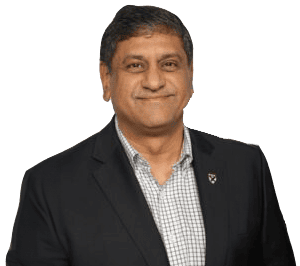
Rohit Mahajan is an entrepreneur and a leader in the information technology and software industry. His focus lies in the field of artificial intelligence and digital transformation. He has also written a book on Quantum Care, A Deep Dive into AI for Health Delivery and Research that has been published and has been trending #1 in several categories on Amazon.
Rohit is skilled in business and IT strategy, M&A, Sales & Marketing and Global Delivery. He holds a bachelor’s degree in Electronics and Communications Engineering, is a Wharton School Fellow and a graduate from the Harvard Business School.
Rohit is the CEO of Damo, Managing Partner and CEO of BigRio, the President at Citadel Discovery, Advisor at CarTwin, Managing Partner at C2R Tech, and Founder at BetterLungs. He has completed executive education programs in AI in Business and Healthcare from MIT Sloan, MIT CSAIL and Harvard School of Public Health. He has completed the Global Healthcare Leaders Program from Harvard Medical School.
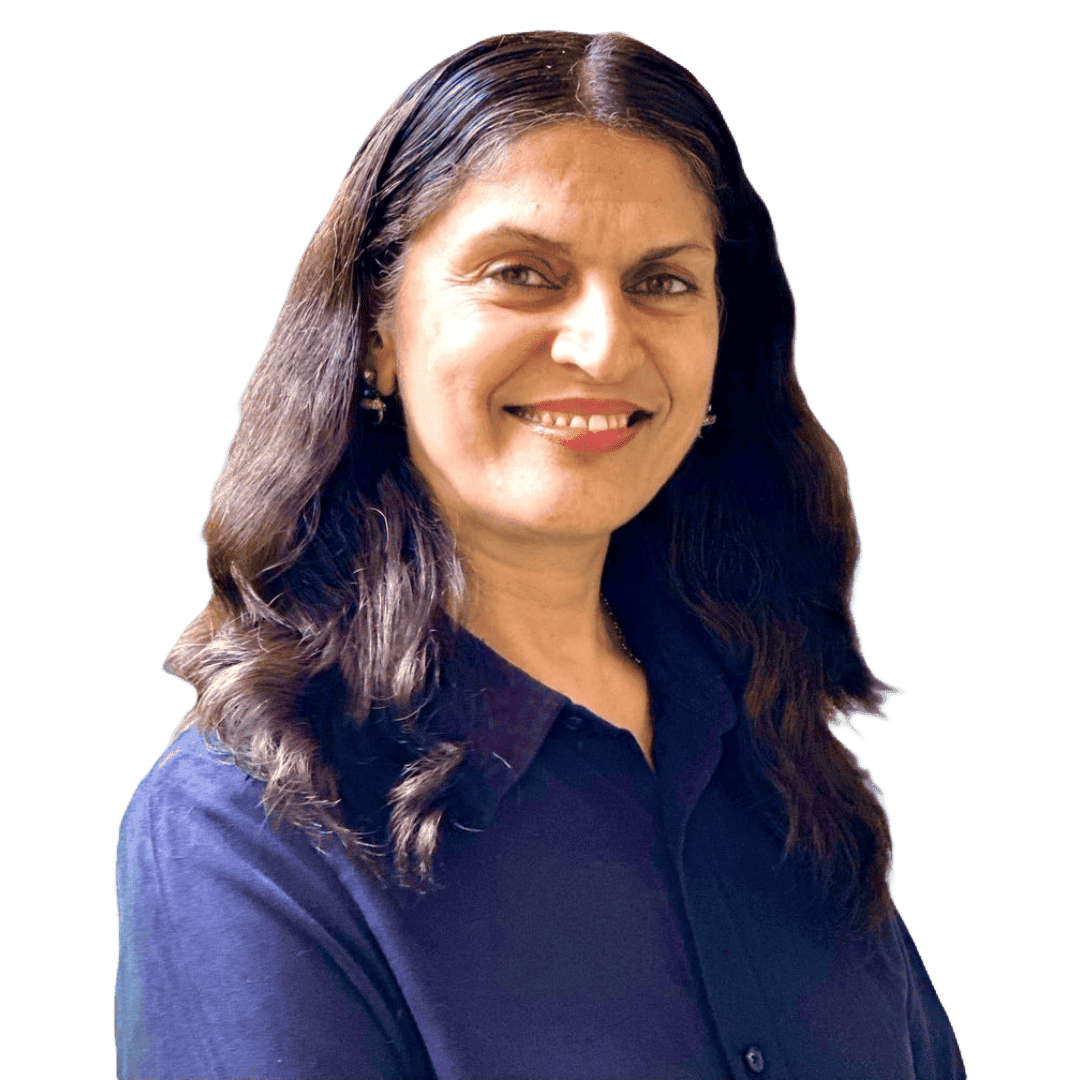
Ritu M. Uberoy is a healthcare AI strategist, technology executive, educator, and author dedicated to advancing the responsible adoption of Artificial Intelligence across healthcare delivery, digital health, and life sciences. With more than twenty-five years of leadership experience spanning the United States and India, she is recognized for helping healthcare organizations move beyond experimentation to achieve scalable clinical, operational, and business transformation through AI.
She leads AI innovation initiatives, including the AI Center of Excellence at BigRio, where she works with health systems, healthcare technology companies, and life sciences organizations to operationalize Generative and Agentic AI solutions responsibly. Her work focuses on aligning AI innovation with clinical workflows, governance frameworks, workforce readiness, and patient trust—ensuring technology augments human judgment in high-consequence healthcare environments.
Ritu is the co-author of Generative AI: Unlocking the Next Chapter in Healthcare, a practical guide for healthcare executives navigating enterprise AI adoption. She also hosts The Big Unlock podcast, engaging global healthcare leaders on AI transformation and digital innovation. An active educator and speaker, she conducts executive workshops and participates in global forums like HIMSS, ViVE, Women in Tech, AI-Powered Women, RAISE, and more, shaping the future of AI-driven healthcare. Ritu holds advanced degrees in Computer Science and completed specialized AI programs at Harvard and MIT.
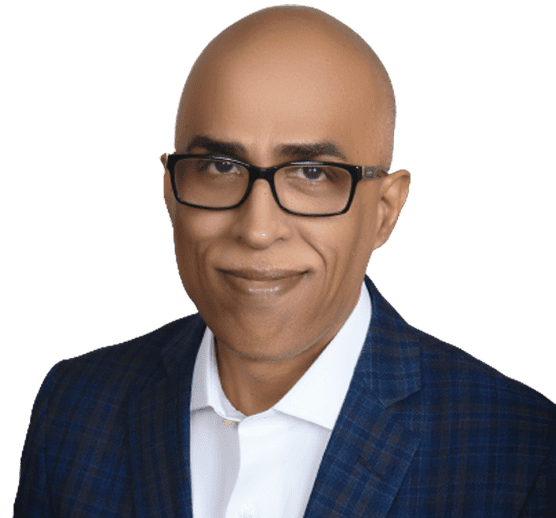
Paddy was the co-author of Healthcare Digital Transformation – How Consumerism, Technology and Pandemic are Accelerating the Future (Taylor & Francis, Aug 2020), along with Edward W. Marx. Paddy was also the author of the best-selling book The Big Unlock – Harnessing Data and Growing Digital Health Businesses in a Value-based Care Era (Archway Publishing, 2017). He was the host of the highly subscribed The Big Unlock podcast on digital transformation in healthcare featuring C-level executives from the healthcare and technology sectors. He was widely published and had a by-lined column in CIO Magazine and other respected industry publications.
Stay informed on the latest in digital health innovation and digital transformation