Season 7
In this episode, Dr. Roy Schoenberg, CEO of Aileen and Founder and Executive Director of Amwell, reflects on the evolution of telehealth and shares a bold vision for AI’s role in reshaping care delivery. He argues that telehealth has largely been used as a substitute channel for traditional visits, whereas its true potential lies in redistributing expertise and democratizing access to care at scale.
Dr. Schoenberg sees AI becoming the primary entry point to healthcare, guiding patient journeys through intelligent, cost-driven pathways while working in concert with, rather than replacing, clinical systems. Through his new venture, Aileen AI, Dr. Schoenberg introduces a fundamentally different approach to virtual care: building “staying power” in patients’ lives through deeply personalized, relationship-driven AI interactions, for seniors. By focusing on familiarity, trust, and daily engagement—delivered through simple interfaces like phone calls—Aileen aims to address the growing caregiving gap. Ultimately, he emphasizes that while AI adoption will evolve gradually, its role as a foundational layer in healthcare is inevitable. Take a listen.
This guest appearance was facilitated through conversations initiated at HIMSS.
About Our Guest
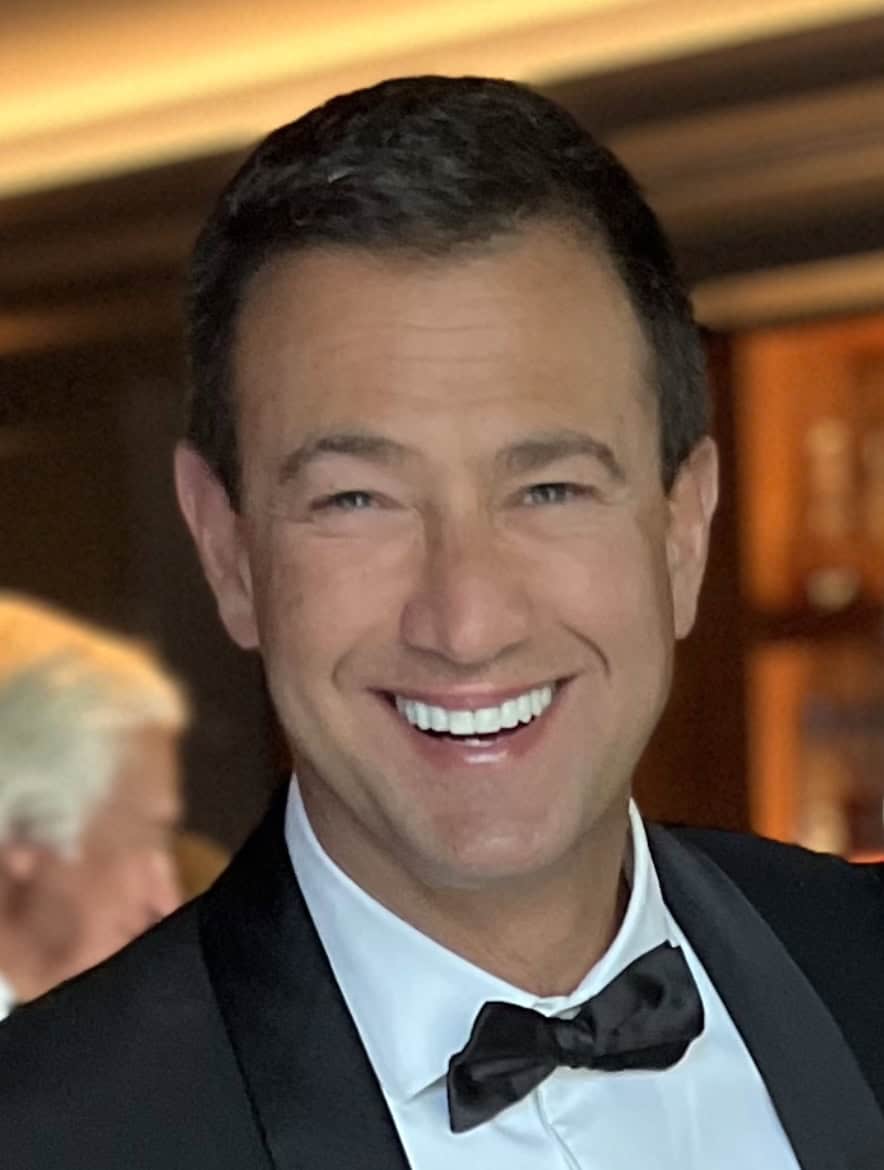
Roy is a serial Health-tech entrepreneur. After founding and running both private and public companies, (now into his fourth venture), Roy’s Impact can be easily traced to everything from Tele-ICU to Patient Portals, the introduction of Telehealth and now Ai’s arrival into healthcare. He worked closely with leaders of our largest health systems, national and regional payers, blue chip tech companies, state and federal agencies, policy makers both in Washington and overseas.
After founding and leading Amwell as its CEO to its IPO and a $9B market cap, Roy transitioned to an executive board position so he can focus on his next disruption - a novel model for the use of Ai for caregiving and elder companionship. His groundbreaking ideas in this area have already captured the industry’s imagination as evident in the recent New England Journal of Medicine Catalyst publication. Outside of his entrepreneurial endeavors, Roy chairs the MIT Sloan HSI healthcare advisory board. He is a member of the American Heart Association telehealth board and his hometown Mass General Brigham Patient Safety Research and Practice board.
Previously, Roy served on the board of the American Telemedicine Association, where he was honored with the industry leadership award. He was inducted into the USCF hall of fame, and was repeatedly recognized by Modern Healthcare magazine as one of the 100 Most Influential People in Healthcare. Roy holds an M.D. from The Hebrew University and an M.P.H. from Harvard. He is happiest next to a whiteboard or a microphone, believes in creative provocation, owns over 50 issued US patents and divides his time between Boston and the island of Nantucket with his wife and two children.
Recent Episodes
Ritu: Hi everyone. My name is Ritu, and I’m the managing partner at Damo Consulting and co-host of the Big Unlock Podcast. A very warm welcome to all our listeners for this next episode of Season Seven. Today we are really excited to welcome back Dr. Schoenberg to our podcast. He’s been on season three, episode 94. He’s the co-founder of Amwell and a pioneer who helped bring telehealth into the mainstream of US healthcare. Under his leadership, Amwell became a foundational platform for health systems and payers navigating the shift to virtual and hybrid care. Dr. Schoenberg is a physician by training and has operated at the intersection of clinical care, technology, and large-scale healthcare transformation. He is now focused on his next venture, Eileen.ai, exploring how AI can further reshape care delivery and decision-making. With that introduction, I’ll hand it over to you, Roy. Thank you so much for joining us today.
Roy: Thank you for having me, and thank you for the very kind introduction. I learned things about myself — this is great.
Ritu: Good to know. It was really good to see you at HIMSS and hear more about Eileen, and I’m sure today we’re going to hear much more since it’s been launched now. But we’ll start with the first question about Amwell. Amwell invested early in building a platform model for virtual care, but many health systems are still struggling to operationalize telehealth beyond siloed use cases. Looking back, what do you think were the biggest mismatches between how you envisioned platform adoption and how health systems actually implemented it? And if you were doing this all over again, what would you do differently to close that gap?
Roy: That’s a good couple of loaded questions. At the very highest level, the notion of delivering care over technology can be looked at in two ways. One, you can look at it as just another channel for the same encounter to take place — over a technological channel. Or you can look at it as more of a switchboard that allows you to completely reshuffle how services are acquired and delivered. Model number one is: I am your doctor, we have a follow-up appointment, and it’s going to be carried out through telehealth rather than in the office. That creates convenience and some level of efficiency, and I think that’s the majority of how health systems are utilizing this technology today. The vision behind it, though, is to give it wings — instead of just executing the same thing through technology, maybe we can democratize the availability of services at a much larger scale. To give you an example, if you happen to live in Boston where I live, cancer care is very available — Dana-Farber, Mass General. But the knowledge of those clinicians could be made available to oncology patients or even primary care physicians in West Texas or North Dakota or other places that don’t have those large cancer centers. If we created the supportive logistical framework to allow skills to flow over technology to the end of the earth, you are rewriting the healthcare experience altogether. Obviously, there’s a lot of muscle memory in healthcare that makes this challenging — health insurance, medical licensure, credentialing, and a variety of other elements that stand in the way of market forces fueling this. I still think it is inevitable. If there’s anything I would say, I think we — like many others — underappreciated how protective the healthcare system is of itself from those kinds of changes. But I think the train is out of the station. Post-COVID, the understanding that healthcare will be redistributed through technology is bigger than ever. So we’re very proud of where we got.
Ritu: You’re absolutely right. COVID normalized virtual health and telehealth, and now with AI we’re really hoping to see this taken to the next level and become truly transformational. Along the same lines, Amwell was built as a platform, but now with AI-native companies emerging, do you think the future still belongs to platforms? Or will it belong to more vertically integrated AI-driven solutions coming into healthcare?
Roy: We used to have conversations about cloud versus server farms fifteen years ago, and that conversation completely disappeared. At this point, nobody in their right mind is going to operate a server farm. I think the conversation about platform versus vertically integrated is also going to become hindsight very quickly, because people are going to care more about how the transition of any one patient takes place between different elements of care. AI will probably become the surrounding technology — the most accessible healthcare interaction you’re going to have, even for follow-up care, will come through AI just because of the economics of it. The magic will be in how AI works in concert with other vertical systems for follow-up care, diagnostics, hospitalization, and so on. There’s a lot of focus right now on whether AI can be a doctor — is it smart enough, does it know enough. The narrative is that if it can be as knowledgeable as a doctor, of course we’ll go to AI because it’s very accessible. But I think that’s a bit of an underestimation of the complexity ahead of us. There’s a lot of sentiment around seeing a doctor in person, and you can trivialize AI by calling it just a chatbot, which doesn’t give any level of reassurance. The groundbreaking event still ahead of us — the one that will dramatically change how healthcare operates with AI — is when payers introduce an insurance product that requires you to interact with AI first if you sign up for it. A little bit like what they tried with HMOs in the eighties, where the PCP was the gatekeeper. That didn’t go well for a lot of different reasons — it was not popular and felt too restrictive. But what they tried to do was control the entry point of a patient into the healthcare system, and if done effectively, potentially control consumption and referrals. The same logic applies to AI. If we can ensure patients first interact with a very knowledgeable technology that is guided by what we know is economical and high quality, we have an opportunity to influence their healthcare journey. But it’s not going to be by convincing patients that AI is better than a doctor. It’s going to be because if they choose the product that requires them to use AI, they will save a lot of money. It may sound cynical, but cost is a very powerful influence on how people consume healthcare. My sense is that it won’t be black and white — it’ll be a product that says the more you use AI, the more you save. A shared savings model. And it will have to be designed smartly, saying there is AI, and if the sky falls you can break the glass and see a clinician, then return to AI. But my bet is that that is how AI will begin to dominate our experience as patients.
Ritu: That’s a great perspective, and we do see it heading in that direction. With ChatGPT and OpenAI, health is now one of the most queried topics — I think 30 to 40% of all queries on ChatGPT right now are about health. And they’re not necessarily doctor-related questions; they’re questions from people who want to be prepared for the doctor’s appointment, asking the chatbot what they should ask their doctor. It’s really interesting that patients are going there first, and only in extreme cases seeking access to a clinician. If AI can handle everything else, then why not?
Roy: That’s exactly right.
Ritu: Okay, great. Now we can start talking about Eileen, which we were so curious about — such an interesting product. What insight or frustration from your experience at Amwell led directly to founding Eileen? And what is the problem you’re solving that is so fundamentally different from telehealth? Because this is also remote and also involves talking to patients virtually, but what’s the biggest mindset shift, and can you tell us more about Eileen?
Roy: The motivation to build Eileen had nothing to do with Amwell or telehealth directly, but there is a corollary. There’s a similarity in the challenge: you need to socialize and get people comfortable experiencing a certain dimension of their healthcare through technology. With telehealth, the place of service changed and the mode of interaction changed. With Eileen, it’s the visceral connection that you need in healthcare — that connection is now going to be furnished by AI instead of by people. It all started with a very interesting academic conversation about the role of AI in healthcare. There was a big group at the table talking about how it’s going to change the way information is analyzed, packaged, and communicated — reminders, scribing, all the things we know AI can do. To keep the dinner interesting, I took the contrarian approach and said I think AI has a role in changing the interface between technology and people in healthcare. Specifically, the most challenged population in terms of healthcare and technology are seniors. There’s clearly a need there because the reality of caregiving is very daunting. We have more and more seniors as a part of the population — doubling and tripling in size over the next decade — and at the same time the number of caregivers available to them is going in the wrong direction. People don’t want to do senior care. It doesn’t pay much and it’s emotionally and physically draining. So we have a real problem in caregiving, and the thinking is maybe AI can step into that growing void and become supportive to seniors. Now that part alone isn’t terrifically creative, because there’s a whole world called age tech designed to do exactly that — thousands of applications, all with their hearts in the right place, trying to support senior self-sufficiency. They come in wonderful shapes and sizes: chatbots, talking orbs, talking pill boxes. All wonderful designs. But the general sentiment is that because of the love-hate relationship between seniors and technology, most of these technologies die on the vine. They either don’t create adoption or they don’t create staying power — they create fatigue and eventually just never get utilized. So the nut hasn’t been cracked. Eileen steps in and says something really simple: if technology is to have a regular, influential role in the life of a senior, then maybe our first order of business is not to tell them what to do, but to establish a regular presence in their daily lives — something that is going to be sought after, something that is going to be part of their regular daily routine that they would want to interact with. If we are successful in creating technology that has that staying power in their daily lives, then through that technology we can communicate medication reminders, dietary reminders, and all the rest. But the trick is that staying power in the life of someone doesn’t come from reciting a medication list. Staying power — putting technology aside — comes from people that know you. Familiarity, intimacy, the ability to talk about your kids and grandkids, to talk about where you come from and your joys and frustrations and relationships and likes and dislikes. So, the goal is: how do you get AI to become that intimate? That’s actually a much bigger technological challenge than people give it credit for. People talk to ChatGPT and think, oh, it feels like a casual conversation, like I’m talking to someone. But for that technology to actually understand where you come from, to know the names of your grandkids, to know whether your dog got into trouble with the neighbor — that requires a completely different level of orchestration. First of all, because it’s not written anywhere. AI is really wonderful when you can feed it a lot of information, but nobody wrote the book about my dad. If AI is supposed to know everything about my dad, there’s really nothing for it to acquire that information from. And secondly, with seniors specifically, AI is designed to respond to prompts. Even the term prompt engineering tells you about the choreography — we write something in, AI comes back. We know that’s not going to work with seniors, because if we wait for seniors to prompt, we’re going to be waiting a very long time. So the whole way AI typically operates doesn’t work here. Eileen was designed to address those challenges — to become a very intimate, very engaging, knowledgeable partner in the life of the senior. One that initiates the relationship itself, doesn’t wait for the senior to download an app or log in or pair with the internet. It uses the phone to call them, the way their kids and family are supposed to. And the magic that happens during the call is that it doesn’t talk about healthcare — it talks and remembers and carries a conversation about what the senior wants to talk about, about the things that excite them or that they spend time on. It has intimate knowledge and a deep commitment to learning what they are interested in and curious about, what makes them laugh, and what they can’t tell anybody else and want to talk about. These are the things Eileen focuses on, because its purpose is to have staying power — regular, daily staying power in their lives. And then it is humble enough to understand that if it achieves that, it’s just a cog in the wheel — a mouthpiece to other technologies that can handle medication reminders, symptom monitoring, anxiety and depression tracking, and all the other things healthcare technology knows how to do. But this one creates the staying power. That’s what Eileen is all about.
Ritu: I remember when you told us about it earlier, I was struck by that very different approach — it’s not a wearable, not an app, not some high-tech device. It’s just a regular phone call, like you would receive from anyone. I thought of my mom and how she interacts with technology, and yes — she loves to get phone calls. That’s something she would actually do. It really makes a lot of sense for the senior age group you’re targeting.
Roy: We think about the simplicity of getting a phone call, but there’s also an eye on how you make this technology available to people. If we’d come up with something that requires installation, internet setup, or a technological learning curve, both the economics and the availability of the product would have completely changed. What we want is to reach a position where if you’re a family increasingly struggling with the heavy lift of being there for your parents who may live far away, and you want something to share that burden with you, we can offer the ability to activate Eileen today and she would start calling tomorrow morning. Anything that doesn’t use the phone — that doesn’t use a staple the senior is already familiar with — would require a completely different kind of orchestration, a completely different cost structure, and would make it significantly less useful to the people who need it most. There’s a lot of thinking behind why we ended up with this seeming contradiction where the backend of Eileen is rocket-science AI — really science fiction kind of AI — whereas the front end of Eileen doesn’t even need Wi-Fi.
Ritu: That’s a really interesting way to think about it. And I remember you also mentioned family groups — that Eileen will actually call family members to learn more about the senior. Is that right?
Roy: If the goalposts here are so much about intimacy and knowing the senior’s reality, and we’ve acknowledged that’s not documented anywhere, then one of the wonderful things about AI is we can say: the people who know the senior are the son and daughter, sometimes the grandkids, maybe a neighbor, maybe a spouse. The way Eileen starts serving a senior is by autonomously reaching out to those people who are close to that senior and carrying out regular conversations with them over the phone to learn about that senior’s reality. It has a very nonchalant, disarming way of doing it — you don’t have to schedule meetings or fill out forms. It just calls and says, when you have a minute, let’s chat. Then it begins building an understanding of the senior’s reality, and once it crosses a certain threshold where it has enough context, only then does it begin calling the senior directly on a regular basis. And at the end of the day, it reaches back out to the son and daughter and says, hey, I spoke to your dad a couple of times today — he was really upset about something, or he’s grumpy but that’s his usual way and everything is fine. We’re at the very early stages of this, but the framework and the approach — this very different mixture of technologies coming together on the different sides of Eileen — seems to be attractive, interesting, and plausible. And as I mentioned at the very beginning, we have to go there, because we are facing a caregiving meltdown. We’ve got to find a way for technology to help us.
Ritu: We usually start with an origin story, but we didn’t do that today. With a few minutes left, I’d love to ask what brought you into healthcare, and with Eileen I can see you really resonate with this topic. How did you get into this intersection of healthcare and technology?
Roy: I used to be a clinician. I did the whole training and thought for a long time that being a practicing clinician was the way I’d go. But I was actually dabbling with technology since I was twelve years old. I stayed home from school — I had pneumonia or something — and my dad got me a Commodore 64, which people don’t even remember existed. I think it had 5K of memory. So since then I’ve been programming and building things. After training and becoming a physician and practicing, what really interested me about technology is that if you build it right, you have the ability to change the lives of people much more widely than even a very successful practice. And the other piece is that healthcare today requires clinicians to be highly specialized, doing the same thing over and over and getting really good at it. But the mission of healthcare — advancing the wellbeing of people — becomes very siloed and myopic when you only do one procedure extremely well every single day. Technology became a different pathway to realizing the same mission: to continually rethink how we can advance the wellbeing of people and make the healthcare experience less painful. Technology today just has a bigger wingspan than some standards of practice. I’m not saying it’s better or worse — I think we need both. But I found my passion in health tech, and it’s the gift that keeps on giving.
Ritu: We’re almost at the end, Dr. Schoenberg. It’s been wonderful chatting with you. Do you have any closing thoughts or predictions for where you see AI going within the next year?
Roy: I’ll just say this: I think we’re very young in this. We get very excited about what AI can do, and I’m pretty sure that, not unlike other technologies, there’s going to be a long period of maturation — mistakes will happen and there will be things we’ll have to worry about. But the entrance of AI as a surrounding system for our healthcare experience is an inevitability. If we know we’re going to get there, you’ve got to put one foot in front of the other and start walking. That’s exactly what we’re doing. It’ll take a village — we need the brainpower and creativity of many people. But we couldn’t be more excited. I think we’re going to change the world no less than what telehealth did.
Ritu: Awesome. Thank you so much, Dr. Schoenberg. It’s been a pleasure having you on the podcast.
Roy: Terrific. Thank you so much for having me.
————
Subscribe to our podcast series at www.thebigunlock.com and write us at [email protected]
Disclaimer: This Q&A has been derived from the podcast transcript and has been edited for readability and clarity.
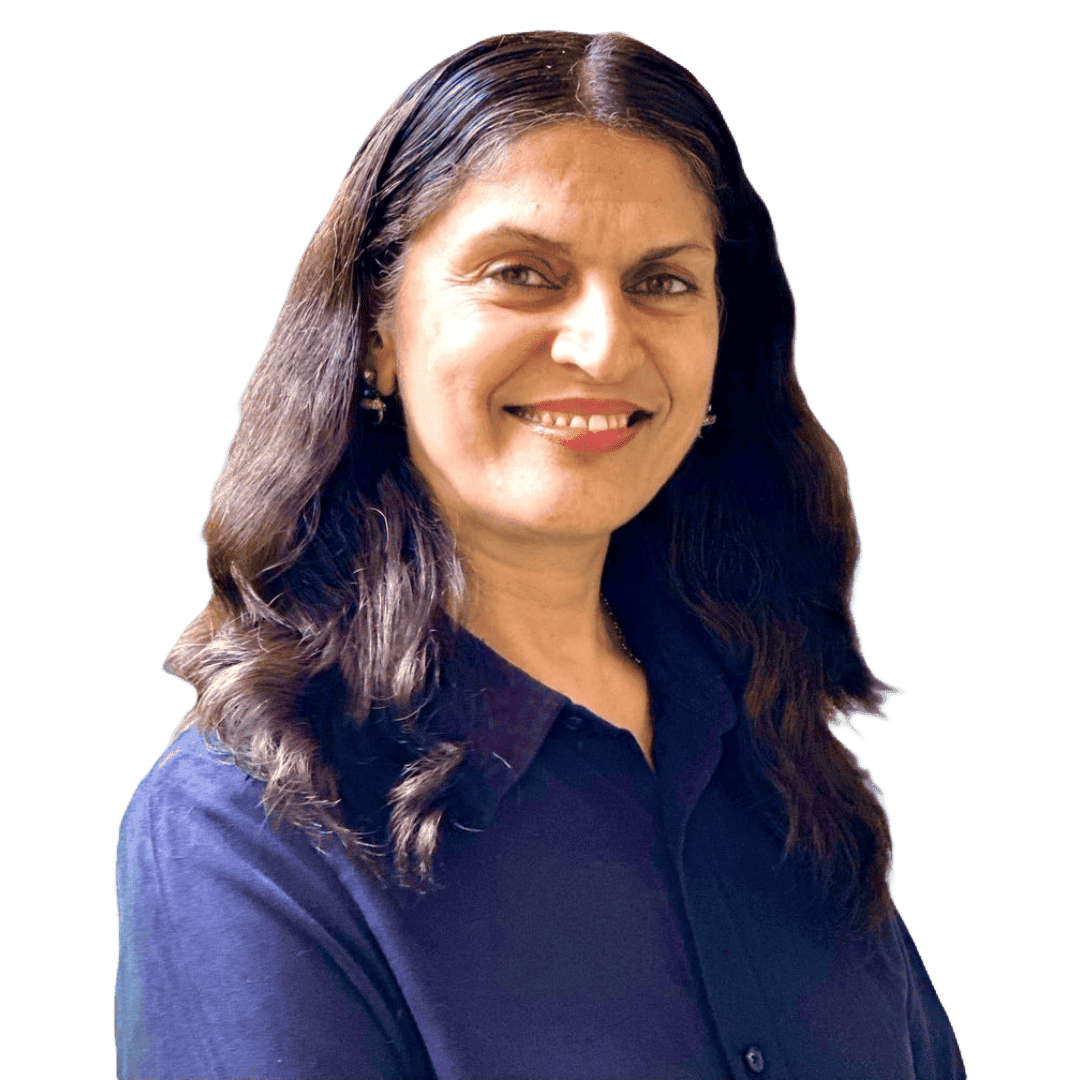
Ritu M. Uberoy is a healthcare AI strategist, technology executive, educator, and author dedicated to advancing the responsible adoption of Artificial Intelligence across healthcare delivery, digital health, and life sciences. With more than twenty-five years of leadership experience spanning the United States and India, she is recognized for helping healthcare organizations move beyond experimentation to achieve scalable clinical, operational, and business transformation through AI.
She leads AI innovation initiatives, including the AI Center of Excellence at BigRio, where she works with health systems, healthcare technology companies, and life sciences organizations to operationalize Generative and Agentic AI solutions responsibly. Her work focuses on aligning AI innovation with clinical workflows, governance frameworks, workforce readiness, and patient trust—ensuring technology augments human judgment in high-consequence healthcare environments.
Ritu is the co-author of Generative AI: Unlocking the Next Chapter in Healthcare, a practical guide for healthcare executives navigating enterprise AI adoption. She also hosts The Big Unlock podcast, engaging global healthcare leaders on AI transformation and digital innovation. An active educator and speaker, she conducts executive workshops and participates in global forums like HIMSS, ViVE, Women in Tech, AI-Powered Women, RAISE, and more, shaping the future of AI-driven healthcare. Ritu holds advanced degrees in Computer Science and completed specialized AI programs at Harvard and MIT.
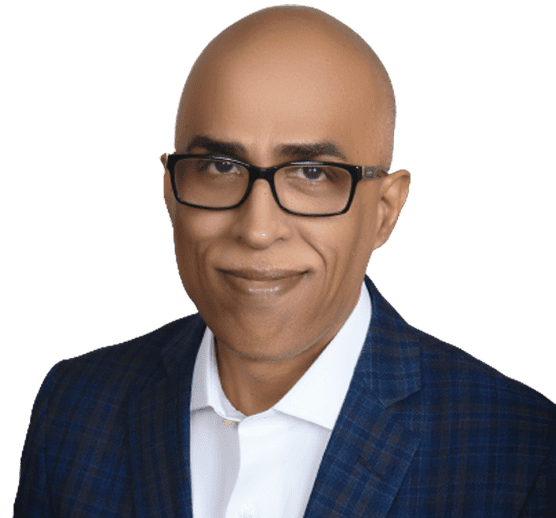
Paddy was the co-author of Healthcare Digital Transformation – How Consumerism, Technology and Pandemic are Accelerating the Future (Taylor & Francis, Aug 2020), along with Edward W. Marx. Paddy was also the author of the best-selling book The Big Unlock – Harnessing Data and Growing Digital Health Businesses in a Value-based Care Era (Archway Publishing, 2017). He was the host of the highly subscribed The Big Unlock podcast on digital transformation in healthcare featuring C-level executives from the healthcare and technology sectors. He was widely published and had a by-lined column in CIO Magazine and other respected industry publications.
Stay informed on the latest in digital health innovation and digital transformation