Season 7
In this episode, Linda Stevenson, Chief Operations & Information Officer at Fisher-Titus Health, shares how rural health systems are driving innovation under significant resource constraints. Leading a 100-bed community hospital with a lean IT team, she highlights the realities of “doing more with less”—from workforce shortages to the critical need for interoperability in coordinating care beyond organizational walls.
Linda challenges the industry’s fixation on AI as a standalone strategy, advocating instead for a problem-first approach: start with the clinical or operational need, then determine if AI is the right fit. She emphasizes that true transformation comes from aligning technology with enterprise priorities, not chasing hype.
She also points to persistent gaps in interoperability and growing cybersecurity risks, particularly in rural settings where vulnerabilities can impact the broader ecosystem. Her message is clear: stay grounded in strategy, focus on outcomes, and prioritize partnership over products to drive meaningful, scalable change. Take a listen.
This guest appearance was facilitated through conversations initiated at ViVE.
About Our Guest
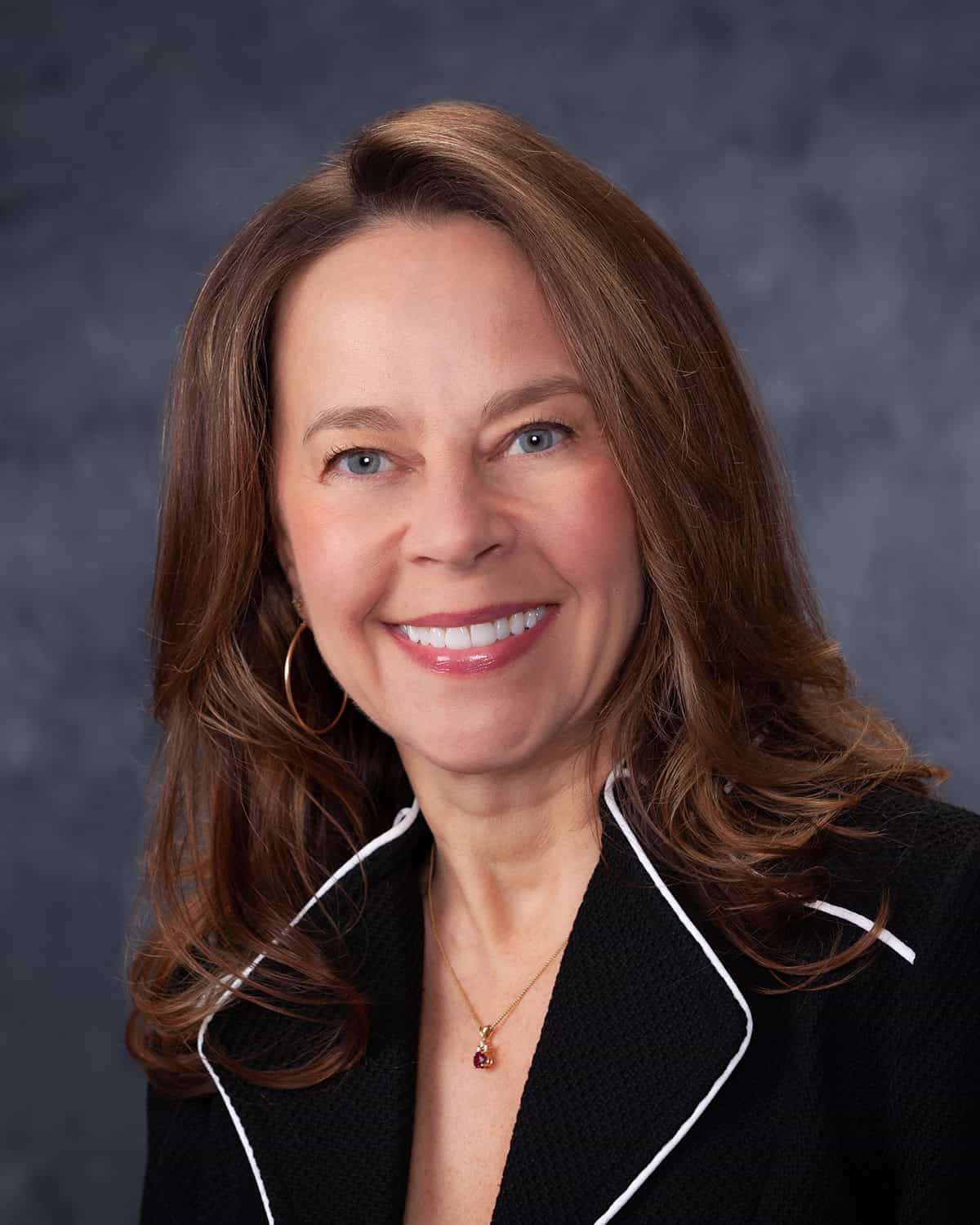
Energetic and passionate digital leader with a masterful track record in transforming organizations to drive greater business outcomes and empower people through technology.
Linda Stevenson is a Certified Healthcare CIO (CHCIO) and serves as Chief Information Officer at Fisher-Titus Health in Norwalk, Ohio. With over thirty-five years of experience in the healthcare sector, Ms. Stevenson has directed transformative initiatives across clinical, operational, and revenue cycle domains at institutions including The Cleveland Clinic, MetroHealth, Southwest General, and Oracle Health Corporation. Her areas of expertise encompass project management, compliance, data security and privacy, regulatory, and system implementations.
Ms. Stevenson holds an MBA from Cleveland State University and is a Project Management Professional. She has been recognized as a top CIO to watch by Becker’s, nominated for the OHA Healthcare Worker of the Year award, and awarded a CHIME Healthcare CIO Bootcamp scholarship.
She is committed to advancing collaboration and innovation within the healthcare industry, serving on the boards of CHIME and Clinisync, and leading the Ohio Users Group for Oracle Health organizations. Ms. Stevenson has coordinated statewide CIO support networks and contributed to advisory boards and committees, including the CHiME and AHA Public Policy Groups, Ohio Health Partnership (OHIP) and Northeast Ohio HIMSS. She participates in national initiatives such as the KLAS Emerging Solutions Top 20 and Gartner industry groups and represented rural healthcare at the 2025 Senate HELP Committee hearing on cyber security.
Beyond her professional responsibilities, Ms. Stevenson is a wellness coach, master yoga teacher, aromatherapist, Reiki Master, Cancer Exercise Specialist, and health advocate.
Recent Episodes
Ritu: Hi everyone. A very warm welcome to all our listeners to Season Seven of the Big Unlock Podcast. My name is Ritu, and I’m your co-host along with Rohit, who is missing from the podcast today. We are very happy to have with us Linda Stevenson. She’s the Chief Information Officer at Fisher Titus Health, where she leads enterprise technology strategy for a community-based health system. She has over 30 years in healthcare IT, and has worked across organizations like Cleveland Clinic, Cerner, and regional hospitals. Her work has focused on integrating core systems, particularly EHR and telehealth. She’s especially passionate about advancing innovation in rural and community health systems where resources are constrained but impact is critical. We are really looking forward to our conversation today. Welcome once again, Linda, to the podcast. Thank you for being here.
Linda: Thanks for having me.
Ritu: I gave an introduction, but feel free to add anything you’d like or if you feel I missed anything.
Linda: I’ll give you a little background on me and my organization. Fisher Titus Health is a rural healthcare organization in northwest Ohio, in a town called Norwalk. We’re a 100-bed hospital facility — not a large hospital, but we offer a lot across the full span of a patient’s life, all the way from birth to end-of-life care, including nursing home care, skilled nursing, and home health. We also have a large physician practice group, so we really do span a wide range of care delivery areas. I talk about doing more with less — that’s what happens in rural healthcare. We are technically a rural healthcare organization, and our job is to figure out how to do things for less money but still achieve the same outcomes and access the same technologies as larger organizations. I love being in rural healthcare because I get to work on very challenging and creative solutions. And as of the beginning of March, I am now also the COO of the organization, handling not only the technology group and cybersecurity, but also all of our ancillary services, facilities, and environmental services.
Ritu: Wow. Congratulations — that’s great to know. As I was reviewing your profile, I realized you have somewhat of an unconventional background for someone in this position. We would love to hear your origin story — what brought you into healthcare and how you got to where you are today. I remember when we spoke, one thing really hit me: you said you have to reach out and ask for things, you can’t just sit back and wait for people to tell you what to do. You have to be confident in your own abilities. Tell us a little bit more about that.
Linda: I started in healthcare as a biller, typing bills on a typewriter back in the day, before all the automation we have now. I found that my passion was asking questions — I was always asking why in that department. The technology team noticed that and said that’s the making of a good analyst, and brought me into technology for the first time very early in my career. I had no computer background from an education standpoint — my degree was in business management. I used to joke it was a useless degree, but I found it certainly helped me later in my career as I moved into project management and building stakeholder relationships across the organization. From those early analyst days, I moved into project management, data security, and then progressively larger EMR implementations. I worked on the Epic implementation when it initially rolled out at Cleveland Clinic, and then had the privilege of working for Cerner — Cerner at the time, not Oracle Health — for three and a half years, really learning what the vendor side looks like through their IT Works division. And here I am as CIO years later. I always tell people: if you’re not sure, say yes. Every single opportunity I said yes to, even when I was afraid or thought it might not be my job — every single time, it opened another door and taught me something new that got me to where I am today.
Ritu: That reminds me of something I read — just jump into the pool and figure the rest out as you go.
Linda: That’s exactly how the COO role came about. The gentleman in that role was retiring, and I just went to my boss, the CEO, and said: put my hat in the ring. I have no idea what I’m doing, but I’ll figure it out.
Ritu: Awesome. So Linda, you’ve seen the full stack of hospital operations — from billing all the way to IT leadership. How has that shaped your view of what a CIO should prioritize today? Should it be innovation? Cost control? Operational reliability? Tell us about your priorities and how you balance these competing demands.
Linda: The easy answer is: yes, it’s all of that. I don’t think we can choose one thing, and I think that’s both the challenge and the beauty of what we get to do. At the bottom line, it’s about partnership — partnering with all the other leaders, whether nursing, finance, or operations, to understand the challenges they face. In some areas the challenge might be optimization or productivity improvement. For example, our therapy departments are struggling to recruit right now. They simply cannot find therapists. So how do we use technology to allow the therapists we do have to work faster while still delivering the same quality, so they can see more patients? It’s not about wanting to reduce headcount — we can’t even find people to hire. In other areas, the question is how to cut costs, through things like application rationalization: really honing in on using the solutions we already have better and getting the most out of our investments. And then there’s automation — some of it is simply about making lives better, whether that means giving patients better access to care or giving providers tools to reduce stress and burnout in their day. It really is all of it, and you just have to understand your audience.
Ritu: You’ve talked about bringing Fisher Titus back to Most Wired status. How do you ensure that’s based on measurable clinical or operational outcomes rather than chasing shiny objects? At VIVE, we heard everyone going after AI just to make it look good.
Linda: I’m a very practical person. About two years ago when everyone was still asking “what’s your AI strategy,” I’ve been around this industry long enough to know that AI is just another tool. We’ve had lots of tools — cloud was a buzzword for a while, EMR was a big thing. Lots of things come and go. Yes, this one might be a bit more impactful than some we’ve seen in the past, but the way I look at it: I don’t have an AI strategy. I have a strategy. The organization has a strategy, and we have a technology strategy to support it. That strategy may or may not involve AI — it depends on the need. I look at it from a practicality standpoint, going back to what we just discussed: partnering with leaders in each area to ask, what problem are you trying to solve? Then we look at whether there’s an AI solution, and whether it brings productivity improvements, cost savings, time savings, patient satisfaction improvements, or quality care improvements. All of those are measurable. That’s the conversation we have: here’s what we’re trying to solve, here are some options, and here’s what we think we can achieve.
Ritu: What we’ve heard from other C-suite leaders is that this has to be cross-functional — you have to build buy-in and partnership across the organization. Are you finding the same at Fisher Titus? And how are you tackling AI literacy, given that every couple of days there’s a new release and it’s hard for anyone to keep up? You said you’re not chasing shiny objects but focusing on strategy — yet you still have to know what’s out there. How does anyone keep up with this pace of innovation?
Linda: You try, right? There are a couple of factors. On one hand, our leaders need AI education to help them understand the basic things they can already be doing to make their lives easier — whether it’s ChatGPT, transcription tools, or other things that can lighten their administrative load. They often don’t grasp those as readily as they understand a vendor coming in and saying “I can solve all your problems with this new scribe solution.” So there’s a parallel track: here’s how you can help yourselves, and here are some broader things we can bring to the organization. At the same time, we have to temper the vendor conversations. Every vendor comes in with shiny objects, and I have to help them understand our strategy. We’ll look at what they offer, but it may or may not fit into the direction we’ve chosen, because we want integration across the whole — we don’t want 30 different scribe solutions or 20 different quality solutions. Vendors are generally receptive to that once you explain the why. You have to spend time on the why — educating them on how powerful these tools can be when done well, versus just buying something random.
Ritu: I think buy-in is the key. Once you have that trust, things move forward. Without it, it gets really difficult.
Linda: And isn’t that the key — trust? They need to trust us and we need to trust them. That’s something we’ve been building for years. It’s not a new thing.
Ritu: You’ve worked both inside health systems and with vendors like Cerner, so this question feels very pertinent. Where do you think the industry still overestimates interoperability, and where are we still fundamentally constrained by vendor ecosystems? Most of these ecosystems remain fairly closed, and now everyone is asking how AI is going to suddenly change that. We heard the recent announcement from Epic about building AI agents into their workspace. What are your thoughts?
Linda: All the EMR vendors are building AI agents — they all have it at various stages of development. The ERP vendors are doing the same. Interoperability has been a conversation since about 2008 when Meaningful Use first started coming out. It’s frustrating because Fisher Titus has engaged with every opportunity to be interoperable where possible. We’re connected to CommonWell, to everything through the HIE — all of it. But that doesn’t mean the information flowing through is in a form that clinicians can actually use. That’s where we still struggle. As a rural healthcare organization it’s especially challenging, because unlike a large integrated system like Cleveland Clinic or Mayo Clinic that has all specialties and services within their own walls, we don’t. We refer a lot, so interoperability is critical for continuity of care. But not all information flows through traditional interoperability channels. A great example: maternity records. A delivery record or a nine-month care plan for a patient is not coming through on a CCDA. We still fax paper records back and forth to outside OB physicians. Interoperability still has a long way to go.
Ritu: That’s what we’ve been hearing from everyone. Even with telehealth — we expected it to drive deeper EHR integration, but we’ve still seen patchwork systems and ongoing problems with embedding telehealth into core clinical workflows. What has your experience been?
Linda: It’s very patchworked. We try to connect wherever possible. I’m actually on the board of directors for Ohio’s state HIE, and I’m very proud of the work Ohio has done — building a really robust HIE that goes well beyond just sending CCDAs, including data exchanges for population health initiatives and supporting state Medicaid. The more you can get involved at the state level, the more you can help shape the bigger picture. Working with fellow CIOs and leaders to ask what we can all do better — that’s where the real conversation needs to happen. And then taking that up to the federal level, so we can ask for exactly what we need rather than having proposals come from people who have never actually worked in healthcare.
Ritu: We’ve been hearing from other health systems and CIOs that they’re driving innovation through internal innovation arms or venture studios. Does Fisher Titus do any of that?
Linda: No. At a rural hospital you generally don’t see that. My entire IT team is 35 people — covering help desk, technology, clinical analysts, informatics, trainers, cybersecurity, everything. That’s our scope. We’re not doing a lot of in-house development. We work through vendor partnerships, and I strongly believe in developing strong relationships with those vendor partners to drive innovation.
Ritu: Linda, we saw that you recently submitted a brief for the Senate Health Committee. Tell us more about that — we would love to hear about your role.
Linda: What a wonderful experience that was. Last summer I had the privilege of going to the Senate Health Committee to talk about rural healthcare, cybersecurity, and the risks facing all of us. Every healthcare organization is exposed to this ongoing onslaught of cyberattacks. But rural healthcare has such small budgets and limited resources that it’s really hard to keep up and protect ourselves — and all organizations are connected through us in one way or another. We’re a link in a chain, and if we’re weak, the entire healthcare chain is weak. I was really trying to highlight that challenge: the difficulty of recruiting cyber professionals, the cost of managing third-party vendor risk. It was a great opportunity to speak up, and actually I’m going back to Washington this week to speak with the Healthcare Sector Cyber Working Group at an all-hands meeting. I’ll be on a panel there talking about these ongoing challenges.
Ritu: That’s great — really important work. I read the briefing you submitted and thought it was very well written. You made some really strong points. I’ve been watching a show called The Capture, and it’s shown how easy it is to use deepfakes to get into systems. Just like you said — once they find the weakest link, that’s all they need. The entire chain has to be strong.
Linda: One of the things I focus on so much is connection and networking, because who in this day and age can do it alone anymore? There’s just too much. Connecting with people like you, with my peer groups, and with CHIME — who also supported me through that Senate Health Committee process — those relationships are invaluable. Vendor relationships too. As leaders we have to stick together to raise the tide for all.
Ritu: Exactly. Time always goes by fast and we are almost at the end. Any forward-looking final thoughts you’d like to share? Where do you think this is all headed, and where do you think we’ll be a year from now?
Linda: I think it goes faster than we think it will, and it’s really hard to keep up. A year from now the conversation will look very different — we’re already starting to see the shift in what AI can actually deliver and what it will actually cost. My final piece of advice: take a deep breath. Think it through. Don’t rush into a million shiny objects. Stick to your strategy and focus on where technology will genuinely benefit you. And don’t forget to take care of yourselves — when we work at this pace, it’s really important to stop, regroup, and refocus on your own health.
Ritu: Thank you, Linda. It’s been a pleasure having you on the show. Thank you so much.
Linda: Thank you. Great to see you.
————
Subscribe to our podcast series at www.thebigunlock.com and write us at info@thebigunlock.com
Disclaimer: This Q&A has been derived from the podcast transcript and has been edited for readability and clarity.
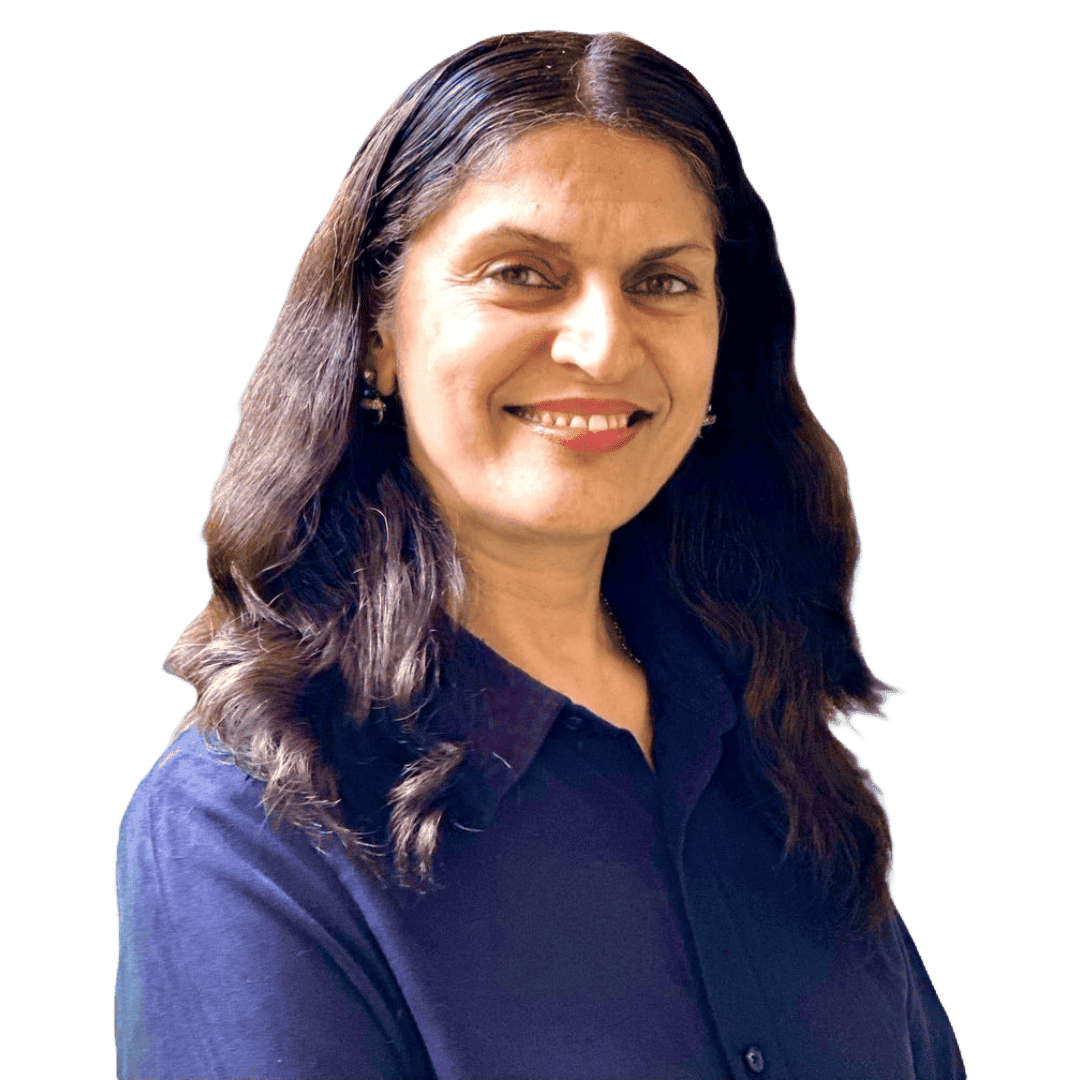
Ritu M. Uberoy is a healthcare AI strategist, technology executive, educator, and author dedicated to advancing the responsible adoption of Artificial Intelligence across healthcare delivery, digital health, and life sciences. With more than twenty-five years of leadership experience spanning the United States and India, she is recognized for helping healthcare organizations move beyond experimentation to achieve scalable clinical, operational, and business transformation through AI.
She leads AI innovation initiatives, including the AI Center of Excellence at BigRio, where she works with health systems, healthcare technology companies, and life sciences organizations to operationalize Generative and Agentic AI solutions responsibly. Her work focuses on aligning AI innovation with clinical workflows, governance frameworks, workforce readiness, and patient trust—ensuring technology augments human judgment in high-consequence healthcare environments.
Ritu is the co-author of Generative AI: Unlocking the Next Chapter in Healthcare, a practical guide for healthcare executives navigating enterprise AI adoption. She also hosts The Big Unlock podcast, engaging global healthcare leaders on AI transformation and digital innovation. An active educator and speaker, she conducts executive workshops and participates in global forums like HIMSS, ViVE, Women in Tech, AI-Powered Women, RAISE, and more, shaping the future of AI-driven healthcare. Ritu holds advanced degrees in Computer Science and completed specialized AI programs at Harvard and MIT.
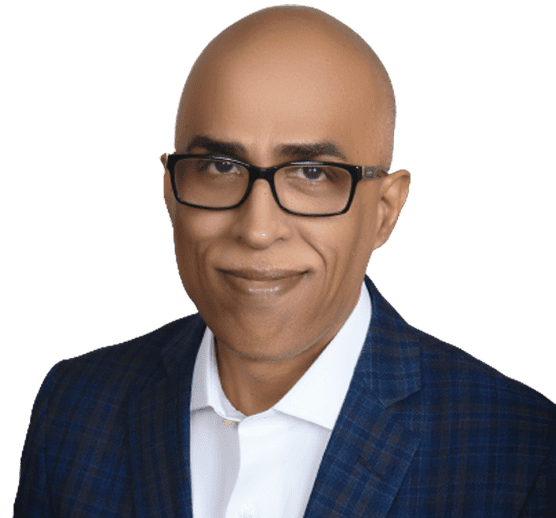
Paddy was the co-author of Healthcare Digital Transformation – How Consumerism, Technology and Pandemic are Accelerating the Future (Taylor & Francis, Aug 2020), along with Edward W. Marx. Paddy was also the author of the best-selling book The Big Unlock – Harnessing Data and Growing Digital Health Businesses in a Value-based Care Era (Archway Publishing, 2017). He was the host of the highly subscribed The Big Unlock podcast on digital transformation in healthcare featuring C-level executives from the healthcare and technology sectors. He was widely published and had a by-lined column in CIO Magazine and other respected industry publications.
Stay informed on the latest in digital health innovation and digital transformation