Season 7
In this episode, Dr. Ruchi Garg, Chief Medical Officer at Fairview Park Hospital, shares how frontline clinicians are shaping the responsible adoption of AI in real-world care settings. Dr. Garg highlights how COVID accelerated digital adoption, from telehealth to remote patient monitoring, demonstrating that care can be both accessible and efficient when technology is thoughtfully applied.
Dr. Garg underscores that AI’s true value lies in reducing administrative burden, particularly in areas like documentation and prior authorization, where inefficiencies delay care and strain clinician-patient relationships. She notes that ambient AI is already improving accuracy and saving hours for physicians, with the next wave extending into orders, workflows, and care coordination.
However, she emphasizes that successful adoption depends on clinician involvement, intuitive design, and minimizing workflow friction. While AI may take on more clinical decision-making, questions around trust, liability, and human oversight remain central, making it critical for healthcare leaders to actively shape, not resist, this transformation. Take a listen.
This guest appearance was facilitated through conversations initiated at ViVE.
About Our Guest
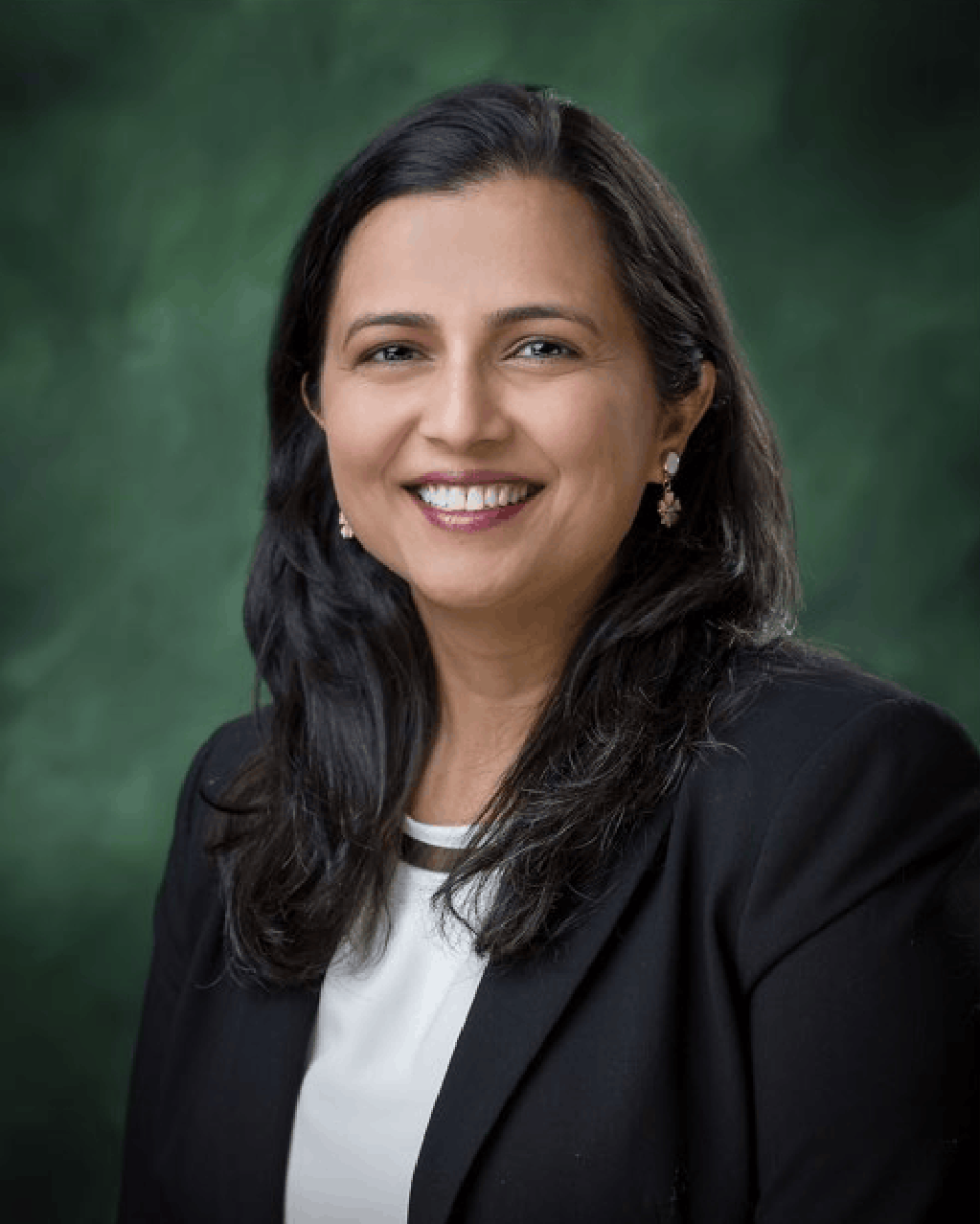
Dr. Ruchi Garg is the Chief Medical Officer of Fairview Park Hospital, a part of HCA system. Dr. Garg brings over 25 years of clinical experience. In the past, Dr. Garg was the Chair of Gynecologic Oncology for all of Cancer Treatment Centers of America Hospitals that was acquired by City of Hope.
Board certified in Gynecologic Oncology and Obstetrics/Gynecology, Dr. Garg has taken care of over 10000 gynecology and gynecologic cancer patients and has a strong interest in cancer prevention. She has performed over 3,500 robotic surgeries.
Dr. Garg developed an interest in digital health – telehealth and remote patient monitoring at the start of the COVID-19 pandemic. She has established several digital health programs and continues to be intricately involved with health tech startups.
As part of the six-year honors program in medicine, Dr. Garg completed her BS and MD at University of Miami, Florida. She completed her residency in Gynecology and Obstetrics at Johns Hopkins in Baltimore, Maryland and Gynecologic Oncology fellowship at the University of Washington in Seattle, Washington. Dr. Garg completed her Executive MBA from Kellogg School of Management at Northwestern University, Evanston, IL. Dr. Garg has received several research awards and has had many publications and book chapters. She has held several academic Associate Professor appointments including at City of Hope, Uniformed Services, UVA, George Washington, and the VCU School of Medicine. Dr. Garg has served on multiple national committees for American Society of Clinical Oncology and Society of Gynecologic Oncology.
She has won numerous top doctor awards, including being spotlighted on the cover of Washingtonian Top Doctors. She serves as a board member for the Joy Clinic, Dublin, GA.
Dr. Garg enjoys spending time with her family and friends. She enjoys sports and athletic activities. Dr. Garg enjoys traveling and learning about other cultures, history, and seeing the beautiful sites on this Earth. She can’t wait to show the world to her 6-year-old son.
Recent Episodes
Ritu: Hi everyone. Welcome to our Big Unlock Podcast. My name is Ritu and I’m the co-host of the podcast. Really happy and excited to have Dr. Ruchi Garg here with us today. This is Season Seven of our Big Unlock Podcast — a very warm welcome to all our listeners. We are really inching towards 200 episodes, so we are very excited. It’s been going on for a while and we are always happy to bring you fresh perspectives. Dr. Ruchi Garg is our guest today. She’s the Chief Medical Officer at Fairview Park Hospital, where she’s deeply engaged in delivering high-quality, patient-centered care in a community hospital setting. She’s a gynecological oncologist with a demonstrated history of working in the higher education industry, and her work reflects a strong commitment to advancing care delivery through thoughtful adoption of technology and process innovation. She’s particularly passionate about addressing physician burnout and enhancing care access for diverse and underserved populations. Today she’s joining us on the Big Unlock Podcast to share her insights on the evolving role of clinicians in shaping the future of healthcare. Really happy to have you here with us, Dr. Garg. Welcome.
Ruchi: Thank you for having me, and thanks for that generous introduction. I look forward to a wonderful conversation today.
Ritu: Our listeners always love to hear an origin story. Now that we’re coming up on 200 episodes, we still hear such interesting things when we ask people how they got into healthcare and into this intersection of healthcare and technology. We’d love to hear what your inspiration was, what led you into healthcare, and what keeps you going. What motivates you?
Ruchi: It’s interesting — I always tell a funny story about what got me into healthcare. Being of Indian origin, growing up we used to laugh that Indians always become either engineers or doctors. In 10th grade, I still remember doing a summer electrical physics course, learning all about circuitry, and it dawned on me in the middle of that summer that I was not going to be as good an engineer as my dad — so I decided to become a doctor.
Ritu: By the process of elimination!
Ruchi: Well, I was mathematically inclined, a STEM child — and thinking about how I could make a bigger impact on the world. My family has always believed that you don’t have to follow your parents’ pathway; you have to build upon it and contribute more. That’s really what led both my brother and me into medicine. Going through medical training, I actually never thought I was going to be a surgeon and a GYN oncologist. I thought I was the child who was going to faint at the sight of blood, and there are some funny stories from medical school. But I loved my surgical rotation — I loved the immediacy of impact you can have on a patient’s life. The more complex the surgeries were, the more I loved them. I remember going through the hepatobiliary rotation and doing Whipple procedures — massive pancreatic or liver resections — and I loved every minute of those six-to-eight-hour surgeries. Then I went through the GYN oncology rotation and I was hooked. GYN oncologists are definitely a unique breed. We love to work hard and play hard, and it’s a unique subspecialty because you get to stay with your patient throughout their entire journey. I’ve had patients as young as eight years old, unfortunately, and as old as 96. I’ve done prophylactic surgeries and prevented cancers in high-risk patients. I’ve diagnosed cancers, done surgeries, treated patients through chemotherapy, and also held their hand when they’ve passed. That’s what attracted me to GYN oncology — we’re trained to do all of it: prophylactic surgery, complex surgeries, chemotherapy, end-of-life care, and building that relationship with our patients.
Ritu: Thank you — it’s very inspiring to hear. The amount of effort and work you put in is incredible. I’m always in awe when I talk to physicians. It really feels like a calling that goes way beyond a profession. So let’s talk about the favorite topic at the moment — at HIMSS you couldn’t walk more than a few steps without hearing about AI. In your current role, what do you see happening? We hear a lot about physician burnout and clinicians walking away from the field. Can you share a personal story where AI really moved the needle and helped you reclaim some time, or a particularly successful implementation that makes you feel this is a pivotal moment?
Ruchi: Let me step back a little to explain why I got hooked on health tech. The real taste came during COVID. I was in private practice in Northern Virginia at the time — a very busy practice that also did academic training with fellows and some research. We couldn’t skip a beat when COVID came because cancer didn’t stop. Within a week I was able to set up a telehealth program in my practice. Fortunately there were companies that had already been advertising, and we connected with them so our patients continued to get care. We also had our own chemotherapy suite, and those patients needed vitals monitored — but as you can imagine, they were a very vulnerable, high-risk population during COVID and we didn’t want to bring them into the office unnecessarily. I connected with a startup doing remote patient monitoring at the time, and we deployed monitoring tools to these patients so their vitals could be transmitted from home. We then did telehealth visits with those patients. The only reason they had to come into the clinic was for labs and infusions — really minimizing visits. The patients liked it because it was convenient and they didn’t have to come in for every single thing in their care paradigm. I was involved with a similar monitoring program at the cancer center after that and built upon it. But when AI technology really took over, there was so much more we could do. That’s where my interest in streamlining healthcare, building efficient protocols, having a more standardized approach, and intertwining that with day-to-day care using AI — that’s when the wheels really started turning. I was fortunate enough to partner with a company called Resa. Initially they were a space-agnostic, AI-based prior authorization company. Within two months of being brought on as an advisor, we had many long conversations and realized that oncology was where we could make the biggest impact. The company shifted their focus to that space, because with an oncology patient you’re getting prior authorizations for every step along the way — prophylactic surgery, major surgery, CT scans, chemotherapy, and then if the cancer comes back, repeat chemotherapy, immunotherapy, radiation therapy. One patient, huge impact. And the prior authorization process has become really cumbersome. Fifteen or seventeen years ago when I started practicing, I would do a peer-to-peer review with an insurance company maybe once a month, if that. By the last few years of my practice — before I took on a full-time administrative role a couple of years ago — I was doing at least one or two peer-to-peers every week.
Ritu: Oh wow.
Ruchi: That’s quite burdensome, and it delays care. It adds anxiety for the patient and tension between the clinical team and the patient, because patients think you’re not doing your job — when in reality you’re working within the constraints to get things approved so they’re not stuck with a huge bill at the end, while also managing all your other patients. The buck doesn’t stop with one patient. That’s where these kinds of technologies are making a big difference and will continue to do so. But the key is that the company listened to me as a clinician. We can’t just throw technology around without having the voice of the clinician and the frontline folks involved in shaping it.
Ritu: Absolutely. I think a recurring theme is that COVID really normalized telehealth and kickstarted this whole wave, making it so much easier for people to accept virtual visits and remote monitoring like you’ve described. Great example — thank you for sharing. I was also asking about particularly successful AI implementations in your community hospital. Other than the oncology company, what has your experience been with ambient or voice agents?
Ruchi: I’m part of Fairview Park Hospital, which is a smaller facility within the larger HCA system. HCA has taken a very centralized approach to deploying AI technologies so they can do it in a controlled, standardized manner with guardrails around data protection and cybersecurity — a very thoughtful approach. What has been done so far is AI-based ambient listening for physicians. My physician services group doctors who are using this technology — mainly my surgeons — each say it has saved them about an hour and a half to two hours every day.
Ritu: That’s huge.
Ruchi: That’s huge. You can see how much burden that takes away — not just the physical strain, but also the accuracy. If you’re waiting until the end of the day to do your notes, you’re going to miss things. We don’t have time built in between patients to do documentation, so a lot of it happens at the end of the day. With ambient listening, documentation happens in the moment, which allows for more accurate notes and a faster turnaround. I was very intentional that my notes had to be done before I left for the day, but not every physician is able to do that — and even for me, there was probably at least 1% of the time I missed it. Then there’s a delay in care because the next day is already full — you’re just playing catch-up. There’s a lot of opportunity to build beyond that layer. Ambient listening can go deeper: AI can then fill in the orders that need to follow — the follow-up orders, the prior authorization forms, the request for surgery, the request for a CT scan. All of that becomes a faster and more accurate turnaround, even though it’s not fully deployed yet. I’m a hundred percent sure that’s the future.
Ritu: A lot of companies are working on exactly that — integrating it into the workflow rather than keeping it as a point solution. With agents, each one can just fire off and handle the next step. My next question is about your leadership role. When you’re leading clinical teams through change — whether it’s new technology, new protocols, or new care models — we hear a lot about responsible and trustworthy AI. What’s your approach to building trust that gets you true adoption rather than passive compliance? You can’t just dictate from tomorrow you’re going to use this. How do you actually convince physicians, who are already resistant to change and incredibly busy, to learn something new and integrate it into their workflow?
Ruchi: It really goes back to partnering with clinicians — or whoever the end user is. If it’s a provider solution, partner with the providers. If it’s a nursing solution, partner with the nurses. Understand the workflow and the user space, and focus on decreasing the burden. When you come from the perspective of making them better and more efficient, and showing how it’s also going to help the patient more — that’s the approach that works. Compare it to the EHR rollout, which is the prime example of what you’re describing. It was something everyone just had to swallow. It wasn’t built with clinicians in mind, and everybody talks about death by a thousand clicks. When I came into my role, one of the concerns my clinical informatics team brought to me was that clinicians weren’t discontinuing telemetry orders — the cardiac monitoring — when patients no longer needed it. They were good at ordering it but not at discontinuing it, so we were running out of telemetry boxes. I asked them to walk me through the workflow. It was one click to order telemetry. It was four clicks across four screens to discontinue it. That’s why it wasn’t getting discontinued until a physician needed the box for their own patient. It seems like a silly example, but when you add up those extra three clicks throughout the day for various things, that’s where you get the barriers to adoption. That’s how we have to think about AI platforms too. If we get doctors used to the fact that their notes are done, and they just need to review and take ownership of them — great. But then asking them to also sit down and enter all the follow-up orders when the technology could easily handle that — the human mind is going to want more, and that’s exactly the direction we need to go. We have to show how it benefits both the clinicians and the patients and keeps removing the burden.
Ritu: We’ve been hearing a lot about successful AI implementations for digital front doors, ambient documentation, and things somewhat removed from the actual practice of medicine. But now we’re slowly seeing a move toward AI doing more diagnostically — passing medical exams, with millions of people around the world turning to ChatGPT with their full health histories and getting back diagnoses. What are your thoughts on this trend? Where do you draw the line between what the physician does versus what AI can do? Should the human in the loop stay, and what’s the time horizon for that to change?
Ruchi: The writing is on the wall. We can keep denying it, but there is low-hanging fruit and standardized protocols that AI is already trained on. Do patients really need to see a doctor to be diagnosed with a URI and get an antibiotic prescribed? But if someone has had three or four infections in two months, you want the next level of critical thinking — and yes, AI will get there. With ambient listening, the AI is getting trained on clinical reasoning. As physicians make corrections and talk through their thinking, the AI is getting that deeper-level training. The writing is on the wall. The question is: who’s going to take the liability? That’s where medicine is hung up right now. It would be very easy to deploy AI decision-making in primary care settings, for example. But if the AI is hallucinating or producing an incorrect diagnosis — because there is a lot of gray zone, which is what we call differential diagnosis — who takes ownership of a bad outcome? Is it the AI company that gets sued? We live in a litigious society. Or is it the doctor who holds the malpractice insurance? I always say that doctors are not allowed to be human. We’re not allowed to make human errors, because if an error leads to a bad outcome, you face the consequences. AI removes some of the human factor but introduces other kinds of glitches.
Ritu: I totally agree. It’s a very evolving field. At HIMSS and VIVE, we heard a lot about health deserts — communities with no access to care. If AI can provide some care in a rural community, is that better than no care at all? It’s an interesting question and we’ll have to closely watch what happens.
Ruchi: Exactly — you hit the nail on the head. That’s where we’re going to have to show the benefit and deploy it. I’m a robotic surgeon by training too, and the robot was initially created by the Department of Defense to operate in remote settings and war zones. Very soon the question became: if the doctor isn’t at the bedside, who takes the liability? Even though that capability existed from the beginning, it never got deployed that way — the surgical team had to be in the room. Even now, robotics can perform basic, standardized surgeries like gallbladder removal or appendectomy. But again, who takes the liability?
Ritu: Dr. Garg, as usual this goes by really fast and we are almost at time. Thank you for being on our show today. Any last thoughts for our listeners or anything you’d like to leave them with?
Ruchi: The biggest thing is that the future is here. We cannot be afraid of it — we have to embrace it. That’s what I tell my physician colleagues: let’s look at the positives we can take away. There are definitely negatives and things to worry about. AI can talk very sweetly, but it does take away the human factor. There will be a generational difference in adapting to and accepting that — millennials versus baby boomers. But as physicians and as people in healthcare, we have to lead that and not sit back and let it define us the way we did with the EMR, or the way we let the payer-insurance system and the political environment around healthcare shape us. Let’s not let that happen with AI technology.
Ritu: That’s great advice. You have to embrace the change and be part of it so you can contribute to it and shape it for the greater good. Thank you, Dr. Garg — it was a pleasure having you on our show today.
Ruchi: Thank you for having me.
————
Subscribe to our podcast series at www.thebigunlock.com and write us at info@thebigunlock.com
Disclaimer: This Q&A has been derived from the podcast transcript and has been edited for readability and clarity.
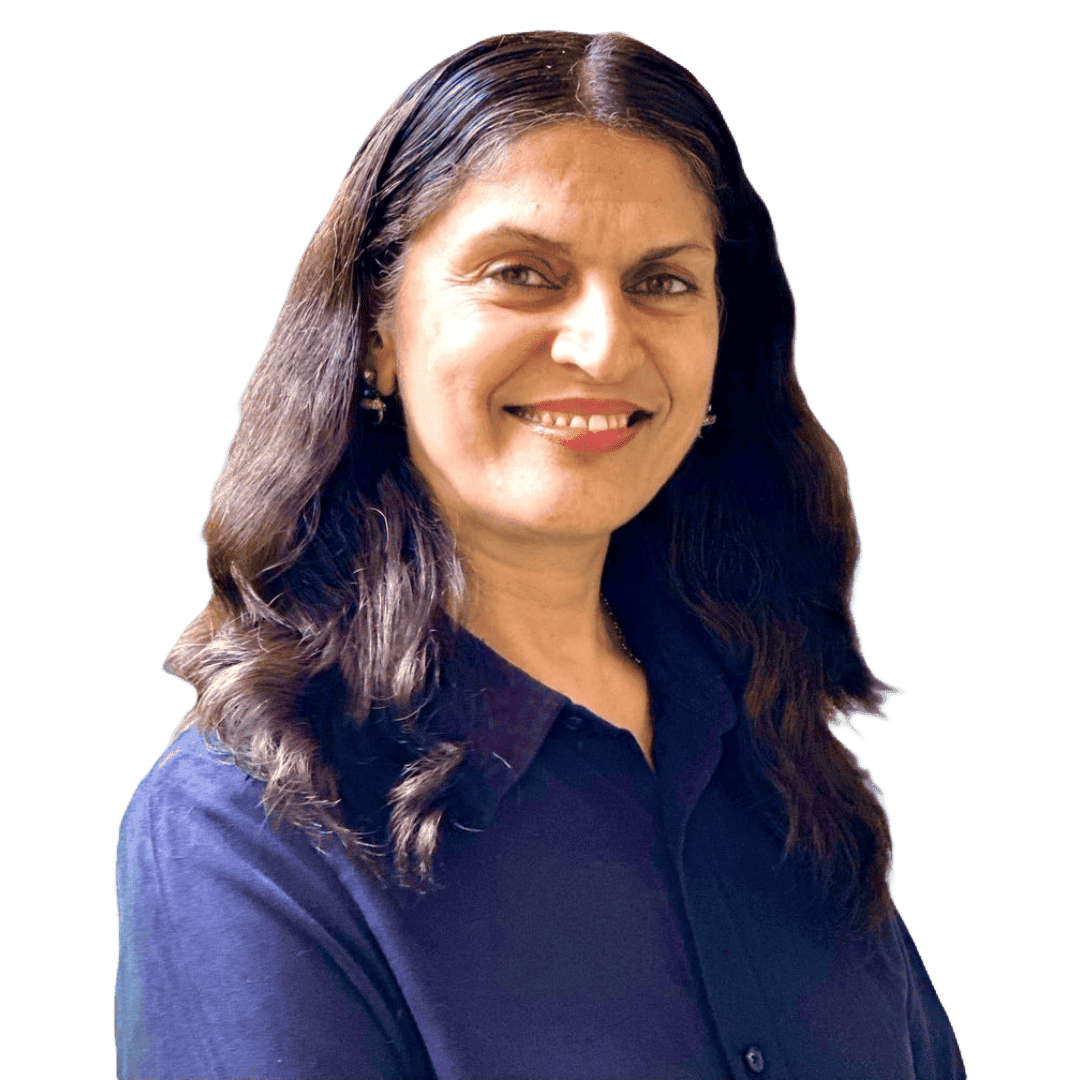
Ritu M. Uberoy is a healthcare AI strategist, technology executive, educator, and author dedicated to advancing the responsible adoption of Artificial Intelligence across healthcare delivery, digital health, and life sciences. With more than twenty-five years of leadership experience spanning the United States and India, she is recognized for helping healthcare organizations move beyond experimentation to achieve scalable clinical, operational, and business transformation through AI.
She leads AI innovation initiatives, including the AI Center of Excellence at BigRio, where she works with health systems, healthcare technology companies, and life sciences organizations to operationalize Generative and Agentic AI solutions responsibly. Her work focuses on aligning AI innovation with clinical workflows, governance frameworks, workforce readiness, and patient trust—ensuring technology augments human judgment in high-consequence healthcare environments.
Ritu is the co-author of Generative AI: Unlocking the Next Chapter in Healthcare, a practical guide for healthcare executives navigating enterprise AI adoption. She also hosts The Big Unlock podcast, engaging global healthcare leaders on AI transformation and digital innovation. An active educator and speaker, she conducts executive workshops and participates in global forums like HIMSS, ViVE, Women in Tech, AI-Powered Women, RAISE, and more, shaping the future of AI-driven healthcare. Ritu holds advanced degrees in Computer Science and completed specialized AI programs at Harvard and MIT.
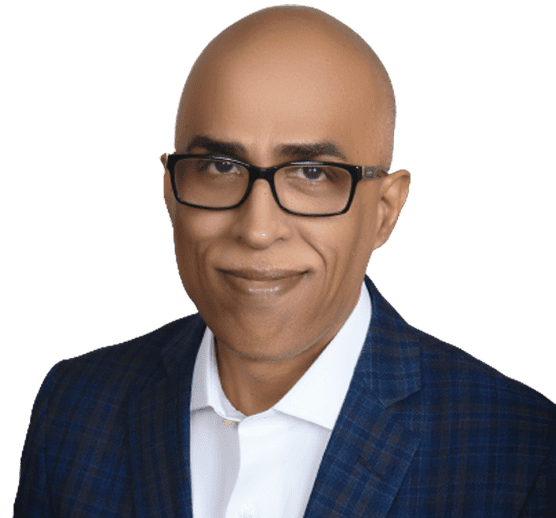
Paddy was the co-author of Healthcare Digital Transformation – How Consumerism, Technology and Pandemic are Accelerating the Future (Taylor & Francis, Aug 2020), along with Edward W. Marx. Paddy was also the author of the best-selling book The Big Unlock – Harnessing Data and Growing Digital Health Businesses in a Value-based Care Era (Archway Publishing, 2017). He was the host of the highly subscribed The Big Unlock podcast on digital transformation in healthcare featuring C-level executives from the healthcare and technology sectors. He was widely published and had a by-lined column in CIO Magazine and other respected industry publications.
Stay informed on the latest in digital health innovation and digital transformation