Season 7
In this episode, Sally Ann Frank, Global Lead for Health and Life Sciences at Microsoft for Startups, discusses how AI is moving beyond experimentation toward measurable enterprise impact. She emphasizes that the most successful startups differentiate themselves not just through technology innovation, but through evolving business models, strong customer discovery practices, and a coachable mindset grounded in strategic mentorship.
Sally explores the challenge of “pilot purgatory,” noting that founders must design for production from day one. Establishing clear ROI frameworks and demonstrating early value are essential to maintaining momentum and avoiding the law of diminishing interest often seen in stalled pilots. Looking toward 2026, Sally envisions a “show me the money” era centered on four bridges: expanding global access through virtual technology to democratize care, closing the investment gap in women’s health beyond reproductive care, advancing AI-driven precision medicine through genetics for individualized treatment, and shifting healthcare from reactive treatment toward preventative longevity. Ultimately, the conversation highlights that lasting success in AI will belong to organizations that evolve into trusted advisors, consistently delivering value at every interaction. Take a listen.
This guest appearance was facilitated through conversations initiated at HIMSS.
About Our Guest
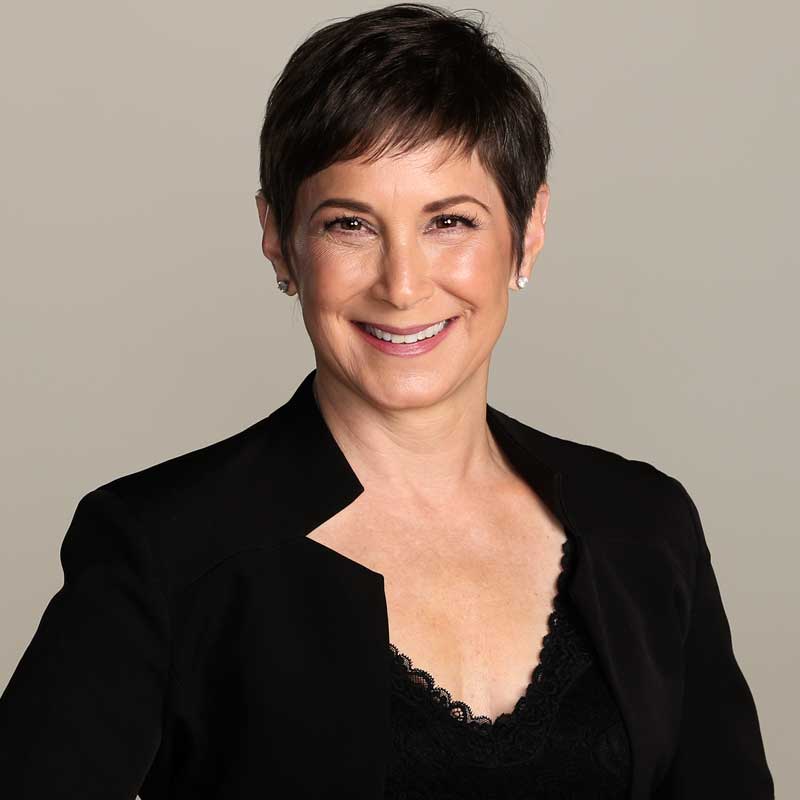
Sally Ann Frank leads the global HLS strategy, programs and portfolio for Microsoft for Startups, an organization dedicated to accelerating the development of innovative, market-making companies. Through business strategy planning, go-to-market development, and technical excellence, she enables startups to achieve their short-term revenue goals and long-term visions. Previously, she was part of Microsoft’s IoT Solutions team, helping healthcare and life sciences companies use IoT to improve patient outcomes and efficiency. With more than 25 years in the technology industry, she is focused on business outcomes, helping providers, payers, medical device, pharmaceutical and life sciences companies use IoT, Machine Learning, AI and a variety of other Microsoft technologies to meet the changing demands of the healthcare industry. She earned an MBA from The George Washington University (Washington, DC), an MS in Systems Management from the University of Southern California and a BS in Marketing and Computer Science from Virginia Tech. Sally is the author of The Startup Protocol: A Guide for Digital Health Startups to Bypass Pitfalls and Adopt Strategies that Work, and The Unicorn Protocol: Digital Health Unicorns, How They Got There and What You Can Learn from Them both from Routledge Press.
Recent Episodes
Ritu: Hi everyone. Welcome to another episode of The Big Unlock Podcast. My name is Ritu Oberoi, and I’ll be your host today along with Rohit Mahajan. We’re really excited and pleased to have Sally Ann Frank with us today. She leads the worldwide health and life sciences strategy, programs, and portfolio for Microsoft for Startups, and she has a front-row seat to how AI is reshaping industries and particularly startups. She brings a unique perspective on what separates breakout startups from the rest, and we’re really excited to ask her about the Unicorn Protocol as well. In this conversation, we will explore how startups can move from experimentation to real enterprise impact in an increasingly AI-first world. With that, I’ll pass it to Rohit for a brief introduction, and then all yours, Sally. Welcome once again to The Big Unlock Podcast.
Rohit: Thank you, Ritu. I’m Rohit, co-host of The Big Unlock Podcast. We are past two hundred episodes at this point, and we are very fortunate to have met you, Sally, at HIMSS and learned about the Unicorn Protocol. We were together at the author’s launch at the Taylor & Francis booth — a very fortunate meeting, and glad to have you on the podcast with us. Over to you for your introduction.
Sally: Thank you so much, both of you, for inviting me today. As Ritu said, I am the startup lead for health and life sciences globally at Microsoft for Startups, and our organization is dedicated to helping startups grow and scale using our technology and leveraging our customer network. I’ve been in this role for a little more than five years, at Microsoft for more than ten years, and working in healthcare for about ten years as well. Prior to this, I worked with a Microsoft partner that was a very small company — almost like a startup when I joined — and I was there for sixteen years. So I’ve been on that journey of being a small company within the large Microsoft ecosystem. I’ve also had two businesses of my own. And as you alluded to, I have the Unicorn Protocol and the book before that, The Startup Protocol — both designed to help educate startups in digital health and life sciences to really maximize their investments of time, effort, and energy to become more successful.
Ritu: Thank you, Sally. We have so much to learn from you. Let’s start with the first question. Microsoft for Startups offers infrastructure, credits, and ecosystem access — but in your opinion, what really separates the startups that convert that support into enterprise traction from those that stall? If everyone is starting from the same level playing field, what happens after that?
Sally: I think it comes down to a few key areas. One is understanding your stakeholders. As part of the Microsoft ecosystem, there are three stakeholders: the partners themselves and what they need to do to be successful; the end customers that we jointly serve; and the other people we work with — account teams, product teams, Microsoft Research, and all of the other organizations that can also be part of a startup’s growth strategy. Understanding those different audiences and being able to message to them — just as you would with different end customers — is really helpful. Another thing that separates those that succeed from those that don’t is making sure that innovation doesn’t stop with the technology. We’re all excited about AI and what it can do to advance workflows and research, but the most successful startups also innovate their business models. They innovate their hiring practices, compensation approaches, go-to-market strategies. That comes through very clearly in the Unicorn Protocol — if you read through those ten case studies, you’ll see that the innovation never stopped at just building innovative tech. And then the final piece is being coachable. None of us can truly innovate on our own. If you are driven to be successful, having strategic mentorship, working with your investors, working with your hyperscaler, and listening to your customers throughout the journey enables you to take in all of these different inputs and build a foundation that is successful today and can morph as AI continues to evolve at this pace.
Ritu: That’s a great answer. Like you said, everybody thinks it stops with the product — but you have to keep innovating even after the product exists. That leads to the next question, Sally. From your vantage point, what is the single biggest barrier startups face when selling into large enterprises? Initially they have one or two showcase clients and everything looks good, but when it comes to real enterprise sales that’s when some get left behind. What are your thoughts?
Sally: Recently I had a startup founder come to me and say, “The sales cycles are so long — twelve, eighteen months.” And yes, that does happen. But when a startup is working with an enterprise and the engagement keeps getting extended and extended, and it’s always “we’ll get back to you,” what that usually signals is that there is not a strong enough value proposition instilling a sense of urgency to get the solution in-house. If the enterprise can see itself living without your solution for a long time, that’s a problem. Make it compelling enough that they want to act sooner. The other thing I see a lot is startups following up with a prospective enterprise customer — whether after the first pitch or further along — without adding value at every interaction. When you do a first pitch, you don’t end with “So what do you think?” You end with “Was that helpful? I’d love feedback on what would make this more compelling for you. I’d like to add some features if that’s appropriate.” And when you follow up by email, don’t just say “We met last week — what do you think? What’s our next step?” Be prescriptive: “Typically, after we do this demo, we do a strategy session so we can refine and customize our solution directly for the problem you’re trying to solve and the unique characteristics of your organization.” It’s all about adding value at every interaction — whether it’s an email saying “I saw this article about a competitor of yours and I think this is something we can help with,” or “We’ve just released a new feature that directly reflects one of the things we discussed.” Every interaction should move you from being a vendor to becoming a trusted advisor. That’s what you’re going for.
Ritu: That’s the key distinguishing factor.
Rohit: Sally, this is fantastic practical advice — you’ve been in the shoes of the entrepreneur, so you know the pain firsthand. Please tell us a bit about your journey in the healthcare space. You’re heading Microsoft’s startup initiatives in health and life sciences — why not automotive or another industry? How did you end up here? I’d love to hear that story.
Sally: I’ve been a lifelong business developer and technologist, working across many different areas of the field for more decades than I’ll admit to. About ten years ago, I had the opportunity at Microsoft to join the IoT team as a specialist specifically for healthcare. When the opportunity was presented, they asked, “What do you know about healthcare?” And I said, “Well, I’ve been a patient before.” I’d been doing a lot of IoT work in manufacturing, and what I found was that the discrete manufacturing IoT scenarios translated really well to process manufacturing for pharmaceuticals, discrete manufacturing for medical devices, and things like remote patient monitoring and cold chain tracking. There were lots of things where, while I didn’t have direct experience, I could apply my IoT background. That said, I’ve never been a clinician or a scientist, and to fill that gap — starting from day one in that role — I have spent at least a half hour to an hour every day reading bespoke news feeds, thanks to AI, so that I can understand the industry better. I also alternate between reading a book for fun and a book for work, constantly filling gaps and continuing to learn. That role ten years ago uncovered a deep passion for the industry that I didn’t know I had. When you apply technology to healthcare and see the impact it can have on patients and their outcomes, it’s a whole new level of impact — and I truly treasure this role and the ability to work directly with people who are improving outcomes for our patients.
Ritu: I think Sally chose an amazing time to come into this industry, given the level of change we’ve seen recently. And as was said at the HIMSS opening keynote, “May you live in interesting times” — this is definitely one of those times. It’s great that you got to contribute to this field and be here when the generative AI wave hit. Speaking of keeping up — you mentioned reading newsletters every single day just to stay current because something new is happening constantly. In your opinion, with so many startups crossing your path, what are founders still misunderstanding about building sustainable, defensible businesses in this space? Everyone seems to be adding AI for its own sake — what really distinguishes the startups that are doing AI right from the rest?
Sally: Going back to what we talked about earlier — show value. One of the things we think about is this: 2024 was the year of experimentation, 2025 was the year of pilots, and 2026 — though it’s not on the Gartner hype cycle — is the “show me the money” year. It all has to be about return on investment. If you’re an early-stage company, you may not be able to show ROI from day one, but you should have a framework for what that will look like. You should understand what value propositions you’re going to lead with, what metrics you’re going to track, and ideally what labor savings, workflow acceleration, or step removal looks like — and have a target so you know what you’re shooting for. The customers you’re talking to in those early customer discovery conversations can literally help you shape this: “Are these the things that are most important to you? Are these the metrics we should be calculating ROI on?” The other thing that often happens — and this speaks a bit to founder naivety — is pilot purgatory. You get the pilot, you’re excited, it goes well, you document the results, and then the customer comes back and says, “We love it. Now what?” And the founder has no answer. The point is: while you’re running the pilot, you have to plan for success and start planning the full production implementation. Because if the pilot ends successfully and there is no clear next step, the law of diminishing interest sets in. The longer the gap between the pilot and when you start building in production, the less likely they are to move forward — they will find a way to tell themselves they didn’t need it that much. And you cannot forget the change management aspect. In most cases, you are asking people to do something differently. The best way to frame it is: “Instead of these ten steps, you’re only going to do five,” or “We’re automating five of those steps, you only need to do two.” But it has to be conveyed in a way where the customer genuinely feels they can’t live without it.
Ritu: So basically — make it valuable for the enterprise so that they want it, and make it easy.
Sally: Make it easy to buy. Make it easy to work with you. Be sensitive to the change management they have to do internally. You can’t be their change management team, but you can be sensitive to it and support those efforts in a way that opens the gate for you to deploy into full production.
Rohit: My takeaway from what Sally said is: have the end in mind from the beginning — you need to go into production. A pilot is only a way to get to that stage. So have a plan, align it with the customer, and move fast, because otherwise they’ll lose interest.
Sally: One final thing — invariably you’re working with someone at the enterprise who is your champion or point of contact. Make that person look good. Let them take all the glory. Step back. They will be much more inclined to do a video snippet or a case study with you if you’ve made them look good. We’re all doing this because we feel passionate about it, but a little professional and personal growth through the process — for both sides — is also very valuable.
Ritu: Make the champion look good and let them succeed as well. Great.
Rohit: Sally, sometimes when we work with clients we become their technology partner and sign a co-development or collaboration agreement at that early stage itself, so your interests are tied together — and they may even benefit from co-development license fees later on. Have you seen this model work well?
Sally: Yes — it’s a wonderful business model where everybody wins.
Ritu: Before we jump into the next question — you mentioned you love to read and you alternate between reading for fun and reading for work. Tell us about the last two books you’ve read.
Sally: I’m reading The Jazz Bird right now — it’s a sort of mafioso-type book, which is my fun read. On the work side, a few of my favorites were all written by friends. Empowering Nurses With Technology is a great book that helped me understand the nursing process and what nurses’ lives actually look like in a way I couldn’t have gotten otherwise. Tom Lowry has two books — AI in Healthcare and Healthcare Nation — both really good. And Gil Bashe published Healing the Sick Care System. Those are all great reads because they come at the ecosystem from different angles: Kathleen’s from the nursing perspective, Tom’s from the AI and healthcare ecosystem angle, and Gil’s from more of the patient voice and patient advocacy perspective — he was a medic before and has been in healthcare his whole life. Together they give you a really well-rounded feel for the ecosystem today.
Ritu: Thank you for sharing those — I’m definitely adding them to my reading list. So with all the startups you have access to, what do you see coming in the next six months to a year? Any predictions for what’s going to be the next hot area?
Sally: I’m not in the predictions game, but I’ll share my aspirations for the ecosystem. One is improved access globally — using virtual technology, cell phones, whatever we have, so that everyone is entitled to healthcare, whether it’s a virtual visit or helping a surgeon in a remote area collaborate with a specialist in another country. Access is something I’m very passionate about. Another area I hope we will do better in is women’s health. It wasn’t until around 1993 that women were regularly included in clinical trials — that’s a significant problem when half the population are women. We still receive only about 2% of healthcare investment, and what is invested tends to focus narrowly on reproductive health and menopause. But there is so much more to women’s health — women present differently for cardiology, diabetes, and all kinds of conditions. I’m also interested in personalized medicine and how we use AI around genetics, pharmacogenomics, and medications to really treat each person as an individual through chronic and acute situations. And then the final thing is flipping the switch from our break-fix model to preventative medicine and longevity medicine — improving not just lifespan but healthspan. This connects back to the women’s health issue: women typically live six to eight years longer but spend more time sick. How do we fix that? How do we genuinely improve quality of life for everyone until the end? Those aren’t necessarily predictions, but that’s where I’m hoping the industry goes.
Ritu: You’re so right on that last one. We had Dr. Klasko on for our 200th episode and he made a very similar point — even the word “physical” in annual physical is problematic. It’s annual, which is already an issue now that we have a constant stream of health data coming in from wearables. And it’s physical — what about the mental, the holistic picture? Preventative and longevity medicine is exactly where we’re heading.
Rohit: I was thinking as you spoke that these are four bridges to the future you’ve painted, Sally — each one huge in itself, and really great food for thought for all of us and for our listeners. Thank you for sharing that.
Sally: Thank you, Rohit. And thank you, Ritu. It’s been a great conversation.

Rohit Mahajan is an entrepreneur and a leader in the information technology and software industry. His focus lies in the field of artificial intelligence and digital transformation. He has also written a book on Quantum Care, A Deep Dive into AI for Health Delivery and Research that has been published and has been trending #1 in several categories on Amazon.
Rohit is skilled in business and IT strategy, M&A, Sales & Marketing and Global Delivery. He holds a bachelor’s degree in Electronics and Communications Engineering, is a Wharton School Fellow and a graduate from the Harvard Business School.
Rohit is the CEO of Damo, Managing Partner and CEO of BigRio, the President at Citadel Discovery, Advisor at CarTwin, Managing Partner at C2R Tech, and Founder at BetterLungs. He has completed executive education programs in AI in Business and Healthcare from MIT Sloan, MIT CSAIL and Harvard School of Public Health. He has completed the Global Healthcare Leaders Program from Harvard Medical School.

Ritu M. Uberoy is a healthcare AI strategist, technology executive, educator, and author dedicated to advancing the responsible adoption of Artificial Intelligence across healthcare delivery, digital health, and life sciences. With more than twenty-five years of leadership experience spanning the United States and India, she is recognized for helping healthcare organizations move beyond experimentation to achieve scalable clinical, operational, and business transformation through AI.
She leads AI innovation initiatives, including the AI Center of Excellence at BigRio, where she works with health systems, healthcare technology companies, and life sciences organizations to operationalize Generative and Agentic AI solutions responsibly. Her work focuses on aligning AI innovation with clinical workflows, governance frameworks, workforce readiness, and patient trust—ensuring technology augments human judgment in high-consequence healthcare environments.
Ritu is the co-author of Generative AI: Unlocking the Next Chapter in Healthcare, a practical guide for healthcare executives navigating enterprise AI adoption. She also hosts The Big Unlock podcast, engaging global healthcare leaders on AI transformation and digital innovation. An active educator and speaker, she conducts executive workshops and participates in global forums like HIMSS, ViVE, Women in Tech, AI-Powered Women, RAISE, and more, shaping the future of AI-driven healthcare. Ritu holds advanced degrees in Computer Science and completed specialized AI programs at Harvard and MIT.

Paddy was the co-author of Healthcare Digital Transformation – How Consumerism, Technology and Pandemic are Accelerating the Future (Taylor & Francis, Aug 2020), along with Edward W. Marx. Paddy was also the author of the best-selling book The Big Unlock – Harnessing Data and Growing Digital Health Businesses in a Value-based Care Era (Archway Publishing, 2017). He was the host of the highly subscribed The Big Unlock podcast on digital transformation in healthcare featuring C-level executives from the healthcare and technology sectors. He was widely published and had a by-lined column in CIO Magazine and other respected industry publications.
Stay informed on the latest in digital health innovation and digital transformation