Season 7
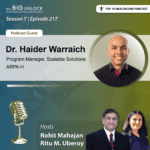
In this episode, Dr. Haider Warraich, Program Manager, Scalable Solutions at Advanced Research Projects Agency for Health (ARPA-H), explains why building trust, not just advancing technology, is key to unlocking the next generation of healthcare AI. Leading ARPA-H’s ADVOCATE program, he shares how the agency is accelerating the development of patient-facing, agentic AI designed to improve outcomes for people living with heart failure, while simultaneously building the regulatory and evaluation infrastructure needed to safely bring these innovations into clinical practice.
Dr. Warraich argues that healthcare must innovate and evaluate AI in parallel. As AI development accelerates, lasting trust will depend on rigorous clinical evidence, familiar regulatory pathways, and real-time post-market monitoring. He also encourages innovators to think boldly, noting that breakthrough ideas often seem unrealistic before they become reality.
Dr. Warraich sees AI alignment, patient-centered technologies for high-need populations, and high-fidelity healthcare simulations as the next frontiers of innovation. He envisions that the future of healthcare AI will be shaped by bold ideas grounded in scientific rigor, transparent evaluation, and close collaboration between innovators, regulators, and health systems. That’s how the industry will build the trust needed to scale AI and improve patient care. Take a listen.
This guest appearance was facilitated through conversations initiated at HIMSS.
About Our Guest
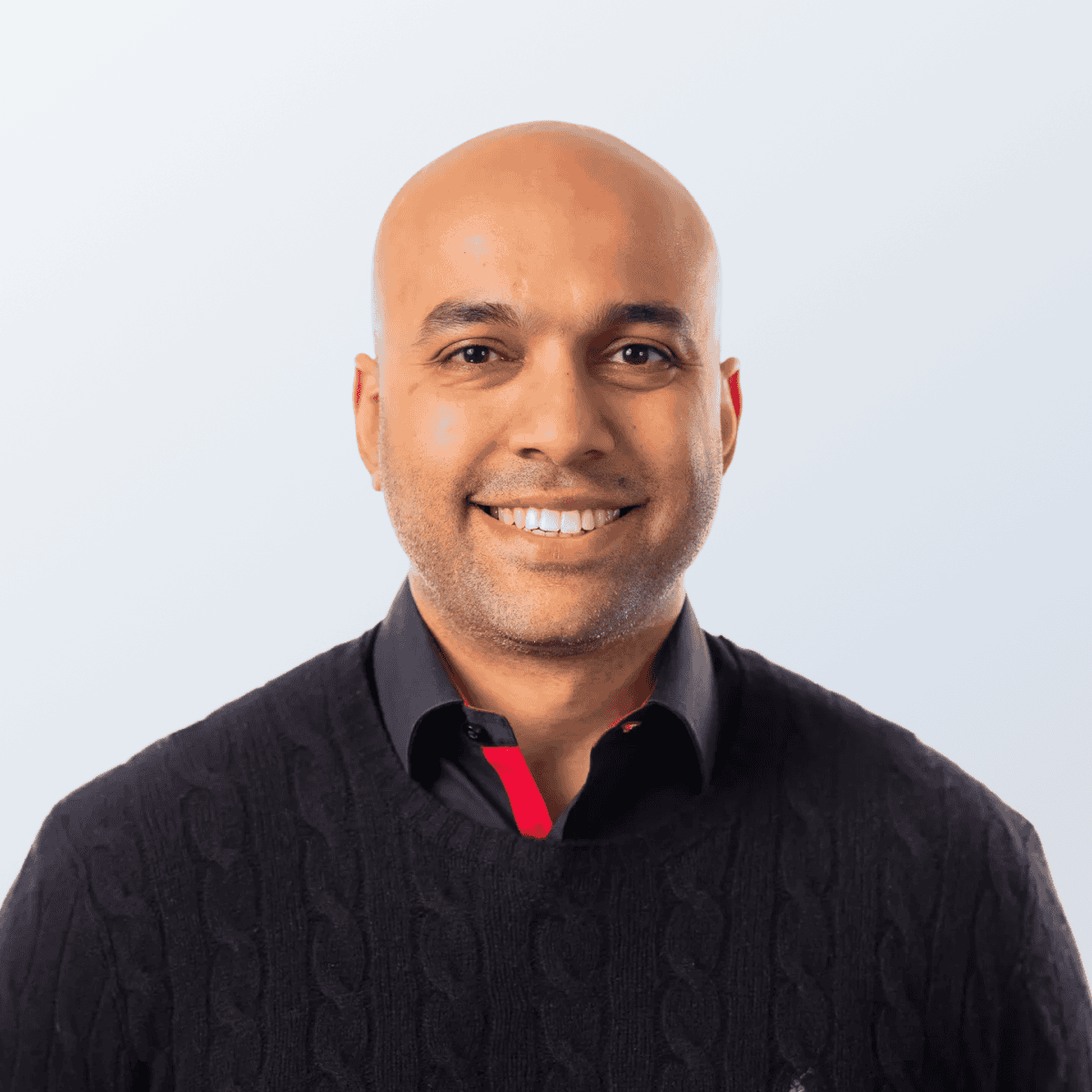
Dr. Haider Warraich joined ARPA-H as a Program Manager in December 2024. He is a clinician with expertise in cardiology, heart failure, and transplantation. Most recently, he served at the U.S. Food and Drug Administration as a Senior Clinical Advisor for Chronic Disease to the FDA Commissioner where he helped shape policy around drugs, devices, nutrition, digital health and artificial intelligence.
Previously, Warraich was a faculty member at Harvard Medical School and Brigham and Women’s Hospital and Director of the Heart Failure Program, at the Veterans Affairs Health System in Boston. He received his medical degree from Aga Khan University, completed residency at Beth Israel Deaconess Medical Center, and fellowships at Duke University Medical Center. He is also the author of over 175 peer reviewed papers and several books.
Recent Episodes
Ritu: Hello, everyone. A very warm welcome to all our listeners to The Big Unlock Podcast Season Seven. My name is Ritu Oberoi, and I’m the managing partner at Damo Consulting and your co-host today along with Rohit. We are really excited and honored to have Dr. Haider Warraich on our podcast today. Dr. Warraich is a cardiologist, researcher, and one of medicine’s most compelling contemporary writers, known for bringing humanity, history, and philosophy into conversations about health and illness. He joined ARPA-H as a program manager in December 2024. ARPA-H is the Advanced Research Projects Agency for Health, which supports the development of high-impact solutions to society’s most challenging health problems. He was previously a faculty member at Harvard Medical School and Brigham and Women’s Hospital and director of the Heart Failure Program. He has written three books and over 175 peer-reviewed papers. Really happy to have him here with us. I’ll ask Rohit for a short introduction, and then it’s all yours, Dr. Warraich.
Rohit: Hi everyone. I’m Rohit Mahajan, CEO of Damo Consulting and co-host of The Big Unlock Podcast. Very happy to be here. Over to you, Haider.
Haider: It’s my pleasure to be here, Ritu and Rohit. We first met at HIMSS and I know we’ve been meaning to speak since then. Lots of exciting things are happening in the health technology space, so I’m excited to dig in.
Ritu: Great. Let’s get started. ARPA-H was created to tackle ambitious, seemingly intractable challenges with a very different risk tolerance than traditional research funding. Based on your experience there, which healthcare problems do you believe are truly moonshot-worthy? And are we being bold enough in the questions we’re asking, or are we still being cautious and not fully exploring the potential of AI?
Haider: To create a thriving funding infrastructure, you need a variety of payers and funders who can tackle different bottlenecks in the market. You need an agency like NIH with broad scale where progress is realized over decades, if not longer. At the same time, private funders — especially in the AI space — will play a huge role in supporting breakthroughs and promising teams. ARPA-H fills a gap that existed in federal research funding: there was no health-focused agency that could take big swings, turn things around quickly, operate on a metrics-and-milestones basis, and have the risk tolerance to take on areas where incremental progress will never be enough — areas of genuine national interest that also create common good for the rest of the world. Our agency director, Dr. Alicia Jackson, has outlined key priorities for the agency. These include winning the biotech race, longevity and reversing aging, defeating devastating diseases, and taking a platform approach to AI. Within AI, we have many different programs approaching this from different angles. The program I’m leading is called the Advocate Program, and its vision is to bring AI to the bedside — bring generative and agentic AI that can essentially do everything a clinician can over the phone — and take that through the regulatory pathway so it can open up this entire field for everyone. But to do so not just quickly, also done well, given how critical it is to get this right. The response to not just this program but to many of ARPA-H’s programs is a testament to how important it always was to have us as part of this ecosystem.
Ritu: I want to dig a little deeper into the speed at which AI is moving. When you take on a project like Advocate with a six-month horizon, but everything can change in a week — how do you keep up and think that far ahead?
Haider: It’s a great question, and it’s actually what makes developing a government-funded AI program very difficult. Even the most ambitious projections in this field can become obsolete very quickly given how fast things are moving. Here’s how I’ve approached it. First, there’s a reason Advocate is focused on the highest-risk AI in the most regulated space. There is already significant integration of AI across healthcare, but mostly in low-risk settings — ambient scribe technology has taken off, and clinical decision support will transform how clinicians interface with the healthcare system in the next few years. But Advocate was focused on developing a patient-facing technology, which puts you in a high-risk but also high-reward category. It targets really high-capability functions: making a diagnosis autonomously, performing triage, closing the loop by providing and prescribing treatment directly to the patient, and going through a regulatory pathway where there’s essentially no precedent for technology like this. We also focused on a relatively high-risk population — patients with heart failure — because ARPA-H believes that if you create a demonstration this ambitious, it opens up the field for everyone downstream. The reverse doesn’t happen. I also tell people: if you’re developing an AI program and it doesn’t sound insane to you, you’re going to get scooped. If what you’re doing sounds feasible today, you’re already a few steps behind. A lot of the work we’re developing for the future would sound off the wall if I described it today — but that is the kind of ambition we need to bring to this technology, because so far it has delivered on, if not exceeded, expectations.
Ritu: How do you reconcile that supersonic speed of development with regulatory pathways that are still slow? If it takes months to approve something, you risk falling behind again.
Haider: That is one of the reasons why an agency like ARPA-H should — and does — work very closely with the regulator. The FDA has never had a partner in government like ARPA-H before: one that can make major investments and ensure that the problems we’re solving actually help the regulators, rather than just impeding their work or getting in the way. That partnership is really crucial. I do think that many regulatory unlocks are fundamentally bureaucratic issues — a sense that you need X number of patients, a specific margin, a specific enrollment type. But in the AI space, a lot of the regulatory blockers are technical. We simply don’t yet have the technology infrastructure that this space requires. One of the most important parts of the Advocate Program is not just supporting the development of technologies that will be classified as medical devices by the FDA, but also funding evaluation technology for post-market monitoring. We call this a supervisory agent, or the supervisory layer — and it is being developed at the same pace and with the same level of resources as the primary technology, if not more. Rather than building in sequence, we are building in parallel, because we understand that traditional timelines and pathways are not going to work for this type of technology. If you want to be relevant as a body that can administer regulations in this space, you need technical support. We have to funnel and focus the best minds and best teams in the world on the problems that are going to unlock this field — and working with the regulator to keep their perspective centered ensures we create solutions aligned with their strategy. We plan to keep doing that.
Ritu: One of the most interesting things I picked up is that the Advocate Program is patient-facing. When you’re talking about technology that has to sound almost crazy to be relevant, how do you bring it to people who may not be ready for it?
Haider: There are two things. First, when you start with an ambitious vision, you also need to scope it. Instead of saying the teams Advocate supports are going to build AI cardiologists, what we’re focused on is: can you develop a technology using generative and agentic AI that improves outcomes in patients with heart failure? That immediately scopes the problem — you define the population, the endpoints, what goes on the label, how you design and deliver it. Scoping is very important. Second, communication matters enormously in the AI space — more than in almost any other field — because people genuinely care about this. This is not a technology working quietly in the background. Everyone sees AI as something that could transform society, healthcare, and every industry. That creates excitement, but it also creates anxiety. There is a real risk that poorly developed tools could add more friction to a system that doesn’t have a lot of give. Technology that isn’t well designed, or doesn’t have the patient’s or clinician’s best interest at its core, could be genuinely catastrophic. So how we talk about this technology and how that is reflected in the design matters enormously for getting the market ready. The technology is ready — the market needs more time. But the market also needs to see things in familiar forms. Clinicians take risks with new technology all the time — new implantable devices, new drugs, new chemotherapies, new genetic therapies — but there is always a sequence to what they see before taking that risk: clinical trials, FDA authorization. There is a precedent for what a community needs to see before accepting that the benefits of a new technology exceed the risks. That is what the first generation of clinical AI technologies needs to provide. For patient-facing technologies, the bar should be, and I think it is fair to argue it should be, the same as for a new high-risk medical device or a new drug. Once that foundational evidence exists, it will cause a seismic shift in how these technologies are accepted, implemented, and deployed. That is one of the core theses of the Advocate Program. Even though the technology itself is frontier — agentic AI for clinical care, supervisory agents for real-time post-market monitoring — the evaluation is super traditional: single-site deployments, human factors research, IDE studies, multicenter trials, and outcomes people understand: heart failure hospitalizations, guideline-directed medical therapy, mortality. We chose to innovate in the technology but kept the evaluation as familiar as possible, because that is the evidence people are accustomed to seeing when adopting new technologies.
Ritu: Great answer. Now I’ll give Rohit a turn.
Rohit: Thank you, Ritu. Haider, I especially liked the point that the FDA has never had a partner in government like ARPA-H — that’s fantastic, because regulatory hurdles need to be surmounted quickly. Tell us a bit more about the Advocate Program: the time horizons, the funding size, the number of projects. And separately, tell us about your own story — what attracted you to healthcare and to ARPA-H, and what you’re looking toward in the future.
Haider: On the timeline: the Advocate Program was launched in January. We solicited solution summaries from teams across each of the technical areas — focused on the development, evaluation, and implementation of clinical agentic AI, patient-facing, for patients with heart failure. That is standard process for every ARPA-H program. We then encouraged teams to submit full proposals, from which we make decisions about who to recommend for funding. Our hope is to announce the selected teams in the coming months, sooner rather than later. On funding: these are contracts, not grants, and a typical ARPA-H program is usually between fifty and a hundred and fifty million dollars. That said, the value the program was always created to provide goes beyond what you can count in dollars. If you’re going to make a dent in the AI space, money alone is not enough — there is plenty of capital available. The real question is how we create value and something that genuinely matters. We are leaning into our strengths as a government agency, which means focusing on the regulatory pathway, on implementation, and on helping health systems get excited about technology where there are still a lot of unknowns. Healthcare systems wanted a partner they could trust as a convener of some of the best technology companies working in this space. And then there is access to data — data that will help determine how well these technologies are developed and how well they perform after deployment. Our goal for the teams is a technology ready to go to FDA for market authorization within two years of the program starting — one year felt too short, three years felt too long. After that, we plan a multicenter trial of the highest-performing technologies in an integrated health system, focused on clinical outcomes but specifically on how to implement this technology in clinical practice. We hope to share more details in the coming months. As for me: I grew up in Pakistan, not far from where Ritu is from in Delhi, just across the border, and went to medical school there. I have always approached writing as a storyteller first, and that has informed my research and clinical career. I moved to Boston for residency after finishing medical school, completed a cardiology fellowship, and then had the opportunity to join the FDA as a senior advisor on chronic disease to the FDA Commissioner. That experience brought everything into sync — giving me the regulatory perspective, helping me understand the critical bottlenecks, and helping me find a common language that works for technologists, private investors, academics, health systems, and regulators. I have been at ARPA-H for almost a year and a half, and it has been really exciting.
Rohit: Thank you for sharing that. You mentioned the Advocate Program application cycle has closed — are you following a January-through-December cycle, and will the next cycle open in January for teams that want to know?
Haider: The Advocate Program opening has closed and we’ll be able to share more once all the teams are on contract — that is essentially day zero of the program. We’re hoping that comes soon. Overall, things are going well. The way ARPA-H works, program managers are expected to develop new programs roughly every year, ideally building on and extending the thesis of the previous one. I foresee — and I’m hopeful — that you’ll see our team coming out with more programs that build on Advocate and extend its impact across the field. This space is too big to rely on a single program to unlock it. Teams are also always welcome to send their ideas directly to ARPA-H and connect with program managers. That process is competitive and depends on finding the right idea, the right risk space, and the right team, but it is an opportunity that remains open. These investigator-initiated projects, alongside agency and program manager-initiated programs, are the major ways to engage with ARPA-H, and there is always new work and new opportunities coming up.
Ritu: I think we can squeeze in one last question. Seeing this field so up close and being in touch with teams telling you about the future of healthcare innovation — which emerging technology do you think is receiving more attention than it deserves? Where is everyone focused when there are other things we should be looking at?
Haider: My paradoxical answer is probably AI. What I’ll say is that AI is receiving the appropriate level of attention, but there are still real gaps we need to focus on. How high-risk AI technologies are evaluated — real-time evaluation — is going to be incredibly important and needs more attention. AI alignment is another: how do we align AI outputs with the preferences, values, and needs of humans, not just as groups but as individuals? That is especially important in healthcare. I also think AI developed specifically for the populations with the greatest need — older people, people with multiple comorbidities, cognitive dysfunction, sensory issues — needs more focus. Developing and validating tools for those populations, where we think the benefit can be greatest, is underexplored. And finally, the space I’m most personally interested in: I think we have finally reached a point where we have the models, the data, and the compute to develop high-fidelity simulations for healthcare. In every other field — manufacturing, supply chain, logistics, transportation, defense, climate — simulation is a huge part of how innovation happens. It remains essentially nonexistent in healthcare, largely because healthcare is hard, our data is messy, humans act in complex ways, patients have intricate physiologies and pathologies, and the overall complexity has made realistic simulation essentially impossible until now. That is a space I believe has real potential to transform how we develop and value technologies, and could meaningfully shorten both development and implementation cycles.
Rohit: Haider, would you like to say anything to close out — perhaps about your most recent book or anything you’re working on?
Haider: Before joining government I had written three books over five years, and in some ways joining ARPA-H was my retirement from writing — I wanted to take a break and be fully present in this work. My last book was focused on chronic pain, partly because from a scientific perspective it is a fascinating phenomenon, partly because I practiced at the height of the opioid epidemic in the United States, and partly because I have lived with chronic pain myself — I’m all good now, but for many years it was part of my life. I combined all of those threads into a book called Song for Scars, published around 2021. But it has been a while since then. What I will say is that a lot of the work we do at ARPA-H is unexpectedly similar to writing a book — having a plan, an outline, a vision, and then putting the pieces together, talking to people, doing research, iterating, editing. It is a very creative, collaborative process. So even though I thought I had retired from writing, much of what I learned then has proven deeply applicable to developing programs and working within this amazing ecosystem.
Ritu: Thank you, Dr. Warraich. It’s been a pleasure having you on our podcast. Thank you so much for joining us.
Haider: Thank you. I appreciate it.
—
Subscribe to our podcast series at www.thebigunlock.com and write us at info@thebigunlock.com
Disclaimer: This Q&A has been derived from the podcast transcript and has been edited for readability and clarity.

Rohit Mahajan is an entrepreneur and a leader in the information technology and software industry. His focus lies in the field of artificial intelligence and digital transformation. He has also written a book on Quantum Care, A Deep Dive into AI for Health Delivery and Research that has been published and has been trending #1 in several categories on Amazon.
Rohit is skilled in business and IT strategy, M&A, Sales & Marketing and Global Delivery. He holds a bachelor’s degree in Electronics and Communications Engineering, is a Wharton School Fellow and a graduate from the Harvard Business School.
Rohit is the CEO of Damo, Managing Partner and CEO of BigRio, the President at Citadel Discovery, Advisor at CarTwin, Managing Partner at C2R Tech, and Founder at BetterLungs. He has completed executive education programs in AI in Business and Healthcare from MIT Sloan, MIT CSAIL and Harvard School of Public Health. He has completed the Global Healthcare Leaders Program from Harvard Medical School.

Ritu M. Uberoy is a healthcare AI strategist, technology executive, educator, and author dedicated to advancing the responsible adoption of Artificial Intelligence across healthcare delivery, digital health, and life sciences. With more than twenty-five years of leadership experience spanning the United States and India, she is recognized for helping healthcare organizations move beyond experimentation to achieve scalable clinical, operational, and business transformation through AI.
She leads AI innovation initiatives, including the AI Center of Excellence at BigRio, where she works with health systems, healthcare technology companies, and life sciences organizations to operationalize Generative and Agentic AI solutions responsibly. Her work focuses on aligning AI innovation with clinical workflows, governance frameworks, workforce readiness, and patient trust—ensuring technology augments human judgment in high-consequence healthcare environments.
Ritu is the co-author of Generative AI: Unlocking the Next Chapter in Healthcare, a practical guide for healthcare executives navigating enterprise AI adoption. She also hosts The Big Unlock podcast, engaging global healthcare leaders on AI transformation and digital innovation. An active educator and speaker, she conducts executive workshops and participates in global forums like HIMSS, ViVE, Women in Tech, AI-Powered Women, RAISE, and more, shaping the future of AI-driven healthcare. Ritu holds advanced degrees in Computer Science and completed specialized AI programs at Harvard and MIT.

Paddy was the co-author of Healthcare Digital Transformation – How Consumerism, Technology and Pandemic are Accelerating the Future (Taylor & Francis, Aug 2020), along with Edward W. Marx. Paddy was also the author of the best-selling book The Big Unlock – Harnessing Data and Growing Digital Health Businesses in a Value-based Care Era (Archway Publishing, 2017). He was the host of the highly subscribed The Big Unlock podcast on digital transformation in healthcare featuring C-level executives from the healthcare and technology sectors. He was widely published and had a by-lined column in CIO Magazine and other respected industry publications.
Stay informed on the latest in digital health innovation and digital transformation