Season 7
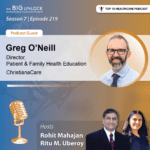
In this episode, Greg O’Neill, Director of Patient & Family Health Education at ChristianaCare, explores why effective communication is one of the most overlooked drivers of better healthcare outcomes. Drawing on his experience as an ICU nurse and health system leader, Greg explains that health literacy is not simply about providing information, it is about ensuring patients truly understand their care and feel confident acting on it.
Greg shares how ChristianaCare is embedding health literacy into patient education, medication management, and clinical workflows by using plain language, personalized content, and technology that supports rather than disrupts caregivers. He also discusses AI’s potential to break down fragmented care by connecting information across systems, reducing cognitive burden for patients, and guiding them through increasingly complex healthcare journeys.
Greg encourages healthcare leaders to adopt a health literacy lens when evaluating digital tools and transformation initiatives. He argues that the greatest value comes when technology strengthens human connection, builds trust, and helps patients achieve better outcomes through clearer communication. Take a listen.
This guest appearance was facilitated through conversations initiated at HIMSS.
About Our Guest
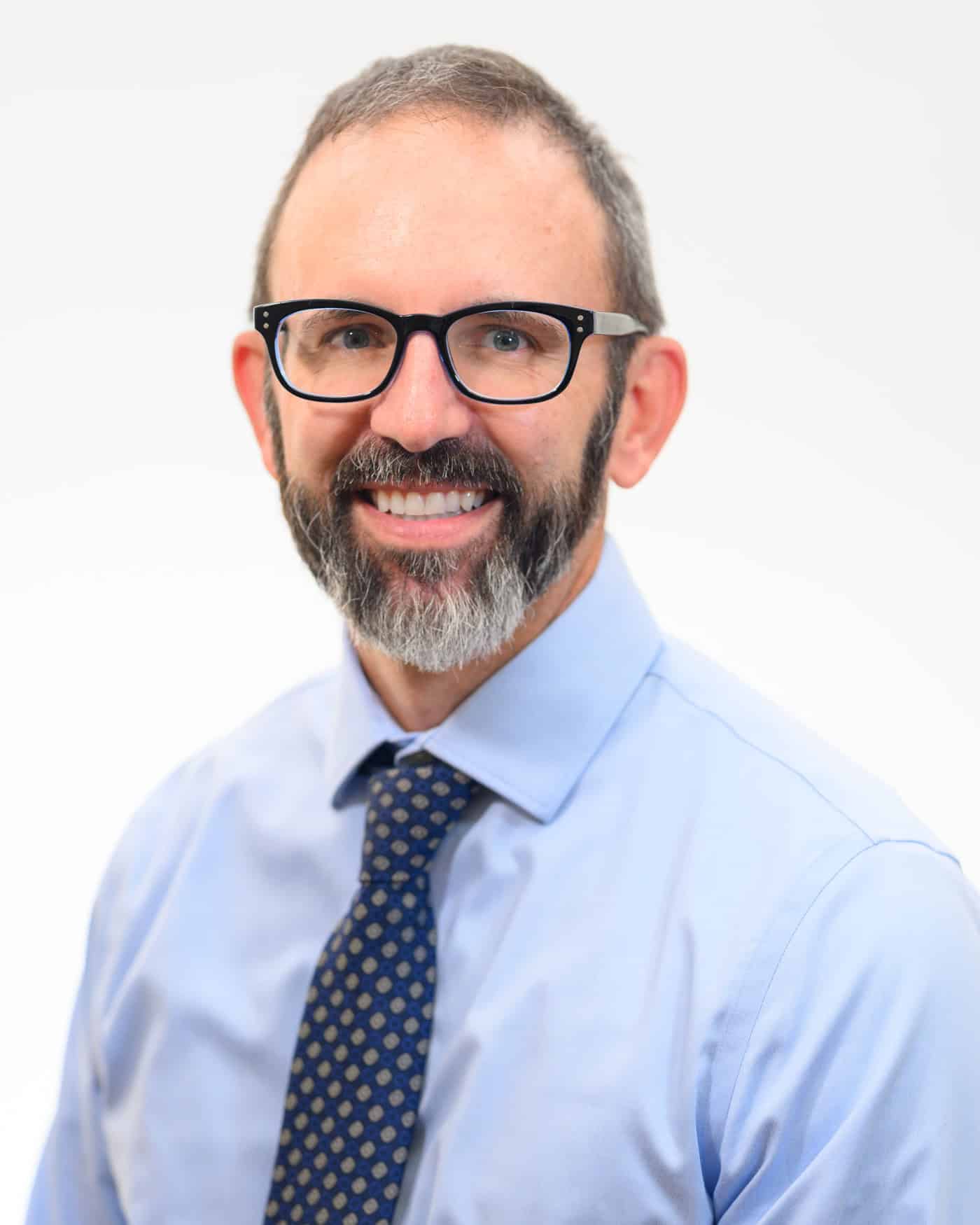
Greg O’Neill, MSN, APRN, AGCNS-BC, NPD-BC, NEA-BC, is the Director of Patient & Family Health Education at ChristianaCare. As director of Patient & Family Health Education, Greg O’Neill leads the strategic plan for patient education and health literacy initiatives at ChristianaCare. After moving on from direct patient care as a trauma/surgical ICU nurse, O’Neill has established a team of nursing professional development specialists who champion health literacy best practices systemwide and support all manner of patient education initiatives and vendor relationships. He is also the chair of the Health Literacy Council of Delaware where he leads a statewide initiative to impact the strategic plan for health literacy across all health sectors. In addition, O’Neill serves as chair of the board of directors for Literacy Delaware, an adult literacy agency in Wilmington, DE. O’Neill has been with ChristianaCare for 16 years and received his MSN as a CNS from the University of Delaware.
Recent Episodes
Ritu: Hello, listeners. Welcome to Season Seven of the Big Unlock Podcast. My name is Ritu Oberoi, and I’m the managing partner at Damo Consulting and your host today along with Rohit, my co-host. We are really excited to welcome Greg O’Neill to our podcast. Greg is the Director of Patient and Family Health Education at ChristianaCare, one of the nation’s most innovative health systems, based in Wilmington. In this role, he leads the strategic plan for patient education and health literacy initiatives. I’ll ask Rohit for a brief introduction, and then it’s all yours, Greg.
Rohit: Hi everyone. I’m Rohit Mahajan, CEO and managing partner at Damo Consulting, and very excited to have this conversation with you, Greg. Over to you.
Greg: Thank you for that introduction. Just to clarify further — I’m an advanced practice nurse, so everything I do comes through that nursing lens. Nurses really try to connect with patients’ needs, as do other healthcare providers. I’m excited to be here. Thanks for having me, and let’s get into it.
Ritu: Why don’t we start with you telling us a little more about ChristianaCare, where your digital health program stands today, what the enterprise priorities are, and how patient education and health literacy fit into that broader strategy?
Greg: I’m very lucky to work at ChristianaCare. We’re a very busy health system — one of the busiest in our region, the largest healthcare system in Delaware, and we provide care across four states. A lot of people are depending on us to provide safe, effective care. We like to say that we serve our patients, families, and communities in their care. One of the ways we do that is by becoming more effective at communication and more efficient in care delivery. Patient education and health literacy are tools in our toolbox to meet people where they are and make sure they’re getting the care they need and can care for themselves as needed. As for system priorities — we do like to be innovative and forward-thinking, and that’s one reason health literacy is so important to our organization. Technology is equally valued. While I don’t oversee all of the technology platforms, I can tell you there is serious interest in making things easier for patients, families, and caregivers alike. Everyone wants healthcare to be easier — for those providing care, they want everything to be seamless and connected; for those receiving care, they want to understand what’s in front of them, what their choices are, and what they need to do to have a better quality of life. That’s where we’re trying to meet them.
Ritu: Thank you, Greg. That’s a perfect lead-in to my next question. We’re seeing a lot of focus on digital access and the consumer experience because patient expectations are rising alongside access to tools like ChatGPT, where patients feel much more prepared and empowered when they come in for care. What are you seeing on the front lines, and how does that shift the mindset around care delivery?
Greg: Our entire world is undergoing this relationship with AI and information. The attention economy is very important — where are people spending their time and attention? One thing we can’t forget in all of this is that people spend time with information and sources they trust. So while we continue to evolve and make care more efficient using advanced systems like AI, we really need to make sure the human connection is still there. No care can happen with digital resources alone. You need care providers, a team, and a system as the backbone to support all of it. That human connection is really where, from a communication standpoint, it all starts and ends. From my perspective, if a person leaves a healthcare encounter confused — not knowing what’s happening or what to do next — that will not help build trust between the two people in that interaction. The tools we use, like AI and patient education resources, need to be wrapped in the context of the human relationship to be trusted. Otherwise, when folks don’t fully understand what’s happening from their care provider, that’s when they seek other sources online. We really want to make sure they trust us first, so that the tools we’re using are what they turn to when they need additional information and want to follow up on their care.
Ritu: I have a follow-on question. What do you think patients and families are actually asking for when it comes to the digital health experience, and how has that shaped the way you approach medication communication and education?
Greg: There are two things I think about on that front. Everyone wants this to be easier — that is the main thing. And it has to meet people where they are. Those are the two pillars. If a person is interacting with an information source and the information is too complicated, too voluminous, or too complex, they’re not going to be able to access it. How we communicate is actually an access-to-care issue. If people don’t feel they’re getting information in the way they need it, they may disengage and disregard that information entirely. Going back to ease — we have all become accustomed to everything being fairly easy from a consumer standpoint. At the touch of a button you can have things delivered to your home or get the service you need, and I think that’s what people are looking for from healthcare: to evolve and meet the same lifestyle standard they experience in the rest of their lives. The goal is to make it that easy, but at a level that people can genuinely interact with.
Ritu: Absolutely right — they want instant access, but they also want to be able to trust the information they’re getting. Rohit, would you like to ask a question?
Rohit: Greg, the practice of medicine is so wide and specialized, with so many different subspecialties. How do you build trust across all of them? Is your group focused on one aspect, or how does a health system overall build trust with patients across every specialty?
Greg: That is an amazing question, because it’s extremely difficult. The care we provide is so complex, the needs so varied. At ChristianaCare, we take care of people from all stages of life — we’re with people the whole way. Real trust and connection happen at the local level. Whatever your interaction with a given specialty is, that’s where the actual connection to care takes place. But from a system strategy standpoint, my team oversees the strategic plan for how we conduct patient education across the organization. We do need broad-reaching standards and practices to ensure the baseline for everyone is at a good operating level. That’s why we promote health literacy best practices. We need to make sure the tools we’re using are wrapped in the care delivery practices of each local provider, so that local connection really sticks. And going back to ease of use — if we’re making system-level decisions that set a relatively simple baseline for everyone, that makes it easier for local providers to pick up those tools and use them in their individual patient interactions. It’s the combination of those two things — system-level standards and local connection — that really drives success in healthcare.
Rohit: That’s great. And Greg, tell us more about how you started your nursing career and what some of your plans for the future look like.
Greg: I started as a student nurse extern — a common way many nurses begin their careers, finding your way into a health system and getting to work right away. From those roots I moved through surgical ICU, where I was a nurse for a number of years, and then continued to advance within the system because I really wanted to impact as many people as possible. I try to bring systems thinking to my nursing practice. After the ICU, I went on to get my master’s and became an advanced practice nurse, because from that position you have access to roles where you can influence with broad strokes how we provide care — and that’s where my personality met my profession.
Rohit: What do you think the future holds?
Greg: I just want to keep providing value — that’s my main goal. If I can influence the conversation and the attention given to patient education and health literacy, I’ll keep doing that. There are many competing priorities in healthcare, and one of my roles is to be an advocate for patients through communication and health literacy best practices. I hope to keep elevating that conversation, because I think it may be underappreciated in the history of healthcare just how important communication is in helping people reach their health goals. Whenever there’s an opportunity for improvement, it often lives in the communication realm, and we need to make sure we’re connecting with people.
Rohit: I’m curious about your approach — communication is so diverse, with so many channels available. How do you measure success at the end of a quarter or a year? What are your success criteria?
Greg: In the realm of patient education, those connections are still being developed. When it comes to quality of care, we have a number of metrics that health systems everywhere use to monitor things — like readmission rates and hearing directly from patients and families about their experience of care. We try to align ourselves with those system-level quality goals. The belief is that by improving patient education and communication, we contribute to improving those standard metrics: safe and effective care, and hearing back from patients and families that it’s working. Specifically for patient education, we’re working to connect our tools more directly to the outcomes we’re seeing. That’s still evolving work.
Ritu: It’s time to talk about AI. We speak with a lot of C-suite leaders, but given your experience on the front lines of nursing and working directly with patients, what do you think about technologies like ambient documentation, AI scribing, or voice agents? How are they going to affect nursing, and where do you see the most transformational potential? Where are you seeing the best adoption and the most meaningful difference?
Greg: I don’t directly oversee systems like ambient listening, but I pay close attention to what’s happening in those spaces. To me, the potential is huge, and I think it’s really going to break down silos. It’s still a little early to see exactly how it will all come to fruition, but one of the most frustrating things for patients and families is when care feels disconnected. We do our best here to make sure those dots are connected for people. AI has so much potential to take what has evolved as disconnected systems and bring them together — to take the cognitive load off the patient, to consolidate all of this information into a clear understanding of what’s happening, what the plan is, and what they need to do next. If we can do that, we’re really transforming healthcare, and I do see a lot of attention moving in that direction. Healthcare is not easy — I can say that directly from having been at the bedside as a nurse. Anything we can do to make the process easier for everyone involved, both caregivers and patients, is going to be a game changer. If we can make all the systems work together to support that, it will be a genuine lifestyle change for everyone involved.
Ritu: Like a personal companion that guides you through the whole journey and keeps telling you what’s next — that would be really remarkable. While looking at ChristianaCare, we read about your work with FDB and their Meducation solution to bring personalized multilingual medication calendars inside the EHR. For listeners or health systems that haven’t explored that kind of tool yet, what does it actually look like in practice?
Greg: When I started this journey over twelve years ago, really focusing on patient education and trying to bring health literacy concepts and practices to care delivery, I wanted to find a strategic partner. I knew this process was going to take time to evolve, technology would keep changing, and I needed a thought partner and strategic partner for the long haul. That’s what I found with FDB and Meducation. From the very first time I saw their solution, I felt they had health literacy at the forefront, and that really came through in the innovation of the tool. The whole thing was created to meet the need of people understanding their healthcare, specifically around medications. For those who haven’t considered this yet, I would say: add a health literacy lens to any decision-making process you undertake. Think about plain language, ease of use, and how the tool will actually be used — and that will help you determine what’s best for your organization. I saw from the beginning a real prioritization of patient needs first. And my team, being nurses, we don’t want to make life harder for the nurses and providers going through their daily activities, so we focus heavily on integrating the tool into their natural workflow. As much as possible, we try to keep it within a step-by-step process that doesn’t pull them completely away from what they’re already doing. FDB has been a great partner in working back and forth to make the tool as easy as possible for end users, which in turn makes the end product for the patient feel meaningful rather than cumbersome — something worth doing for the patient’s benefit. The main commitment is to ensure that the process of using the tool remains easy enough for our caregivers.
Ritu: Healthcare leaders are increasingly being asked to do more with fewer resources. Beyond the financial ROI of digital transformation initiatives, how do you measure the impact of health literacy programs in terms of clinician satisfaction, patient outcomes, or system resilience? How do you justify the investment?
Greg: We all need to be making sure we’re adding value, and we strive to do that every day. While we’re still developing the data tools on the back end to connect those outcomes, what really resonates for me personally is the individual stories. Nothing makes a healthcare provider — nurse, physician, physician assistant, whoever’s delivering that care — feel more validated than when they genuinely feel the care they’re providing is understood and that the person is going to be able to meet their goals. When we do training sessions, my team doesn’t just manage technology — we also manage best practices. When we work with nurses and physicians on how to use the tools and how to communicate clearly using plain language, you see the light bulbs go on. When a provider says, “It’s really important to me to communicate clearly, so I use teach-back in my practice — and when I hear it back from the patient, I’m validated,” that to me is the most meaningful metric. Everyone is trying to build trust and make the relationship the driver of care, and that’s the best way to do it. So it’s both ends: we’re trying to build a system-level view on the back end, making those ROI data connections to quality and safety — but providers don’t necessarily come to work every day with data metrics in mind. They’re trying to provide excellent care, connect with people, and make sure care is valued and that people can meet their goals. The sweet spot is connecting the tools with the practices that hit home, so that when you leave at the end of the day, you know you really connected with people and made a difference in their journey.
Rohit: Greg, any closing thoughts for our listeners?
Greg: I appreciate the opportunity to keep sharing this message. I just hope people continue to prioritize communication and health literacy best practices. One thing we really want to avoid in healthcare is waste — wasting time or resources. The cost of care is on everyone’s mind, so we need to be more effective and more efficient. If we’re not communicating well, we might be spinning our wheels. All of our caregivers are very well-intentioned, doing the best they can. But if we’re not confirming that it’s working — if we’re not making sure people understand what’s happening before they leave our care — we might be missing the mission. I encourage everyone, whether you’re a systems thinker at the leadership level or a caregiver working directly with patients every day, to keep the health literacy lens on. If you do, you’re much less likely to miss that opportunity to truly connect with the people you serve.
Ritu: Thank you, Greg. It’s been a pleasure having you on the podcast.
Greg: It’s been a great time. Thank you so much.
—
Subscribe to our podcast series at www.thebigunlock.com and write us at info@thebigunlock.com
Disclaimer: This Q&A has been derived from the podcast transcript and has been edited for readability and clarity.
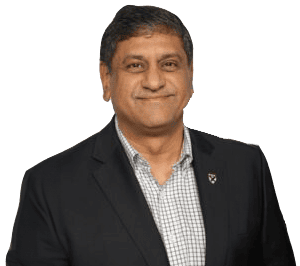
Rohit Mahajan is an entrepreneur and a leader in the information technology and software industry. His focus lies in the field of artificial intelligence and digital transformation. He has also written a book on Quantum Care, A Deep Dive into AI for Health Delivery and Research that has been published and has been trending #1 in several categories on Amazon.
Rohit is skilled in business and IT strategy, M&A, Sales & Marketing and Global Delivery. He holds a bachelor’s degree in Electronics and Communications Engineering, is a Wharton School Fellow and a graduate from the Harvard Business School.
Rohit is the CEO of Damo, Managing Partner and CEO of BigRio, the President at Citadel Discovery, Advisor at CarTwin, Managing Partner at C2R Tech, and Founder at BetterLungs. He has completed executive education programs in AI in Business and Healthcare from MIT Sloan, MIT CSAIL and Harvard School of Public Health. He has completed the Global Healthcare Leaders Program from Harvard Medical School.
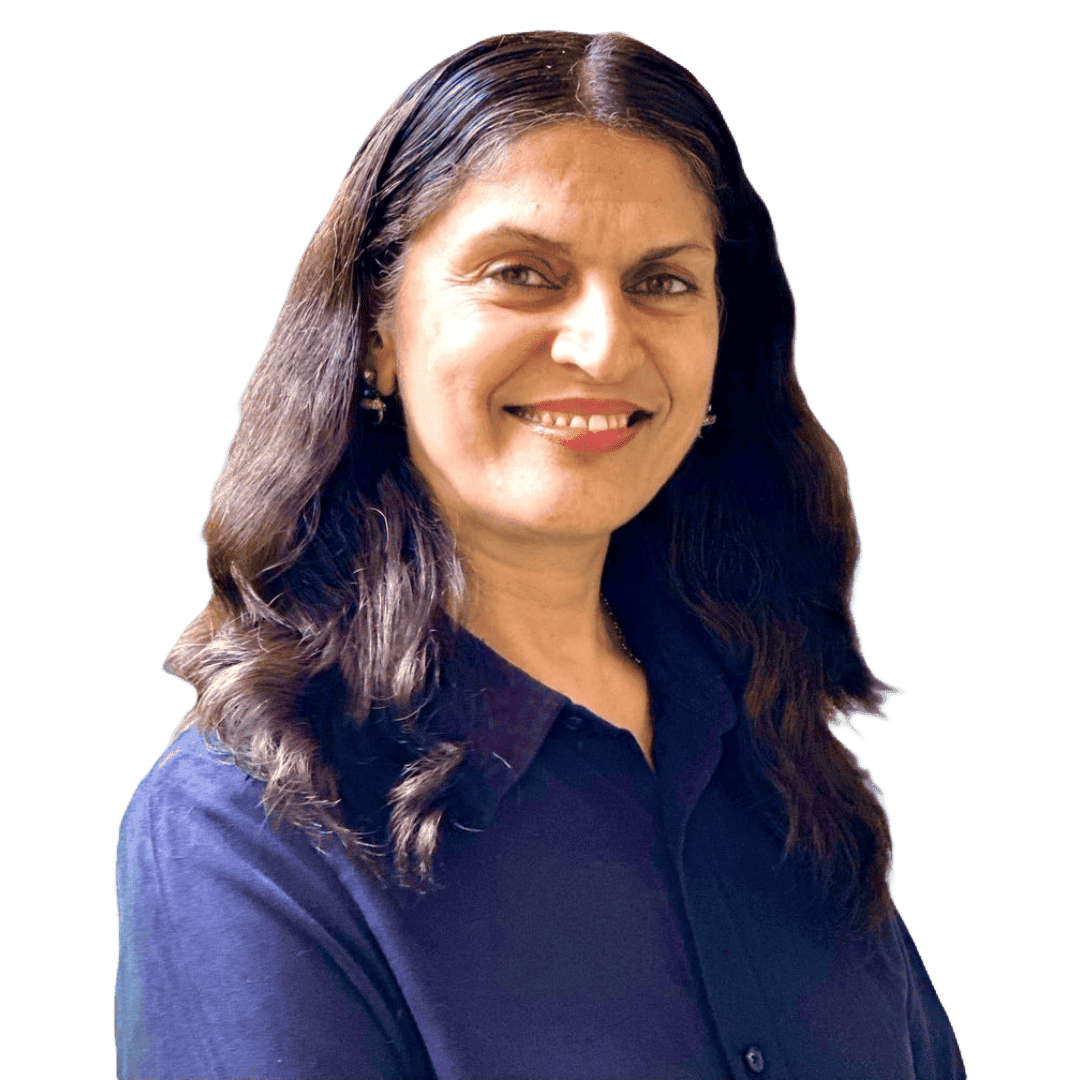
Ritu M. Uberoy is a healthcare AI strategist, technology executive, educator, and author dedicated to advancing the responsible adoption of Artificial Intelligence across healthcare delivery, digital health, and life sciences. With more than twenty-five years of leadership experience spanning the United States and India, she is recognized for helping healthcare organizations move beyond experimentation to achieve scalable clinical, operational, and business transformation through AI.
She leads AI innovation initiatives, including the AI Center of Excellence at BigRio, where she works with health systems, healthcare technology companies, and life sciences organizations to operationalize Generative and Agentic AI solutions responsibly. Her work focuses on aligning AI innovation with clinical workflows, governance frameworks, workforce readiness, and patient trust—ensuring technology augments human judgment in high-consequence healthcare environments.
Ritu is the co-author of Generative AI: Unlocking the Next Chapter in Healthcare, a practical guide for healthcare executives navigating enterprise AI adoption. She also hosts The Big Unlock podcast, engaging global healthcare leaders on AI transformation and digital innovation. An active educator and speaker, she conducts executive workshops and participates in global forums like HIMSS, ViVE, Women in Tech, AI-Powered Women, RAISE, and more, shaping the future of AI-driven healthcare. Ritu holds advanced degrees in Computer Science and completed specialized AI programs at Harvard and MIT.
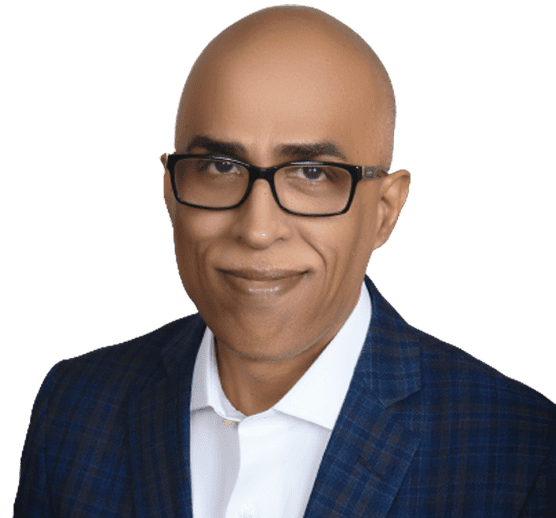
Paddy was the co-author of Healthcare Digital Transformation – How Consumerism, Technology and Pandemic are Accelerating the Future (Taylor & Francis, Aug 2020), along with Edward W. Marx. Paddy was also the author of the best-selling book The Big Unlock – Harnessing Data and Growing Digital Health Businesses in a Value-based Care Era (Archway Publishing, 2017). He was the host of the highly subscribed The Big Unlock podcast on digital transformation in healthcare featuring C-level executives from the healthcare and technology sectors. He was widely published and had a by-lined column in CIO Magazine and other respected industry publications.
Stay informed on the latest in digital health innovation and digital transformation