Season 7
In this episode, William Taranto, Founder and President of Merck’s Global Health Innovation Fund, shares his perspective on how strategic investments in AI, digital health, and data-driven technologies can address critical challenges across the pharmaceutical industry.
William explains why healthcare innovation must begin with real industry problems rather than individual technologies. He discusses the importance of building connected ecosystems, where data and complementary solutions work together to create value at scale. As AI accelerates drug discovery, he highlights the need for pharmaceutical companies to strengthen clinical development, manufacturing, and supply chain capabilities to keep pace.
The conversation also explores Merck’s approach to fostering innovation through strategic partnerships, commercial collaborations, and global investment initiatives. William emphasizes that successful healthcare innovation requires a deep understanding of the industry, patience to build sustainable businesses, and a clear focus on improving patient access and outcomes. Take a listen.
About Our Guest
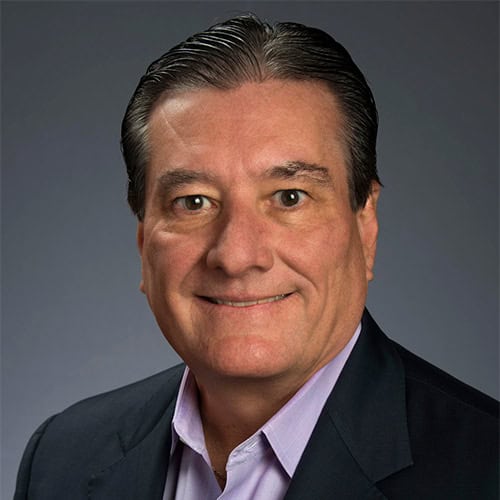
William Taranto is founder and president of Merck’s Global Health Innovation Fund (GHIF), known as MSD’s Global Health Innovation Fund outside the U.S. and Canada. He launched GHIF in 2010 and has built it into a $600M evergreen fund focused on digital health, AI, and data-driven life sciences. Under his leadership, GHIF has deployed more than $1B across 80+ companies, generated more than $15B in exits, and returned $2B to Merck.
Notable exits include Unnatural Products, which agreed in November 2026 to a sale to argenx valued at up to $1.15B. PathAI is set to be acquired by Roche for up to $1.05B under an agreement announced in May 2026. Bill chaired Preventice Solutions through its acquisition by Boston Scientific in a deal worth up to $1.2B. GHIF was an early backer of Livongo Health and sold its stake at the company’s 2019 IPO for a profit of more than $140M.
GHIF began investing in AI in 2011 and now holds 15 AI-enabled companies across drug discovery, clinical trials, supply chain, and patient access. Beyond financial returns, about 65 active engagements connect portfolio companies with MSD business units, partnerships valued at more than $300M. Bill brings more than 30 years of public and private board experience. A past chairman of Global Corporate Venturing, he writes the COMPASS column for GCV and was named to the GCV Titans 2026 list.
Recent Episodes
Ritu: Hello, listeners. Welcome to season seven of our Big Unlock podcast. My name is Ritu M Uberoy, and I’m a managing partner here at BigRio and Damo Consulting, and I’ll be your host today for this episode of our Big Unlock podcast. today, we are delighted to welcome Bill Taranto to our podcast. He’s the founder and president of Merck’s Global Health Innovation Fund, known as MSD’s Global Health Innovation Fund outside the US and Canada.
He launched this fund in twenty ten, and he has built it into a six-hundred-million-dollar evergreen fund focused on digital health, AI, and data-driven life sciences. Notable exits include Preventice Solutions, Livongo Health, and PathAI. And we are really looking forward to this conversation and to hear Bill’s perspective.
So welcome to our podcast, Bill. Thank you for being here today.
William: Well, thank you very much, for inviting me, Ritu. Pleasure to be here. And for the audience that don’t know me, I know you said a little bit, but, my name’s Bill Taranto, and as you said, I’m President of the Merck Global Health Innovation Fund.
We’re a fund, just to give you a little more clarity on what we do, we’re focused on, pharma services most. And what I mean by that is what we try to do is look at the most critical issues facing a pharmaceutical company today, not just Merck, but the industry as well. And it usually covers four sort of broad areas.
We focus on the R&D space, so we’re invested quite a bit in AI and ML and drug discovery, novel platforms like radiology and pathology, blood platforms. Just novel ways, the way that we think about doing R&D. Then on the critical development side, which is, I think, one of the more growing new spaces for pharma, anything that we can do to better the clinical trial experience, whether it’s site selection, patient management, a- any of the components that make up that piece is important to us.
Another big bucket for us is kind of lumped into what we call IT, manufacturing, and supply chain. On the IT side, it’s just infrastructure. Things like data aggregation, integration and harmonization, data analytics and informatics, cybersecurity, those type of things. On the supply chain side, most people don’t realize that pharma loses quite a bit of their product, almost 10% or more, to theft, fraud, damaged good, lost good.
We ship it the wrong way. Should’ve got by plane, we might’ve sent it by boat. So, using data and AI really to help us understand how do we better track and trace in making sure that our product gets to the right place and to the right patient the way it was supposed to be. On the manufacturing side, that’s new to us.
We haven’t done a lot yet, but we’re looking at robotics quite a bit, lab in the cloud. just kinda new areas of AI that we think are gonna have an impact on us, but I would say that’s a newer area for us. The next bucket is around patient impact or access. We’re a pharma-owned pharmaceutical company, so we have to be very careful about any stick- kickback statutes where we can’t be in the corporate practice of medicine, so we can have to be very careful where we invest in that space.
But we do things like clinical decision support tools, care coordination, better management of how patients get access to medicines, but that’s really the way to kinda think about it. And then the last bucket is real world evidence and data. We’re trying to give You know, Merck and the industry access to better data and better ana- analytics and informatics on top of it.
And so that’s kind of where we focus as a fund, which makes up the whole idea of pharma services, and then where does enabling technologies, digital, and all these other types of technology solutions impact that? The last thing I’ll say is, we’re a growth investor for the most part. We’ll do A and B rounds occasionally, but we’re not chartered to do startup or seed capital.
We try to be more on the growth side of investing. And finally, today, we have about 60 investments in our main portfolio, and we have a couple of accelerators and idea studios that h- host a number 30-some odd companies. So it’s a pretty large portfolio, but it’s been quite successful strategically and financially. But that just gives you kind of a 30,000 view of the fund.
Ritu: Thank you, Bill. You know, I have a couple of follow-up questions right there, but thank you for that introduction. And, let’s start with the first one. You know, you’ve talked a lot about this ecosystem investing. You know, you’ve said that you should have data flowing across these complementary companies rather than, you know, building these isolated products.
So can you tell us how do you actually assemble this ecosystem? Because rather than just backing the best individual company, you’re always looking to not do these point solutions or create more fragmentation or complexity. So tell us how you kind of visualize or imagine. You said you have 60 companies.
William: Yeah. We do a couple different things. First is, as I mentioned, we start with a use case. Okay. So unlike other investors, we don’t start with a company. We actually start with something, what are we trying to solve in the industry, or what’s the most critical clinical trial? We need more patients to be in the clinical trial.
That could be something we’re trying to solve. In AI and ML, how do we get a target ID? How do we target assets quicker than we could in the past by using AI? So whatever this, you know, the problem is, that’s what we start with From that, we then look for a company. And our primary premise is a quote that I always say is, “Data’s the currency we’re gonna use to transact in a future healthcare market,” which means we want all of our companies to be data companies.
An AI company doing drug discovery is a data company in the end. It’s creating data that’s important. A monitoring company is a data company. A supply chain tracking company is a data company. The tool they’re using is things like AI, but we want all of our companies to be data companies. That’s the core asset that we’re looking for.
And then how does that data provide an outcome, ultimately, to help solve that use case? The other thing we look at is the ecosystem. One of the problems you have in digital health is point solutions really don’t work, but everything kind of starts as a point solution. Pharma wants scale, and we want an integrated solution, so we have to think in terms of, well, how do these companies work together, and what would be the mix and match of companies?
It doesn’t mean you have to acquire all of them and put them into a single company. But what we try to do is say, okay, if I’m investing over here, what are the gaps that I have? It’s, you know, it’s not solving 100% of the use case. If I can help that company partner with another company within my portfolio, even outside my portfolio, it then brings that broader integrated solution together in an ecosystem fashion.
It does a couple of things. It builds the scale that we’re looking for, it provides pharma at least with a better solution, and then ultimately it leads to a better exit because we’re building a bigger, more viable company over time. So kind of the process is starting with a use case, identifying the company that we think can solve that, and then thinking in broader terms of the ecosystem of what’s the different mix and match of portfolio companies that we have to think about in order to build this out to have the appropriate solution.
And that’s, you know, partly why the portfolio is the size it is, ’cause we have lots of companies mixing and matching that are providing solutions not only to Merck, but to the pharma industry.
Ritu: Great answer. Thank you. So, you know, you’ve said that this healthcare AI conversation is now finally moving from what AI might do to, you know, what it can actually deliver.
And like you said, you know, GHI has invested in so many companies which are using AI across biology, chemistry, vaccines, and target identification, lead optimization. But given all these claims that are being made around AI drug discovery, you know, what convinces you that this AI platform is actually, you know, changing the economics of this probability of drug development rather than just simply accelerating one tiny step along this process?
William: I think that’s a great question. I think there’s a couple different answers. Well, one of the questions I get is, “Well, you’ve invested in some 15, 18 different companies around, across, you know, biology, chemistry, vaccines. Why’d you do that?” Partly because we wanted to spread our bets. They all do it slightly different.
And at the time, when you’re starting to invest, you’re not sure if they work. And what you’re starting to see though, not only as an industry, is, you know, the first is can they identify a target that’s something of interest to… And that’s happened a lot. That’s really robust in our industry. But the next is now moving through the stages, right?
Can you get through phase one? Can you get through phase two? Can you get through phase three? And then can you be a product in the market? What we’ve started to see over the last three or four years is we’ve gotten through past phase one. There’s a bunch in phase two, and now there’s a bunch in phase three.
I don’t know for sure. I, you know, I could be wrong, but I don’t believe anything’s made it to market yet from, AI, but we’re close. And that’s the progression you’re seeing. And once one makes it, right, we begin to understand what did that platform do? And then all the other platforms that are moving through each phase, what are they doing that’s different than the ones that didn’t go past just a target?
And then that’s where you start to see what’s becoming winners, what type of the technology with AI works better, and it’ll keep evolving. You know, AI will not stop evolving, so we have to keep investing in newer things. But it’s beginning to show us a pattern now for the last three or four years, what’s the right things to invest in, what’s working, and then ultimately what’s going to be the impact.
Now, like I said, getting something to market, that’s the ultimate goal. We’ve done really well with our portfolio of getting lots of products into phase one, phase two. I don’t believe we’ve got something to phase three yet, but we’re close. So it’s doing all the right things that- pharma wants. Because the fa- we are doing it faster.
I would say, you know, it’s hard maybe to calculate the true cost savings as of yet, but they are saving and creating efficiencies because we are doing it at a speed we weren’t doing it before, and we’re moving things through the pipe faster than we did before. You know, the interesting conundrum, I know you didn’t ask this, but I’ll just kind of throw it out there to you for- this for all the Pharma’s.
If AI begins to work really well, we’re gonna have the problem of too many products and not the ability for pull-through to manufacture it all and get them all to market, right? If you start all of a sudden, you know, maybe you were probably doing it five a year, now you’ve got 15 a year and they’re all coming to market.
Yep. What’s the throughput to get everything to market? Yeah. It’s a good dilemma to have, but it’s an interesting conundrum that the industry’s got to think through because- This is changing, right? And we could also have all these products that we gotta get to market, but we don’t have the infrastructure-
Ritu: Yeah
William: to get them to market. And so it’s, it’s kind of an, a great thing to have, but wow, we gotta think through the n- So one thing that I’m pointing out is what’s important is you’ve gotta invest in all these areas, ’cause you’ve gotta think you also then, well, if you’re creating all this, well, how’s your manufacturing?
How’s your supply chain? How’s your sales and marketing, you know, your post-market? All that stuff has to be invested in, at least from my viewpoint, to make this all successful. It’s not binary to one area.
Ritu: Yeah. I think you’ve spotlighted a very important conundrum, that the speed and the pace of change also requires underlying systems to kind of change at the same time.
You know, maybe you’ll need synthetic data, or maybe you’ll need some new types of testing. We had a very similar conversation with Heather Vereb, you know, he’s with ARPA-H, and they were doing, talking about this moonshot program. And they were saying, like, you can’t be in that era where, you know, the FDA regulation takes, like, a year to approve, because, in a year everything has changed already.
So they’ll have to basically rewrite those rules as well, get FDA to move faster so that the products get approved in time. So that’s an interesting point. Thank you, Bill, for highlighting that. So, I want to circle back to something you mentioned, you know, as part of your introduction where you talked about the Idea Studios.
So tell us a little bit more about that, and I think the Idea Studios take Merck further upstream into, you know, even earlier stage innovation. So tell us why, you know, Merck thought that was important, and why you need to get in, like, further upstream with Idea Studios. Yeah.
William: So we have two different things that we do. We do something called our Merck Digital Design Studio, which is a true accelerator. And that’s located in New Jersey, Boston, and Montreal. And that focuses on one thing, our Merck research, and it focuses on AI and ML and drug discovery. And we’re on our third cohort, so I think about 90 companies have gone through it.
Okay. but it’s really focused on one small area, and, it was AI, ML, and drug discovery. We did that one because, to your point, the fund is a growth fund, in A rounds and B, but we’re not doing that startup capital. How do we take a step to look at sort of that fourth horizon, but be able to invest early where the general fund wasn’t structured to do that?
But we could start these, this thing called a Merck Digital Design Studio. Okay. So that’s what that purpose is. Then we decided, well, you know, we’re a global company. And though we’ve always invested outside the US, it’s not easy being located in the US without having personnel and infrastructure outside the US.
But we really wanted to expand in Asia Pacific and Europe And then we came up with this idea where we said, “Well, let’s start a studio in a sense.” And what the studio does… So what makes a difference than MDSS is MDSS is simple. We put in a safe note with other investors, and that money goes to the company, and it converts or doesn’t work or whatever happens, but we’re kinda hands-off.
The difference with the studios is it’s a partnership actually with our MSD companies. Okay. So in Asia Pacific, what we’ll do is we’re working with 10 markets, and what we do is we committed a certain amount of capital- approximately $10 million of capital, and they committed around 5 million of commercial money.
And what we do is we identify a use case- that’s prevalent to their local area. So it could be something just in India, and maybe they’re working on a way to help get better access or another way to help with payment of goods, whatever the solution we’re trying to solve for. What we do is, with our local company, we find the right asset.
We’ll do the equity invest with other investors, but they’ll commit a certain amount of money to a commercial agreement to help test and grow it locally. Okay. And then if it’s works, what’s our ability to then to transport it to another local area, you know, moving, let’s say, from India to Taiwan to Korea to Indonesia to wherever.
And so the whole idea was to build locally, but also allow us to invest earlier in a geography we didn’t have a good presence in. We did the same thing in Europe that covers five markets. The same concept. We committed a little more money because it was a little bigger market, 15 million from GHI for equity, and then they committed 10 million for commercial agreements, but it works the same way.
We identify a problem. Is there a local company? Okay, this company is in France, it’s helping our French MSD organization, but can we move it to UK? Can we move it to Italy? Can we move it to Spain, et cetera, et cetera. So it gave us a couple of things. It gave us the ability to expand the GHI sort of name globally.
Allow us to invest a little easier with help from our local MSD organizations because they can help with some on the ground stuff that we don’t have personnel to do- like we do in the US, and then really help us solve healthcare problems that aren’t in the US, and that was kind of the idea, and it’s really worked out extremely well.
We’re three years into Asia and Europe Idea Studio. We’re in our sixth year for MDSS, doing the AI and ML in drug discovery, and we’ve had a number graduate where we’ve reinvested. They’ve raised money so that they’re performing. The studios are still a little early. We- we’re now starting to see the results of those and then the next question is, do we re-up again where we commit another batch of money and then MSD commits their piece and we do another set of investing again?
But it’s not really a cohort like the MDSS is, like a traditional accelerator. But it’s really given us an ability to have a global picture on healthcare.
Ritu: Great. So Bill, I’m really interested in understanding, you know, Merck itself is investing so much into AI and all the new technologies. So how does that kind of work with these portfolio companies?
Like, what are the companies getting from Merck and what is Merck getting from these companies, and the whole build versus buy? Like, are you just buying these companies to get access to these new, you know, innovative solutions? What’s your viewpoint on that? Would love to hear more about that.
William: Yeah, so really interesting.
Not only Merck, but sort of the pharma venture world- has an interesting view on all these assets where we want them to exist in the world. We don’t necessarily have to own them. It’s different with AI and ML in drug discovery. That’s probably the one area that’s very competitive and if somebody gets a target, probably the pharma’s gonna buy it.
That’s okay. All the other areas that we’re working in, there’s no competitive necessary advantage to own it, but we need it to exist in the world and scale. So I co-invest with a lot of our pharmaceutical brethren because we’re trying to build these ecosystems. So your primary question of what does Merck get out of it and what do we get out of it, well, the main goal for us is for Merck or another pharma, but obviously Merck, that being my parent, to partner with one of these portfolio companies and start with a pilot and learn, and then move that pilot into a longer term commercial agreement where the pilot was successful, now let’s expand and we’ve learned and moved in. So it helps Merck learn, it helps Merck create what they’re trying to create from an AI infrastructure. Now, like anything, if they choose to want to buy something, they can certainly bid like anybody else, but then they don’t have any rights, they just bid like someone else.
But the real reason is let it exist and you work with it, and the secret sauce is what you do with it, Merck. ‘Cause J&J has a different secret sauce, and Pfizer has a different secret sauce. But we want you to work with it. What’s happened over time is we now have over 100 commercial agreements with our portfolio companies valued at over $400 million. Merck is heavily engaged. And what’s turned out is we’re picking such good companies, our renewal rates are moving from a pilot to a full commercial agreement is around 72%. Wow. So we’re getting a ton of renewal where Merck’s saying, “This is the right company for us”. And a lot of times people say, “Well, why isn’t something renewed?” It’s not that anything went bad, right? Sometimes we as a pharma are ahead of the company. Sometimes the company is actually ahead of pharma, and that- Right… it might take a future engage- like, maybe time, maybe more investment, and maybe a year from now we re-engage again.
You know, and then of course sometimes it just doesn’t work, and that’s what happens, right? But you can see the success rate that we’re having with getting Merck a partnership. And what that then does is it gets the organization really learning and understanding how to use these tools, and then integrating those tools into their daily way they do pharma R&D- Right
or any other part of pharma that it’s being applied to, and it becomes then part of their daily lives. But they’re really taking the active approach of piloting first and then moving into a broader commercial agreement, and it’s, it’s been pretty successful.
Ritu: Great. So you’ve been doing this for such a long time, Bill, you know, you’ve led this for years, and you’ve always talked about maintaining this consistent purpose through, you know, change and not just following what’s fashionable.
So do you have, like, an overarching, like, guiding principle? Like, how do you pick these companies and what, you know, kind of makes you… Like, you must be getting so many pitches every single day. So how do you kind of distinguish and what, like, really appeals to you? You know, our listeners would love to hear that.
William: As a pharmaceutical company, ultimately it’s about the patient and the patients we serve. So are we investing in things that ultimately benefit the patient? If we’re investing in good R&D, that hopefully leads to a good product which gets to you and I, the patient, that’s helping the patient. If we’re investing in the right supply chain, we’re getting the product to the right place at the right time-
to the right patient. If we’re investing in access, how are we making sure people get access to not only our medicine, but other people’s medicines, right? It’s the whole continuum of serving the patient, and that’s what drives ultimately the investment we make. When we work back from that and saying, “Well, is the solution work for that point solution or,” excuse me, “the use case we’re trying to solve, does that ultimately lead to that if we do it correctly?”
Okay. Yeah, that’s right. And then are we better serving Merck or the industry to get to that solution that helps the patient in the end? If that’s a yes, then this is the right company. Then if it does all the other things we like, is it a data company? Does it fit our ecosystem? Can we come to terms? You know, all the other things you work with as an investor.
Is there a right syndicate? But it really starts with us is we’re here to serve the patient. And ultimately, that’s what all our investments ultimately try to do in a direct or indirect way, and that’s what makes it work.
Ritu: Yeah. Great answer. Thank you so much. Just changing tracks a little bit here, Bill.
You know, our listeners always love to hear an origin story, and sometimes we hear such interesting anecdotes, so we would love to hear how you got into, you know, pharma, and how did you come to Merck, and what was your background before, and what led you to Merck?
William: It’s funny. I… So I graduated college in 1985, and back then there were more jobs than people.
Everybody was getting jobs, and I actually wanted to be in the advertising industry and for whatever reason didn’t get placed in. But Wall Street was hiring and banking was hiring, so I got into, banking, and from that it led to me getting hired by Johnson & Johnson to do investing for them. And I was there almost 20 years, and it was great, you know, because J&J at the time, you know, this is, was a, you know, a while ago, were very forward-thinking as a company.
Our group was actually asked to look five years out into the future, predict what the healthcare future was gonna be, and try to invest in that to make J&J prepared for that future. And we built this really fascinating portfolio of companies and a practice that was doing that. And one of our first big investments was Surescripts, which is the big e-prescribing hub that exists today, right?
We did it for certain reasons to help, you know, the industry. But what was great about J&J for me was a great place to learn, make mistakes, and get really good at what I do. I think for Merck got the benefit of people that were really experienced and walked right in the door and could do this job without blinking.
But that’s what happened. So out of the blue in 2010, I got a call from Merck, and they said, “We love what you’re doing at J&J. Would you ever come over and-” Conversation was really nice. I said, “Well, have you done investing before?” “No, not in technology.” And I’m saying, “Well, do you have a therapeutic fund?”
They didn’t even have a therapeutic fund officially. And I was like, “Well, that’s interesting. You wanna do technology before you do therapeutic?” And they’re like, “Yeah.” And, had, you know, basically a whiteboard. They said, “We’ll, we’ll give you what you want.” So I brought my team over, I could structure the fund the way…
I had a lot of lessons learned, and I said, “Well, if you let me do this in a way that I think venture capital could be done, I think I can make you successful and not successful.” And they were like, “Yeah.” So I brought my team over, and we came over in April of ’10, and been at it, you know, almost 17 full years now and…
But I, you know, like I said, I think Merck got the benefit of a lot of years at J&J, of trial and error- of building the right kind of way to invest in digital, but that’s the way it works. But yeah, I kind of fell into this, and been in it for my whole career, and it’s been wonderful. I’ve been very blessed to work for two fantastic companies.
You know, J- I still love J&J, and Merck’s been wonderful to me as well, and I hope, you know, when I look back at the time after retiring, just look at all the companies we invested in that are existing in the world, and we gave back.
Ritu: Yeah. Thank you. Thank you for sharing that with our listeners.
Sure. So as usual, you know, time’s flown by and we are almost at the end. So would you like to share any closing thoughts and, you know, any advice for our listeners from all your years of experience? And, you know, we would love to share any tips- Sure… with the listeners or anybody who’s thinking- Oh,
William: Sure. You know, for the entrepreneurs out there, I would say, if you’re gonna invest in healthcare, understand healthcare. It’s one of the most complicated, complex industries that are out there. We laugh at, like, if we’re going to get a prescription, 10 different entities or people touch that prescription before you, and I may not even get that prescription.
You need to know all that. You need to know how the system works if you’re gonna be a entrepreneur in healthcare ’cause it’s so complicated. But you can learn that. If you know that, then you’ll know where your product fits, and then you’ll understand also how the ecosystem works because healthcare is really an ecosystem.
Ritu: Yes.
William: It all relies on other moving parts, and not one part works by itself. And so the first thing I would just say to any entrepreneur is really understand that, and then where does your product fit in that? And then the second piece is, are you solving a use case that wants, people want solved?
People will pay for it, whether it’s out of pocket or reimbursed, if it’s solving a problem that the industry needs to have solved. So focus your thinking, you know, on that. And just, the last piece, if you’re gonna be an investor and/or an entrepreneur, healthcare is long. It’s not the quick wins you see in the tech side-
of the world, right? It takes time in healthcare to build a company, to scale it. Just play the long game and you’ll be successful, but if you think it’s gonna be a two-year and someone’s buying, I mean, not that it can’t happen, it’s very rare when it happens. Just think long game. It’s the one industry that just takes time.
And if you have patience, you can be successful, and that’s what I would tell that group.
Ritu: Yeah. Thank you, Bill. Thank you so much for being on our podcast today. It was a pleasure having you as our guest. Thank you.
William: I enjoyed it very much
—
Subscribe to our podcast series at https://thebigunlock.com/ and write us at info@thebigunlock.com
Disclaimer: This Q&A has been derived from the podcast transcript and has been edited for readability and clarity.
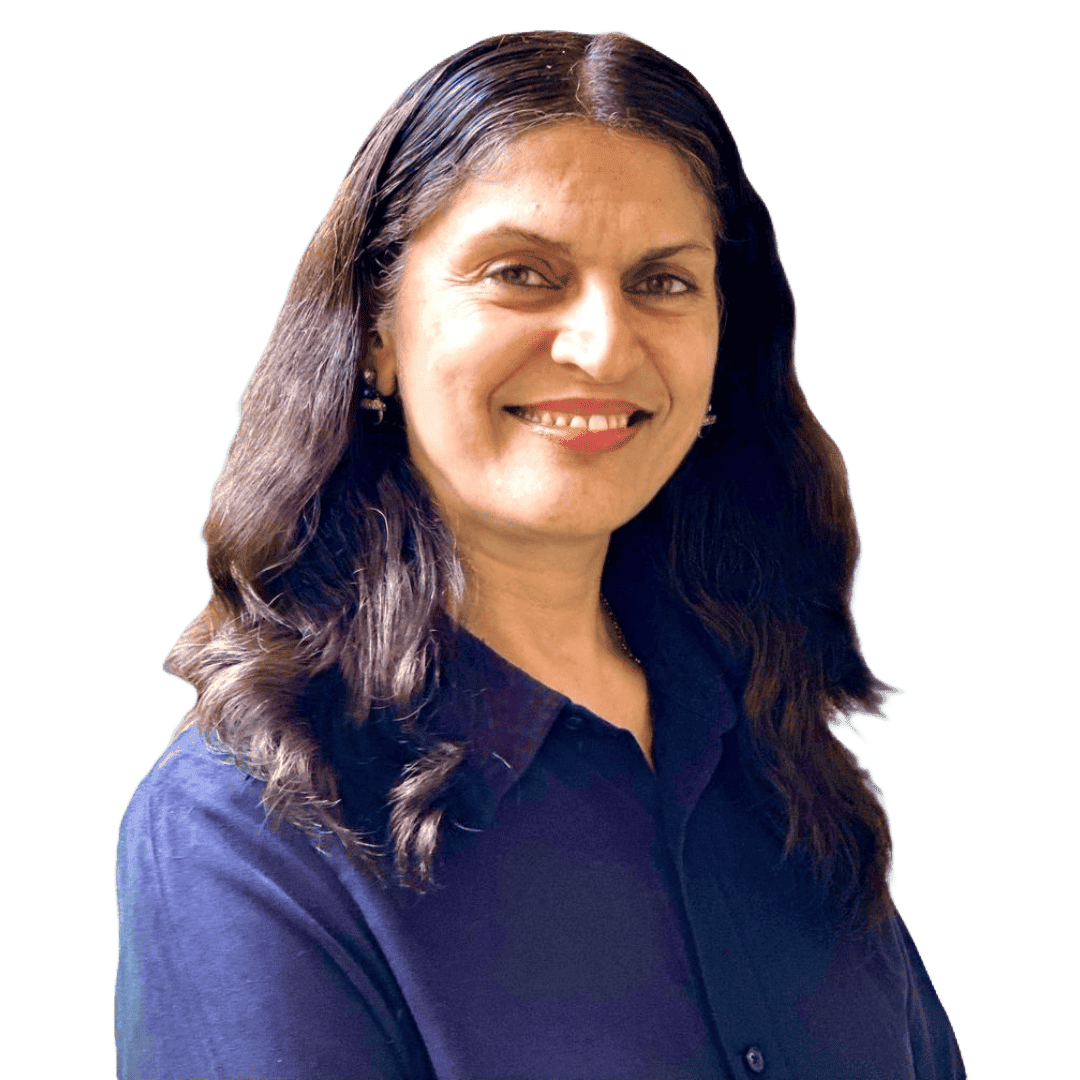
Ritu M. Uberoy is a healthcare AI strategist, technology executive, educator, and author dedicated to advancing the responsible adoption of Artificial Intelligence across healthcare delivery, digital health, and life sciences. With more than twenty-five years of leadership experience spanning the United States and India, she is recognized for helping healthcare organizations move beyond experimentation to achieve scalable clinical, operational, and business transformation through AI.
She leads AI innovation initiatives, including the AI Center of Excellence at BigRio, where she works with health systems, healthcare technology companies, and life sciences organizations to operationalize Generative and Agentic AI solutions responsibly. Her work focuses on aligning AI innovation with clinical workflows, governance frameworks, workforce readiness, and patient trust—ensuring technology augments human judgment in high-consequence healthcare environments.
Ritu is the co-author of Generative AI: Unlocking the Next Chapter in Healthcare, a practical guide for healthcare executives navigating enterprise AI adoption. She also hosts The Big Unlock podcast, engaging global healthcare leaders on AI transformation and digital innovation. An active educator and speaker, she conducts executive workshops and participates in global forums like HIMSS, ViVE, Women in Tech, AI-Powered Women, RAISE, and more, shaping the future of AI-driven healthcare. Ritu holds advanced degrees in Computer Science and completed specialized AI programs at Harvard and MIT.
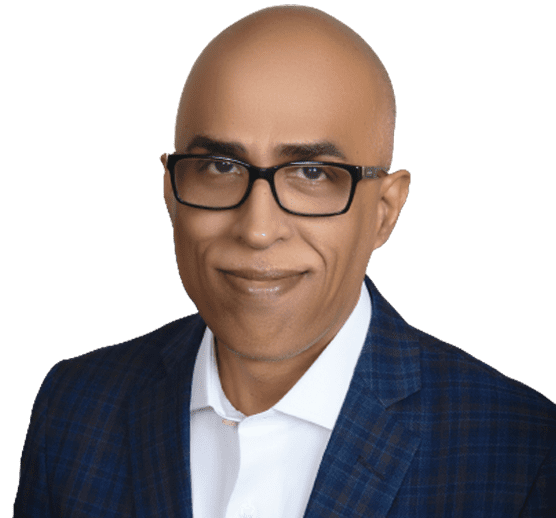
Paddy was the co-author of Healthcare Digital Transformation – How Consumerism, Technology and Pandemic are Accelerating the Future (Taylor & Francis, Aug 2020), along with Edward W. Marx. Paddy was also the author of the best-selling book The Big Unlock – Harnessing Data and Growing Digital Health Businesses in a Value-based Care Era (Archway Publishing, 2017). He was the host of the highly subscribed The Big Unlock podcast on digital transformation in healthcare featuring C-level executives from the healthcare and technology sectors. He was widely published and had a by-lined column in CIO Magazine and other respected industry publications.
Stay informed on the latest in digital health innovation and digital transformation