Season 7
In this episode, Shailu Verma, CEO and Co-founder of Mila Health, explores how healthcare AI is moving beyond patient engagement and conversational tools toward AI agents that execute care coordination workflows. He explains that many critical tasks across the patient journey remain manual, creating an opportunity for AI to improve access, engagement, operational efficiency, and outcomes.
Shailu emphasizes that scaling AI requires more than another point solution. AI must integrate seamlessly into existing clinical technology, remain configurable and governable, deliver consistent responses, and bring humans into the loop when needed. He sees LLMs becoming increasingly commoditized, making the last mile of execution, governance, and workflow integration critical differentiators.
Shailu urges healthcare leaders to start with measurable problems where AI can demonstrate real ROI. His message is clear: move AI from conversation to execution, automate manual coordination, and focus on getting meaningful work done. Take a listen.
About Our Guest
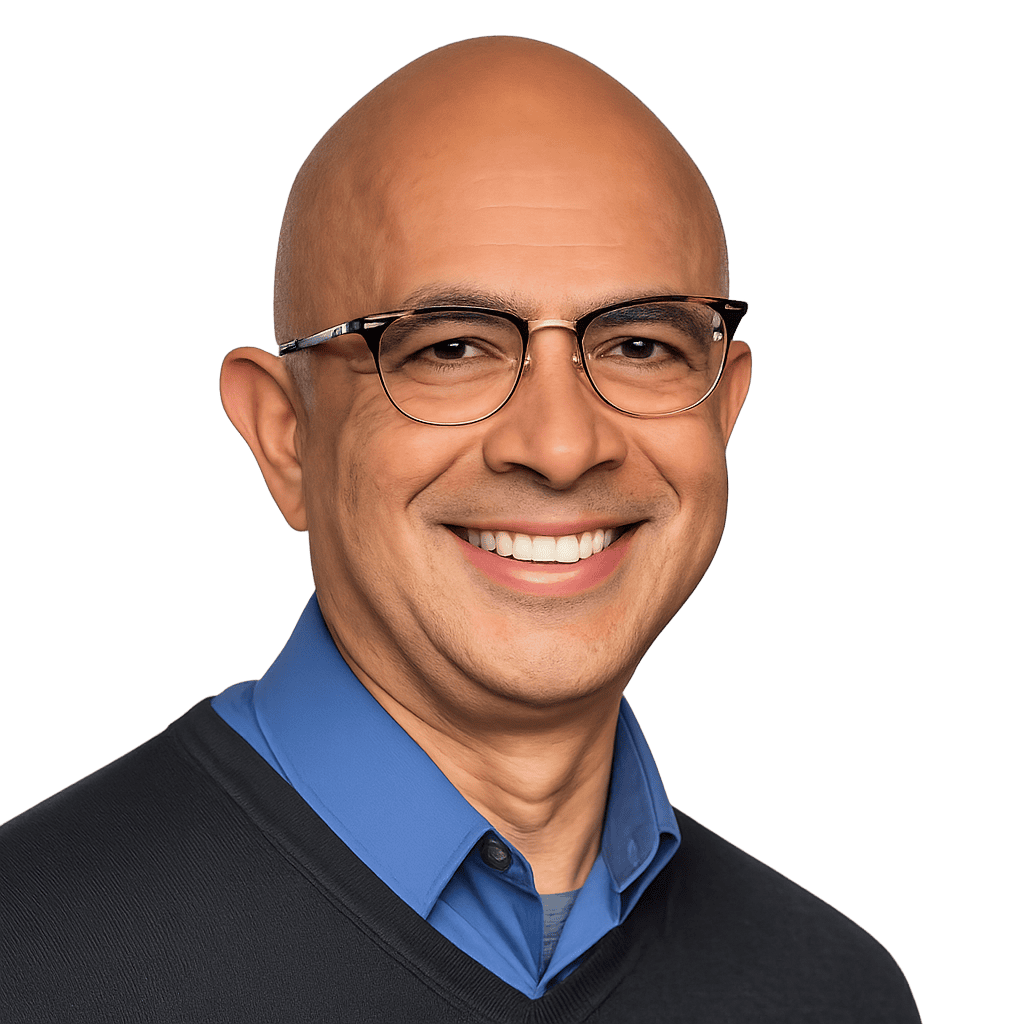
Shailu Verma is the Chief Executive Officer and Co-founder of Mila Health Inc. He has a track record of building businesses in healthcare and technology. He was the Chief Product Officer of United Health Group's Strategy and Innovation group, where he developed early versions of patient conversational agents to enhance care plan adherence. He led mylevel2.com, where these innovations drove consistent improvement in patient outcomes and reduced medical loss ratio. Prior to UHG, Shailu led product at Amazon Web Services' computer vision, databases, and storage services, where he launched 30+ services reaching millions of customers. Shailu was also President and Co-Founder of Lanworth, which pioneered the use of big data, including real-time satellite forecasting, across financial, commodity, bio-fuel, and natural resources markets, before its acquisition by Thomson Reuters in 2011.
Recent Episodes
Ritu: Hi, listeners. Welcome to Season Seven of the Big Unlock Podcast. My name is Ritu M Uberoy, and I’m managing partner at Damo Consulting and your host today along with Rohit. Today I’m delighted to welcome Shailu Verma, CEO and co-founder of Mila Health. Shailu has built technology businesses at the intersection of healthcare and AI, serving as Chief Product Officer for UnitedHealth Group’s Strategy and Innovation, leading product at Amazon Web Services, and previously co-founding Landwords, which was acquired by Reuters. At Mila Health, he’s focused on one of healthcare’s biggest operational challenges: how to use AI agents embedded directly into clinical workflows to automate care coordination and improve patient engagement. We are really looking forward to an engaging conversation today. I’ll hand it over to Rohit for a short introduction, and then it’s all yours, Shailu. Thank you for joining us.
Rohit: Thank you, Ritu. I’m Rohit Mahajan, co-host of the Big Unlock Podcast and CEO of Damo Consulting. Very happy to have you on the podcast, Shailu. Over to you for your intro.
Shailu: Thank you, Rohit and Ritu. It’s a pleasure to be here. I’m Shailu Verma, CEO and co-founder of Mila Health. Prior to founding Mila, I worked briefly as a consultant at McKinsey, then started my first company in the computer vision space, which was acquired by Thomson Reuters. I went on to join the AWS AI computer vision team in 2016, building some of the first machine learning and AI APIs that came out of AWS, and then led the machine learning team at UnitedHealth Group. Healthcare has been a deep passion — my wife is a physician, I have two daughters, one in medical school and one working toward getting in. Getting to apply technology in healthcare has been a dream, and that’s how Mila Health was founded.
Ritu: Most of the healthcare industry still thinks of patient engagement as reminders and messaging — more apps that patients have to use. But you’ve argued that the real opportunity is AI-driven care coordination that actually completes clinical workflows and helps the patient. What does that shift look like in practice, and why is it so much more impactful than traditional outreach? And this wouldn’t have been possible two or three years ago — but now, with AI, we finally have the tools. What does Mila Health see as the real opportunity here?
Shailu: Let me go a little deeper into the problem. Healthcare organizations have patient engagement tools, EMRs, and many different software systems that they’ve invested in over time, all connected in a complex web. But each platform follows its swim lane very narrowly — patient engagement does reminders, EMRs handle records, payment systems handle billing. The aspect of actually taking care of a patient through their care journey is still done mostly manually. Reaching out to bring someone in for an annual wellness visit, preparing them for a procedure like a colonoscopy, guiding them on medications and diet, following up afterward to determine whether they need another procedure in five or ten years — all of that is still largely manual work. It’s a $334 billion problem. Connecting these complex systems and closing the gaps in patient care was a hard problem a few years ago. Now, with large language models, we have the opportunity to reduce that enormous manual effort in giving patients access to care and coordinating care after appointments. That is Mila’s mission — and to answer your question directly, while patient engagement tools address reminders, there are still many gaps in full care coordination, and that’s what Mila is solving for.
Ritu: You’ve said that organizations moving fastest with AI are not just buying another point solution — they’re embedding intelligence into the systems clinicians already use. Why is that distinction so important, and what have you learned from driving adoption inside health systems? How do you get them to adopt yet another solution when they already have a whole range of apps and software?
Shailu: To automate the vast majority of patient care journeys that are done manually, and to make it easy for our customers, we knew we had to build systems that get embedded into existing software. We took inspiration from companies like AWS, Stripe, and Twilio — they have APIs that get embedded into an existing stack and are easily configurable. A health system shouldn’t have to reconnect Mila to their EMR; it should come embedded and connected through APIs. We built Mila to be completely embedded — you can turn it on in days or weeks rather than months of complex integration. That makes it part of an existing solution rather than another point solution. Point solutions have two problems: implementation time, and they become yet another swim lane. We want to be the interconnectivity between swim lanes, not create a new one. We built Mila as a set of APIs that any existing software system can adopt to automate across other systems. To give you a concrete example: we are live in over three hundred dental organizations in the US. Each has an EMR, a practice management system, a payment system, and an insurance verification system. Our APIs are embedded in the practice management system those organizations already use. To adopt AI for care coordination, all they have to do is flip a switch in their existing system and say, “I want AI to reach out to patients who haven’t had their cleaning in the last year.” No separate EMR integration, no practice management integration, no telephony integration required — it’s already built in because the APIs are embedded in the stack. That’s how an API-enabled, easily configurable solution scales effectively and makes it easy for customers to adopt.
Ritu: We’ve heard repeatedly from C-suite leaders that healthcare has no shortage of impressive AI pilots, but very few reach enterprise scale. You’ve described Mila now supporting hundreds of organizations because of ease of integration. What were some of the other key architectural, clinical, or organizational decisions that enabled you to move beyond pilots to real operational deployment?
Shailu: Our enterprise scale has happened primarily by making it simple for organizations to adopt — because it’s embedded in their software stack and almost invisible, the way Twilio is invisible in software today. And we address problems that are critical to their immediate needs. Take the dental organizations I mentioned — they’re short-staffed, unable to consistently reach their patient panel or follow up effectively after care. Many calls go unanswered, hit answering machines, or come in over weekends when patients need help immediately. We embedded Mila into the practice management stack they already use and solved the real problem: answering patient questions 24/7. Patients can call any time, change or create appointments, ask questions. We also built in a human-in-the-loop mechanism — when Mila can’t answer, a human steps in. That makes it a safe, easily implemented solution, and that’s what enables enterprise scale versus ongoing pilots where you have to prove things over and over. The formula is simple: make it simple, solve real problems, and bring a human in the loop when needed.
Rohit: As you scaled the business, what were some of the core challenges you faced — both business and technical — especially given the wide variety of practices you work with, from small to large? How do you handle the integrations?
Shailu: Building a startup is hard, and building one in healthcare is even more complex. The challenges are mostly universal startup challenges — get more customers, get more funding, build the product, keep the team motivated. Getting that virtuous cycle moving is the core of the startup journey. On the technical side, three tenets that we established early have been foundational. The first was to build as an API-first product — white-labeled, easily adopted by any software system, easily configured. Not a point solution. The second was configurability. Every practice, small or large, has its own rules — their own three-inch binder of processes. Mila needs to adopt that binder for each office and adapt accordingly. The third was safety and governability. Mila must be consistent — if a patient asks the same question five different ways, Mila should give the same answer each time. It should be safe. And a health system of any size should be able to govern it and understand why Mila said what it said. We established these three tenets before we wrote a single line of code, and they have held true to where we are today. That is one of the key reasons we’ve achieved the penetration and enterprise scale we have — it makes adoption easier, governance easier, and change management easier for our customers.
Rohit: What are some of the new things you’re working on? Products in SaaS are always evolving based on customer feedback. What’s bubbling up to the top? And I’m curious about the fast-changing LLM landscape — with Chinese models emerging, cost structures shifting. How do you navigate that?
Shailu: There’s a common thread to both questions. On the technical side, we’ve built a neurosymbolic graph that sits on top of large language models. We are LLM-agnostic — we swap models regularly depending on the task, optimizing for cost and efficacy. Our thesis has always been that in healthcare, you cannot let an LLM use a stochastic bag of words to answer a patient’s question. The health system needs to be able to configure and control what Mila says, and there needs to be explainability for why Mila said what it said. With that architecture, we welcome the changing landscape — foundational models getting better and cheaper. Token costs have already come down a hundredfold, and we think they’ll come down another hundredfold. But the last-mile problem of governance, consistency, and configuration remains, and that’s where Mila has innovated. That’s also where our ongoing development is focused: moving from conversation to autonomous execution of tasks. It’s one thing to have a ChatGPT-style back-and-forth. What matters for our customers is execution. We’re working with a large payer right now where we’re calling Medicare Advantage members to schedule their first annual wellness visit appointment. Previously, the payer would spend three months preparing with a call center and achieve an outreach rate of fourteen to eighteen percent at a cost of twelve to fifteen dollars per patient. With Mila, we’ve reduced startup time from three months to six weeks, increased the response rate from fifteen to eighteen percent to over fifty percent, and reduced cost per outreach to one-fifth of what it was — all while having a conversation with the patient and actually executing the appointment scheduling. That last-mile focus on efficiency and outcomes is where we’re doubling down.
Ritu: Many CEOs and C-suite leaders are feeling pressure to do something with AI but are unsure where to begin. Based on what you’ve seen across your customers, what’s the biggest misconception about deploying AI in healthcare production today? And where would you recommend they start to generate real, measurable ROI?
Shailu: The place where I’ve seen success happen most consistently is where AI solves a revenue problem or a patient intake problem. Every provider in a health system has thousands of patients in their panel. A GI doctor may have twenty thousand; a primary care physician three to five thousand. If you ask almost any of them, they’ll say forty to sixty percent of their patients haven’t been seen often enough or haven’t completed things like their annual wellness visit. The problem is twofold: patients aren’t being seen, and health systems have quality and prevention metrics — colonoscopy screening rates, cancer screening rates, annual wellness visit rates — that they need to hit. And of course, each visit generates revenue. We’ve seen real success when we address the simple problem of reaching out to this disconnected patient population, activating them, and scheduling their appointment on a single outreach call. That solves the metrics problem, addresses the patient care gap, and generates meaningful revenue. A concern I hear from leaders is: what will patients think of an AI agent calling them? We’ve now done this millions of times. Roughly three to four percent of patients say they don’t want to speak with an AI — in which case, a human steps in. Some hang up. But the vast majority, ninety to ninety-five percent, are genuinely happy to hear from their care team and learn they can schedule a visit right then on that call. That is real change. And once they’re back in the system, everything else follows naturally — follow-up care, ongoing coordination. That frictionless starting point is the most powerful place to begin.
Rohit: Any thoughts about the future or closing remarks for the audience?
Shailu: Watch for the conversational part of AI to move from conversation to execution — to actually getting work done. That’s super important for Mila, but it should be equally important for healthcare leaders trying to implement AI effectively. And people should not be integration layers. The vast majority of the manual work happening today is integration work — verifying insurance, closing scheduling gaps, following up on outstanding items. These are simple gaps that AI can close. We don’t need humans calling in to update an insurance record. Let’s start simple, focus on execution, and use the tools we have. It isn’t rocket science. We’ll solve bigger problems over time, but these easy wins are the right place to begin.
Rohit: Great thoughts, Shailu. Thank you for joining the podcast. Over to you, Ritu, for closing.
Ritu: Thank you, Shailu. It’s been an absolute pleasure. Thank you for sharing your insights, and I hope our listeners take away a great deal from today’s conversation.
Shailu: My pleasure. Thank you for having me.
—
Subscribe to our podcast series at https://thebigunlock.com/ and write us at info@thebigunlock.com
Disclaimer: This Q&A has been derived from the podcast transcript and has been edited for readability and clarity.

Rohit Mahajan is an entrepreneur and a leader in the information technology and software industry. His focus lies in the field of artificial intelligence and digital transformation. He has also written a book on Quantum Care, A Deep Dive into AI for Health Delivery and Research that has been published and has been trending #1 in several categories on Amazon.
Rohit is skilled in business and IT strategy, M&A, Sales & Marketing and Global Delivery. He holds a bachelor’s degree in Electronics and Communications Engineering, is a Wharton School Fellow and a graduate from the Harvard Business School.
Rohit is the CEO of Damo, Managing Partner and CEO of BigRio, the President at Citadel Discovery, Advisor at CarTwin, Managing Partner at C2R Tech, and Founder at BetterLungs. He has completed executive education programs in AI in Business and Healthcare from MIT Sloan, MIT CSAIL and Harvard School of Public Health. He has completed the Global Healthcare Leaders Program from Harvard Medical School.

Ritu M. Uberoy is a healthcare AI strategist, technology executive, educator, and author dedicated to advancing the responsible adoption of Artificial Intelligence across healthcare delivery, digital health, and life sciences. With more than twenty-five years of leadership experience spanning the United States and India, she is recognized for helping healthcare organizations move beyond experimentation to achieve scalable clinical, operational, and business transformation through AI.
She leads AI innovation initiatives, including the AI Center of Excellence at BigRio, where she works with health systems, healthcare technology companies, and life sciences organizations to operationalize Generative and Agentic AI solutions responsibly. Her work focuses on aligning AI innovation with clinical workflows, governance frameworks, workforce readiness, and patient trust—ensuring technology augments human judgment in high-consequence healthcare environments.
Ritu is the co-author of Generative AI: Unlocking the Next Chapter in Healthcare, a practical guide for healthcare executives navigating enterprise AI adoption. She also hosts The Big Unlock podcast, engaging global healthcare leaders on AI transformation and digital innovation. An active educator and speaker, she conducts executive workshops and participates in global forums like HIMSS, ViVE, Women in Tech, AI-Powered Women, RAISE, and more, shaping the future of AI-driven healthcare. Ritu holds advanced degrees in Computer Science and completed specialized AI programs at Harvard and MIT.

Paddy was the co-author of Healthcare Digital Transformation – How Consumerism, Technology and Pandemic are Accelerating the Future (Taylor & Francis, Aug 2020), along with Edward W. Marx. Paddy was also the author of the best-selling book The Big Unlock – Harnessing Data and Growing Digital Health Businesses in a Value-based Care Era (Archway Publishing, 2017). He was the host of the highly subscribed The Big Unlock podcast on digital transformation in healthcare featuring C-level executives from the healthcare and technology sectors. He was widely published and had a by-lined column in CIO Magazine and other respected industry publications.
Stay informed on the latest in digital health innovation and digital transformation