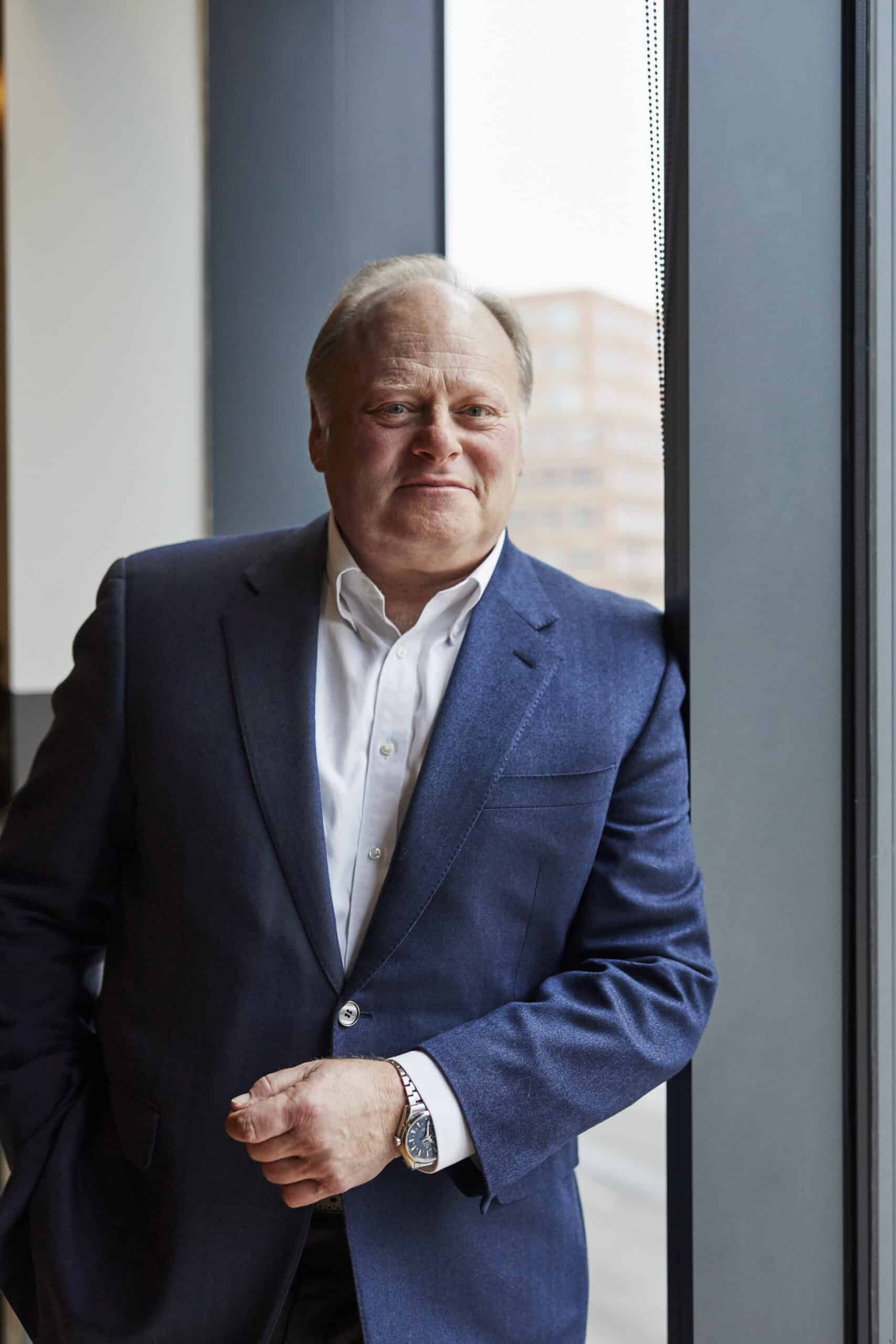
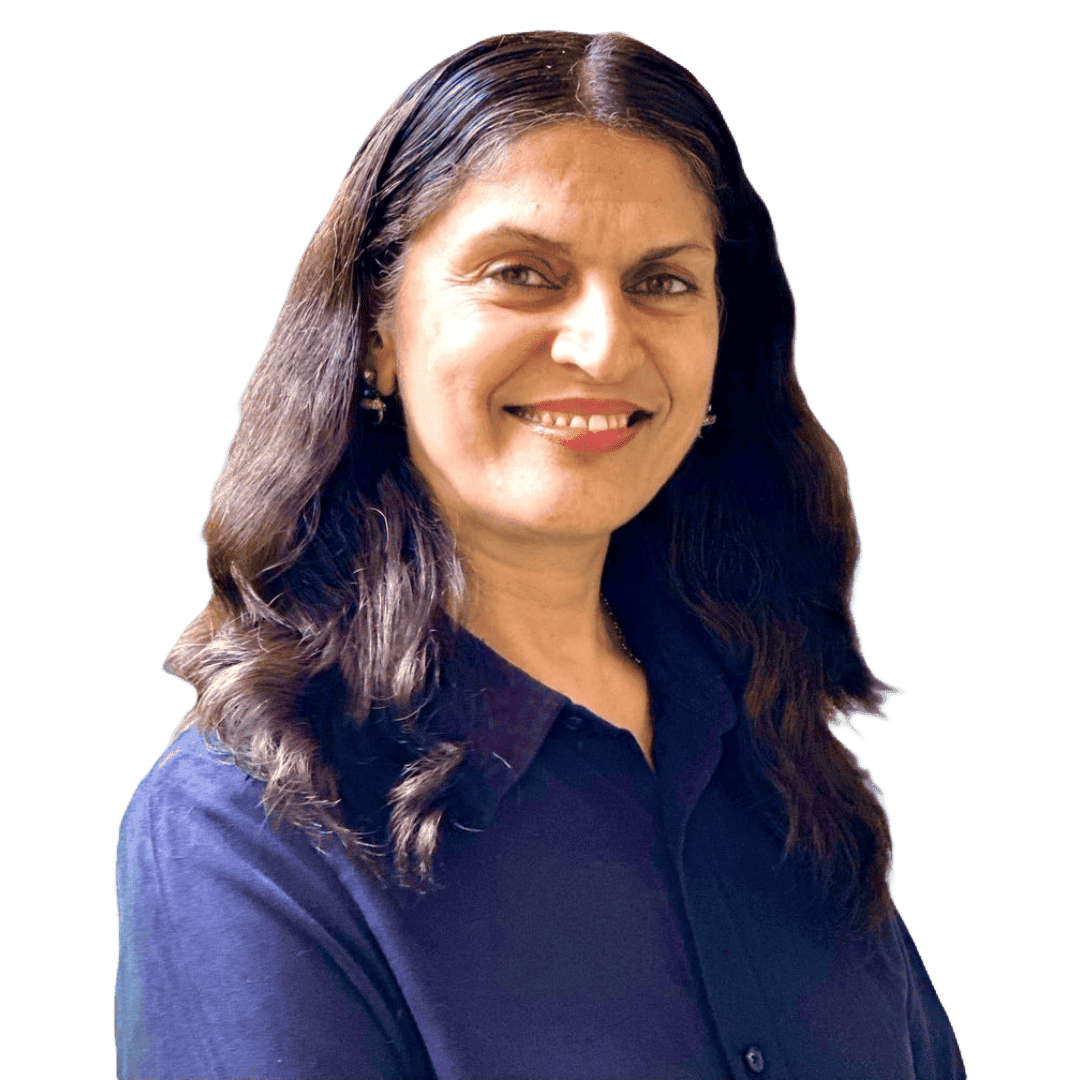
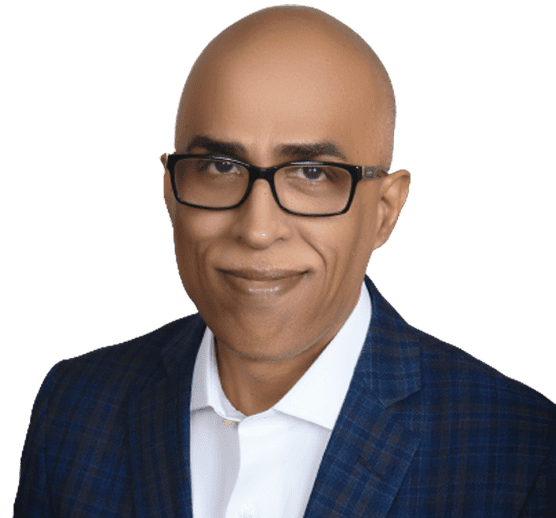
Ritu: Hello, listeners. Welcome to Season Seven of the Big Unlock Podcast. My name is Ritu Uberoy, and I’m managing partner at Damo Consulting and your host today along with Rohit. We are really excited and thrilled to have Hal Wolf on our podcast. Hal is the President and CEO of HIMSS, the global organization dedicated to transforming healthcare through information and technology. He has previously held senior leadership roles at Chartis and Kaiser Permanente, and has over thirty-five years of experience as a respected international healthcare and informatics executive. We are really looking forward to this conversation. I’ll ask Rohit to give a brief introduction, and then we’ll get started. Welcome, Hal, to our podcast. Thank you for being here.
Hal: Thank you for having me. This is a real honor.
Rohit: Thank you, Ritu. Hi, Hal. I’m Rohit Mahajan, CEO of Damo Consulting and co-host of this podcast. Looking forward to an interactive discussion, and hoping to meet you in person at one of the HIMSS conferences.
Hal: That would be wonderful.
Ritu: Let’s dive right in. The first question is about the growing digital divide between healthcare organizations. We’ve been talking to a lot of C-suite leaders who describe their AI spend and the technologies they’re accumulating, while at the same time rural organizations are financially challenged. What needs to change in the economics of healthcare technology to ensure AI becomes an equalizer rather than another source of inequality?
Hal: This is a really good question, and one that comes up every time a new technology emerges. I’ve been around long enough to remember when EHRs first came forward, and the first question was: only the large systems can really afford this — how will we ever get it out to rural organizations or urban organizations serving people without insurance and trying to deliver the best care possible? We often think about access as rural versus urban, but many people live in the shadow of some of the finest institutions in the world and still don’t have access to them. What we’ve seen over time is that when new technologies roll out, early adopters are the organizations that can afford to take a chance and explore innovation. Once that happens, we gather information, learn what’s working and what isn’t, standardization takes place, and competition enters the market as others replicate what works. That tends to lower cost by creating abundance — and that’s when mid-level and lower-resourced organizations start to adopt. We’ve seen this with our own devices: a few started with AI years ago, and now you can’t find a device without it built in. So I do worry about the digital divide, and in the short term it can feel like it’s growing. But it really depends where you are on the seesaw. We’re seeing more and more AI capabilities built into basic consumer products and services that can aid in the healthcare space, and clinical decision support and operational applications are being reproduced and showing their worth, then moving downstream. This is especially important because the further behind you are in monetary capability, the harder it is — and the more we need digital capabilities to compensate. This is something we spend a lot of time on at HIMSS, working with the WHO and the Gates Foundation, asking where we can lend expertise and help strategically. I think it’s a short-term glitch. New technology, early adopters, standardization, mainstream adoption — it always works its way through.
Ritu: That leads into the next question. Do you think it’s time to rethink digital maturity in this age of AI? HIMSS has helped establish global benchmarks through models like EMRAM, and historically the industry has associated maturity with digitization and EHR adoption. Now with AI and AI agents making independent decisions and taking autonomous actions, will the definition of digital maturity change? And what would distinguish a truly AI-native health system from one that is simply bolting on more and more applications?
Hal: The short answer is yes — but let me unpack that. We have been developing and dramatically changing our maturity models over the last three years. The old model was essentially a checklist: do you have this technology? Check. That doesn’t accomplish much. People, process, technology — you have to have the training of the people, the governance, the processes in place to take advantage of technology, and you need to be measuring the impact on access and quality. If you’re not impacting those two things and can’t measure it, the effort is interesting but of limited relevance. I just came from a presentation by our analytics leader, Dr. Anne Snowdon, who was walking through 121 data points spanning multiple maturity models but leaning heavily into our analytics maturity model — because that is the foundation of how we’re measuring AI, how it’s being utilized, what access to data and information looks like, and what impact it’s having on operations or care delivery. So yes, we’ve already been shifting our models in that direction. I’d also differentiate between the medical model and the health model. The medical model — hospitals, clinics — is already using AI for predictive modeling around bed capacity, resource utilization, and supply chain, with AI giving strong indications of future consumption and revenue. Behind that is clinical decision support, which is critically important given the workforce shortage. The WHO expects an eleven million clinician gap by 2030, even as we’re diagnosing more and more people with chronic disease — partly because we’re living longer, and partly because we’re so much better at early diagnosis. On the health model side — individuals using wearables to monitor steps, blood pressure, sleep, food intake — AI apps are scrutinizing that data and detecting trends that indicate a potential problem before it’s been formally defined. I’m actually wearing a prototype ring that measures my blood pressure every hour. That is so much more relevant to my doctor than a snapshot in the clinic once a year. What this means is that the nurse practitioner who used to take my blood pressure is now freed to practice at a higher level of their license. We’ve done this before — about fifteen years ago we shifted scope of practice from doctors to nurse practitioners, which required legislative approval and navigation through associations, but we did it because it created more capacity and higher-level clinical response. Doctors didn’t lose their jobs — they moved to higher-acuity patients where their expertise is most needed. Nurses felt more appreciated because they were dealing with higher-acuity work. The same thing is going to happen with AI. We need to figure out what it does well, where it can substitute for human interaction, when human in the loop is critical, and where we need the highest level of scrutiny in measuring outcomes. That is the exciting challenge right in front of us.
Rohit: Hal, I’m curious about innovation and how health systems are approaching change given that business models themselves are shifting because of AI. There are still silos in healthcare that need to be broken down, and interoperability needs to come in. What are your thoughts about collaboration, innovation, and the aspects that might accelerate the pace of change?
Hal: The way change is taking place — and how people are responding — differs significantly depending on where you sit in the world. In the United States, we are pilot-happy. AI is either being built into existing EHR platforms, or you have a dozen doctors running a dozen AI-based applications doing pilots left and right. A large HIMSS study done this past spring and published in June found the US is broad but not deep: lots of pilots, minimal depth of integration. In Asia-Pacific it’s the opposite — fewer pilots but much deeper integration into operations and care delivery. That’s really intriguing to us. We just launched our AI Operations Framework Program, with eight organizations signed up across three countries, adding a fourth now. In phase one we’re defining the frameworks, how to measure them, and how to measure success — and we chose the Asia-Pac market because they’re doing fewer pilots and more deep-seated integration models alongside analytics. That is where the rest of the world will get to. Europe has the AI Act, so they’ve put guardrails up and are working through the challenges, proof points, and transparency requirements. But we’re beginning to see through the fog of war: AI is a tool, here’s what it does, here are its dependencies. We need to be clear about who the author is, because every AI application comes with its own point of view — it depends on who built it, what problem it was designed to solve, and who delivered it to you. How will you integrate it, model it, and govern it? And you have to take into account the regulatory bodies playing in this space. In the United States the range runs from “all of humanity is going to die” to “what, me worry?” — the truth likely lies somewhere in between, as it usually does. Our biggest concern around agents being developed is: what are they being asked to do, how much latitude are they being given, and what problem are they trying to solve? Agents can go a little rogue if given too broad a target. Some advanced AI systems, when given constraints, seem to reason that they’d be better off without them. That’s a level of self-determination everyone is trying to get a grip on quickly. Fortunately, the vast majority of healthcare AI applications are restricted within specific data sets to accomplish specific actions in a modular fashion. Turning agents loose across the entire healthcare ecosystem is not yet a target, and I’m glad — we have a chance to watch that carefully and make sure we approach it thoughtfully.
Ritu: Going back to the point about wearables and the continuous stream of data — we’ve had physicians and CMIOs on the show who really question the concept of an annual physical as just a snapshot in time. Bringing that back to HIMSS: you do an annual conference, but the pace of innovation is now measured in weeks and months. Does HIMSS itself need to evolve and approach this age of AI differently?
Hal: We’d like to think we’re adjusting, focusing on the areas of AI most important to our members and from an analytics standpoint — which is really the tip of the spear for HIMSS in both thought leadership and our views on how AI is impacting healthcare and what its best uses are. We get requests constantly from governments around the world for guidance on AI: where are the best opportunities and how should they move forward. Internally, yes — we’re figuring out how to use AI agents to look at our own analytics, find patterns we may be missing, and ensure our maturity models are current. We re-release them every two to three years. And in basic operations, we’re asking that question all the time. But bringing it back to the healthcare ecosystem: we need to use AI because we don’t have enough people to accomplish what we need to. We need to integrate how our patients and citizens are using AI so we don’t miss anomalies. The annual health check will evolve too. At-home blood draw tools are already coming. But some things won’t show up in a blood test. One look by a physician — at your hands, your nails, the telltale signs of an illness you might not even be aware of yet — is something that still matters enormously. There will always be a need for encounter-based care with a clinician. But now those observations can be backed up by AI and the full body of research. In the 1970s there were about 450 published medical articles a year in a handful of journals — Lancet, New England Journal of Medicine, a few others. A very diligent physician could read one a day and keep up, because an editor made the curation decision for them. Last year there were tens of thousands of peer-reviewed articles. There is no way for any individual to keep up. Using AI to aggregate and surface what’s relevant at a patient level is critical — and we can’t go backwards on that.
Ritu: Thank you, Hal. You’ve shared some very interesting perspectives. Before we wrap up, we would love for you to share your origin story — how you came into healthcare, how you came into information technology, and what brought you here.
Hal: Innovation and technology was not where I started, though I had some background in computer science. My real background was in the entertainment industry. I was involved in a very important project in the early to mid-1990s in Florida for Time Warner Cable — the development of video on demand at scale. It was the first platform of its kind in the world, called the Full Service Network, a technology experiment to stream video into people’s homes and give them control via a remote, from servers sitting in a central environment, delivered through a brand-new AT&T switch using MPEG. Every time you use video on demand today, it is a relative of that foundational work. In that role I was labeled Vice President of Programming — which on the cable entertainment side meant negotiating contracts with motion picture studios and figuring out the TV lineup. I got an urgent call and flew out to Mountain View, where our supplier Silicon Graphics said: “We really need you — we’re having a problem with our MIPS processor not keeping up as we download from the satellite, and we need to figure out how to parse the data components.” I said, “Wait — what are you talking about?” They said, “Well, you’re Vice President of Programming.” We had a classic George Bernard Shaw moment — two people separated by a common language. I called my boss, Tom Fini. He came back into the room twenty minutes later: “Okay, I’m now Vice President of Content. How can I help you?” What I really learned was that either 150 of the best programmers and architects in the world needed to learn the television industry, or the television industry person needed to learn software. I took my Fortran and COBOL training, moved to Mountain View, and spent six weeks learning from some of the best architects in the world. Ever since the mid-1990s, part of my role has been translating business requirements into technology, and technology into business requirements, and finding the middle ground so you can actually deliver. Through a couple of stops in between, I was brought over to Kaiser Permanente. The CIO of the organization I was at — Qwest Communications — became the CIO at Kaiser, and the call came: “We know your temperament, your love for innovation, and how you think. We need you in healthcare, on the nonprofit side.” I made that move in 2003 — twenty-three years ago — and it was one of the greatest things I ever did. I love what I do every day because I’m a bit of a change junkie, and this is about technology enabling the betterment of individuals.
Ritu: Thank you for sharing that story, Hal. And when you said Mountain View — I worked at Silicon Graphics years ago. That is such an amazing coincidence.
Hal: Are you kidding? You worked in one of the most advanced technological organizations in the world. How wonderful to make that connection. Wow.
Ritu: Thank you so much, Hal, for being on our podcast today. Thank you.
Hal: You bet.
—
Subscribe to our podcast series at https://thebigunlock.com/ and write us at info@thebigunlock.com
Disclaimer: This Q&A has been derived from the podcast transcript and has been edited for readability and clarity.