Season 7
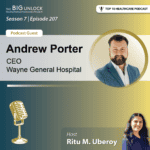
In this episode, Andrew Porter, CEO of Wayne General Hospital, shares how a community-based health system is navigating the dual pressures of financial sustainability and rural healthcare delivery. Drawing on his unique “three-legged stool” perspective as a clinician, administrator, and academic, Andrew highlights the necessity of staying nimble in a rapidly evolving market.
Wayne General is taking a pragmatic approach to AI by focusing on real problems instead of technology hype. Andrew details the successful implementation of ambient AI documentation, which has improved provider satisfaction and restored the intimacy of the patient-physician relationship. He also discusses leveraging AI partnerships to bring high-sophistication care, such as heart murmur detection, to rural populations. Andrew emphasizes the critical need for AI-driven transformation in the revenue cycle to alleviate the administrative complexity burdening small hospitals. Take a listen.
About Our Guest
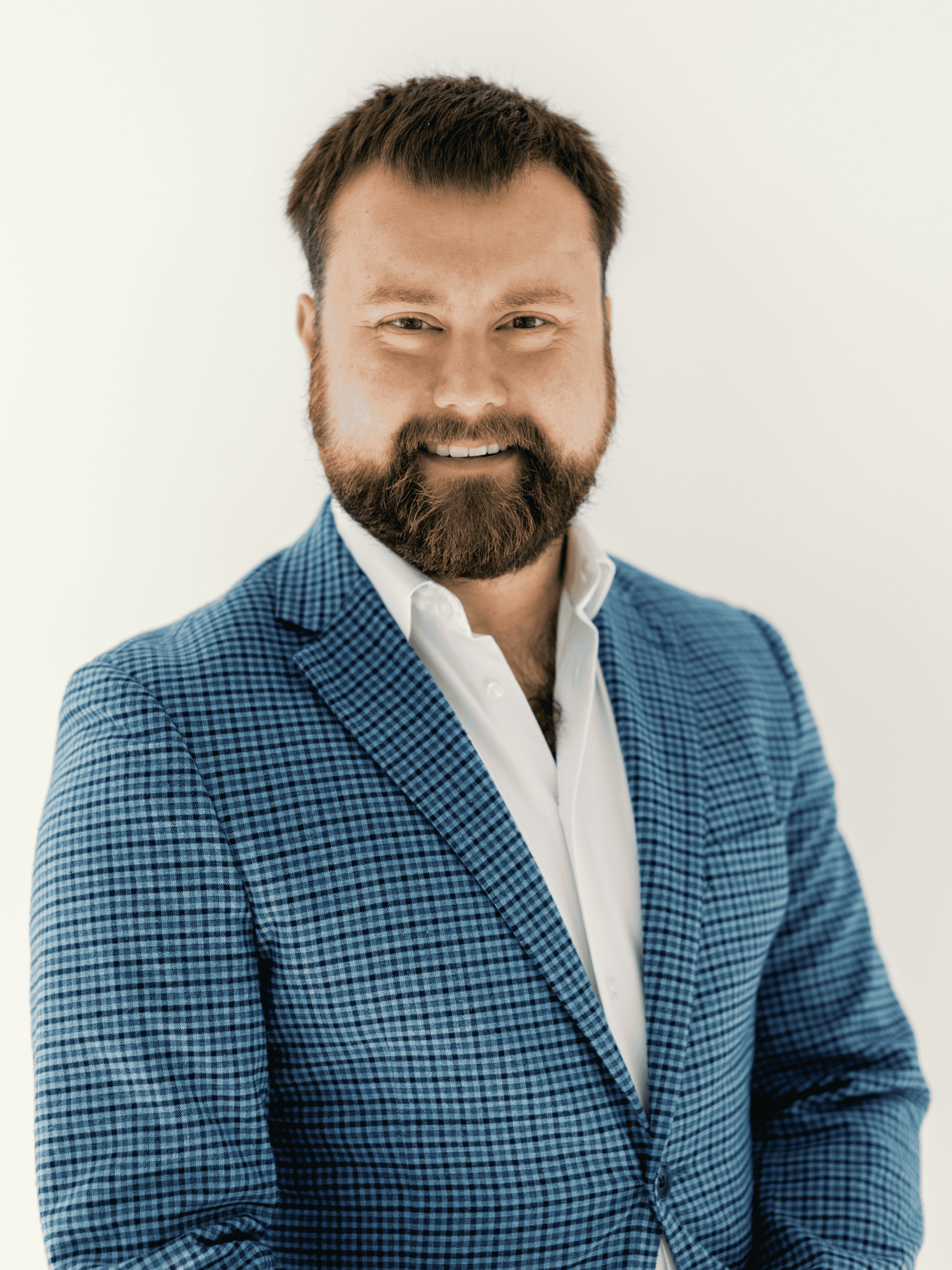
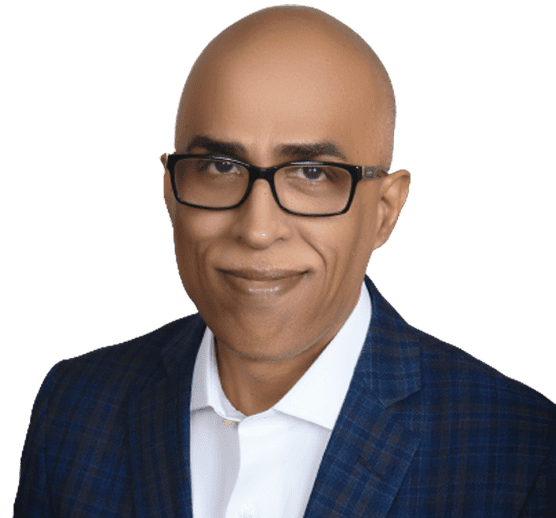
Andrew Porter is the Chief Executive Officer of Wayne General Hospital in Waynesboro, Mississippi where he leads strategic planning and daily operations. A graduate of the University of Lynchburg’s Doctor of Medical Science program as part of its second cohort, Dr. Porter continues to practice emergency medicine in the rural setting.
He is certified as a Physician Assistant by the NCCPA and holds the Emergency Medicine Certificate of Added Qualifications (EM-CAQ). Throughout his career, Dr. Porter has served on numerous advisory boards and boards of directors and has also provided expert testimony as a defense expert witness.
Dr. Porter has a special interest in public-private venture partnerships and has successfully structured and closed several collaborative initiatives designed to expand healthcare access and innovation in rural communities. In addition to his clinical and administrative experience, he completes his professional triad with a strong commitment to academics. From classroom teaching and precepting to research and program development, he finds preparing the next generation of healthcare professionals to be one of the most rewarding aspects of his work. He has previously served as an Associate Preclinical Director and held multiple adjunct faculty appointments.
Despite his professional accomplishments, Dr. Porter considers his family his greatest achievement and enjoys spending as much time as possible with his wife and three children on their tree farm.
Recent Episodes
Ritu: Hi everyone. Welcome to the Big Unlock Podcast. My name is Ritu Oberoi. I’m the managing partner here at Damo Consulting and co-host of the Big Unlock Podcast. A very warm welcome to all our listeners to Season Seven. Today we are very thrilled to have with us Andrew Porter. He serves as a key leader at Wayne General Hospital, where he’s driving forward initiatives focused on operational excellence, patient-centered care, and sustainable growth for a community-based health system. Andrew has been instrumental in advancing strategic priorities that strengthen access, improve outcomes, and enhance workforce resilience. Looking forward to a very in-depth and engaging conversation. Welcome, Andrew. Thank you.
Andrew: Thank you for having me.
Ritu: Would you like to add anything to that introduction, or shall we get started?
Andrew: I’m on y’all’s time. I’d just like to say it’s a privilege and an honor to get to chat with you all today, and for your listeners to get to know us here at Wayne General Hospital a little better. I’m excited about what we get to talk about today.
Ritu: We usually like to start with an origin story — asking our guests how they got into healthcare, and particularly into this intersection of healthcare, administration, and tech. If you can tell us a little about your background and how you came to this role, we’d love to hear that.
Andrew: Of course. It’s a winding path of how I ended up here, so I’ll give y’all the short elevator version. I actually started working here at Wayne General when I was still in high school — my first job was here as an ER tech. I did that through high school and into college. I initially went the clinical route in my education. I’m a PA by trade and practiced emergency medicine — I continue to do that to an extent even now. I did some teaching and education along the way, earned my doctorate in medical sciences with a focus on healthcare administration, and then the opportunity came along to return to my hometown to practice emergency medicine. I was able to bring that education and administrative leadership skill set with me, and the rest is history. My board of trustees put faith in me to be the CEO here at the hospital, and here we are today.
Ritu: Thank you for sharing that. You have this professional triad of clinical experience, administrative experience, and a strong commitment to academics. Which part is your personal favorite?
Andrew: I had an accounting professor once who described it beautifully using the analogy of a three-legged stool. Professionally, I have a clinical component, an academic component, and an administrative component — and for me personally, each one of those legs makes the other stronger. Continuing to work on the front lines in healthcare gives me a much better sense of the needs of the community and the pulse of my staff. There are so many times that being in the emergency department, interacting with staff at that level, allows me to catch something that could turn into a significant cultural or logistical issue before it becomes a larger problem. The adjunct teaching keeps me sharp on what the research is showing and where best practices are headed in five to ten years. Having that academic hat on makes me a better administrator. I know the practical challenges, but I also bring the academic perspective to the table. Together, all of that helps me drive our system using best practices, while keeping today’s financial challenges in mind, maintaining a strong strategic plan, and staying nimble — because the healthcare world today is essentially completely different from what it was a year ago.
Ritu: I like that analogy — it really helps visualize exactly what you’re saying, that you have to keep all three things in balance and each one makes the others stronger. Thank you for sharing that. Andrew, I wanted to hear more about Wayne General, because you operate in this challenging community hospital environment. What specific operational or financial levers have had the biggest impact in maintaining both quality and sustainability? We’ve been hearing from other health system C-suite leaders that it’s always a resource crunch and you’re constantly having to do more with less. Beyond AI, what’s top of mind and how do you face those challenges?
Andrew: A little more detail about our organization: we are the sole community hospital for our area, serving a population in excess of 50,000 people given our rural geography and how far our reach extends. We’re county-owned — which may be unique to some listeners — meaning we are actually a political subdivision of Wayne County. Even though we don’t receive any taxpayer funding, we have been financially sustainable for many, many years. At the end of the day, the reality is that we really try to embrace the idea that we’re the people’s hospital. We are owned by the people of Wayne County. We have the nonprofit designation, and I describe it to people this way: 365 days a year, our goal is high-quality patient care. We’re not a for-profit organization answering to shareholders — we answer to the people. But to meet those needs, you have to have money, so at the end of the day it’s still a business. It’s a unique business model, but you still have to get cash in the door. For small hospitals like ours, there’s been so much transition since COVID. We went through an EHR transition during that period, which is always a very big undertaking for a smaller health system. Navigating how that intertwines with the revenue cycle has been a big challenge. For a small community hospital leader, the name of the game right now is being conservative with finances, valuing our independence, and keeping the financial side right up there with patient care — because to offer a high level of patient care, we have to be in a good financial situation.
Ritu: Absolutely. Taking that further — where do you see the most practical near-term opportunities for AI and automation? How far along are you on that journey? We hear a lot about ambient documentation, voice agents, and digital front door technologies, since clinicians are still cautious about AI for diagnostics and clinical decision-making. Where is Wayne General with those technologies?
Andrew: About a year ago, I very distinctly remember having conversations of the nature of: we don’t want to get left behind. So we took a hard look at where our pain points were — but we weren’t going to go out and try to fix problems with AI that didn’t exist. We said: let’s look at the issues we’re actually having and see if AI might be part of the solution. A good example is the ambient documentation and AI-assisted documentation space — that was one of the first areas we went down that path, and it’s been very positive for us. We’ve had it active in a substantial way for about two months now, so it’s still a little early to have a complete picture of the financial implications around improved documentation. I will tell you, the timeliness of documentation has absolutely improved. But for me, the biggest factor has been provider satisfaction. Even some of our later-career providers — who are sometimes resistant to new technology — have tremendously embraced the use of AI for documentation assistance. I would argue that has added longevity to certain providers, and while I don’t yet have a way to quantify this, I believe it’s also improving the patient experience. Instead of the provider feeling rushed to get back to the keyboard and complete documentation, medicine now becomes more what it was intended to be — an intimate, conversational interaction between the patient and their physician or provider focused on the patient’s needs that day.
Andrew: So AI-assisted documentation is what comes to mind first as something we’ve implemented and are seeing really positive early results from.
Ritu: I was having a conversation a few months ago with one of our C-suite guests, and they mentioned that one important benefit of ambient documentation is that doctors are vocalizing more — and that’s great for patients because they love to hear more. Because the system is capturing everything in the background, providers are actually saying things out loud that they might otherwise have just thought, and that really helps.
Andrew: That’s a great point, and putting my clinician hat on — it’s so easy to see a patient and say something like, “I think you have pneumonia, we’re going to run a couple of tests and get a chest X-ray,” and then move on. With ambient documentation, you’re naturally encouraged to be more detailed in that conversation because you know it’s going to be populated into the note. The conversation becomes: “Here’s my concern about what we may be dealing with. I’m going to order X, Y, and Z tests. Here’s what I’m looking for. This is the initial treatment plan.” And the way I have my AI-assisted documentation tool set up, every time I go into the room it timestamps it — which is an additional encouragement to make sure that every 30 minutes, every hour, or whatever is appropriate, I’m reassessing the patient and providing updates to them. So while it may not have been the original intent, it also increases accountability — making sure you’re having those detailed, appropriate conversations with the patient and their family and checking in on them regularly. Personally, those have been some of the real positives for me.
Ritu: Going along those same lines, you mentioned some of those physicians were from an older generation and more resistant to technology. Let’s talk about change fatigue and the barriers to digital transformation. How did you break down those barriers and get everyone on board?
Andrew: For us, one of our more experienced clinicians had actually heard that this technology was becoming available. We let him do a little research, look at different vendors, and participate in the selection process — and then we let him be the first user for a couple of months. He really became our champion. The sell was easy after that because when this particular person — someone who hates technology and wishes we could still do everything on paper — starts telling his colleagues, “This is as close to charting on paper as we’re probably ever going to come again. It’s decreased my workload. I’m not staying hours after my shift or coming in on my days off” — that carries a lot of weight. So for other organizations, finding that champion early on and giving them real buy-in to the project was really key for us.
Ritu: Basically, have the change driver be someone who has a personal stake in the change and can genuinely influence others around them.
Andrew: And realizing that the right agent of change may not be the first person who comes to mind. It doesn’t need to be the newest graduate clinician. It probably needs to be someone more senior, because your senior medical staff will have those long-standing relationships with colleagues, and the trust they carry operates on a different level.
Ritu: Looking ahead, what do you believe will differentiate the community hospitals that thrive from the ones that struggle to survive? Resources are always going to be scarce. What are the key factors that will keep Wayne General — and community hospitals in general — on the path to sustainability?
Andrew: We have a saying in medicine: you often don’t want to be the first to do something, and you don’t want to be the last. For us, that meant while we may not be the very first to try something, we do want to stay on the cutting edge. If we see a product or solution that has worked for others and makes sense for us, we’re going to consider going down that path. The AI vendor market has opened up so many opportunities for relationships and solutions. One thing we’ve been very fortunate with is our relationship with Eko Health, who make the Eko stethoscope. We’ve partnered with them on various research projects using their Sensora AI tool for heart murmur detection, and that’s been a great relationship. That gets into the space of how we use AI to increase access to care — bringing a level of technology and sophistication to a population that historically would have been years behind what could be offered in a large metropolitan area. We’re passionate about bringing that cutting edge of care when it makes financial sense and when we have the capabilities to support it. We’re proud of that relationship and look forward to the research that will come out of that partnership.
Ritu: As you’ve explored AI on your own — and you mentioned you’re always doing research — what do you feel are some of your personal favorite areas you’d like to know more about? And where do you think the biggest change in healthcare is headed in the next year or so? Crystal ball?
Andrew: Putting my administrator hat on — something is going to have to change in the revenue cycle space: coding, billing. There has to be some relief at some point for our hospitals, because the current model is enormously complex. I’ll be very honest — I by no means fully understand the revenue cycle, let alone a layperson trying to make sense of it. And just the timing alone — how long it takes from when a patient is seen to when the facility receives payment — you’re often looking at 30 to 60 days at minimum. I really hope that health systems and payers can come together and find solutions with AI in coding, billing, and that whole arena. That would be huge for everyone. So while it may not be a crystal ball prediction with a definitive endpoint, that’s Andrew’s hope for what will happen.
Ritu: That’s a tough one because it involves so many players and everything is so fragmented. To build something that can communicate across all of them — that’s the barrier we’ve been hearing about from everyone. Everything is so siloed. Unless there are protocols that allow components to talk to each other — maybe with agents from each side communicating and speeding up the process — maybe that’s the future.
Andrew: That would be incredible.
Ritu: Maybe that is the future. It’s been a great conversation. Thank you so much for joining us on the Big Unlock Podcast. It’s been a pleasure having you as our guest. Thank you so much, Andrew.
Andrew: Thank you. It’s been an honor.
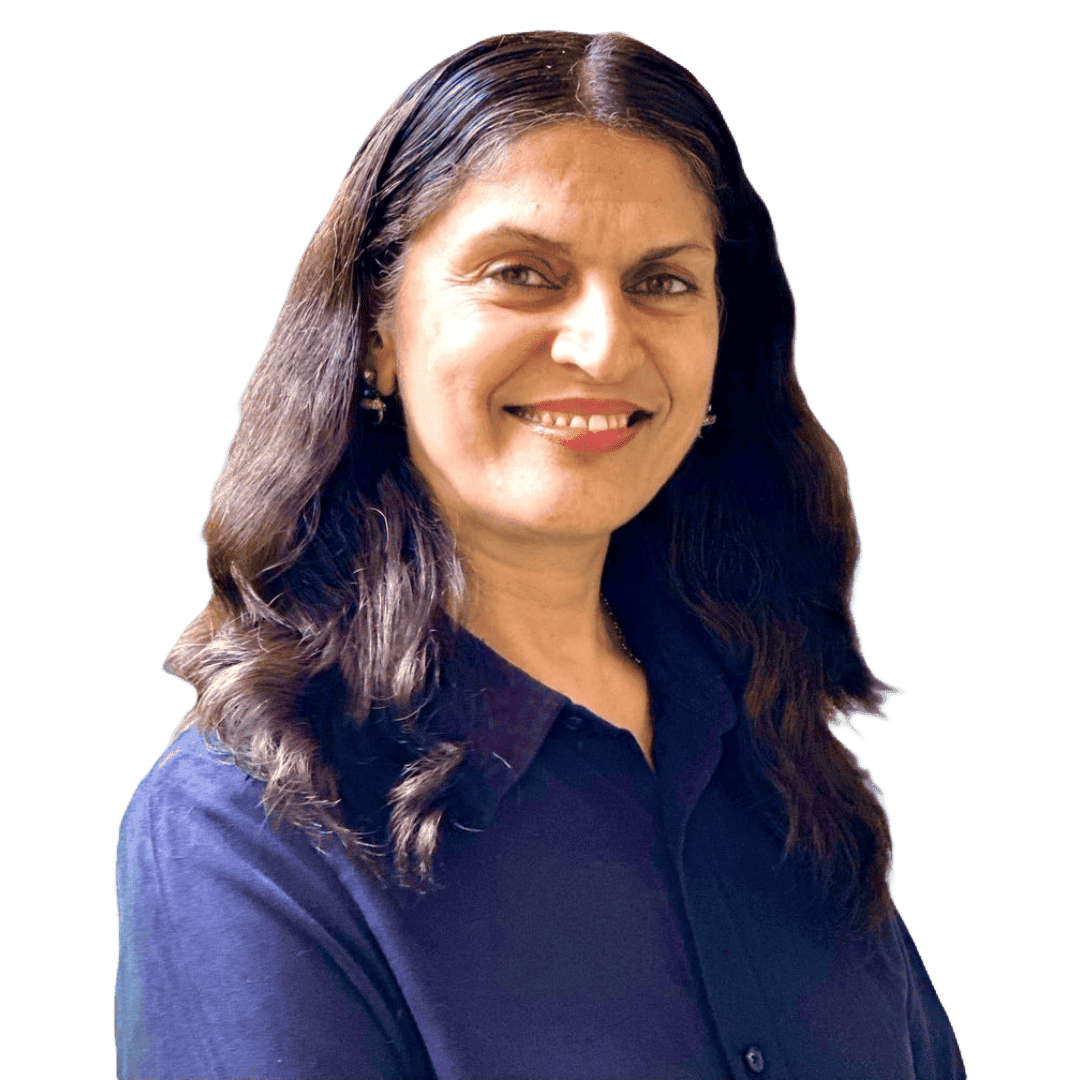
Ritu M. Uberoy is a healthcare AI strategist, technology executive, educator, and author dedicated to advancing the responsible adoption of Artificial Intelligence across healthcare delivery, digital health, and life sciences. With more than twenty-five years of leadership experience spanning the United States and India, she is recognized for helping healthcare organizations move beyond experimentation to achieve scalable clinical, operational, and business transformation through AI.
She leads AI innovation initiatives, including the AI Center of Excellence at BigRio, where she works with health systems, healthcare technology companies, and life sciences organizations to operationalize Generative and Agentic AI solutions responsibly. Her work focuses on aligning AI innovation with clinical workflows, governance frameworks, workforce readiness, and patient trust—ensuring technology augments human judgment in high-consequence healthcare environments.
Ritu is the co-author of Generative AI: Unlocking the Next Chapter in Healthcare, a practical guide for healthcare executives navigating enterprise AI adoption. She also hosts The Big Unlock podcast, engaging global healthcare leaders on AI transformation and digital innovation. An active educator and speaker, she conducts executive workshops and participates in global forums like HIMSS, ViVE, Women in Tech, AI-Powered Women, RAISE, and more, shaping the future of AI-driven healthcare. Ritu holds advanced degrees in Computer Science and completed specialized AI programs at Harvard and MIT.
Paddy was the co-author of Healthcare Digital Transformation – How Consumerism, Technology and Pandemic are Accelerating the Future (Taylor & Francis, Aug 2020), along with Edward W. Marx. Paddy was also the author of the best-selling book The Big Unlock – Harnessing Data and Growing Digital Health Businesses in a Value-based Care Era (Archway Publishing, 2017). He was the host of the highly subscribed The Big Unlock podcast on digital transformation in healthcare featuring C-level executives from the healthcare and technology sectors. He was widely published and had a by-lined column in CIO Magazine and other respected industry publications.
Stay informed on the latest in digital health innovation and digital transformation