In this episode, Ann Bilyew, President at WebMD Ignite, explores how the rise of AI-generated health information is changing the way health systems connect consumers to care. As LLMs increasingly own the information layer, she argues that the opportunity for healthcare organizations is shifting from owning search and discovery to establishing credibility and owning the handoff from a patient’s question to the right care.
Ann emphasizes the importance of complete, credible, and corroborated content, alongside personalized engagement that reflects each patient’s clinical circumstances, preferences, and needs. She also calls for reducing friction and breaking down organizational and technology silos across marketing, education, engagement, and care to create a more cohesive patient journey. Ann believes healthcare organizations must focus on creating the connection point between foundational AI models and the actual provision of care. Take a listen.
About Our Guest
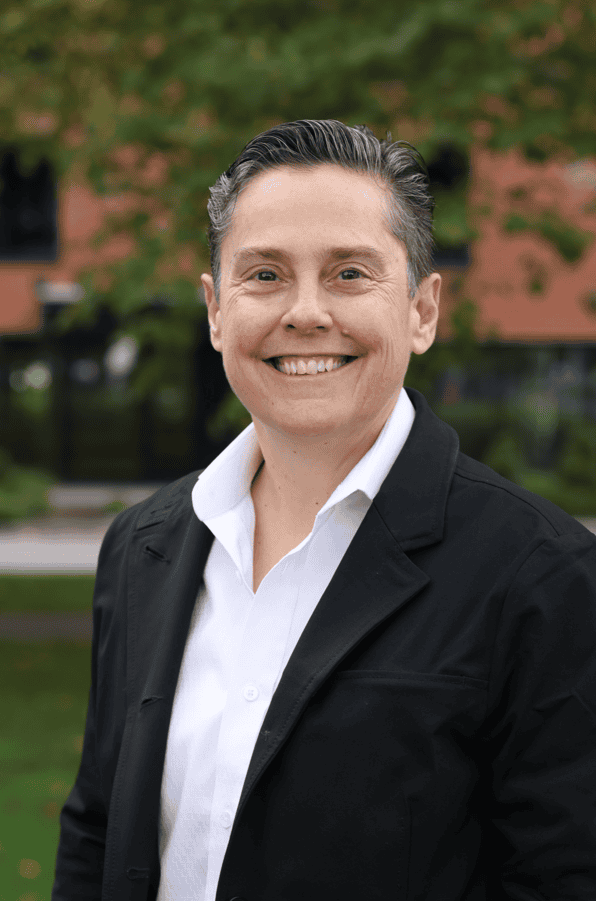
Ann Bilyew is a prominent executive in the healthcare sector, currently serving as the Executive Vice President (EVP) for Health and President of the Healthcare Solutions Group at Internet Brands, where she leads WebMD Ignite, the leading B2B growth partner for healthcare organizations. With over 20 years of experience in investing and leading healthcare companies, Bilyew plays a crucial role in shaping strategies for patient engagement and healthcare solutions.
Recent Episodes
Ritu: Hello, listeners. Welcome to Season Seven of The Big Unlock Podcast. My name is Ritu M. Uberoy, and I’m managing partner at Damo Consulting and your host today. We are very happy to welcome Ann Bilyew to our podcast. Ann is a prominent executive in the healthcare sector, currently serving as Executive Vice President and President of the Healthcare Solutions Group at Internet Brands, where she leads WebMD Ignite, the leading B2B growth partner for healthcare organizations. She has over twenty years of experience investing in and leading healthcare companies, and plays a crucial role in shaping strategies for patient engagement and healthcare solutions. Really happy to have you here with us, Ann. Welcome.
Ann: Thank you, Ritu. It’s a pleasure to be here. Just a couple of sentences about WebMD Ignite so people understand what we do. Most people think of WebMD as the place consumers go with a health question, and that is still very much who we are. We also have Medscape, the leading professional source of information, reference, and news for clinicians. Ignite is our institutional or enterprise business for payers and providers and health systems. What we provide is a comprehensive patient and member engagement platform powered by industry-leading content and data, which enables personalization at scale and omni-channel orchestration. We are really the entire backbone of a patient or member engagement platform for payers and providers.
Ritu: Thank you for telling us about that, Ann. That leads directly to our first question. People are actively searching the internet for health information, and we’ve moved away from “Doctor Google” behavior toward AI summaries — where people don’t even know where the information is coming from; they’re just reading AI-generated answers and acting on them. Patients are now coming to doctors so prepared from ChatGPT that they’re essentially seeking a second opinion on something they’ve already formed a view about. How do we maintain trust in this environment, and how do patients know what to trust?
Ann: A great question, and we don’t really know yet — all of this has happened so quickly. What we do know is that there has been a complete collapse of the traditional funnel for health systems and payers doing traditional digital marketing. By our count, roughly seventy to eighty percent of a health system’s digital budget has been focused on search — specifically Google search. Over the past fifteen to twenty years, they’ve spent billions of dollars trying to be one of the little blue links at the top of a results page. What we’ve seen evolve over the last twelve months is that health is squarely in the crosshairs of AI Overviews — AI-generated answers instead of links. A study by BrightEdge from December of last year found that ninety percent of health-related questions put into Google now return an AI Overview. And when an answer is returned, click-through rates drop dramatically. A Semrush study from around the same period showed that when an AI Overview is present — which, remember, is now ninety percent of health-related searches — click-through rates drop to around one percent. That whole strategy of search engine optimization and search engine marketing has been completely blown up. The information is now readily available whether a consumer goes to Google or uses ChatGPT or Claude or whatever LLM they prefer. What’s increasingly scarce is credibility and trust, and that’s where a health system can maintain relevancy in the marketing funnel. That is where they increasingly need to focus.
Ritu: You’ve made the argument that content is scarce, and AI makes that point so much more consequential. Historically, patient education content could be reviewed, approved, and published. But now an LLM isn’t just giving back that same information — it’s combining it with other sources and generating new answers in real time. How should healthcare organizations treat their content layer in this environment?
Ann: When you look at what used to be called the digital front door — which was always a fancy phrase for a website — traditional SEO was all about keywords, volume of content, and number of pages. Scale. We know that no longer matters as much. Our team studied about fifty markets and well over a hundred and fifty health system websites to see not how they were ranking in Google, but how they were being cited by the LLMs. What we found is that the most important thing you can do is have the right information. When an LLM gives an answer, it is increasingly listing sources — and you want to be cited as one of those sources. To be cited, the content you publish has to be credible: complete, corroborated by third parties where possible, and connected to the overall pathway to care. What we see mattering most is physician profiles that are complete and comprehensive — that really tell a full story about those providers. You need robust information about the service lines that are most important to you, demonstrating your competency and capability, corroborated by third-party sources. Beyond the citation, what ultimately matters is being listed as the handoff — the place to go for care. It used to be: question in Google, blue link, user lands on your site, and you try to guide them through the patient journey. Health system websites, frankly, are pretty awful. I would encourage any listener who says “my website is great” to actually go on it and see — the friction, the homepage trying to do everything at once between paying a bill, finding a location, and figuring out where to park, none of which has anything to do with getting a person interested in care to the right clinician. Health systems have to own the handoff from question to answer to care. The answers will increasingly be provided by LLMs — full stop. We’re not going to own the information layer. What we can own is the conversion layer, the conversion to care. That is where health systems need to optimize their content, their website, and their outreach.
Ritu: Both of those points are absolutely right. The handoff is so important because information is now coming from so many different sources, and the validity and trustworthiness of citations matters more than ever. Let’s change tracks a bit. We always love an origin story — how did you get into healthcare, how did you get comfortable with tech, and what has your journey looked like?
Ann: I’ve always been in healthcare my whole career — not as a clinician, but trained as a business person. My journey really has three or four chapters. Coming out of business school, I joined a healthcare-only boutique consulting firm called APM, really focused on M&A. This was during the first major transition to integrated delivery networks. Doing M&A, integration, and deep operational work was a great training ground — even post-MBA — to really learn how these organizations operate and how to design solutions that can actually work in the real world. Then I joined a private equity firm called Advent and became a partner there, investing in healthcare technology and healthcare services, both in the US and internationally — Europe and Israel. I wanted to try running a company, so I took a portfolio company and became CEO of one called MD Everywhere. That’s where I really learned to lead large organizations through periods of rapid technological change. I’ve seen a lot of technological transitions over my career, and a lot of what I call technology theater — most of which ends badly. But this time feels a little different to me in terms of the impact of AI and the velocity of change. It feels different from most other transitions I’ve seen. We successfully sold and exited that business, and I then joined Internet Brands just after they completed the acquisition of WebMD and took it private. My charge was to build out the institutional or enterprise business — what we now know as Ignite — and scale it. Today we work with 95% of the hundred and fifty largest health systems and 80% of the twenty largest payers, so we’ve gotten a lot done in the last four or five years.
Ritu: Loved hearing those chapters — but still want to go back to the origin. When you came out of business school, why healthcare? There were so many options. Usually people have a personal connection. Is there something that led you there?
Ann: Coming out of undergrad, I was accepted to Harvard Business School — which is unusual right out of college. They said, “You’re young — go work for a couple of years and then come back.” So I had a year to do essentially whatever I wanted. There was a community health center in Kansas City — I went to KU for undergrad — that wanted to build a new facility. They’d outgrown their current one and needed someone to come in on a project basis and help raise the capital through bond initiatives at the city and state level. It was a great project, and that’s really where I got the healthcare bug. I became genuinely intellectually interested in the complexity of the industry and the impact it has on communities and on the country as a whole. We raised the capital, got the building built, and I went back about a year later and saw the groundbreaking — knowing that project had helped many generations of families in Kansas City since then. That’s how I got into healthcare. Coming out of business school, I really only looked at healthcare and went directly to APM — sort of the mothership of healthcare boutique consulting, deploying to all of the leading health systems and payers at the time.
Ritu: Thank you for sharing that. WebMD Ignite describes itself as both a patient engagement organization and a growth partner helping health systems attract patients and strengthen referrals. Most of the time those goals align — but not always. What happens when the commercially optimal action for a health system isn’t necessarily best for the individual patient? And what governance do health systems need to ensure personalization is optimizing for the patient’s best interest rather than just becoming a more sophisticated marketing engine?
Ann: Just a quick clarification first — we work with over 650 health systems in total. The 95% figure refers to the 150 largest, but we work with organizations across the full spectrum: very small, local, regional, and standalone all the way up to the largest health systems in the country. That breadth gives us a tremendous perspective on what’s working, what isn’t, and what strategies are being deployed in different markets. To answer your question: the way I think about it is that we have to earn the right to communicate with people. The only way to earn that right is to give them something of value — to show them that we know them, understand them, and have taken the time to understand the unique set of circumstances that make them an N of 1. What are their unique clinical characteristics? What are their unique socioeconomic circumstances? What are their preferences — how do they like to receive information, in what format, through what channels? Only when you put all of those things together can you say: here is what matters to this particular individual, here is where they are on their care journey right now. That is how you earn the right to communicate. This is what retail and other industries have done well and have trained consumers to expect — they want to see that you’ve taken the time to understand their needs, and that you’re giving them information that is relevant, timely, and in their preferred format through their preferred channels. When we give people quality, tailored information, the patient will make the right decision for themselves. That is really our job: give them the right information personalized to their needs, preferences, and circumstances so they can make a good decision — and then facilitate whatever that decision is. Remove the friction from making an appointment, from signing up for a class, offer tools like health risk assessments or calculators. Remove the friction, help people make good decisions. The ultimate decision always belongs to the consumer, to the human, to the patient.
Ritu: What I gather from that answer is that you’ve tried to unify the patient journey. You’ve mentioned removing friction several times, and we know healthcare is deeply siloed. Given that unique perspective of working with 650-plus health systems, what has been the most difficult part of unifying the patient journey, and what goes on behind the scenes?
Ann: I can’t think of another industry that treats its customers — its patients — in such a siloed way. When we think about the patient journey, there’s content as they’re making a decision or selecting a provider or deciding whether to make an appointment — we call that marketing. Then once a patient is on a journey, has selected a provider, made an appointment, scheduled a procedure, the information they start receiving at that point we call education. But it’s all the same thing. It’s all designed to influence someone to make a decision and take an action that is hopefully in their best interest. Whether they’re early in the journey, deciding whether to see a clinician, or they’ve already scheduled a procedure and are receiving information on how to prepare — it’s all information and engagement designed to influence at different stages. The challenge is that those parts of the organization are completely siloed. Clinical owns patient education; marketing owns patient acquisition and activation; someone else owns retention and adherence. Separate budgets, separate teams, separate technology stacks — yet it’s one person going all the way through that journey. It’s one human being we’re speaking to throughout. Getting our clients to think that way is the work. Some are getting there — you’re starting to see new roles like VP of Patient Experience or Chief Patient Experience Officer, and budgets beginning to come together. But we’re still in the early innings.
Ritu: Time has flown, as usual, and we’re almost at the end of the podcast. Any closing thoughts or crystal ball predictions? We used to ask about the next year or two — now it feels like the next few weeks.
Ann: Anyone making predictions today is taking a big risk. The speed at which we’re evolving as an industry, as a culture, as a country is astronomical and truly unprecedented. I wouldn’t venture any predictions other than this: the information layer will increasingly be owned by the LLMs and the foundational models. Our job is to figure out how to make the connection point between those foundational models and the actual provision of care. That is where we have to concentrate, and that is where we have to figure out how to build.
Ritu: Thank you so much, Ann, for joining us on the Big Unlock Podcast. It’s been our pleasure having you as our guest.
Ann: Thank you. It’s been my pleasure. I appreciate it very much.
—
Subscribe to our podcast series at www.thebigunlock.com and write us at info@thebigunlock.com
Disclaimer: This Q&A has been derived from the podcast transcript and has been edited for readability and clarity.
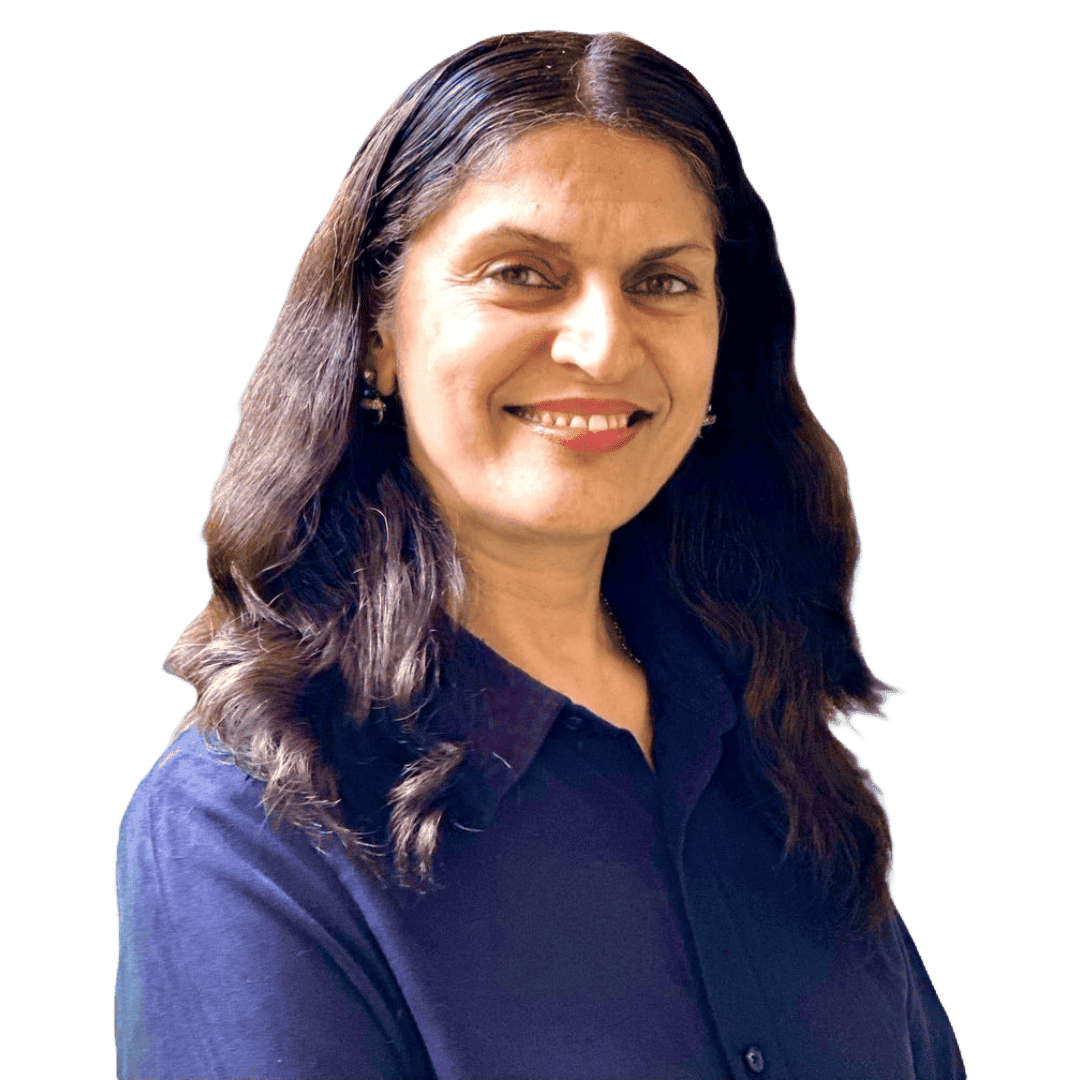
Ritu M. Uberoy is a healthcare AI strategist, technology executive, educator, and author dedicated to advancing the responsible adoption of Artificial Intelligence across healthcare delivery, digital health, and life sciences. With more than twenty-five years of leadership experience spanning the United States and India, she is recognized for helping healthcare organizations move beyond experimentation to achieve scalable clinical, operational, and business transformation through AI.
She leads AI innovation initiatives, including the AI Center of Excellence at BigRio, where she works with health systems, healthcare technology companies, and life sciences organizations to operationalize Generative and Agentic AI solutions responsibly. Her work focuses on aligning AI innovation with clinical workflows, governance frameworks, workforce readiness, and patient trust—ensuring technology augments human judgment in high-consequence healthcare environments.
Ritu is the co-author of Generative AI: Unlocking the Next Chapter in Healthcare, a practical guide for healthcare executives navigating enterprise AI adoption. She also hosts The Big Unlock podcast, engaging global healthcare leaders on AI transformation and digital innovation. An active educator and speaker, she conducts executive workshops and participates in global forums like HIMSS, ViVE, Women in Tech, AI-Powered Women, RAISE, and more, shaping the future of AI-driven healthcare. Ritu holds advanced degrees in Computer Science and completed specialized AI programs at Harvard and MIT.
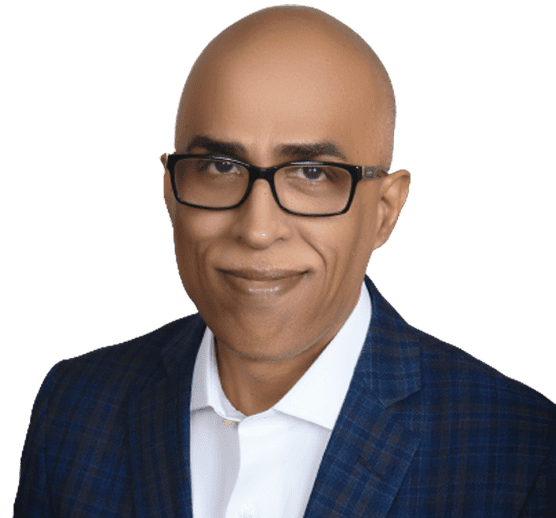
Paddy was the co-author of Healthcare Digital Transformation – How Consumerism, Technology and Pandemic are Accelerating the Future (Taylor & Francis, Aug 2020), along with Edward W. Marx. Paddy was also the author of the best-selling book The Big Unlock – Harnessing Data and Growing Digital Health Businesses in a Value-based Care Era (Archway Publishing, 2017). He was the host of the highly subscribed The Big Unlock podcast on digital transformation in healthcare featuring C-level executives from the healthcare and technology sectors. He was widely published and had a by-lined column in CIO Magazine and other respected industry publications.
Stay informed on the latest in digital health innovation and digital transformation