Season 7
In this episode, Roberta Schwartz, Executive Vice President at Houston Methodist Hospital and Chief Innovation Officer at Houston Methodist, explores how healthcare is moving from AI hype toward a more mature, outcomes-driven approach to innovation. She argues that as technology companies expand beyond traditional “swim lanes,” health systems must become more thoughtful about selecting platforms that can address multiple needs while avoiding fragmented solutions.
Roberta emphasizes that technology alone does not create transformation. Successful AI adoption requires rethinking workflows, redesigning processes, and measuring whether technology improves care, strengthens the workforce, and reduces costs. She shares Houston Methodist’s approach of bringing operators and IT leaders together to evaluate innovation through both frontline impact and ROI.
She also discusses agentic AI, virtual care, and centralized specialty services as ways to expand access and improve workforce efficiency. Her message to healthcare leaders is to remain optimistic but skeptical: define trials, measure outcomes, question assumptions, and ensure every technology investment delivers meaningful value. Take a listen.
About Our Guest
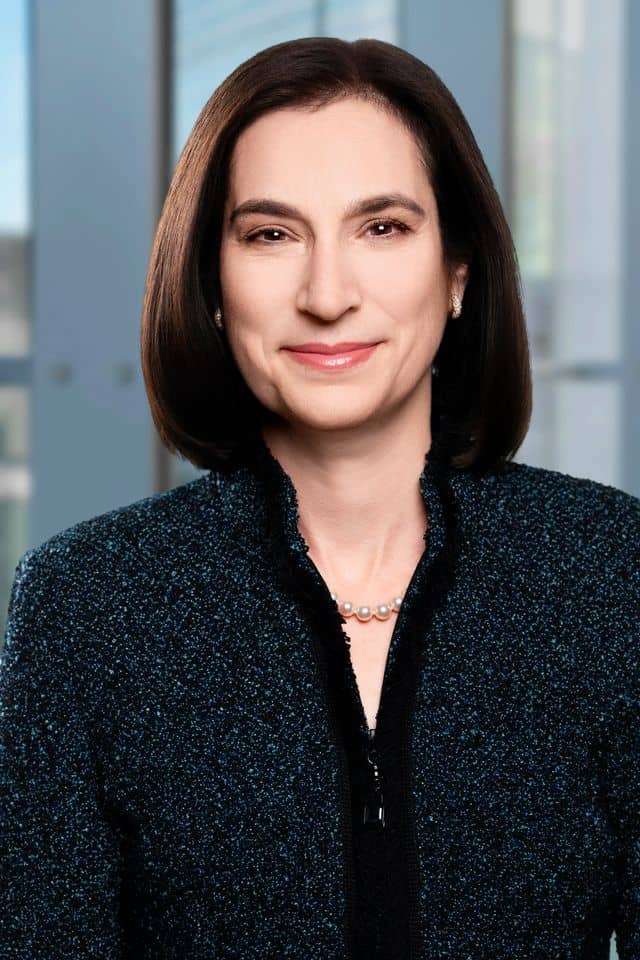
Roberta L. Schwartz is the executive vice president of Houston Methodist Hospital — one of the founding institutions of the Texas Medical Center — and the chief innovation officer of
Houston Methodist. As executive vice president of Houston Methodist Hospital, Roberta oversees all operations at the 979-bed hospital, which U.S. News & World Report named the No. 1 hospital in Texas for 15 straight years. The publication also listed Houston Methodist Hospital to its prestigious “Honor Roll” 10 times. As chief innovation officer, Roberta is responsible for advancing and expanding Houston Methodist’s digital innovation platforms, including telemedicine, artificial intelligence and big data.
Prior to joining Houston Methodist, Roberta worked as the director of business development for the Icahn School of Medicine at Mount Sinai in New York. She was also a consultant and project manager for several academic medical centers for APM/Computer Sciences Corp. and the Centers for Medicare & Medicaid Services.
Roberta earned a master’s degree in health science from Johns Hopkins University and an honors undergraduate degree from Barnard College at Columbia University. She has a Ph.D. from UTHealth Houston School of Public Health.
Roberta is nationally recognized for her professional and nonprofit work. She was recognized by Modern Healthcare’s Top 25 Women Leaders as one of its “10 Women to Watch.” She is involved in many nonprofit organizations, such as LifeGift, the Robert M. Beren Academy, the United Orthodox Synagogues and the Young Survival Coalition.
Recent Episodes
Ritu: Hello, listeners. Welcome to Season Seven of the Big Unlock Podcast. My name is Ritu Oberoi, and I’m managing partner at Damo Consulting and your co-host today along with Rohit. Today we are welcoming Roberta Schwartz to our podcast. Roberta is the Executive Vice President and Chief Innovation Officer of Houston Methodist Hospital in the Texas Medical Center. As EVP, Roberta oversees all operations at this 979-bed hospital, which US News and World Report named the number-one hospital in Texas for fourteen straight years. As CIO, she is responsible for advancing and expanding Houston Methodist’s digital innovation platforms, including telemedicine, AI, and big data. We are really looking forward to this conversation. Welcome to the podcast, Roberta.
Roberta: It is a pleasure to be here. Thank you so much for having me.
Rohit: I’m Rohit Mahajan, managing partner and CEO at Damo Consulting and co-host along with Ritu. Looking forward to chatting with you, Roberta. Over to you.
Ritu: Roberta, you’ve talked about 2026 being the year of maturation and said that healthcare is now well past the AI hype phase. But we’re still seeing CIOs mostly jumping onto a tool-based strategy and acquiring siloed tools — which leads to interoperability problems all over again. With all the success Houston Methodist has had, give us your viewpoint on how AI is actually changing the operating model of a health system, and what you’ve done to make this such a success.
Roberta: If you look at that technology adoption curve that ends in maturation and then starts the next curve, we’re right at that center point. All of us now have fairly mature EMRs that continue to make modifications and improvements — whether you’re on Meditech, Epic, Cerner, or Oracle — layering in more recently available technology: search, symptom checker, chat, texting functionality. That’s the maturation happening in the base tools. The second thing — and I credit Darren Dworkin as a mentor and friend who articulated this — is that it used to be when we met a company, the job was to keep everyone in their swim lanes so technologies didn’t cross into each other. But that’s no longer possible. What a company could do yesterday, today, and tomorrow are essentially infinite. You used to tell companies, “Stick to your lane,” and now the lane is the entire swimming pool. So picking companies becomes both the challenge and the exciting part — because once you get into the pool with one or two, they can do multiple things with the same technology. The maturation for those of us on the provider side is identifying what companies can actually do, because everyone will sell you that they can do everything. It’s going to be impossible to work with ten companies and keep them each in their lanes. Now you work with one, two, or three that can cover the entire pool for you.
Ritu: That’s a really good answer — especially pertinent today with all the recent announcements from Epic and the other major players. You’re right, nobody’s going to stick to their lanes, and AI is what’s making that possible.
Rohit: Roberta, tell us a little about your background and how you got to where you are today. Listeners usually like to hear that journey — how did you get interested in this space, and what’s been motivating you?
Roberta: I have a 24-year-old daughter who’s currently working for FEMA in Washington, DC and applying for medical school. She’s very focused on disaster medicine — she’s an EMT, got involved with the Texas Department of Emergency Management, and has known exactly what she wanted to do for years. That clarity was partly taken from me, because I also decided what I wanted to do when I was 13 or 14. I started candy striping in hospitals, fell in love with hospitals, and knew I didn’t want to do hands-on medicine. If you’re not going into hands-on medicine, you get involved in the business side. So right out of college I worked at an insurance company for a year, went back for my master’s at Hopkins, then went to work for what is today CMS — Medicare and Medicaid — under the Clinton administration. From there I went into consulting, then in-house at Mount Sinai, and have been at Houston Methodist for 25 years now. Looking back at that career trajectory, I got into this field to improve healthcare — not from the patient care side, but from the administrative and policy side, recognizing that policy alone could not do everything. My passion for innovation came from watching what innovation was doing in other industries and feeling strongly that it could be brought to healthcare. I’m a late bloomer on the tech side — I’m not even sure I’ve fully bloomed yet. But I understand operations deeply: how you staff, how you change practitioners, what it takes to make things work at the front line. Marrying that with an understanding of what newer technologies are doing and how patients, physicians, and staff are interacting with them — and recognizing that what those technologies did for other industries, they can do for us — that’s the intersection. The issue with many technology companies is they don’t understand the inner workings of how something would have to get approved, what it takes to drive change, or how fragile the healthcare system actually is. You can’t disrupt one piece and assume it won’t impact everything else. But as we chip away carefully, piece by piece, we can make significant improvements in how we deliver care and in the cost of healthcare.
Rohit: That leads naturally to my next question. You mentioned innovation and how you’re embracing it at Houston Methodist. I was fortunate to attend your presentation at the HIMSS AI conference in Boston, and I know Houston Methodist has a defined center of innovation strategy. Would you like to share a little more about that?
Roberta: We began this process years ago. It’s called the Center for Innovation, and we sometimes refer to it as the “digital innovation-obsessed people.” It’s a group of roughly half IT and half operations people who sit together and think through every technology that comes through the door — evaluating the ROI, identifying what it can bring to the front line to improve the clinician’s world and the patient’s world, but also what it returns to the institution. The goal is to give people back time, give people back joy, and give them back the reasons they got into this field. Nobody got into nursing to click buttons or be a slave to an electronic medical record. They got into it to treat patients and feel that sense of accomplishment when they’ve done their job really well. I sometimes get in a little trouble for saying this, but my view is it’s not about ratios and benchmarks. The question is: did you come to work, feel like you did an amazing job, and leave without the anxiety that something was left undone? In these new scenarios, old benchmarks are becoming less relevant — the studies behind today’s benchmarks were done on old technology in different points in time. It’s up to us not only to introduce new technologies, but to push the limits and change the way we deliver care, whether at the bedside, in the home, or in the clinic. And we’re seeing it happen. We’re seeing behaviors change and the way people do things change, and that’s really heartening.
Ritu: At that presentation Rohit shared with me, you described some remarkable numbers around your agentic AI implementation — Houston Methodist achieving a 95% patient satisfaction score for ease of scheduling and generating significant ROI. But as you said, you can’t use the same ratios to measure the clinical side or physician satisfaction. Why have those proved so much harder to quantify, and where do you see the boundary between what AI agents can safely take over and where the human factor still plays an irreplaceable role?
Roberta: Scheduling is a great case study in itself — I could talk about it for a long time, and our leaders Tisha Montgomery and Adam Meyer could talk for hours. But it’s a great example of how technology and change management have to fit together. One without the other doesn’t work. Layering technology onto an old process just costs you more, because you still have the old process and you’ve added the technology on top. Think of the old paradigm where one scheduler serves one or two doctors. If you try to layer technology into that same model, you can’t get any ROI because that person still needs to answer the phone and handle surgical scheduling. You can’t eliminate the role. But when you say, “I’m going to take five schedulers, put them together, and add technology,” suddenly you probably don’t need five schedulers anymore — maybe three, maybe two. That requires change, because people are used to having a dedicated scheduler. But to get from five to two, you first do online scheduling, which requires doctors to put their templates online and keep them accurate. Once that’s in place, there are still phone calls — so who answers them? That’s where our bot, Zoe, comes in. We defined exactly what Zoe handles and when the call drops to a human. Tisha told me a great story where people were calling to say Zoe wasn’t working — it wasn’t that Zoe wasn’t working. Zoe was doing exactly what she was supposed to do, routing clinical questions to the clinic. The issue was the clinic staff weren’t logged in and weren’t picking up. If you don’t have the end of the pipe staffed, it can look like your agentic system is failing when it’s actually working perfectly. Setting up those workflows properly — Zoe gets three tries, then it drops to a human; certain phrases automatically drop to a human — means the human now has more time for the truly complex calls. The combined result of template work, online scheduling, and agentic AI has allowed us to schedule for far more doctors without adding staff. One scheduler can now handle ten doctors instead of four, and a much higher volume is handled online. None of that was possible without rethinking the process first.
Ritu: You’ve made a point we’ve heard from other CIOs as well — the bolt-on approach doesn’t work. You really have to rethink and reevaluate the process before adding AI on top, otherwise you won’t get the transformation you’re expecting. Thank you for explaining that so clearly, Roberta. Rohit, would you like to ask a question?
Rohit: There’s been a huge shift toward virtual medicine at Houston Methodist, Roberta, and it’s especially interesting to us because we’re working with a startup in teleophthalmology as well. Could you tell us how the virtual portfolio has grown over the last five years, and how you’re expanding it with more specialty services?
Roberta: This is without a doubt the direction we’re all heading. We have an enormous number of baby boomers moving through the care system who are older and need more care, while at the same time we have a reduction in the number of practicing physicians in some areas — rural and otherwise — and real access issues in many places. We’re spending a lot of time transferring patients who don’t necessarily need to be transferred, which increases their length of stay, increases resources consumed, and is often unnecessary. Even for Houston Methodist, with eight hospitals ranging from a hundred beds to a thousand beds, each hospital has needs for on-call and consultative services in the moment. Should a patient have to be transferred to our flagship for ophthalmology? The answer is no — you connect with a company that can provide those on-call services. Companies like Genome, which provides genetic counseling on call, with neurological and cardiac genetic counseling specialists — I can’t own ten independent specialists in every subspecialty of genetic counseling. But when we pool our resources, we can each afford a piece of one, and that’s the centralized model. Whether I own the resources or contract for them, the concept is the same: centralize and deliver that care on camera. We are all in. We have cameras in every room, every operating room, throughout our emergency rooms, and across our clinics. The concept is how do we bring care to you in the moment. I’ll give you a great example even for our current physicians. We got a note from one of our hospitalists who had just left the hospital when he got a new admission. He was picking up his kids, so he said, “I’m just going to camera in.” He did the full assessment, got the patient started, noted he’d camera back in with his findings, and then wrote to us: “It was so great. I didn’t have to drive back half an hour to do that admission. I was able to do it on camera.” That’s our own doctor. Beyond that, we have contracts with multiple providers who help us in areas where we’re short.
Ritu: Switching tracks for the last question — with LLMs and AI agents, performance can shift after deployment, but healthcare has traditionally validated technology only at implementation and assumed it stays static. Do you think this requires a new model of governance? Did Houston Methodist have to rethink that?
Roberta: One of the things I’m most proud of is that when we sat down a few years ago to redo our maturation plan, we said even then: “Be careful. Be wary. Make sure the agents you deploy will not increase costs.” We were already concerned about taking sufficient, baked-in, cost-effective technologies and layering in more expensive ones on top. Agents have the potential both for nirvana and to break the bank. For each one you deploy, the answer is “it depends,” and you have to think it through carefully. Your trials have to be very defined. You have to confirm you’re getting the outcomes and being responsible with the dollars — but that doesn’t mean you should ignore agents or pretend they’re not coming. Go in with an open, skeptical, questioning mind. And always remember: your job is to improve care, improve the workforce, and reduce cost. If you can answer all three of those with a yes for a given agent, move forward and don’t be afraid.
Ritu: We’re almost at the end of the podcast. Would you like to share any closing remarks or lessons learned for our listeners?
Roberta: Change is definitely the hardest part — getting people to understand, to change, to believe. I’m probably one of the greatest evangelists and also one of the greatest skeptics at the same time. I was talking with a group from Rice yesterday and they were excited about something. I told them: “I’m excited about it too. I still don’t think what you’re describing will mature for a number of years, and I don’t think it’s going to deliver the ROI you’re projecting.” Those of us in the field are working with precious few dollars, so anything innovators bring us has to return real value — not “this will bring value if you just get everyone to change and push the whole ball uphill.” That is a very hard ask. My advice: be prepared to really understand the struggles of getting your technology to a point where it returns value, and be honest about where you can and cannot reduce costs for a healthcare system. It’s both an excitement and a warning.
Ritu: Great answer — in a nutshell, ask the right questions and stay questioning. Thank you, Roberta. Thank you so much for joining us today on the podcast.
Roberta: A pleasure. Thank you for having me.
Rohit: Thank you, Roberta.
—
Subscribe to our podcast series at https://thebigunlock.com/ and write us at info@thebigunlock.com
Disclaimer: This Q&A has been derived from the podcast transcript and has been edited for readability and clarity.
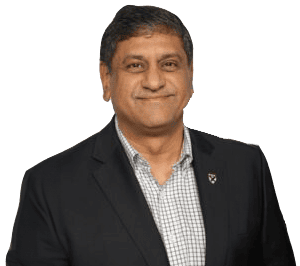
Rohit Mahajan is an entrepreneur and a leader in the information technology and software industry. His focus lies in the field of artificial intelligence and digital transformation. He has also written a book on Quantum Care, A Deep Dive into AI for Health Delivery and Research that has been published and has been trending #1 in several categories on Amazon.
Rohit is skilled in business and IT strategy, M&A, Sales & Marketing and Global Delivery. He holds a bachelor’s degree in Electronics and Communications Engineering, is a Wharton School Fellow and a graduate from the Harvard Business School.
Rohit is the CEO of Damo, Managing Partner and CEO of BigRio, the President at Citadel Discovery, Advisor at CarTwin, Managing Partner at C2R Tech, and Founder at BetterLungs. He has completed executive education programs in AI in Business and Healthcare from MIT Sloan, MIT CSAIL and Harvard School of Public Health. He has completed the Global Healthcare Leaders Program from Harvard Medical School.
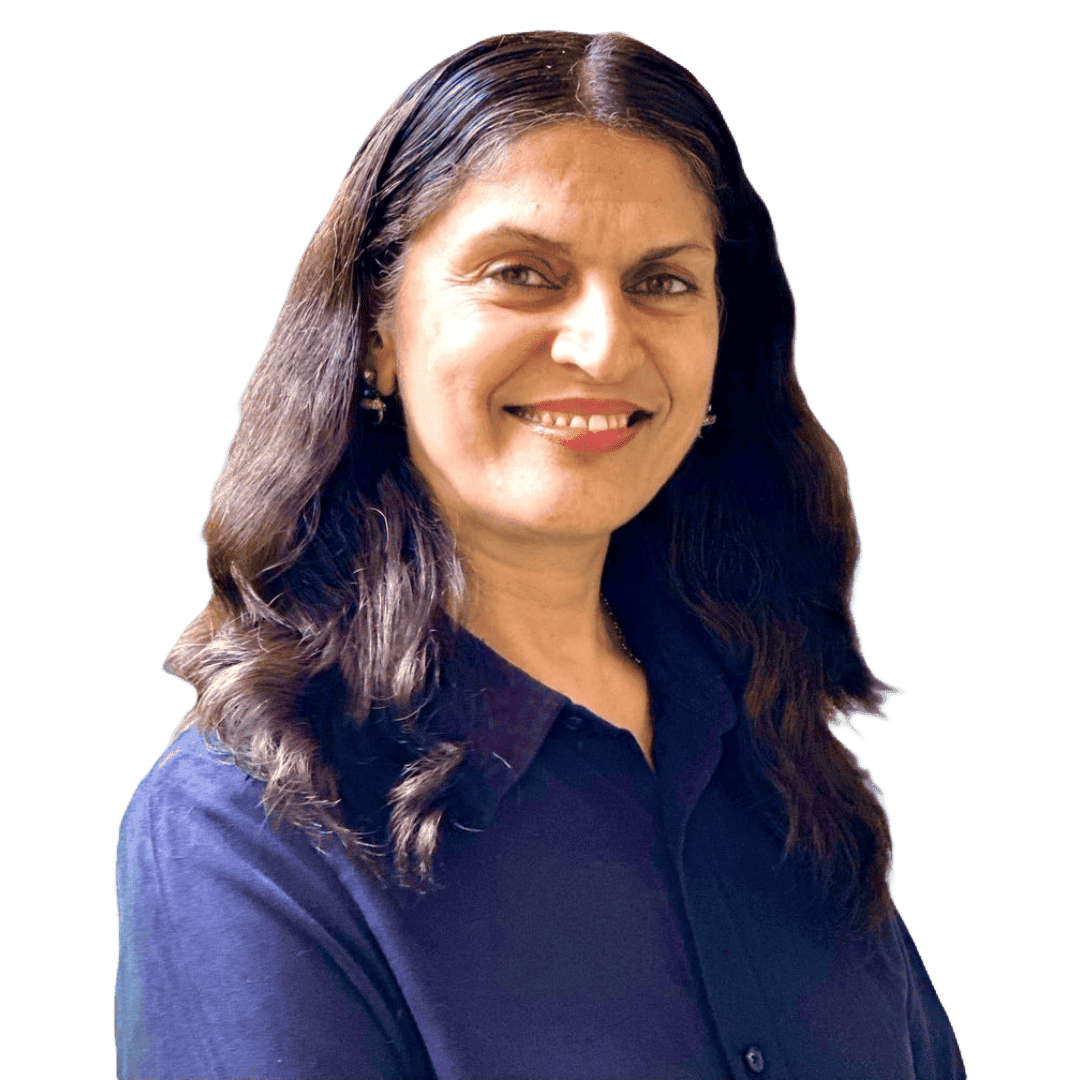
Ritu M. Uberoy is a healthcare AI strategist, technology executive, educator, and author dedicated to advancing the responsible adoption of Artificial Intelligence across healthcare delivery, digital health, and life sciences. With more than twenty-five years of leadership experience spanning the United States and India, she is recognized for helping healthcare organizations move beyond experimentation to achieve scalable clinical, operational, and business transformation through AI.
She leads AI innovation initiatives, including the AI Center of Excellence at BigRio, where she works with health systems, healthcare technology companies, and life sciences organizations to operationalize Generative and Agentic AI solutions responsibly. Her work focuses on aligning AI innovation with clinical workflows, governance frameworks, workforce readiness, and patient trust—ensuring technology augments human judgment in high-consequence healthcare environments.
Ritu is the co-author of Generative AI: Unlocking the Next Chapter in Healthcare, a practical guide for healthcare executives navigating enterprise AI adoption. She also hosts The Big Unlock podcast, engaging global healthcare leaders on AI transformation and digital innovation. An active educator and speaker, she conducts executive workshops and participates in global forums like HIMSS, ViVE, Women in Tech, AI-Powered Women, RAISE, and more, shaping the future of AI-driven healthcare. Ritu holds advanced degrees in Computer Science and completed specialized AI programs at Harvard and MIT.
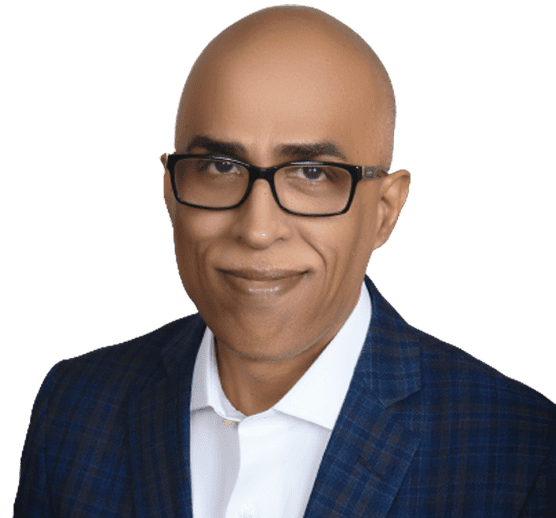
Paddy was the co-author of Healthcare Digital Transformation – How Consumerism, Technology and Pandemic are Accelerating the Future (Taylor & Francis, Aug 2020), along with Edward W. Marx. Paddy was also the author of the best-selling book The Big Unlock – Harnessing Data and Growing Digital Health Businesses in a Value-based Care Era (Archway Publishing, 2017). He was the host of the highly subscribed The Big Unlock podcast on digital transformation in healthcare featuring C-level executives from the healthcare and technology sectors. He was widely published and had a by-lined column in CIO Magazine and other respected industry publications.
Stay informed on the latest in digital health innovation and digital transformation