Season 7
In this episode, Dr. Bharat Sutariya, Senior Vice President and Chief Health Officer at Oracle Health, discusses the radical transformation of healthcare through AI-native digital platforms. As an emergency physician with over 25 years of experience, including leadership roles at Cerner and Deloitte, Dr. Sutariya provides a unique perspective on moving past the “burden” of legacy EHR systems.
The core of the conversation centers on Oracle’s bold bet: moving away from the industry-standard “bolt-on” AI approach. Instead, Oracle is rebuilding the healthcare stack from the ground up, embedding AI into the foundational layer. Dr. Sutariya argues that the future of healthcare technology isn’t just about capturing data but about systems of orchestration. This means AI that doesn’t just transcribe a note but listens to the clinical intent to automatically queue orders, handle referrals, and initiate prior authorizations.
Dr. Sutariya predicts that within a year, the conversation will shift from documentation efficiency to a truly connected, intelligent ecosystem that gives time back to both providers and patients. Take a listen.
This guest appearance was facilitated through conversations initiated at HIMSS.
About Our Guest
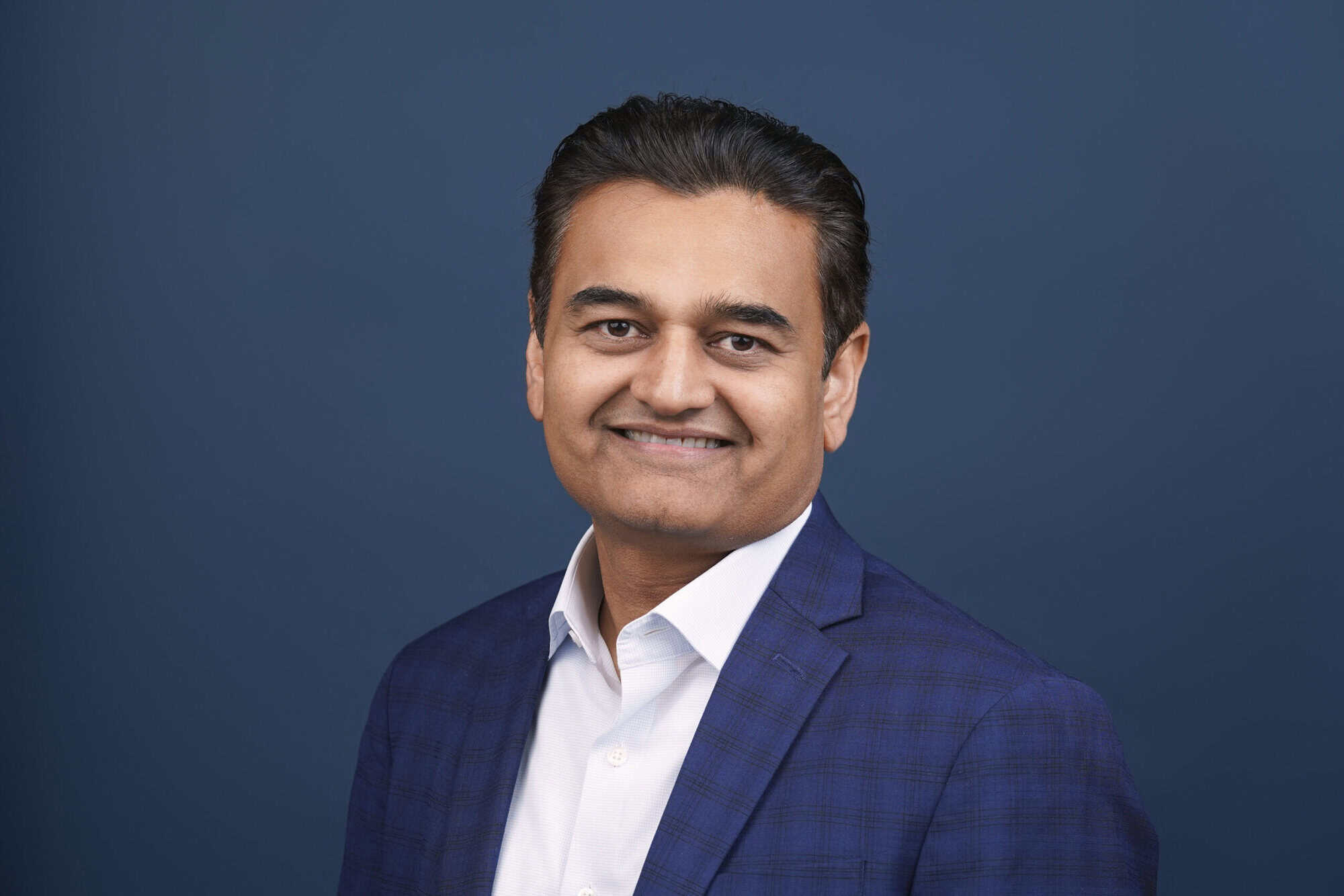
Dr. Bharat Sutariya serves as Senior Vice President and Chief Health Officer on the executive leadership team of Oracle Health & Life Sciences, where he leads enterprise strategy, customer engagement, product advisement, and industry representation for the global business. A seasoned and forward thinking healthcare leader, he is committed to advancing the use of AI and digital technologies to modernize healthcare delivery, elevate clinical and operational performance, and improve the experience of every stakeholder across the ecosystem.
Dr. Sutariya guides customer leadership collaboratives that bring together senior clinical, operational, and business executives, ensuring their insights directly shape Oracle’s next generation intelligent health platform and the connected data ecosystem that bridges research and care. In this work, he aligns market needs with product innovation across provider, payer, and life sciences domains to support a rapidly transforming industry.
His career spans extensive leadership in healthcare technology, clinical operations, and large scale transformation. Prior to Oracle, he was a leader in Deloitte’s Integrated Health practice, driving technology enabled clinical and operational modernization for health systems nationwide. Previously, as Vice President and Chief Medical Officer at Cerner, he played a central role in developing core EHR capabilities, value based care solutions, and data driven performance improvement programs.
Board certified in Emergency Medicine, Dr. Sutariya has practiced in Michigan and Kansas. He began his career at the Detroit Medical Center, where he led major clinical transformation and health IT initiatives across the integrated delivery network, and served as a clinical assistant professor at Wayne State University School of Medicine. He completed his Emergency Medicine residency at Wayne State University and the Detroit Medical Center.
Recent Episodes
Ritu: Hi everyone. A very warm welcome to all our listeners to the Big Unlock Podcast, Season Seven. Today we are very happy to have with us Dr. Bharat Sutariya, who leads Oracle Health’s clinical AI strategy. My name is Ritu, and I am the managing partner at Damo Consulting and co-host of the Big Unlock Podcast along with Rohit. Today Rohit is not here, so I’ll be in conversation with Dr. Sutariya. Dr. Sutariya is a senior healthcare leader at Oracle Health, shaping the next generation of digital platforms and how data and AI are transforming care delivery at scale. At Oracle Health, Dr. Sutariya is focused on enabling a more connected, intelligent healthcare ecosystem, and his work sits at the intersection of platform modernization, interoperability, and the emerging role of AI in re-imagining healthcare delivery. With that, I’ll hand it over to Dr. Sutariya. Welcome to the podcast. Thank you for being our guest today.
Bharat: It’s a pleasure, and thank you for the warm welcome. I look forward to our conversation.
Ritu: Thank you so much. If you’d like to add anything beyond the introduction, we’d love to hear.
Bharat: Sure. I’ve been fortunate to be at the intersection of healthcare and technology for over 25 years. I’m an emergency physician by training and practiced for 26 years — initially in Detroit, where I trained at the Detroit Medical Center and led much of the digital transformation there. Then I moved to Cerner for 17 years, did a short stint with Deloitte, and joined Seema’s executive leadership team at Oracle Health a couple of years ago. I’ve had the opportunity to witness healthcare’s journey from paper-based practice, through read-only systems, to heavy EHR documentation, and now — what I would say is the most exciting era — where we are on the verge of delivering the vision we’ve always had: allowing clinicians to practice better, patients to generate better outcomes, and the healthcare ecosystem to reach a more sustainable path. I am more bullish and excited than ever.
Ritu: Thank you, Dr. Sutariya. We always love to start with an origin story, and doctors’ origin stories are really fascinating. We always ask: what led you to tech? Being a doctor is such a full-time job — how do you manage to combine your interest in technology and medicine? Tell us a little more about that.
Bharat: What led me to tech is a relentless focus and impatience to improve healthcare — all the way back to residency, when I simply would not tolerate the green-screen CRT machines delivering lab reports, the printers not working, things just not functioning. I’ve always had very little patience for things that don’t work, and I believe patients and providers deserve better. I’ve always looked at technology as the most scalable answer to that problem. That’s what got me into technology from the early days of residency, then leading tech transformation at Detroit Medical Center, and onward from there.
Ritu: Tell us a little more about your time at Cerner, because you had a front-row seat to both the promises and limitations of large-scale EHR systems. They were supposed to make things better, but interoperability — which was always promised — was never fully there. What lessons do you bring to Oracle Health, and how do you think you can improve on that?
Bharat: I had the pleasure of working with Neal Patterson, Cerner’s founder, for nearly 15 of my 17 years there. He always stated that healthcare is too important to stay the same — meaning it needed to evolve, and faster. That was always the focus at Cerner. Cerner started as a lab company, grew into an inpatient EHR, and then into an enterprise EHR over the years. What most people don’t appreciate is this: if we had taken the way people practiced on paper 20 to 25 years ago and simply made it electronic, EHRs would actually be quite efficient. But what we don’t often talk about is 20 to 25 years of regulatory compliance, new evidence in medicine, and the overburdening of data — all of these movements stacked on top of EHRs, combined with EHRs becoming increasingly administrative. That is what led to the burden people talk about. It’s not the EHR alone. Take E&M coding, for example — it’s quite burdensome, and many times clinicians perceive that burden as coming from the EHR, when in reality it’s the E&M coding system, the medico-legal documentation requirements, or some other external task. All of it gets compounded into an EHR issue. That’s why I’m excited about the future, because I think we have much better answers going forward.
Ritu: Thank you for that insightful answer. Oracle Health is now representing a shift toward a more unified, platform-centric model. What fundamentally changes when healthcare moves from fragmented systems to a single data and workflow layer? And what do you think will get harder before it gets easier?
Bharat: There has been quite rapid adoption of AI and modern technology over the last couple of years in particular, and we made a different bet than most of the industry. The industry largely took a bolt-on approach — keep the legacy foundational EHR and bolt AI on top of it. That’s the industry norm. At Oracle, we took a different approach: AI is too important and transformative a tool to treat that way. In addition, we had the opportunity — because of Oracle’s full stack — to leverage everything from the foundational database and Oracle Cloud OCI infrastructure, through the AI layer, to the modern application layer. So we decided to reconstruct not just the EHR, but the entire healthcare tech ecosystem across provider, payer, and life sciences, to achieve a connected ecosystem vision. For us, AI is embedded into the EHR — or you could say the EHR is embedded inside the AI. There is no bolt-on. While that requires significant resources to build what the market has had for three or four decades of legacy EHR, we’re taking the bigger bet to transform the whole thing. That does require investment, but it gives us a significant advantage to innovate without legacy constraints. The industry’s bolt-on approach is having early success, as is ours, because we are still scratching the surface of what AI can bring to medicine. Where you will see differentiation going forward: we’ve already deployed AI agents on top of our legacy Millennium EHR, but we’ve just released a brand new Oracle Health ambulatory primary care EHR that is AI-embedded, cloud-first, and truly native. It looks and behaves radically different — with far fewer menus and clicks, because AI is always present as your companion with a human in the loop. The biggest movement for us is transitioning from a system of record — which is what most EHRs have been — to a true system of orchestration and workflow. That is the transformation we are leading toward.
Ritu: I totally agree. The bolt-on approach can only lead to incremental change. If you’re looking for transformational change, you have to build with AI first in mind. That’s something we’ve talked about in our voice agent webinars — companies expect more from AI but don’t see that transformation because they’re using it as a bolt-on solution, which only delivers that incremental 10 to 20% productivity gain. AI can let you do things fundamentally differently. So what are your thoughts on invisible AI versus clinician-facing tools? We’re hearing a lot about ambient and how doctors feel free to just talk directly to the patient without the documentation burden in between. Where is the real value creation happening today?
Bharat: The biggest near-term value is in reducing what I would call high-volume friction — the tasks that typically cause clinician burnout: documentation, chart review, ordering, and all the follow-up tasks. What we’ve now demonstrated with Oracle Health’s clinical AI agents, each built for these specific purposes, is that when you deploy them with access to the full chart context, you do significantly reduce that burden. We’ve seen it in time saved, clinician satisfaction, a reduction in pajama time, and even better patient interactions — because clinicians now have more face-to-face time rather than hiding behind a keyboard. And for us, outcomes aren’t only about process measures like time saved. We’re also tracking truly clinical and financial outcomes: did patient care improve? Was the provider able to see more patients efficiently? Was the patient happier with the interaction? Those things that really matter are where we’re now transitioning. Even in these early days, focusing on high-volume friction, AI has already been tremendously helpful.
Ritu: Would you say ambient has been one of the most successful use cases of AI so far? And where do you see it going further?
Bharat: Absolutely. Ambient as an assistive technology in healthcare delivery is probably the single best technology I’ve seen in my 25-plus-year career in terms of rapid adoption — and not just rapid adoption by one or two physician groups, but across the board. Every physician group you give access to embraces it, and they use it with a high degree of sustained adoption. That’s because it adds real value. It captures documentation fairly accurately and keeps the human in the loop — the draft is presented to the clinician, who validates it before committing it to the chart. But while many startups in the industry consider that the endpoint, at Oracle Health we view it as the beginning and the foundation. For example, our ambient agent, while creating the note draft and listening to the conversation between provider and patient, is constantly monitoring that conversation. Did the physician say something about orders? “Mrs. Jones, I’m going to order X, Y, Z lab tests for you. I’m going to renew your prescription.” The agent extracts the clinician’s intent and queues up orders, prescription refills, and follow-up tasks — including referrals and prior authorizations. If Mrs. Jones needs a knee replacement, the agent understands in that moment who the payer is, whether prior authorization is required based on eligibility and coverage criteria, and if so, it retrieves the authorization criteria, pulls all the relevant information from the chart, fills it automatically, and presents it to the clinician for review. If more work is needed, it goes to the queue. The ambient conversation is directly connected to the automation of a significant downstream task, done more accurately. That’s our journey — millions of agents spinning off in the background based on that ambient conversation, continuing the care journey forward.
Ritu: So you’re saying it’s going to move beyond just being a note-taker to actually taking the next step — listening and acting on what’s discussed?
Bharat: It’s already there. It’s already happening.
Ritu: Most health system CIOs and CMIOs we speak with are now genuinely overwhelmed by the pace of innovation — something new seems to emerge every single day. How should they think about sequencing platform modernization, AI adoption, and operational transformation without creating decision fatigue within their organizations?
Bharat: Let me offer a few key points. First, start with the end in mind. Be clear about the outcomes you’re trying to achieve, and recruit the right solution for that. Second, don’t look at AI as a collection of a hundred individual vendors. Look for a partner who can help you establish a platform and services framework capable of solving hundreds of problems over many years. Those are the two axes I think are most important. What I see in the marketplace — even within our customer base and beyond — is that tens, sometimes hundreds, of startups and AI companies are approaching health system leadership from every direction with different point solutions. Each of them genuinely has something to offer and can solve a specific problem. But the challenge is: how do you bolt ten or twenty different AI startups into your ecosystem? Every model requires data, which means you’re extracting and sending data to various external environments and then managing the cybersecurity, data privacy, and compliance implications of each one. AI has already proven itself enough that every health system should accept it is part of their journey. So you might as well embrace it and start forming a trusted partner framework — identifying which partner or set of partners can help you establish an AI infrastructure within your organization, connected to both your clinical and enterprise systems, to achieve clinical, operational, and financial improvement. Think from a partnership perspective. Then think with purpose — what are the highest-impact starting points? What has already been proven in the marketplace? Adopt that, but don’t wait for the next wave to perfectly emerge. Some degree of experimentation and piloting is important in this space, and in AI the pilot cycle is measured in days and weeks, not months or years, because that’s how efficiently you can deploy an AI agent and get to outcomes.
Ritu: Do you see a tension there? In most industries, the mantra is innovate fast and fail fast. But in healthcare it’s almost the opposite — you have to play it safe and not take chances. How do you reconcile those two?
Bharat: You raise an important point. In virtually any other industry, a parts-per-million error rate might be acceptable. In healthcare, it is not. So you absolutely must have guardrails — and that’s exactly why you need a trusted partner and platform with appropriate governance built in. While you may be doing early adoption of innovation, you need the right guardrails, the right governance, and the right metrics to ensure absolute patient safety. You also need to be able to test high-risk scenarios in a non-production environment. But here’s the opportunity: there is so much improvement to be made on the operational side of healthcare that you can safely deploy AI to solve a significant number of operational problems and gain efficiency before you move toward higher-stakes clinical applications. That gives everyone a meaningful runway to get started in a big way.
Ritu: Where we’re seeing most implementations right now is in the digital front door — before the patient even reaches the clinical setting. But do you think the guardrails and safety factors you described will keep humans in the loop longer? AI is progressing so rapidly — we’re already hearing about AGI, and we saw with Project Strawberry that some organizations are pausing releases to give the industry time to assess vulnerabilities. Do you think the human-in-the-loop model can hold, or will AI leapfrog that?
Bharat: That’s where careful governance and guardrails are essential, because no one can afford to simply wait. The question is how do you keep moving forward while doing so safely. I think establishing clear frameworks helps — for example, if something is purely administrative and doesn’t directly impact patient care or patient safety, it could potentially be automated. That’s the invisible AI piece. You just need the right metrics to confirm it’s achieving the intended outcome. You can do that very safely on the operational end. But the moment you inch toward anything that assists — not even makes — clinical decisions, then transparency becomes paramount. The AI must show why it’s drawing a particular conclusion, and it should be assistive and presenting facts with full transparency to the clinician rather than acting autonomously. For example, in our new EHR, every time a physician logs in, an AI-driven summary is immediately generated — one that knows the patient, knows the reason for the visit, knows the physician, and has access to the entire longitudinal record. It constructs a concise summary a clinician can consume in one to two minutes, versus clicking through fifteen tabs over ten minutes on a complex patient. But critically, we’ve embedded metadata tags throughout that summary. Anywhere there is critical information, the clinician can hover over it and see exactly where it came from — and with one click, the source document loads with the relevant text highlighted. That’s AI driving clinical efficiency in a way that’s also transparent and safe. We’re fortunate to have the full Oracle Health AI infrastructure stack combined with three to four decades of clinical system development experience. We understand the clinical significance of every data element and its metadata. A lab value isn’t just a lab value — we understand what abnormal, high, and low mean, the standard deviations, and the source context, because we’ve been living with that data on the Cerner side for decades. Combined with Oracle’s capabilities, that puts us in a stronger position to deploy AI safely.
Ritu: You made very good points — retrieval-augmented generation with traceability back to the source, and the importance of context because you have so much surrounding information to interpret each value accurately. That was a very insightful answer. Time has flown by and we’re almost at the end of the podcast. What are your predictions for the next year? If we had this conversation again in a year, what would we be talking about?
Bharat: I think we’ll be talking about the next chapter — moving away from documentation and truly into orchestration. That’s the big shift. And AI shouldn’t be creating work; AI needs to do the work. I think we’ll see more successful examples of that. At the end of the day, all of this only matters if our clinicians and patients feel they’ve gotten time back, are doing fewer repetitive tasks, and feel there’s a safer path toward better healthcare. That’s the north star. Health systems should feel they can operate a better care delivery model. Providers should feel they’re delivering safer, better care while remaining personally satisfied — not overburdened. And patients should feel that the health system they’re visiting, powered by AI, is delivering a genuinely better experience. That’s the north star we’re working toward.
Ritu: Thank you so much, Dr. Sutariya. It’s been an absolute pleasure having you on the podcast. Thank you for making the time to speak with us today.
Bharat: It’s my pleasure. Thank you for a great conversation.
————
Subscribe to our podcast series at www.thebigunlock.com and write us at [email protected]
Disclaimer: This Q&A has been derived from the podcast transcript and has been edited for readability and clarity.
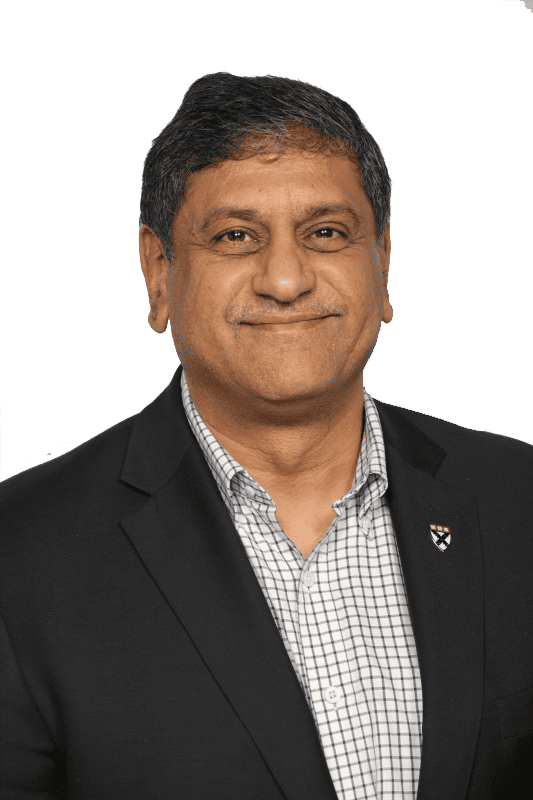
Rohit Mahajan is an entrepreneur and a leader in the information technology and software industry. His focus lies in the field of artificial intelligence and digital transformation. He has also written a book on Quantum Care, A Deep Dive into AI for Health Delivery and Research that has been published and has been trending #1 in several categories on Amazon.
Rohit is skilled in business and IT strategy, M&A, Sales & Marketing and Global Delivery. He holds a bachelor’s degree in Electronics and Communications Engineering, is a Wharton School Fellow and a graduate from the Harvard Business School.
Rohit is the CEO of Damo, Managing Partner and CEO of BigRio, the President at Citadel Discovery, Advisor at CarTwin, Managing Partner at C2R Tech, and Founder at BetterLungs. He has previously also worked with IBM and Wipro. He completed his executive education programs in AI in Business and Healthcare from MIT Sloan, MIT CSAIL and Harvard School of Public Health. He has completed the Global Healthcare Leaders Program from Harvard Medical School.
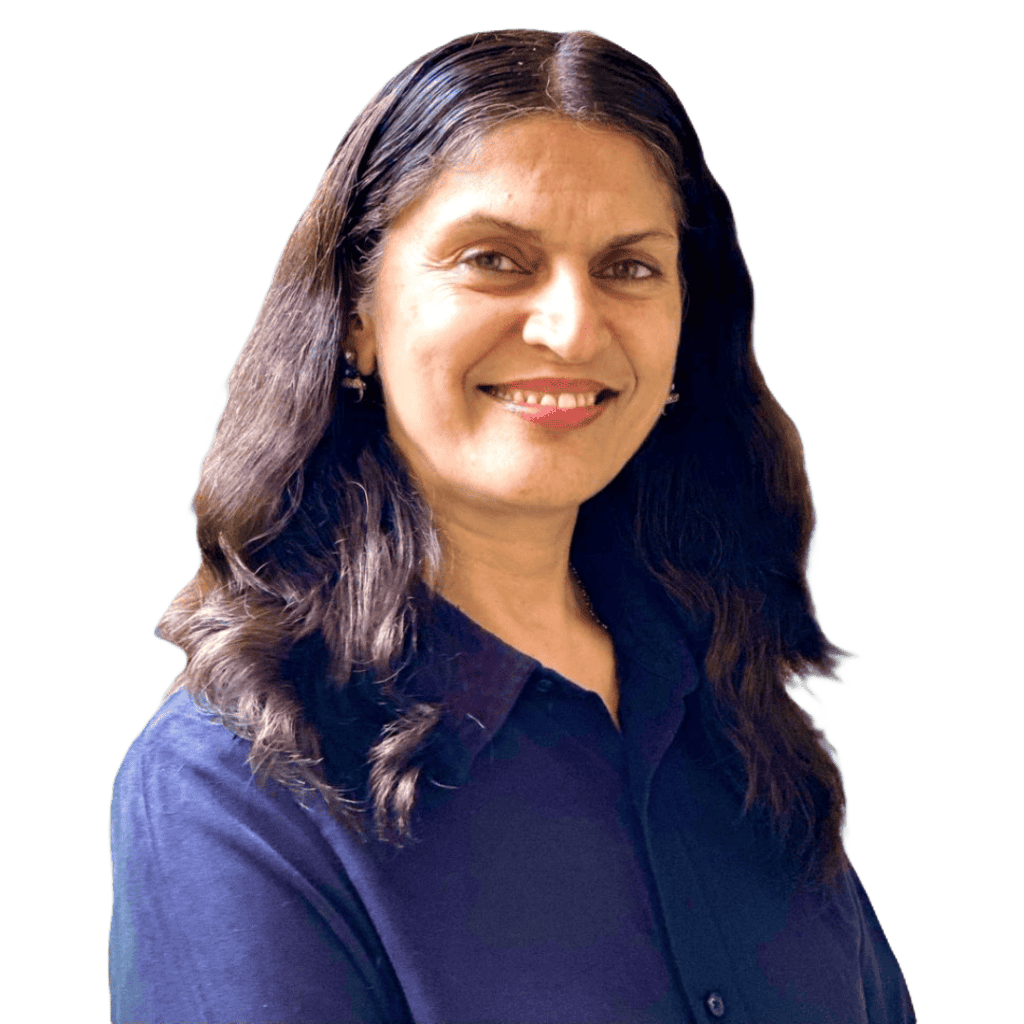
Ritu M. Uberoy has over twenty-five years of experience in the software and information technology industry in the United States and in India. She established Saviance Technologies in India and has been involved in the delivery of several successful software projects and products to clients in various industry segments.
Ritu completed AI for Health Care: Concepts and Applications from the Harvard T.H. Chan School of Public Health and Applied Generative AI for Digital Transformation from MIT Professional Education. She has successfully taught Gen AI concepts in a classroom setting in Houston and in workshop settings to C-Suite leaders in Boston and Cleveland. She attended HIMSS in March 2024 at Orlando and the Imagination in Action AI Summit at MIT in April 2024. She is also responsible for the GenAI Center of Excellence at BigRio and DigiMTM Digital Maturity Model and Assessment at Damo.
Ritu earned her Bachelor’s degree in Computer Science from Delhi Institute of Technology (now NSIT) and a Master’s degree in Computer Science from Santa Clara University in California. She has participated in the Fellow’s program at The Wharton School, University of Pennsylvania.
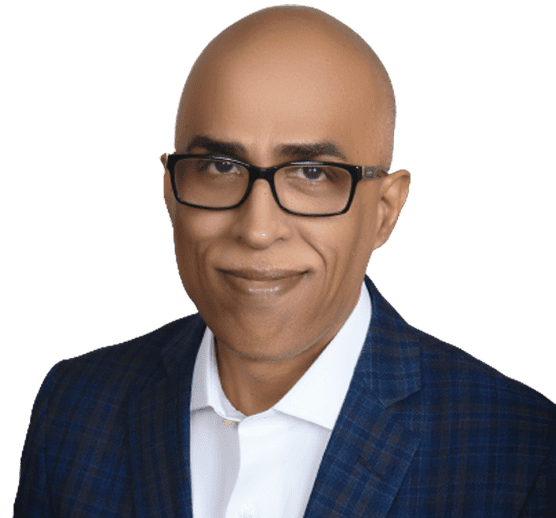
Paddy was the co-author of Healthcare Digital Transformation – How Consumerism, Technology and Pandemic are Accelerating the Future (Taylor & Francis, Aug 2020), along with Edward W. Marx. Paddy was also the author of the best-selling book The Big Unlock – Harnessing Data and Growing Digital Health Businesses in a Value-based Care Era (Archway Publishing, 2017). He was the host of the highly subscribed The Big Unlock podcast on digital transformation in healthcare featuring C-level executives from the healthcare and technology sectors. He was widely published and had a by-lined column in CIO Magazine and other respected industry publications.
Stay informed on the latest in digital health innovation and digital transformation