Season 7
In this episode, Dr. Dhruv Khullar, Associate Professor of Medicine and Population Health Sciences at Weill Cornell Medicine, explores how technology, public trust, and the evolving role of physicians are reshaping healthcare. Drawing on his experience as both a practicing clinician and a leading commentator on health policy, he argues that medicine is no longer the singular authority on health. Physicians now share influence with social media, AI tools, direct-to-consumer health companies, and a growing ecosystem of digital health platforms.
Dr. Khullar also discusses the promise and pitfalls of AI, emphasizing that while the technology can improve documentation, patient navigation, drug discovery, and clinical decision support, its adoption must be guided by evidence and rigorous evaluation. According to him, AI’s greatest opportunity may be helping restore the human connection in care by removing administrative burdens and creating more space for meaningful patient interactions.
The conversation also explores physician education, AI literacy, value-based care, public trust, and the growing commercialization of healthcare. Dr. Khullar returns to a central theme: technology alone will not solve healthcare’s challenges. Progress will require stronger communication, thoughtful leadership, and a renewed commitment to putting patients, not profit, at the center of care. Take a listen.
This guest appearance was facilitated through conversations initiated at Health Tech Summit.
About Our Guest
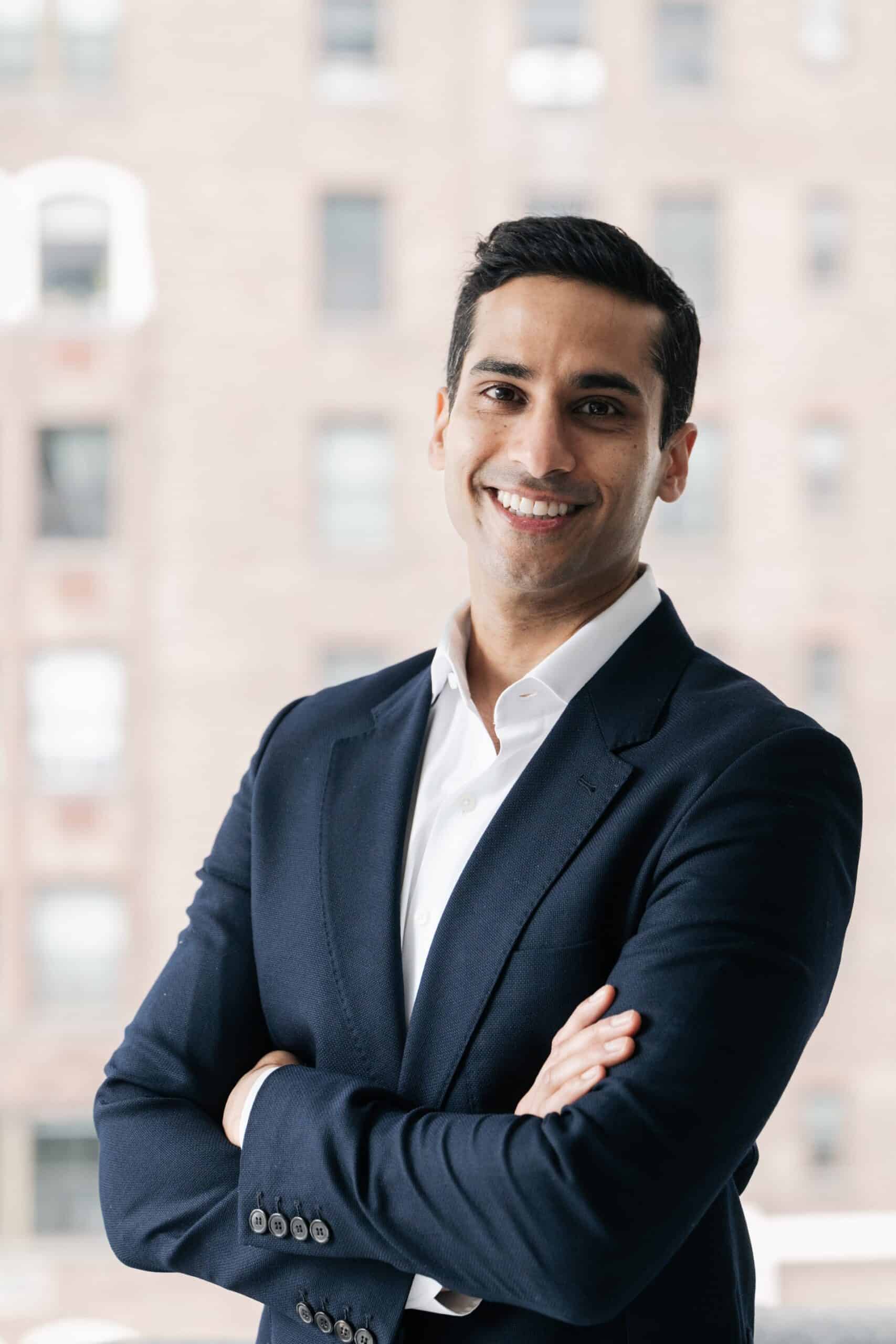
Dhruv Khullar, M.D., M.P.P. is a physician and associate professor of health policy and economics at Weill Cornell Medical College. He is also a writer at The New Yorker, where he covers medicine, health care, and politics. He serves as Director of The Physicians Foundation Center for the Study of Physician Practice and Leadership, and an Associate Director of the Cornell Health Policy Center. His research focuses on value-based care, health care consolidation, and medical innovation, and has been published in JAMA and The New England Journal of Medicine.
Dr. Khullar earned his medical degree at the Yale School of Medicine and completed his medical training at the Massachusetts General Hospital and Harvard Medical School. He also received a Masters in Public Policy from the Harvard Kennedy School, where he was a fellow at the Center for Public Leadership. He has been recognized by LinkedIn as a Top Healthcare Professional, National Minority Quality Forum as a 40 Under 40 Leader in Health, and FASPE with the 2019 Distinguished Fellow Award for Ethical Leadership. His writing was featured in The Best American Science and Nature Writing 2025.
Recent Episodes
Ritu: Hello, listeners. A very warm welcome to Season Seven of the Big Unlock Podcast. My name is Ritu Oberoi, and I’m the managing partner at Damo Consulting and your host today. We are really excited to welcome Dr. Dhruv Khullar to our podcast. Dr. Khullar is a practicing physician, health policy scholar, and one of the most thoughtful contemporary voices examining the intersection of medicine, technology, economics, and the human experience. As an associate professor at Weill Cornell Medicine and a contributing editor for The New Yorker, his work explores everything from corporate consolidation in healthcare and Medicare Advantage to AI, physician burnout, public trust, and the changing identity of doctors in modern society. A very warm welcome to you, Dr. Khullar.
Dhruv: Thanks very much. It’s great to be here.
Ritu: We love to start with an origin story and hear what brought you to medicine and to writing. Would love to hear about that journey.
Dhruv: My father is a physician, and I grew up around medicine. I saw the relationships he had with patients and the way he was able to help people through some of the most challenging times in their lives. From a very early age I knew that’s what I wanted to do — to see patients, to learn medicine, and to apply it in a way that genuinely helped people. Along the way I got very interested in all the forces surrounding healthcare. As I went through college and then medical school, it became clear that the traditional model in which physicians had been practicing for decades was changing — partly political, partly economic, partly cultural. I really wanted to understand all those forces, so I took a year and a half away from medical school, did a public policy degree, and started writing about not just medicine but public policy as well. I found that writing was a way I could both understand the system more deeply and communicate about it to patients, clinicians, and the general public.
Ritu: Thank you — I’ve been reading your New Yorker articles and really enjoying your perspectives. One thread I want to pick up from what you just said is that medicine is now changing its status as the singular authority in health. Doctors are competing with influencers, algorithmic startups, and political movements for public trust. In this era where direct-to-consumer startups increasingly shape health decisions, how do you see the role of the physician evolving over the next decade?
Dhruv: This is such an important question. A good way to start is to think about how medicine was practiced in the twentieth century. At that time, medicine was a hegemon of sorts — it had a near monopoly on access to medical information, on the delivery of medical care, and on authority and legitimacy about health issues. All three of those things — authority, delivery, and information — have started to shift in the twenty-first century. Some of that is because of political movements and other actors now claiming authority. Some of it is because of social media, Dr. Google, and increasingly artificial intelligence. And part of it is because of other care delivery models — direct-to-consumer companies, telehealth, online practice. In this environment, medicine really needs to rethink its role. It’s not going to look the way it did in the twentieth century. We need to be much more agile in the way we partner with other organizations, much more persuasive in the content we put out. It’s not enough to simply dispense the doctor’s orders — we need to provide rationale, perspective, and an understanding of why certain recommendations are being made. And I think we need to be much more involved not just in the practice of medicine, but in the issues that surround it and influence how we deliver care. Some of that might involve consulting with those in public office or running for office ourselves. Some of it might be working with startups or other healthcare organizations. Some of it might mean being active on social media. It will look different for different members of the profession, but it’s not going to be enough to close our eyes or abdicate our public role.
Ritu: I read one of your earlier articles — I believe it was in the New York Times — where you wrote about doctors as leaders, using the example of a cardiology floor where the lead physician’s role is to step up and direct in a crisis. That perspective seems to extend to how physicians need to lead with these new technologies too. That leads into the next question: you’ve written about how medicine often adopts technologies long before fully understanding their second-order consequences. Now, with generative AI moving from admin support into clinical reasoning, patient communication, and even emotional companionship, where do you think the healthcare industry is most underestimating the societal or psychological impact of AI?
Dhruv: Patients and clinicians are going to be using AI because it is so convenient, so fluent, and so present. Whether we like it or not, this is going to be an increasingly central part of the healthcare system, and it’s our responsibility to figure out how to harness its potential while minimizing its potentially adverse consequences. Part of that requires insisting on a certain level of evidence of efficacy. There are so many claims being made about AI today — that it can make care safer, more efficient, more accessible, or accelerate drug discovery. All of these are possible, and I hope they prove true, but they are claims that need to be met with evidence and data before we roll them out across the system. I think about AI in a few buckets. One of the first areas where AI will make a big impact is in the administration of healthcare — documentation, billing. We’re already seeing AI scribes in many healthcare systems, and that is an area of great promise. Another is patient navigation. As clinicians, we sometimes underestimate how difficult it is to make your way through the medical system — making an appointment, engaging with a health insurer, figuring out how to pay a bill. AI has real potential to help here. Drug discovery is a third area I’m very optimistic about. Practically all pharmaceutical companies and many biotech companies are now using AI to understand protein folding or scour chemical spaces for interesting molecules worthy of further study. And finally, in care delivery itself — clinical decision support, precision medicine, treatment modalities — all of these will be influenced and improved by AI. But again, we need to see the data and understand the ultimate impact for clinicians and patients as we roll these things out.
Ritu: In our conversations with C-suite leaders over the last year, that’s exactly the direction we’ve been seeing — a lot of acceptance around the digital front door, patient navigation, ambient scribes. But as AI moves into clinical decision-making, that’s where the trust and ethics questions really sharpen. One question that comes up often is whether we risk optimizing for convenience so aggressively that we accidentally engineer empathy out of the system.
Dhruv: I think we’ve already done that. We are already in a place where we’ve engineered empathy out of the system, because medicine has become so focused on efficiency as defined by number of visits per hour. AI potentially has a real opportunity to bring empathy back — if we are able to take some of the things that detract from the clinical interaction, things like coding, billing, documentation, data collection, and reporting, and automate them, it opens up space where more of the clinical interaction can be devoted to genuinely engaging with the patient. We’ve already seen this in some respects with AI scribes. Many of my colleagues who now use them feel able to look the patient in the eye and focus their full attention on them in a way they couldn’t even a few years ago. But this has to be paired with a cultural change. The technological revolution will create space for more patient engagement — but you can easily imagine the mandate becoming: now that you have more time, see twice or three times as many patients in the same unit of time. If we want that extra time to be devoted to engaging patients more deeply and addressing their concerns in ways that a five-to-fifteen-minute visit never allowed, we have to fight for that. It has to be part of what happens as these technologies enter clinical practice.
Ritu: Exactly — patients aren’t rejecting medicine, they’re rejecting feeling unseen, rushed, or processed by the system. And we’ve been hearing from physicians that with ambient scribes they actually articulate more during visits, because they know the scribe is capturing everything. As a side effect, patients feel more heard and see more value in that relationship.
Dhruv: There are types of care and patients and interactions where people may be comfortable with a more transactional relationship — low acuity conditions, minor risks, when someone just needs something quickly. Maybe those are the right places for AI, or AI distantly supervised by a clinician. Not every patient wants to be deeply seen in every interaction — sometimes you just want what you need and to get on with your day. But for more serious conditions, for situations that require a greater discussion of trade-offs between values, for integrating clinical evidence with personal preferences, there are whole categories of care where people genuinely crave that deeper understanding.
Ritu: Let’s shift tracks a little. You write on such a wide variety of topics — how do you generate ideas? Are you simply very observant? Do you note things down in the moment?
Dhruv: Ideas come from a few main places. Many come from my clinical practice. When you’re seeing patients in the hospital, you’re watching the way various forces affect their lives, the challenges they’re navigating. Those naturally spark questions — why is someone going through this? What are the barriers? Are there things that could unstick the process? That’s one big bucket. A second is following the research closely in a particular area. Whether it’s CRISPR or GLP-1 medications, when you’re reading the medical literature there are moments where a new paper is genuinely significant, or a body of work has matured enough to deserve broader attention. And the third is understanding political events and current events — a new policy being proposed, a new reform, where understanding the specifics and synthesizing them for a general audience feels both useful and timely.
Ritu: I just read your article about peptides today and learned things I had no idea about. How do you keep yourself updated on technology when things are moving so fast? Even people working in the field full-time are struggling to keep up.
Dhruv: We’ve never seen anything quite like this — both in terms of the pace of technological advance and the speed of adoption. I try to have as many conversations as I can with people at the forefront of these technologies, people who are living and breathing them every day, to understand what’s on their minds and what challenges they’re grappling with. That takes considerable time and attention. I also read the medical literature to see how these technologies are being applied, what the evidence base looks like, and how things have shifted even month to month. But the other thing to point out is that what I’m really trying to do is not follow every change every week — I’m trying to see the bigger picture. Stepping back to a 30,000-foot view of where we’ve been, where we are now, and where we might be going allows you to understand the landscape rather than get lost in the day-to-day minutiae.
Ritu: In the last six to twelve months we’ve seen the rise of chief AI officers and chief digital transformation officers across health systems. What is your organization’s approach to digital and AI literacy among physicians? Are clinicians being trained on this?
Dhruv: We have a very thoughtful approach. There are sessions where doctors and other clinicians can understand the potential and the drawbacks of these technologies and how to integrate them into clinical practice. Some of that is very focused on practical applications — how to make the most of diagnostic support tools in the clinical setting. But some of it is about education: how should we be teaching the next generation of physicians to use these tools while retaining their own critical thinking? I think we should take a fundamentally conservative approach here. This is a potentially very powerful technology, but it remains essential that medical trainees retain the ability to reason through a case independently and use AI as a second opinion rather than the primary engine of their clinical reasoning.
Ritu: So you believe the foundational clinical training shouldn’t be displaced until this technology is more fully proven?
Dhruv: Yes. We should enthusiastically evaluate the potential upside of using AI to support clinical care delivery. But there is sometimes a narrative that all a physician needs to be these days is an empathic presence, and the AI will do all the thinking. I don’t think that’s true at all. The pace of medicine requires you to keep a great deal inside your head in order to care for patients well. And to properly adjudicate the AI’s output, you have to be the one exercising judgment — knowing when to ask another question, how to evaluate whether what you’re being told is accurate, whether it actually applies to the patient in front of you. Those are skills physicians still need to be deeply skilled at.
Ritu: I agree — we’re still some way from that future. You’ve also written compellingly about medicine entering a kind of Gilded Age, where extraordinary innovation coexists with deep public distrust and worsening inequity. Do you think healthcare today is facing primarily a policy failure, a moral failure, or a narrative failure — and which one is the hardest to fix?
Dhruv: I think medicine has become primarily a business, and we need a countervailing narrative in which it is seen more properly as a craft — something done in the best interest of patients. That’s not to say medicine should never think about money, or that doctors and hospitals haven’t always had financial incentives. But there is a feeling, both among healthcare workers and patients, that the primary motive has become extracting maximum profit rather than delivering the best care. Some of that is an internal failing on the part of healthcare providers, and some of it is the result of outside corporate forces entering medicine that don’t carry the same professional ethic that doctors, nurses, and other clinicians have been trained in. I think we’re reaching a point where there is pushback — some states have passed legislation requiring physician majority ownership of medical groups rather than private equity or other corporate ownership structures. There is growing recognition and appetite to push back against an overly commercialized healthcare space. But we are still at the beginning of that project.
Ritu: Would you like to share some thoughts on value-based care?
Dhruv: Value-based care is a powerful tool, and one we’ve been trying to apply for the past several decades — notably after the passage of the Affordable Care Act, when it became a central framework for how Medicare thinks about paying physicians and healthcare organizations. But there are real challenges with its application, and it hasn’t been the slam dunk people expected a decade and a half ago. A lot of that has to do with how incentives are structured and the unintended consequences they create. Take risk coding: if you’re comparing healthcare organizations’ outcomes to their neighbors’, there’s a real incentive to capture as many diagnoses as possible so your patient population appears as sick as possible, which makes your risk-adjusted outcomes look better. That’s one example. Another big criticism is that some of the metrics introduced are relatively narrow or feel irrelevant to certain specialties. In all these ways there have been serious challenges to the value-based payment shift — but directionally, I still think it’s the right way to go.
Ritu: Maybe AI will help fix some of these issues — that would be a satisfying full-circle moment. We’re almost at time, Dr. Khullar. It’s been a really good conversation. Would you like to leave us with any closing thoughts, or any predictions for the next six to twelve months?
Dhruv: I just want to say how grateful I am to have joined you today. These kinds of conversations are so important. One of the things we need to be more focused on as a medical profession and a public health system is figuring out how to have meaningful conversations — with one another, and with the general public. Good communication, good storytelling, speaking simply and clearly and forthrightly — that is a really important part of where we need to go as a healthcare system. So thank you for the opportunity.
Ritu: Thank you so much. It’s been a pleasure having you on the podcast today. Thank you, Dr. Khullar.
Dhruv: Thanks very much.
—
Subscribe to our podcast series at www.thebigunlock.com and write us at info@thebigunlock.com
Disclaimer: This Q&A has been derived from the podcast transcript and has been edited for readability and clarity.
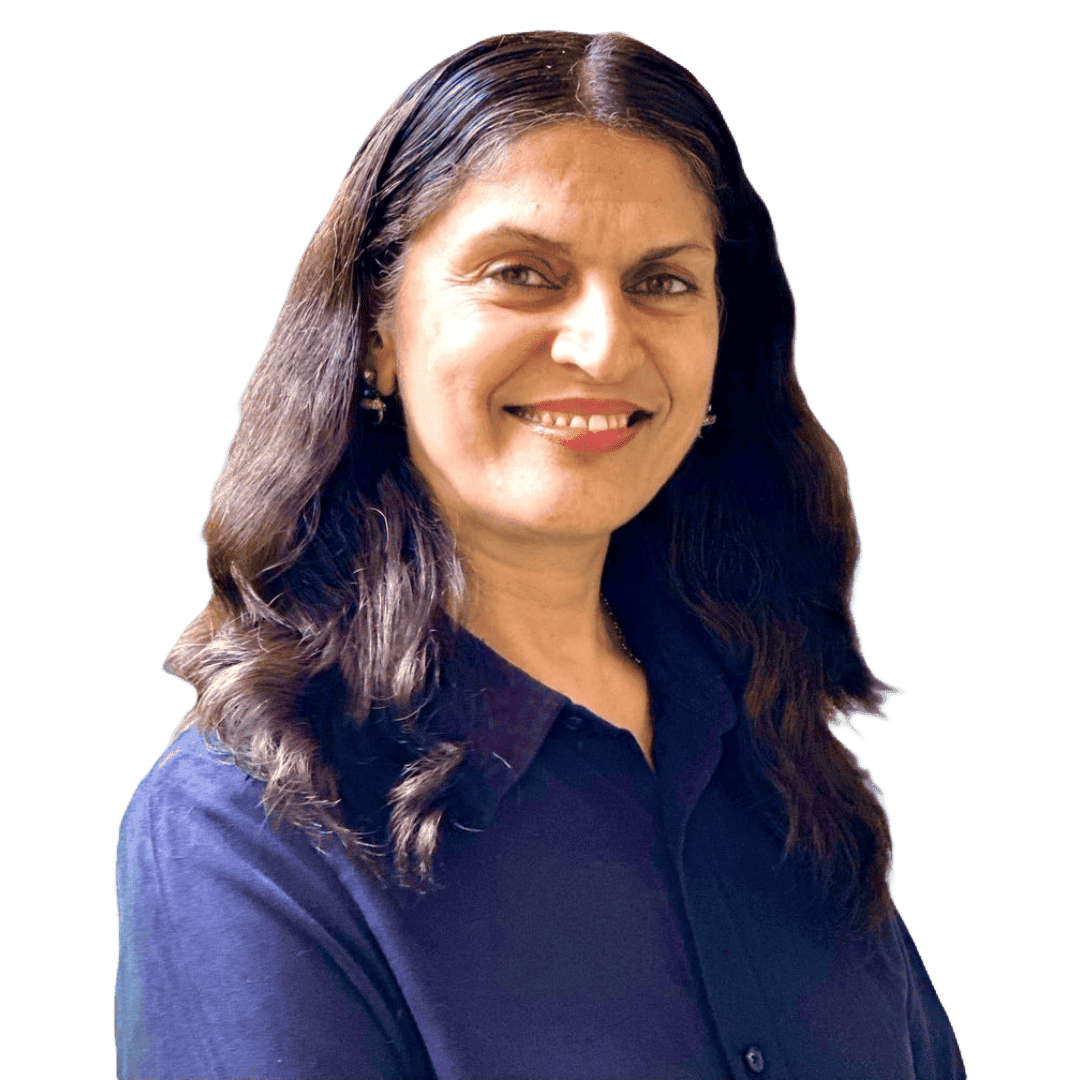
Ritu M. Uberoy is a healthcare AI strategist, technology executive, educator, and author dedicated to advancing the responsible adoption of Artificial Intelligence across healthcare delivery, digital health, and life sciences. With more than twenty-five years of leadership experience spanning the United States and India, she is recognized for helping healthcare organizations move beyond experimentation to achieve scalable clinical, operational, and business transformation through AI.
She leads AI innovation initiatives, including the AI Center of Excellence at BigRio, where she works with health systems, healthcare technology companies, and life sciences organizations to operationalize Generative and Agentic AI solutions responsibly. Her work focuses on aligning AI innovation with clinical workflows, governance frameworks, workforce readiness, and patient trust—ensuring technology augments human judgment in high-consequence healthcare environments.
Ritu is the co-author of Generative AI: Unlocking the Next Chapter in Healthcare, a practical guide for healthcare executives navigating enterprise AI adoption. She also hosts The Big Unlock podcast, engaging global healthcare leaders on AI transformation and digital innovation. An active educator and speaker, she conducts executive workshops and participates in global forums like HIMSS, ViVE, Women in Tech, AI-Powered Women, RAISE, and more, shaping the future of AI-driven healthcare. Ritu holds advanced degrees in Computer Science and completed specialized AI programs at Harvard and MIT.
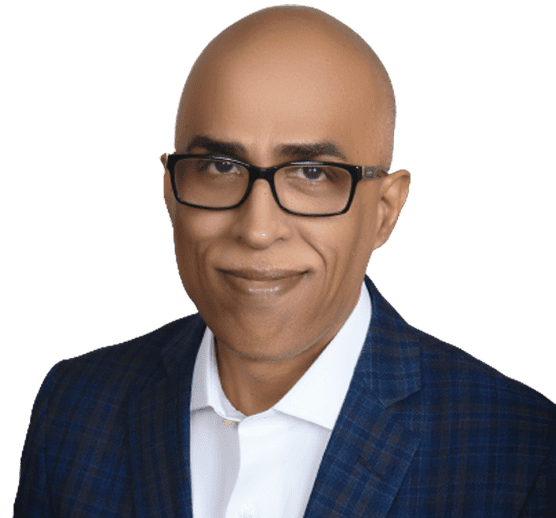
Paddy was the co-author of Healthcare Digital Transformation – How Consumerism, Technology and Pandemic are Accelerating the Future (Taylor & Francis, Aug 2020), along with Edward W. Marx. Paddy was also the author of the best-selling book The Big Unlock – Harnessing Data and Growing Digital Health Businesses in a Value-based Care Era (Archway Publishing, 2017). He was the host of the highly subscribed The Big Unlock podcast on digital transformation in healthcare featuring C-level executives from the healthcare and technology sectors. He was widely published and had a by-lined column in CIO Magazine and other respected industry publications.
Stay informed on the latest in digital health innovation and digital transformation