Season 7
In this episode, Marshall Glanzer, Chief Technology Officer of Town Square Health, outlines a bold model for scaling fully capitated risk programs for Medicare recipients. Transitioning from food-delivery logistics at GrubHub, Marshall brings critical structural insights for digital health innovators seeking to scale clinical models without eroding patient trust.
The core theme of the discussion centers on a counter-intuitive tech strategy: utilizing advanced digital infrastructure to intentionally deepen human relationships rather than automate them away. Town Square orchestrates unified “coordinated care visits,” bringing the patient, primary clinician, and a remote specialist into a single conversation to act as a multi-disciplinary “healthcare oracle” at the point of care.
For technology vendors, Marshall defines a safe clinical AI deployment roadmap using an “augmented clinician” framework. Advanced workflows, like chat-first patient portals managed by an automated “AI judge,” rely on the licensed physician as the ultimate orchestrator. This approach elegantly bypasses commercial barriers like malpractice liability, credentialing, and fractured billing, leveraging the financial alignment of value-based care to fully absorb modern R&D costs. Take a listen.
About Our Guest
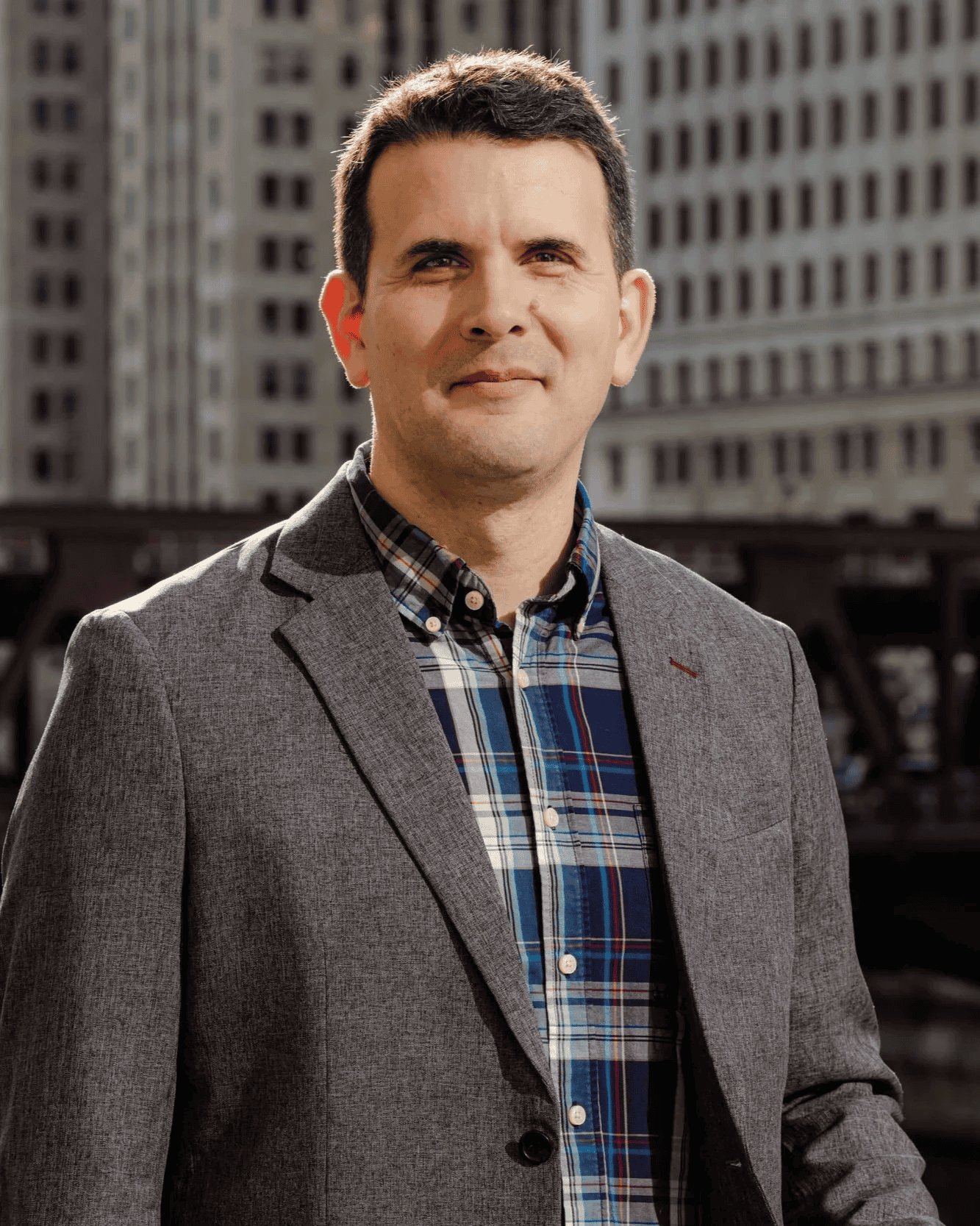
Marshall Glanzer serves as Chief Technology Officer at Town Square Health, where he leads the development and implementation of technology strategies that support a modern, coordinated, and data-driven care delivery model. In his role, Marshall focuses on harnessing digital infrastructure, interoperability, and innovation to create seamless experiences for patients, clinicians, and care teams, enabling better outcomes and operational performance.
Marshall brings a strong background in software engineering and technology leadership from across the digital and healthcare sectors. Before joining Town Square Health, he held senior engineering and technology management roles at GrubHub and The Nerdery where he led cross-functional teams to build scalable solutions that drive efficiency, user engagement, and reliable performance. His experience spans product development, systems architecture, and operational technology integration—skills he applies to advance Town Square Health’s mission of delivering high-quality care with technology at the core.
Marshall’s blend of engineering excellence and strategic technology vision positions Town Square Health to innovate in the rapidly evolving landscape of healthcare technology, ensuring that digital tools enhance clinical workflows, patient access, and care coordination in service of value-based care.
Recent Episodes
Ritu: Hi there. A very warm welcome to all our listeners to Season Seven of the Big Unlock Podcast. My name is Ritu Oberoi, and I’m the managing partner at Damo Consulting and your host today. Super excited to welcome our guest, Marshall Glanzer, Chief Technology Officer and co-founder at Townsquare Health. Marshall is focused on rethinking how care is delivered for Medicare populations through technology-enabled integrated models. With healthcare rapidly shifting toward value-based care and outcomes-driven models, Marshall brings a pragmatic perspective on what it actually takes to improve care at scale. In today’s conversation, we’ll explore how AI, data, and new care delivery models can move healthcare from fragmented interactions to more connected, proactive, and patient-centered care. With that, let’s get started. Marshall, welcome to the podcast.
Marshall: I’m delighted to be here and happy to have the opportunity to share about Townsquare Health.
Ritu: Thank you. Would you like to tell us a little more about Townsquare Health and your origin story? Our listeners always love to hear how you got here.
Marshall: My path has been a bit unusual. My background is in technology and custom software development — not in healthcare, so I’m something of a transplant. My last decade of work was with GrubHub, where we managed large, complex systems at scale and I moved between management and individual contributor technology roles. Before that, most of my background was consulting for small companies and Fortune 500 companies alike. The story is interesting. I’ve known our co-founder and CEO, Dr. David Buchanan, for over 20 years — we’re both soccer players in Chicago and that’s how we met. Over the years we’ve talked a lot about the intersection of healthcare and technology, and it became clear that we were very aligned on what well-executed technology can bring to a care model. He had a vision of what fantastic value-based, fully capitated risk care could look like, and so we decided to launch this together. Although we’re still at an early stage, the feel around the company is that we all share that founding spirit and are in it together as a tight-knit team. A little about what Townsquare Health specifically is: we are a new primary and multi-specialty care provider for Medicare recipients. Our business model is value-based care and fully capitated risk, which means our financial outcomes are aligned with patient health outcomes. Our business is to keep people healthy through preventative care, strong chronic case management, and panel management — very much drawing from an Oak Street Health playbook, where Dr. Buchanan has his background. We are opening brick-and-mortar centers starting this fall in the Rochester, New York area, beginning with a smaller clinic to get established in the market and then building full-size clinics at the start of next year. If there’s one takeaway about Townsquare Health I’d want people to know, it’s that our thesis is that patient experience is the cornerstone value. We believe a strong focus there will have a powerful and positive ripple effect across the business. On retention: when patients feel a higher quality of care and notice the experience, they stay — and for a longitudinal value-based care relationship, the longer we work with you, the better your health outcomes will be. Happy patients also help spread the word, creating a positive flywheel for growth. And on clinical outcomes: a longitudinal relationship built on high trust between patients and their care team leads to better outcomes through a tighter partnership.
Ritu: Thank you for that introduction. I want to come back to the patient experience piece, but first — you came from GrubHub and other industries, and healthcare is notoriously difficult to scale because of regulation, reimbursement, fragmented stakeholders, and long sales cycles. What have been your biggest lessons so far in building a tech-enabled healthcare company that can scale without losing that focus?
Marshall: Those challenges are real. But when you’re dedicated to the mission, the work of standing up relationships, getting through compliance, forming contracts with payers, and building relationships with local healthcare entities just becomes work that needs to get done. Does it move at a different timescale than I’m used to from a pure technology company? Absolutely. But a slower-moving industry also gets to learn from the mistakes of faster-moving ones. Healthcare companies can observe what happened with microservices architecture or service-oriented architectures and adopt conservatively what works well and in the right way for the industry. So there are pros and cons. The timescale is something I’m still getting used to. I also want to come back to patient experience and highlight two key components that we believe patients will truly notice. The first is the care navigator role. These are MAs by training who are longitudinally empaneled with patients. We have a care teamlet structure: a PCP supported by two navigators, where the PCP’s panel is split roughly between the two. As a patient, you have a primary navigator, but if they’re unavailable, someone else who knows you well is ready to support you. Our goal at Townsquare Health is that every patient feels welcomed, known, and supported every step of the way. A longitudinal relationship with more than just one person goes a long way toward that. Navigators help patients with answering questions, returning calls, coordinating referrals and scheduling, and generally taking the burden off patients in ways we know they’ll appreciate. The second aspect — one I’m personally excited about because it’s been a pain point in my own healthcare — is our remote specialist consultations and coordinated care visits. I’ve felt the frustration of being caught in a game of telephone between my primary care provider and specialists, where each is asking me for context from the other and I’m stuck in the middle trying to relay medical terminology I didn’t fully understand in the first place. Our solution is a coordinated care visit where all three parties are in the same conversation: you and your PCP are in clinic, and your specialist joins remotely. You get to hear them align on your care plan directly, and you leave knowing your primary care team is equipped for holistic care delivery across both primary and specialty care. We’ve heard great things about this model wherever it’s been deployed, and we’re excited to make it a cornerstone of the Townsquare experience.
Ritu: That’s something really worth looking forward to, because the disconnect between primary care and specialists is one of the most common issues we hear about from health systems. So how are you thinking about the role of AI in all of this, especially given that you’re building from scratch and have the opportunity to integrate it from the ground up?
Marshall: It’s a big topic for us. For anyone starting out in the AI era, my personal experience is both feeling very excited about the possibilities and constantly anxious that I’m not fully taking advantage of the potential. When we think about deploying AI at Townsquare Health, one ground rule is foundational: we would never ask a patient to trust something we don’t fully trust ourselves. It’s not hard to find legitimate cases for concern — misinformation, systems that push people toward actions not in their best interest, safety and privacy risks. Patient trust is sacred to us and critical to our longitudinal care model. We would not deploy any AI system without robust privacy safeguards and human supervision to ensure safety. We are investing in the interpersonal relationship between patients and their care teams. Counter to the mainstream excitement about replacing human relationships with AI, we’re swimming against that current — we want patients spending more time with their doctor and navigator, not less. But strangely, that actually makes us ideal adopters of AI. Let me explain. As patients, what do we want from our primary care provider? We want a personal healthcare oracle — someone who knows everything about healthcare, everything about our specifics, all specialties rolled into one person. That person doesn’t exist, but we can approach it. We also want to easily learn about our own health, treatments, and options. Traditionally that’s been web search and WebMD; more recently much of that traffic has shifted to chatbots. Both have strengths but also weaknesses — safety concerns, misinterpretation. And after doing that research, patients want to discuss it and feel heard when they bring it to their care team. This brings us back to the coordinated care visit. The first step we’re taking from day one is bringing your PCP and specialists into the same conversation. That approaches the healthcare oracle — your PCP becomes equipped for your holistic care plan, and you have a single point of contact who has your back across all dimensions of your healthcare. We’re also exploring a few more options that build on that idea, though these will be opt-in and not for everyone. Just as we invite a specialist for a consultation, your PCP might say: “You’ve shared some information — what if we did an open evidence search during our visit and discussed the results together?” Phase one is a capable healthcare search experience. Phase two is a conversation that includes a medically trained chatbot. Phase three — more futuristic but coming — is an AI specialist you can have a voice conversation with, bringing even more information to enhance your care team’s knowledge. All of these follow the same pattern of bringing a well-informed third-party source into the conversation, in a safe, supervised environment. What’s exciting to me is that having these conversations with your PCP in the exam room builds patients’ digital literacy — how to interact with these tools, how to think critically about them, how to incorporate them into their approach to health. We’re educating the patient population of tomorrow with these tools, but critically with the care team involved, so it’s safe and patients are taking proper action rather than making decisions based on unsupervised personal research. We’re also exploring an AI-first patient portal. It would surface standard questions about your health from your chart, but because it’s provided by Townsquare Health, your care team can participate and provide safety and oversight. An AI layer monitoring those conversations could flag when a patient is trending toward acting on advice that warrants a clinical conversation — and either redirect or enable the right next step, whether that’s a prescription or a referral. An AI system running on your actual medical record is also inherently more effective and safer: more effective because context improves AI results, and safer because the system knows your conditions, allergies, current medications, and problem list. This is something we’ll do R&D around. I want to address why we — a company emphasizing interpersonal relationships — are actually better positioned to deliver on this. Direct-to-consumer AI deployment faces enormous barriers: credentialing, malpractice insurance, billing, and who absorbs the cost. By positioning AI as augmenting our clinical delivery, we sidestep those problems. The PCP remains in control using their credentials and insurance, billing stays the same, and as value-based care providers absorbing risk, investing in anything that keeps people healthy directly benefits our financials as well. And to hint at how advanced these systems could become — are you familiar with Project Glasswing? It’s a next-generation model from Anthropic so powerful at understanding complex software systems that it can identify vulnerabilities by stitching together chains of individual bugs that in combination create exploitable weaknesses. If you squint and use your imagination, the difference between piecing together that kind of complex technical thesis and applying similar reasoning to biological systems, chemistry, medicine, and genomics — I think there are interesting parallels there. It suggests these systems may grow more powerful even faster than we imagined.
Ritu: Absolutely. When you were describing that whole scenario, it sounded like an agentic universe with you orchestrating between different agentic systems — and that’s exactly what we’ve been hearing from Anthropic and OpenAI, that everything is moving toward agentic. Thank you, Marshall. We didn’t even realize how quickly the time flew by. Would you like to leave any closing thoughts for our listeners? It was really refreshing to hear your take on the future — most guests are quite conservative, but your tech background makes you more open to embracing the full range of possibilities.
Marshall: We’re really trying to fully understand the potential within our specific market positioning. I wouldn’t be doing my job as CTO if I didn’t think as far ahead as possible and try to catch every opportunity on the horizon. That said, to reiterate — interpersonal relationships are truly job number one at Townsquare Health. We want a fantastic patient experience regardless of a patient’s preference for engaging with technology. Some people would never consent to ambient listening or clinical note-taking, and we recognize the wide variety of preferences. We will meet everybody where they are. But for those who are interested in exploring these things, there is a tremendous amount of potential, and we’re really excited about it.
Ritu: It was really amazing having you on the podcast today, Marshall. Thank you so much for joining us.
Marshall: My pleasure. Thanks so much.
————
Subscribe to our podcast series at www.thebigunlock.com and write us at info@thebigunlock.com
Disclaimer: This Q&A has been derived from the podcast transcript and has been edited for readability and clarity.
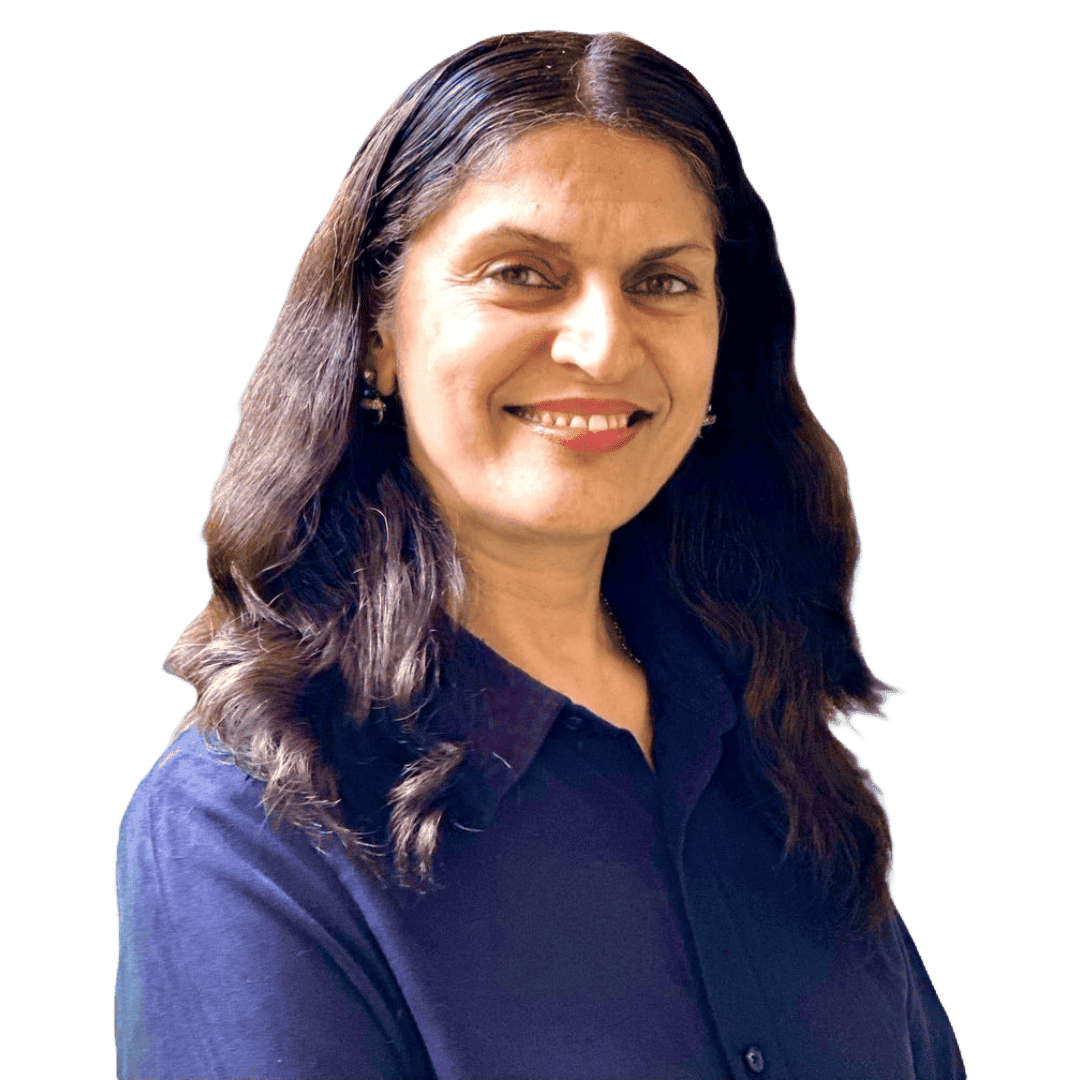
Ritu M. Uberoy is a healthcare AI strategist, technology executive, educator, and author dedicated to advancing the responsible adoption of Artificial Intelligence across healthcare delivery, digital health, and life sciences. With more than twenty-five years of leadership experience spanning the United States and India, she is recognized for helping healthcare organizations move beyond experimentation to achieve scalable clinical, operational, and business transformation through AI.
She leads AI innovation initiatives, including the AI Center of Excellence at BigRio, where she works with health systems, healthcare technology companies, and life sciences organizations to operationalize Generative and Agentic AI solutions responsibly. Her work focuses on aligning AI innovation with clinical workflows, governance frameworks, workforce readiness, and patient trust—ensuring technology augments human judgment in high-consequence healthcare environments.
Ritu is the co-author of Generative AI: Unlocking the Next Chapter in Healthcare, a practical guide for healthcare executives navigating enterprise AI adoption. She also hosts The Big Unlock podcast, engaging global healthcare leaders on AI transformation and digital innovation. An active educator and speaker, she conducts executive workshops and participates in global forums like HIMSS, ViVE, Women in Tech, AI-Powered Women, RAISE, and more, shaping the future of AI-driven healthcare. Ritu holds advanced degrees in Computer Science and completed specialized AI programs at Harvard and MIT.
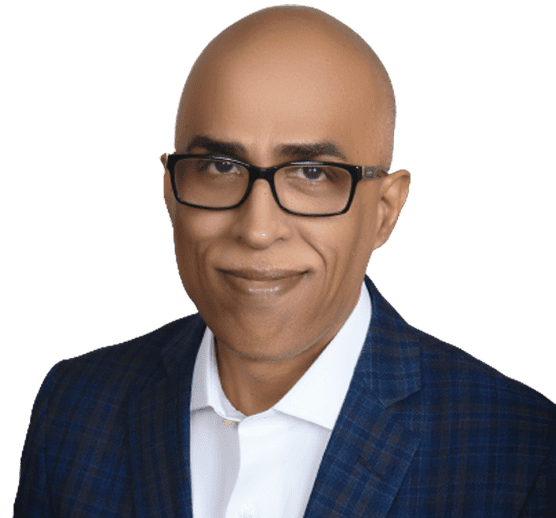
Paddy was the co-author of Healthcare Digital Transformation – How Consumerism, Technology and Pandemic are Accelerating the Future (Taylor & Francis, Aug 2020), along with Edward W. Marx. Paddy was also the author of the best-selling book The Big Unlock – Harnessing Data and Growing Digital Health Businesses in a Value-based Care Era (Archway Publishing, 2017). He was the host of the highly subscribed The Big Unlock podcast on digital transformation in healthcare featuring C-level executives from the healthcare and technology sectors. He was widely published and had a by-lined column in CIO Magazine and other respected industry publications.
Stay informed on the latest in digital health innovation and digital transformation