Season 7
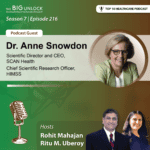
In this episode, Dr. Anne Snowdon, Scientific Director and CEO at SCAN Health and Chief Scientific Research Officer at HIMSS, explores why AI has the potential to transform healthcare, but only if health systems build the evidence, infrastructure, and workforce readiness to support it. She argues that while AI is generating tremendous excitement, most health systems are still in the early stages of adoption with many initiatives remaining in pilot phases.
Dr. Snowdon explains that healthcare must shift from deterministic decision-making toward probabilistic, predictive care, while developing new approaches to continuously evaluate AI as it learns and evolves. She also highlights the need to improve AI literacy among clinicians and establish stronger evidence before scaling enterprise-wide deployments.
Beyond clinical workflows, Dr. Snowdon makes a compelling case for reimagining digital health around patients rather than health systems. She envisions AI empowering individuals to better manage their health while seamlessly connecting them with trusted providers through interoperable, data-driven ecosystems. She also identifies digitally enabled supply chains as a critical but often overlooked foundation for safer, more personalized, and higher-quality care. She believes that the future of healthcare depends not just on adopting AI, but on creating connected, evidence-based systems that improve outcomes for patients, clinicians, and the broader health ecosystem. Take a listen.
About Our Guest
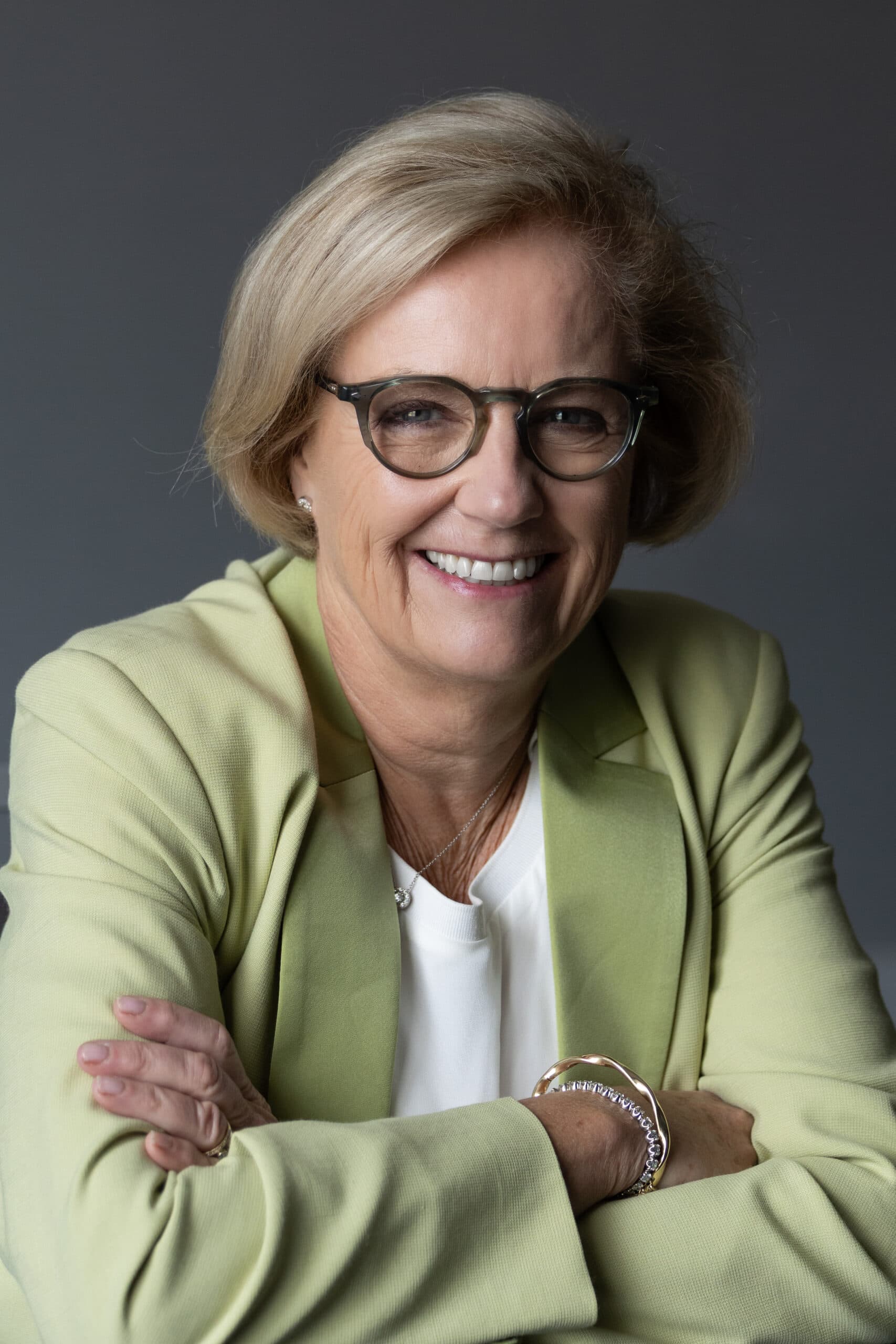
Dr. Anne Snowdon is a Professor of Strategy and Entrepreneurship at the Odette School of Business, University of Windsor in Canada. Currently, Dr. Snowdon is the Scientific Director and CEO for SCAN Health, and the Chief Scientific Research Officer for HIMSS. Dr. Snowdon leads a National Program of Research in Supply Chain and Digital Health Transformation and has published more than 150 research articles, papers and cases, has received over $25 million in research funding, holds patents and has commercialized a highly successful booster seat product for children traveling in vehicles, and is a Fulbright Scholar. She is Vice Chair of the Ontario Research Advisory Board and was recently appointed as a board member of the Alcohol Gaming Commission of Ontario. She holds a PhD in Nursing from the University of Michigan, MSc from McGill University, and BScN from Western University.
Recent Episodes
Ritu: Hello, listeners. Welcome to Season Seven of The Big Unlock Podcast. My name is Ritu Oberoi, and I’m managing partner at Damo Consulting and your co-host today along with Rohit. We are very excited to welcome Dr. Anne Snowdon to our podcast. Dr. Snowdon is a fascinating guest because she looks at healthcare through a lens that most leaders overlook — the supply chain. While many healthcare executives focus on clinical care, digital transformation, or reimbursement, Anne has spent decades demonstrating that quality, safety, and innovation all depend on the invisible infrastructure that connects products, data, clinicians, and patients. Anne is Professor of Strategy and Entrepreneurship at the University of Windsor, CEO of SCANHealth, and Chief Scientific Research Officer at HIMSS. She has spent decades studying the intersection of healthcare delivery, technology, and system resilience, and we are really happy to welcome her to our podcast today. With that, I’ll ask Rohit for a brief introduction, and then it’s all yours, Anne.
Rohit: I’ll be really brief — thank you, Ritu and Anne. Good to be here with both of you. I’m the co-host of The Big Unlock Podcast, and I look forward to an engaging conversation. Over to you, Anne.
Anne: Thank you. I’m Anne Snowdon. As Ritu has shared, I am the Chief Scientific Research Officer for HIMSS, where our mandate, mission, and vision is to ensure every human everywhere has access to their full health potential. When you really think about that, it requires an impressive flow of data right to the point of every decision, starting with patients and clinicians. I’m a nurse by training, a full professor at the Ontario Business School, with a program of research in supply chain — which is a very important infrastructure piece that most people simply don’t realize is important. I’m delighted to be here and looking forward to our discussion.
Ritu: Great. Let’s jump right in. The keyword of the day is AI, and we are all inundated with promises about its potential — that AI is going to revolutionize healthcare. But what real progress have health systems actually made toward this digital and AI transformation? And in your opinion, can we actually get there? What’s the horizon you see for real change?
Anne: Such a great set of questions. I absolutely think AI holds great promise and is probably one of the most unique groups of technologies health systems have seen in likely decades. The real catch is: what can it actually achieve right now? I think that remains to be seen. At HIMSS we are seeing impressive work across Asia-Pacific countries, North America, and Europe — and much of that work is in the pilot phase, a “try this on for size” stage. Healthcare is a very evidence-driven sector. I’m a nurse by training — if I’m going to use a new technology to deliver care to the children I used to care for, I want to be sure it will be valuable and most definitely not cause harm. I would say we’re early, Ritu, in where health systems are. Great promise, a lot of attention — but as a researcher, when I look at the hard data, it’s pretty early. There’s a lot of anecdotal evidence and impressive work around AI tools for clinicians — quality of work life, ambient listening so documentation doesn’t take so long. But beyond that, it’s early days, and things are unfolding so quickly that health systems are struggling both to understand AI’s full capability and to think through how best to integrate it into care processes to achieve what it promises for patients and the workforce.
Ritu: Thank you, Anne. You’re echoing what we’ve been hearing from C-suite leaders coming onto this podcast — health systems are investing heavily in AI transformation initiatives, but scaling innovation remains a challenge. The anecdotal evidence is there, but based on real numbers we still have some way to go. In your opinion, from everything you see, what are the biggest barriers preventing healthcare organizations from moving beyond pilots to enterprise-wide transformation?
Anne: I think there are three things. First, AI is a unique group of technology — it learns and changes over time. We are a sector accustomed to testing and evaluating, like a clinical trial of a device or a medication, and those devices and medications don’t change. We test until we’re confident they work for every patient. The challenge with AI is that where it starts and where it learns, shifts, and possibly drifts — we don’t have the methodologies to track that as directly as we would with any other kind of technology. So the first barrier is understanding that this is a technology with great promise, but it’s continually learning. It’s about building a lifecycle approach to understanding what it is, what its purpose is, for whom it is best suited, and how you track, once you implement it, that it’s achieving everything it promises. That’s a significant shift in how health systems have always operated — you’re tracking a moving target, not a fixed quality outcome. The second barrier is the workforce and workforce confidence. Physicians, nurses, pharmacists, and allied health professionals have not been broadly educated on what AI is and is not, and what it does and can achieve — so it’s a bit of a black box for the workforce. And there’s a deeper issue: AI is about prediction. A machine learning tool predicts whether the child I’m looking after in an intensive care unit may be at risk for an infection. But we are not educated or socialized as a workforce to think about probabilities — which is what a prediction is. We’re trained on very deterministic thinking: here’s the assessment, here’s the diagnosis, here’s the best clinical pathway to care for this patient. That is a completely different way of thinking. That migration from deterministic best practice to a technology predicting probabilities and enabling us to prevent risks — we don’t have much experience doing that, and there is understandable hesitancy and many questions in the workforce. The third barrier is the evidence. We are a very evidence-driven sector, and the evidence base on AI applications and tools is still pretty early. When you put all those things together — it’s fascinating, exciting, and compelling, but also a little daunting, because we’re being asked to think differently and make decisions differently. The system hasn’t yet built the foundations to ensure that when you spend the money on AI — which is expensive — you can be confident it will return tremendous value for patients, the workforce, and your capacity to deliver care.
Ritu: That’s an absolutely brilliant summary. The first point about AI being a moving target with new headlines every single day, the second about digital and AI literacy where people just aren’t ready and information is coming in too fast, and the third about the shift from deterministic thinking to probabilistic — you can really see how that migration would be difficult. Great answer, thank you.
Rohit: I was intently listening and thinking about the same thing — how evidence-driven this industry is, and how preventing harm and mitigating risk is always at the forefront. Anne, could you tell us more about your role at HIMSS and some of the key initiatives you’re driving this year and next? And also please share your origin story — what attracted you into healthcare and how your journey unfolded.
Anne: Let me start with what I do at HIMSS. I lead the research at the Office of Scientific Research. The basis of that work really reflects the vision of Hal Wolf, our CEO, and Reid Oakes, our COO. Because healthcare is so evidence-based and research-driven, HIMSS as a global network advancing digital health transformation needs to be the epicenter for creating the evidence of what digital health transformation actually achieves. That is very much the work I lead. We’ve published studies on what a highly digitally advanced hospital achieves for patients, for the workforce, and for performance outcomes compared to hospitals with much less progress in digital health transformation. One clear finding is that quality and safety outcomes are exponentially stronger in highly digitally advanced hospitals. How exactly those digital infrastructure systems drive those stronger outcomes is the next question we’re working to answer. We’ve also looked at the patient experience — highly digitally advanced hospitals show much stronger patient experience outcomes as well. A lot of our work at HIMSS involves measuring where hospitals are starting from in their digital health transformation journey. Many hospitals say, “We’re impressed by this AI technology — where do we start?” It’s a bit like a GPS on a road trip: where are you starting from, and where do you want to get to? We measure what digital assets and strengths a hospital already has that will serve them well as they advance AI strategies and technologies. So I lead the research and evidence base that defines what digital health transformation is, what it achieves, and for whom — and I work closely with health systems globally to define the future of digital health transformation, measured through our maturity models. As for my story — I built my very first machine learning algorithm in around 2004 or 2005. I was leading a national child seat safety study in Canada, because road crashes are a leading cause of death in Canadian children. As an ICU nurse at the time, I cared for a lot of profoundly ill children as a result of head, neck, and spinal cord injuries from these crashes. I went to the auto industry and asked why they couldn’t better protect children, and the answer came down to how children are securely seated in vehicles. We conducted a national child seat survey and built a machine learning algorithm to predict which ways of seating children in vehicles were associated with the greatest risk of injury in a crash. If we know what puts children at risk, the auto industry can make much safer seating, seat belts, and child seat companies and policymakers can act accordingly. That’s how I first really understood the opportunity of AI and what it can achieve. As a nurse, I also spent a lot of time focused on quality and safety outcomes. Medical error remains a problem even after two decades of healthcare technology — and that led me to supply chain. In automotive, I learned that they can track and trace a brake pad right to a vehicle owned by a citizen in any Canadian city, and can tell you exactly who made that brake pad and why it failed. Can we do that in healthcare? Can we know exactly what medication was prescribed to which patient and whether it helped, achieved nothing, or caused harm? That’s a supply chain question, and the answer is currently no. If we had that data, we could build the AI tools that predict which patients are at greatest risk, and then as a nurse I would know to find an alternative. In a nutshell, my career has been about solving these challenges by leveraging technology and transforming systems to achieve what they need to for the people they serve.
Rohit: Very interesting — thank you for sharing.
Ritu: From your unique vantage point as Chief Scientific Research Officer at HIMSS, what key areas of health and care do you see as most likely to benefit from AI-powered solutions right now, across all your research?
Anne: I can tell you what I’m seeing and what I’m not seeing — and it’s likely what I’m not seeing that I’m most anxious to pursue. What I am seeing is that health systems are generally adopting AI to optimize or automate processes. Patients can engage with an AI chatbot to book a visit or a procedure. Ambient listening for clinicians is making documentation better and smarter. There are a number of these AI technologies within health systems today that show real promise. But the common theme across almost all of them is making the system work better for the system. The gap I’m seeing — and what I’d really like to see more of — is what these technologies are achieving for patients. What are these AI tools, these agentic AI chatbots, actually doing for and with patients? How are they helping people manage their health? How are they connecting people to providers in much easier ways than making an appointment, travelling to a facility, waiting in a waiting room, and hoping to be seen within a timely manner? What I see today is that patients still have to meet the needs of the system to get care. The gap I really hope we can influence is how we can leverage AI tools to help people help themselves. If I’m a parent with a two-year-old with asthma, where are the AI tools that help me understand my son’s asthma triggers and how air quality changes put him at risk when he goes to school — tools that alert me that today is a day he should stay inside? In other words, help me help my son manage his condition. Those are the tools I’m not seeing yet. I think AI has a wonderful opportunity there. There are many AI tools in the commercial space, and that presents both opportunity and challenge. I recently had a pediatrician share this story with me: a mother came into the emergency room, the physician assessed and diagnosed the child and created a care plan, and the mother said, “My agent tells me I should be doing something different. Why are you telling me something else?” So the AI available in the commercial space is trying to help people, but it’s not connected to the health system. It potentially creates a divide between best evidence-based clinical practice and what a consumer AI agent has surfaced from the public domain. I think we need to close that gap — give people technology tools that are connected to evidence-based, talented provider teams, so they get accurate, truthful information that helps them make good decisions. That’s a space where I’m really looking for progress.
Ritu: That’s exactly why OpenAI and Anthropic have jumped directly into health — they’re seeing tens of millions of queries a month from people asking exactly these questions: how to be better prepared for a doctor’s appointment, what to ask, how to manage their own health proactively. People want to do this, they just haven’t had the right tools. Maybe now they will.
Anne: But those tools are coming from the commercial space, which isn’t connected to the reality of care delivery. That’s the gap.
Ritu: That leads naturally to the next question. Healthcare leaders often focus on clinical quality, patient experience, and financial performance as separate priorities. How can a modern digitally enabled supply chain help health systems improve all three simultaneously? And what metrics should executives actually be tracking? Why does it remain so siloed — one person looking at finance, another at patient experience, and nobody really talking to each other?
Anne: It’s very true, and I literally just gave a presentation on this. In every other business sector, supply chain is highly digitally enabled. Think about going online to buy a book — the system tells you, “You’re interested in these books; here are seven others you might consider.” It’s transparent and real-time. In healthcare, we collect all our health and safety data, and that team works with it. We have a supply chain team that knows what products they ordered but has no idea where those products were delivered, and definitely no idea who used them or what those products ultimately achieved. This is about an integrated, interoperable, near-real-time flow of data to the point of every decision. Part of this is digital infrastructure — supply chain tools and products typically live in the financial side of the organization, while patient care data lives in the electronic medical record. You have to bring those together. When you do, you know: what products do we have, what patients are we caring for, what care do they need, and what outcomes are we achieving? That transparency across a patient’s full journey of care — from the primary care physician who referred, to the surgeon who operated, to the hospital that provided care, right through to home — and tracking outcomes across that entire journey tells you exactly what patients you’re seeing, what care you’re delivering, what products you’re using, and which products are working best and for whom. When you know that, you can customize product and care delivery to what’s going to achieve the best outcomes for each individual. That’s where supply chain creates an integrated digital highway of information that informs every decision, particularly the patient’s own decisions across their care journey. That’s the real opportunity, and it’s another area where I don’t yet see AI being applied — but where I see it as a phenomenally big opportunity to advance.
Rohit: Very interesting conversation so far. Anne, anything you see in the crystal ball for next year?
Anne: With the way AI is unfolding, Rohit, your question might as well be what’s my prediction for Monday. I think predictions are always difficult to make. But I do think that in the next year or so — maybe less, maybe a little longer — health systems are going to start engaging much more directly with patients around how and where they can become very much more part of their own health ecosystem. Patients will be able to have and select the tools that work for them — particularly AI tools — rather than having to rely on whatever they find in the consumer space on one hand, and health systems on the other trying hard to deliver wonderful care but lacking the connectivity they need. I think that engagement, that opportunity to really mobilize these technologies to ensure they are working for people starting with patients — supporting their health, making sure the workforce is meaningfully connected to their patients — is where I hope we’re heading. One of the reasons so many of us go into nursing is to make a difference in people’s lives. If these technologies help us better understand what health and care means for our patients, there isn’t a nurse on the planet who doesn’t want to use that understanding to ensure every patient gets care that is meaningful and contributes to their quality of life. Maybe that’s a hope and a wish more than a crystal ball — but it’s a phenomenal opportunity, and one that HIMSS and many of our colleagues and global members are really driving to advance.
Rohit: Great. Thank you for those comments, Anne.
Ritu: It’s been an absolute pleasure to have you on our podcast, Dr. Snowdon. Thank you so much for being here today.
Anne: My pleasure. Thank you so much for having me.
—
Subscribe to our podcast series at www.thebigunlock.com and write us at info@thebigunlock.com
Disclaimer: This Q&A has been derived from the podcast transcript and has been edited for readability and clarity.

Rohit Mahajan is an entrepreneur and a leader in the information technology and software industry. His focus lies in the field of artificial intelligence and digital transformation. He has also written a book on Quantum Care, A Deep Dive into AI for Health Delivery and Research that has been published and has been trending #1 in several categories on Amazon.
Rohit is skilled in business and IT strategy, M&A, Sales & Marketing and Global Delivery. He holds a bachelor’s degree in Electronics and Communications Engineering, is a Wharton School Fellow and a graduate from the Harvard Business School.
Rohit is the CEO of Damo, Managing Partner and CEO of BigRio, the President at Citadel Discovery, Advisor at CarTwin, Managing Partner at C2R Tech, and Founder at BetterLungs. He has completed executive education programs in AI in Business and Healthcare from MIT Sloan, MIT CSAIL and Harvard School of Public Health. He has completed the Global Healthcare Leaders Program from Harvard Medical School.

Ritu M. Uberoy is a healthcare AI strategist, technology executive, educator, and author dedicated to advancing the responsible adoption of Artificial Intelligence across healthcare delivery, digital health, and life sciences. With more than twenty-five years of leadership experience spanning the United States and India, she is recognized for helping healthcare organizations move beyond experimentation to achieve scalable clinical, operational, and business transformation through AI.
She leads AI innovation initiatives, including the AI Center of Excellence at BigRio, where she works with health systems, healthcare technology companies, and life sciences organizations to operationalize Generative and Agentic AI solutions responsibly. Her work focuses on aligning AI innovation with clinical workflows, governance frameworks, workforce readiness, and patient trust—ensuring technology augments human judgment in high-consequence healthcare environments.
Ritu is the co-author of Generative AI: Unlocking the Next Chapter in Healthcare, a practical guide for healthcare executives navigating enterprise AI adoption. She also hosts The Big Unlock podcast, engaging global healthcare leaders on AI transformation and digital innovation. An active educator and speaker, she conducts executive workshops and participates in global forums like HIMSS, ViVE, Women in Tech, AI-Powered Women, RAISE, and more, shaping the future of AI-driven healthcare. Ritu holds advanced degrees in Computer Science and completed specialized AI programs at Harvard and MIT.

Paddy was the co-author of Healthcare Digital Transformation – How Consumerism, Technology and Pandemic are Accelerating the Future (Taylor & Francis, Aug 2020), along with Edward W. Marx. Paddy was also the author of the best-selling book The Big Unlock – Harnessing Data and Growing Digital Health Businesses in a Value-based Care Era (Archway Publishing, 2017). He was the host of the highly subscribed The Big Unlock podcast on digital transformation in healthcare featuring C-level executives from the healthcare and technology sectors. He was widely published and had a by-lined column in CIO Magazine and other respected industry publications.
Stay informed on the latest in digital health innovation and digital transformation