Season 7
In this episode, Dr. Richard Zane, Chief Medical Officer and Chief Innovation Officer at UCHealth, discusses how AI and emerging technologies can improve clinical decision-making, expand access to care, and enable scalable healthcare innovation.
Dr. Zane emphasizes that successful innovation begins with problems identified by frontline teams, not technology looking for applications. He explains how AI’s strengths in pattern recognition and complex data analysis can support better decisions, while human judgment remains essential in clinical care. He shares an approach to partnering with technology companies, co-developing solutions, and designing for scale. He also discusses how technology can bring complex care closer to rural communities, supported by appropriate clinical safeguards.
Dr. Zane advocates replacing traditional pilots with phased deployments, rapid iteration, and continuous improvement. His message to healthcare leaders is to prioritize patient needs, fear inaction rather than failure, and focus on technology that delivers meaningful value. Take a listen.
About Our Guest
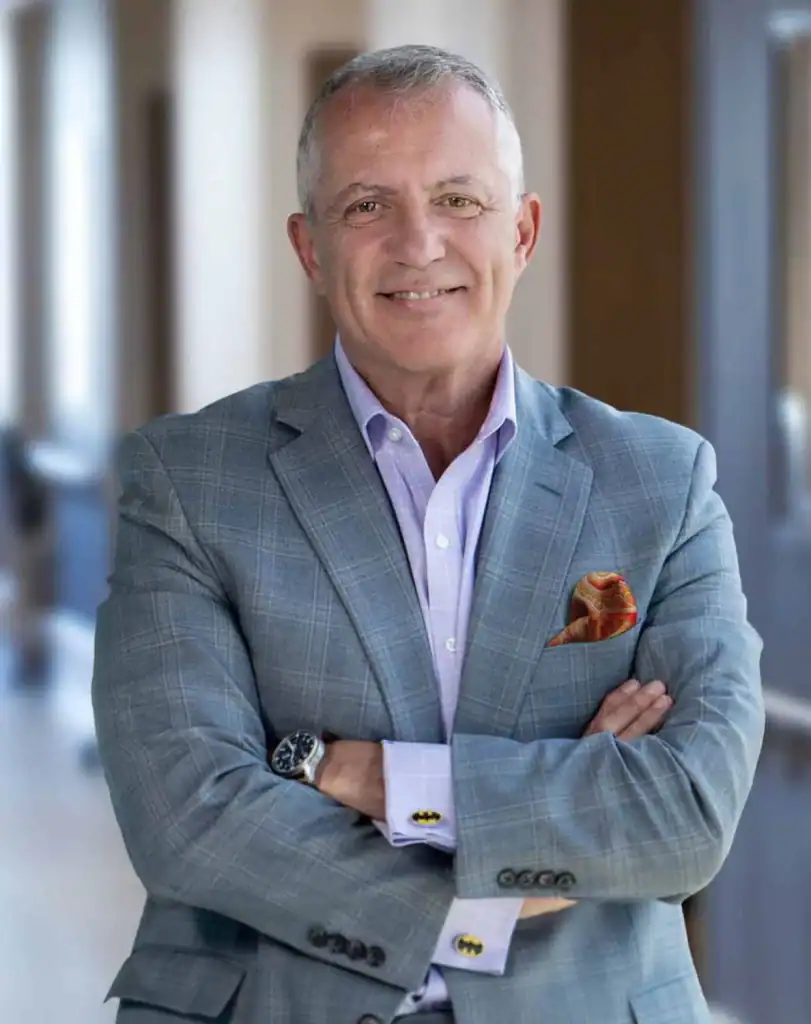
Dr. Richard Zane serves as chief medical officer and chief innovation officer of UCHealth, a nationally recognized, nonprofit health care system with operating revenue of $10 billion and a workforce of more than 37,000 people. In this dual role, Dr. Zane oversees UCHealth’s clinical, quality and safety programs, working collaboratively with operational leaders and partners from the University of Colorado School of Medicine and UCHealth Medical Group to deliver exceptional patient care and drive continuous innovation.
UCHealth includes 15 Colorado hospitals, including the state’s only academic medical center, with over 2,500 inpatient beds and more than 200 clinic locations in Colorado, southern Wyoming and western Nebraska.
Before taking the role of chief medical officer, Dr. Zane was the George B. Boedecker, Jr. and Boedecker Foundation Professor and Chair of Emergency Medicine at the University of Colorado School of Medicine. He joined UCHealth and the University of Colorado in 2012, following his tenure as associate professor and vice chair of the department of emergency medicine at Brigham and Women’s Hospital and Harvard Medical School. He also served as medical director for MDConnect, the Partners Healthcare patient access, transfer, and transport system.
Dr. Zane attended Temple University School of Medicine and went on to specialty training in emergency medicine at The Johns Hopkins Hospital.
Recent Episodes
Ritu: Hello, listeners. Welcome to Season 7 of the Big Unlock podcast. My name is Ritu M Uberoy, and I’m a managing partner here at BigRio and Damo Consulting. I’ll be your co-host today along with- Hello… Rohit for The Big Unlock podcast. And today, we are welcoming Dr. Richard Zane to our podcast. He is the chief medical officer and chief innovation officer at UCHealth, which is a ten-billion-dollar non-profit health system spanning fifteen hospitals and more than two hundred clinic locations.
And it’s really interesting that he has this dual role where he oversees clinical quality and safety while helping lead UCHealth’s work across AI virtual care and new models of care delivery. And he’s also a co-founder at the Care Innovation Center, where UCHealth partners with technology companies to develop, validate, and scale solutions, which is, very interesting to us, and we are going to ask him a lot of questions about that.
He’s a practicing emergency physician who previously held leadership roles at Brigham and Women’s Hospital and Harvard Medical School. We’re really happy to welcome Dr. Zane to our podcast today and glad to have you here. Thank you for being here with us today, Dr. Zane.
Richard: Thank you for having me.
Ritu: Would you like to add anything to that super long introduction?
Richard: I think that was an introduction that my mother would be proud of, so thank you for that.
Ritu: Happy to hear that. Rohit, would you like to introduce yourself, and then we can get started.
Rohit: I’ll say a quick hi. Hi, everyone. I’m Rohit Mahajan. I’m the CEO at BigReo and co-host of The Big Unlock podcast, and, very excited, Rich, to have you on the podcast with us.
We are looking forward to an engaging and interactive conversation. So back to you, Ritu.
Ritu: Thank you. So let’s get started, Dr. Zane. You’re now wearing both these hats, the chief medical officer and chief innovation officer at, two hats at UCHealth. Bringing these two responsibilities together, has it changed the way you think about innovation and particularly about these new thresholds that, AI solutions are now bringing into the picture?
And what do you think about the thresholds that AI solutions now have to cross before you’re willing to put them into this hospital setting and healthcare setting? Would love to hear your views on that.
Richard: That was a big question. To answer the first part, yes, I think it’s quite symbiotic that the chief medical officer role and the chief innovation officer role are together, at least it is for me.
Until recently, I was one of two people who had that role. Now I’m just one. We like to say here at UCHealth that when we think about innovation, we think about intelligence, and two terms that mean everything and nothing. And intelligence to us is making better decisions in healthcare. And those better decisions could be choosing pharmacotherapy at the bedside.
It could be thinking about ordering procedures for complex cases. It could be how to deploy capital. It could be how to better run an infusion center, outpatient clinic, et cetera. And we’re also very fond of saying that our innovation strategy is our quality strategy, is our virtual health strategy, is our informatics strategy, and is our IT strategy.
So the entirety of the way in which we run a healthcare system is focused on our patients, what’s better for them, and the best things for patients are making better decisions on their behalf So AI fits clearly within that because AI helps us make better decisions. The question is, where do you bring in human adjudication, and where do you allow AI to make or inform decisions?
And that’s the journey that we’re on now.
Ritu: Thank you for that answer, Dr. Zane. I think that’s becoming, more and more pertinent now because agentic AI has entered this picture, and UCHealth also seems to be moving beyond these individual AI applications towards a broader platform. We’ve all seen, A Bridge for Ambien, virtual health center applications, and you have a collaboration with Verily around data and AI.
So how do you see all these pieces coming [00:04:00] together? And in your opinion, what does this underlying architecture of like an overall AI-enabled health system look like rather than these fragmented pieces that are now, being put into place across health systems?
Richard: So I think that everybody starts off with point solutions and thinks about, do we have a point solution for detecting atrial fibrillation?
Do we have a point solution to optimize revenue cycle? And the question is, how do we set up a platform? And every third word now in the innovation world is platform, platform, platform. And how does it all come together and coalesce in one intelligent architecture? And I think it all has to do with culture, process, and tools.
So people, process, and tools is all healthcare is. And when you think about AI, I like to say that AI is math, it’s not magic. And there’s a lot that AI has in common with the practice of medicine. And if you think about how medicine is practiced, it really is pattern recognition, variable adjudication, and understanding the human connection.
Humans, on their best day, can adjudicate eight, maybe 11 contemporaneous variables. AI can adjudicate seven million. And I just made up that number. Could be more, could be fewer. And then from a pattern recognition, that’s why they talk about experienced physicians practicing because we can recognize patterns the more we see them, and it’s just as important to recognize when a pattern fits as when a pattern doesn’t.
That is by definition what AI does, is recognize patterns. So if we think about where it fits best and easiest, it’s usually in things that are purely math without A direct immediate human consequence. So I think if you look across all of industry, especially in healthcare, there isn’t a single institution that hasn’t implemented some form of AI, end to end or not, in revenue cycle and administrative automation.
And then many healthcare systems, including ours, have implemented AI end to end in patients as a customer, meaning when a patient asks for an appointment, when a patient asks for directions, when a patient asks for a prescription, when a patient asks for
prior authorization. The holy grail, so to speak, is can we have AI take a history, prescribe or recommend a treatment without a human in the loop? And the answer is not yet. We have not done that yet. I think that there are some point solutions that have done that under very, very specific circumstances.
So that’s how we are approaching this, is it’s really a no-brainer to do it in administrative automation. It makes perfect sense, just like every single person will book a flight or learn how to get to grandma’s house or grandma’s friend’s house using AI or an application. But it’s when can we rely on AI to inform a medical or clinical decision?
And I think every day it gets better and better. The biggest barriers, at least to me, are not the agents, and it’s not the engines, and it’s not the industry, it’s the regulatory burden on healthcare, both from a national perspective and a local perspective, on where the tolerance or allowance for the utilization of AI can be deployed.
Ritu: This, dovetails nicely into the next question, where we are talking about the Care Innovation Center, where, you’re co-developing, validating, and then sometimes even investing in these companies, and you have this hundred million dollar venture capability behind the Care Innovation Center.
So when you’re seeing these startups and when you’re looking ahead to these new technologies, which will do this piece, this clinical piece that you’re talking about, what makes you decide that the startup is worth partnering with, and what are the warning signs that tell you that this technology is never going to scale within the health system?
And we are particularly interested in this answer because we see companies in our venture studio as well. So would love to hear your perspective on this.
Richard: So the first most important thing for us is how did we come up with the problem statement? What problem are we trying to solve? And for us, the best problems are the ones that come from the people doing the work So the people at the front line identify a problem that they think technology may be a solution for.
And then we look at the problem statement, and we look at it in a very specific way, in a very structured way. And then we try and do an environmental scan and see if some other health system has solved this problem. And then we will learn from that other health system, and we will adopt, implement that solution.
But more frequently than not, there isn’t out-of-the-box solution. So we will think about how we can partner with a company, most commonly a technology company, sometimes a services company or combination of the two, and then partner with them. And that’s when how do you evaluate the company comes in. And as there’s a right size to it because, an angel investing company often doesn’t have the resources, so we’d have to think about are they really special and different.
And then on the other end of the spectrum, immensely large companies often can’t work in small point solution fashion because it just won’t move the needle. Google is not gonna do something that is gonna take three years to come to fruition and is not gonna generate billions and billions of dollars because it just doesn’t move the needle for their shareholders.
So it’s picking the right size company. And then we think about our ideal partners are ones where we’re a customer. We need the solution to work. We’re a co-developer. We can drive the solution, and then we participate in value creation. How do we invest in the company or how do we generate revenues from the solution, and then how can we help them scale?
We know that ninety-eight percent of medicine happens in the community, not in academic medical centers. So we’re very comfortable being customer number one, but we design for customers two through two thousand because if it won’t scale, it’s not gonna be of any use for us for longer than a couple of months.
So that’s the overarching approach. To answer your question specifically about when do we think something’s not gonna work, it’s really one by each. We are not afraid to fail. If my charge for my board is if a hundred percent of the things I work on are gonna work out of the box, I’m not trying hard enough, I’m not taking enough risk, and I’m not being sufficiently creative.
So one is, have they done it before? Have they started a company before? Have they run something before? As better than I, you bet on the jockey, not the horse. Do I think that they’re gonna be capable of pivoting? The most successful things we’ve done ended up doing something far different than what we initially thought that they were gonna do.
So can we pivot together? And then most importantly, do our cultures fit? And our approach is that if we evaluate a company, it’s usually, depending on the [00:11:00] size, the CEO or a very senior leader with myself and our senior director for innovation, and we just have a conversation about our approaches and whether our approaches are aligned.
And it’s more of a cultural temperature check, so to speak. If they are pretty compelling from a company perspective and a leadership perspective and a technology perspective, I then do three processes in parallel as much as I can. One is a subject matter expert evaluation. So the people who actually do the work will evaluate the company.
And what I ask them to do is to meet the company and not like them because I like them, but to like them if what they say comes true, does it make their jobs better and our patients’ lives better? Full stop. Do they think they would need this technology to do their job? Second evaluation is a technology deep dive.
Does their technology fit with our technology? And then third is an investable asset evaluation. Do they have financial promise? And we can de-risk a lot because we’ll know early, often before we invest, whether it’s gonna work or if we think it’s going to work. So if they pass those three things, then we’ll do something small together.
On purpose small, not because it’s gonna solve a problem, but because it’ll just show us that we can work together. And once we’ve demonstrated that we can work together and the problem’s worth solving, we make an investment, and then it’s a self-fulfilling prophecy.
Ritu: Thank you, Dr. Zane, for those very valuable insights.
I think the listeners, have a lot to learn there. Rohit, would you like to ask a question?
Rohit: Yeah, sure. I was, thinking about all the activity and the interest, Dr. Zane, that is in rural healthcare transformation. I’m sure you have rural locations as well in your state. So how do you think about that, and what are some of the suggestions or advice you have for health systems or entrepreneurs or even physicians who are thinking about this huge rural healthcare transformation that is happening at this time?
Richard: Right now, rural transformation is a political statement that has federal funding behind it, so it’s very difficult to develop point solutions that are going to be scalable and sustainable for something like that. Technology, I believe, is the big equalizer, which means that it allows us to care for patients in remote areas and deliver care closer to home.
We have 15 hospitals. We are in three regions hundreds of miles apart. We have three Level 1 trauma centers, and currently the hospital that’s right behind me has over 900 patients in it. I currently have three hospitals that have less than 10 patients in them. And everything in between. What technology allows us to do is absent procedures, it allows us to deliver complex, sometimes tertiary care, in a rural environment, and we have to think about how that works.
Do we have the right people in place? The right tools, the right procedures, and the right processes, and the right safety net. Safety net meaning if something isn’t working, we have the ability to move that patient to a place that’s of higher complexity and capability. So from our approach to caring for patients in their communities, and that’s really what you’re saying about rural health, it’s caring for someone in their community when their community could be dozens or hundreds of miles away from a more complex delivery system.
Technology is what we’re gonna rely on to do that.
Rohit: That’s great. Now talking about all the changes, Dr. Zane, that are happening so fast in the AI world, and the fact that there’s a lot of adoption of things like even, I’m just saying a name, open evidence, which may or may not be allowed by your AI governance policies or the health systems’ thought process around how AI should be used.
How do you deal with this adoption, which is at such a fast pace, which everyone’s using in their daily life, and now they’re bringing it into their workplace?
Richard: So let me be really clear. Let’s say for a second that I had the power to tell every doctor at UCHealth that they can’t use open evidence, and I don’t have that power.
But let’s say I did, and I told them they couldn’t, I would fail. Because they would use it one hundred percent. Because the reality is it’s a remarkable tool that’s just getting better the more it’s used. Yeah. What we have to think about is how we can bring that into workflows, because our guiding principles for intelligence or clinical decision support or whatever you describe it is- It has to be easier and not harder, fewer clicks and not more clicks, path of least resistance, bulletproof right, and it has to be within their workflows.
The bulletproof right is an interesting concept, and I’m not sure if you’ve spent any time on OpenEvidence, but I sure have. And I think it’s a remarkable, almost inspirational tool, and it allows doctors to do far more complex things than they otherwise would feel comfortable with. That statement might be scary to some people, but the same thing is true for Google 10 years ago.
The same thing is true for textbooks 100 years ago, which is immediately available information. And I have been able to deliver pretty complex diagnoses using OpenEvidence that I otherwise would not have been able to three or four years ago.
Rohit: That’s great to
Ritu: know. That’s amazing. So just switching tracks a little bit here, Dr.
Zane. Whenever we get our guests, we like to ask them their origin stories, and sometimes we hear really interesting anecdotes or personal stories about what brought you into medicine and what brought you into technology specifically. So we would love to hear your story as well.
Richard: My story, the reason why I’m a physician, is I met a beautiful woman who I wanted to marry, and she was going to medical school, so I went to medical school to impress my wife.
Ritu: That’s… We haven’t heard that before, so that’s a good one.
Richard: My wife is a surgeon, and we were elementary school teachers, and we met as elementary school teachers. I had- Wow… applied to law school, medical school, graduate school, and decided to go to medical school to impress her, full stop. I didn’t even know that you had to do residencies.
So I went to medical school in Philadelphia at Temple, my state school. Had a great experience, and at the 11th hour decided to do emergency medicine because it checked all the boxes for me. I didn’t know it was a specialty. I thought I was gonna do family medicine or OBGYN. And then I did my training at Johns Hopkins and did a fellowship there, ended up staying there and running their helicopter and transport program.
And I just liked running things. That’s the story. And then my wife finished her residency, did a fellowship- In pediatric orthopedics at Brown in Rhode Island, and I thought I was gonna stay at Johns Hopkins, and turns out I didn’t wanna leave my kid for a year, so I got a one-year job at Harvard Medical School in Brigham and Women’s that lasted 14, and it was defining for me.
And then I came out to Colorado and started a new Department of Emergency Medicine that didn’t exist before. And the reason why I got into technology was absolutely pragmatic, which was I did not have the tools to care for the numbers of patients that I aspired to care for, and I couldn’t afford them.
So I found companies that had developed unique technologies, and I convinced them that I could make them better if they let me have their technology for free. And that’s where we came up with the concept of the Care Innovation Center, was partnering with industry, co-developing, having revenue share or some type of participation in value creation.
And then that became within an emergency department, then it became within 27 emergency departments and 25 urgent cares and a virtual health center, and then a healthcare system and a university. So it just grew that model seemed appealing to both health systems and technology companies and investors.
Ritu: Thank you for sharing that. That’s an amazing story, and I’m sure, the listeners would love to hear that. It’s really interesting to hear you talking very comfortably about technology, Dr. Zinn, because a lot of time we get physicians and they say that, this is one of the barriers, that in healthcare people are, slower to adopt these technologies because of the safety factor and the fact that you can’t afford to fail.
But hearing you talk about failure and innovation was very interesting. So would you like to tell us a little bit more about that, that how do you get that buy-in culturally from the other physicians in your organization, and how are you able to make people comfortable with these ideas?
Richard: So first, we have guiding principles – which are that our patients come first, right? Full stop, without exception. We exist to care for patients Just like a stethoscope was somehow controversial when it first came out, AI may be controversial. To me, it’s not, and to our health system, it is not. So why do we exist? To care for patients. So we create solutions that benefit people.
That’s a guiding principle. We fear inaction, not failure, and abhor bureaucracy. Those are the guiding principles for how we think about things. The other is that we don’t do pilots. I hate the word pilot. We won’t do pilots. We’ll do phased deployments. So we have a healthcare system that is based on one single mature instance of electronic health record, Epic, and we use our health system as a learning laboratory.
So first, the problem statements that we are building solutions for have been identified by someone who’s responsible for the work, so they are our early adopter. So we identify early adopters, we ensconce them in resources so that they are using their judgment, they’re deploying the technology, and we are making it easy for them.
And then we show that it works there, and then we show it works somewhere else. We rapidly iterate, which means if I say to Johnny or Timmy or Sally, “I’m gonna deploy this technology in your environment, I want you to use it,” it’ll never work. I’ll say to Timmy, Johnny or Sally, “Here’s the problem we’re trying to solve.
Here’s how we think an approach makes sense. Do you agree?” If they do agree, then we deploy it, and we rapidly iterate. So we check in, maybe not every minute or every hour, but certainly more than every day. And when something doesn’t work, we either fix it or pivot. So we don’t deploy technology that doesn’t work and people are stuck with it.
We sometimes deploy technology that is initially clunky, but then have the resources and have the commitment to fix it and make it better. And then success begets success. So now that we’ve done a number of deployments that sometimes have started off clunky, but then have gotten smoother, people have confidence in us.
Ritu: Great. I think we’re almost at the end of the podcast. Time, has flown by as usual. So Rohit, would you like to ask a last question? Or then we can ask Dr. Zane for some closing thoughts.
Rohit: Yeah. Dr. Zane, any closing thoughts or anything you are seeing from the Periscope peaking around the corner.
Richard: So I think it’s very important for people to understand that healthcare is broken. I think everybody who’s experienced it knows that. There isn’t a single solution. There isn’t even three or four solutions. There’s 1,000.1 solutions, and the only thing that will move us across the finish line, if there is a finish line, is adopting and understanding how to rationally deploy technology to make all of our lives better, just like we’ve done over the last two hundred years.
Ritu: Great answer. Thank you for being our guest on the podcast today, Dr. Zane. It was a pleasure having you. Thank you.
This episode is brought to you by the HealthImpact Fall Forum, which happened in New York City on October 6 -7, 2026
—
Subscribe to our podcast series at https://thebigunlock.com/ and write us at info@thebigunlock.com
Disclaimer: This Q&A has been derived from the podcast transcript and has been edited for readability and clarity.

Rohit Mahajan is an entrepreneur and a leader in the information technology and software industry. His focus lies in the field of artificial intelligence and digital transformation. He has also written a book on Quantum Care, A Deep Dive into AI for Health Delivery and Research that has been published and has been trending #1 in several categories on Amazon.
Rohit is skilled in business and IT strategy, M&A, Sales & Marketing and Global Delivery. He holds a bachelor’s degree in Electronics and Communications Engineering, is a Wharton School Fellow and a graduate from the Harvard Business School.
Rohit is the CEO of Damo, Managing Partner and CEO of BigRio, the President at Citadel Discovery, Advisor at CarTwin, Managing Partner at C2R Tech, and Founder at BetterLungs. He has completed executive education programs in AI in Business and Healthcare from MIT Sloan, MIT CSAIL and Harvard School of Public Health. He has completed the Global Healthcare Leaders Program from Harvard Medical School.
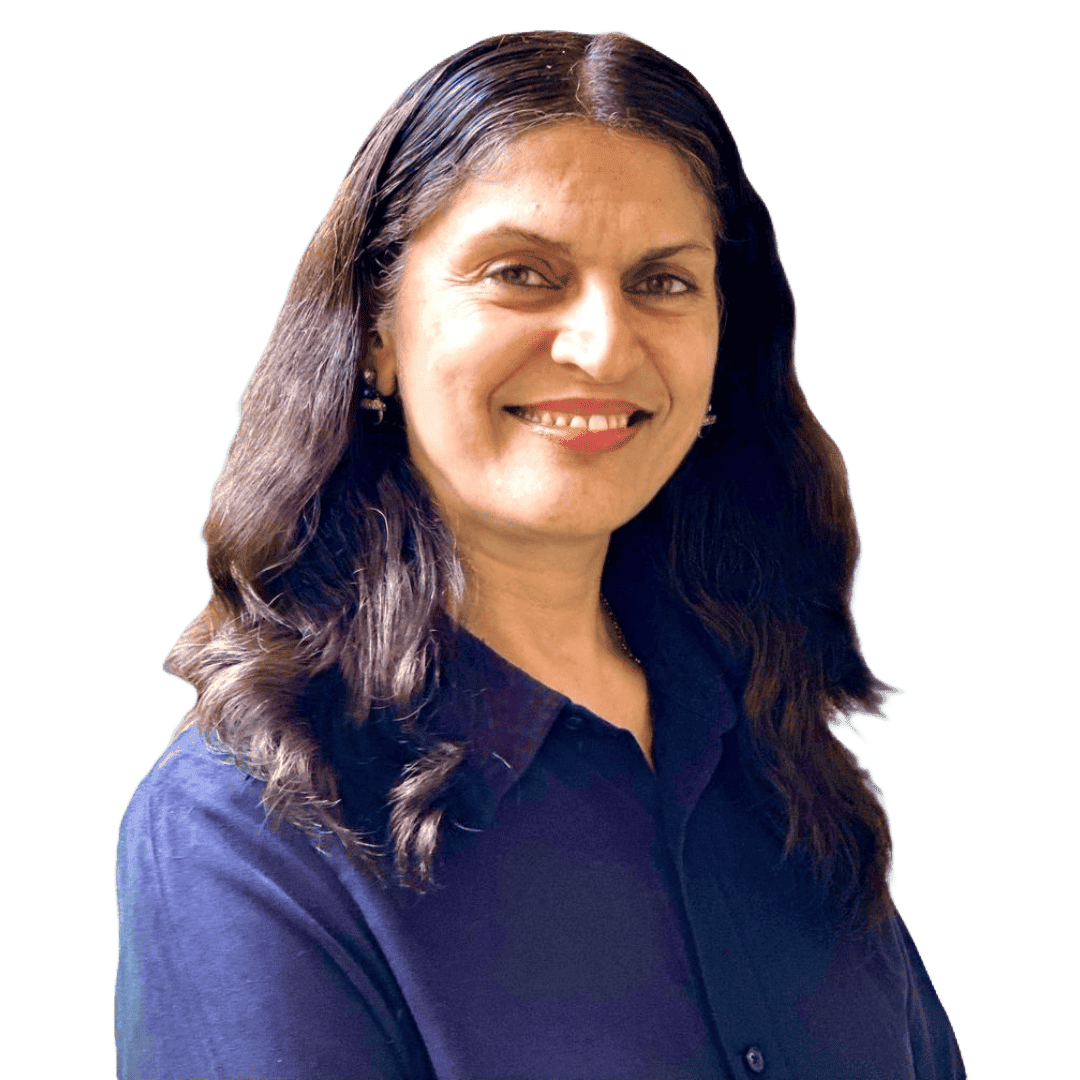
Ritu M. Uberoy is a healthcare AI strategist, technology executive, educator, and author dedicated to advancing the responsible adoption of Artificial Intelligence across healthcare delivery, digital health, and life sciences. With more than twenty-five years of leadership experience spanning the United States and India, she is recognized for helping healthcare organizations move beyond experimentation to achieve scalable clinical, operational, and business transformation through AI.
She leads AI innovation initiatives, including the AI Center of Excellence at BigRio, where she works with health systems, healthcare technology companies, and life sciences organizations to operationalize Generative and Agentic AI solutions responsibly. Her work focuses on aligning AI innovation with clinical workflows, governance frameworks, workforce readiness, and patient trust—ensuring technology augments human judgment in high-consequence healthcare environments.
Ritu is the co-author of Generative AI: Unlocking the Next Chapter in Healthcare, a practical guide for healthcare executives navigating enterprise AI adoption. She also hosts The Big Unlock podcast, engaging global healthcare leaders on AI transformation and digital innovation. An active educator and speaker, she conducts executive workshops and participates in global forums like HIMSS, ViVE, Women in Tech, AI-Powered Women, RAISE, and more, shaping the future of AI-driven healthcare. Ritu holds advanced degrees in Computer Science and completed specialized AI programs at Harvard and MIT.
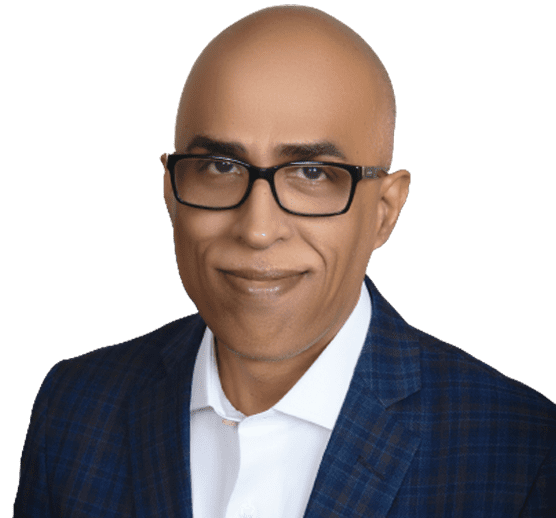
Paddy was the co-author of Healthcare Digital Transformation – How Consumerism, Technology and Pandemic are Accelerating the Future (Taylor & Francis, Aug 2020), along with Edward W. Marx. Paddy was also the author of the best-selling book The Big Unlock – Harnessing Data and Growing Digital Health Businesses in a Value-based Care Era (Archway Publishing, 2017). He was the host of the highly subscribed The Big Unlock podcast on digital transformation in healthcare featuring C-level executives from the healthcare and technology sectors. He was widely published and had a by-lined column in CIO Magazine and other respected industry publications.
Stay informed on the latest in digital health innovation and digital transformation