Season 7
In this episode, Daniel Barchi, Senior Executive Vice President and Chief Information Officer at CommonSpirit Health, challenges the notion that deploying more AI applications translates into greater success. The real measure, he argues, is the value these technologies deliver to patients, clinicians, and health systems.
Daniel shares how CommonSpirit has expanded its AI portfolio to approximately 260 applications, emphasizing disciplined governance, retiring underperforming tools, and tracking realized ROI rather than projected benefits. He explains why healthcare transformation is primarily about people and processes, with technology playing a supporting role.
The conversation also explores CommonSpirit’s approach to enterprise platforms, internally developed AI solutions, and secure access to large language models through its Insightli platform. Daniel also highlights workforce education, reducing clinician burnout, and improving patient experience as essential priorities. His message to healthcare leaders is to align AI investments with organizational priorities, empower employees through training, and ensure technology strengthens rather than replaces human care. Take a listen.
About Our Guest
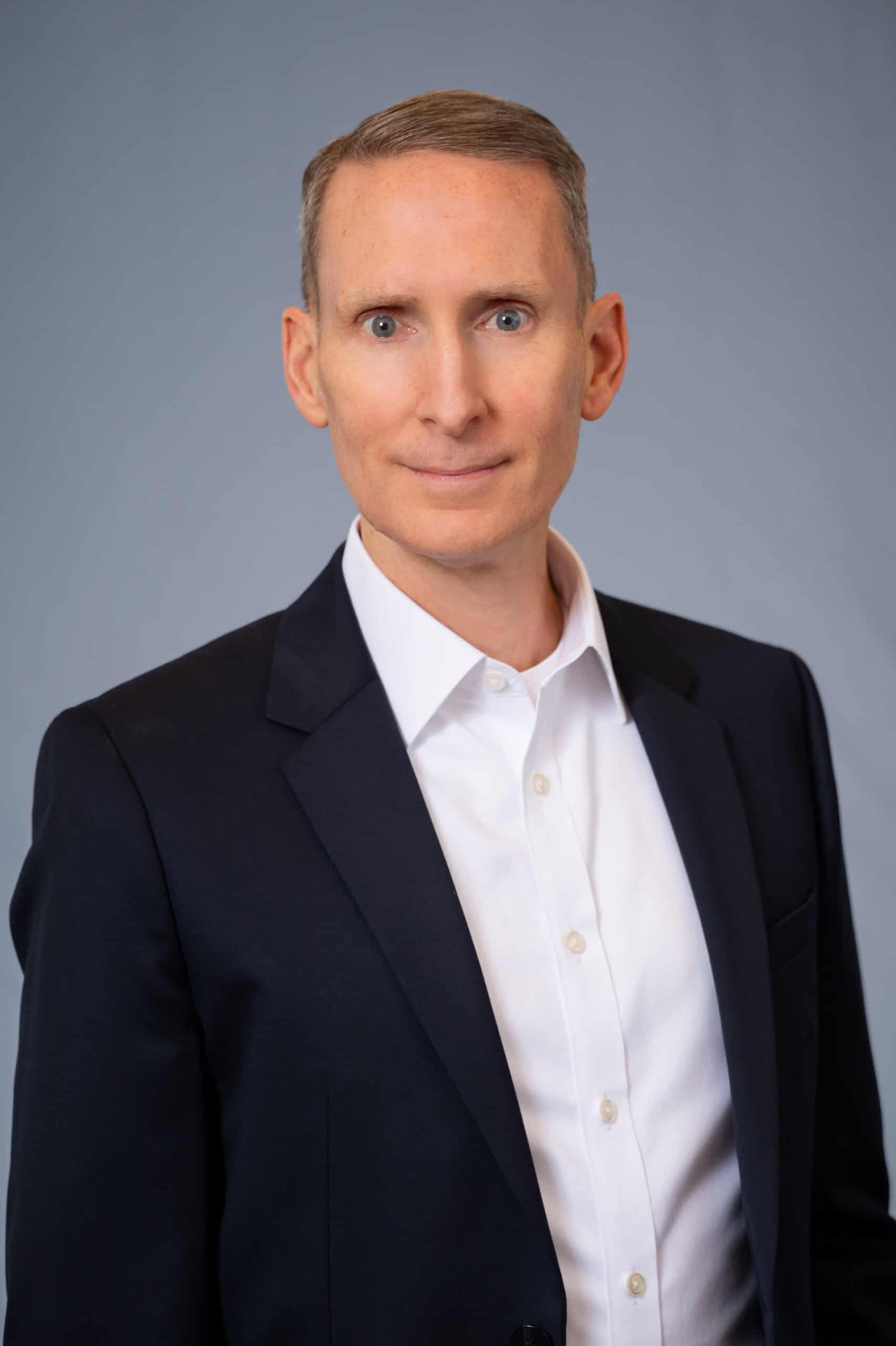
As the Senior Executive Vice President and Chief Information Officer at
CommonSpirit Health, Daniel Barchi provides vision and leadership to support growth, operational performance, digital innovation and IT security. Daniel joined CommonSpirit in 2022 to contribute his more than 20 years of experience advancing and integrating information technology, digital clinical and consumer applications and financial tools for large and complex health care systems.
Before his work at CommonSpirit, he served as CIO of NewYork-Presbyterian Health System, where he led operations of information technology, business systems, innovation, analytics, telemedicine and pharmacy teams. Prior to this role, Daniel served as CIO of Carilion Clinic, Yale New Haven Health System and Yale School of Medicine. Before his career in health care technology, Daniel worked in the telecommunications industry, leading global project operations for MCI and WorldCom in Europe, Asia and the Middle East. Daniel earned his Bachelor of Science from the U.S. Naval Academy at Annapolis and served as a U.S. Naval Officer at sea on guided missile cruisers. He was twice awarded the Navy Commendation Medal for leadership, the Southeast Asia Service Medal for Iraq operations in the Red Sea and the NATO Service Medal for Bosnian War operations. As he prepared to complete his Naval service, Daniel earned a Master of Science in Engineering Management from Old Dominion University.
Recent Episodes
Ritu: Hello, listeners. Welcome to Season Seven of the Big Unlock Podcast. My name is Ritu M Uberoy, and I’m managing partner at Damo Consulting and your host today along with Rohit. Today we are welcoming Daniel Barchi to our podcast. Daniel is the CIO at CommonSpirit Health, where he leads enterprise technology strategy, digital innovation, AI, and cybersecurity. He brings more than two decades of healthcare technology leadership, having previously served as CIO at NewYork-Presbyterian, Yale New Haven Health System, and Carilion Clinic. Under his leadership, CommonSpirit has scaled its AI portfolio to approximately 250 applications, generating more than $100 million in annual savings. Welcome, Daniel, and thank you for being our guest today.
Daniel: Thank you so much, Ritu. It’s great to be here with you and Rohit.
Rohit: Hi, everyone. I’m Rohit Mahajan, CEO at Damo Consulting and co-host of this podcast. Looking forward to an engaging discussion. Back to you, Ritu.
Ritu: Let’s start with how AI adoption is moving toward enterprise-wide transformation. CommonSpirit has scaled from approximately sixty AI tools in 2023 to about 250 now. But you’ve made the interesting observation that having 400 or 800 tools doesn’t mean you’re doing better. At what point does adding more AI become counterproductive?
Daniel: We’re very proud of what we’re doing with AI at CommonSpirit — we’re using it across clinical operations, HR, revenue cycle, and technology. We’ve been doing robotic process automation for well over ten years, but we leaned hard into AI over the past three years and grew from about sixty applications to about 260 today. That said, I don’t think 300 or 500 or 800 is the right answer. The number I’m actually most proud of is twenty — the number we’ve retired. And there’s another twenty or so things we’ve said no to. It’s not about saying yes to everything; it’s about being very selective in what is aligned with our mission and has positive ROI, clinically, financially, or from a patient experience standpoint. Being smart enough to retire tools that are no longer meeting their purpose — because they’ve been subsumed by others, are no longer sufficiently secure, or no longer meet our raised standards — is just as important as adding new ones. The big picture: we’re at about a three on the Gartner maturity scale. We’re doing a lot and getting very mature, but we have ways to continue to mature, as most health systems would say. What we’re focused on is scale with discipline — strong AI operational governance, tracking who’s using each tool, the ROI, the benefits, the risks, and the plans for each one. We’re also leaning hard into platforms. At CommonSpirit we operate across twenty-four states, with more than 150,000 employee colleagues and more than 150 hospitals, so standardization matters. We’re going from nineteen EHRs to one, from nine different ERP systems down to one, from many business process tools to one instance of ServiceNow, and from many third-party ERP platforms to one instance of Salesforce. As we consolidate onto these platforms, we want to enable their embedded AI rather than always going to a third party or building it ourselves.
Ritu: You mentioned a multidisciplinary AI governance structure. With so many stakeholders involved and meetings happening bi-weekly, do you think governance can become a bottleneck to innovation? How do you counterbalance governance with speed — especially in scenarios like ambient documentation, where patient data use raises specific requirements?
Daniel: This is a question I’ve been asked in different forms, including when people ask about full AI autonomy. I think back to about ten years ago when I was CIO in New York City and one of our teams said, “We can build and deploy an app within forty-eight hours.” My first response was: “What app would we want to build and deploy in forty-eight hours?” Speed isn’t the point — strategy, planning, benefits, and integration are the point. Anyone who says good governance is a bottleneck to innovation misses something important: healthcare technology is really about 80% people, 15% process, and only 5% technology. Anyone who says “let’s ram AI through quickly with light governance” is hoping that technology alone will move the needle, when in fact there is so much work to do with people — better training, better resources, better tools — and process — better standardization, documentation, and use of data — before you even get to the technology piece. Having the right governance committee evaluate every AI tool is not getting in the way; it makes us better and aligns with our mission. And when you think about who is on our governance committee — nursing, physicians, finance, operations, mission, IT, compliance, and our ethics team — they help us make better long-term choices than a tight group of technology and finance people making decisions alone.
Ritu: You’ve attributed $200 million in value captured from AI. We often hear that ambient scribing saves around sixteen minutes per physician per day — meaningful for quality of life but hard to quantify financially. Where is this return actually coming from?
Daniel: So many organizations, inside and outside healthcare, throw out big numbers about AI with very little to back them up. What you mostly see is people talking about their spend on AI — not the outcome. At CommonSpirit, we’re focused on defining value and then tracking it. We’re better at tracking the financial value because it’s quantifiable. Ambient scribing is one where many quality-of-life and quality-of-care benefits are not financially quantifiable but are genuinely important, and we plan to lean into tracking those non-financial benefits more. But we remain tightly focused on financial benefits because we want to know what we’re getting for our investments. We’ve created a five-gate system for every AI tool. Gate one is the opportunity itself — say a physician identifies a new AI tool and process that could save $10 million in our operating theaters. Gate two, she comes back with a business plan showing perhaps $8 million in benefits after working through the details. Gate three, our finance team reviews it and determines the real value is closer to $5 million. Gate four, IT implements it — with available capital and resources, perhaps we can only implement half, realizing about $2.5 million in potential value this year. Gate five, we go back and measure what we actually generated — and in this example, the actual value captured is about $1.5 million of the original $10 million estimate. Health systems could say they’ve delivered half a billion dollars in AI value, but we say we’ve generated about $100 million because we can track the actual realized value for each tool.
Rohit: Daniel, you described a scenario where a clinician generates the idea that ultimately gets implemented — that’s very powerful, because they are the domain experts. How do you look at AI through the lens of clinician experience and reducing burnout, and what metrics are you tracking there?
Daniel: Clinicians don’t wake up every morning thinking about AI. They’re thinking about patients, quality of care, and the sustainability of the intensive clinical work they do. So AI is one tool we provide to help them — ambient scribing and others. But there are many other platforms technology leaders should be putting in front of clinicians to make their clinical lives better and give them the data they need. And we can’t focus solely on physicians. For ambient scribing, for example, we’re not only rolling it out for physicians — we’re exploring how to make it work for our nurses as well. Beyond ambient, I’m proud of other things we’re doing to reduce bedside friction. Our Chief Physician Executive, Tom McGinn, has been working with colleagues nationally to create something called Predict PE. We just rolled it out at one of our hospitals in Texas — it automates the calculation of the Wells score to determine whether an ED patient may be having a pulmonary embolism. Based on clinical features the clinician observes, it recommends either a D-dimer blood test or a CT scan. Making the right choice improves efficiency, saves cost, reduces unnecessary radiation exposure, and speeds up the clinical process. Rolling out tools like this — generated by our chief physician executive or other frontline physicians — is exactly how the technology team can support clinicians in the greater good.
Rohit: A quick follow-on, Daniel: you have a very large employee base — around 150,000 people. How do you bring tools like ChatGPT or Gemini to an audience that size, given everyone is already using them personally and that naturally spills into professional life?
Daniel: Most healthcare is driven by labor — labor is more than 50% of any healthcare budget, and it’s people who deliver the care. So we want to make sure AI tools are supporting our colleagues. The fear around AI is mostly about whether it will replace people, and that’s not the right frame. With 10–15% annual turnover in healthcare, thousands of new people join every year. As a healthcare leader, I want to provide tools that support long-tenured colleagues in what they do, and also provide the most cutting-edge tools that our newest employees would expect when they join an organization like ours. At CommonSpirit, we’ve made large language models available to colleagues through what we call a walled garden — a tool we built internally called Insightly. Instead of simply sending people to Gemini or Anthropic, Insightly aggregates the LLMs we use within our own network, allowing clinical and non-clinical colleagues to ask questions we wouldn’t want going into the public domain. You write a question, choose the model — Anthropic, Google Gemini, OpenAI — and get an answer from the model best suited to your need. It also lets us manage our token spend. A few months ago a specific model from one of our vendor partners was driving significantly more cost than we wanted, and we simply removed it from the catalog. That’s how we make LLMs safely available across the entire health system.
Rohit: What is your approach to buy versus build on new applications, not just AI? You mentioned retiring around twenty tools — is there still significant internal development happening, or is the trend shifting toward off-the-shelf solutions?
Daniel: We’re doing much more internal development than I would have expected a few years ago. About 47% of all our AI tools are built internally, about 31% are embedded in a core platform like our Epic EHR or Workday ERP, and only about 22% — and decreasing — are externally purchased tools. For external tools, there’s always a challenge: contracting, financial implications, due diligence on whether it’s better than an internal option. We prefer internal or platform-based solutions when we can. But sometimes, like with ambient scribing, it’s simply better to buy what’s available. And increasingly I’d like to grow that 31% platform number — if our EHR or ERP already has AI capabilities available, enabling those is the quickest path to ROI. The 47% internal development surprised me. What I’ve come to see under strong leadership from our AI and data team is that we can quickly build light, nimble applications that meet a specific need. One example: nursing leaders in one of our markets needed a specific dataset and clinical workflow to focus on length of stay. They found a third-party Silicon Valley tool that would have cost roughly $5 million over three years, plus integration work. My team said: for what they actually need, we can build this in three or four weeks, stand it up, and run it for twelve to thirty-six months while we make longer-term platform decisions. When I say we’re building internally, we’re not building tools meant to last a decade — they’re light and nimble, they fill gaps, and they let us focus resources on immediate needs while we make thoughtful longer-term decisions about what we buy on a platform or from a vendor.
Ritu: You said 80% of healthcare is people and only 5% is technology. Other CIOs and C-suite leaders always tell us about the challenge of bringing everyone along and equipping them to handle new tools without triggering job displacement fears. How are you bringing 150,000-plus employees along safely and setting the right cultural tone around AI?
Daniel: It really starts with our board and our CEO, Wright Lassiter, and the framework he’s shared for how we use AI — in alignment with our mission. Wright said: “When we think about AI, we think about how it should help us accomplish our mission and our priorities: safety and quality first, then a better caregiver experience, then a more frictionless experience for our patients, and then — as an outcome of getting all those right — lower cost.” That ordering matters. It’s not about cost savings first; it’s about clinical care, caregiver experience, and patient experience first, with cost as the fourth priority. In that framework, AI is non-threatening — it’s there to support our people and our mission. Beyond Insightly, which I described earlier, we’ve also created an AI Learning Academy — this was insisted on more than two years ago by Sunil Kakade, an outstanding AI leader in our organization. We have eleven classes, and more than 16,000 classes have been taken by our colleagues: caregivers, custodial staff, support teams, IT teams, food service workers — anyone in the organization can take them. By being thoughtful about why we’re using AI, making it available to everyone through Insightly, and offering free online courses, we create an environment where all of our colleagues can lean into what we’re doing with AI together.
Ritu: We would love to hear your origin story. You have an interesting background with the Navy. How did you get into healthcare and what brought you here?
Daniel: I was fortunate to serve our country as a naval officer driving ships at sea for about seven years. After leaving the Navy, I became a project manager in the telecom industry. When telecom went through major challenges in the early 2000s, I became a turnaround person — running small companies, finding investment, selling them, and making strategic decisions alongside a larger organization. In 2002 I got a call from the CEO of Carilion Health System in Virginia who said: “We understand you’re a bit of a turnaround person. Would you come run a biomedical institute for us?” To be truthful, I got a B in high school biology and was not well qualified for the job — but I ended up leading a team of PhDs and MDs doing thalidomide and small molecule research, along with private equity and venture capital investment into companies spinning out of university IP. After a couple of years of success there, the CEO called and said: “We’ve let the CIO go. We need you to be CIO.” I had no healthcare technology experience whatsoever. That was 2006, twenty years ago, and I’ve had the chance to do it at progressively larger institutions in Virginia, Connecticut, New York, and now here at CommonSpirit. I’m really proud to bring that varied experience to healthcare technology and to what we do for our mission and our patients.
Ritu: Great story — thank you for sharing that. Any closing thoughts for our listeners? We used to ask for a year-out crystal ball, but now we ask about the next three to six months because the pace of change is so rapid.
Daniel: Leaning into AI in a thoughtful way is absolutely where we need to go — but nothing moves us away from providing human-based care at the bedside. Technology and AI support that care, but it is care delivered by humans that will win the day for the foreseeable future, and that human element is what makes the care we deliver genuinely better.
Ritu: Thank you so much, Daniel. Thank you for being on our podcast.
Rohit: Thank you, Daniel, and thank you for your service as well.
Daniel: Thank you both.
—
Subscribe to our podcast series at https://thebigunlock.com/ and write us at info@thebigunlock.com
Disclaimer: This Q&A has been derived from the podcast transcript and has been edited for readability and clarity.

Rohit Mahajan is an entrepreneur and a leader in the information technology and software industry. His focus lies in the field of artificial intelligence and digital transformation. He has also written a book on Quantum Care, A Deep Dive into AI for Health Delivery and Research that has been published and has been trending #1 in several categories on Amazon.
Rohit is skilled in business and IT strategy, M&A, Sales & Marketing and Global Delivery. He holds a bachelor’s degree in Electronics and Communications Engineering, is a Wharton School Fellow and a graduate from the Harvard Business School.
Rohit is the CEO of Damo, Managing Partner and CEO of BigRio, the President at Citadel Discovery, Advisor at CarTwin, Managing Partner at C2R Tech, and Founder at BetterLungs. He has completed executive education programs in AI in Business and Healthcare from MIT Sloan, MIT CSAIL and Harvard School of Public Health. He has completed the Global Healthcare Leaders Program from Harvard Medical School.

Ritu M. Uberoy is a healthcare AI strategist, technology executive, educator, and author dedicated to advancing the responsible adoption of Artificial Intelligence across healthcare delivery, digital health, and life sciences. With more than twenty-five years of leadership experience spanning the United States and India, she is recognized for helping healthcare organizations move beyond experimentation to achieve scalable clinical, operational, and business transformation through AI.
She leads AI innovation initiatives, including the AI Center of Excellence at BigRio, where she works with health systems, healthcare technology companies, and life sciences organizations to operationalize Generative and Agentic AI solutions responsibly. Her work focuses on aligning AI innovation with clinical workflows, governance frameworks, workforce readiness, and patient trust—ensuring technology augments human judgment in high-consequence healthcare environments.
Ritu is the co-author of Generative AI: Unlocking the Next Chapter in Healthcare, a practical guide for healthcare executives navigating enterprise AI adoption. She also hosts The Big Unlock podcast, engaging global healthcare leaders on AI transformation and digital innovation. An active educator and speaker, she conducts executive workshops and participates in global forums like HIMSS, ViVE, Women in Tech, AI-Powered Women, RAISE, and more, shaping the future of AI-driven healthcare. Ritu holds advanced degrees in Computer Science and completed specialized AI programs at Harvard and MIT.
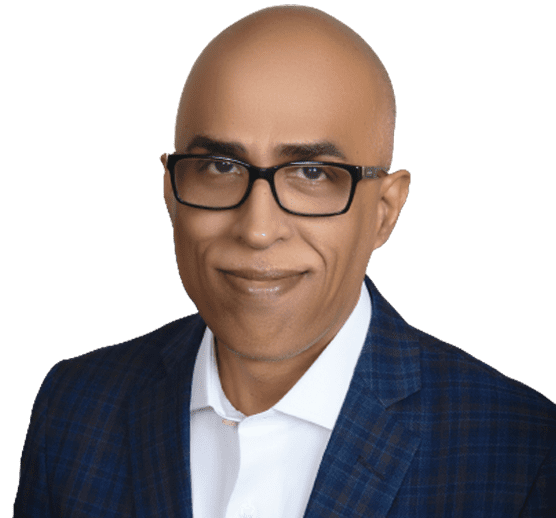
Paddy was the co-author of Healthcare Digital Transformation – How Consumerism, Technology and Pandemic are Accelerating the Future (Taylor & Francis, Aug 2020), along with Edward W. Marx. Paddy was also the author of the best-selling book The Big Unlock – Harnessing Data and Growing Digital Health Businesses in a Value-based Care Era (Archway Publishing, 2017). He was the host of the highly subscribed The Big Unlock podcast on digital transformation in healthcare featuring C-level executives from the healthcare and technology sectors. He was widely published and had a by-lined column in CIO Magazine and other respected industry publications.
Stay informed on the latest in digital health innovation and digital transformation