Month: December 2025

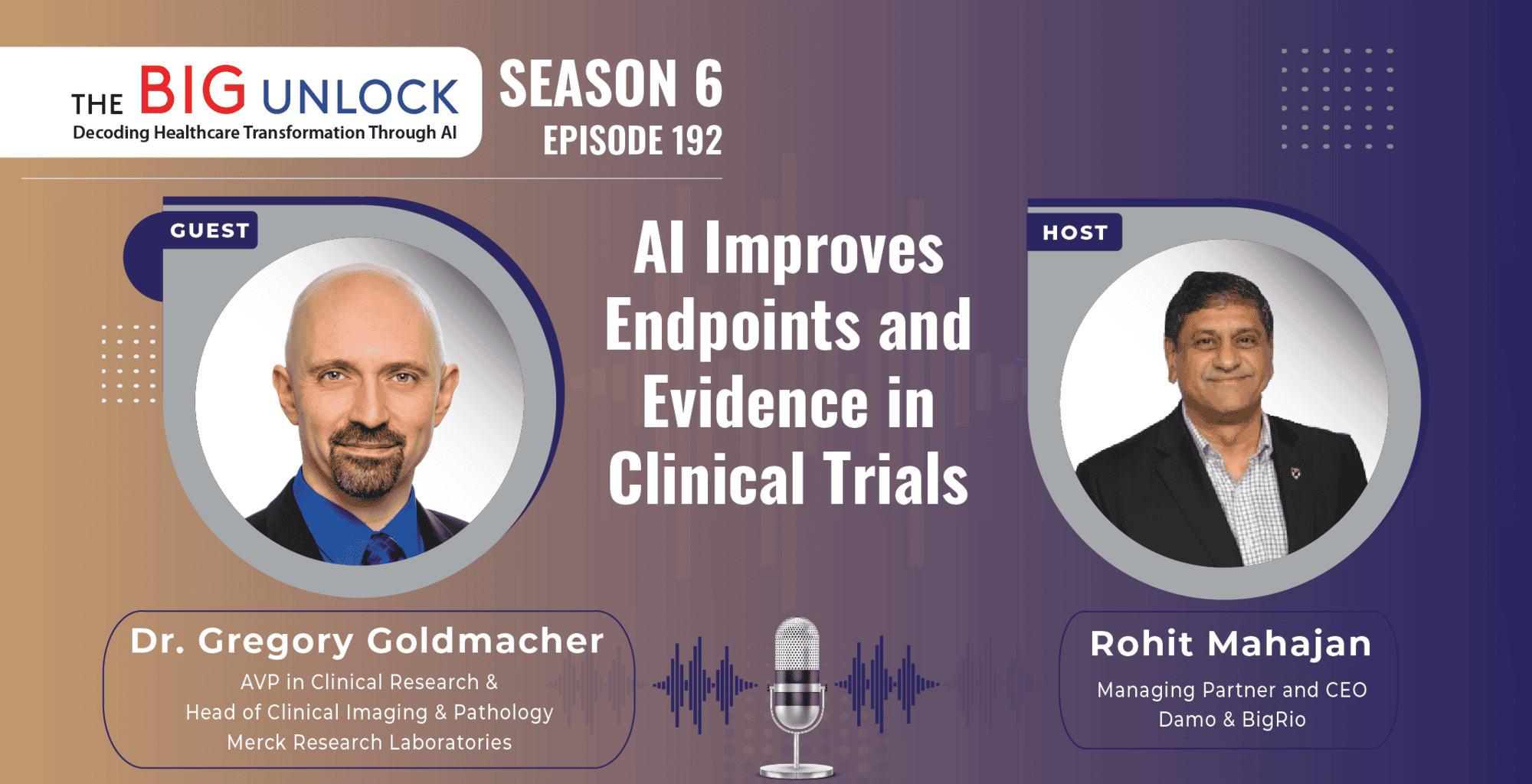
AI Improves Endpoints and Evidence in Clinical Trials

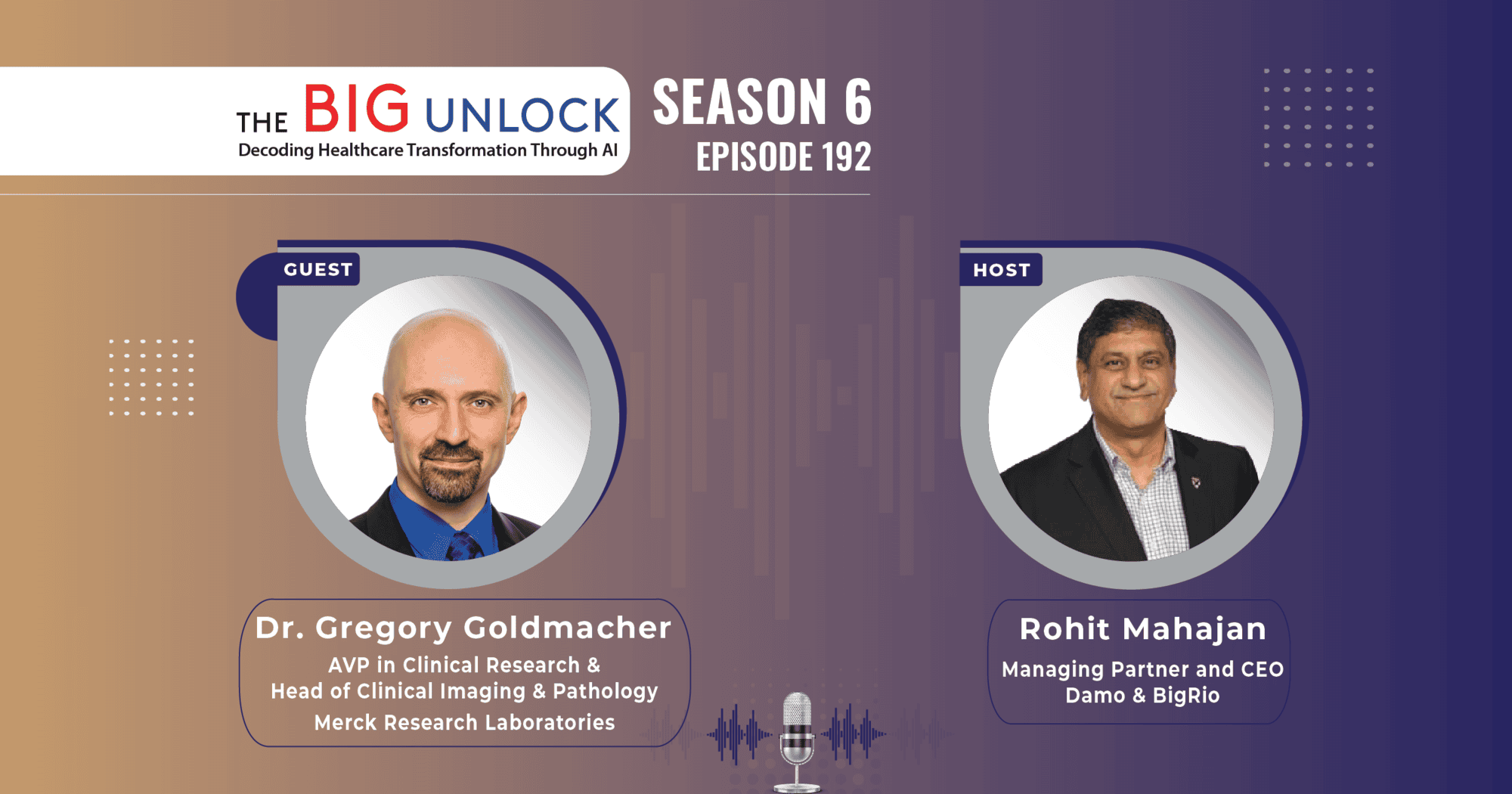
Season 6: Episode #192

Podcast with Gregory Goldmacher, M.D., Associate Vice President in Clinical Research, and Head of Clinical Imaging & Pathology at Merck Research Laboratories

AI Improves Endpoints and Evidence in Clinical Trials
To receive regular updates 

In this episode, Dr. Greg Goldmacher, Associate VP of Clinical Research at Merck, known as MSD outside of the United States and Canada, explains how AI is transforming imaging, clinical trials, and early-stage drug development. Greg describes endpoints as the core of every clinical trial, since they determine whether a therapy is safe or effective. He notes that AI is not new to imaging and aligns well with pattern recognition, yet its real value lies in identifying details that humans often miss.

Greg stresses that drug development still depends on huge volumes of data spread across legacy systems. Without strong data standardization, AI cannot deliver reliable results. He also points to the FDA’s evolving guidance on AI and emphasizes the need for rigorous validation before using AI-derived measurements for regulatory decisions.

Greg highlights the opportunity to improve efficiency, reduce human burden, and generate more consistent insights. With thoughtful adoption, AI can support better decisions in clinical development and improve outcomes for patients. Take a listen.

Video Podcast and Extracts

About Our Guest
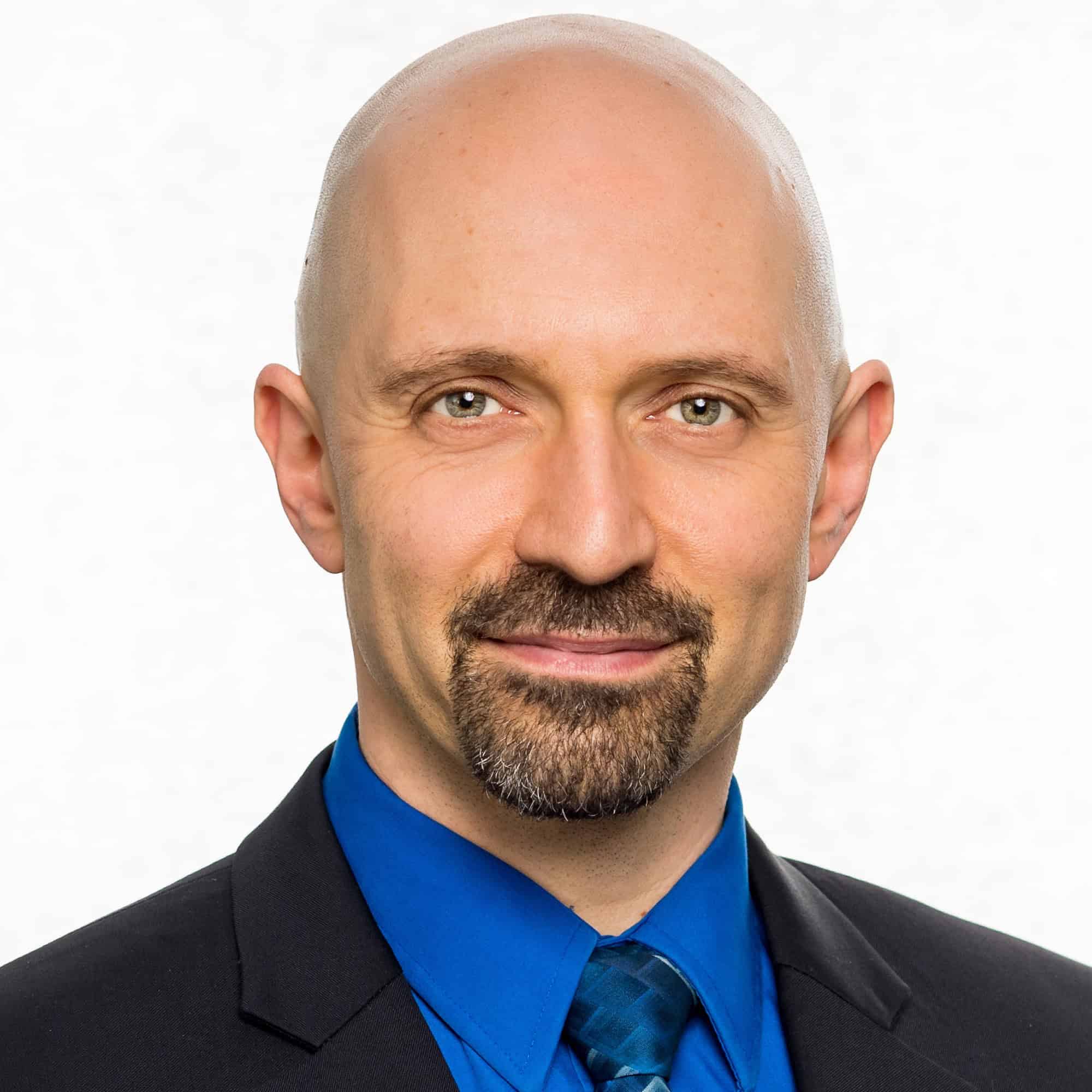
Dr. Gregory Goldmacher is currently Associate Vice President in Clinical Research, and Head of Clinical Imaging & Pathology at Merck Research Laboratories. With his team of physicians and scientists he oversees the use of imaging and clinical pathology assessments in approximately 300 clinical trials across all therapeutic areas. In addition, he leads multi-disciplinary research efforts in artificial intelligence, tumor modeling, novel oncology response criteria, and other innovative approaches in drug development. He also supports business development, strategic venture investments, data standardization, and educational initiatives.

Prior to Merck, he was a senior medical director and Head of Oncology Imaging at ICON. He has held leadership positions in numerous collaborative groups across industry and academia focused on clinical trial methods, artificial intelligence, quantitative imaging, and data standards.

Greg received his bachelor’s degree from the University of Chicago, his MD and PhD in Neuroscience from the UT Southwestern Medical Center, and his MBA from Temple University’s Fox School of Business. He did his clinical training in diagnostic radiology, with fellowships in neuroscience and neuroimaging at the Massachusetts General Hospital and Thomas Jefferson University. He lives in the Boston area.


Rohit: Hi Greg, welcome to the Big Unlock podcast. It’s great to have you on the show today. Thank you for having me, Greg. Absolutely. I’m Rohit Mahajan. I’m the CEO of Damo Consulting and BigRio, a Boston-based consulting company. Damo does strategy consulting for healthcare providers and payers and works with several pharma companies on AI, data, and analytics initiatives. I think we are in for a treat with our listeners.

Greg: Thanks, Rohit, and thank you for having me. I understand that most of the time your focus is on healthcare, and biopharma is healthcare-adjacent. It has some crossover interest, so I appreciate the invitation to talk to your audience. My name is Greg Goldmacher. I am Associate VP of Clinical Research at Merck Research Laboratories and head of the Clinical Imaging and Pathology function. My team oversees the use of scans and tissue in assessing trial outcomes and clinical trial endpoints.

Rohit: As we all know, Greg, there are so many clinical trials at this point in time. I think the number is very large, possibly approaching a million. So what kind of clinical trials do you focus on with your group?

Greg: My group has a broad base, and we support trials across every therapeutic area. We go where the endpoints are. What is an endpoint? It is a measurement of whether a clinical trial has met its objective. You make a measurement in one group of trial participants, compare it with another group, and see whether you have shown safety and efficacy.

The majority of trials where clinical imaging is used for endpoints are in oncology. Intuitively, you can think about what you measure to see whether a cancer drug is working. Are tumors growing or shrinking over time? You assess that by doing a series of scans.

There are several hundred clinical trials my team supports. The large majority are in oncology, but we also support central nervous system, immunology, cardio-respiratory, metabolic disease, and other therapeutic areas.

Rohit: That is fantastic, Greg. From what I know about clinical trials, it is a long and expensive process because patients are involved. It is usually a big hurdle for biopharma companies to complete clinical trials in a way that allows the drug to go to market. Could you tell us a little more, for listeners who may not be aware of this long and expensive process, about how this works at a high level?

Greg: Yeah, sure. I have to preface everything by saying I am speaking on behalf of myself. I am not speaking on behalf of Merck, and I will not discuss any specific Merck products, programs, or trials. I will speak broadly about biopharma, the processes, and then we can get into the use of technology and AI.

So let’s start with the big picture. There is the preclinical process where molecules are designed, evaluated for molecular properties, first in vitro and then in preclinical in vivo models. A lot of it is looking at pharmacodynamics, pharmacokinetics, the distribution of the drug in the organism, whether it is getting to its target, and preclinical safety. You also get an initial idea of dose.

Then comes the clinical part. Once you move into clinical trials, phase one trials focus on safety and establishing dose. Then there is a transition into phase two, where you look at finalizing the dose and ideally gaining some signal of efficacy. Safety information is collected throughout.

Then in phase three trials, you are really determining efficacy. These are often referred to as pivotal trials. Phase twos may be pivotal as well. Data from phase twos, if appropriately designed, and phase threes can be submitted for regulatory approval for marketing the drug.

Occasionally there are phase four trials, which typically happen post-approval and collect additional safety information or information on efficacy in the real-world setting.

Rohit: That is a great high-level intro, Greg. Thank you. Before we segue, and it is not too long in any podcast before AI comes up, we are going to talk about the use of AI and new technologies in the clinical trial process so it can be more efficient, cost effective, and faster. What are some of your thoughts on that?

And before that, if you could give some insights into how you got to this position and how you started your role. I understand you trained as a physician, so I would love to hear that story before we dive into the AI side.

Greg: I started off thinking I was going to be a basic science researcher working in a lab. In college, I was working in a lab during a summer research position, and someone said I should get an MD-PhD rather than a straight PhD because it would be easier to get research grants.

So I did an MD-PhD at UT Southwestern. My PhD was in neuroscience. I briefly thought about being a clinical neurologist, but in the mid-nineties the bread and butter of neurology was stroke and neurodegenerative disorders. In both cases, you made the diagnosis and then said good luck, go see occupational therapy because there was nothing disease-modifying.

So instead I went into diagnostic radiology. I returned to the Boston area, did my residency in diagnostic radiology, and then was a fellow at Mass General in neuroimaging. I was doing stroke imaging research and got involved in a clinical trial. I was helping run an NIH-sponsored clinical trial, and my mentor got me involved in a small industry-sponsored trial using a thrombolytic drug. They were looking at reopening of the artery on CT angiography to get an initial sense of efficacy.

I effectively became the core lab as a fellow for this trial.

A couple of years later, I was doing more stroke research at Jefferson in Philly and realized the lab was not really my jam. The chief medical officer from Icon came and gave a talk about things you can do as a physician-scientist in industry and mentioned that they had a radiology core lab. This was an ecosystem I had no idea about. You never hear about these things in medical training.

I went to Icon for five years and retrained as a cancer imager because that is where a lot of the endpoints are. Then in 2015, I came to Merck. I supported part of the cancer imaging portfolio, and then as organizational changes happened, I took on supporting clinical imaging across the entire portfolio, all therapeutic areas. Later we added clinical pathology as well, because assessing outcomes using pathology conceptually functions the same way. It is newer to have approvable endpoints based on pathology. Imaging processes had been worked out over a long time, so we were transposing those processes into that space.

Now going to the technology side of things, I like to say in radiology we were doing AI research before ChatGPT made it cool. AI is pattern recognition, and visual pattern recognition is something humans do all the time. You show a picture of a dog or a cat and you know immediately, even if you cannot describe explicit rules.

In radiology, models can see patterns that human eyes cannot, no matter how good a radiologist you are. There is a lot of interest in that. Shortly after I joined Merck, I started pulling together people from data science, statistics, clinicians, biomarker groups, regulatory, digital, and others across the organization to do research in this space.

Rohit: So given your deep experience in clinical trials and AI, especially now with new models like ChatGPT, what are some of the things you are seeing that are applicable in the clinical trials world?

Greg: So there are a couple of broad categories. Let’s start with one that is the easiest and most obvious business case for the use of AI in the clinical trials world. Then we can segue into things that are less obvious but, I think, scientifically and from a business strategy point of view, very interesting.

The easiest place to make the business case is that clinical trials are expensive and a lot of it is human resource cost. So there are many applications of AI for efficiency. In the preclinical space, AI is used for genome searches, target identification, drug design, assessing protein folding, and things of that nature.

Once you get into the clinical space, there is a lot of use of AI to support clinical operations. That includes creating documents, protocols, clinical study reports, informed consent forms, and reports of various kinds. There is also AI analysis. A huge amount of data gets collected, and manual review of all that data is extremely labor intensive. That is an area where AI can help.

One example of manual effort is the many kinds of reconciliation in clinical trials where data is gathered in one place and also in another place, and you have to make sure things match. That can be extremely labor intensive manually. That is where general AI use and specifically agents can help. You can say to an agent, retrieve data from this place, do the comparison, take an action based on the comparison, such as issuing a query to a site to ask for clarification. That kind of use is great for efficiency and is the most straightforward business case. That is being adopted across many industries, and in clinical trials where reports and reconciliation and analysis are important, it is a valuable tool.

Rohit: That’s amazing. I think that’s great to know. And then in drug development decisions, if we talk about AI applications in drug development decisions and automating tasks and making strategic decisions for the organization, what do you think about that aspect, Greg?

Greg: Efficiency is the obvious use case. The slightly less obvious but at least as impactful use case, and of course I’m speaking from my perspective as somebody who focuses on imaging assessments, is thinking about endpoints. Endpoints are measurements. Why do you make measurements? To make decisions. AI allows us to make better measurements for better decisions.

As an example, let’s use cancer. The traditional way of assessing whether a cancer drug is working is you do a scan before treatment starts. You find the tumors, pick a few to measure, add up their measurements, then do multiple scans during treatment. If they shrink, that’s a response. If they grow, that’s progression. At each assessment time point, you apply simple rules to classify as complete response, partial response, stable disease, or progressive disease. Then you extract an endpoint like objective response rate or progression free survival using rules like RECIST, a standard tool in clinical trials.

What we really care about is not tumors growing or shrinking. What we care about is patient survival. Objective response rate is a good predictor of survival at large N. When you have a large population, improvements in response rate indicate improvements in survival. The problem is that as N gets smaller, that correlation gets worse. There are many examples of drugs that looked good in early phase trials with dozens of subjects and then failed in phase three. That is a terrible outcome for patients and a huge waste of resources. A phase three trial can cost $150 million. Those pipeline decisions are made early in phase one B or early phase two.

Another application is picking the right dose of a drug. Traditional dose finding cranks up the dose until the patient has adverse events and then backs off. There are reasons why that may not be optimal. If you could compare survival in groups of 30 or 40 patients, you could get to a confident dose for late phase trials.

Here is where AI can come into its own. Scans contain information not visible to the naked eye. Models can see pixel patterns. When you look at a tumor, there is more information than size. Pixel patterns may correlate with necrosis, vascularity, or inflammation, reflecting aspects of the tumor microenvironment. If you have a training set where you can associate these patterns with a gold standard like biopsy, then you can do non-invasive assessment of the tumor microenvironment.

You could use that as a pharmacodynamic biomarker. For instance, drugs in immuno-oncology work better when tumors are inflamed. If you could measure that non-invasively across the entire patient, you could assess whether a combination partner is good. If all tumors light up with inflammation, that is a potentially good drug partner.

There is also the potential to look at early changes in tumors and directly predict survival rather than predicting shrinkage first. A downside of systems like RECIST is that they use fixed percentage changes and do not take into account kinetics. A common academic approach is to take total tumor burden and assume it consists of a treatment-sensitive fraction that decays and a treatment-resistant fraction that grows. If you fit a curve with a decay constant and a growth constant, the growth constant has been shown to be better associated with survival. That makes sense because tumors kill by growing.

The challenge is that systems like RECIST depend on picking a few tumors and measuring them. Anytime you sample, you assume the average drives the outcome, but that is not true. What kills the patient is the worst tumor, the most resistant and most aggressive. If you did not pick that tumor for measurement, you are blind to it. You want to measure everything.

You also want a full 3D outline of the entire tumor. Radiologist time is expensive, and drawing every tumor in 3D is not scalable. AI can do it. Tools do not yet automatically find every tumor, but once you point to a tumor, AI can draw it in 3D, propagate it across scans, make all the measurements, and feed that into modeling.
With a combination of direct AI assessments and assessments assisted by AI, you could get better measurements of efficacy and make better decisions about a drug pipeline, combinations, and dose selection.

Rohit: That’s a great explanation, thank you for that, Greg. So as you mentioned, a lot of this is exploratory and academic in nature. When do you see it moving into industry grade regulatory practices, because pharma, biotech, biopharma is a highly regulated industry segment? What are some of your thoughts around that space and any FDA insights you can provide?

Greg: What I would say is, first of all, with regard to the kinds of measurements I’ve talked about, you notice that I talked about using them in early phase decision making. This is purely internal decision making.

Now, as you move forward, pharma decision makers are conservative and risk averse. You have to do a lot of validation first. You validate internally, and the initial uses are internal uses. As evidence starts to accumulate, you can start building these more advanced assessments into phase two trials as exploratory endpoints.

In order for the FDA to accept a measurement of any kind, whether AI based or not, as an outcome in a trial, there needs to be strong evidence that those measurements are strongly associated with clinical benefit. Essentially, the process is that you start with internal decision making, then build it in as exploratory endpoints, then accumulate data and submit that to regulators as part of the overall package. As experience builds up, you can start thinking about using it to supplement regulatory decisions like supporting breakthrough designation or accelerated approval, and then someday potentially as primary endpoints.

The FDA put out guidance in January of this year on the use of AI in regulatory decision making. They laid out a framework for building what they call a credibility assessment framework. You have to define the context of use clearly, then assess the model risk. If you are making decisions about treatment or endpoints based on the output of an AI model, you have to consider whether it is the only factor in the decision or just a contributing factor, and what the potential risk is if it is wrong.

If you are making a treatment decision based on AI output, that is high risk. If the decision is not as directly about care, the risk is lower. You have to assess model risk and generate evidence commensurate with that level of risk. The evidence has to be generated in intelligent ways, avoiding pitfalls like data commingling or circularity. If you train a model on data and then test it on overlapping data, that can give inaccurate results that do not generalize. You have to think through all the pitfalls to build evidence the FDA can accept.

Right now, everybody is in exploratory mode and figuring out how to do this. The guidance from FDA in January was draft guidance. These draft guidances can remain in draft for years and reflect the latest thinking. There have been responses and published analyses, and pharma and bio have generated organized responses. That is where I would suggest people go to read about the FDA’s thinking.

The bottom line is whatever you are thinking of doing with AI in biopharma, if you want to bring it to regulators eventually, you need to engage early. Sit down and say, here is our plan, here is the technology, here is the data we trained it on, here is how we validated it, here is the context of use, here is the risk, and use that to build the credibility assessment framework.

Rohit: That’s amazing. And then Greg, you are AI in a very large biopharma organization. What are some of the challenges you run into in such environments and how do you overcome them? What are some strategies that you have followed successfully, if you would like to share?

Greg: Sure. So it’s a great question. One thing that big pharma has in massive amounts is data. If you are in a pharma that has run a large clinical development program, you are drowning in data. Some challenges are around data standardization. You will have legacy systems, and a big pharma may have dozens of legacy systems that collect data and cannot necessarily talk to each other. When you want a model to look at data, it helps to have a data standard.

That is something that helped radiology, which adopted AI early because radiology has the DICOM data standard. No matter the scanner manufacturer, they all generate DICOM data. That was possible because there were only a few major equipment manufacturers whose data engineers could agree on a standard. Other kinds of data are not standardized that way. That is an important challenge and a market opportunity for companies that want to create tools to interconvert, harmonize, and unify data. AI would be useful for this.

Another aspect is sensitivity around data access and patient consent in clinical trials. Clinical trial data is sensitive, and you have to put risk mitigation strategies in place to ensure you are not generating outputs that confuse or undermine what is known about a medication. You also have to think about whether subjects in a trial consented to that use of their data. The mitigation is working with people writing informed consent language to clarify that these additional uses are permissible.

Finally, aside from data, there is the people side. Data scientists and AI engineers are brilliant, but they may not understand the problems that need to be solved. They may come up with solutions in search of problems or solutions that are difficult to apply. Any organization building an AI team needs to bring together people who understand the challenges, like clinical developers and strategists, with people who understand the tools, like data scientists and statisticians. Statisticians are critical because of pitfalls like overlapping data and overtraining. What you want in an AI team is a multidimensional view of the problems and tools, and collaboration to solve the problems.

Rohit: That’s a great insight. So as we come to the end of the podcast, Greg, what are your thoughts for the future? When you look into the crystal glass, what small, medium, or big changes do you see coming our way?

Greg: People are enthusiastic that it will do everything, walk your dog, run your clinical trial, and butter your bread. AI is a set of tools, potentially very powerful, but you have to use it with caution because how you train and validate it matters.

In the future, what I envision is the early phase of drug development getting faster as AI is applied to molecule design, preclinical aspects, and extracting more information in clinical development from each subject. In later phases, AI will make trials more efficient in workload, resourcing, and insights around recruitment, like where to find the right patients.

So I see an acceleration of drug development through each stage that AI can enable as long as it is done with appropriate ethical safeguards and scientific rigor.

Rohit: Absolutely. And it will bring drugs to market faster if we are able to envision that. Thank you, Greg. I really appreciate it. These were very insightful thoughts you provided in this podcast. Anything you would like to say in closing?

Greg: Thank you very much for inviting me, and I look forward to seeing some other guests on your show now that I am aware of it.

Rohit: Thank you, Greg. Really appreciate it.

————

Subscribe to our podcast series at www.thebigunlock.com and write us at [email protected]    

Disclaimer: This Q&A has been derived from the podcast transcript and has been edited for readability and clarity.

About the host

Paddy is the co-author of Healthcare Digital Transformation – How Consumerism, Technology and Pandemic are Accelerating the Future (Taylor & Francis, Aug 2020), along with Edward W. Marx. Paddy is also the author of the best-selling book The Big Unlock – Harnessing Data and Growing Digital Health Businesses in a Value-based Care Era (Archway Publishing, 2017). He is the host of the highly subscribed The Big Unlock podcast on digital transformation in healthcare featuring C-level executives from the healthcare and technology sectors. He is widely published and has a by-lined column in CIO Magazine and other respected industry publications.

About the Host

Ritu M. Uberoy has over twenty-five years of experience in the software and information technology industry in the United States and in India. She established Saviance Technologies in India and has been involved in the delivery of several successful software projects and products to clients in various industry segments.

Ritu completed AI for Health Care: Concepts and Applications from the Harvard T.H. Chan School of Public Health and Applied Generative AI for Digital Transformation from MIT Professional Education. She has successfully taught Gen AI concepts in a classroom setting in Houston and in workshop settings to C-Suite leaders in Boston and Cleveland. She attended HIMSS in March 2024 at Orlando and the Imagination in Action AI Summit at MIT in April 2024. She is also responsible for the GenAI Center of Excellence at BigRio and DigiMTM Digital Maturity Model and Assessment at Damo.

Ritu earned her Bachelor’s degree in Computer Science from Delhi Institute of Technology (now NSIT) and a Master’s degree in Computer Science from Santa Clara University in California. She has participated in the Fellow’s program at The Wharton School, University of Pennsylvania.

About the Host
Rohit Mahajan is an entrepreneur and a leader in the information technology and software industry. His focus lies in the field of artificial intelligence and digital transformation. He has also written a book on Quantum Care, A Deep Dive into AI for Health Delivery and Research that has been published and has been trending #1 in several categories on Amazon.

Rohit is skilled in business and IT  strategy, M&A, Sales & Marketing and Global Delivery. He holds a bachelor’s degree in Electronics and Communications Engineering, is a  Wharton School Fellow and a graduate from the Harvard Business School. 

Rohit is the CEO of Damo, Managing Partner and CEO of BigRio, the President at Citadel Discovery, Advisor at CarTwin, Managing Partner at C2R Tech, and Founder at BetterLungs. He has previously also worked with IBM and Wipro. He completed his executive education programs in AI in Business and Healthcare from MIT Sloan, MIT CSAIL and Harvard School of Public Health. He has completed  the Global Healthcare Leaders Program from Harvard Medical School.

About the Legend
Paddy was the co-author of Healthcare Digital Transformation – How Consumerism, Technology and Pandemic are Accelerating the Future (Taylor &  Francis, Aug 2020), along with Edward W. Marx. Paddy was also the author of the best-selling book The Big Unlock – Harnessing Data and Growing Digital Health Businesses in a Value-based Care Era (Archway Publishing, 2017). He was the host of the highly subscribed The Big Unlock podcast on digital transformation in healthcare featuring C-level executives from the healthcare and technology sectors. He was widely published and had a by-lined column in CIO Magazine and other respected industry publications.
Top 10 AI Trends Shaping Healthcare in 2025: Insights from Season 6 of The Big Unlock

Season 6 of The Big Unlock podcast captures a defining moment for healthcare. Across conversations with CIOs, CMIOs, CMOs, CAIOs, digital transformation leaders, and innovators, one message comes through clearly: artificial intelligence has moved beyond experimentation. In 2025, AI is no longer something healthcare organizations are “exploring,” it is becoming embedded into how care is delivered, how work gets done, and how health systems think about scale, sustainability, and growth.

Season 6 reveals a deeper transformation, leaders are rethinking workflows, workforce models, patient access, governance, and the economics of care, with AI acting as an accelerator rather than a silver bullet. 

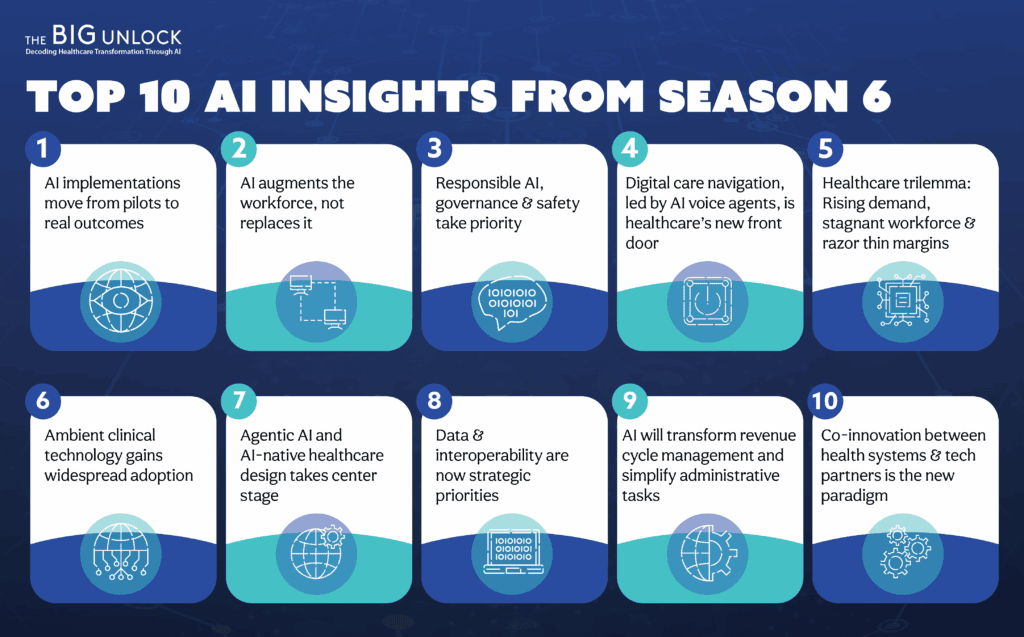
Here are the Top 10 trends discussed throughout the 2025 season, a reflection of what healthcare leaders are prioritizing today and where the industry is headed next.


AI Is Becoming Operational: Moving Beyond Pilots to Real Outcomes

One of the strongest signals from Season 6 is that AI has crossed the pilot phase. Health systems are no longer satisfied with proofs of concept; they are demanding measurable, operational impact.

Guests across the season described how AI is now embedded into day-to-day workflows, from clinical documentation and scheduling to capacity management and care coordination. These deployments are delivering tangible results: reduced clinician burnout, improved access, faster turnaround times, and more efficient use of limited resources.

What differentiates successful organizations is not the sophistication of the technology, but the discipline of implementation. Leaders emphasized that operational AI requires governance, workflow redesign, and ongoing measurement – not one-off experiments.

The message is clear: 2025 is the year AI became real for providers.


The Rise of Ambient Clinical Technology

Ambient clinical listening emerged as one of the most discussed and widely adopted technologies in Season 6. Rather than being framed as a documentation shortcut, ambient technology was described as a fundamental shift in how clinicians experience care delivery.

By capturing conversations in real time and generating structured clinical notes, ambient tools reduce after-hours documentation and allow clinicians to remain fully present with patients. The result is not only time savings, but also better clinician-patient relationships and improved note quality.

At the same time, guests were clear that success depends on thoughtful rollout. Training, trust, and change management are critical. When implemented responsibly, ambient technology is quickly becoming foundational to modern clinical practice.


The Shift to Agentic AI and AI-Native Healthcare Design

Season 6 marks a noticeable shift from generative AI that supports tasks to agentic AI that can take action. Leaders discussed AI agents that can handle referrals, manage prior authorization workflows, coordinate care tasks, and support operational decision-making.

This evolution signals a broader transformation toward AI-native healthcare design. Instead of layering AI on top of existing processes, organizations are beginning to redesign workflows around intelligent systems that operate within defined guardrails and escalate to humans when needed.

While still early, these discussions make it clear that agentic AI will play a critical role in scaling care delivery without proportionally increasing workforce size.


Workforce Augmentation: AI as a Partner, not a Replacement

Across Season 6, leaders were remarkably aligned on one point: AI is not about replacing clinicians, it is about enabling them.

Guests described how AI is taking on repetitive, administrative, and low-value tasks, allowing clinicians to focus on complex decision-making, patient relationships, and care quality. This shift is particularly important in an environment marked by workforce shortages and burnout.

However, adoption depends on trust. Clinicians need to understand how AI works, where its limits are, and how decisions are made. Season 6 reinforces that the future workforce will be defined by effective collaboration between humans and intelligent systems.

A recurring message: AI should free clinicians to practice at the top of their license.


Data Infrastructure & Interoperability Are Now Strategic Priorities

Another recurring theme is the realization that AI success is fundamentally a data problem. Without clean, connected, and interoperable data, even the most advanced models fail to deliver value.

Guests emphasized investments in cloud platforms, standardized data pipelines, and interoperability frameworks. Pediatric networks, population health initiatives, and enterprise AI strategies all pointed to the same conclusion: data infrastructure is no longer a back-office concern, it is core to clinical and operational strategy.

In 2025, data readiness is increasingly viewed as a prerequisite for innovation rather than a downstream technical task.

Data modernization is no longer an IT project, it is enterprise strategy.


The Importance of Responsible AI, Governance & Safety

As AI adoption accelerates, Season 6 makes it clear that governance has become a top priority. Leaders spoke openly about the risks of deploying AI without appropriate oversight, particularly in clinical and administrative decision-making.

Many organizations have established formal AI governance structures that include clinicians, technologists, compliance teams, and executive leadership. These groups are responsible for evaluating use cases, monitoring bias, ensuring safety, and setting boundaries for automation.

Rather than slowing progress, responsible AI practices are helping organizations scale with confidence and build trust among clinicians and patients alike.

The theme: Responsible innovation is not optional, it’s foundational to trust.


Digital Care Navigation Is Becoming the New Front Door

Several episodes highlighted a shift in how patients access and experience care. Digital care navigation platforms are increasingly serving as the “front door” to healthcare, guiding patients to the right care setting at the right time.

AI-powered navigation tools help reduce friction, improve access, and optimize system capacity. For health systems, they also play a critical role in managing demand, improving patient satisfaction, and supporting growth strategies.

Season 6 positions digital navigation not as a consumer add-on, but as essential infrastructure for modern healthcare delivery.


AI in Revenue Cycle and Administrative Simplification

While clinical use cases often dominate AI conversations, Season 6 repeatedly underscored the massive opportunity in administrative and revenue-cycle workflows.

Leaders discussed how AI can streamline prior authorizations, reduce denials, improve documentation accuracy, and automate routine administrative tasks. Given the scale of administrative costs in healthcare, even modest efficiency gains can have outsized financial impact.

These discussions reinforce that some of AI’s most immediate and sustainable value lies in simplifying the non-clinical work that burdens care teams and organizations.

This is one of the most financially meaningful areas for AI in 2025.


Co-Innovation Models Between Health Systems and Technology Partners

Another important trend is the rise of co-innovation models. Rather than buying off-the-shelf solutions, health systems are increasingly partnering with technology companies to build solutions together.

This approach allows tools to be shaped by real-world clinical workflows and operational constraints. It also accelerates adoption, as clinicians and leaders have a stake in the solution from the outset.

Season 6 shows that co-innovation is becoming a preferred path for developing scalable, relevant, and trusted digital solutions.


The “Healthcare Trilemma”: Rising Demand, Workforce Shortages & Margin Pressure

The final trend ties many of the season’s themes together. In the episode focused on solving healthcare’s trilemma, leaders articulated a structural challenge facing nearly every health system: rising patient demand, persistent workforce shortages, and increasing financial pressure.

The conversation emphasized that traditional growth models. hiring more staff or adding more facilities, are no longer sufficient. Instead, organizations must focus on disciplined prioritization, co-innovation, and AI-enabled orchestration of care.

This trend reinforces a central message of Season 6: AI is not just a tool for efficiency. It is becoming essential to healthcare’s long-term resilience and sustainability.


Looking Ahead: Setting the Stage for Healthcare’s AI-Driven Future in 2026 

The conversations in Season 6 of The Big Unlock paint a clear picture of healthcare in 2025. AI is no longer peripheral. It is reshaping how care is delivered, how clinicians work, how patients access services, and how health systems remain viable in an increasingly complex environment.

The real “big unlock” is not adopting AI for its own sake, but using it to redesign healthcare around people, data, and intelligent systems – responsibly, thoughtfully, and at scale.

The “big unlock” for 2025 is not simply adopting AI tools.
It is redesigning healthcare around AI, moving from incremental change to structural transformation. Health systems that embrace these themes will shape the next decade of healthcare delivery.

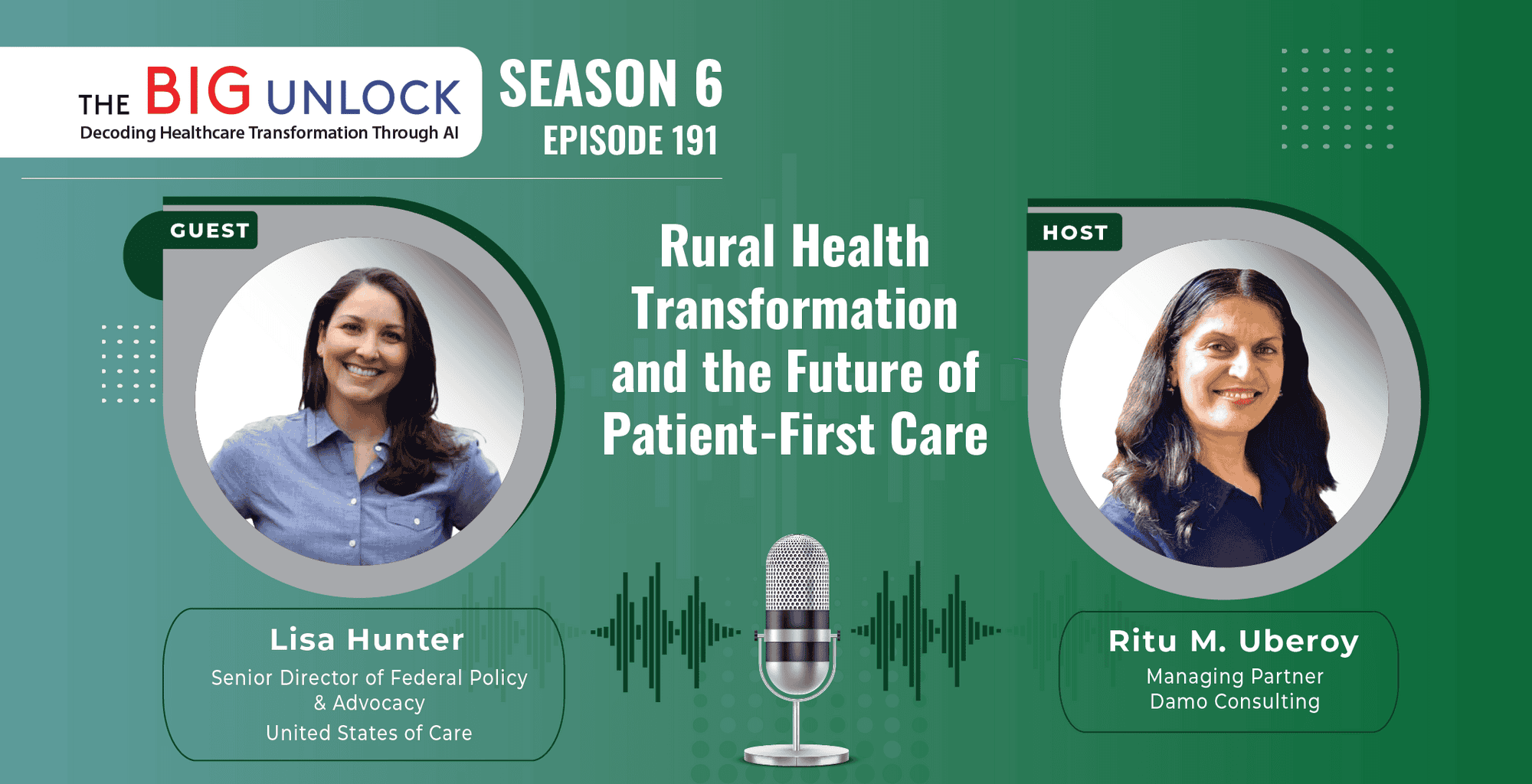
Rural Health Transformation and the Future of Patient-First Care

Season 6: Episode #191

Podcast with Lisa Hunter,
Senior Director of Federal Policy
& Advocacy, United States of Care

Rural Health Transformation and the Future of Patient-First Care

To receive regular updates 

In this episode, Lisa Hunter, Senior Director of Federal Policy and Advocacy at United States of Care, discusses how her organization is working to ensure every American has access to affordable, high-quality care, with a particular focus on rural communities. She explains the new Rural Health Transformation Program—a 50-billion-dollar, five-year federal investment that gives states a rare opportunity to redesign rural health delivery, address workforce gaps, and move toward “patient first care” models that emphasize coordination, whole-person care, and sustainable payment structures.​​

Lisa highlights a growing trust gap around AI in healthcare, noting that patients are more comfortable with AI in back-office and ambient use cases compared to roles that feel like they replace clinicians. She stresses the need for rigorous listening, research, and language that resonates with people, so policy and technology decisions reflect real experiences rather than abstract concepts. Take a listen.

Video Podcast and Extracts

About Our Guest

In her role as Senior Director of Federal Policy & Advocacy at USofCare, Lisa leads a team of policy experts and strategists to advance the organization’s health advocacy agenda with Congress and the administration. Her work largely focuses on affordability, access, and translating what people want and need from the health care system into policy solutions for federal uptake. Lisa brings to the USofCare almost twenty years of experience working to expand access to affordable health care through roles in the federal government, nonprofits, electoral campaigns, and the private sector.

Most recently, Lisa led strategic partnerships at Families USA, and oversaw advocacy and government affairs at the Better Medicare Alliance. Prior to joining the advocacy community, Lisa spent several years as a consultant with Avalere Health helping clients operationalize regulations with respect to the Affordable Care Act and Medicare Advantage. Early in her career she served as a political appointee at the U.S. Department of Health and Human Services during the Obama Administration, as a Congressional staffer, and as a Peace Corps volunteer teaching literacy at a primary school in Guyana. Lisa’s expertise on health policy implications for everyday people appear in media outlets such as the New York Times, Axios, Politico, Inside Health Policy, The Hill, Fierce Healthcare, and others.


Q: Hi, Dr. Michael Docktor, welcome to our Big Unlock podcast. We are really happy to have you as a guest on our show. Uh, it’s on our sixth season now, and, uh, we are looking forward to this conversation. I’m sure we’ll have a very engaging and interesting conversation about dog health, about healthcare in general, and the new trends about AI and all the buzzwords that people want to hear. Welcome to our show — we’d like to start with introductions. Happy to have you give your introduction. Thank you.

Michael: Yeah, thank you so much for having me. Yeah, I’m Michael Docktor, co-founder and CEO of Dock Health. I’m an ologist by trade. I am now on this, uh, healthcare venture outside of Boston Children’s Hospital where I started my GI career.

I was a busy clinician working on the clinical side as well as in innovation and informatics, and found that we had wonderful tools in the world outside of healthcare and struggled with my own challenges around managing all the tasks that are part of patient care. I found that I was using task management and project management tools that were not built for healthcare.

I scratched my head and wondered why we don’t have these things for healthcare. That was a journey. We started just over five years ago. We spun out Dock Health from Boston Children’s, and we’ve been on a very exciting journey in the world outside the academic walls since then.

It’s been fun. I’m excited to talk to you more about, uh, what we’re doing.

Q Great. That’s a great introduction. Thank you for letting our listeners know. We usually like to start with how you came into healthcare because everyone has an interesting story about what inspired them to become a physician.

For you, it’s particularly interesting because you’ve created this interface between design, technology, and healthcare — and you went beyond just visualizing what you wanted to do or asking why somebody doesn’t fix it, to actually building it yourself. I’d love to hear more about how you came into medicine and then into technology.

Michael: I could probably spend the entire podcast on this question. Obviously, my last name is Doctor, so there was some planting occurring there, and there’s something to be said for that.

One of my earliest memories was wanting to grow up to be a doctor. My younger sister had some GI issues when we were young, and I became very close with her gastroenterologist. I followed her on her journey and, unbeknownst to me, ended up following one of my mentors and was inspired to do the work for other children the way my sister was cared for. That was the initial inspiration.

You mentioned design. That’s interesting because my mother is an interior designer, my father is a dentist who specialized in aesthetics, and design — how things look, feel, and work — has always been part of my DNA. It was an amazing journey to go from being a traditional doctor in pediatric gastroenterology to discovering the importance of user experience and user interface.

Then the iPhone came out, then the iPad, and that really started me on my journey of exploring app development and software, and wondering why we didn’t use these wonderful devices in our pockets the way we should. That journey started more than 10 years ago and has led me to this perfect intersection of healthcare, design, and informatics, creating better experiences for patients and providers.

There’s a lot to unpack there, but people ask me if I would do it differently if I had the chance to do it all over — and absolutely not. I’m doing exactly what I want to be doing right now.

Q: Thank you for sharing that. That gives us so much perspective into how you came into this field, the influence of your parents, and how everyone around you inspired you to do this. That’s really interesting.

That leads us into how you built Dock Health. Tell us some examples of how you saw this becoming transformational in actual implementations with clients. When you built the tool, did you visualize exactly what it would do? Did it go beyond what you thought it would achieve in a healthcare setting? We’d love to hear more about that.

Michael: We’re far beyond where I ever thought we’d be when we first started this journey. That’s the exciting part. Fundamentally, we have such an administrative and operational challenge in healthcare. I saw it firsthand as a busy clinician struggling to manage all the clinically adjacent work that had to be done for my patients.

For example, I might have a patient with Crohn’s disease who needs to go to an infusion center. There are all these downstream tasks and administrative steps that need to be done by a team of people. We didn’t have assistants to do that, and the electronic health record wasn’t built for it.

A quarter of the $5 trillion spent in healthcare goes to administrative and operational challenges, and there really are no tools built for that. We rely on paper checklists, email, faxes, and spreadsheets to manage all the work happening outside the electronic health record.

For me, the realization was that I was using wonderful project management and task management tools to run software projects in my innovation and informatics roles—and yet nothing like that existed in healthcare. Patients, in many ways, are projects. There are tasks that form the essence of care, and they need to be tackled, managed, and collaborated on, with visibility and accountability across teams. That didn’t exist.

What we are now doing is serving as that productivity platform for healthcare, one that sits alongside the electronic health record in synergy, helping manage all the administrative and operational tasks of patient care in ways the EHR wasn’t designed for.

Some examples would be managing patient intake and all the processes associated with it. Referrals, inbound and outbound, with all the paperwork, eligibility checks, and faxes—those workflows are still incredibly manual. Referrals are a great example: 80% of referrals that come into major academic medical centers are still arriving by fax, despite the fact that they’re using Epic, a wonderful electronic health record.

These processes are still incredibly laborious, take too long, and are inefficient. Patient care suffers along the way. There’s a gigantic bottleneck around the administrative and operational work that moves patients through their journeys, and that’s what we’re focused on fixing.

Q: This is what we hear from a lot of our clients and other CIOs and C-suite leaders who come to our podcast—that this is one major problem with healthcare. It’s siloed, and the processes are really stuck in the dark ages.

We were talking to somebody from Athena, and they said they had an 800-person offshore center in India just to screen faxes. When a fax came in, one person looked at it to see if it was a pizza order or a referral. It sounds unbelievable in this day and age, but that’s how it works. I’m amazed to hear this from you as well. It’s remarkable.

Michael: Yeah. In fact, Athena is a partner of ours, and we’re working on referral management. It’s an incredibly antiquated process where everyone loses visibility. The amount of manual labor required to process these things is shocking in this day and age, when they can be handled through process automation, AI, and agents.

Q: Exactly. You’re talking about agentic, we’re talking about voice agents, and yet we’re still dealing with faxes. That’s really interesting to know.

Michael: There is reason to be hopeful. Healthcare is always many decades behind, but the adoption of AI is progressing more rapidly than I’ve seen any technology adopted in healthcare. There’s reason for hope.

Q: That leads into my next question, but before we get there, you mentioned Dock Health as a productivity platform. That’s what it does for doctors, clinicians, and patients. But when we talk to our doctors, clients, and health systems, the one word that always comes up is complexity. They deal with so many different systems and have to learn something new each time.

Where does Dock Health fit in? Is it another system they have to manage, or does it help reduce that burden?

Michael: Yeah, it’s all about reducing the burden and improving the user experience. That’s been fundamental to our belief system since the founding of the company.

First and foremost, we’re trying to become the productivity platform and the hub that handles the administrative and operational work. Instead of being “another system,” we’re often replacing spreadsheets, paper checklists, emails, and faxes—the ways we’ve traditionally managed the 50% or more of administrative and operational tasks required for patient care.

The EHR is great for clinical work, billing, prescribing, and scheduling, but so much happens downstream that isn’t covered. I’d argue we are creating the hub for that. Just as the EHR is the clinical hub, Dock Health serves as the operational hub. Together, it’s really one plus one equals three.

We’re also aiming to be much more consumer-like in our approach. Our tool can onboard a customer in 30 minutes. We offer a free trial, and for small organizations that want to get up and running, they can start using it right away—just like downloading an app. It’s lightweight, highly configurable for end users, and designed with a strong focus on user experience.

The real challenge is that clinicians don’t want another tool. They’re busy and need to spend their time in the EHR. Our core users are often the super users: front office staff, back office teams, operational leaders, and administrative staff who leverage our tool every day.

The important piece is that we connect to the electronic health record and provide visibility for clinicians. If they’re interested, they can see where a patient is in their journey or where a process stands, but they don’t have to be in our system all day, checking tasks or learning another workflow.

The intent is to provide that operational hub for administrative and support staff—the essential members of the care team—while clinicians continue their work in the EHR and often drive tasks into our system through their orders and actions there.

Q: Is the integration with the EHRs native, like with Epic, Cerner, and the big ones?

Michael: Yeah. We’re on the marketplace with a number of the top EHRs, including Epic and Cerner. We’re also working with Mayo Clinic, their Mayo Clinic Platform, and their Deploy platform.

The other thing I’d mention is that many organizations use our tools without being integrated with the electronic health record. That’s often because they’re smaller practices—mental health, concierge care, or primary care—that simply need a hub to handle administrative and operational work and collaborate as a team.

We spend a lot of time helping organizations define their processes, and those processes can then live in Dock, where they can be collaborated on and turned into operational best practices. That’s something that often doesn’t happen in traditional healthcare organizations, and our tool is valuable even when it’s not connected to an EHR.

Of course, the real value comes when we integrate with systems—EHRs, CRMs, patient engagement tools—and serve as the hub while automating as many tasks as possible. That’s when the flywheel starts turning, and organizations begin to feel the benefits of automation and work reduction. It ultimately moves the needle in a measurable way.

Q: So, you’re saying if there’s an integration with the EHR, then it’s end-to-end and people can see a complete view of what’s happening. But even without the EHR, because it helps with workflow management, it’s valuable for practices?

Michael: It’s just like every other industry. They have Asana, JIRA, Trello—all these tools where a lot of the real work gets done. That provides value in itself by giving a clear view into where the patient is in their journey and what process they’re following.

When we integrate with an EHR or other systems, we can then automate those workflows. For example, when a fax comes in, we can launch a workflow for a new patient referral. When a lab order is placed, we can launch a workflow for follow-up. Or when a patient has a procedure, we can launch a process for their downstream follow-up.

Q: That leads into the next question, which is your learning journey with AI. What advice do you have for our listeners about where AI is headed? And with voice agents and agentic tech being buzzwords, where do you see Dock Health going? Are you also looking at implementing voice agents?

Michael: AI is incredibly exciting. I’ve put it out there that we’re an AI-first company. We’ve been thinking about this for a while, and we already have what we call Dock Intelligence in production with customers. We started with the basics, using foundational models and generative AI to process large troves of data.

Now, we can summarize all the work being done for a patient and create a snapshot for the end user—showing all tasks, workflows, patient context, and even clinical context if available. That gives a quick overview of what’s happening. Users can edit that snapshot if needed, or generate a note that writes back to the EHR to keep the operational and clinical record in sync.

That’s the first step in our AI journey. From there, we realized tasks bundle into workflows, workflows can be automated, and now we’re starting to farm out those tasks to agents and AI. For example, a voice agent could follow up with a patient to confirm a referral or review lab results. We’re actively pursuing that, as well as leveraging AI to extract data from faxes to automate referral processes.

AI is the big unlock. In the next three to five years, I believe most administrative and operational tasks will be handled by automation and AI agents orchestrating together. These agents need rails to run on and structure to guide them, and end users must remain in the loop to provide oversight and visibility. But the lion’s share of this work will be handled by agents—and we’re building that future right now.

Q: Are you aligning specifically with any particular LLM or provider, or are you going to be completely agnostic?

Michael: I’d like to think we’ll be agnostic. We’re doing plenty of building on some of the foundational models ourselves, and we’re partnering where we can with great tools. For example, with voice agents, we’re not necessarily building them ourselves—there are excellent options out there. What we are doing is building our own homegrown AI agents that can manage processes and facilitate handoffs from task to task.

Our approach has always been to recognize that there’s a wonderful ecosystem out there. We want to be the hub that connects to the best-of-breed systems—whether that’s Epic as an EHR, Salesforce as a CRM, or other tools we can leverage to create a healthy ecosystem. That’s what we’re pursuing.

Q: I wanted to ask a question about that because with the LLMs, one of the main problems is the hallucinations or the repeatability or the trust factor there. So I saw that Dock is HITRUST certified. So, I just wanted to ask, what are your views on that? Because in terms of using generative AI when we talk to our clients, uh, for implementations on LLMs, or they’re more comfortable certainly with the administrative tasks, but even with the administrative tasks there’s always the question of what are the guardrails you put around that and how do you make sure that the results that you are seeing or you are displaying on Doc Health, you know, stay within that, those bounds of accuracy. Whathat are your thoughts around that?

Michael: AI is incredibly exciting—it’s moving at the speed of light, and everyone wants to benefit from it. I do think administrative and operational areas of healthcare are lower-hanging fruit and far less risky. We’re not yet in a place where we can reliably use AI for absolute clinical decision support and autonomy, though I believe we’ll get there in the not-too-distant future.

For now, the clunky and manual administrative work is ripe for AI. Still, we need to be mindful of potential hallucinations. In our experience so far, we haven’t seen issues, but we’ve put safeguards in place. That means keeping a human in the loop to ensure outputs are appropriate and relevant. We also give users the ability to edit results before they’re sent—whether it’s a summary being emailed to a colleague or written back into the EHR as a clinical note.

It’s essential to show your work. If we’re pulling data from various sources, we show those sources. We keep users in the loop, give them control to review and edit, and maintain tight feedback loops to catch and address anything off.

So far, even foundational LLMs have been surprisingly strong in our relatively narrow use cases. The real challenges will come as we move toward higher-risk clinical decision support—but I’m confident we’ll get there quickly.

Q: It’s interesting you mentioned humans in the loop and the fact that people can review or edit what’s being generated. But with agents, one of the key defining characteristics is autonomy—they can make API calls, send emails, even browse the web to find and act on information. How do you think about that level of control being handed over?

Michael: I think it’s all about balance. The value of task automation and workflow automation is clear. For us, one of our strengths is providing a user interface where the end user can actually see where a process is in its journey.

We’re working on features like showing confidence levels or confidence intervals for data extracted—for example, from a fax. That way, we not only show our work but also give transparency into how accurate that extraction might be. Using our interface, which breaks workflows into tasks, we can show exactly where a process stands. If we believe human involvement is needed, we assign a task and call someone in to review.

Even in the agentic future—which is already upon us and actively being built and tested—we see ways to keep humans in the loop. Operating entirely in a vacuum is risky. Part of my mantra, coming from clinical practice, is that I lacked visibility and accountability in the work being done on behalf of my patients, lost in a black hole of faxes and emails. It’s important to show where the patient is in their journey, where the process stands, whether an agent is handling it or automation is moving data between systems. Giving people visibility and the ability to drill down is critical.

Q: That’s an interesting viewpoint. You mentioned the front and back office and clinicians, but I didn’t realize patients might also have visibility into the system.

Michael: That’s certainly the vision for the future. Right now, our solution focuses on creating visibility and accountability for the care team—clinical and operational staff. But ultimately, the patient is part of the care team too. I would love to see a future where patients are assigned tasks and the rest of the care team has visibility into their progress. I think that’s inevitable. For now, we’re focused on giving the traditional care team the tools they need, but over time, I see patients and their home-based care team being part of that ecosystem.

Q: So I think we are almost at the end of the podcast. We would like to conclude by asking you what you think, maybe give a horizon of like a year and then maybe a five-year horizon. What do you think the top trends that are going to be in AI, and particularly for you at Dock Health? What are the three things that you are really keeping close tabs on and you feel that it’s going to really impact your product and be very transformational.

Michael: It’s tough to predict because AI is moving so fast. Moore’s Law doesn’t apply anymore—the doubling is happening every few months. Everything right now is AI, and “agentic” is the word of the day. I’ve even heard “ambient agents.” We see our role as orchestrating workflows where agents will carry out the majority of tasks.

When we started Dock Health, I imagined a day when it would be smart enough to handle processes automatically. AI has accelerated that roadmap by five to ten years, and the pace keeps shrinking. I truly believe that in the next five years, when healthcare spending in the U.S. reaches $10 trillion, the $2.2 trillion spent on administrative and operational costs may actually shrink because of operational efficiencies unlocked by AI.

We want to give care teams superpowers. Administrative and operational staff deserve better tools to do their work. Just as ambient scribes are now relieving clinicians from documentation, I believe AI will do the same for the administrative and operational burdens in healthcare. Within three to five years, I expect most of that work will be automated. Humans will still play a role, but much of it will feel like it just happens—almost magically.

If you zoom out five years from now, it will look like magic. But by then it will feel obvious. And that excites me, because at the end of the day, patients, our economy, and the world need more efficient care. The fact that we waste a trillion dollars a year on administrative tasks is shameful. Patients are asked to take on too much, like reminding us about referrals or tracking down lab results. These things happen because we’re human and don’t scale well. But now we have incredible tools at our fingertips, and I believe the next few years will be the most exciting time healthcare has ever experienced.

If we zoom out five years from now, it’s going to look like magic—but by then it will feel obvious. I’m excited for that future because, at the end of the day, patients, our economy, and our world need more efficient care. The fact that we waste a trillion dollars a year on administrative and operational tasks is shameful.

Too much of the burden falls on patients. Physicians and care teams often say, “Call me if you don’t get your referral in a couple of days,” or, as I saw with my own mom recently, patients are left chasing down lab results. These things happen because we’re human and we don’t scale well.

Now, we have incredible tools at our fingertips. That’s why I believe the coming years will be the most exciting time in healthcare that I’ve ever experienced—and likely the most exciting time the world has ever seen. Healthcare is primed for transformation and opportunity.

Q: Thank you for being with us on our podcast. It was a wonderful conversation, and we look forward to sharing your vision for the future with our listeners.

Michael: Thanks so much.

————

Subscribe to our podcast series at www.thebigunlock.com and write us at [email protected]  

Disclaimer: This Q&A has been derived from the podcast transcript and has been edited for readability and clarity.

About the host

Paddy is the co-author of Healthcare Digital Transformation – How Consumerism, Technology and Pandemic are Accelerating the Future (Taylor & Francis, Aug 2020), along with Edward W. Marx. Paddy is also the author of the best-selling book The Big Unlock – Harnessing Data and Growing Digital Health Businesses in a Value-based Care Era (Archway Publishing, 2017). He is the host of the highly subscribed The Big Unlock podcast on digital transformation in healthcare featuring C-level executives from the healthcare and technology sectors. He is widely published and has a by-lined column in CIO Magazine and other respected industry publications.

About the Host

Ritu M. Uberoy has over twenty-five years of experience in the software and information technology industry in the United States and in India. She established Saviance Technologies in India and has been involved in the delivery of several successful software projects and products to clients in various industry segments.

Ritu completed AI for Health Care: Concepts and Applications from the Harvard T.H. Chan School of Public Health and Applied Generative AI for Digital Transformation from MIT Professional Education. She has successfully taught Gen AI concepts in a classroom setting in Houston and in workshop settings to C-Suite leaders in Boston and Cleveland. She attended HIMSS in March 2024 at Orlando and the Imagination in Action AI Summit at MIT in April 2024. She is also responsible for the GenAI Center of Excellence at BigRio and DigiMTM Digital Maturity Model and Assessment at Damo.

Ritu earned her Bachelor’s degree in Computer Science from Delhi Institute of Technology (now NSIT) and a Master’s degree in Computer Science from Santa Clara University in California. She has participated in the Fellow’s program at The Wharton School, University of Pennsylvania.

About the Host

Rohit Mahajan is an entrepreneur and a leader in the information technology and software industry. His focus lies in the field of artificial intelligence and digital transformation. He has also written a book on Quantum Care, A Deep Dive into AI for Health Delivery and Research that has been published and has been trending #1 in several categories on Amazon.

Rohit is skilled in business and IT  strategy, M&A, Sales & Marketing and Global Delivery. He holds a bachelor’s degree in Electronics and Communications Engineering, is a  Wharton School Fellow and a graduate from the Harvard Business School. 

Rohit is the CEO of Damo, Managing Partner and CEO of BigRio, the President at Citadel Discovery, Advisor at CarTwin, Managing Partner at C2R Tech, and Founder at BetterLungs. He has previously also worked with IBM and Wipro. He completed his executive education programs in AI in Business and Healthcare from MIT Sloan, MIT CSAIL and Harvard School of Public Health. He has completed  the Global Healthcare Leaders Program from Harvard Medical School.

About the Legend

Paddy was the co-author of Healthcare Digital Transformation – How Consumerism, Technology and Pandemic are Accelerating the Future (Taylor &  Francis, Aug 2020), along with Edward W. Marx. Paddy was also the author of the best-selling book The Big Unlock – Harnessing Data and Growing Digital Health Businesses in a Value-based Care Era (Archway Publishing, 2017). He was the host of the highly subscribed The Big Unlock podcast on digital transformation in healthcare featuring C-level executives from the healthcare and technology sectors. He was widely published and had a by-lined column in CIO Magazine and other respected industry publications.
Why the Real Future of Digital Health Is Human-Centered – Not Just AI-First

Why the Real Future of Digital Health Is Human-Centered - Not Just AI-First

Despite significant technological advances in artificial intelligence, the future of digital health is increasingly focused on a human-centered approach that prioritizes personalization, empathy, and holistic care over pure automation. Most experts agree that the future points toward a blend of AI-driven insights and human expertise. AI excels at processing vast amounts of data to predict risks and suggest optimal treatments, while human healthcare professionals provide the essential elements of empathy, complex decision-making, and emotional support that technology cannot replicate. 

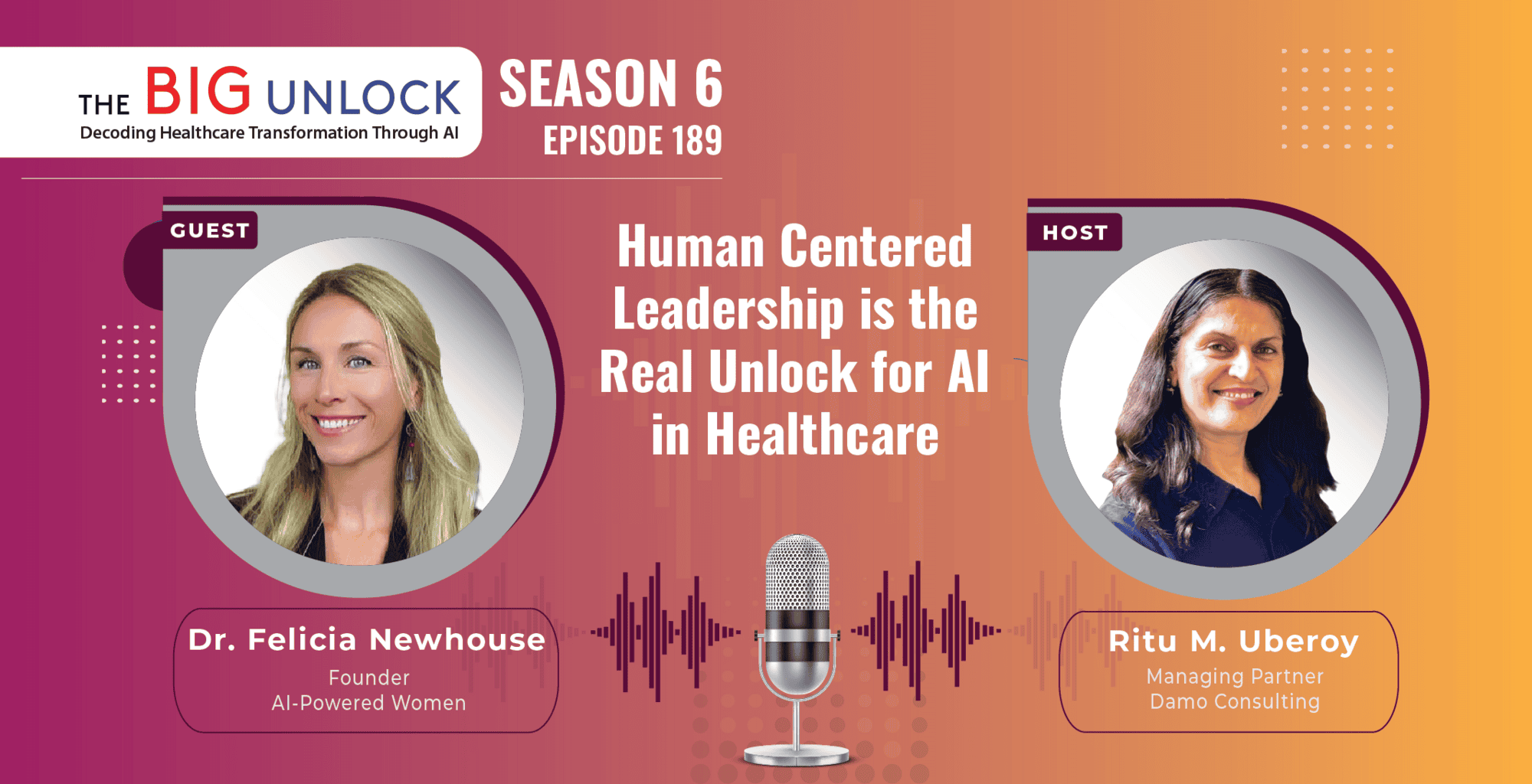
This idea of “digital hybridization” was discussed on two recent episodes of The Big Unlock podcast, one featuring Chris Gallagher, M.D., Founder and Chief Strategy Officer, Access TeleCare and the other Dr. Felicia Newhouse, Founder, AI-Powered Women. They both shared their insights on the evolution of AI and how virtual care is reshaping access and improving outcomes while at the same time enhancing patient engagement and allowing a more human-centered experience.


Towards a Human-Centered AI Model for Digital Well-Being

Ever since the earliest days of its inception there was this fear of AI replacing humans, or at least severely reducing much needed human interactions. As Felicia put it, “we all feel the need to belong.” These elements of human touch that we all crave are never going to go away, and they are critical as AI is becoming increasingly ubiquitous in all industries, but it is profoundly important in healthcare.

As a cardiologist, for Dr. Gallagher, the melding of technology and the human side of medicine was always there. “I always saw cardiology as field that combines technology and medicine together. It’s procedural based, and by nature it has always been cutting edge. You work in a lab that looked like something from the Starship Enterprise, screens everywhere and all sorts of incredible technology.”

He went on to explain that he also spent a good part of his career in rural health and that provided a stark contrast to that high-tech environment. Yet, he realized how he could use technology to bridge those worlds and bring quality care to those underserved communities, first with telehealth and now AI.  He told show host Ritu Uberoy that he has now dedicated his career to this “virtual care space” managing underserved, untreated populations.


A Vision for Virtual Care

AI adoption in healthcare has always involved a lot of changing of hearts and minds, both on the provider and the patient side. To achieve his ultimate vision of virtual care, Chris says, “simplicity is key.” 

“The key to our vision of virtual care, to getting more people to use it, was making it as user friendly as possible, not only on the medical practitioner’s side but also on the patient side. It had to be simplistic and never fail. In our inception days we used this analogy, the system had to be Fisher Price easy –you push a button, the cow goes, moo,’ everyone’s smiling and laughing. That was our ultimate goal to get it that push button easy.

Today, having provided that, Chris says he sees immense opportunity and possibilities. “Opportunities within our back office functions to simplify and streamline the business of medicine. We also see opportunities to improve the provider’s experience and minimize burnout. We have nearly 800 users for whom we have improved and simplified their experience when it comes to patient care.”

Then he told Ritu that he also sees opportunities to enhance patient care itself using new technology that helps connect them more to their doctors and nurses and not distance them from them as was once feared.


Can We Train Machines to Be More Empathetic?

Empathy and compassion need to be a cornerstone of human-centered healthcare. Can virtual health agents be taught to be empathetic? While current AI agents, and future “healthcare robots” may not experience empathy in the same way humans do, the ability to display empathetic behaviors can foster more positive and meaningful interactions between humans and machines.

Felica said that machines can process complexity, but only humans can really feel the complexities of true empathy. However, despite that distinction she says we can shape and mold and redefine the meaning of “artificial intelligence” to a kind of “sympathetic intelligence” as we continue to evolve human-centered AI design in the years to come.


Feminine Leadership Principals

Clinical studies have consistently shown that females are naturally more empathetic than males. So maybe what AI in healthcare needs is not so much a human touch, but a woman’s touch. Felicia certainly thinks so. “When we say feminine leadership principles, it doesn’t mean you have to be a woman. It just means that they’re grounded in kind of more feminine way of showing up as a leader, which is intuition and empathy and things like that.”


How Automation Can Unleash Human Potential

At the end of the day, rather than diminishing humans, AI can help us reach our full potential. As Felica put it, once we can fully use AI automate the mundane things that are holding us back, who knows what can be accomplished? Therin lies its true power she believes.

“We can leverage these technologies to essentially automate and offload the aspects of yourself that are holding you back so you can become a much more human centered and whole leader and whole human that has more to offer to the world around you. We can partner with AI in that capacity because if you think of AI as kind of an emerging species that we’re parenting. Right now, it’s in the toddler stage, and it’s up to us to raise it right. AI has its own brilliance to offer, and we have our own brilliance to offer. We have to look at our future as kind of a hybrid species that’s collaborating together.”

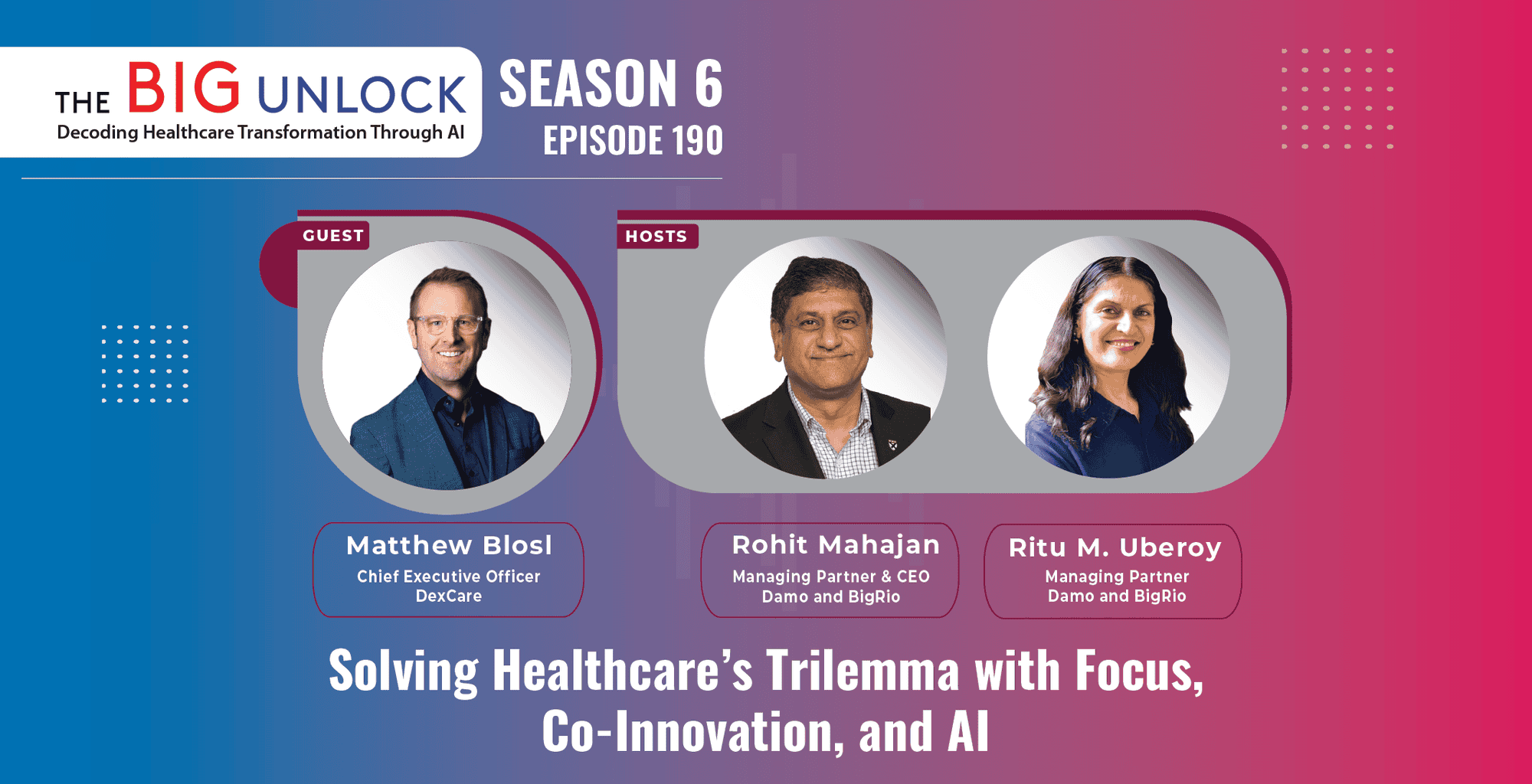
Solving Healthcare’s Trilemma with Focus, Co-Innovation, and AI

Season 6: Episode #190

Podcast with Matthew Blosl,
Chief Executive Officer, DexCare

Solving Healthcare’s Trilemma with Focus, Co-Innovation, and AI

To receive regular updates 

In this episode, Matthew Blosl, CEO of DexCare, discusses how he helps high-growth healthcare technology companies navigate critical inflection points by pairing disciplined focus with a culture that embraces failure as a path to innovation. He describes DexCare’s journey from a Providence Health incubated initiative to a scaled care orchestration platform that helps health systems address a “trilemma” of rising patient demand, clinician shortages, and margin pressure.

Matt explains DexCare’s co-innovation model, where every health system becomes an innovation partner rather than a one-size-fits-all implementation, enabled by modern data and AI capabilities. He outlines a pragmatic AI roadmap: first improving internal operations, then enhancing existing products, and finally accelerating true product innovation, while warning that AI can easily drive teams off-mission without strong focus. Matt also points out how fast things are shifting in healthcare and encourages leaders to rethink how they run their organizations and come together more often to tackle the challenges ahead. Take a listen.

Video Podcast and Extracts

About Our Guest

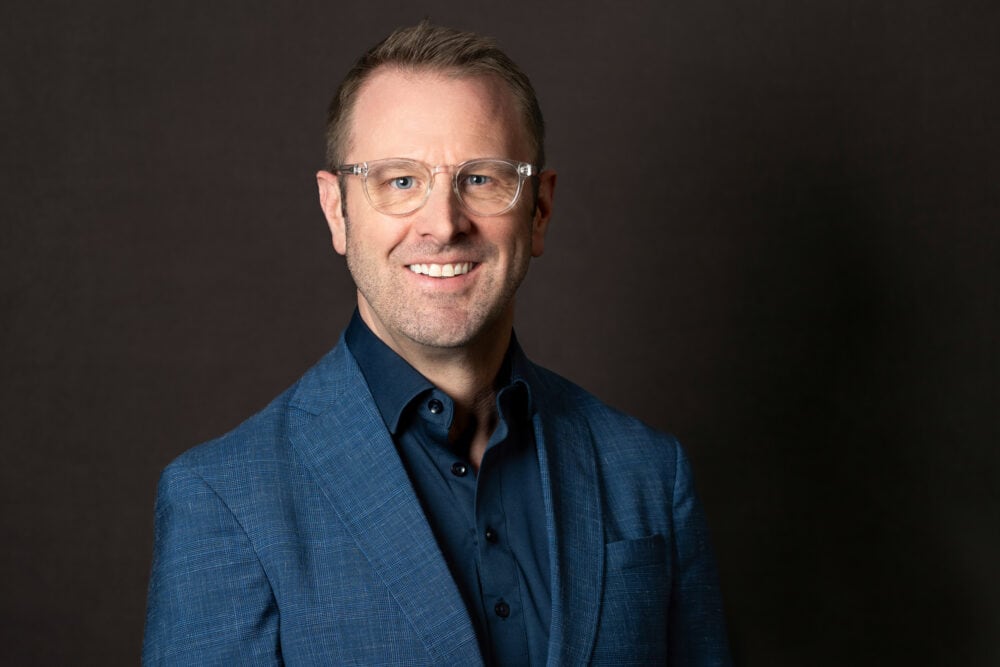
Matthew Blosl is Chief Executive Officer and a board member of DexCare, the leading digital platform for orchestrating patient demand and care access. With over 20 years of executive leadership experience in technology-driven organizations, Blosl is recognized for building high-performing teams, scaling commercial operations, and driving strategic growth that delivers measurable customer and enterprise value.

Prior to joining DexCare, Blosl held a senior leadership role at Experity, where he led commercial initiatives that significantly expanded the company’s market presence and helped secure its leadership position in the urgent care space. Throughout his career, he has fostered cultures of operational excellence and innovation, consistently delivering results in high-growth environments.

Blosl holds a degree in engineering from the University of Michigan and completed his business education at Stanford Graduate School of Business. He brings a powerful combination of technical rigor and strategic acumen to his leadership, grounded in a passion for transforming healthcare access and outcomes.

At DexCare, Blosl is leading the company into its next phase of growth, focused on expanding platform innovation—including the introduction of AI-driven capabilities—and deepening adoption across leading U.S. health systems. Under his leadership, DexCare continues to transform how patients find and access the right care, at the right time, with the right provider.


Ritu: Hi everyone. Welcome to our next episode of The Big Unlock podcast. We are in Season Six now with 180+ episodes, and today we are welcoming Matt Blosl to our podcast. He is the CEO at DexCare. Welcome once again to all our listeners. My name is Ritu M. Uberoy. I am the co-host here at The Big Unlock podcast and Managing Partner at BigRio and Damo Consulting. Welcome to the podcast.

Rohit: Super excited to be here with Ritu and with Matt. I’m Rohit Mahajan, CEO and Managing Partner at BigRio and Damo Consulting, and the co-host of this podcast. Over to you, Matt.

Matt: Great, thank you. Yes, I’m Matt Blosl, CEO of DexCare. I’m very familiar with not only this space in healthcare but also with high-growth companies. DexCare is my seventh venture private-equity-backed company, and I’m excited to talk about everything we have going on here at DexCare.

Ritu: Great. So we’ll jump right in. Matt, our listeners always love an origin story, so we would like to hear how you got to where you are today. And also, very interestingly, like you mentioned, this is your seventh gig. But something different here is that, as you said in our intro call, DexCare had already gone through a very steep growth curve when you came in. Usually, it’s the other way around, where you’re helping the company grow into that phase. So how has it been different for you this time, and what lessons have you learned or what do you think the difference has been?

Matt: Yeah, it’s interesting. When I reflect on my career, I’ve typically not been the founder of businesses. I’ve come in usually at some inflection point. DexCare is a unique story in that it was incubated within Providence Health, then spun out, and then had three to four years of hyper growth. The company got to a point that many high-growth companies do, where they reach an inflection point. What it takes to get from an idea on a napkin to a certain point requires one kind of skill set, and then taking it from point B to point C often requires a different viewpoint.

So for me, coming into DexCare was a very familiar point—well-established business, great clients, a lot of growth—but taking the next step in maturing the business requires looking at things differently. That’s what I’ve done at DexCare and throughout the last 15–20 years: coming into a well-established business and figuring out how to get it to the next level.

Rohit: So Matt, this is super interesting. Could you share your interest in healthcare—what got you started—and talk a little about your story and journey to where you are today?

Matt: Yeah, it’s interesting. I don’t know that it’s the typical story. I spent most of my career not in healthcare. My wife is a physician, so I always said I didn’t need to go into healthcare. Then about 12 years ago, a private equity firm tapped me on the shoulder and asked me to help scale a healthcare technology business.

During the mutual diligence process, I remember telling them multiple times that if they wanted somebody with healthcare experience, I was not the guy. They said they needed someone to build and scale the business, and that they already had enough domain expertise within the company. I didn’t fully understand that then, but I understand it now. Once a company reaches a certain size, like we were at 200 people, you have plenty of domain expertise. What you often lack is the foundational experience needed to take the company to the next level.

I spent seven years building and scaling that company, and we had a successful exit. Between that company, Asparity, and DexCare, I went outside healthcare for two years. When the DexCare opportunity came up, I was excited to return to healthcare, which is something I never thought I would say.

Healthcare is extremely complex, and because of that complexity, it is farther behind other industries from a technology perspective. For someone who likes messy situations and messy industries, it is a good fit because there is a lot that needs to happen. And it feels good to see the impact of the work. I spent seven years building a company in the urgent care sector and saw the direct results. Providers could see more patients and patients were more engaged. I was with that business through COVID and saw the impact our software had on providers and patients.

So I realized I had been missing that feeling in my career. All the hard work you do every day is not only technology. The downstream effect of the work makes you feel like you are making an impact.

Ritu: Yeah, you are genuinely making a difference and I think that is really good. So Matt, it was interesting that you mentioned Providence and how it was spun out of Providence. In our earlier chat, you mentioned this culture of co-innovation where you always worked with your customers to innovate rather than building something and then trying to sell it to them. That was a very interesting and different perspective. We would love to hear more about that co-innovation culture and how you fostered that at DexCare.

Matt: It’s interesting because typically when you think about co-innovation or even customization, that is usually seen as a negative attribute within a SaaS business. Ideally, you build a piece of software and there is as little customization or configuration as possible. Ideally, you take it out of the box and plug it in with every client. That is not realistic in my opinion, certainly within healthcare, but especially for us focusing on large health systems. A one size fits all product will not work. You will not get mass adoption and you will not get full benefit from it.

What is really cool about where we are from a technology perspective is that you can do customization at scale or innovation at scale. Often when you think about innovation, you think of it as a one-time event. You innovate a product and then sell it to all customers. What we are able to do now, and the mentality we have taken at DexCare, is that every single client is innovation. We are innovating for that health system. They all have different priorities, workflows, system capabilities, and data capabilities. We look at innovation on an individual level, coming in and helping innovate using our core platform but making it applicable to their environment.

This is a mindset shift, because often people think this is a barrier to scale. We have proven that is not the case, especially with advancements in technology and artificial intelligence. We can move and process data faster than ever before. We are leaning into this not as a disadvantage but as an advantage, not just for our customers but as a competitive advantage for the company. And I still have to explain that because investors see individual installs at different clients and assume the economics cannot be great. We have proven that is not the case.

Ritu: Okay, great answer. This ties into my next question. With the rapid changes in technology, and even previously, most times technology innovation at a company gets bogged down or does not succeed, not because of the technology itself, but because of cultural issues. People are resistant to change or are entrenched in their ways of thinking. It is interesting that you said you have done innovation at scale and you innovate for every single client. How do you make sure that this culture permeates the company from the ground up and that everybody is bought into that vision? Otherwise, this cannot succeed if people are holding on to old ideas or want to do the same thing each time.

Matt: First, I will point out that this is a journey. I would never suggest that we are at the end point of that. It is a never-ending journey, but yes, it comes down to the people and the leadership. That was something here at DexCare that is interesting because we came out of Providence and took on the second-largest health system in the country, Kaiser Permanente. So in the early years of the company, it was really about staying in pace with our existing customers because they were so large and complex that innovation was pushed to the side. We didn’t have to innovate then. We had a great core product that solved a key problem within health systems, so we focused on taking this product to market at scale.

When you get to the point where we are now, at an inflection point with a great foundation, the question becomes how do we build upon that. That requires a culture shift. There have been a lot of things I have tried to bring to DexCare to do that. One, it comes down to leadership. I tell the team all the time that I want us to fail more. A lot of times that is a head-scratching message, but it is true. If we are not failing, we are not pushing the envelope. You need to fail in a controlled way, and as long as we take an intentional, data-driven approach to the bets we make, not every bet will work out. Creating an environment where that is acceptable sounds easy, but how you show up every day matters. Even taking the little failures and celebrating those helps people realize that failure is progress. You learn more from failures than successes.

When I advise companies, I encourage them to be intentional about creating a culture of learning, and part of learning is failing. Many leadership teams say they support that, but do they really? How they show up each day determines that. So for me, it starts with leadership discipline.

The other important thing at DexCare is that we have had to fill experience gaps. Often companies hire for today’s need because they have a role to fill or capacity to add. In reality, especially for key positions, I look to fill experience gaps, meaning hiring someone who knows where we need to be in two or three years. They have seen it and been through the cycles. They understand what innovation looks like and what failure looks like. If you can get people who have done it before, they can push the innovation envelope because they bring perspective to the team. That is important in creating an innovation culture.

So the two big things that come to mind are leadership mentality and getting key people who have been through it before.

Rohit: That’s definitely a recipe for success, no doubt about it. So Matt, I would like to chime in. You were previously mentioning the infusion of AI across the board in your approach — with your clients and also the product and services the company is offering. Tell us a little more about what DexCare does, how it helps clients, and how you thought about infusing AI into the entire approach and the product and services.

Matt: This is a conversation I have in some capacity every day because AI is an inflection point. It’s arguably the largest one we’ve seen, and it’s evolving at the most rapid pace we’ve ever seen. Before I talk about DexCare, I’ll talk about health systems in general because it’s important to keep that in perspective. You can’t pick up the paper any day without seeing the gold rush of companies doing AI this, AI that.

What’s interesting within healthcare is that there is still a lot of apprehension around AI. Many health systems have set up AI governance committees, so there’s still a degree of education that needs to happen. While AI enables us to do things we’ve never done before, it will take time for health systems and healthcare in general to get comfortable with the risk associated with it. This is real — when you take it to the point of treating patients or using patient data, there is real risk. So it needs time to prove itself. Technology is ready today, but mass adoption will take longer. Health systems are still trying to understand what AI means to their business.

The second thing I’m hearing a lot is that even once AI gives us the data or insight, that’s only part of it. We still need to change the workflow — how we schedule a patient, treat a patient, follow up with a patient. Just having the insight is the starting point. Healthcare is slow to change and very complex. AI can deliver great things, but we need to partner with clients to help them understand what they need to do differently once they have that intelligence. That takes time and is complicated, and there needs to be empathy for what goes beyond the technology.

So how does that translate to DexCare? I don’t look at AI as a project off to the side. It’s quickly becoming standard infrastructure — like a new coding language. The tendency is to chase the next new thing AI enables. At DexCare, we started by asking: how do we just do what we already do, better? More efficiently, with more impact, now that we have this capability?

We took an internal look first: how can we use AI for internal operations? How do we use it to write code better, communicate with customers better? Then we looked at our existing products. Before going off to build new things, what does AI offer to make our current products better? We have a roadmap that goes well into next year that doesn’t necessarily add incremental revenue, but it innovates within our existing products.

Then comes the third part: true innovation. This has completely changed the game. What used to take six months to rapid prototype or build an alpha version, I now have teams doing over a weekend. It scares me — in a good way — because I’m thinking, how do I harness that? I used to expect updates in months. Now they come back in days with an initial version. So we’ve had to rethink our entire product development process — how we go from an idea to shipping product. It has completely changed. Because of the rapid pace, we can fail more, which means we can innovate more.

Going back to co-innovation — clients have very limited time. We’re one of hundreds or thousands of vendors coming to them with ideas. Historically, it’s been a struggle to get mindshare for co-innovation. Now, because we can take ideas and prove or disprove them quickly, it unlocks new opportunities. We can sit with clients, understand their challenges in a one-hour meeting, and come back with a prototype within weeks. It has dramatically condensed the timeline for what we can do.

Ritu: Yeah, that’s what we’re hearing across all clients — both kinds of projects where you’re improving existing things and also thinking completely out of the box for brand-new solutions, like voice agents or agentic AI. Those are the two themes we’re hearing a lot from customers.

Matt: The other lens we’re using at DexCare — and I see this with other companies too — is focus. I’ve been using that word a lot with our teams. We have what we call the three F’s at DexCare: Focus, Fearless, and Fast. Focus is really important because AI enables you to become massively unfocused very quickly. For us, there is enough opportunity staying in the lane we live in — care orchestration. How do we match a patient with the right provider and deal with all the complexity on both sides? There is so much we can innovate within that space that it’s easy, especially with AI, to start drifting outside that lane.

We’re trying to stay focused and take care orchestration to a level our clients and the industry never thought possible. That discipline has benefited us. I talk to other companies that are doing many different things, and at the end of the day, it’s like multiple businesses under one roof. For us, we want to revolutionize orchestration within health systems and don’t have a desire right now to go outside that lane.

Focus is really important. AI can be your worst enemy because it can make you unfocused quickly — and it wouldn’t even cost much to do so. So we’re trying to stay focused on our core mission and value proposition, and use the technology disruption as an advantage, not a distraction.

Ritu: Great. So Matt, you also spoke about the trilemma in today’s world. I thought that was an interesting term, and I think our listeners would like to hear more. If you can tell us a little more about the trilemma, that would be great.

Matt: Yeah, the trilemma is a phrase we coined at DexCare that describes the environment we operate in. From a macroeconomic and administrative perspective, the trilemma is: more patients, fewer doctors, and thinner margins.

The stat we use is that 11,000 people enter the Medicare/Medicaid market every day. At the same time, we have fewer doctors. The projected number of providers leaving practice over the next decade is astounding. And then margins are thinner — so more patients, fewer doctors, and less money.

Going back to care orchestration — the lane we play in — the trilemma is the problem, or opportunity, we’re addressing for health systems. How do we help them get the right patient to the right provider, knowing more patients are coming, expectations are changing, and providers are fewer?

And within “fewer doctors,” there’s another complexity: unused capacity. That’s an interesting challenge. You need more doctors, yet you have unused capacity because of complexity — where data lives, workflows, decision trees. So it feels like fewer doctors are available, even though you’re not using the ones you have to their fullest.

Then the “less money” part — every client I talk to is being challenged to do more with less because of the macroeconomic environment. Margins are thin and getting thinner. That’s why the ROI around DexCare resonates — much of it is efficiency, which is exactly what they need.

The trilemma is something we talk about every day. It’s an easy way to calibrate with someone new: we don’t start with features. We start with the trilemma — more patients coming, staffing issues, and economic strain. From there, it becomes easy to see how the DexCare platform can help.

Rohit: So before we finish the podcast, Matt, we’re coming close to the end of this session. We’d love to have you on again, of course. But for now, any insights or thoughts you’d like to share with the audience? When you look into the future, what do you see coming our way? Any parting thoughts?

Matt: And that’s the best part of that event — everyone in healthcare is there. It’s a nice mix of people from across the healthcare technology ecosystem. I was trying to describe to the company some of my takeaways, and it goes back to something I mentioned earlier: the pace at which things are happening. That’s what everyone was talking about. A lot of the problems or opportunities we’re facing aren’t new, but the pace of change is unlike anything we’ve seen before. It’s exciting and daunting at the same time.

What that pace means is that everyone is rethinking their business. Whether it’s health systems, technology solution providers, or investors — everyone is reassessing what they do and how they do it. It’s fascinating to step back and see that there isn’t a single model to follow. Everyone is reinventing themselves right now.

And because of that, the opportunity to collaborate is incredibly strong. That’s why I enjoy getting out into the market — we’re all rethinking how we operate. Co-innovation really works in this environment because health systems are reevaluating their businesses, and so is everyone else.

With the rate of change and the trilemma we talked about, it’s an exciting time to be doing what we’re doing. I think we’ll see evolution in healthcare over the next two to three years that we haven’t seen in a decade or more. I encourage everyone to lean into collaboration. There’s enough opportunity for all of us. We need to lock arms and figure out, as an industry, how to make care easier to access and better to deliver.

It’s an exciting time to be in healthcare. I never thought I’d be here, but I feel very fortunate because of everything happening in the industry.

Rohit: Amazing. Thank you, Matt, for sharing those insights.

Matt: Yeah, absolutely. Thank you for having me.

————

Subscribe to our podcast series at www.thebigunlock.com and write us at [email protected]    

Disclaimer: This Q&A has been derived from the podcast transcript and has been edited for readability and clarity.

About the Hosts

Rohit Mahajan is an entrepreneur and a leader in the information technology and software industry. His focus lies in the field of artificial intelligence and digital transformation. He has also written a book on Quantum Care, A Deep Dive into AI for Health Delivery and Research that has been published and has been trending #1 in several categories on Amazon.

Rohit is skilled in business and IT  strategy, M&A, Sales & Marketing and Global Delivery. He holds a bachelor’s degree in Electronics and Communications Engineering, is a  Wharton School Fellow and a graduate from the Harvard Business School. 

Rohit is the CEO of Damo, Managing Partner and CEO of BigRio, the President at Citadel Discovery, Advisor at CarTwin, Managing Partner at C2R Tech, and Founder at BetterLungs. He has previously also worked with IBM and Wipro. He completed his executive education programs in AI in Business and Healthcare from MIT Sloan, MIT CSAIL and Harvard School of Public Health. He has completed  the Global Healthcare Leaders Program from Harvard Medical School.

Ritu M. Uberoy has over twenty-five years of experience in the software and information technology industry in the United States and in India. She established Saviance Technologies in India and has been involved in the delivery of several successful software projects and products to clients in various industry segments.

Ritu completed AI for Health Care: Concepts and Applications from the Harvard T.H. Chan School of Public Health and Applied Generative AI for Digital Transformation from MIT Professional Education. She has successfully taught Gen AI concepts in a classroom setting in Houston and in workshop settings to C-Suite leaders in Boston and Cleveland. She attended HIMSS in March 2024 at Orlando and the Imagination in Action AI Summit at MIT in April 2024. She is also responsible for the GenAI Center of Excellence at BigRio and DigiMTM Digital Maturity Model and Assessment at Damo.

Ritu earned her Bachelor’s degree in Computer Science from Delhi Institute of Technology (now NSIT) and a Master’s degree in Computer Science from Santa Clara University in California. She has participated in the Fellow’s program at The Wharton School, University of Pennsylvania.

About the Legend

Paddy was the co-author of Healthcare Digital Transformation – How Consumerism, Technology and Pandemic are Accelerating the Future (Taylor &  Francis, Aug 2020), along with Edward W. Marx. Paddy was also the author of the best-selling book The Big Unlock – Harnessing Data and Growing Digital Health Businesses in a Value-based Care Era (Archway Publishing, 2017). He was the host of the highly subscribed The Big Unlock podcast on digital transformation in healthcare featuring C-level executives from the healthcare and technology sectors. He was widely published and had a by-lined column in CIO Magazine and other respected industry publications.
Human Centered Leadership is the Real Unlock for AI in Healthcare

Season 6: Episode #189

Podcast with Dr. Felicia Newhouse, Founder, AI-Powered Women

Human Centered Leadership is the Real Unlock for AI in Healthcare

To receive regular updates 

In this episode, Dr. Felicia Newhouse, Founder of AI-Powered Women, highlights the need for human centered leadership as the foundation for AI’s future in healthcare. Reflecting on her near-death experience and two decades in tech, she warns that rapid automation may boost efficiency but often leaves people feeling overwhelmed, disconnected, and burned out.

Dr. Newhouse emphasizes that true progress requires qualities only humans can bring, empathy, intuition, emotional intelligence, and what she describes as “systems awareness” and “systems feeling.” These capabilities help leaders understand the broader human impact of digital tools and design AI that supports well-being rather than replacing human judgment.

She urges organizations to slow down, prioritize dignity and belonging, and adopt AI in ways that strengthen human connection. According to Dr. Newhouse, the real unlock for healthcare will come when AI is guided by compassion, humanity, and mindful leadership. Take a listen.

Video Podcast and Extracts

About Our Guest

With over 20 years as a product tech executive, three successful startup exits, and a PhD focused on women’s leadership and transformational learning, Felicia Newhouse curates spaces where technical fluency meets inner evolution.

Drawing on her work as an energy practitioner and mindfulness-based leader, she integrates evidence-based approaches to human transformation with a deep understanding of consciousness and systemic change. Through the AI-Powered Women Academy and the annual MIT Summit, Felicia unites visionary educators, researchers, and changemakers ahead of their time to ensure women don’t just adapt to the age of AI—they lead it and evolve it with clarity, confidence, and consciousness.


Q: Hi, Dr. Michael Docktor, welcome to our Big Unlock podcast. We are really happy to have you as a guest on our show. Uh, it’s on our sixth season now, and, uh, we are looking forward to this conversation. I’m sure we’ll have a very engaging and interesting conversation about dog health, about healthcare in general, and the new trends about AI and all the buzzwords that people want to hear. Welcome to our show — we’d like to start with introductions. Happy to have you give your introduction. Thank you.

Michael: Yeah, thank you so much for having me. Yeah, I’m Michael Docktor, co-founder and CEO of Dock Health. I’m an ologist by trade. I am now on this, uh, healthcare venture outside of Boston Children’s Hospital where I started my GI career.

I was a busy clinician working on the clinical side as well as in innovation and informatics, and found that we had wonderful tools in the world outside of healthcare and struggled with my own challenges around managing all the tasks that are part of patient care. I found that I was using task management and project management tools that were not built for healthcare.

I scratched my head and wondered why we don’t have these things for healthcare. That was a journey. We started just over five years ago. We spun out Dock Health from Boston Children’s, and we’ve been on a very exciting journey in the world outside the academic walls since then.

It’s been fun. I’m excited to talk to you more about, uh, what we’re doing.

Q Great. That’s a great introduction. Thank you for letting our listeners know. We usually like to start with how you came into healthcare because everyone has an interesting story about what inspired them to become a physician.

For you, it’s particularly interesting because you’ve created this interface between design, technology, and healthcare — and you went beyond just visualizing what you wanted to do or asking why somebody doesn’t fix it, to actually building it yourself. I’d love to hear more about how you came into medicine and then into technology.

Michael: I could probably spend the entire podcast on this question. Obviously, my last name is Doctor, so there was some planting occurring there, and there’s something to be said for that.

One of my earliest memories was wanting to grow up to be a doctor. My younger sister had some GI issues when we were young, and I became very close with her gastroenterologist. I followed her on her journey and, unbeknownst to me, ended up following one of my mentors and was inspired to do the work for other children the way my sister was cared for. That was the initial inspiration.

You mentioned design. That’s interesting because my mother is an interior designer, my father is a dentist who specialized in aesthetics, and design — how things look, feel, and work — has always been part of my DNA. It was an amazing journey to go from being a traditional doctor in pediatric gastroenterology to discovering the importance of user experience and user interface.

Then the iPhone came out, then the iPad, and that really started me on my journey of exploring app development and software, and wondering why we didn’t use these wonderful devices in our pockets the way we should. That journey started more than 10 years ago and has led me to this perfect intersection of healthcare, design, and informatics, creating better experiences for patients and providers.

There’s a lot to unpack there, but people ask me if I would do it differently if I had the chance to do it all over — and absolutely not. I’m doing exactly what I want to be doing right now.

Q: Thank you for sharing that. That gives us so much perspective into how you came into this field, the influence of your parents, and how everyone around you inspired you to do this. That’s really interesting.

That leads us into how you built Dock Health. Tell us some examples of how you saw this becoming transformational in actual implementations with clients. When you built the tool, did you visualize exactly what it would do? Did it go beyond what you thought it would achieve in a healthcare setting? We’d love to hear more about that.

Michael: We’re far beyond where I ever thought we’d be when we first started this journey. That’s the exciting part. Fundamentally, we have such an administrative and operational challenge in healthcare. I saw it firsthand as a busy clinician struggling to manage all the clinically adjacent work that had to be done for my patients.

For example, I might have a patient with Crohn’s disease who needs to go to an infusion center. There are all these downstream tasks and administrative steps that need to be done by a team of people. We didn’t have assistants to do that, and the electronic health record wasn’t built for it.

A quarter of the $5 trillion spent in healthcare goes to administrative and operational challenges, and there really are no tools built for that. We rely on paper checklists, email, faxes, and spreadsheets to manage all the work happening outside the electronic health record.

For me, the realization was that I was using wonderful project management and task management tools to run software projects in my innovation and informatics roles—and yet nothing like that existed in healthcare. Patients, in many ways, are projects. There are tasks that form the essence of care, and they need to be tackled, managed, and collaborated on, with visibility and accountability across teams. That didn’t exist.

What we are now doing is serving as that productivity platform for healthcare, one that sits alongside the electronic health record in synergy, helping manage all the administrative and operational tasks of patient care in ways the EHR wasn’t designed for.

Some examples would be managing patient intake and all the processes associated with it. Referrals, inbound and outbound, with all the paperwork, eligibility checks, and faxes—those workflows are still incredibly manual. Referrals are a great example: 80% of referrals that come into major academic medical centers are still arriving by fax, despite the fact that they’re using Epic, a wonderful electronic health record.

These processes are still incredibly laborious, take too long, and are inefficient. Patient care suffers along the way. There’s a gigantic bottleneck around the administrative and operational work that moves patients through their journeys, and that’s what we’re focused on fixing.

Q: This is what we hear from a lot of our clients and other CIOs and C-suite leaders who come to our podcast—that this is one major problem with healthcare. It’s siloed, and the processes are really stuck in the dark ages.

We were talking to somebody from Athena, and they said they had an 800-person offshore center in India just to screen faxes. When a fax came in, one person looked at it to see if it was a pizza order or a referral. It sounds unbelievable in this day and age, but that’s how it works. I’m amazed to hear this from you as well. It’s remarkable.

Michael: Yeah. In fact, Athena is a partner of ours, and we’re working on referral management. It’s an incredibly antiquated process where everyone loses visibility. The amount of manual labor required to process these things is shocking in this day and age, when they can be handled through process automation, AI, and agents.

Q: Exactly. You’re talking about agentic, we’re talking about voice agents, and yet we’re still dealing with faxes. That’s really interesting to know.

Michael: There is reason to be hopeful. Healthcare is always many decades behind, but the adoption of AI is progressing more rapidly than I’ve seen any technology adopted in healthcare. There’s reason for hope.

Q: That leads into my next question, but before we get there, you mentioned Dock Health as a productivity platform. That’s what it does for doctors, clinicians, and patients. But when we talk to our doctors, clients, and health systems, the one word that always comes up is complexity. They deal with so many different systems and have to learn something new each time.

Where does Dock Health fit in? Is it another system they have to manage, or does it help reduce that burden?

Michael: Yeah, it’s all about reducing the burden and improving the user experience. That’s been fundamental to our belief system since the founding of the company.

First and foremost, we’re trying to become the productivity platform and the hub that handles the administrative and operational work. Instead of being “another system,” we’re often replacing spreadsheets, paper checklists, emails, and faxes—the ways we’ve traditionally managed the 50% or more of administrative and operational tasks required for patient care.

The EHR is great for clinical work, billing, prescribing, and scheduling, but so much happens downstream that isn’t covered. I’d argue we are creating the hub for that. Just as the EHR is the clinical hub, Dock Health serves as the operational hub. Together, it’s really one plus one equals three.

We’re also aiming to be much more consumer-like in our approach. Our tool can onboard a customer in 30 minutes. We offer a free trial, and for small organizations that want to get up and running, they can start using it right away—just like downloading an app. It’s lightweight, highly configurable for end users, and designed with a strong focus on user experience.

The real challenge is that clinicians don’t want another tool. They’re busy and need to spend their time in the EHR. Our core users are often the super users: front office staff, back office teams, operational leaders, and administrative staff who leverage our tool every day.

The important piece is that we connect to the electronic health record and provide visibility for clinicians. If they’re interested, they can see where a patient is in their journey or where a process stands, but they don’t have to be in our system all day, checking tasks or learning another workflow.

The intent is to provide that operational hub for administrative and support staff—the essential members of the care team—while clinicians continue their work in the EHR and often drive tasks into our system through their orders and actions there.

Q: Is the integration with the EHRs native, like with Epic, Cerner, and the big ones?

Michael: Yeah. We’re on the marketplace with a number of the top EHRs, including Epic and Cerner. We’re also working with Mayo Clinic, their Mayo Clinic Platform, and their Deploy platform.

The other thing I’d mention is that many organizations use our tools without being integrated with the electronic health record. That’s often because they’re smaller practices—mental health, concierge care, or primary care—that simply need a hub to handle administrative and operational work and collaborate as a team.

We spend a lot of time helping organizations define their processes, and those processes can then live in Dock, where they can be collaborated on and turned into operational best practices. That’s something that often doesn’t happen in traditional healthcare organizations, and our tool is valuable even when it’s not connected to an EHR.

Of course, the real value comes when we integrate with systems—EHRs, CRMs, patient engagement tools—and serve as the hub while automating as many tasks as possible. That’s when the flywheel starts turning, and organizations begin to feel the benefits of automation and work reduction. It ultimately moves the needle in a measurable way.

Q: So, you’re saying if there’s an integration with the EHR, then it’s end-to-end and people can see a complete view of what’s happening. But even without the EHR, because it helps with workflow management, it’s valuable for practices?

Michael: It’s just like every other industry. They have Asana, JIRA, Trello—all these tools where a lot of the real work gets done. That provides value in itself by giving a clear view into where the patient is in their journey and what process they’re following.

When we integrate with an EHR or other systems, we can then automate those workflows. For example, when a fax comes in, we can launch a workflow for a new patient referral. When a lab order is placed, we can launch a workflow for follow-up. Or when a patient has a procedure, we can launch a process for their downstream follow-up.

Q: That leads into the next question, which is your learning journey with AI. What advice do you have for our listeners about where AI is headed? And with voice agents and agentic tech being buzzwords, where do you see Dock Health going? Are you also looking at implementing voice agents?

Michael: AI is incredibly exciting. I’ve put it out there that we’re an AI-first company. We’ve been thinking about this for a while, and we already have what we call Dock Intelligence in production with customers. We started with the basics, using foundational models and generative AI to process large troves of data.

Now, we can summarize all the work being done for a patient and create a snapshot for the end user—showing all tasks, workflows, patient context, and even clinical context if available. That gives a quick overview of what’s happening. Users can edit that snapshot if needed, or generate a note that writes back to the EHR to keep the operational and clinical record in sync.

That’s the first step in our AI journey. From there, we realized tasks bundle into workflows, workflows can be automated, and now we’re starting to farm out those tasks to agents and AI. For example, a voice agent could follow up with a patient to confirm a referral or review lab results. We’re actively pursuing that, as well as leveraging AI to extract data from faxes to automate referral processes.

AI is the big unlock. In the next three to five years, I believe most administrative and operational tasks will be handled by automation and AI agents orchestrating together. These agents need rails to run on and structure to guide them, and end users must remain in the loop to provide oversight and visibility. But the lion’s share of this work will be handled by agents—and we’re building that future right now.

Q: Are you aligning specifically with any particular LLM or provider, or are you going to be completely agnostic?

Michael: I’d like to think we’ll be agnostic. We’re doing plenty of building on some of the foundational models ourselves, and we’re partnering where we can with great tools. For example, with voice agents, we’re not necessarily building them ourselves—there are excellent options out there. What we are doing is building our own homegrown AI agents that can manage processes and facilitate handoffs from task to task.

Our approach has always been to recognize that there’s a wonderful ecosystem out there. We want to be the hub that connects to the best-of-breed systems—whether that’s Epic as an EHR, Salesforce as a CRM, or other tools we can leverage to create a healthy ecosystem. That’s what we’re pursuing.

Q: I wanted to ask a question about that because with the LLMs, one of the main problems is the hallucinations or the repeatability or the trust factor there. So I saw that Dock is HITRUST certified. So, I just wanted to ask, what are your views on that? Because in terms of using generative AI when we talk to our clients, uh, for implementations on LLMs, or they’re more comfortable certainly with the administrative tasks, but even with the administrative tasks there’s always the question of what are the guardrails you put around that and how do you make sure that the results that you are seeing or you are displaying on Doc Health, you know, stay within that, those bounds of accuracy. Whathat are your thoughts around that?

Michael: AI is incredibly exciting—it’s moving at the speed of light, and everyone wants to benefit from it. I do think administrative and operational areas of healthcare are lower-hanging fruit and far less risky. We’re not yet in a place where we can reliably use AI for absolute clinical decision support and autonomy, though I believe we’ll get there in the not-too-distant future.

For now, the clunky and manual administrative work is ripe for AI. Still, we need to be mindful of potential hallucinations. In our experience so far, we haven’t seen issues, but we’ve put safeguards in place. That means keeping a human in the loop to ensure outputs are appropriate and relevant. We also give users the ability to edit results before they’re sent—whether it’s a summary being emailed to a colleague or written back into the EHR as a clinical note.

It’s essential to show your work. If we’re pulling data from various sources, we show those sources. We keep users in the loop, give them control to review and edit, and maintain tight feedback loops to catch and address anything off.

So far, even foundational LLMs have been surprisingly strong in our relatively narrow use cases. The real challenges will come as we move toward higher-risk clinical decision support—but I’m confident we’ll get there quickly.

Q: It’s interesting you mentioned humans in the loop and the fact that people can review or edit what’s being generated. But with agents, one of the key defining characteristics is autonomy—they can make API calls, send emails, even browse the web to find and act on information. How do you think about that level of control being handed over?

Michael: I think it’s all about balance. The value of task automation and workflow automation is clear. For us, one of our strengths is providing a user interface where the end user can actually see where a process is in its journey.

We’re working on features like showing confidence levels or confidence intervals for data extracted—for example, from a fax. That way, we not only show our work but also give transparency into how accurate that extraction might be. Using our interface, which breaks workflows into tasks, we can show exactly where a process stands. If we believe human involvement is needed, we assign a task and call someone in to review.

Even in the agentic future—which is already upon us and actively being built and tested—we see ways to keep humans in the loop. Operating entirely in a vacuum is risky. Part of my mantra, coming from clinical practice, is that I lacked visibility and accountability in the work being done on behalf of my patients, lost in a black hole of faxes and emails. It’s important to show where the patient is in their journey, where the process stands, whether an agent is handling it or automation is moving data between systems. Giving people visibility and the ability to drill down is critical.

Q: That’s an interesting viewpoint. You mentioned the front and back office and clinicians, but I didn’t realize patients might also have visibility into the system.

Michael: That’s certainly the vision for the future. Right now, our solution focuses on creating visibility and accountability for the care team—clinical and operational staff. But ultimately, the patient is part of the care team too. I would love to see a future where patients are assigned tasks and the rest of the care team has visibility into their progress. I think that’s inevitable. For now, we’re focused on giving the traditional care team the tools they need, but over time, I see patients and their home-based care team being part of that ecosystem.

Q: So I think we are almost at the end of the podcast. We would like to conclude by asking you what you think, maybe give a horizon of like a year and then maybe a five-year horizon. What do you think the top trends that are going to be in AI, and particularly for you at Dock Health? What are the three things that you are really keeping close tabs on and you feel that it’s going to really impact your product and be very transformational.

Michael: It’s tough to predict because AI is moving so fast. Moore’s Law doesn’t apply anymore—the doubling is happening every few months. Everything right now is AI, and “agentic” is the word of the day. I’ve even heard “ambient agents.” We see our role as orchestrating workflows where agents will carry out the majority of tasks.

When we started Dock Health, I imagined a day when it would be smart enough to handle processes automatically. AI has accelerated that roadmap by five to ten years, and the pace keeps shrinking. I truly believe that in the next five years, when healthcare spending in the U.S. reaches $10 trillion, the $2.2 trillion spent on administrative and operational costs may actually shrink because of operational efficiencies unlocked by AI.

We want to give care teams superpowers. Administrative and operational staff deserve better tools to do their work. Just as ambient scribes are now relieving clinicians from documentation, I believe AI will do the same for the administrative and operational burdens in healthcare. Within three to five years, I expect most of that work will be automated. Humans will still play a role, but much of it will feel like it just happens—almost magically.

If you zoom out five years from now, it will look like magic. But by then it will feel obvious. And that excites me, because at the end of the day, patients, our economy, and the world need more efficient care. The fact that we waste a trillion dollars a year on administrative tasks is shameful. Patients are asked to take on too much, like reminding us about referrals or tracking down lab results. These things happen because we’re human and don’t scale well. But now we have incredible tools at our fingertips, and I believe the next few years will be the most exciting time healthcare has ever experienced.

If we zoom out five years from now, it’s going to look like magic—but by then it will feel obvious. I’m excited for that future because, at the end of the day, patients, our economy, and our world need more efficient care. The fact that we waste a trillion dollars a year on administrative and operational tasks is shameful.

Too much of the burden falls on patients. Physicians and care teams often say, “Call me if you don’t get your referral in a couple of days,” or, as I saw with my own mom recently, patients are left chasing down lab results. These things happen because we’re human and we don’t scale well.

Now, we have incredible tools at our fingertips. That’s why I believe the coming years will be the most exciting time in healthcare that I’ve ever experienced—and likely the most exciting time the world has ever seen. Healthcare is primed for transformation and opportunity.

Q: Thank you for being with us on our podcast. It was a wonderful conversation, and we look forward to sharing your vision for the future with our listeners.

Michael: Thanks so much.

————

Subscribe to our podcast series at www.thebigunlock.com and write us at [email protected]  

Disclaimer: This Q&A has been derived from the podcast transcript and has been edited for readability and clarity.

About the host

Paddy is the co-author of Healthcare Digital Transformation – How Consumerism, Technology and Pandemic are Accelerating the Future (Taylor & Francis, Aug 2020), along with Edward W. Marx. Paddy is also the author of the best-selling book The Big Unlock – Harnessing Data and Growing Digital Health Businesses in a Value-based Care Era (Archway Publishing, 2017). He is the host of the highly subscribed The Big Unlock podcast on digital transformation in healthcare featuring C-level executives from the healthcare and technology sectors. He is widely published and has a by-lined column in CIO Magazine and other respected industry publications.

About the Host

Ritu M. Uberoy has over twenty-five years of experience in the software and information technology industry in the United States and in India. She established Saviance Technologies in India and has been involved in the delivery of several successful software projects and products to clients in various industry segments.

Ritu completed AI for Health Care: Concepts and Applications from the Harvard T.H. Chan School of Public Health and Applied Generative AI for Digital Transformation from MIT Professional Education. She has successfully taught Gen AI concepts in a classroom setting in Houston and in workshop settings to C-Suite leaders in Boston and Cleveland. She attended HIMSS in March 2024 at Orlando and the Imagination in Action AI Summit at MIT in April 2024. She is also responsible for the GenAI Center of Excellence at BigRio and DigiMTM Digital Maturity Model and Assessment at Damo.

Ritu earned her Bachelor’s degree in Computer Science from Delhi Institute of Technology (now NSIT) and a Master’s degree in Computer Science from Santa Clara University in California. She has participated in the Fellow’s program at The Wharton School, University of Pennsylvania.

About the Host

Rohit Mahajan is an entrepreneur and a leader in the information technology and software industry. His focus lies in the field of artificial intelligence and digital transformation. He has also written a book on Quantum Care, A Deep Dive into AI for Health Delivery and Research that has been published and has been trending #1 in several categories on Amazon.

Rohit is skilled in business and IT  strategy, M&A, Sales & Marketing and Global Delivery. He holds a bachelor’s degree in Electronics and Communications Engineering, is a  Wharton School Fellow and a graduate from the Harvard Business School. 

Rohit is the CEO of Damo, Managing Partner and CEO of BigRio, the President at Citadel Discovery, Advisor at CarTwin, Managing Partner at C2R Tech, and Founder at BetterLungs. He has previously also worked with IBM and Wipro. He completed his executive education programs in AI in Business and Healthcare from MIT Sloan, MIT CSAIL and Harvard School of Public Health. He has completed  the Global Healthcare Leaders Program from Harvard Medical School.

About the Legend

Paddy was the co-author of Healthcare Digital Transformation – How Consumerism, Technology and Pandemic are Accelerating the Future (Taylor &  Francis, Aug 2020), along with Edward W. Marx. Paddy was also the author of the best-selling book The Big Unlock – Harnessing Data and Growing Digital Health Businesses in a Value-based Care Era (Archway Publishing, 2017). He was the host of the highly subscribed The Big Unlock podcast on digital transformation in healthcare featuring C-level executives from the healthcare and technology sectors. He was widely published and had a by-lined column in CIO Magazine and other respected industry publications.
How Virtual Care Is Redefining Physician Capacity, Patient Access, and the Future of AI in Healthcare

How Virtual Care Is Redefining Physician Capacity, Patient Access, and the Future of AI in Healthcare

Insights from Dr. Chris Gallagher on The Big Unlock Podcast

Virtual care is no longer an experiment. It is becoming a core part of modern healthcare delivery. In a recent episode of The Big Unlock podcast, Dr. Chris Gallagher, Founder and Chief Strategy Officer at Access TeleCare, discussed the shift toward hybrid care models, how virtual care, tele-ICUs, and AI are reshaping physician distribution, hospital operations, and the patient experience, especially for underserved communities.

Chris’ story is both personal and systemic, rooted in early exposure to underserved communities, years before telehealth entered the mainstream. His experience provides a real-world blueprint for how virtual care models can solve persistent physician shortages, expand specialty care, and create safer, more efficient patient experiences.

From Rural Weekends to Virtual ICU Pioneer

Chris’s journey into telehealth began as a cardiology trainee spending weekends serving rural communities around Dallas, where he saw the same level of disease complexity as in major academic medical centers, often worse because conditions went undiagnosed for years. That experience convinced him that geography should not determine the quality of care, and it sparked a career-long focus on high-acuity, underserved patients.​

When recruitment of on-site specialists failed, he and his colleagues turned to telemedicine, eventually building the first virtual ICU in Texas in 2013. And on its third night, the program helped save a life and cemented his conviction that virtual care needed to be his life’s work.​

Overcoming Early Resistance to Telemedicine

Launching tele-ICU a decade before COVID meant pushing against skepticism from clinicians who questioned whether virtual models were “real medicine”. To win trust, Chris’s team limited their initial efforts to a single ICU for a year, proving safety, outcomes, and ROI before scaling.​

He describes the long stretch from 2014–2016 as mostly educating health systems, with a turning point around 2018 when leaders needed less explanation and more implementation. Then the pandemic accelerated acceptance by at least a decade and normalized virtual care as a core modality.​

Making Technology “Fisher-Price Easy”

One of Chris’s central themes is that technology must be radically simple if clinicians are going to use it in the chaos of real-world care. Early on, a virtual encounter required 27 steps for the physician and 13 for the nurse, which created friction and slowed adoption.​

His team adopted a design mantra – “Fisher-Price easy,” and relentlessly removed steps until clinicians could connect with a patient almost as easily as pressing a single button. As the user experience improved, encounters increased and adoption became self-sustaining, a pattern he believes will repeat with AI if solutions are intuitive and reliable.​

Solving Physician Distribution, Not Just Rural Access

While the origin story was rural underserved care, Chris emphasizes that the main telehealth use case has shifted dramatically. In just three years, Access TeleCare moved from serving 70% rural and 30% urban patients to the reverse – 70% urban and 30% rural.​

Today, virtual programs are as likely to support large city hospitals as small rural facilities, especially where there is only one on-site specialist who can never take a day off without leaving gaps in coverage. Telehealth becomes a “programmatic envelope of care,” adding fractional virtual FTEs around local clinicians so hospitals can achieve 24/7 coverage without burning out the in-person team.​

Virtual Coverage as a New Staffing Model

Chris describes a new staffing paradigm where hospitals no longer try to fully staff every specialty on-site around the clock. Instead, they:

  • Use virtual clinicians to cover nights, weekends, and low-volume periods.
  • Allow scarce specialists (like infectious disease or intensivists) to focus on clinic or procedures while telehealth handles inpatient consults.​

Because 66% of hospital time is nights and weekends, covering everything purely in person is either impossibly expensive or unsustainable for clinicians, whereas virtual care can be scaled “dose-dependently,” used only as much as needed, without idle capacity.​

AI, Automation, and The Digital Back Office

For Chris, AI is not abstract; it is already embedded in practical workflows. His organization is piloting AI in back-office areas such as revenue cycle and operational automations, as well as in clinical routing and scheduling to support nearly 800 physicians and nurse practitioners.​

Over 50% of consults now flow through digital automation rather than phone calls, with EMR-integrated workflows that let hospitals trigger a consult at the push of a button and route it directly to the right specialist’s mobile app. AI will make this routing smarter and faster, enabling his team to reach the bedside up to 20% sooner, crucial for emergencies like acute stroke or cardiac arrest.​

Voice Agents and The Next Wave Of AI

Chris is optimistic about voice agents as a natural evolution in AI-enabled care. His team is actively running pilots with multiple vendors to determine which tools best fit their physicians and advanced practitioners, focusing on both efficiency and experience.​

Most current use cases they are exploring sit behind the scenes – supporting revenue cycle, documentation, and operational workflows, rather than replacing the human interaction at the bedside. The goal is not to remove clinicians from the loop but to free them from administrative burden so they can spend more time in clinical decision-making and patient communication.​

Redefining The Digital Front Door For Acute Care

Unlike many digital health companies that focus on at-home consumers, Access TeleCare’s “digital front door” starts inside hospitals. All of their patients are in emergency departments, ICUs, inpatient floors, or clinics, and many encounters are unscheduled, triggered by sudden changes in condition.​

Instead of patients booking online, hospitals initiate virtual consults directly from Epic or Cerner, routing requests into a centralized platform that balances workload among specialists in seconds. This model turns telehealth into an invisible backbone of acute care, embedded in hospital operations rather than acting as an external service layer.​

Making Virtual Care Feel Like In-Person Medicine

To win clinician and patient trust, Chris insists that virtual encounters must feel as close as possible to traditional bedside care. Each hospital is equipped with a six-foot telemedicine cart featuring a large display, high-resolution zoom camera, and digital stethoscope so remote physicians can read monitors, view ventilator settings, and perform detailed physical exams.​

There is always a “patient presenter” in the room – usually a nurse, medical assistant, or ER physician – to provide hands-on support and carry out parts of the exam, while the remote physician documents, orders, and manages treatment within the hospital’s EMR as any on-site clinician would.​

Health Equity, Local Care, And Cost Savings

A major impact of these programs is on equity and local access. Around 82% of the patients Access TeleCare serves are underserved, including uninsured, Medicaid, and elderly populations who would otherwise face delayed or fragmented care.​

By bringing specialists to the bedside virtually, hospitals avoid costly transfers that can add about $5,000 per episode and, in the case of helicopter transports, tens of thousands of dollars more—costs that ripple through families and communities. For roughly the price of a $200 telemedicine consult, hospitals can keep patients in their home communities, close to their support systems, while still delivering high-quality specialty care.​

Toward A Virtual-First, Hybrid Future

Strategically, Chris sees health systems moving toward “virtual-first” models in many non-procedural specialties. In this vision, every patient is guaranteed baseline access to specialty care via virtual providers, and in-person clinicians are layered on top for procedures and high-volume needs.​

He argues that traditional physician staffing models, largely unchanged for a century, are no longer tenable in an era of workforce shortages and rising demand. Virtual care provides the flexibility to dial resources up or down, matching supply to demand without overworking clinicians or paying for idle capacity.​

A Turning Point for Medicine

Chris places AI and virtual care alongside antibiotics and modern surgical techniques as potential turning points in medical history. COVID, he notes, didn’t just accelerate telehealth adoption—it fundamentally lowered healthcare’s resistance to change and opened the door for broader digital transformation.​

He is bullish that AI will significantly enhance organizational efficiency, improve the physician experience, and ultimately elevate patient care, provided that governance, privacy, and safety guardrails are in place. For Chris Gallagher, the future of healthcare is hybrid, AI-enabled, and deeply human—using technology not to replace clinicians, but to extend their reach to every patient who needs them, wherever they are.

The Healthcare Digital Transformation Leader

Stay informed on the latest in digital health innovation and digital transformation.

The Healthcare Digital Transformation Leader

Stay informed on the latest in digital health innovation and digital transformation

The Healthcare Digital Transformation Leader

Stay informed on the latest in digital health innovation and digital transformation.