Tag: All episodes

AI Leadership Starts with a Simplified, Integrated Tech Stack

Season 7

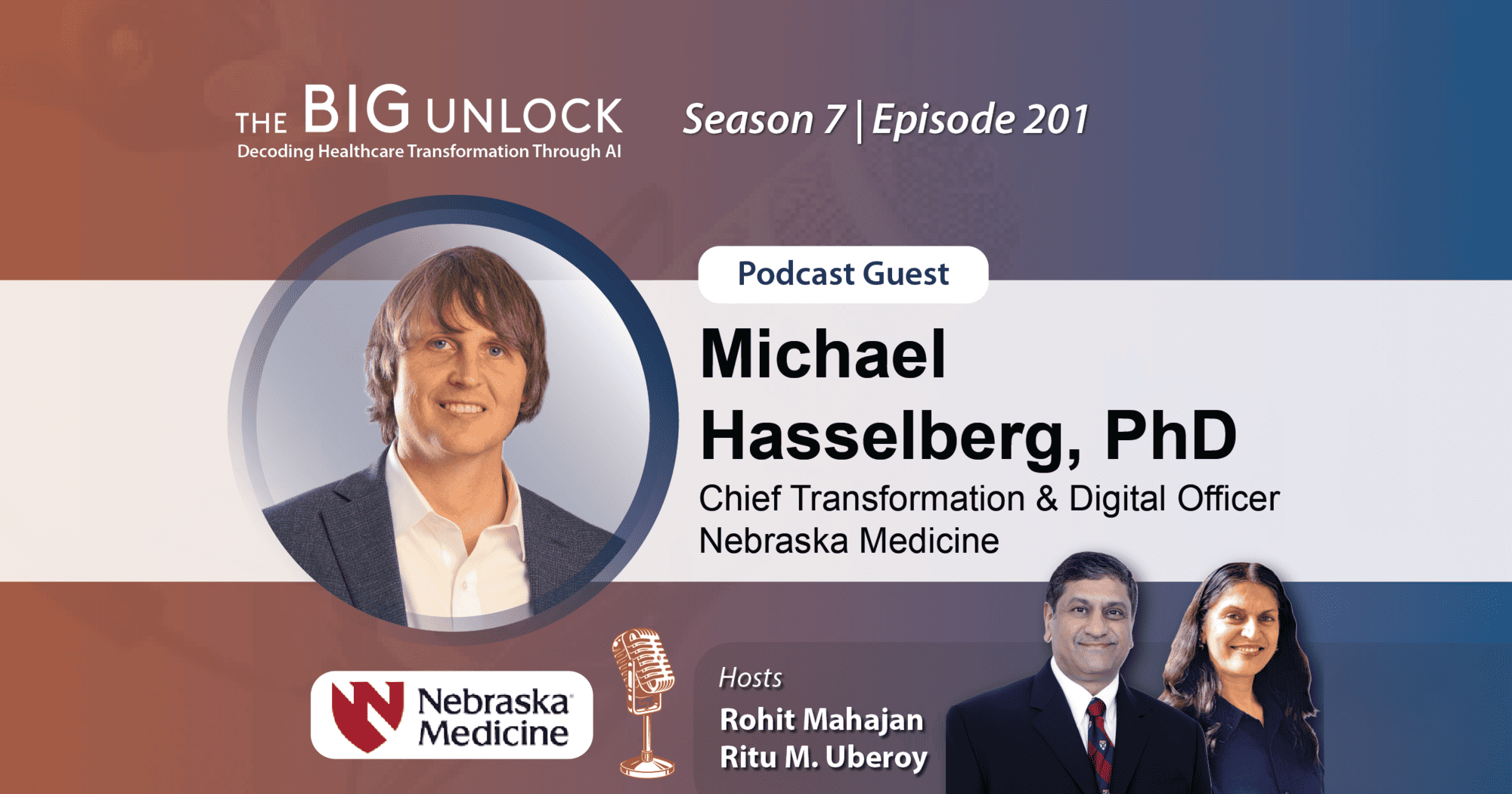
Episode 201 - Podcast with Michael Hasselberg, PhD, RN, Chief Transformation and Digital Officer,
Nebraska Medicine - AI Leadership Starts with a Simplified, Integrated Tech Stack

The Big Unlock
The Big Unlock
AI Leadership Starts with a Simplified, Integrated Tech Stack
Loading
/

In this episode, Dr. Michael Hasselberg, Chief Transformation and Digital Officer at Nebraska Medicine, makes a compelling case for sustainable digital transformation in healthcare. Sustainable digital transformation requires more than technology, it demands the right organizational structure. By unifying IT, innovation, and strategy under a single transformation office, health systems can move from isolated pilots to enterprise-wide impact.

Drawing from his journey across telehealth, mobile apps, VR, and AI, Dr. Hasselberg emphasizes that true transformation is about redesigning systems to deliver the right care at the right time. Nebraska Medicine deploys nearly one new generative AI tool per month, automating capacity management, discharge workflows, and revenue cycle operations. He also highlights the value of real-world innovation units where new technologies are tested with live patients before system-wide deployment.

Dr. Hasselberg’s most provocative insight: the next frontier of AI readiness isn’t a new technology, it’s application rationalization. He argues that to lead in AI and innovation, health systems must simplify their tech stack. Take a listen.

About Our Guest

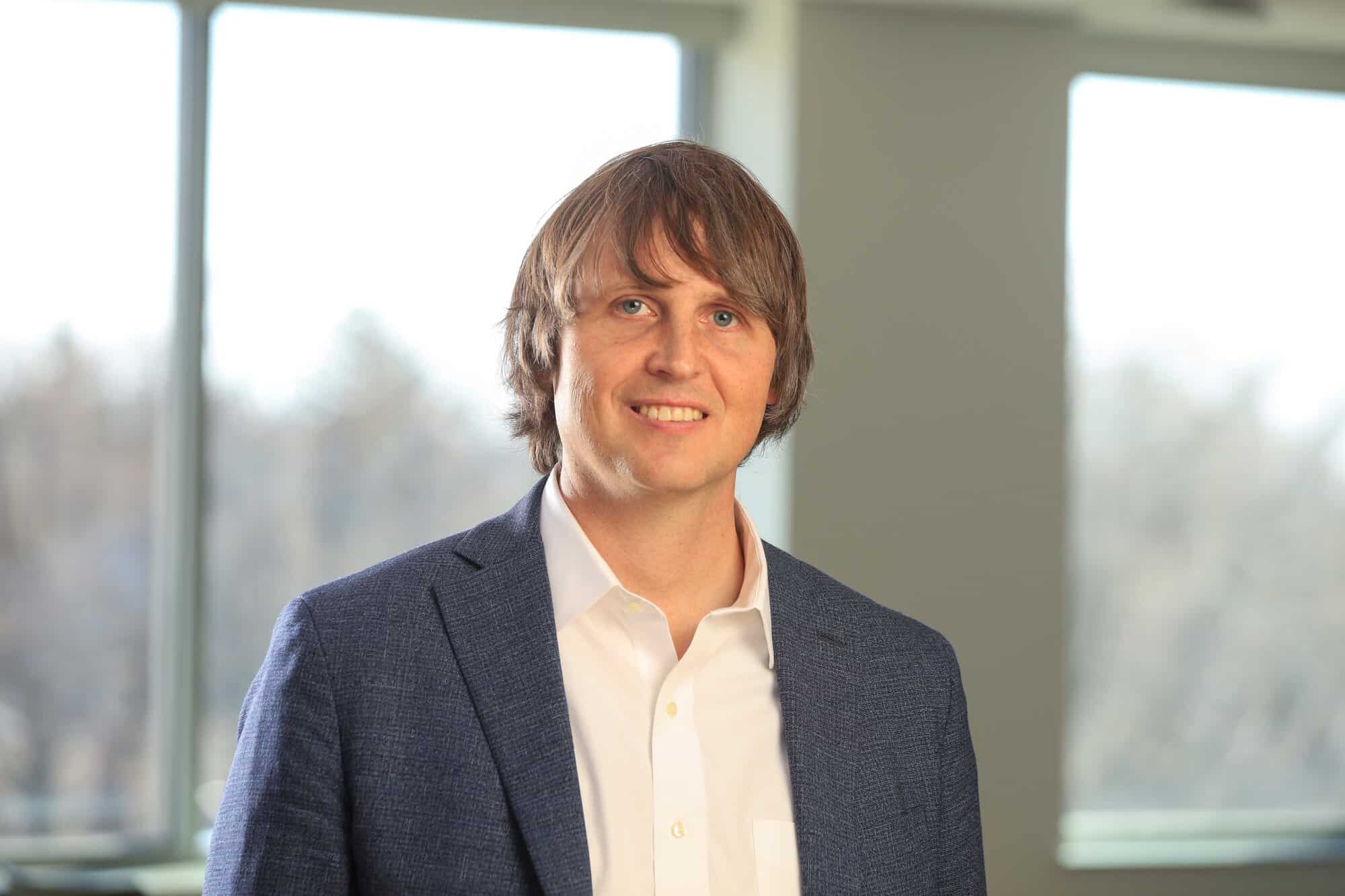
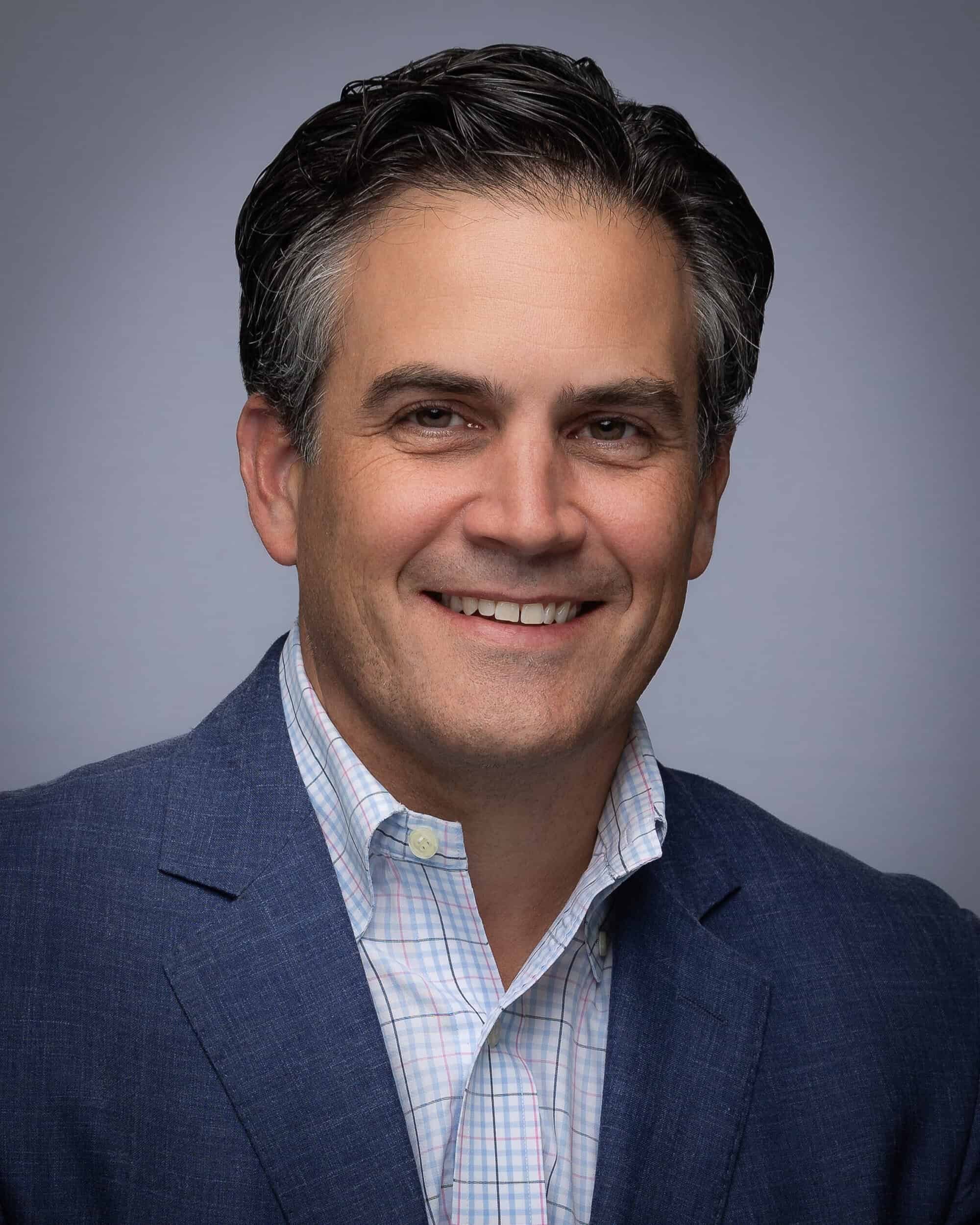
Michael Hasselberg, PhD, RN, PMHNP-BC, is the chief transformation and digital officer for Nebraska Medicine, where he leads information technology, the strategy enablement office, and the innovation team. In this role, he drives enterprise efforts to modernize care delivery and accelerate digital transformation, aligning technology, clinical operations and strategic growth initiatives. His work focuses on scaling solutions that improve patient outcomes, enhance clinician experience and strengthen health system performance. Dr. Hasselberg is also a professor of family medicine in the University of Nebraska Medical Center’s College of Medicine and volunteer professor in the College of Nursing.

Before joining Nebraska Medicine, Dr. Hasselberg spent more than two decades at the University of Rochester (UR) in New York where he held faculty appointments in psychiatry, nursing, and data science. His last role was serving as UR Medicine’s first chief digital health officer and co-director of the UR Health Lab. Dr. Hasselberg earned his Bachelor of Science in nursing at Binghamton University, Master's degree as a psychiatric mental health nurse practitioner from UR and then went on to earn a PhD degree in health practice research from UR.

His expertise expands health and technology as a Robert Wood Johnson Foundation Clinical Scholar Fellow and committee member for the National Academies Standing Committee on Primary Care. He has also been an advisor on digital transformation to government agencies, industry, venture, and health systems across the country.


Ritu: Hello listeners, a very warm welcome to the Big Unlock Podcast. My name is Ritu, and I’m the managing partner at Damo Consulting and co-host of the Big Unlock Podcast along with Rohit. We are extending a very warm welcome today to Dr. Michael Hasselberg. He’s been on the Big Unlock Podcast before — in 2022, season four, episode 138.

Welcome back. Dr. Hasselberg is the Chief Transformation and Digital Officer at Nebraska Medicine, where he is leading enterprise-wide efforts to modernize care delivery through digital innovation and operational transformation. He has a background in emergency medicine, public health, and informatics, and brings a uniquely systems-oriented perspective to scaling technology in complex health environments. Today he’s joining us on the Big Unlock Podcast and we are really excited to have this conversation. With that I’ll give it to Rohit for his introduction, and then it’s all yours, Dr. Hasselberg. Welcome once again.

Rohit: Thank you. Welcome, Michael, to the podcast — really nice to have you again. I am CEO of Damo and co-host of the Big Unlock Podcast. Short intro from our side; over to you.

Michael: It’s great to be back, and a lot has happened since we last talked in 2022, so I’m excited to dive in with both of you.

Ritu: Almost seems like a different era. Seriously. So, Dr. Hasselberg, we always love to start with an origin story because our listeners like to hear unique stories about how people got into healthcare and how they got to where they are today. If you’d like to start with that, we’d love to hear your story.

Michael: Sure. First and foremost, I’m a nurse, and very proud of being a nurse. I went on to become a psychiatric nurse practitioner very early in the psychiatric nurse practitioner movement. When I graduated, there weren’t actually any jobs for psych NPs in the city of Rochester. So, my first job as a nurse practitioner was about an hour and a half to two hours away from Rochester, where I drove every day to a very rural community in New York State where I was the only psychiatric prescriber for about six counties.

I managed the outpatient psychopharmacology clinic and the jails and the nursing homes. It was a pretty transformative experience that made me very passionate about serving vulnerable communities. The patients I served were so grateful that I was willing to drive that far every day to provide care. That experience became my underlying “why” for the rest of my career — how can we find more efficient ways to get healthcare out to communities that weren’t getting the care they deserved.

From there I finished a traditional research PhD, and after that I was tasked with developing a telehealth infrastructure for psychiatry at the University of Rochester. This was well before telehealth was widely reimbursed in the States. We built a very large telehealth infrastructure across New York State, and eventually reached a point where I couldn’t grow it further because I couldn’t graduate clinicians fast enough to take on more patients on the other end.

That’s when I really leaned into innovation. I started thinking about whether we could use technology without needing a clinician on the other end to deliver care. I got into the world of mobile apps and started working with the engineering school and computer science department to develop mobile apps for behavioral health. Then I moved from mobile apps into virtual reality when the first Oculus Quest headset came out — affordable, powerful, and untethered — and started developing mindfulness and meditation applications for VR headsets.

By that point I had different layers of digital interventions: apps, telehealth, VR headsets, and in-person care. I got really interested in data science and started thinking about whether I could use big data to risk-stratify patients to the right level of care at the right time in the right place. That drew me into machine learning and data science about seven or eight years ago.

Then COVID hit and every health system had to go digital overnight. I was put into a new position as Chief Digital Health Officer at Rochester to lead that digital transformation strategy. About two to three years ago, when the world was introduced to generative AI, our innovation team at Rochester got early access to some of those foundation models in a secured, private way. I was pretty blown away by their power. Around that time — 2022, when we last spoke — I was making comments in national forums that with the advent of generative AI, it had never been easier for health systems to develop their own AI tools in-house to solve their own problems, rather than relying entirely on vendors.

That’s when I got to meet Dr. Michael Ash, who was serving as the Chief Transformation Officer at Nebraska Medicine. Dr. Ash is a very innovative, entrepreneurial, visionary thought leader from a technology standpoint. We started exchanging ideas, and he was eventually named incoming President and CEO of Nebraska Medicine. He invited me to Omaha as a visiting professor to see the health system, and I fell in love with Nebraska, Omaha, and the organization. It was a very hard decision because I love Rochester through and through, but I took the leap to join Nebraska Medicine in Dr. Ash’s former role as Chief Transformation and Digital Officer.

Ritu: Wow, that’s a great recounting of the entire story — thank you. Really interesting for our listeners to hear as well. One thing I picked up on is that your title emphasizes transformation, not just Chief Digital Officer. What’s the difference, and where do most health systems fall short when trying to bridge that gap?

Michael: One of the things that excited me about Nebraska Medicine is that they are, I would argue, more mature and out ahead in terms of their leadership structure. They are very nimble in regards to the number of chiefs who report directly to the CEO and president. There are six chiefs — the Chief Transformation and Digital Officer being one — along with the Chief Operating Officer, Chief Financial Officer, Chief Medical Officer, Chief Nursing Officer, and then a combined Chief Legal and People Officer.

What excited me about Nebraska to do transformation at scale is that it goes well beyond just technology. In my role I’m accountable for three main verticals. First, IT — the Chief Information Officer reports up to me. Second, our innovation and venture arm, which we can dig into deeper if listeners are interested, because we’re doing some really cool things there. And third, the strategy office — we have a VP of Strategy Enablement and an entire strategy office that looks at markets, guides acquisitions, and evaluates joint ventures.

The strategy office is also where our AI efforts and engineers sit. Having strategy, innovation, and IT all underneath essentially a transformation office means we’ve got the right ingredients to do transformational work at scale. That’s what’s really exciting for me and why I took the leap to Nebraska. I think we’re very well positioned structurally to not only improve the lives of all Nebraskans, but to become the gold standard for the rest of the country on what the future of healthcare looks like.

Ritu: That’s a really good answer. Having those three things — IT, innovation, and strategy — reporting into you is directly related to the next question. A recurring issue we hear from Chief AI Officers and Chief Digital Officers is a lack of operational ownership for digital initiatives, which leads to most pilots failing or fading into obscurity. Having those three arms under you and being fully responsible must be doing a lot to ensure the success of these initiatives. We’d love to hear more about the venture arm — what’s your approach to developing new technologies and incubating ideas?

Michael: One of the really exciting things is that we already have a commitment from the health system, the university, the state, and our philanthropists to build a $2.2 billion Hospital of the Future. It’s already underway — we’ve got a hole in the ground, construction has started, and the doors will open on our main campus in about five years. We know that with healthcare and technology changing so quickly, it’s really hard to answer the question: what will the hospital room of the future look like five years from now?

To prepare ourselves to answer that question, we’ve already made significant investments in our innovation ecosystem — hundreds of millions of dollars into our Edge District. The Edge District is focused on two things: what I’d call inside-out innovation, where our researchers are developing new intellectual property that we look to potentially commercialize and spin out as startups; and outside-in, where local startups that want to get into healthcare and understand healthcare problems can get involved.

On the university side, we’ve also made significant investments in simulation and education for our future leaders. We have a program called iEXCEL, which I believe is one of the largest, if not the largest, simulation centers in the entire country. They’re using very frontier technology — we’re leaning heavily into holograms. We actually have a hologram theater where we can create holograms nearly the size of a room of hearts and organs that students can interact with as they’re learning anatomy and surgery. Of course, we also have simulation rooms and surgical simulation suites in that building.

But the really unique and exciting element is our Innovation Design Unit and Bridge Program, which sits inside Nebraska Medicine itself. We’ve built a 17-bed med-surg unit that can scale up to an ICU if needed, and it has all the bells and whistles of technology. The unit itself is modular and all glass — touch the glass and it frosts over. When we hire staff to work in the Innovation Design Unit, we look at their behavioral profiles during interviews: are they agile, knowing that how they deliver care and the technology they use is going to be constantly changing and iterating?

There’s literally a bridge off that unit to our Bridge Program — a small mockup of the unit where our engineers, data scientists, and clinicians bring in vendors or build new technology, test it in that environment, and then nurses and physicians can come over, play with it, and test it before we bring it live with patients in the Innovation Design Unit. The learnings from those technologies are informing exactly what we’re going to put into Project Health, our new Hospital of the Future. I’ve been to innovation programs around the country at some of the leading health systems, and I have never seen anything like this.

Ritu: Amazing. So, these holograms are like digital twins?

Michael: Yes, exactly. It sits on the university side, and essentially as we’re training students, we can input radiology images and the system creates a hologram of that organ from the image. Students can interact with the hologram as they’re learning anatomy and how to perform surgery.

The other exciting thing is that Nebraska is a rural state and the University of Nebraska has four campuses, one of which is in a rural part of the state where a new medical school cohort is starting up. The university has worked hard on how to transmit these holograms remotely out to that campus, so faculty specialists in Omaha can continue to support and teach those students at a distance using this forward-thinking technology. Really special and unique — and it’s what I love about being part of an academic health system, really partnering with the university side to educate our future clinicians so they’re ready to function in a hospital of the future that is digitally enabled and AI-augmented.

Rohit: With so much innovation going on, how do you prioritize and allocate resources? And if you’d like to share any success stories — and maybe some failures from a learning perspective as well?

Michael: The maturity of our structure really drives this. We have purposely placed AI — specifically our AI engineers, data analytics, and data scientists — in our strategy office, which keeps the projects we take on aligned with the most important priorities of the health system. Starting from our board metrics down to what we call our Delta projects, and then into our OKR projects.

When a new use case gets submitted, we have a very rigorous evaluation process, and where a proposal scores most points is strategic alignment to our top priorities. Within the strategy office we have a team of process engineers who, when a use case is submitted, deeply examine what problem is trying to be solved and what workflows are involved. The process engineers work closely with our enterprise architects and solution architects in IT to ask: do we already have a technology on our stack that could address this problem? If not, we work through the build-versus-buy question.

I’d argue we are more of a build shop, and that hasn’t always been the case in healthcare. We build about one new generative AI tool per month in-house. We now have 28 tools we’ve built ourselves, deployed at scale — and those AI use cases, which are aligned with our biggest health system priorities, each get what we call a Delta team. The Delta team includes operators, clinicians, informaticists, and technologists. We make sure that from build through deployment, the initiative is properly resourced to be successful and to scale. Once it’s scaled and running, the Delta team moves to the next project, and the tool is maintained as an operational program within the health system.

We’ve had a ton of success focusing on back-office work: throughput, clinical capacity. We’ve built AI tools that identify which patients in our hospital are ready for discharge and automate notifications to nurses — “this patient is ready, here are the orders needed to move them to the discharge lounge and out of the hospital.” Very similar tools around transfers: identifying which patients at rural hospitals across the state are appropriate to transfer to us, and when a patient is with us, identifying when they’re ready to transfer back. Just through automating capacity management, we’ve created over 30 net-new beds in our hospital — not by building new beds, but by automating the processes.

We’ve also automated a lot of scheduling and surgical optimization, getting the right patients in to see our surgeons at the right time. In the revenue cycle we’ve had a lot of success automating denials management, prior authorizations, and registry reporting — freeing up nurses from manually extracting data to submit to registries so the AI can do that extraction instead.

An example of something that started with significant resistance: a faculty member — a brilliant heart surgeon — went to a conference, met with an AI vendor, and came back convinced he needed their specific tool to help identify structural heart defects to get the right patients to him more efficiently. He was adamant: “The vendor says it’s plug-and-play, fully integrated into the EHR, and I needed it yesterday.” I had to spend a lot of time with him to take a step back and ask: what is the problem you’re actually trying to solve?

Once we fully understood that, I told him we have tools in-house and a data science team that I believed could not only build the same solution, but build it better because it would be personalized to his workflow. He was very hesitant and said, “I’ve heard this before — I don’t have six months to a year for you to build something.” We got past that. We were able to build a solution in less than a month, and he and his service line are very happy because it not only solves his problem, it’s tailored exactly to his workflow.

Ritu: Those are really good examples. We were bracing for the usual ambient documentation and scribe story, so it’s nice to hear about different applications.

Michael: Something people don’t know about Nebraska: when I think of the two most transformative technologies in healthcare to date, on the patient side no one would question that telemedicine has been the most transformative. And Nebraska Medicine was the birthplace of telemedicine — it started here in the Department of Psychiatry, in partnership with the Bell Telephone Company, in the 1950s. Most people don’t know that.

On the provider side, no question — ambient documentation is the most transformative technology. We were the first digital scribe pilot site in the country, in partnership with Nuance and Rush in Chicago, co-developing that technology. The two most transformative technologies in healthcare, and Nebraska was at the forefront of both. I could absolutely talk about our successes with ambient documentation, but I did want to highlight that we were one of the first, working with Nuance years ago as they were developing that technology.

Ritu: Great information — the listeners will love hearing that. We’re almost at the end; time has flown by. We’d love to hear what you see coming down the pipeline in the next one to two years that could be as transformative as ambient documentation.

Michael: I can tell you, and this may not be the sexy answer listeners are hoping for: the biggest transformative project I’ve kicked off as the new Chief Transformation Officer at Nebraska is actually a cleanup project. I’ve just launched application rationalization, and it is not an IT-driven project — it’s a health system strategic initiative.

Over the years, partly as a result of our innovative culture, we’ve had significant application sprawl. Our technology stack is very, very complex. My argument is that if we really want to continue to be leaders in AI and innovation, we have to simplify our tech stack. It will create more standardized workflows across the system, and it will free up my technologists, informaticists, and innovators — who right now are spread really thin managing so many applications.

We’re very excited, and I believe we’re going to be able to cut two-thirds of the applications on our stack over the next couple of years. That will create more efficiencies, unlock more innovation, and set us up even better from a data enablement standpoint to continue leaning into AI. Not the sexy answer, but it’s like spring cleaning — and we’ve got a lot of it to do.

Rohit: I’d add that it’s also an opportunity to infuse the remaining applications with more AI.

Michael: A hundred percent. We’re going to lean into our core applications and their functionality, and every vendor right now is introducing AI capabilities. I want to lean into my core platforms, and to do that I’ve got to remove the noise. This is a health system-level strategy, not an IT-driven initiative. We’ve already been able to identify and retire several applications, so we’re well underway.

Ritu: We’re almost at the end of the podcast. I’m sure listeners have a lot to unpack, and we’ve learned a lot of new and interesting things about Nebraska as well. Thank you so much for sharing, Dr. Hasselberg, and thank you once again for being on our podcast.

Michael: I loved it — this was a lot of fun. Hopefully you’ll invite me back in about four years, right around the time we’re opening our Hospital of the Future. Technology will have changed quite a bit by then.

Ritu: That sounds great — we’ll definitely be there for that. Thank you so much for being on our podcast.

Michael: Thank you. Alright, have a great one.

————

Subscribe to our podcast series at www.thebigunlock.com and write us at [email protected]   

Disclaimer: This Q&A has been derived from the podcast transcript and has been edited for readability and clarity.

About the Hosts

Rohit Mahajan is an entrepreneur and a leader in the information technology and software industry. His focus lies in the field of artificial intelligence and digital transformation. He has also written a book on Quantum Care, A Deep Dive into AI for Health Delivery and Research that has been published and has been trending #1 in several categories on Amazon.

Rohit is skilled in business and IT  strategy, M&A, Sales & Marketing and Global Delivery. He holds a bachelor’s degree in Electronics and Communications Engineering, is a  Wharton School Fellow and a graduate from the Harvard Business School. 

Rohit is the CEO of Damo, Managing Partner and CEO of BigRio, the President at Citadel Discovery, Advisor at CarTwin, Managing Partner at C2R Tech, and Founder at BetterLungs. He has previously also worked with IBM and Wipro. He completed his executive education programs in AI in Business and Healthcare from MIT Sloan, MIT CSAIL and Harvard School of Public Health. He has completed  the Global Healthcare Leaders Program from Harvard Medical School.

Ritu M. Uberoy has over twenty-five years of experience in the software and information technology industry in the United States and in India. She established Saviance Technologies in India and has been involved in the delivery of several successful software projects and products to clients in various industry segments.

Ritu completed AI for Health Care: Concepts and Applications from the Harvard T.H. Chan School of Public Health and Applied Generative AI for Digital Transformation from MIT Professional Education. She has successfully taught Gen AI concepts in a classroom setting in Houston and in workshop settings to C-Suite leaders in Boston and Cleveland. She attended HIMSS in March 2024 at Orlando and the Imagination in Action AI Summit at MIT in April 2024. She is also responsible for the GenAI Center of Excellence at BigRio and DigiMTM Digital Maturity Model and Assessment at Damo.

Ritu earned her Bachelor’s degree in Computer Science from Delhi Institute of Technology (now NSIT) and a Master’s degree in Computer Science from Santa Clara University in California. She has participated in the Fellow’s program at The Wharton School, University of Pennsylvania.

About the Legend

Paddy was the co-author of Healthcare Digital Transformation – How Consumerism, Technology and Pandemic are Accelerating the Future (Taylor &  Francis, Aug 2020), along with Edward W. Marx. Paddy was also the author of the best-selling book The Big Unlock – Harnessing Data and Growing Digital Health Businesses in a Value-based Care Era (Archway Publishing, 2017). He was the host of the highly subscribed The Big Unlock podcast on digital transformation in healthcare featuring C-level executives from the healthcare and technology sectors. He was widely published and had a by-lined column in CIO Magazine and other respected industry publications.
Healthcare Needs Real Disruption, Not Incremental Change

Season 7

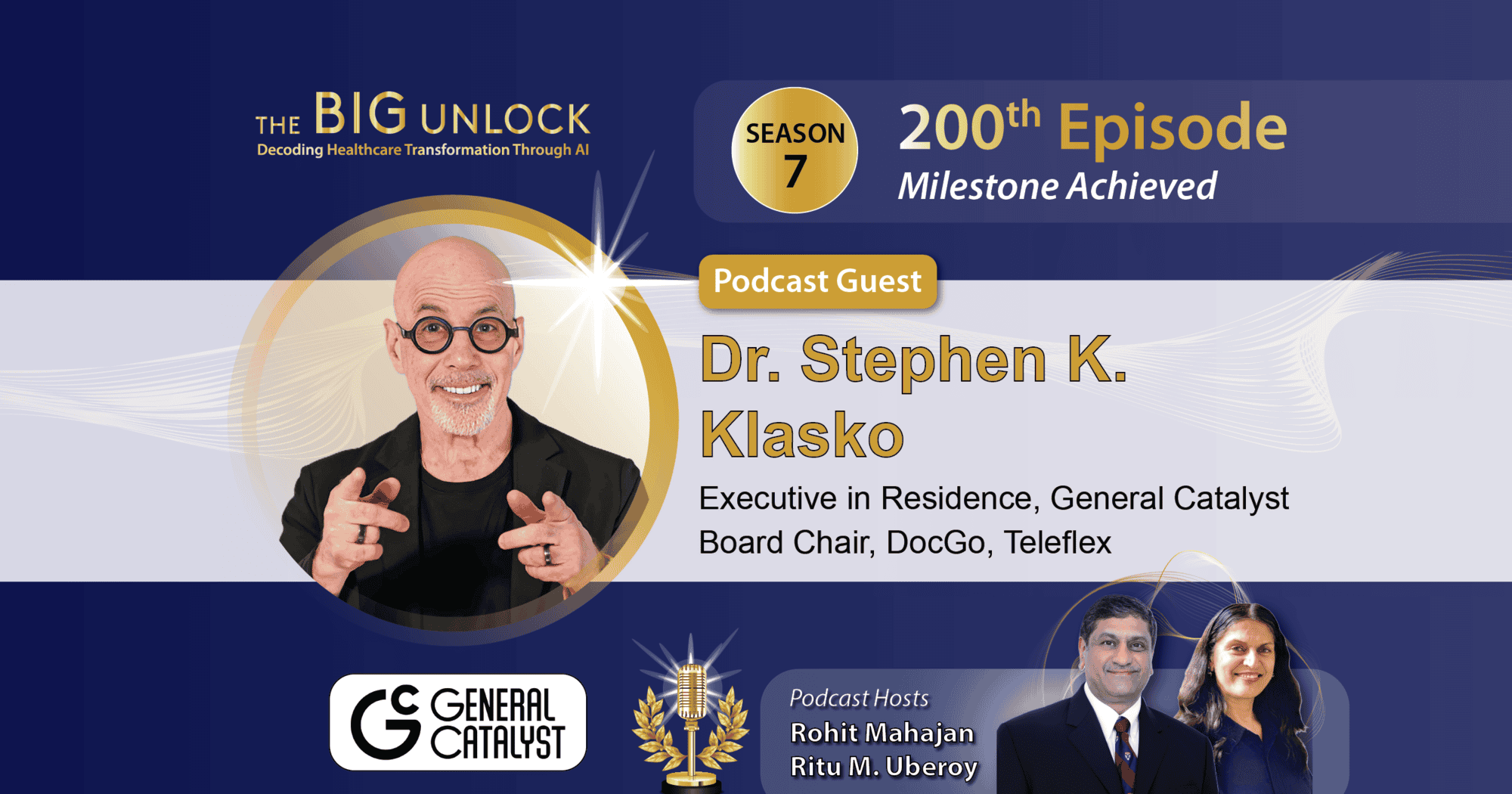
Episode 200 - Podcast with Stephen K. Klasko, MD, MBA, Executive in Residence, General Catalyst
Board Chair - DocGo, Teleflex

The Big Unlock
The Big Unlock
Moving Beyond Pilots to Scale Impact in Healthcare
Loading
/

Season 7 | Episode 200

Dr. Stephen K. Klasko, Executive in Residence, General Catalyst & Board Chair, DocGo, Teleflex -
Healthcare Needs Real Disruption, Not Incremental Change

The Big Unlock
The Big Unlock
Healthcare Needs Real Disruption, Not Incremental Change
Loading
/

In this episode, Dr. Stephen K. Klasko, former CEO of Jefferson Health, Executive in Residence at General Catalyst, Board Chair at DocGo, Teleflex, and one of healthcare’s most provocative voices, challenges the industry to rethink its fundamental assumptions and move toward a more sustainable, patient-centered future. He argues that despite years of discussion around value-based care and digital transformation, true disruption has been limited because stakeholders remain unwilling to fundamentally change existing business models.

Dr. Klasko argues that the healthcare system is broken, fragmented, expensive, and inequitable and that true disruption, like what Uber did to taxis or Amazon to retail, will demand that some players fail. He makes the case that the annual physical visit is a farce, and that continuous health narratives powered by wearables and AI companions are the future of proactive, personalized care.

On the tech-provider collaboration front, Dr. Klasko identifies – founder ego, misaligned incentives, and EHR-era skepticism as the biggest barriers. He advocates for co-developing solutions, sharing equity, and building genuine partnerships. Dr. Klasko’s message to healthcare leaders is unambiguous: stop turning things around 360 degrees and start making real, uncomfortable changes. Take a listen.

This guest appearance was facilitated through conversations initiated at Health Tech Summit by Cornell Tech.

About Our Guest

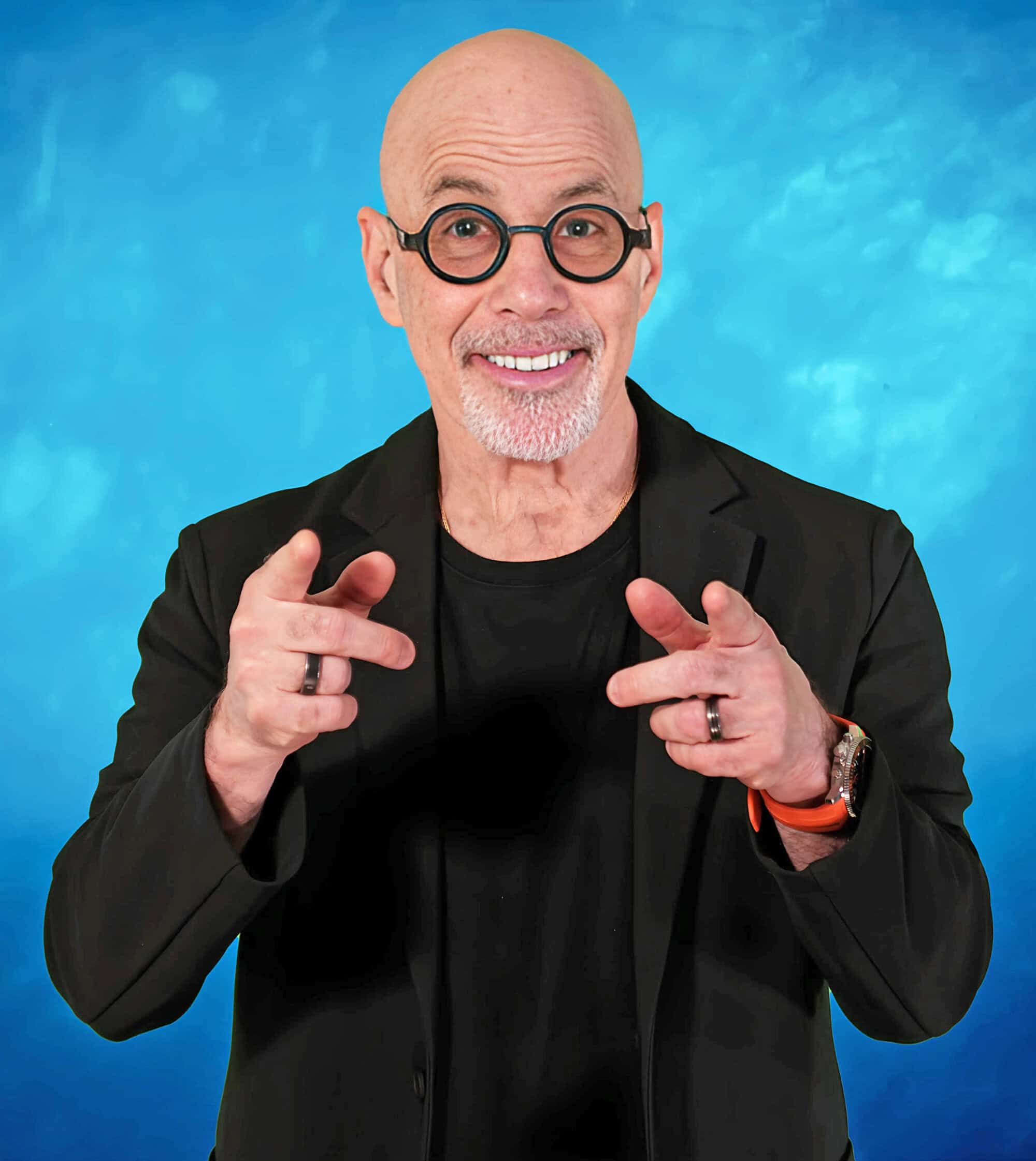
Dr. Stephen Klasko's professional history has been about not just disrupting healthcare but demolishing its sacred cows and rebuilding from scratch. As president and CEO of Thomas Jefferson University and Jefferson Health, he orchestrated a 567% revenue growth from $1.5 billion to $10 billion in nine years, while pulling off a merger of a 200-year-old health science university with a design school to reimagine "the human design experience in healthcare" starting at home. In a single year, he was named the #2 most influential person in healthcare and Fast Company's "Top 25 most creative people in business." He co-authored "Unhealthcare: A Manifesto for Health Assurance" with Hemant Taneja of General Catalyst—a battle cry against an industry he believes is fundamentally broken.

Now leading that change through his work at General Catalyst and DocGo, Klasko has spent his career proving that the biggest threat to healthcare innovation isn't technology, it's the traditionalists defending a dying system. Where others see academic medicine and Silicon Valley as opposing forces, he has built his legacy proving that they're the only combination powerful enough to save healthcare from itself.

As a DJ and doctor, he looks forward to 2026, when we, as the dreamers and designers of healthcare, can do an "ERAS tour"—Empathy, Radical collaboration, Access, and Swift care—and, as Sia sang, find the "courage to change."


Ritu: Hello everyone. Welcome to the Big Unlock Podcast. My name is Ritu and I’m your co-host today along with Rohit. I’m the managing partner at Damo Consulting and host of the Big Unlock Podcast. Really happy to have our listeners here today and to welcome Dr. Klasko to the podcast.

He’s one of the most provocative voices re-imagining the future of healthcare. In 2024, Becker’s Hospital Review named him as one of the great leaders in healthcare. He’s been recognized by Fast Company as one of the most creative people in business, by Modern Healthcare as the number two most influential person in healthcare, and by Ernst & Young as Entrepreneur of the Year.

Former CEO of Jefferson Health, he led its transformation into a national model for innovation, scaling it into a 14-plus hospital system. He’s also co-author of Unhealthy: A Manifesto for Health Assurance, where he challenges the industry to move beyond sick care toward true health assurance. Today, as an advisor and investor working with organizations like General Catalyst, he’s helping build the next generation of digitally enabled, patient-centered care models. Known for questioning long-held assumptions, Dr. Klasko continues to push healthcare leaders to rethink not just how care is delivered, but why the system even exists in its current form.

Really happy to have you with us, Dr. Klasko. With that I’ll pass it to Rohit for a brief intro.

Rohit: Thank you, Ritu. Hi everyone, I’m Rohit — CEO of Damo and co-host of the Big Unlock Podcast. It is a pleasure to have you, Steve, on the podcast. We had such a wonderful presentation from you at Cornell Tech recently. Looking forward to an engaging session. Thank you.

Stephen: Well, thanks. You guys did a better introduction than I could have done. When you’re 72, you have about five different careers — we could take the whole half hour. What I told someone at a Forbes conference: a young woman came up to me and said it seemed like everybody knows me. I said, look, I’m 72, I’ve been a healthcare leader for 40 years, I’m still vertical, and my first five Google pages are still positive. There are only about ten people who can say all four of those things.

The simple answer is I started my career as a DJ. I’m a high-risk obstetrician who delivered about 1,500 babies in private practice in Pennsylvania and Florida. Through a series of events, I got my MBA at Wharton and became one of the leaders in studying what makes doctors different and how we handle change. I became the dean of a couple of medical schools, including one where we selected a class based on self-awareness, empathy, communication skills, and cultural competence — not just memorizing the Krebs cycle.

Then I became CEO of two different academic medical centers: University of South Florida — which, interestingly, is not in south Florida but in northwest Florida, which tells you everything about the logic of Florida — and then Jefferson, which we grew from roughly a $1.5 billion single-hospital entity to an 18-hospital healthcare-at-any-address system with an insurance company.

One of the things I’m most proud of: we merged our 200-year-old health science university with the number-three design university and created the first MD/Master’s in Design — the design of the human experience in healthcare. Our mission became being a 200-year-old academic medical center thinking like a startup, really embodying the model of what you’d get if a Silicon Valley entrepreneur and a health system CEO had a baby. We tried to create that at Jefferson, and in some respects that’s what we’re doing at General Catalyst now. We’ve acquired a health system, Summa, and created health assurance partners like WellSpan and others. It’s taking both sides — the tech galaxy and the traditional healthcare ecosystem galaxy — recognizing that neither has all the answers, and trying to bring them together.

Ritu: Thank you for that wonderful introduction — three questions straight away from what you’ve said. Let’s start with the first one. You’ve talked about healthcare at any address: telehealth, distributed care, digital front doors. COVID really normalized that, but we still haven’t seen that system come fully to scale. What is the problem, and why do you think digitization and the digital front door haven’t happened so far?

Stephen: I’ll start with two quotes. One is from Peter Diamandis, who said the problem with disruption is that it disrupts your current line of business. And we haven’t been willing — insurers haven’t been willing, hospitals haven’t been willing — to disrupt their current lines of business. We all talk about it. We talk about value-based care like it’s some Greek mythology myth, because we haven’t figured out how to make it work by and large.

One of my mentors was Bill Kissick, who wrote a book 45 years ago called Medicine’s Dilemmas: Infinite Needs, Finite Resources. He was the first to talk about the Iron Triangle of access, quality, and cost. If you remember ninth-grade geometry, increase one angle and you have to decrease another. So if you increase access, you’re either going to increase cost or decrease quality — unless you’re willing to disrupt the system. And disruption is painful.

He said, in a nonpolitical way: if anyone ever tells you they’re going to increase access, increase quality, and decrease cost — and it’s not going to be painful — they’re not telling the truth. The day after the ACA passed, President Obama said it would increase access, increase quality, and decrease cost with no pain to anybody. Whether that was intentional or inadvertent, it clearly wasn’t true. Trump said his plan would be fantastic, terrific, unbelievable, and really huge — and it was none of the four.

In every other disruption of every other sector — Uber and taxis, Amazon and retail — the players that weren’t willing to be fundamentally disrupted went away. Think Sears and JCPenney. Circuit City thought they could go all-e-commerce and failed. Others said, “Holy moly, this is real,” figured out how to make their old model work alongside a new model — think Target and Walmart.

That’s largely what’s happening right now in healthcare. This is the first time in our history where just about everybody’s hurting. For the last ten or fifteen years, hospitals ruled the roost and told insurers what to do. Then payers said, “If you don’t do this, I’ll send all my patients elsewhere.” Just look at UnitedHealthcare — since the ACA it became the second-best-performing stock after Apple, and it’s a middleman. But now they’re hurting and the hospitals are hurting too.

The simple answer is: until we recognize that the system is broken, fragmented, expensive, and inequitable — and probably unsustainable, though we’ve been saying that for a long time — something has to give. It’s really like Hurricane Katrina, where everybody said the levees wouldn’t hold until they didn’t. We are literally at that point in healthcare.

Ritu: I totally agree with you. Even at Cornell Tech, something I wrote down from your talk: true change can’t be incremental and slow — it has to be jolting, and it has to hurt people.

Stephen: And people have to fail. Sears and JCPenney failed. Circuit City said “we’re going all-e” and failed. I did a lot of work with Target and Walmart when I took over Jefferson, and their whole philosophy was: we’re really good at what we do, we’re not going to abandon that, but we have to be just as good as Amazon at what they do. In one case they bought a new platform, in another they built one. That was an aha moment for me.

At Jefferson, we have one of the best pancreatic cancer surgeons in the world — Dr. Charles Yeo. If you have pancreatic cancer, you don’t care about our digital health strategy, our TV screens, or our food. You want to see Dr. Yeo, and people come from around the world for that. But for the other 97% of people in Philadelphia who don’t wake up thinking of themselves as patients, all we could say was: come to my office, my ER, my urgent care, my hospital. None of them wanted to do any of that. They wanted to be a person with diabetes or congestive heart failure or COPD who could thrive without having to think about it.

One of our first big successes at General Catalyst was Livongo — sold for $18.4 billion. All Livongo did, when you really think about it, was say: we’ll be your invisible friend if you have diabetes. They partnered with Jefferson and said, “Klasko’s great — but he’s great if you need his office, urgent care, ER, or hospital. That’s not what you need 97% of the time. We’ll be there for the other 97%.” That’s what tech, payers, and health systems have to learn to do together. The ones that can disrupt on access, quality, user experience, and cost will succeed.

Ritu: That leads into the new era — you’ve also talked about how the whole idea of the annual wellness visit is going to be outdated because of the constant stream of data coming in from wearables. People need AI companions, and they’re so used to getting everything on demand. The whole model of going into the doctor’s office, seeing the doctor, and then waiting for information is going to be very outdated very soon.

Stephen: The annual visit is a farce. Think about it — imagine if your entire financial life was managed by checking in once a year and ignoring everything in between. Oh, by the way, there was a war, or inflation ticked up four years ago. We’ll just check you annually. I had my Mayo Executive Wellness exam and they gave me all this guidance on exercise and weight loss. I’m a marathon runner. Two days later I tore my hamstrings. Everything they told me was immediately irrelevant.

If they had gotten the data from my Oura ring, they would have said, “Hey Steve, you were running 25 miles a week and you stopped on Tuesday — we’d like to talk to you.” Well, I didn’t just stop. I did a face plant because I tore my hamstrings and had them surgically reattached.

My new book is going to be called — as I mentioned at the Cornell talk — Swifties, Startups, and the Singularity, where I come back from 2035 as the Chief Digital Health Officer for President Taylor Swift, because the Swifties have become a political party. We could do worse. Our healthcare motto was “make healthcare Taylor-made, make it Swift” — neither of which was true in 2026. And one of the breakup songs was: we were never, ever, ever going back together with annual physicals. Even the term “physical” is asinine — it means I’m going to check everything from the neck down once a year.

One of the companies I’m involved with, NeurFlow, did a study showing that about 30% of people who have attempted or completed suicide had seen their primary care doctor within the last four or five months. They had a “physical” and the doctor didn’t connect what may have been a warning sign. NeurFlow actually connects those warning signs. So the whole concept of continuous health narratives and much more sophisticated wearables is critical.

I had a cardiac bypass two years ago. I left the hospital on day two — actually DJing for the nurses on day two. Typical cardiac rehab would have me sitting in a waiting room about five weeks later, getting wired up and walking on a treadmill. I’m a marathon runner — I wasn’t doing that. So I talked to my cardiologist and we connected my Oura ring and Apple Watch data. He had me start walking around week two, monitoring heart rate variability, and gradually increasing. I did it all from home at a much lower cost and was back to running within about eight weeks — whereas with the traditional approach I would just have been starting treadmill walking.

This healthcare-at-any-address model not only makes care more accessible but allows you to customize it. A lot of bypass patients are sedentary people who haven’t exercised — and that’s the one-size-fits-all model in American medicine. I had an autoimmune issue, a cholesterol of 107, and weighed 140 pounds. I didn’t need to prove I could walk on a treadmill.

Ritu: Absolutely. So Dr. Klasko, you’ve been championing radical collaboration between health systems and Silicon Valley for a while now. You mentioned Summa, but in practice, what is the biggest failure you’ve seen where collaboration looked good on paper but didn’t work in the real world due to culture, incentives, or ego?

Stephen: I think you answered your own question — culture and ego. Let me expand on that. First, here’s what we hear from health system CEOs: “We are tired of putting all the Lego pieces together for all the point solutions your 28-year-old founders create.”

I’m a board advisor to five very good women’s health AI and tech companies handling different parts of women’s health — fertility, menopause, the vaginal microbiome, pregnancy. Why don’t they get together and say, “Throughout a woman’s life, we can now do more of this at home”? It’s founder ego. I sometimes have to explain to these companies: you’re not going to create an IPO based on dense breasts, or vaginal microbiome, or one part of a woman’s life like fertility alone.

The second thing is that we haven’t been that successful in the past. As one CEO told me: “You spent 40 years telling us technology would make our life easier.” Start with what he called the epidemic of EHRs — they were supposed to make our lives easier and all they did was create more administrators. There’s real skepticism that AI isn’t just our new cool EHR.

And then the third thing is incentives. One of the things I’m proud of at Jefferson: I wrote an article called “I’m Never Getting Fleeced Again.” I was at University of South Florida and a CEO came to me in 2009 — a virtual health company, even back then. He said, “Steve, I want to take you out to dinner. We couldn’t have done it without you. USF was our first client.” I asked why the dinner. He said, “We just got valued at $800 million.” I said, “That better be one hell of a dinner, because we didn’t get anything out of that.” He said, “No, no — I’m also going to send you four fleeces.” So my article was “I’m Never Getting Fleeced Again.”

If I’m really involved in helping create billion-dollar companies, that has to change. At Jefferson, we literally put a General Catalyst person on our cabinet. We co-developed. With companies like Carrum Health, we gave them total access to all our doctors and systems, but we also had an opportunity to gain equity — not pay-to-play, just true partnership. When Carrum became a significant company, I didn’t feel like I’d helped create something and gotten nothing in return.

From Jefferson’s perspective, it was also a portfolio diversifier — which is what every health system needs. If you’re struggling to make a 2% margin on your hospital business and you can’t depend on investment markets continuing to grow 10 or 15% a year, while you’re getting less and less from insurers — meanwhile $30 billion is being spent on digital health and somebody’s making a lot of money, and they can’t make it without you — you don’t need to be a genius to ask: how do I participate in that in a legal and ethical way? That’s what I talk to hospital system CEOs and boards about.

Rohit: Steve, I’m thinking about the fact that hospitals are largely set up as not-for-profit — that’s in their DNA. You’ve been CEO of a not-for-profit system. Now you have General Catalyst, clearly driven by profit, with investors expecting a return, coming in through the Summa partnership. How do you bring those two worlds together?

Stephen: I’ve been on the board or in the CEO seat of three kinds of health systems: not-for-profit, for-profit, and religious faith-based institutions. Here’s what I’d say: by and large, the faith-based institutions were the most mission-driven and the least profitable. We started every board meeting with our mission. Beyond that, the distinction between not-for-profit and for-profit is much more variable than people think.

I’ve seen not-for-profit hospitals that talk about nothing other than donor dollars, US News & World Report rankings, and beating competitors in research. And I’ve talked to people like Jonathan Perlin, who was Chief Medical Officer for HCA and now runs JCAHO, who would push back on that. He’d say, “We probably did more to normalize obstetric care through our for-profit system.” Chip Kahn, head of the Federation of American Hospitals, would say: “The difference is we pay taxes.”

That said, there are absolutely for-profit systems I wouldn’t want to be part of — and there are not-for-profit systems I wouldn’t want to be part of either. When you get to General Catalyst, it’s a genuinely different situation. I know it’s easy for me to say, but when we wrote that book — Unhealthy: A Manifesto for Health Assurance — we called it a manifesto deliberately. And my partner, who I now have the honor of working for, made a decision that to truly actualize what we wrote, we have to prove it.

We did not go and acquire a sexy, profitable LA health system. We acquired Summa Health in Akron, Ohio — literally in the middle of the country, in the middle of how health systems are doing. They weren’t going bankrupt, they were in the upper-middle tier on quality, but not what everyone was talking about. A couple-billion-dollar, few-hospital system with a small insurance company. We have this principle called responsible innovation. We didn’t invest a few hundred million dollars there to come back with a quick profit. It’s a ten-year type of commitment.

And honestly, partly why I’m not the most directly involved — I’m 72, unless they’re building assisted living facilities. But it’s exciting and I think it’s being done for the right reasons.

What frustrates me is that I’ve been doing this for 40 years, and when you go to Health Evolution, Forbes Healthcare, or similar events, you’d think we have the most equitable, fair healthcare system in the world, because everybody’s talking about what they’re doing. We’ve been talking about the same transformations for decades. The quote I used at Cornell: Jason Kidd, when he came to the Dallas Mavericks who were 24 and 52, said “I’m going to turn this team around 360 degrees.” We do a lot of turning things around 360 degrees in healthcare.

I’m hoping that people who listen to the Big Unlock Podcast and who went to the Cornell Health Tech Summit are willing to say: I’m mad as hell and I’m not going to take it anymore. We’re not turning things around 360 degrees anymore. That’s my hope.

Ritu: Thank you. Thank you so much, Dr. Klasko. It’s been a pleasure.

Stephen: Thank you. Take care, everyone.


————

Subscribe to our podcast series at www.thebigunlock.com and write us at [email protected]  

Disclaimer: This Q&A has been derived from the podcast transcript and has been edited for readability and clarity.


About the Hosts

Rohit Mahajan is an entrepreneur and a leader in the information technology and software industry. His focus lies in the field of artificial intelligence and digital transformation. He has also written a book on Quantum Care, A Deep Dive into AI for Health Delivery and Research that has been published and has been trending #1 in several categories on Amazon.

Rohit is skilled in business and IT  strategy, M&A, Sales & Marketing and Global Delivery. He holds a bachelor’s degree in Electronics and Communications Engineering, is a  Wharton School Fellow and a graduate from the Harvard Business School. 

Rohit is the CEO of Damo, Managing Partner and CEO of BigRio, the President at Citadel Discovery, Advisor at CarTwin, Managing Partner at C2R Tech, and Founder at BetterLungs. He has previously also worked with IBM and Wipro. He completed his executive education programs in AI in Business and Healthcare from MIT Sloan, MIT CSAIL and Harvard School of Public Health. He has completed  the Global Healthcare Leaders Program from Harvard Medical School.

Ritu M. Uberoy has over twenty-five years of experience in the software and information technology industry in the United States and in India. She established Saviance Technologies in India and has been involved in the delivery of several successful software projects and products to clients in various industry segments.

Ritu completed AI for Health Care: Concepts and Applications from the Harvard T.H. Chan School of Public Health and Applied Generative AI for Digital Transformation from MIT Professional Education. She has successfully taught Gen AI concepts in a classroom setting in Houston and in workshop settings to C-Suite leaders in Boston and Cleveland. She attended HIMSS in March 2024 at Orlando and the Imagination in Action AI Summit at MIT in April 2024. She is also responsible for the GenAI Center of Excellence at BigRio and DigiMTM Digital Maturity Model and Assessment at Damo.

Ritu earned her Bachelor’s degree in Computer Science from Delhi Institute of Technology (now NSIT) and a Master’s degree in Computer Science from Santa Clara University in California. She has participated in the Fellow’s program at The Wharton School, University of Pennsylvania.

About the Legend

Paddy was the co-author of Healthcare Digital Transformation – How Consumerism, Technology and Pandemic are Accelerating the Future (Taylor &  Francis, Aug 2020), along with Edward W. Marx. Paddy was also the author of the best-selling book The Big Unlock – Harnessing Data and Growing Digital Health Businesses in a Value-based Care Era (Archway Publishing, 2017). He was the host of the highly subscribed The Big Unlock podcast on digital transformation in healthcare featuring C-level executives from the healthcare and technology sectors. He was widely published and had a by-lined column in CIO Magazine and other respected industry publications.
Autonomous AI Turning Evidence into Action

Season 7

Episode 199 - Podcast with Dr. Eric Stecker, Co-founder and Chief Medical Officer, Insight Health -
Autonomous AI Turning Evidence into Action

The Big Unlock
The Big Unlock
Autonomous AI Turning Evidence into Action
Loading
/

In this episode, Dr. Eric Stecker, Co-founder and Chief Medical Officer at Insight Health, explores how autonomous AI agents are reshaping cardiovascular care and population health in the United States.

Dr. Stecker draws a critical distinction between autonomous action and autonomous decision-making, arguing that AI can deliver enormous clinical value today by acting autonomously on well-established care protocols, without waiting for fully autonomous diagnostic AI. He highlights that preventable conditions like hypertension and high cholesterol already have decades of evidence behind them; the real gap is in implementation, where AI-powered agents can identify at-risk patients, prompt appropriate prescriptions, and check in on medication adherence by reducing millions of avoidable cardiac events.

Dr. Stecker emphasizes that clinician involvement, not just advisory oversight, is essential to avoid alert fatigue, documentation overload, and signal-to-noise failures. He states that meaningful AI adoption requires building trust with both healthcare workers and patients, starting with autonomous action today while responsibly advancing toward autonomous clinical decision-making tomorrow. Take a listen.

This guest appearance was facilitated through conversations initiated at ViVE.

About Our Guest

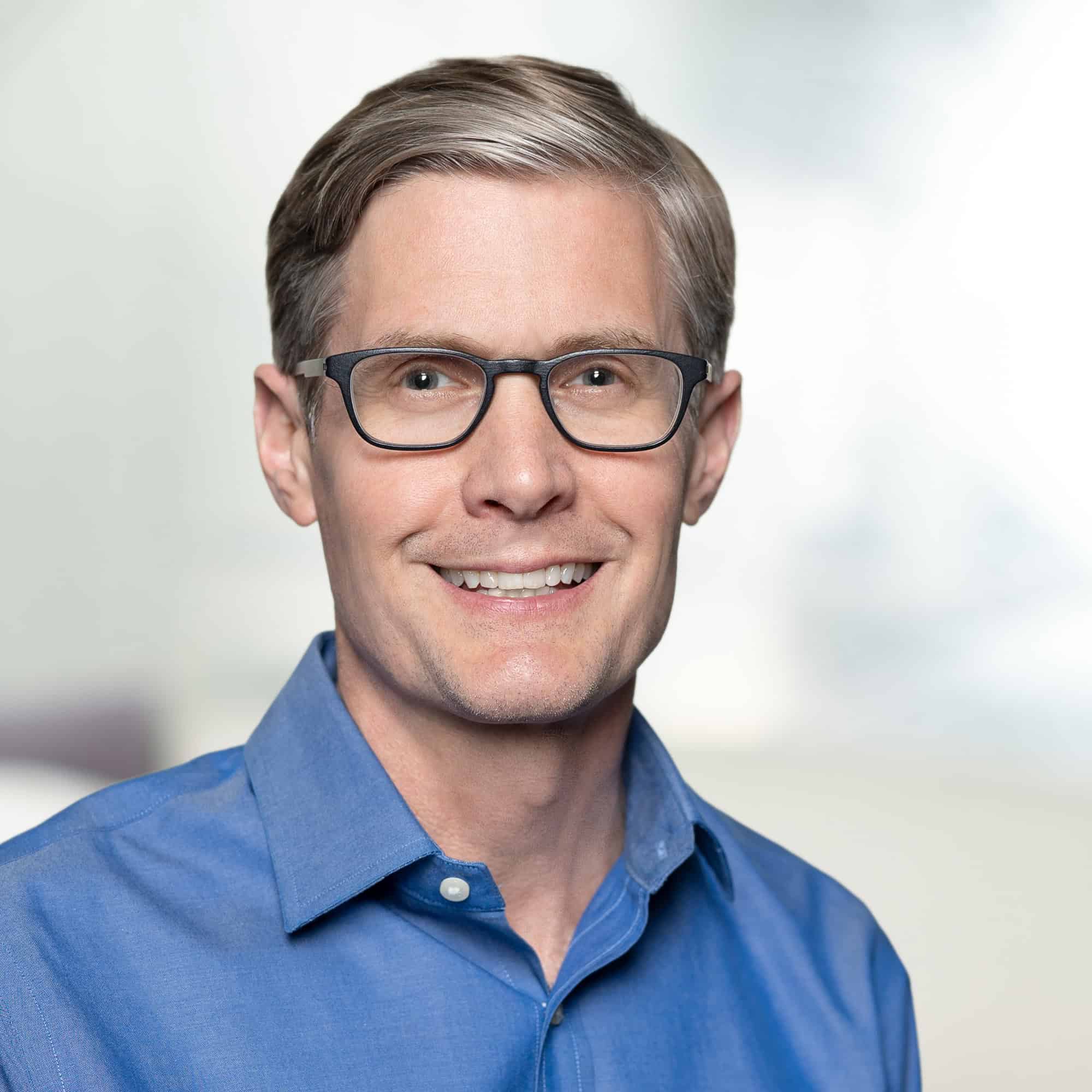
Dr. Eric Stecker is the co-founder and Chief Medical Officer at Insight Health, a cardiologist and professor of medicine at Oregon Health and Science University. He chaired the American College of Cardiology’s Science and Quality Committee, which is responsible for national cardiology practice guidelines and other clinical policy documents. He maintains a practice that focuses on advanced ablation and device implantation. He received a B.S. and M.D. in the Medical Scholars Program from the University of Wisconsin Madison. He received an M.P.H. with a focus on health management and policy from the University of Michigan.


Ritu: Hi everyone. Welcome to our next episode of the Big Unlock Podcast, season seven. We are really excited to have Dr. Stecker with us here today. Dr. Stecker is the Chief Medical Officer and co-founder of Insight Health, where he’s focused on applying artificial intelligence to improve real-world clinical outcomes.

He’s also a practicing cardiologist and professor of medicine at Oregon Health and Science University. His work sits at the intersection of cardiology, data science, and population health, with a particular emphasis on translating predictive insights into actionable interventions. Dr. Stecker has been a leading voice in how AI can move beyond detection to truly impact prevention and care delivery.

Today he’s joining us on the Big Unlock Podcast to explore how intelligent systems are reshaping the future of cardiovascular care. With that, a very warm welcome to all our listeners. Dr. Stecker, thank you so much for joining us today.

Eric: Hi. Thank you. It’s great to be on your podcast. It’s really an honor, and you’ve had some great guests and explored some great topics in the past.

Ritu: Thank you so much, Dr. Stecker. We are really excited to have this conversation because we just came back from HIMSS and AI was everywhere. One of the more interesting things — we went to the Cornell Health Tech Summit and they really talked about wearables and this constant stream of data that’s coming in, and how that’s going to make the annual physical obsolete.

We would love to hear your thoughts on the future of continuous cardiac care with wearables and remote monitoring with AI. Do you envision a future where cardiology becomes a continuously managed condition? And if so, how?

Eric: I think there are some very exciting possibilities, and I’m glad you brought up the idea of continuous health management and continuous monitoring.

That’s an area that’s created great excitement for many people, and I do think it is in our future. It’s important, though, to distinguish that which is an evolving evidence basis. In clinical medicine, putting my academic cardiologist hat on for a moment — there are a variety of interventions and monitoring approaches we can employ, and what we emphasize depends on what is most beneficial for patients. Continuous wearables and continuous physiologic data monitoring has some evidence for benefit, and I think that will evolve significantly over time.

It’s an area where AI can intersect very well and very effectively, once autonomous AI agents are tested and FDA approved. It’s important to recognize, though, that there is a whole set of health interventions we know are very high-impact and beneficial — we just need to work on implementing them. We know what to do; we just need to do it, and AI can really improve care for those things right now.

We don’t need new technology or large clinical trials to show benefit. We have decades of very high-quality clinical evidence. Take statin medications — cholesterol medications for patients at high risk of cardiovascular events or with known heart disease. We have hundreds of thousands of patients studied in clinical trials showing significant benefit, yet identifying those patients, starting them on medication, and supporting them to ensure they take it as prescribed — these are the challenges we face right now. That gap results in hundreds of thousands or even millions of additional heart attacks and cardiovascular deaths. This is something AI can dramatically improve today, without the need for any further study.

Ritu: That’s a great answer — lots to unpack there. You talked about autonomous AI agents, and within Insight Health you’ve had particular success building a suite of these agents. We’d love to hear more about that. I also read a news update that you were recognized by OpenAI for crossing one billion tokens. What’s happening there?

Eric: Yes, thank you. I wish Sara, our CTO and co-founder, were on — he posted something about when we got the plaque for a billion tokens. We use multiple models, by the way, but for OpenAI specifically, by the time the plaque arrived in the mail, we’d already crossed ten times that threshold.

To back up a moment — the idea for our company: we have four excellent co-founders, which is a little unique. Two of us are mid-career physicians who have been practicing clinical medicine for some time and continue to do so. We’ve had to scale back significantly to build this company, but we love clinical medicine and our goal was to remove the roadblocks and allow us to have much more impact for patients in a much less painful way. There are so many speed bumps and potholes in the clinical care delivery system.

The idea came about when my co-founder Dr. Gore — our other Chief Medical Officer — and I went for weekly runs every Saturday morning, rain or shine in the Pacific Northwest. I remember it was early December 2022, dark, rainy, cold, probably 45 degrees. ChatGPT had just burst into public consciousness. Gore said, “This will transform medicine.” We were not in the tech world, not CS folks, so it took us by surprise too. We thought, this will transform medicine — we have to be involved and help guide where it goes for doctors in general and for us specifically. That was the genesis.

We were then connected — his brother is a Silicon Valley entrepreneur with a lot of contacts — and he connected us with Jay Malson and ultimately with Saron Siva. We created the company, and within six or eight months, we had, to our knowledge, the first autonomous interaction with a patient in real clinical practice. This is a specialist practice, which has been our initial focus.

There’s a lot of great technology being developed. Google, for instance, was doing some really great work at that time. But because it was being driven from the tech end rather than the clinical medicine end, they were using patient actors to do scenarios and working on the clinical intelligence layer from that angle. We understood that interacting with patients and intelligently offloading what AI can handle — allowing patients more time to discuss their condition, talk about their symptoms, and ask certain questions within guardrails — we knew that technology could do that, and we knew that was a big part of the benefit for clinicians and patients.

We were confident enough, with our clinical experience and the technological experience of our other two co-founders, that we could make this work. In the first example, we actually had a nurse sitting with the patient in the clinic. About the first week, a nurse was right next to the patient. Then we recognized, “Hey, this is working — let’s release it and let patients do it in their own homes.” That was the genesis.

Since then, we’ve built out a suite of autonomous AI agents that can interact with patients, review referrals, review prior authorizations, summarize the clinical encounter — you’re very familiar with AI scribes — and reach out to patients after the visit. All of these are orchestrated via sophisticated technology, allowing for a much more AI-intensive experience that still feels very comfortable for the patient and for clinicians.

Ritu: That’s really interesting, because we keep hearing that AI actually just augments humans. What has your experience been in reality? Are we over-romanticizing “human in the loop,” and at what point does AI need to take more autonomous decision-making? You mentioned that you eventually removed the nurse because AI was fully capable of handling it on its own. Would love to hear more about your thoughts on that.

Eric: I think you raise a couple of excellent points. I would divide autonomous action from autonomous decision-making — I think those are two separate things. They’re often conflated, and understandably so. The reason I separate them is that once you move into the world of AI making clinical decisions and issuing orders without a human in the loop, it requires a lot of technological work — both on the fundamental technology operations and on the AI safety assurance overlay layer.

It also requires a ton of clinical validation, testing, and oversight. That’s very important. We do not have enough clinicians — not enough specialists or primary care providers — so it’s very important to move in that direction. But it’s very difficult. The other challenge is trust: patient trust and healthcare worker trust among those working alongside autonomous decision-making AI within the healthcare ecosystem.

Most important, of course, are patients — they’re the center, and the reason we deliver healthcare. So autonomous decision-making is important and will come and needs to be developed, but I think we should avoid an excessive focus on it, because there is so much low-hanging fruit to pick right now to improve care through autonomous action.

There’s also appropriate debate about whether AI is really saving clinicians — or are they just having to look through more data generated by the AI scribe? Are they having to double-check for hallucinations? The answer is: absolutely, well-designed and well-implemented AI can act autonomously in a way that really improves both the clinician and patient experience. It has to be done well, but that’s something we can and are doing right now.

There’s so much benefit — and by benefit I don’t just mean healthcare efficiency and its positive financial ramifications for health systems and payers. I also mean patient outcomes: reducing death and disability from disease. We know what we need to do. We need to diagnose high blood pressure, prescribe appropriate medications, and support patients. Wouldn’t it be wonderful if every time a patient was started on a new medication, a nurse — whether an AI nurse or a real nurse — contacted them and asked: “Did you fill that prescription? How’s it going? Are you having any side effects? Do you have any questions? And when would you like me to check in again?”

If a patient says, “Check in with me in a month” — you check back in a month. Are they still taking the medication? Is it okay? Just that action can dramatically reduce mortality among middle-aged and elderly people in the United States, simply by diagnosing high blood pressure, suggesting the correct medication for the clinician to start, and then checking in with the patient. This is not a “sending rocket ships to Mars” kind of thing. We can do this right now — and in fact, we do.

Ritu: That’s a very important distinction you’ve made between autonomous action and autonomous decision-making — something really worth thinking about. Thank you for clarifying that. But that leads directly into the next question: you made a correct point about ambient AI and other tools generating more data and cognitive load for clinicians. AI can generate a flood of alerts, risk scores, and predictions — more and more information. What are your thoughts on the signal-to-noise problem? How do you ensure AI is surfacing the right interventions without overwhelming clinicians or patients? At what point do you decide how much is enough?

Eric: That’s absolutely right. Using that example — if you’re checking in with patients weekly on an oncology issue and you generate a three-quarters-of-a-page summary every time and push it into the EHR, somebody then has to look at it and decide what to do.

This is exactly why having clinicians involved in technology development and implementation is critical. Dr. Gore and I are mid-career — we’ve been attending physicians for 15 to 17 years. We have a lot of experience in clinical medicine, and we still love it. We’re not looking for an exit; we’re making our ecosystem better.

Involving clinicians in a meaningful way — not just as Chief Medical Officers with a couple of consulting meetings here and there, but actually integrating them into product development and implementation — that will be essential. Because exactly what you raised will be highlighted immediately. “Wait, you’re checking in with this patient twice a week — how do we manage that information? Only escalate medical flags. We need a protocol to distinguish routine symptom responses from things that require documentation. Maybe it’s a floating dashboard.” Involving experienced clinicians is the key. If you leave this only to people who have an MD but never practiced, or only to technology developers, the issues you highlight will be a major problem.

I don’t want to whitewash this — the technology advances so fast that sometimes we need to catch up. Having AI scribe documentation that’s two pages long may suit some clinicians, but it creates a huge cognitive load for many others. You really need abbreviated summaries that highlight key things.

You also raised alert fatigue, which is extremely well-documented and a serious problem. I’m old enough to remember paper charts in medical school. When EHRs first came out, everyone was splashing alerts everywhere, and people just clicked “Okay” to get through them. That issue is better understood now, but we may be entering a new era with AI where we need to relearn that lesson. I hope not — and the more experienced clinicians are involved, the quicker we’ll learn it.

Ritu: It’s really interesting to hear that you’re mid-career and still love medicine. That reminded me — we usually start the podcast with an origin story about how you got into healthcare, and we didn’t do that this time. We’d love to hear how you got into this, how you chose cardiology, and how you got interested in the intersection of technology and healthcare. Doctors really bring a unique perspective because you’re there every day and you know what needs to work.

Eric: My father is an engineer and my mother is a social worker, and I am an amalgamation of those two ways of thinking — which is a great fit for medicine: thoroughly analytic, but also with the interactive and social insight that social work requires.

The reason I got into cardiology is that, honestly, memorization is not a strength of mine. To get into medical school you generally need to be an excellent memorizer, and I’m about average for a smart person — which, compared to the average medical student, makes me a bad memorizer. I was somewhat dismayed in the first couple years of medical school, memorizing lists and being graded on how many items out of ten or twelve you could retain. I did fine, but it was painful.

What I loved was physiology — how systems work together. I would understand it quickly, remember it well, and integrate it into practice. In my third and fourth years, I recognized that cardiology is rich with physiology, and that you can have a major impact on patients’ health and longevity. The interesting procedures, depending on the specialty, were also a draw. For all those reasons I gravitated to cardiology and ultimately to electrophysiology.

As for technology — my father worked at an engineering company, and when Oracle first became available to consumers, we got it: floppy disks and a shelf of manuals two feet long. I learned Oracle, worked at my dad’s company, and created SQL databases. That gave me a taste for technology, a sense of it. I never pursued it further — no programming, no CS degree — but it kept me interested and involved. And ultimately, that’s how Dr. Gore and I thought of the idea and then contacted our other two co-founders to start the company.

Ritu: Very interesting. Thank you for sharing that, Dr. Stecker. Do you think the role of the cardiologist is going to get redefined in an AI world as AI takes on more diagnostic and predictive tasks? How do you think the field needs to evolve to keep up with this wave of technology that seems to be threatening to overwhelm many specialties and healthcare in general?

Eric: I sure hope it will absolutely happen. My hope is that clinicians and patients do not need to evolve too much — that the main issue is establishing comfort and warranted trust with the implementation of technology, but that the technology can fit around the current experience and improve it dramatically, unlike EHRs of 15 years ago — or frankly right now.

An example of that is our autonomous AI agents that reach out to patients before visits to gather their basic medical history, understand a patient’s pain syndrome in detail, or for a cardiology patient, understand what procedures they’ve had done and where. All of this can happen at 2:00 AM if the patient is a shift worker — in their own home, on their own time. It doesn’t have to happen in the waiting room. All the questions the doctor or nurse might ask at the beginning of the visit can be handled in the comfort of the patient’s own home. That’s an example of how technology can work more effectively and can work around the needs of the patient.

Ritu: Meeting the patient where they are rather than having the patient come to you. When you talk about these autonomous agents, are you specifically talking about voice agents or how are they operating?

Eric: There are voice agents — you call up and talk with a very natural-sounding AI agent by voice only. There are also text-based interactions. Our company has technology we call “visual voice,” where it’s like texting on your phone as you’re speaking — and as the AI communicates with you, it can also pull in videos to that stream. For instance, instructional videos. An example: as an electrophysiologist dealing with arrhythmia, I frequently send out rhythm monitors. A company can send one straight to a patient’s home and they can put it on themselves. It has instructions, but if they don’t know how, our visual voice can show them a video right there — “Put it here, do this, click that.” You don’t have to look it up on the internet or call an 800 number for help.

There are many different interactive modalities. Again, this fits with the theme of making this as accessible as possible to patients, because that’s going to promote their engagement with their health and doing what we know will promote longevity.

Ritu: With all the implementations you’ve seen so far at Insight Health, have you seen particular success in any specific category, or do you think agents are generally successful across the board?

Eric: We have seen a lot of success. It very much depends on the context — whether it’s a mid-size clinic, an insurer, a smaller or large health system. The needs will be very different for each. That’s the strength of the deep tech stack we’ve developed; we can fit any kind of need.

One example, in keeping with public health — I have a master’s in public health as well — there is a well-established set of preventive activities: colorectal cancer screening through colonoscopies or stool-based or blood-based testing, breast cancer screening, cholesterol checks, blood sugar checks. These are very well established as beneficial, but it’s very challenging for payers and insurers to transmit that down into health systems, clinics, and to patients — even when they’re highly motivated and have bonuses aligned to good care through Medicare plans.

Payers have limited ways of intervening on those gaps. Say 50% of patients aren’t getting colorectal cancer screening, and death from colon cancer is much higher in their panel than it should be. Our technology can screen, reach out to the patient, assess their interest in colorectal cancer screening, educate them about it, assess their preference — colonoscopy, stool-based home test, or blood-based test — and then actually arrange it. It can schedule the colonoscopy, arrange prep, and screen whether they need to see a gastroenterologist first or can go straight to colonoscopy.

For me, the most impactful work is what touches public health and population health. But I recognize that every clinic and every clinician has different pain points, and we can insert ourselves into any of them.

Ritu: Time’s flown by and we’re almost at the end of the podcast — it’s been a great discussion. Thank you so much, Dr. Stecker. Any last thoughts or closing advice you’d like to share with our listeners before we wrap?

Eric: I know you’ve got a sophisticated audience, and I think it’s important for them to realize that as we progress along the spectrum from autonomous action to autonomous decision-making, it will be critically important to engage the workers within healthcare organizations to ensure it’s implemented well and that trust is established. And, of course, ultimately the patients.

The further upstream we are from patient interaction, the less critical that trust-building is. If it’s point solutions working on the back end of the healthcare ecosystem, that’s relatively straightforward. If it’s patient-facing, it’s really important to work with experienced people who can do it well. And as we progress toward the world of autonomous decision-making, wearables, and constant care delivery, we’ll really need to work through what that means as a society and build acceptance before it can gain traction.

Ritu: It might be happening sooner than we realize — the COVID era of AI. Thank you so much, Dr. Stecker. It’s been a pleasure having you on our podcast.

Eric: Thank you. It’s been a great time.

————Subscribe to our podcast series at www.thebigunlock.com and write us at [email protected]Disclaimer: This Q&A has been derived from the podcast transcript and has been edited for readability and clarity.

About the Host

Rohit Mahajan is an entrepreneur and a leader in the information technology and software industry. His focus lies in the field of artificial intelligence and digital transformation. He has also written a book on Quantum Care, A Deep Dive into AI for Health Delivery and Research that has been published and has been trending #1 in several categories on Amazon.

Rohit is skilled in business and IT  strategy, M&A, Sales & Marketing and Global Delivery. He holds a bachelor’s degree in Electronics and Communications Engineering, is a  Wharton School Fellow and a graduate from the Harvard Business School. 

Rohit is the CEO of Damo, Managing Partner and CEO of BigRio, the President at Citadel Discovery, Advisor at CarTwin, Managing Partner at C2R Tech, and Founder at BetterLungs. He has previously also worked with IBM and Wipro. He completed his executive education programs in AI in Business and Healthcare from MIT Sloan, MIT CSAIL and Harvard School of Public Health. He has completed  the Global Healthcare Leaders Program from Harvard Medical School.

Ritu M. Uberoy has over twenty-five years of experience in the software and information technology industry in the United States and in India. She established Saviance Technologies in India and has been involved in the delivery of several successful software projects and products to clients in various industry segments.

Ritu completed AI for Health Care: Concepts and Applications from the Harvard T.H. Chan School of Public Health and Applied Generative AI for Digital Transformation from MIT Professional Education. She has successfully taught Gen AI concepts in a classroom setting in Houston and in workshop settings to C-Suite leaders in Boston and Cleveland. She attended HIMSS in March 2024 at Orlando and the Imagination in Action AI Summit at MIT in April 2024. She is also responsible for the GenAI Center of Excellence at BigRio and DigiMTM Digital Maturity Model and Assessment at Damo.

Ritu earned her Bachelor’s degree in Computer Science from Delhi Institute of Technology (now NSIT) and a Master’s degree in Computer Science from Santa Clara University in California. She has participated in the Fellow’s program at The Wharton School, University of Pennsylvania.

About the Legend

Paddy was the co-author of Healthcare Digital Transformation – How Consumerism, Technology and Pandemic are Accelerating the Future (Taylor &  Francis, Aug 2020), along with Edward W. Marx. Paddy was also the author of the best-selling book The Big Unlock – Harnessing Data and Growing Digital Health Businesses in a Value-based Care Era (Archway Publishing, 2017). He was the host of the highly subscribed The Big Unlock podcast on digital transformation in healthcare featuring C-level executives from the healthcare and technology sectors. He was widely published and had a by-lined column in CIO Magazine and other respected industry publications.
Moving Beyond Pilots to Scale Impact in Healthcare

Season 7

Episode 198 - Podcast with Rachel Feinman, SVP of Innovation and Managing Director of TGH Ventures,
Tampa General Hospital - Moving Beyond Pilots to Scale Impact in Healthcare

The Big Unlock
The Big Unlock
Moving Beyond Pilots to Scale Impact in Healthcare
Loading
/

In this episode, Rachel Feinman, SVP of Innovation and Managing Director, TGH Ventures at Tampa General Hospital, shares how the organization is breaking out of “pilot purgatory” to turn digital innovation into measurable impact. With a clear mandate to move beyond endless experimentation, the focus is on starting with a strong thesis, partnering intentionally, and scaling quickly when results are proven.

Rachel reflects on her journey from law to healthcare, bringing a unique lens on strategy, execution, and deal-making. She highlights the balance healthcare must strike that is moving fast in operational and administrative workflows while taking a deliberate, governance-led approach to clinical innovation. This “go slow to go fast” mindset enables both safety and speed.

She also underscores the growing role of AI in improving logistics, supporting care teams, and unlocking real-time insights, while emphasizing responsible deployment. Beyond technology, the real opportunity lies in connecting fragmented care journeys and extending care beyond hospital walls to create a more seamless, patient-centered experience. Through strategic investments and a focus on outcomes, Tampa General is building an innovation model designed to scale impact, not just ideas. Take a listen.

About Our Guest

Rachel Feinman is the Senior Vice President of Innovation, Ventures and Digital Solutions at Tampa General Hospital and the Managing Director of TGH Ventures, the innovation, investment and commercialization arm of the Tampa General Hospital system. In her role, Rachel leads innovation at TGH, including strategic partnerships focused on driving value creation for the system. Rachel also oversees the organization’s venture investment strategy, managing a portfolio of early-to-growth stage startups and sourcing additional opportunities.

Rachel has a passion for influencing strategy and driving the action that enables impactful innovation to truly transform the delivery of healthcare. She also enjoys working with and mentoring early-stage startups and emerging entrepreneurs, most recently having served as the Executive Director of the Florida-Israel Business Accelerator, an organization focused on helping high impact Israeli startups penetrate the U.S. healthcare market. Rachel is a fully recovered business attorney with a long career advising clients raising from private investment funds to startups to large corporate organizations. As an attorney, Rachel specialized in business transactions of all kinds, with a specialization in private equity and venture capital transactions, as well as intellectual property protection and technology licensing deals. Rachel also has varied philanthropic interests, serving on non-profit boards like the Gasparilla International Film Festival and the Florida Venture Forum. Rachel lives in Tampa with her husband Josh and her two sons, Asher and Ezra, as well as her stepson, Brooks. She enjoys traveling with her family, having quiet time at the beach and watching her sons play baseball.


Ritu: Hi everyone. Welcome to The Big Unlock podcast, and today we are really happy to have with us Rachel Feinman, a leader at Tampa General Hospital who’s helping shape the future of digital health innovation. She works at the intersection of clinical operations, digital transformation, and emerging technologies such as AI. And she brings a thoughtful perspective on how health systems can move from technology experimentation to real operational impact. And like we were talking about at HIMSS, get out of pilot purgatory. So really looking forward to having Rachel with us here today. And welcome to all our listeners. My name is Ritu Roy. I am the co-host of The Big Unlock podcast along with Rohit. I’ll ask Rohit to quickly introduce himself, and then it’s all yours, Rachel. Thank you for joining us today.

Rohit: Thank you, Rachel, and thank you, Ritu. I’m Rohit Mahajan. I’m the co-host of The Big Unlock Podcast along with Ritu and also the CEO at BigRio. So, super excited to have this conversation. And over to you, Rachel.

Rachel: Thank you so much for having me. I’m excited to be here to talk to you guys today. It’s funny, Ritu, you started talking about pilot purgatory, and at TGH we don’t do pilots. It was a mandate from our CEO, John Couris, after a lot of frustration with the fact that a lot of pilots are akin to a slow no, or an inability to show alignment or drive results. And so some of it’s a little bit tongue in cheek, I think, in terms of naming it a pilot versus something else, because of course we don’t just initiate everything at scale right away. Yeah. But the concept is we’re not going to be in the business of endless pilots. What we’re going to do is we’re going to start with a thesis. We’re going to identify a partner, a solution, start in a place where we think we can drive results, measure those results, and then if it works and it’s driving the results that we are anticipating and wanting to see, then we’re going to scale it quickly. We’re not going to stay in that purgatory that you were talking about. So I think it’s really important from a system perspective for us to think like that. Think about trying things, scaling quickly, driving impact, and really why we’re doing what we do. And it’s about impact.

Ritu: No, that’s great. Thank you, Rachel. I think the listeners would be really interested to hear your origin story because you have a very unusual background with law, and then you pivoted to healthcare. So we would love to hear how you got where you are and what it is that you really love doing about your job, and specifically about innovation.

Rachel: Sure. Yeah. This is something I love talking about because I think there are plenty of people who find themselves professionally feeling stuck or maybe feeling like they went down a path and they weren’t necessarily using all of the skills that they have, or experiencing kind of professional joy in what they’re doing, and that was really the case for me when I was practicing law. There’s so much about it that I like. I loved the people I worked with. I loved serving clients and helping them solve problems, something that I still do today, but there were a lot of aspects of it that I didn’t enjoy. Really, as an M&A and business lawyer, I always felt like the conversation with the lawyer ended right at the good parts. It was kind of like, just as they started talking about or thinking about strategy and solving operational challenges, I was like, okay, we’re charging by the minute — or, we’re getting charged by the minute — so we’re going to hang up with you now and go draft that document we talked about. For me, it was just that feeling like I was always being excused from the party right as the good parts were starting, and then realizing and connecting the fact that as a partner within a law firm, I was actually driving the strategy and some operational decisions within our law firm. But I wanted to do that as my full-time job. And at that time I was really engaged with startups in the startup ecosystem and here in Tampa. We’re really kind of part of that rise-of-the-rest mentality that I think took shape in the last decade or two, where innovation and startups can exist and be supported in places outside of Boston, New York, and Silicon Valley. So I guess it was probably 10 or so years ago, I started advising a number of startups, doing a lot of volunteering, and that led me to my first role outside of law, which was to stand up an accelerator program focused on Israeli companies that were looking to soft-land in Florida. And one of the verticals that we ultimately focused on was healthcare. And I was just fascinated by the challenges of building a health tech startup or a med device startup and selling into health systems like the one I currently work for. And so helping those startups was great, but I really felt limited in the ability to help them from the outside. And so I had the opportunity at the time — I’m a builder, I like building new things — and this was at the same time that our CEO had the vision to create an innovation and a venture function within Tampa General. So because I had gotten to know him, I somehow convinced him — I’m so happy I did that — that I could help stand up what’s now TGH Ventures and translate his vision into practice and build a team around all of it. And it’s just been so much fun. This industry that we’re in is plagued, fortunately or unfortunately, with endless challenges. It’s also an industry that touches every one of us as a patient or a family member. And so the opportunity to really dive in and solve challenges in an industry that I know touches everyone is really impactful. So I have fun every day.

Ritu: That’s an amazing origin story, and we are so happy you kind of combined all your skills. I think the lawyer path came in very handy when you were convincing, right? You have those skills to work.

Rachel: Yeah. I like to say I’m not officially a lawyer in my job, but I get to play one on a very frequent basis because we’re negotiating deals regularly with partners that we work with, and of course when we make our investments. So it definitely still comes in handy.

Ritu: Great. So Rachel, I would like to circle a little bit back to the pilots again because we were talking to somebody else and they made a very good point that with all these new innovations, especially with AI coming out, sometimes the mentality is, okay, fail fast and innovate. But in healthcare you’re like zero risk and you really have to look at the safety aspects of it, which leads to a very bipolar situation because these two things are so much at odds. And you talked about how at Tampa you’re not doing pilots and you really look for that scaling. So how do you kind of resolve or make those two meet in the middle? We would love to know.

Rachel: Yeah, that’s a great question, and I think you hit on the reason why, as an industry, we have in the past not moved as quickly. I mean, there are good reasons for it, right? When you’re talking about patient care and safety, and oftentimes the potential for medical errors and things that can have a really significant impact, of course you need to be incredibly safe and focus in on that. Fails around safety are not okay. Right? So when we talk about failing fast, which we do often, it’s really around the fact that there’s so much opportunity to improve the system and the logistics and the administrative and operational aspects of what we do even before you get to the idea of patient care or clinical care. So that’s not to say that there are not opportunities to innovate around that, and we do, and we touch aspects of clinical care, but I think that there absolutely are opportunities to recognize challenges and move fast as it relates to — I always think about it like we’re one giant logistics company, right? When we’re coordinating care of patients, whether it’s within the walls of a hospital or it is in that connective tissue between transactional visits for patients, there’s tons of opportunity for us to look at new care delivery models and new ways of leveraging technology to make scheduling more efficient. So I think moving fast in those areas, looking at what works, seeing successes, and then scaling those is absolutely doable. And then when it comes to aspects of safety and patient care, I always like to say the old expression: go slow to go fast. So in those instances, you start at the outset with the right governance, the right people around the table, but with the end goal of going fast in mind. And then I think you can get yourself out of those cycles of admiring things and getting hung up on what-ifs and what if this happened or that happened. Get all the right people around the table, go slow in the beginning to set the right guardrails to ensure safety. And then move fast to see if something is actually going to work and make a difference.

Rohit: I was thinking about the wonderful experience I had, Rachel, at the NEXT Summit, which was a very good learning experience and very energizing. Thank you for inviting us over there. Would you like to tell us more about what’s next for next year? And also, the report was crowdsourced, so I’m sure the audience would love to hear how that was done as well.

Rachel: Yeah, sure. I’d love to share a little bit about that. So this was our very first year putting on our NEXT Summit, and really we settled on calling it NEXT because we’re focused on driving what’s next in our industry, really around innovating the business aspects of healthcare. And so we brought together around 300 attendees, made up of leaders from within our organization, investors, other health system executives, politicians, payers, folks who are involved in retail healthcare, and academia. So we had a very robust and varied audience coming together across two days to talk about and hear: what can we do? Our goal was to really be solution-oriented. A lot of times you go to some of these conferences or you hear panelists, and it’s a lot of griping about what’s wrong with our industry, what are the problems. And I think we have to recognize and name those. But our goal was, and I think we achieved it with all of our discussions, to quickly move on from, here are all of our problems, to actually focusing on solutions. That was what we did. We are going to be having the NEXT Summit again in Tampa next year, again in February. We’re really excited about that. Of the 300 people who attended, almost half of them actually came from outside of the Tampa Bay area. So that was really great, to have done this the first time without really a proven product and with a lot of people not knowing what we were going to be doing. We had so many people travel in to participate, and it was really, really great. One of the key outputs, I think, Rohit, that you were alluding to was that we worked with a frequent partner of ours, Vu Studios, that’s focused and based here in Tampa. They’re incredible at the forefront of all things AI, and their expertise really is AI and digital and film, but they do a lot. They’ve got robust partnerships with Accenture and some other groups, including us. And so what we thought was, we’ve got all these incredible minds in healthcare for two days together in one space. How can we harness this great group of people to try to drive that change that we were talking about? So we brought Vu and their intelligence hub to bear. We had one of those little phone booths — I don’t know, Rohit, if you got in it.

Rohit: I did.

Rachel: Okay. It was great. But the goal was, let’s have the first AI-generated white paper from a conference. I don’t know if we were actually the first, but I think it was the first I’d heard of it, and no one else had told me that anyone else had done it. So we centered on a topic really near and dear to many of us, which is affordability. That’s a huge challenge in healthcare. We see healthcare costs continuing to rise. And what are we, as the leaders in this industry, going to do about it? So we put everyone together and we captured thousands of insights and were able to synthesize those, leveraging AI, and generate this white paper that we sent around and published on LinkedIn and other places while people were, frankly, probably still on their flights home. So the power of AI — really excited about it.

Rohit: It was almost in real time. Yeah, it was in real time.

Ritu: Yeah. I haven’t looked at it. I would love to read it. I’ll look it up now and find it.

Rohit: Yeah. So if I may ask one more question, Rachel. You mentioned how you set up the ventures at Tampa General Hospital. So could you tell us a little bit more about the lens or the screening process, or what your vision is with this venture? And so far, have you had any successes that you would like to talk about?

Rachel: Sure. Yeah. So we do a number of things, but one of the core things is we invest in emerging startups in healthcare as a health system venture arm. Our primary focus is on driving the strategy of the health system forward. So we do significant financial diligence. We want to make sure that the companies we are investing in, we feel confident about the likelihood of a strong financial return on those investments, but we are also very focused on whether or not that company is going to help us advance our strategy as a system in one way or another. And really more specific than just improving care or driving patient experience, we’re looking very specifically and tied into our organizational action plan, which drives our organization’s strategy and those specific tactics. So a good example of that is a company that we recently invested in called Reimagine Care. Unfortunately, I’ve lived this experience this past year with my own father, who was diagnosed with esophageal cancer, and he was a patient at TGH. Unfortunately, we hadn’t yet gone live with Reimagine Care, but it really crystallized for me going through the process of managing the complex health needs and symptoms of oncology patients who are going through chemo and immunotherapy. Just trying to understand and manage what is causing these symptoms at once — I mean, it’s like a puzzle. Trying to figure out and manage the care of these patients, and the burden on our care teams is significant in terms of the number of in-basket messages going to our doctors, the nurses answering the nurse care line. It’s not 24 hours a day. They stop answering the phones at a certain amount of time, and my mom knew that. She knew, okay, if I don’t hear back the answer to these questions by this certain amount of time, I’ve got to call again because I know the nurse line is closing. And what Reimagine Care does is leverage AI coupled with 24/7 clinical support to help these patients manage their care. And one of the key drivers for us is the number of admissions of our medical oncology patients in the ED. And you have very sick patients — the last place you need them to be is in the emergency room. So what Reimagine Care has been able to do at a number of institutions where they’re already live, and where we hope they’ll be able to drive the same outcomes for us, is drive up to a 70% reduction in avoidable emergency room visits for these oncology patients, improve the satisfaction of our patients, and also help eliminate the burnout of our providers. So that’s an example of a company that we’re invested in, and I think in the next few weeks we will be live with at TGH, helping patients like my dad who are battling cancer.

Rohit: That’s wonderful to hear.

Ritu: Yeah. Great story. Thank you for sharing that, Rachel. I mean, that really hits home when you have a personal anecdote to share. So Rachel, really interesting to hear about the report as well. Would you like to share, from all the research and the published report, are there any specific areas within healthcare that you feel are very underutilized, or where the real opportunities are, say in the next one to three years? Any advice for startups or people who are building? What do you think you would really love to see, or something you haven’t seen so far, and you feel that the market is ripe for that?

Rachel: Yeah, I mean, I hate to go where everyone goes around AI, but I mean, I have to. At TGH, we are deploying AI solutions at a rapid rate. I’m very excited about that. I’m very bullish on our opportunities to leverage AI across domains to be able to support our teams and our patients. So I think that’s one of the things. I think the other thing that’s really important, and folks who are building, I would encourage them to focus on, is that we still have opportunities to improve the way that we deliver care. More and more care is going into the home. More and more care is going to settings outside of the health system. And like I mentioned, that kind of fabric between transactions — we’re very focused on that as a system, not really being transactional with you and seeing you at these particular places, but how can we make sure that we thread all of those together for a seamless experience for you and, frankly, one that’s going to enhance your care, make sure nothing falls through the cracks, make sure all different care providers are communicating with one another, and you don’t feel like you’re in different specialist silos. I think there’s still a ton of opportunity to make an impact around that.

Ritu: Great. Thank you so much. I think we are almost at the end of time, so Rohit, would you like to ask any final questions?

Rohit: Yeah, sure. So Rachel, from a Tampa General Hospital perspective, would you like to share any big plans on expansion or new things that are happening over in your system?

Rachel: TGH is constantly growing. We just had a big announcement of our partnership on the east coast of Florida with Mass General. We’re really excited to be able to serve the east coast of Florida with that partnership and a growing network of specialists. We continue to grow and expand as a system in terms of our market as well as our research and our clinicians. There’s so much growth going on. I think we’re very excited about all of that.

Rohit: That was great to hear.

Ritu: Yeah.

Rachel: Well, thank you guys so much for having me.

Ritu: Thank you so much.


————

Subscribe to our podcast series at www.thebigunlock.com and write us at [email protected]  

Disclaimer: This Q&A has been derived from the podcast transcript and has been edited for readability and clarity.


About the Hosts

Rohit Mahajan is an entrepreneur and a leader in the information technology and software industry. His focus lies in the field of artificial intelligence and digital transformation. He has also written a book on Quantum Care, A Deep Dive into AI for Health Delivery and Research that has been published and has been trending #1 in several categories on Amazon.

Rohit is skilled in business and IT  strategy, M&A, Sales & Marketing and Global Delivery. He holds a bachelor’s degree in Electronics and Communications Engineering, is a  Wharton School Fellow and a graduate from the Harvard Business School. 

Rohit is the CEO of Damo, Managing Partner and CEO of BigRio, the President at Citadel Discovery, Advisor at CarTwin, Managing Partner at C2R Tech, and Founder at BetterLungs. He has previously also worked with IBM and Wipro. He completed his executive education programs in AI in Business and Healthcare from MIT Sloan, MIT CSAIL and Harvard School of Public Health. He has completed  the Global Healthcare Leaders Program from Harvard Medical School.

Ritu M. Uberoy has over twenty-five years of experience in the software and information technology industry in the United States and in India. She established Saviance Technologies in India and has been involved in the delivery of several successful software projects and products to clients in various industry segments.

Ritu completed AI for Health Care: Concepts and Applications from the Harvard T.H. Chan School of Public Health and Applied Generative AI for Digital Transformation from MIT Professional Education. She has successfully taught Gen AI concepts in a classroom setting in Houston and in workshop settings to C-Suite leaders in Boston and Cleveland. She attended HIMSS in March 2024 at Orlando and the Imagination in Action AI Summit at MIT in April 2024. She is also responsible for the GenAI Center of Excellence at BigRio and DigiMTM Digital Maturity Model and Assessment at Damo.

Ritu earned her Bachelor’s degree in Computer Science from Delhi Institute of Technology (now NSIT) and a Master’s degree in Computer Science from Santa Clara University in California. She has participated in the Fellow’s program at The Wharton School, University of Pennsylvania.

About the Legend

Paddy was the co-author of Healthcare Digital Transformation – How Consumerism, Technology and Pandemic are Accelerating the Future (Taylor &  Francis, Aug 2020), along with Edward W. Marx. Paddy was also the author of the best-selling book The Big Unlock – Harnessing Data and Growing Digital Health Businesses in a Value-based Care Era (Archway Publishing, 2017). He was the host of the highly subscribed The Big Unlock podcast on digital transformation in healthcare featuring C-level executives from the healthcare and technology sectors. He was widely published and had a by-lined column in CIO Magazine and other respected industry publications.
Turning AI Hype into Healthcare Execution

Season 7

Episode 197 - Podcast with Aditya Bansod, CTO & Co-Founder, Luma Health - Turning AI Hype into Healthcare Execution

The Big Unlock
The Big Unlock
Turning AI Hype into Healthcare Execution
Loading
/

In this episode, Aditya Bansod, CTO and Co-Founder of Luma Health, discusses why healthcare AI often underdelivers, and what leaders must do to turn promise into performance.

Aditya argues that AI’s challenge in healthcare isn’t ambition, but execution. While new tools are emerging rapidly, most remain point solutions that fail to integrate into the complex workflows that move patients from scheduling to care delivery. True impact, he says, depends on orchestrating the “last mile” of healthcare, referrals, intake, documentation, and the countless operational handoffs that determine whether care actually happens.

He shares how Luma approaches AI adoption with flexible guardrails, allowing health systems to calibrate automation based on confidence thresholds and maturity. The conversation also explores the rise of agentic AI, the tension between human-in-the-loop oversight and autonomy, and why CIOs are navigating a messy but necessary consolidation phase.

Looking ahead, Aditya is optimistic that AI will transform patient access and engagement, only if it’s deeply embedded into workflows, not layered on top of them. Take a listen.

About Our Guest

Aditya Bansod is CTO and co-founder of Luma Health. With a lifelong passion for building software, Bansod leads Luma Health’s technical vision and strategic direction for building a platform that empowers healthcare providers to better serve their patients and improve healthcare outcomes. With over 15 years of experience as a product management leader developing mobile solutions at Adobe and Microsoft, and at venture-backed start-ups, Bansod made the transition from B2B software solutions to healthcare in 2015 in order to have a meaningful and measurable impact on how providers use mobile technologies to engage with and communicate with their patients.


Charles: I am Chuck Christian. I’m the Vice President of Technology and CTO for Franciscan Health. Franciscan is a 12 or 13 hospital system, depending on how you count them. We cover a swath of the Midwest from just south of Indianapolis all the way to Chicago, basically following the I-65 corridor.

We have between 350 and 400 locations, including physician practices, imaging centers, lab draws, urgent cares, and oncology centers. It’s a pretty large organization. We have about 29,000 team members, both employees and contractors, at Franciscan Health.

We are truly mission focused. We are a Catholic healthcare system with a big C. We are owned by the Sisters of St. Francis of Perpetual Adoration. That means there are two sisters in the chapel praying for whatever they deem important and anything we ask them to pray for, 24 hours a day, seven days a week, 365 days a year. That’s where the “perpetual adoration” comes in.

We are a mission-driven organization. I believe in that. A lot of our hospitals are smaller and in underserved places, and we take care of that patient population. I think we’re really good at it.

I’ve known this organization almost 40 years. The CIO previous to Charles, who is our current COO, was a good friend of mine. I was CIO of a hospital in Southern Indiana for 24 years, and Bill and I ran a similar software stack. I watched Bill and learned a lot from him as far as how he ran this large organization.

I’ve been here for six years. I joined in April of 2019, so in dog years that’s like 35 years or more. We are very busy. I’m very blessed to have an outstanding team that manages all this, and I get to stand in awe and watch everything we accomplish every day.

Rohit: That’s fabulous. Thank you, Chuck for that intro.

Ritu: My name is Ritu Roy, and I’m the Managing Partner here at Damo and BigRio, and also the co-host of The Big Unlock podcast with Rohit. Thank you for being our guest today, Chuck. We are looking forward to an engaging and insightful conversation. With that, we can dive right in and get started.

Charles: Thank you.

Rohit: Hi Chuck. I’m Rohit Mahajan. I’m the Managing Partner and CEO at BigRio and Damo Consulting. It’s great to have you on the podcast. Like Ritu said, we’re looking forward to an engaging discussion. I’d like to start with the first thought on my mind. You’re in a mission-driven organization, and you’ve been a healthcare leader for many years. What started you on this journey? Tell us how you got started in healthcare, what attracted you, and what you’re passionate about.

Charles: Well, it depends on how far back you want to go. I’m an X-ray tech, radiologic technologist if you want to use the term. The first 14 years of my career were in radiology.

I stepped out of high school on June sixth in 1971, and on June seventh I stepped into the hospital, and I haven’t left since. Interesting enough, I did a lot of things in the radiology department and became part of the management team of that department. I guess if the chief tech had not been just a few years older than me, I’d still be there, because that was the role I wanted. But Roy just retired a few years ago, and I wasn’t going to wait that long.

I’m a geek, I’m a nerd. I was a nerd in high school. It wasn’t cool to be a nerd in high school back then, but it’s cool to be a nerd now. I did a lot of programming classes on the old System Threes with punch cards. Then I learned how to code for Z80 processors.

When we started automating hospitals back in the mid-eighties, I got chosen to run the ambulatory implementation of order management after we had put in patient management. I realized I liked it, and I knew that was where healthcare was going. Radiology has been a high-tech department in hospitals for a long time. I was trying to automate the patient record in radiology, but it was so expensive I couldn’t get any funding for it.

So I jumped ship and moved over to the vendors for about five years. Eventually I was asked to move to either an implementation manager role or the director of an outsourced IT department in southern Indiana. I did that. I had four daughters at the time, and it was the right thing to do because it was a great place to raise my girls.

I spent 24 years there. It was during the time the role of a healthcare CIO was defined. When I left that job, I was Vice President and CIO. I moved to Georgia to a health system there as Vice President and Chief Information Officer. Then I came back to Indiana and worked at the Indiana Health Information Exchange, which is now the only exchange in Indiana. I had been involved with it since 2005. I worked there for a little over four years, and then I took this role here. That’s my stint in healthcare, which has spanned over 50 years.

Rohit: That’s awesome, Chuck. You’ve been there, done it, and seen it as well. I was curious because a few days ago, when we were chatting, you were talking about being either back from UGM or about to go there.

We all know it’s a week-long affair, people go deep, and there are so many things to cover. We were wondering if you could share some of your experiences or a heads-up on topics you see coming our way.

Charles: Sure. I came home with a great deal of anxiety because of trying to figure out how we’re going to do everything and where healthcare is going. The nice thing about Epic is they now cover the entire gambit. I remember when Epic started; they were only in the ambulatory space and then only in large academic medical centers. They cover quite a scope of product these days.

Now that they have grown the applications, they have de-identified shared data, which I think is going to be a plus. The two-letter acronym was everywhere, AI, and how it’s going to be leveraged and used. They did a nice job showing scenarios of how it could be used and how organizations are using it.

We’re a risk-averse organization. We’re taking a more moderated approach. We’re getting our governance in place first. We already have a few things going through the AI mill, and we will have more. We split it into two pieces, one on the clinical side and one on the operational side. Epic has both, and I think they’re well positioned to do that work. They partner with Microsoft, and they continue to do so.

They announced they are working on their own ambient listening. They have business partners already, but they are creating their own product. I assume it will be predicated on the Microsoft stack, but they didn’t say, so I don’t know.

They also mentioned they are working on their own ERP and starting with workforce management. That makes sense because the workforce is in Epic all the time. Nursing staffing, scheduling, shifts, and how all that ties together. It’s an interesting leap.

Years ago, when Lawson, before being purchased by Infor, said they would create a patient accounting platform, I was in a CHIME focus group. When they mentioned that, a bunch of CIOs in the room asked why they would do that. You need to get your ERP right first. But I think the way Epic is approaching it makes sense.

It was great. I was there for about four days and spent most of the time listening to presentations. Judy did a great job with a big screen about what’s next and what’s coming. The rest of her team did a great job showing what you can do now and what’s coming. They do a good job setting expectations around timelines. They release quarterly. We do two a year, so we’re current from their perspective but behind. We don’t have the wherewithal to immediately adopt everything when they release it, so we have to plan accordingly.

Ritu: Yeah. So Chuck, when I was reading about the UGM, it was interesting because they said their unique proposition with AI is the de-identified patient records they have in Epic Cosmos, which is more than 15 billion patient records. They said that for the first time, it can actually move toward healthcare rather than sick care because doctors can predict trends. And I think they released two new things called Emmy and Penny, which will help doctors see the trajectory of what is going to happen with patients.

So I was curious about your thoughts because you’ve been in this industry for such a long time. Do you think that this USP—this huge bank of patient records—is really going to set them on a differentiating path compared to all the other AI startups trying to do the same thing?

Charles: I think that having the data is huge, honestly. It reminded me a lot of—if you remember years ago—they had a thing called PatientsLikeMe, where people with unique and rare diseases could find others and compare notes and treatment approaches. Working at the Indiana Health Information Exchange, I know they have about 30 years of data. Not all of it is discrete, but the majority is.

One question I asked the CEO, who is a friend of mine—and a lot of researchers use that de-identified data—is that when you create an AI model and just let it learn, there are all kinds of interesting determinations you can make once you have the data. So I think it’s going to be a game changer. Epic is also trying to outdo themselves. Given the market of EHR vendors, there aren’t many left standing. There are three or four. Others are creating similar repositories, but I’m not sure they have the long-term vision or the wherewithal to get it done. Knowing the talent Judy has pulled together, I think it will be very interesting to see what comes down the pike.

Ritu: Thank you.

Rohit: Chuck, you mentioned you’re taking a conservative approach to AI adoption and setting governance before taking major steps. How do you think about innovation or typical problem-solving—for example, reducing cognitive load across the organization? How do you balance this conservative approach with the fast-paced changes happening in the marketplace?

Charles: I think we have to be very clear about what problem we’re trying to solve. There are so many solutions being thrown at us—“Hey, we can do this, we can do that”—but often it’s not a problem we actually have. So we’re trying to pick and choose which targets to shoot at.

I’m married to a critical care nurse, so I’m very careful about getting in the way of the nursing staff. She’s retired, but for me, technology needs to be invisible. If it gets in the way of people being able to do their job, then it’s a problem.

If you think about it for a minute—and I’ll give you Chuck’s opinion—we don’t really have electronic medical record systems for documenting the care of the patient. What we have are electronic systems that capture information required for billing. That’s part of the problem. We have all these required elements clinicians have to document—physicians have to dot all the i’s and cross all the t’s—to get the appropriate words in so it can be translated into billing codes, ICD-10 codes, HPS codes, and so on. It truly gets in the way of taking care of patients.

But once we get that discrete data, we can use AI and other tools to help determine a better course of treatment. You’re never going to hear me say that we should depend solely upon AI. It has to be moderated and reviewed by someone with clinical training. Physicians have shown me I’ve been wrong more times than you can imagine. Working together and having good data aggregation is important.

One thing I learned early on when implementing the first physician order entry and clinical documentation systems was that physicians said: “Don’t tell me what I already know. Tell me what I don’t know. Better yet, tell me what I need to know about the patient in front of me right now.” There are things they don’t know. That’s where data aggregation from health information exchanges helps, because patients don’t get care in one location or from one physician.

I’m living proof of that. I get care in two—actually three—health systems because that’s where my specialists are. My primary care doctor wants to know what my orthopedist did or what my cardiologist’s course of treatment is, because he’s managing my diabetes and a few other things. Having access to information—recent labs, imaging studies—is extremely important.

We talked about interoperability, and that’s where it comes into play. Most hospitals in Indianapolis are on Epic, so you can get data easily. From non-Epic systems, there are mechanisms too. When I see my cardiologist—who uses a different system—and he already knows what my medications are because they were recently changed by another physician, that’s positive. I don’t have to list everything. When they know my latest labs, that’s positive too, because we’re not hunting for information.

It’s about providing information that is important to the treatment at that moment.

I had the privilege of sitting in a presentation—maybe eight or nine years ago—at Scripps Institute. They showed a demo of what a patient encounter could be. It was very Star Trek–like. The computer or AI interacted with the physician and patient appropriately. It listened in the background and captured information about the encounter. When the physician said, “We need to order a CT scan of your lower abdomen,” it was already getting that scheduled. When the patient was ready to leave, everything was set. It was also checking for recent labs and reminding the physician if the patient—say a diabetic—was due for an eye exam or foot check.

I think it’s about having access to the information so we can inform—not determine but inform—the physicians. Because at the end of the day, physicians are accountable for the outcomes. They have to be in control, not the AI.

Ritu: Yeah,

Charles: we’re not ready for Skynet yet.

Ritu: I think you described a multi-agent system where the agents are off doing things and then bringing it all back for the physician to review. With that being said, we all know that AgTech is one of the top trends everyone’s talking about these days. What are your thoughts on voice agents? Where is Franciscan with that? Have you had exposure to or tried voice agents in the hospital?

Charles: Yeah, we’ve got a trial. We’ve got over 200 physicians working on those. Is it going to be the end-all, be-all? I don’t know. The physicians seem to like it. It assists them; it helps with their pajama time.

I’ve listened to conversations from other health systems that were early adopters, and I have to go back in time to when we were looking at automating physician practices in Southern Indiana. We visited a group of 14 family practice doctors. The husband and wife who started the practice mostly did OB and family medicine. Their use of computers was minimal—they were still mostly on paper. But they had other physicians who, I think, slept with their laptops.

The interesting thing was that depending on how well a physician adopted the computer system and molded it to how they practiced, they got to take advantage of it. I think it’s going to be the same with AI and voice agents. If they allow it to help and figure out how to incorporate it into how they think and practice, they’ll see the benefit. The systems are pliable enough now that it’s easier to do.

When I was in Georgia, we needed to automate a lot of OB practices on the same platform. One OB had been practicing almost 30 years and already had a solution he had customized. He told me I would tear it out of his cold, dead fingers. So we worked with him. The new system was more flexible and pliable than his old one, and he became a champion because he was willing to take the time to understand how he could use the technology to help him practice.

I think that’s the key. If you’re resistant to it, that’s fine—that’s perfectly okay. But people who write software often think all physicians think the same way. They’re absolutely wrong. It depends on where they trained. I learned that when implementing emergency room electronic medical records. The physicians who helped design the software were trained with a very different approach to critical thinking than our physicians. We had to relearn and figure out ways to adjust, because once clinicians are trained a certain way, it’s hard to change those habits and the way they gather and maintain information.

Ritu: Thank you. Great answer.

Rohit: Chuck, I’d like to ask your thoughts about the innovation process. How do you approach it, and what are some of the things you do to foster innovation?

Charles: One of the things we did was stand up a Tech Innovation Lab. Honestly, it was a selfish move because people were just bringing technology into the organization. All the enterprise architects report to me, and we work together to understand what will work in our environment and what won’t. We try to standardize as much as we can.

So I created the Innovation Lab to bring these innovations into a controlled environment and try them there. It’s a walled garden. It’s not connected to the rest of the network. It has its own connections to the internet. So if we blow something up, it only blows up in the lab. That’s why we did it.

What we’re able to do is bring ideas in and fail fast—figure out what works and what doesn’t. We’ve done that several times. Virtual nursing is something we’ve worked on a lot. There were all kinds of interesting opportunities brought to us. One facility went ahead and put a solution into a live patient population, and we found out quickly that’s not how you do it. You don’t test that kind of thing in a live environment. It frustrates the staff and patients, and it leaves leadership thinking, “We already tried that—it doesn’t work.”

Well, you tried what doesn’t work. Let me show you what will work.

We needed the opportunity to rapidly figure out what would work. One issue with that failed experiment was that the people who built the carts didn’t understand our environment. They put a wireless access point in the cart that was incompatible with our network. Once we got the cart, we figured it out quickly. We re-engineered it, and it works fine now—but we’re not using that cart because it was over-engineered and very expensive.

We’re trying to use standard components that can be supported and replaced quickly. The idea is to generate a lot of ideas and figure out how to use them appropriately without getting in the way.

You also have to think about the aesthetics of the equipment you’re bringing in. The first cart had a big five-wheel base—kind of a star shape. In some patient rooms, it was in the way. Nursing quickly said, “That’s not going to work.”

So we found an iPad holder that hangs on the patient’s bedroom wall when not in use. It’s out of the way, easy to access, and uses magnetic connectors so if someone snags it, it just comes apart. No trip hazard.

You must consider not only the technology but how it fits in patient rooms.

Originally, the idea was that the Innovation Lab would review the technology, understand how it fits together, and then install it in our SIM labs. We have two—one north, one south. Then the simulation teams would put it in a physician office or patient room and see how it fits before we use it in live care. That’s our next step with virtual nursing.

We also have a lot of conversations with organizations that have fully rolled out these solutions. We learn from their experiences. A mistake is only a mistake if you don’t learn from it. If you do, then it’s experience. We leverage their experience so we don’t repeat the same things, and so we can move quicker.

Rohit: That’s awesome. As we are approaching the end of the podcast, I would like to ask if you would touch on the mentorship program.

Ritu: Yes, I would really like to hear more about that, Chuck, because it’s something unique and I think it would be interesting for our listeners as well.

Charles: Just making sure we’re talking about the virtual mentoring program. After COVID, we were bringing on a lot of new nurse graduates. When you bring someone into that role, they need a more experienced nurse for a procedure they may have never done before. That usually means waiting for that nurse to come to them.

We had a couple of nursing staff in the mentorship program who came up with a way to use technology for an on-screen virtual visit with the new nurse. The experienced nurse could walk them through the procedure and be there with them, or if the new nurse had a question, they could step out into the hall, ask it, and go back in. It improved speed to delivery of care more than anything else.

It also gave seasoned nurses a chance to step away from what they were doing instead of traveling to another location. If they need to go in person, they still do, but this gave us another option. We got great feedback from both the new nurses and our more mature nursing staff, and we rolled it out through the enterprise. I haven’t checked in on it recently, but I assume it’s still running. I only hear when things break, and if it’s not broken, I’m not going to fix it. I assume the technology is still working and paying dividends.

Ritu: Thank you so much.

Rohit: So, Chuck, as we come to the end of the podcast, any closing remarks or thoughts you’d like to share before we finish?

Charles: I’ve been in healthcare a long time. Healthcare is a target rich environment for creativity and innovation. But we’re still taking care of patients the same way we did, and it’s about the human touch and caring for people.

When I first started in radiology years ago, I was taken aback that people weren’t always treated as people. They were exams. Do this gallbladder in this room, do this hip nailing in that room. I was reminded they’re people. They could be my family. They could be my children. That’s why I’m passionate about making sure the technology works and doesn’t get in the way.

Have we reached the pinnacle? No. Is it better? I think it is. But we’re still trying to figure it out every day. As long as we have great people passionate about providing outstanding care and we understand where that ability comes from, we’ll keep moving forward.

We’re a Catholic healthcare system, and our rule is we start most meetings with prayer. We are called to love one another as God loves us, and we need to remember that every day. That’s why I keep doing what I’m doing.

Rohit: Awesome.

Ritu: Thank you so much, Chuck.

Rohit: Really appreciate it.

Charles: Okay. Thanks for the opportunity to share.

————

Subscribe to our podcast series at www.thebigunlock.com and write us at [email protected]   

Disclaimer: This Q&A has been derived from the podcast transcript and has been edited for readability and clarity.

About the Host

Rohit Mahajan is an entrepreneur and a leader in the information technology and software industry. His focus lies in the field of artificial intelligence and digital transformation. He has also written a book on Quantum Care, A Deep Dive into AI for Health Delivery and Research that has been published and has been trending #1 in several categories on Amazon.

Rohit is skilled in business and IT  strategy, M&A, Sales & Marketing and Global Delivery. He holds a bachelor’s degree in Electronics and Communications Engineering, is a  Wharton School Fellow and a graduate from the Harvard Business School. 

Rohit is the CEO of Damo, Managing Partner and CEO of BigRio, the President at Citadel Discovery, Advisor at CarTwin, Managing Partner at C2R Tech, and Founder at BetterLungs. He has previously also worked with IBM and Wipro. He completed his executive education programs in AI in Business and Healthcare from MIT Sloan, MIT CSAIL and Harvard School of Public Health. He has completed  the Global Healthcare Leaders Program from Harvard Medical School.

Ritu M. Uberoy has over twenty-five years of experience in the software and information technology industry in the United States and in India. She established Saviance Technologies in India and has been involved in the delivery of several successful software projects and products to clients in various industry segments.

Ritu completed AI for Health Care: Concepts and Applications from the Harvard T.H. Chan School of Public Health and Applied Generative AI for Digital Transformation from MIT Professional Education. She has successfully taught Gen AI concepts in a classroom setting in Houston and in workshop settings to C-Suite leaders in Boston and Cleveland. She attended HIMSS in March 2024 at Orlando and the Imagination in Action AI Summit at MIT in April 2024. She is also responsible for the GenAI Center of Excellence at BigRio and DigiMTM Digital Maturity Model and Assessment at Damo.

Ritu earned her Bachelor’s degree in Computer Science from Delhi Institute of Technology (now NSIT) and a Master’s degree in Computer Science from Santa Clara University in California. She has participated in the Fellow’s program at The Wharton School, University of Pennsylvania.

About the Legend

Paddy was the co-author of Healthcare Digital Transformation – How Consumerism, Technology and Pandemic are Accelerating the Future (Taylor &  Francis, Aug 2020), along with Edward W. Marx. Paddy was also the author of the best-selling book The Big Unlock – Harnessing Data and Growing Digital Health Businesses in a Value-based Care Era (Archway Publishing, 2017). He was the host of the highly subscribed The Big Unlock podcast on digital transformation in healthcare featuring C-level executives from the healthcare and technology sectors. He was widely published and had a by-lined column in CIO Magazine and other respected industry publications.
Augmenting Care and Strengthening Trust with AI

Season 7

Episode 196 - Podcast with Dr. Andrea Willis, SVP & Chief Medical Officer, BlueCross BlueShield of Tennessee - Augmenting Care and Strengthening Trust with AI

The Big Unlock
The Big Unlock
Augmenting Care and Strengthening Trust with AI
Loading
/

In this episode, Dr. Andrea Willis, SVP and Chief Medical Officer at BlueCross BlueShield of Tennessee, shares how payers can harness AI to advance affordable, accessible, and more human-centered care.

From her clinical roots to leading population health, quality, and health equity initiatives, Dr. Willis brings a deeply personal commitment to service. She describes how AI is being deployed across care management and utilization management, not to replace clinicians or deny care, but to augment teams, accelerate evidence-based decisions, and close gaps in care. In care management, AI-powered summarization and prompting help staff stay fully present with members while improving engagement and measurable outcomes. In utilization management, transparency, evidence-based criteria, and clear documentation remain foundational to rebuilding provider trust. She also highlights that relevance matters more than data volume, and that guided self-service must balance automation with timely human escalation.

Dr. Willis emphasizes transparency in prior authorization, cross-functional governance, AI literacy goals across the enterprise, and strong PHI protections. For her, scaling AI responsibly – through interoperability, collaboration, and measurable impact – is key to rebuilding trust and transforming the healthcare experience. Take a listen.

About Our Guest

Dr. Andrea Willis is senior vice president and chief medical officer for BlueCross BlueShield of Tennessee, which has more than 6,500 employees and serves more than 3.3 million members throughout the state and across the country. She oversees total health management and pharmacy management and is responsible for achieving and maintaining clinical quality excellence, optimizing member care and medical management functions, oversight of clinical risk management and collaboration with the provider community.

Willis previously served as medical director of the BlueCross CHOICES Long-Term Services and Supports (LTSS) program. She also served as medical director for BlueCare Tennessee and Cover Tennessee.

Before joining BlueCross, Willis was director of the CoverKids program and was responsible for developing Tennessee’s federally approved State Children’s Health Insurance Program (SCHIP). She also previously served as deputy commissioner for the Tennessee Department of Health.

Willis is a fellow with the American Academy of Pediatrics. She earned a Master of Public Health from Johns Hopkins Bloomberg School of Public Health and a Doctor of Medicine from Georgetown University School of Medicine. She received her Bachelor of Science degree from the University of Alabama at Birmingham.

She was recognized by Modern Healthcare as one of its Women Leaders of 2024. Additional past honors from the magazine include her being named as one of its Top 25 Minority Executives in Healthcare and one of the 50 Most Influential Clinical Executives. Johns Hopkins Alumni Association honored her with a Distinguished Alumna Award. Becker’s Hospital Review named her as an African-American Leader in Healthcare to Know. She received the inaugural Champion of Healthcare Award in Diversity, Equity and Inclusion awarded by the Chattanooga Times-Free Press in 2021.

Willis has testified in front of the U.S. Senate Committee on Health, Education, Labor, and Pensions. She served as a member of the Health Advisory Board for the Johns Hopkins Bloomberg School of Public Health and the Nashville Health Care Council. She is currently President of the Board for the Middle Tennessee Chapter of the American Heart Association.


Charles: I am Chuck Christian. I’m the Vice President of Technology and CTO for Franciscan Health. Franciscan is a 12 or 13 hospital system, depending on how you count them. We cover a swath of the Midwest from just south of Indianapolis all the way to Chicago, basically following the I-65 corridor.

We have between 350 and 400 locations, including physician practices, imaging centers, lab draws, urgent cares, and oncology centers. It’s a pretty large organization. We have about 29,000 team members, both employees and contractors, at Franciscan Health.

We are truly mission focused. We are a Catholic healthcare system with a big C. We are owned by the Sisters of St. Francis of Perpetual Adoration. That means there are two sisters in the chapel praying for whatever they deem important and anything we ask them to pray for, 24 hours a day, seven days a week, 365 days a year. That’s where the “perpetual adoration” comes in.

We are a mission-driven organization. I believe in that. A lot of our hospitals are smaller and in underserved places, and we take care of that patient population. I think we’re really good at it.

I’ve known this organization almost 40 years. The CIO previous to Charles, who is our current COO, was a good friend of mine. I was CIO of a hospital in Southern Indiana for 24 years, and Bill and I ran a similar software stack. I watched Bill and learned a lot from him as far as how he ran this large organization.

I’ve been here for six years. I joined in April of 2019, so in dog years that’s like 35 years or more. We are very busy. I’m very blessed to have an outstanding team that manages all this, and I get to stand in awe and watch everything we accomplish every day.

Rohit: That’s fabulous. Thank you, Chuck for that intro.

Ritu: My name is Ritu Roy, and I’m the Managing Partner here at Damo and BigRio, and also the co-host of The Big Unlock podcast with Rohit. Thank you for being our guest today, Chuck. We are looking forward to an engaging and insightful conversation. With that, we can dive right in and get started.

Charles: Thank you.

Rohit: Hi Chuck. I’m Rohit Mahajan. I’m the Managing Partner and CEO at BigRio and Damo Consulting. It’s great to have you on the podcast. Like Ritu said, we’re looking forward to an engaging discussion. I’d like to start with the first thought on my mind. You’re in a mission-driven organization, and you’ve been a healthcare leader for many years. What started you on this journey? Tell us how you got started in healthcare, what attracted you, and what you’re passionate about.

Charles: Well, it depends on how far back you want to go. I’m an X-ray tech, radiologic technologist if you want to use the term. The first 14 years of my career were in radiology.

I stepped out of high school on June sixth in 1971, and on June seventh I stepped into the hospital, and I haven’t left since. Interesting enough, I did a lot of things in the radiology department and became part of the management team of that department. I guess if the chief tech had not been just a few years older than me, I’d still be there, because that was the role I wanted. But Roy just retired a few years ago, and I wasn’t going to wait that long.

I’m a geek, I’m a nerd. I was a nerd in high school. It wasn’t cool to be a nerd in high school back then, but it’s cool to be a nerd now. I did a lot of programming classes on the old System Threes with punch cards. Then I learned how to code for Z80 processors.

When we started automating hospitals back in the mid-eighties, I got chosen to run the ambulatory implementation of order management after we had put in patient management. I realized I liked it, and I knew that was where healthcare was going. Radiology has been a high-tech department in hospitals for a long time. I was trying to automate the patient record in radiology, but it was so expensive I couldn’t get any funding for it.

So I jumped ship and moved over to the vendors for about five years. Eventually I was asked to move to either an implementation manager role or the director of an outsourced IT department in southern Indiana. I did that. I had four daughters at the time, and it was the right thing to do because it was a great place to raise my girls.

I spent 24 years there. It was during the time the role of a healthcare CIO was defined. When I left that job, I was Vice President and CIO. I moved to Georgia to a health system there as Vice President and Chief Information Officer. Then I came back to Indiana and worked at the Indiana Health Information Exchange, which is now the only exchange in Indiana. I had been involved with it since 2005. I worked there for a little over four years, and then I took this role here. That’s my stint in healthcare, which has spanned over 50 years.

Rohit: That’s awesome, Chuck. You’ve been there, done it, and seen it as well. I was curious because a few days ago, when we were chatting, you were talking about being either back from UGM or about to go there.

We all know it’s a week-long affair, people go deep, and there are so many things to cover. We were wondering if you could share some of your experiences or a heads-up on topics you see coming our way.

Charles: Sure. I came home with a great deal of anxiety because of trying to figure out how we’re going to do everything and where healthcare is going. The nice thing about Epic is they now cover the entire gambit. I remember when Epic started; they were only in the ambulatory space and then only in large academic medical centers. They cover quite a scope of product these days.

Now that they have grown the applications, they have de-identified shared data, which I think is going to be a plus. The two-letter acronym was everywhere, AI, and how it’s going to be leveraged and used. They did a nice job showing scenarios of how it could be used and how organizations are using it.

We’re a risk-averse organization. We’re taking a more moderated approach. We’re getting our governance in place first. We already have a few things going through the AI mill, and we will have more. We split it into two pieces, one on the clinical side and one on the operational side. Epic has both, and I think they’re well positioned to do that work. They partner with Microsoft, and they continue to do so.

They announced they are working on their own ambient listening. They have business partners already, but they are creating their own product. I assume it will be predicated on the Microsoft stack, but they didn’t say, so I don’t know.

They also mentioned they are working on their own ERP and starting with workforce management. That makes sense because the workforce is in Epic all the time. Nursing staffing, scheduling, shifts, and how all that ties together. It’s an interesting leap.

Years ago, when Lawson, before being purchased by Infor, said they would create a patient accounting platform, I was in a CHIME focus group. When they mentioned that, a bunch of CIOs in the room asked why they would do that. You need to get your ERP right first. But I think the way Epic is approaching it makes sense.

It was great. I was there for about four days and spent most of the time listening to presentations. Judy did a great job with a big screen about what’s next and what’s coming. The rest of her team did a great job showing what you can do now and what’s coming. They do a good job setting expectations around timelines. They release quarterly. We do two a year, so we’re current from their perspective but behind. We don’t have the wherewithal to immediately adopt everything when they release it, so we have to plan accordingly.

Ritu: Yeah. So Chuck, when I was reading about the UGM, it was interesting because they said their unique proposition with AI is the de-identified patient records they have in Epic Cosmos, which is more than 15 billion patient records. They said that for the first time, it can actually move toward healthcare rather than sick care because doctors can predict trends. And I think they released two new things called Emmy and Penny, which will help doctors see the trajectory of what is going to happen with patients.

So I was curious about your thoughts because you’ve been in this industry for such a long time. Do you think that this USP—this huge bank of patient records—is really going to set them on a differentiating path compared to all the other AI startups trying to do the same thing?

Charles: I think that having the data is huge, honestly. It reminded me a lot of—if you remember years ago—they had a thing called PatientsLikeMe, where people with unique and rare diseases could find others and compare notes and treatment approaches. Working at the Indiana Health Information Exchange, I know they have about 30 years of data. Not all of it is discrete, but the majority is.

One question I asked the CEO, who is a friend of mine—and a lot of researchers use that de-identified data—is that when you create an AI model and just let it learn, there are all kinds of interesting determinations you can make once you have the data. So I think it’s going to be a game changer. Epic is also trying to outdo themselves. Given the market of EHR vendors, there aren’t many left standing. There are three or four. Others are creating similar repositories, but I’m not sure they have the long-term vision or the wherewithal to get it done. Knowing the talent Judy has pulled together, I think it will be very interesting to see what comes down the pike.

Ritu: Thank you.

Rohit: Chuck, you mentioned you’re taking a conservative approach to AI adoption and setting governance before taking major steps. How do you think about innovation or typical problem-solving—for example, reducing cognitive load across the organization? How do you balance this conservative approach with the fast-paced changes happening in the marketplace?

Charles: I think we have to be very clear about what problem we’re trying to solve. There are so many solutions being thrown at us—“Hey, we can do this, we can do that”—but often it’s not a problem we actually have. So we’re trying to pick and choose which targets to shoot at.

I’m married to a critical care nurse, so I’m very careful about getting in the way of the nursing staff. She’s retired, but for me, technology needs to be invisible. If it gets in the way of people being able to do their job, then it’s a problem.

If you think about it for a minute—and I’ll give you Chuck’s opinion—we don’t really have electronic medical record systems for documenting the care of the patient. What we have are electronic systems that capture information required for billing. That’s part of the problem. We have all these required elements clinicians have to document—physicians have to dot all the i’s and cross all the t’s—to get the appropriate words in so it can be translated into billing codes, ICD-10 codes, HPS codes, and so on. It truly gets in the way of taking care of patients.

But once we get that discrete data, we can use AI and other tools to help determine a better course of treatment. You’re never going to hear me say that we should depend solely upon AI. It has to be moderated and reviewed by someone with clinical training. Physicians have shown me I’ve been wrong more times than you can imagine. Working together and having good data aggregation is important.

One thing I learned early on when implementing the first physician order entry and clinical documentation systems was that physicians said: “Don’t tell me what I already know. Tell me what I don’t know. Better yet, tell me what I need to know about the patient in front of me right now.” There are things they don’t know. That’s where data aggregation from health information exchanges helps, because patients don’t get care in one location or from one physician.

I’m living proof of that. I get care in two—actually three—health systems because that’s where my specialists are. My primary care doctor wants to know what my orthopedist did or what my cardiologist’s course of treatment is, because he’s managing my diabetes and a few other things. Having access to information—recent labs, imaging studies—is extremely important.

We talked about interoperability, and that’s where it comes into play. Most hospitals in Indianapolis are on Epic, so you can get data easily. From non-Epic systems, there are mechanisms too. When I see my cardiologist—who uses a different system—and he already knows what my medications are because they were recently changed by another physician, that’s positive. I don’t have to list everything. When they know my latest labs, that’s positive too, because we’re not hunting for information.

It’s about providing information that is important to the treatment at that moment.

I had the privilege of sitting in a presentation—maybe eight or nine years ago—at Scripps Institute. They showed a demo of what a patient encounter could be. It was very Star Trek–like. The computer or AI interacted with the physician and patient appropriately. It listened in the background and captured information about the encounter. When the physician said, “We need to order a CT scan of your lower abdomen,” it was already getting that scheduled. When the patient was ready to leave, everything was set. It was also checking for recent labs and reminding the physician if the patient—say a diabetic—was due for an eye exam or foot check.

I think it’s about having access to the information so we can inform—not determine but inform—the physicians. Because at the end of the day, physicians are accountable for the outcomes. They have to be in control, not the AI.

Ritu: Yeah,

Charles: we’re not ready for Skynet yet.

Ritu: I think you described a multi-agent system where the agents are off doing things and then bringing it all back for the physician to review. With that being said, we all know that AgTech is one of the top trends everyone’s talking about these days. What are your thoughts on voice agents? Where is Franciscan with that? Have you had exposure to or tried voice agents in the hospital?

Charles: Yeah, we’ve got a trial. We’ve got over 200 physicians working on those. Is it going to be the end-all, be-all? I don’t know. The physicians seem to like it. It assists them; it helps with their pajama time.

I’ve listened to conversations from other health systems that were early adopters, and I have to go back in time to when we were looking at automating physician practices in Southern Indiana. We visited a group of 14 family practice doctors. The husband and wife who started the practice mostly did OB and family medicine. Their use of computers was minimal—they were still mostly on paper. But they had other physicians who, I think, slept with their laptops.

The interesting thing was that depending on how well a physician adopted the computer system and molded it to how they practiced, they got to take advantage of it. I think it’s going to be the same with AI and voice agents. If they allow it to help and figure out how to incorporate it into how they think and practice, they’ll see the benefit. The systems are pliable enough now that it’s easier to do.

When I was in Georgia, we needed to automate a lot of OB practices on the same platform. One OB had been practicing almost 30 years and already had a solution he had customized. He told me I would tear it out of his cold, dead fingers. So we worked with him. The new system was more flexible and pliable than his old one, and he became a champion because he was willing to take the time to understand how he could use the technology to help him practice.

I think that’s the key. If you’re resistant to it, that’s fine—that’s perfectly okay. But people who write software often think all physicians think the same way. They’re absolutely wrong. It depends on where they trained. I learned that when implementing emergency room electronic medical records. The physicians who helped design the software were trained with a very different approach to critical thinking than our physicians. We had to relearn and figure out ways to adjust, because once clinicians are trained a certain way, it’s hard to change those habits and the way they gather and maintain information.

Ritu: Thank you. Great answer.

Rohit: Chuck, I’d like to ask your thoughts about the innovation process. How do you approach it, and what are some of the things you do to foster innovation?

Charles: One of the things we did was stand up a Tech Innovation Lab. Honestly, it was a selfish move because people were just bringing technology into the organization. All the enterprise architects report to me, and we work together to understand what will work in our environment and what won’t. We try to standardize as much as we can.

So I created the Innovation Lab to bring these innovations into a controlled environment and try them there. It’s a walled garden. It’s not connected to the rest of the network. It has its own connections to the internet. So if we blow something up, it only blows up in the lab. That’s why we did it.

What we’re able to do is bring ideas in and fail fast—figure out what works and what doesn’t. We’ve done that several times. Virtual nursing is something we’ve worked on a lot. There were all kinds of interesting opportunities brought to us. One facility went ahead and put a solution into a live patient population, and we found out quickly that’s not how you do it. You don’t test that kind of thing in a live environment. It frustrates the staff and patients, and it leaves leadership thinking, “We already tried that—it doesn’t work.”

Well, you tried what doesn’t work. Let me show you what will work.

We needed the opportunity to rapidly figure out what would work. One issue with that failed experiment was that the people who built the carts didn’t understand our environment. They put a wireless access point in the cart that was incompatible with our network. Once we got the cart, we figured it out quickly. We re-engineered it, and it works fine now—but we’re not using that cart because it was over-engineered and very expensive.

We’re trying to use standard components that can be supported and replaced quickly. The idea is to generate a lot of ideas and figure out how to use them appropriately without getting in the way.

You also have to think about the aesthetics of the equipment you’re bringing in. The first cart had a big five-wheel base—kind of a star shape. In some patient rooms, it was in the way. Nursing quickly said, “That’s not going to work.”

So we found an iPad holder that hangs on the patient’s bedroom wall when not in use. It’s out of the way, easy to access, and uses magnetic connectors so if someone snags it, it just comes apart. No trip hazard.

You must consider not only the technology but how it fits in patient rooms.

Originally, the idea was that the Innovation Lab would review the technology, understand how it fits together, and then install it in our SIM labs. We have two—one north, one south. Then the simulation teams would put it in a physician office or patient room and see how it fits before we use it in live care. That’s our next step with virtual nursing.

We also have a lot of conversations with organizations that have fully rolled out these solutions. We learn from their experiences. A mistake is only a mistake if you don’t learn from it. If you do, then it’s experience. We leverage their experience so we don’t repeat the same things, and so we can move quicker.

Rohit: That’s awesome. As we are approaching the end of the podcast, I would like to ask if you would touch on the mentorship program.

Ritu: Yes, I would really like to hear more about that, Chuck, because it’s something unique and I think it would be interesting for our listeners as well.

Charles: Just making sure we’re talking about the virtual mentoring program. After COVID, we were bringing on a lot of new nurse graduates. When you bring someone into that role, they need a more experienced nurse for a procedure they may have never done before. That usually means waiting for that nurse to come to them.

We had a couple of nursing staff in the mentorship program who came up with a way to use technology for an on-screen virtual visit with the new nurse. The experienced nurse could walk them through the procedure and be there with them, or if the new nurse had a question, they could step out into the hall, ask it, and go back in. It improved speed to delivery of care more than anything else.

It also gave seasoned nurses a chance to step away from what they were doing instead of traveling to another location. If they need to go in person, they still do, but this gave us another option. We got great feedback from both the new nurses and our more mature nursing staff, and we rolled it out through the enterprise. I haven’t checked in on it recently, but I assume it’s still running. I only hear when things break, and if it’s not broken, I’m not going to fix it. I assume the technology is still working and paying dividends.

Ritu: Thank you so much.

Rohit: So, Chuck, as we come to the end of the podcast, any closing remarks or thoughts you’d like to share before we finish?

Charles: I’ve been in healthcare a long time. Healthcare is a target rich environment for creativity and innovation. But we’re still taking care of patients the same way we did, and it’s about the human touch and caring for people.

When I first started in radiology years ago, I was taken aback that people weren’t always treated as people. They were exams. Do this gallbladder in this room, do this hip nailing in that room. I was reminded they’re people. They could be my family. They could be my children. That’s why I’m passionate about making sure the technology works and doesn’t get in the way.

Have we reached the pinnacle? No. Is it better? I think it is. But we’re still trying to figure it out every day. As long as we have great people passionate about providing outstanding care and we understand where that ability comes from, we’ll keep moving forward.

We’re a Catholic healthcare system, and our rule is we start most meetings with prayer. We are called to love one another as God loves us, and we need to remember that every day. That’s why I keep doing what I’m doing.

Rohit: Awesome.

Ritu: Thank you so much, Chuck.

Rohit: Really appreciate it.

Charles: Okay. Thanks for the opportunity to share.

————

Subscribe to our podcast series at www.thebigunlock.com and write us at [email protected]   

Disclaimer: This Q&A has been derived from the podcast transcript and has been edited for readability and clarity.

About the Host

Rohit Mahajan is an entrepreneur and a leader in the information technology and software industry. His focus lies in the field of artificial intelligence and digital transformation. He has also written a book on Quantum Care, A Deep Dive into AI for Health Delivery and Research that has been published and has been trending #1 in several categories on Amazon.

Rohit is skilled in business and IT  strategy, M&A, Sales & Marketing and Global Delivery. He holds a bachelor’s degree in Electronics and Communications Engineering, is a  Wharton School Fellow and a graduate from the Harvard Business School. 

Rohit is the CEO of Damo, Managing Partner and CEO of BigRio, the President at Citadel Discovery, Advisor at CarTwin, Managing Partner at C2R Tech, and Founder at BetterLungs. He has previously also worked with IBM and Wipro. He completed his executive education programs in AI in Business and Healthcare from MIT Sloan, MIT CSAIL and Harvard School of Public Health. He has completed  the Global Healthcare Leaders Program from Harvard Medical School.

Ritu M. Uberoy has over twenty-five years of experience in the software and information technology industry in the United States and in India. She established Saviance Technologies in India and has been involved in the delivery of several successful software projects and products to clients in various industry segments.

Ritu completed AI for Health Care: Concepts and Applications from the Harvard T.H. Chan School of Public Health and Applied Generative AI for Digital Transformation from MIT Professional Education. She has successfully taught Gen AI concepts in a classroom setting in Houston and in workshop settings to C-Suite leaders in Boston and Cleveland. She attended HIMSS in March 2024 at Orlando and the Imagination in Action AI Summit at MIT in April 2024. She is also responsible for the GenAI Center of Excellence at BigRio and DigiMTM Digital Maturity Model and Assessment at Damo.

Ritu earned her Bachelor’s degree in Computer Science from Delhi Institute of Technology (now NSIT) and a Master’s degree in Computer Science from Santa Clara University in California. She has participated in the Fellow’s program at The Wharton School, University of Pennsylvania.

About the Legend

Paddy was the co-author of Healthcare Digital Transformation – How Consumerism, Technology and Pandemic are Accelerating the Future (Taylor &  Francis, Aug 2020), along with Edward W. Marx. Paddy was also the author of the best-selling book The Big Unlock – Harnessing Data and Growing Digital Health Businesses in a Value-based Care Era (Archway Publishing, 2017). He was the host of the highly subscribed The Big Unlock podcast on digital transformation in healthcare featuring C-level executives from the healthcare and technology sectors. He was widely published and had a by-lined column in CIO Magazine and other respected industry publications.
AI Must Strengthen a Clinician’s “Spidey Sense,” Not Replace It

Season 7

Episode 195 - Podcast with Dr. Amit Phull, Chief Clinical Experience Officer, Doximity - AI Must Strengthen a Clinician’s “Spidey Sense,” Not Replace It

The Big Unlock
The Big Unlock
AI Must Strengthen a Clinician’s “Spidey Sense,” Not Replace It
Loading
/

In this episode, Dr. Amit Phull discusses what responsible AI adoption in healthcare really looks like, starting with trust, usability, and preserving clinician judgment. He emphasizes that ease of use and confidence in outputs are non-negotiable for clinician adoption, especially in already time-constrained workflows.

The discussion also explores why AI must be built with clinicians, not simply deployed for them, and how poorly integrated tools risk adding friction instead of value. Dr. Phull also talks about preserving a clinician’s “spidey sense”—the intuition developed through experience—while using AI to augment, not override, clinical judgment. The conversation also touches on how success should be measured beyond dashboards, including recurrent use, time savings, and reductions in burnout.

Dr. Phull states that AI, when designed thoughtfully, can help clinicians reclaim time, sharpen expertise, and focus more fully on patient care, without losing the human edge that defines great medicine. Take a listen.

About Our Guest

Dr. Amit Phull is Chief Clinical Experience Officer at Doximity, where he has helped shape the company’s physician-first strategy since 2014. A board-certified emergency medicine physician with a background in computer science, Dr. Phull brings a rare dual perspective: he is both a practicing clinician and a digital health executive leading AI product development at one of the most widely used platforms in U.S. medicine.

With decades of experience at the intersection of care delivery and technology, Dr. Phull plays a critical role in bridging the gap between clinical practice and product innovation. He has a front-row view of today’s healthcare AI arms race, and a hands-on role in building tools that deliver real clinical value. At Doximity, he works closely with engineers, data scientists, and fellow physicians to test, validate, and scale AI solutions that help care teams reclaim time, reduce burnout, and stay focused on what matters most: their patients.

Dr. Phull was instrumental in the development of Doximity’s telehealth platform during the COVID-19 pandemic, and today leads clinical strategy for the company’s growing suite of AI-powered tools, including its ambient scribe tool and evidence-based clinical reference DoxGPT. A longtime champion of Doximity’s “docs and dorks” mindset, he ensures that every innovation enhances – not disrupts – clinical workflows.

Dr. Phull holds an M.D. and a B.S. in Computer Science from the University of Virginia. He completed his emergency medicine residency at Northwestern University in Chicago, where he currently serves as adjunct faculty. He also holds a faculty appointment at the George Washington University School of Medicine and Health Sciences. Prior to his role at Doximity, Dr. Phull also worked at Bain & Company.


Charles: I am Chuck Christian. I’m the Vice President of Technology and CTO for Franciscan Health. Franciscan is a 12 or 13 hospital system, depending on how you count them. We cover a swath of the Midwest from just south of Indianapolis all the way to Chicago, basically following the I-65 corridor.

We have between 350 and 400 locations, including physician practices, imaging centers, lab draws, urgent cares, and oncology centers. It’s a pretty large organization. We have about 29,000 team members, both employees and contractors, at Franciscan Health.

We are truly mission focused. We are a Catholic healthcare system with a big C. We are owned by the Sisters of St. Francis of Perpetual Adoration. That means there are two sisters in the chapel praying for whatever they deem important and anything we ask them to pray for, 24 hours a day, seven days a week, 365 days a year. That’s where the “perpetual adoration” comes in.

We are a mission-driven organization. I believe in that. A lot of our hospitals are smaller and in underserved places, and we take care of that patient population. I think we’re really good at it.

I’ve known this organization almost 40 years. The CIO previous to Charles, who is our current COO, was a good friend of mine. I was CIO of a hospital in Southern Indiana for 24 years, and Bill and I ran a similar software stack. I watched Bill and learned a lot from him as far as how he ran this large organization.

I’ve been here for six years. I joined in April of 2019, so in dog years that’s like 35 years or more. We are very busy. I’m very blessed to have an outstanding team that manages all this, and I get to stand in awe and watch everything we accomplish every day.

Rohit: That’s fabulous. Thank you, Chuck for that intro.

Ritu: My name is Ritu Roy, and I’m the Managing Partner here at Damo and BigRio, and also the co-host of The Big Unlock podcast with Rohit. Thank you for being our guest today, Chuck. We are looking forward to an engaging and insightful conversation. With that, we can dive right in and get started.

Charles: Thank you.

Rohit: Hi Chuck. I’m Rohit Mahajan. I’m the Managing Partner and CEO at BigRio and Damo Consulting. It’s great to have you on the podcast. Like Ritu said, we’re looking forward to an engaging discussion. I’d like to start with the first thought on my mind. You’re in a mission-driven organization, and you’ve been a healthcare leader for many years. What started you on this journey? Tell us how you got started in healthcare, what attracted you, and what you’re passionate about.

Charles: Well, it depends on how far back you want to go. I’m an X-ray tech, radiologic technologist if you want to use the term. The first 14 years of my career were in radiology.

I stepped out of high school on June sixth in 1971, and on June seventh I stepped into the hospital, and I haven’t left since. Interesting enough, I did a lot of things in the radiology department and became part of the management team of that department. I guess if the chief tech had not been just a few years older than me, I’d still be there, because that was the role I wanted. But Roy just retired a few years ago, and I wasn’t going to wait that long.

I’m a geek, I’m a nerd. I was a nerd in high school. It wasn’t cool to be a nerd in high school back then, but it’s cool to be a nerd now. I did a lot of programming classes on the old System Threes with punch cards. Then I learned how to code for Z80 processors.

When we started automating hospitals back in the mid-eighties, I got chosen to run the ambulatory implementation of order management after we had put in patient management. I realized I liked it, and I knew that was where healthcare was going. Radiology has been a high-tech department in hospitals for a long time. I was trying to automate the patient record in radiology, but it was so expensive I couldn’t get any funding for it.

So I jumped ship and moved over to the vendors for about five years. Eventually I was asked to move to either an implementation manager role or the director of an outsourced IT department in southern Indiana. I did that. I had four daughters at the time, and it was the right thing to do because it was a great place to raise my girls.

I spent 24 years there. It was during the time the role of a healthcare CIO was defined. When I left that job, I was Vice President and CIO. I moved to Georgia to a health system there as Vice President and Chief Information Officer. Then I came back to Indiana and worked at the Indiana Health Information Exchange, which is now the only exchange in Indiana. I had been involved with it since 2005. I worked there for a little over four years, and then I took this role here. That’s my stint in healthcare, which has spanned over 50 years.

Rohit: That’s awesome, Chuck. You’ve been there, done it, and seen it as well. I was curious because a few days ago, when we were chatting, you were talking about being either back from UGM or about to go there.

We all know it’s a week-long affair, people go deep, and there are so many things to cover. We were wondering if you could share some of your experiences or a heads-up on topics you see coming our way.

Charles: Sure. I came home with a great deal of anxiety because of trying to figure out how we’re going to do everything and where healthcare is going. The nice thing about Epic is they now cover the entire gambit. I remember when Epic started; they were only in the ambulatory space and then only in large academic medical centers. They cover quite a scope of product these days.

Now that they have grown the applications, they have de-identified shared data, which I think is going to be a plus. The two-letter acronym was everywhere, AI, and how it’s going to be leveraged and used. They did a nice job showing scenarios of how it could be used and how organizations are using it.

We’re a risk-averse organization. We’re taking a more moderated approach. We’re getting our governance in place first. We already have a few things going through the AI mill, and we will have more. We split it into two pieces, one on the clinical side and one on the operational side. Epic has both, and I think they’re well positioned to do that work. They partner with Microsoft, and they continue to do so.

They announced they are working on their own ambient listening. They have business partners already, but they are creating their own product. I assume it will be predicated on the Microsoft stack, but they didn’t say, so I don’t know.

They also mentioned they are working on their own ERP and starting with workforce management. That makes sense because the workforce is in Epic all the time. Nursing staffing, scheduling, shifts, and how all that ties together. It’s an interesting leap.

Years ago, when Lawson, before being purchased by Infor, said they would create a patient accounting platform, I was in a CHIME focus group. When they mentioned that, a bunch of CIOs in the room asked why they would do that. You need to get your ERP right first. But I think the way Epic is approaching it makes sense.

It was great. I was there for about four days and spent most of the time listening to presentations. Judy did a great job with a big screen about what’s next and what’s coming. The rest of her team did a great job showing what you can do now and what’s coming. They do a good job setting expectations around timelines. They release quarterly. We do two a year, so we’re current from their perspective but behind. We don’t have the wherewithal to immediately adopt everything when they release it, so we have to plan accordingly.

Ritu: Yeah. So Chuck, when I was reading about the UGM, it was interesting because they said their unique proposition with AI is the de-identified patient records they have in Epic Cosmos, which is more than 15 billion patient records. They said that for the first time, it can actually move toward healthcare rather than sick care because doctors can predict trends. And I think they released two new things called Emmy and Penny, which will help doctors see the trajectory of what is going to happen with patients.

So I was curious about your thoughts because you’ve been in this industry for such a long time. Do you think that this USP—this huge bank of patient records—is really going to set them on a differentiating path compared to all the other AI startups trying to do the same thing?

Charles: I think that having the data is huge, honestly. It reminded me a lot of—if you remember years ago—they had a thing called PatientsLikeMe, where people with unique and rare diseases could find others and compare notes and treatment approaches. Working at the Indiana Health Information Exchange, I know they have about 30 years of data. Not all of it is discrete, but the majority is.

One question I asked the CEO, who is a friend of mine—and a lot of researchers use that de-identified data—is that when you create an AI model and just let it learn, there are all kinds of interesting determinations you can make once you have the data. So I think it’s going to be a game changer. Epic is also trying to outdo themselves. Given the market of EHR vendors, there aren’t many left standing. There are three or four. Others are creating similar repositories, but I’m not sure they have the long-term vision or the wherewithal to get it done. Knowing the talent Judy has pulled together, I think it will be very interesting to see what comes down the pike.

Ritu: Thank you.

Rohit: Chuck, you mentioned you’re taking a conservative approach to AI adoption and setting governance before taking major steps. How do you think about innovation or typical problem-solving—for example, reducing cognitive load across the organization? How do you balance this conservative approach with the fast-paced changes happening in the marketplace?

Charles: I think we have to be very clear about what problem we’re trying to solve. There are so many solutions being thrown at us—“Hey, we can do this, we can do that”—but often it’s not a problem we actually have. So we’re trying to pick and choose which targets to shoot at.

I’m married to a critical care nurse, so I’m very careful about getting in the way of the nursing staff. She’s retired, but for me, technology needs to be invisible. If it gets in the way of people being able to do their job, then it’s a problem.

If you think about it for a minute—and I’ll give you Chuck’s opinion—we don’t really have electronic medical record systems for documenting the care of the patient. What we have are electronic systems that capture information required for billing. That’s part of the problem. We have all these required elements clinicians have to document—physicians have to dot all the i’s and cross all the t’s—to get the appropriate words in so it can be translated into billing codes, ICD-10 codes, HPS codes, and so on. It truly gets in the way of taking care of patients.

But once we get that discrete data, we can use AI and other tools to help determine a better course of treatment. You’re never going to hear me say that we should depend solely upon AI. It has to be moderated and reviewed by someone with clinical training. Physicians have shown me I’ve been wrong more times than you can imagine. Working together and having good data aggregation is important.

One thing I learned early on when implementing the first physician order entry and clinical documentation systems was that physicians said: “Don’t tell me what I already know. Tell me what I don’t know. Better yet, tell me what I need to know about the patient in front of me right now.” There are things they don’t know. That’s where data aggregation from health information exchanges helps, because patients don’t get care in one location or from one physician.

I’m living proof of that. I get care in two—actually three—health systems because that’s where my specialists are. My primary care doctor wants to know what my orthopedist did or what my cardiologist’s course of treatment is, because he’s managing my diabetes and a few other things. Having access to information—recent labs, imaging studies—is extremely important.

We talked about interoperability, and that’s where it comes into play. Most hospitals in Indianapolis are on Epic, so you can get data easily. From non-Epic systems, there are mechanisms too. When I see my cardiologist—who uses a different system—and he already knows what my medications are because they were recently changed by another physician, that’s positive. I don’t have to list everything. When they know my latest labs, that’s positive too, because we’re not hunting for information.

It’s about providing information that is important to the treatment at that moment.

I had the privilege of sitting in a presentation—maybe eight or nine years ago—at Scripps Institute. They showed a demo of what a patient encounter could be. It was very Star Trek–like. The computer or AI interacted with the physician and patient appropriately. It listened in the background and captured information about the encounter. When the physician said, “We need to order a CT scan of your lower abdomen,” it was already getting that scheduled. When the patient was ready to leave, everything was set. It was also checking for recent labs and reminding the physician if the patient—say a diabetic—was due for an eye exam or foot check.

I think it’s about having access to the information so we can inform—not determine but inform—the physicians. Because at the end of the day, physicians are accountable for the outcomes. They have to be in control, not the AI.

Ritu: Yeah,

Charles: we’re not ready for Skynet yet.

Ritu: I think you described a multi-agent system where the agents are off doing things and then bringing it all back for the physician to review. With that being said, we all know that AgTech is one of the top trends everyone’s talking about these days. What are your thoughts on voice agents? Where is Franciscan with that? Have you had exposure to or tried voice agents in the hospital?

Charles: Yeah, we’ve got a trial. We’ve got over 200 physicians working on those. Is it going to be the end-all, be-all? I don’t know. The physicians seem to like it. It assists them; it helps with their pajama time.

I’ve listened to conversations from other health systems that were early adopters, and I have to go back in time to when we were looking at automating physician practices in Southern Indiana. We visited a group of 14 family practice doctors. The husband and wife who started the practice mostly did OB and family medicine. Their use of computers was minimal—they were still mostly on paper. But they had other physicians who, I think, slept with their laptops.

The interesting thing was that depending on how well a physician adopted the computer system and molded it to how they practiced, they got to take advantage of it. I think it’s going to be the same with AI and voice agents. If they allow it to help and figure out how to incorporate it into how they think and practice, they’ll see the benefit. The systems are pliable enough now that it’s easier to do.

When I was in Georgia, we needed to automate a lot of OB practices on the same platform. One OB had been practicing almost 30 years and already had a solution he had customized. He told me I would tear it out of his cold, dead fingers. So we worked with him. The new system was more flexible and pliable than his old one, and he became a champion because he was willing to take the time to understand how he could use the technology to help him practice.

I think that’s the key. If you’re resistant to it, that’s fine—that’s perfectly okay. But people who write software often think all physicians think the same way. They’re absolutely wrong. It depends on where they trained. I learned that when implementing emergency room electronic medical records. The physicians who helped design the software were trained with a very different approach to critical thinking than our physicians. We had to relearn and figure out ways to adjust, because once clinicians are trained a certain way, it’s hard to change those habits and the way they gather and maintain information.

Ritu: Thank you. Great answer.

Rohit: Chuck, I’d like to ask your thoughts about the innovation process. How do you approach it, and what are some of the things you do to foster innovation?

Charles: One of the things we did was stand up a Tech Innovation Lab. Honestly, it was a selfish move because people were just bringing technology into the organization. All the enterprise architects report to me, and we work together to understand what will work in our environment and what won’t. We try to standardize as much as we can.

So I created the Innovation Lab to bring these innovations into a controlled environment and try them there. It’s a walled garden. It’s not connected to the rest of the network. It has its own connections to the internet. So if we blow something up, it only blows up in the lab. That’s why we did it.

What we’re able to do is bring ideas in and fail fast—figure out what works and what doesn’t. We’ve done that several times. Virtual nursing is something we’ve worked on a lot. There were all kinds of interesting opportunities brought to us. One facility went ahead and put a solution into a live patient population, and we found out quickly that’s not how you do it. You don’t test that kind of thing in a live environment. It frustrates the staff and patients, and it leaves leadership thinking, “We already tried that—it doesn’t work.”

Well, you tried what doesn’t work. Let me show you what will work.

We needed the opportunity to rapidly figure out what would work. One issue with that failed experiment was that the people who built the carts didn’t understand our environment. They put a wireless access point in the cart that was incompatible with our network. Once we got the cart, we figured it out quickly. We re-engineered it, and it works fine now—but we’re not using that cart because it was over-engineered and very expensive.

We’re trying to use standard components that can be supported and replaced quickly. The idea is to generate a lot of ideas and figure out how to use them appropriately without getting in the way.

You also have to think about the aesthetics of the equipment you’re bringing in. The first cart had a big five-wheel base—kind of a star shape. In some patient rooms, it was in the way. Nursing quickly said, “That’s not going to work.”

So we found an iPad holder that hangs on the patient’s bedroom wall when not in use. It’s out of the way, easy to access, and uses magnetic connectors so if someone snags it, it just comes apart. No trip hazard.

You must consider not only the technology but how it fits in patient rooms.

Originally, the idea was that the Innovation Lab would review the technology, understand how it fits together, and then install it in our SIM labs. We have two—one north, one south. Then the simulation teams would put it in a physician office or patient room and see how it fits before we use it in live care. That’s our next step with virtual nursing.

We also have a lot of conversations with organizations that have fully rolled out these solutions. We learn from their experiences. A mistake is only a mistake if you don’t learn from it. If you do, then it’s experience. We leverage their experience so we don’t repeat the same things, and so we can move quicker.

Rohit: That’s awesome. As we are approaching the end of the podcast, I would like to ask if you would touch on the mentorship program.

Ritu: Yes, I would really like to hear more about that, Chuck, because it’s something unique and I think it would be interesting for our listeners as well.

Charles: Just making sure we’re talking about the virtual mentoring program. After COVID, we were bringing on a lot of new nurse graduates. When you bring someone into that role, they need a more experienced nurse for a procedure they may have never done before. That usually means waiting for that nurse to come to them.

We had a couple of nursing staff in the mentorship program who came up with a way to use technology for an on-screen virtual visit with the new nurse. The experienced nurse could walk them through the procedure and be there with them, or if the new nurse had a question, they could step out into the hall, ask it, and go back in. It improved speed to delivery of care more than anything else.

It also gave seasoned nurses a chance to step away from what they were doing instead of traveling to another location. If they need to go in person, they still do, but this gave us another option. We got great feedback from both the new nurses and our more mature nursing staff, and we rolled it out through the enterprise. I haven’t checked in on it recently, but I assume it’s still running. I only hear when things break, and if it’s not broken, I’m not going to fix it. I assume the technology is still working and paying dividends.

Ritu: Thank you so much.

Rohit: So, Chuck, as we come to the end of the podcast, any closing remarks or thoughts you’d like to share before we finish?

Charles: I’ve been in healthcare a long time. Healthcare is a target rich environment for creativity and innovation. But we’re still taking care of patients the same way we did, and it’s about the human touch and caring for people.

When I first started in radiology years ago, I was taken aback that people weren’t always treated as people. They were exams. Do this gallbladder in this room, do this hip nailing in that room. I was reminded they’re people. They could be my family. They could be my children. That’s why I’m passionate about making sure the technology works and doesn’t get in the way.

Have we reached the pinnacle? No. Is it better? I think it is. But we’re still trying to figure it out every day. As long as we have great people passionate about providing outstanding care and we understand where that ability comes from, we’ll keep moving forward.

We’re a Catholic healthcare system, and our rule is we start most meetings with prayer. We are called to love one another as God loves us, and we need to remember that every day. That’s why I keep doing what I’m doing.

Rohit: Awesome.

Ritu: Thank you so much, Chuck.

Rohit: Really appreciate it.

Charles: Okay. Thanks for the opportunity to share.

————

Subscribe to our podcast series at www.thebigunlock.com and write us at [email protected]   

Disclaimer: This Q&A has been derived from the podcast transcript and has been edited for readability and clarity.

About the Hosts

Rohit Mahajan is an entrepreneur and a leader in the information technology and software industry. His focus lies in the field of artificial intelligence and digital transformation. He has also written a book on Quantum Care, A Deep Dive into AI for Health Delivery and Research that has been published and has been trending #1 in several categories on Amazon.

Rohit is skilled in business and IT  strategy, M&A, Sales & Marketing and Global Delivery. He holds a bachelor’s degree in Electronics and Communications Engineering, is a  Wharton School Fellow and a graduate from the Harvard Business School. 

Rohit is the CEO of Damo, Managing Partner and CEO of BigRio, the President at Citadel Discovery, Advisor at CarTwin, Managing Partner at C2R Tech, and Founder at BetterLungs. He has previously also worked with IBM and Wipro. He completed his executive education programs in AI in Business and Healthcare from MIT Sloan, MIT CSAIL and Harvard School of Public Health. He has completed  the Global Healthcare Leaders Program from Harvard Medical School.

Ritu M. Uberoy has over twenty-five years of experience in the software and information technology industry in the United States and in India. She established Saviance Technologies in India and has been involved in the delivery of several successful software projects and products to clients in various industry segments.

Ritu completed AI for Health Care: Concepts and Applications from the Harvard T.H. Chan School of Public Health and Applied Generative AI for Digital Transformation from MIT Professional Education. She has successfully taught Gen AI concepts in a classroom setting in Houston and in workshop settings to C-Suite leaders in Boston and Cleveland. She attended HIMSS in March 2024 at Orlando and the Imagination in Action AI Summit at MIT in April 2024. She is also responsible for the GenAI Center of Excellence at BigRio and DigiMTM Digital Maturity Model and Assessment at Damo.

Ritu earned her Bachelor’s degree in Computer Science from Delhi Institute of Technology (now NSIT) and a Master’s degree in Computer Science from Santa Clara University in California. She has participated in the Fellow’s program at The Wharton School, University of Pennsylvania.

About the Legend

Paddy was the co-author of Healthcare Digital Transformation – How Consumerism, Technology and Pandemic are Accelerating the Future (Taylor &  Francis, Aug 2020), along with Edward W. Marx. Paddy was also the author of the best-selling book The Big Unlock – Harnessing Data and Growing Digital Health Businesses in a Value-based Care Era (Archway Publishing, 2017). He was the host of the highly subscribed The Big Unlock podcast on digital transformation in healthcare featuring C-level executives from the healthcare and technology sectors. He was widely published and had a by-lined column in CIO Magazine and other respected industry publications.
AI Succeeds Through Seamless Workflow Integration and Clinician Empowerment

Season 7

Episode 194 - Podcast with Chethan Sathya, MD., Vice President of Strategic Initiatives, Northwell Health - AI Succeeds Through Seamless Workflow Integration and Clinician Empowerment

The Big Unlock
The Big Unlock
AI Succeeds Through Seamless Workflow Integration and Clinician Empowerment
Loading
/

In this episode, Dr. Chethan Sathya, Vice President of Strategic Initiatives at Northwell Health, unpacks why healthcare innovation only scales when clinicians, public health, and AI are designed to work together.

Dr. Sathya shares his journey from surgery to journalism to public health advocacy, including leading gun violence prevention efforts. He explains why most AI pilots fail, because of poor workflow integration and clinician burden, and why ambient intelligence, tele-specialty care, and agentic AI are poised to scale. His message is clear: build technology alongside clinicians, not around them. Take a listen.

About Our Guest

Chethan Sathya, MD, MSc is a pediatric surgeon, public health leader, journalist, and Vice President of Strategic Initiatives Northwell Health. He has received numerous awards and recognitions, including top 40 under 40 by Modern Healthcare, the Community Health Leadership award from the United Hospital Fund, and Top Rising Healthcare Leaders Under 40 by Becker’s Hospital Review. As Director of Northwell’s Center for Gun Violence Prevention, he spearheads an innovative, health system-wide approach to firearm injury prevention, integrating research, clinical screening, advocacy, and public health interventions. Dr. Sathya has received grants totaling more than $5 million and has published numerous peer reviewed papers that have helped significantly advance the fields of injury prevention, pediatrics, implementation science, and public health.

A National Institutes of Health (NIH)-funded researcher and reviewer, Dr. Sathya led the development of a pioneering universal screening protocol for firearm injury risk, through which over 100,000 families have been screened. He also founded the National Gun Violence Prevention Learning Collaborative, engaging over 600 healthcare institutions in evidence-based firearm injury prevention strategies. His leadership extends to national partnerships, including the Milken Institute (Senior Advisor), the Clinton Foundation, Sandy Hook Promise (Board of Directors), and White House-led health system convenings on gun violence prevention.

Beyond firearm injury prevention, Dr. Sathya has been at the forefront of public health and healthcare innovation. He has led system wide initiatives in health disparities, childhood disease prevention, social innovation, and value-based care, and has also worked closely with state and federal agencies and lawmakers to improve public health infrastructure, re-think private-public partnerships, and leverage unique aspects of social innovation to improve health outcomes. He also advises startups and major health tech firms on AI in medicine, digital health, and data-driven solutions. With expertise in implementation science, he focuses on scaling and sustaining innovative healthcare strategies.

A sought-after thought leader and surgeon-journalist, Dr. Sathya has contributed to CNN, Scientific American, The Washington Post,and TIME and has delivered keynotes at major forums including the World Economic Forum, Clinton Global Initiative, Milken Global, the White House, American Hospital Association and the National Academies of Sciences, Engineering, and Medicine. He also serves as Trauma Director at Cohen Children’s Medical Center, Associate Professor of Surgery and Pediatrics at the Zucker School of Medicine, and Affiliate Scientist at the University of Toronto. Dr. Sathya completed his undergraduate degree at McGill University, medical school and general surgery training at the University of Toronto, followed by a Pediatric Surgery Fellowship at Northwestern Medicine in Chicago. He holds a Master’s in Clinical Epidemiology from the University of Toronto and completed a Fellowship in Global Journalism at the Munk School of Global Affairs. Additionally, he pursued a Public Health program at the Dalla Lana School of Public Health and completed the Health Policy and Executive Leadership program at the Heller School for Social Policy and Management at Brandeis University.


Charles: I am Chuck Christian. I’m the Vice President of Technology and CTO for Franciscan Health. Franciscan is a 12 or 13 hospital system, depending on how you count them. We cover a swath of the Midwest from just south of Indianapolis all the way to Chicago, basically following the I-65 corridor.

We have between 350 and 400 locations, including physician practices, imaging centers, lab draws, urgent cares, and oncology centers. It’s a pretty large organization. We have about 29,000 team members, both employees and contractors, at Franciscan Health.

We are truly mission focused. We are a Catholic healthcare system with a big C. We are owned by the Sisters of St. Francis of Perpetual Adoration. That means there are two sisters in the chapel praying for whatever they deem important and anything we ask them to pray for, 24 hours a day, seven days a week, 365 days a year. That’s where the “perpetual adoration” comes in.

We are a mission-driven organization. I believe in that. A lot of our hospitals are smaller and in underserved places, and we take care of that patient population. I think we’re really good at it.

I’ve known this organization almost 40 years. The CIO previous to Charles, who is our current COO, was a good friend of mine. I was CIO of a hospital in Southern Indiana for 24 years, and Bill and I ran a similar software stack. I watched Bill and learned a lot from him as far as how he ran this large organization.

I’ve been here for six years. I joined in April of 2019, so in dog years that’s like 35 years or more. We are very busy. I’m very blessed to have an outstanding team that manages all this, and I get to stand in awe and watch everything we accomplish every day.

Rohit: That’s fabulous. Thank you, Chuck for that intro.

Ritu: My name is Ritu Roy, and I’m the Managing Partner here at Damo and BigRio, and also the co-host of The Big Unlock podcast with Rohit. Thank you for being our guest today, Chuck. We are looking forward to an engaging and insightful conversation. With that, we can dive right in and get started.

Charles: Thank you.

Rohit: Hi Chuck. I’m Rohit Mahajan. I’m the Managing Partner and CEO at BigRio and Damo Consulting. It’s great to have you on the podcast. Like Ritu said, we’re looking forward to an engaging discussion. I’d like to start with the first thought on my mind. You’re in a mission-driven organization, and you’ve been a healthcare leader for many years. What started you on this journey? Tell us how you got started in healthcare, what attracted you, and what you’re passionate about.

Charles: Well, it depends on how far back you want to go. I’m an X-ray tech, radiologic technologist if you want to use the term. The first 14 years of my career were in radiology.

I stepped out of high school on June sixth in 1971, and on June seventh I stepped into the hospital, and I haven’t left since. Interesting enough, I did a lot of things in the radiology department and became part of the management team of that department. I guess if the chief tech had not been just a few years older than me, I’d still be there, because that was the role I wanted. But Roy just retired a few years ago, and I wasn’t going to wait that long.

I’m a geek, I’m a nerd. I was a nerd in high school. It wasn’t cool to be a nerd in high school back then, but it’s cool to be a nerd now. I did a lot of programming classes on the old System Threes with punch cards. Then I learned how to code for Z80 processors.

When we started automating hospitals back in the mid-eighties, I got chosen to run the ambulatory implementation of order management after we had put in patient management. I realized I liked it, and I knew that was where healthcare was going. Radiology has been a high-tech department in hospitals for a long time. I was trying to automate the patient record in radiology, but it was so expensive I couldn’t get any funding for it.

So I jumped ship and moved over to the vendors for about five years. Eventually I was asked to move to either an implementation manager role or the director of an outsourced IT department in southern Indiana. I did that. I had four daughters at the time, and it was the right thing to do because it was a great place to raise my girls.

I spent 24 years there. It was during the time the role of a healthcare CIO was defined. When I left that job, I was Vice President and CIO. I moved to Georgia to a health system there as Vice President and Chief Information Officer. Then I came back to Indiana and worked at the Indiana Health Information Exchange, which is now the only exchange in Indiana. I had been involved with it since 2005. I worked there for a little over four years, and then I took this role here. That’s my stint in healthcare, which has spanned over 50 years.

Rohit: That’s awesome, Chuck. You’ve been there, done it, and seen it as well. I was curious because a few days ago, when we were chatting, you were talking about being either back from UGM or about to go there.

We all know it’s a week-long affair, people go deep, and there are so many things to cover. We were wondering if you could share some of your experiences or a heads-up on topics you see coming our way.

Charles: Sure. I came home with a great deal of anxiety because of trying to figure out how we’re going to do everything and where healthcare is going. The nice thing about Epic is they now cover the entire gambit. I remember when Epic started; they were only in the ambulatory space and then only in large academic medical centers. They cover quite a scope of product these days.

Now that they have grown the applications, they have de-identified shared data, which I think is going to be a plus. The two-letter acronym was everywhere, AI, and how it’s going to be leveraged and used. They did a nice job showing scenarios of how it could be used and how organizations are using it.

We’re a risk-averse organization. We’re taking a more moderated approach. We’re getting our governance in place first. We already have a few things going through the AI mill, and we will have more. We split it into two pieces, one on the clinical side and one on the operational side. Epic has both, and I think they’re well positioned to do that work. They partner with Microsoft, and they continue to do so.

They announced they are working on their own ambient listening. They have business partners already, but they are creating their own product. I assume it will be predicated on the Microsoft stack, but they didn’t say, so I don’t know.

They also mentioned they are working on their own ERP and starting with workforce management. That makes sense because the workforce is in Epic all the time. Nursing staffing, scheduling, shifts, and how all that ties together. It’s an interesting leap.

Years ago, when Lawson, before being purchased by Infor, said they would create a patient accounting platform, I was in a CHIME focus group. When they mentioned that, a bunch of CIOs in the room asked why they would do that. You need to get your ERP right first. But I think the way Epic is approaching it makes sense.

It was great. I was there for about four days and spent most of the time listening to presentations. Judy did a great job with a big screen about what’s next and what’s coming. The rest of her team did a great job showing what you can do now and what’s coming. They do a good job setting expectations around timelines. They release quarterly. We do two a year, so we’re current from their perspective but behind. We don’t have the wherewithal to immediately adopt everything when they release it, so we have to plan accordingly.

Ritu: Yeah. So Chuck, when I was reading about the UGM, it was interesting because they said their unique proposition with AI is the de-identified patient records they have in Epic Cosmos, which is more than 15 billion patient records. They said that for the first time, it can actually move toward healthcare rather than sick care because doctors can predict trends. And I think they released two new things called Emmy and Penny, which will help doctors see the trajectory of what is going to happen with patients.

So I was curious about your thoughts because you’ve been in this industry for such a long time. Do you think that this USP—this huge bank of patient records—is really going to set them on a differentiating path compared to all the other AI startups trying to do the same thing?

Charles: I think that having the data is huge, honestly. It reminded me a lot of—if you remember years ago—they had a thing called PatientsLikeMe, where people with unique and rare diseases could find others and compare notes and treatment approaches. Working at the Indiana Health Information Exchange, I know they have about 30 years of data. Not all of it is discrete, but the majority is.

One question I asked the CEO, who is a friend of mine—and a lot of researchers use that de-identified data—is that when you create an AI model and just let it learn, there are all kinds of interesting determinations you can make once you have the data. So I think it’s going to be a game changer. Epic is also trying to outdo themselves. Given the market of EHR vendors, there aren’t many left standing. There are three or four. Others are creating similar repositories, but I’m not sure they have the long-term vision or the wherewithal to get it done. Knowing the talent Judy has pulled together, I think it will be very interesting to see what comes down the pike.

Ritu: Thank you.

Rohit: Chuck, you mentioned you’re taking a conservative approach to AI adoption and setting governance before taking major steps. How do you think about innovation or typical problem-solving—for example, reducing cognitive load across the organization? How do you balance this conservative approach with the fast-paced changes happening in the marketplace?

Charles: I think we have to be very clear about what problem we’re trying to solve. There are so many solutions being thrown at us—“Hey, we can do this, we can do that”—but often it’s not a problem we actually have. So we’re trying to pick and choose which targets to shoot at.

I’m married to a critical care nurse, so I’m very careful about getting in the way of the nursing staff. She’s retired, but for me, technology needs to be invisible. If it gets in the way of people being able to do their job, then it’s a problem.

If you think about it for a minute—and I’ll give you Chuck’s opinion—we don’t really have electronic medical record systems for documenting the care of the patient. What we have are electronic systems that capture information required for billing. That’s part of the problem. We have all these required elements clinicians have to document—physicians have to dot all the i’s and cross all the t’s—to get the appropriate words in so it can be translated into billing codes, ICD-10 codes, HPS codes, and so on. It truly gets in the way of taking care of patients.

But once we get that discrete data, we can use AI and other tools to help determine a better course of treatment. You’re never going to hear me say that we should depend solely upon AI. It has to be moderated and reviewed by someone with clinical training. Physicians have shown me I’ve been wrong more times than you can imagine. Working together and having good data aggregation is important.

One thing I learned early on when implementing the first physician order entry and clinical documentation systems was that physicians said: “Don’t tell me what I already know. Tell me what I don’t know. Better yet, tell me what I need to know about the patient in front of me right now.” There are things they don’t know. That’s where data aggregation from health information exchanges helps, because patients don’t get care in one location or from one physician.

I’m living proof of that. I get care in two—actually three—health systems because that’s where my specialists are. My primary care doctor wants to know what my orthopedist did or what my cardiologist’s course of treatment is, because he’s managing my diabetes and a few other things. Having access to information—recent labs, imaging studies—is extremely important.

We talked about interoperability, and that’s where it comes into play. Most hospitals in Indianapolis are on Epic, so you can get data easily. From non-Epic systems, there are mechanisms too. When I see my cardiologist—who uses a different system—and he already knows what my medications are because they were recently changed by another physician, that’s positive. I don’t have to list everything. When they know my latest labs, that’s positive too, because we’re not hunting for information.

It’s about providing information that is important to the treatment at that moment.

I had the privilege of sitting in a presentation—maybe eight or nine years ago—at Scripps Institute. They showed a demo of what a patient encounter could be. It was very Star Trek–like. The computer or AI interacted with the physician and patient appropriately. It listened in the background and captured information about the encounter. When the physician said, “We need to order a CT scan of your lower abdomen,” it was already getting that scheduled. When the patient was ready to leave, everything was set. It was also checking for recent labs and reminding the physician if the patient—say a diabetic—was due for an eye exam or foot check.

I think it’s about having access to the information so we can inform—not determine but inform—the physicians. Because at the end of the day, physicians are accountable for the outcomes. They have to be in control, not the AI.

Ritu: Yeah,

Charles: we’re not ready for Skynet yet.

Ritu: I think you described a multi-agent system where the agents are off doing things and then bringing it all back for the physician to review. With that being said, we all know that AgTech is one of the top trends everyone’s talking about these days. What are your thoughts on voice agents? Where is Franciscan with that? Have you had exposure to or tried voice agents in the hospital?

Charles: Yeah, we’ve got a trial. We’ve got over 200 physicians working on those. Is it going to be the end-all, be-all? I don’t know. The physicians seem to like it. It assists them; it helps with their pajama time.

I’ve listened to conversations from other health systems that were early adopters, and I have to go back in time to when we were looking at automating physician practices in Southern Indiana. We visited a group of 14 family practice doctors. The husband and wife who started the practice mostly did OB and family medicine. Their use of computers was minimal—they were still mostly on paper. But they had other physicians who, I think, slept with their laptops.

The interesting thing was that depending on how well a physician adopted the computer system and molded it to how they practiced, they got to take advantage of it. I think it’s going to be the same with AI and voice agents. If they allow it to help and figure out how to incorporate it into how they think and practice, they’ll see the benefit. The systems are pliable enough now that it’s easier to do.

When I was in Georgia, we needed to automate a lot of OB practices on the same platform. One OB had been practicing almost 30 years and already had a solution he had customized. He told me I would tear it out of his cold, dead fingers. So we worked with him. The new system was more flexible and pliable than his old one, and he became a champion because he was willing to take the time to understand how he could use the technology to help him practice.

I think that’s the key. If you’re resistant to it, that’s fine—that’s perfectly okay. But people who write software often think all physicians think the same way. They’re absolutely wrong. It depends on where they trained. I learned that when implementing emergency room electronic medical records. The physicians who helped design the software were trained with a very different approach to critical thinking than our physicians. We had to relearn and figure out ways to adjust, because once clinicians are trained a certain way, it’s hard to change those habits and the way they gather and maintain information.

Ritu: Thank you. Great answer.

Rohit: Chuck, I’d like to ask your thoughts about the innovation process. How do you approach it, and what are some of the things you do to foster innovation?

Charles: One of the things we did was stand up a Tech Innovation Lab. Honestly, it was a selfish move because people were just bringing technology into the organization. All the enterprise architects report to me, and we work together to understand what will work in our environment and what won’t. We try to standardize as much as we can.

So I created the Innovation Lab to bring these innovations into a controlled environment and try them there. It’s a walled garden. It’s not connected to the rest of the network. It has its own connections to the internet. So if we blow something up, it only blows up in the lab. That’s why we did it.

What we’re able to do is bring ideas in and fail fast—figure out what works and what doesn’t. We’ve done that several times. Virtual nursing is something we’ve worked on a lot. There were all kinds of interesting opportunities brought to us. One facility went ahead and put a solution into a live patient population, and we found out quickly that’s not how you do it. You don’t test that kind of thing in a live environment. It frustrates the staff and patients, and it leaves leadership thinking, “We already tried that—it doesn’t work.”

Well, you tried what doesn’t work. Let me show you what will work.

We needed the opportunity to rapidly figure out what would work. One issue with that failed experiment was that the people who built the carts didn’t understand our environment. They put a wireless access point in the cart that was incompatible with our network. Once we got the cart, we figured it out quickly. We re-engineered it, and it works fine now—but we’re not using that cart because it was over-engineered and very expensive.

We’re trying to use standard components that can be supported and replaced quickly. The idea is to generate a lot of ideas and figure out how to use them appropriately without getting in the way.

You also have to think about the aesthetics of the equipment you’re bringing in. The first cart had a big five-wheel base—kind of a star shape. In some patient rooms, it was in the way. Nursing quickly said, “That’s not going to work.”

So we found an iPad holder that hangs on the patient’s bedroom wall when not in use. It’s out of the way, easy to access, and uses magnetic connectors so if someone snags it, it just comes apart. No trip hazard.

You must consider not only the technology but how it fits in patient rooms.

Originally, the idea was that the Innovation Lab would review the technology, understand how it fits together, and then install it in our SIM labs. We have two—one north, one south. Then the simulation teams would put it in a physician office or patient room and see how it fits before we use it in live care. That’s our next step with virtual nursing.

We also have a lot of conversations with organizations that have fully rolled out these solutions. We learn from their experiences. A mistake is only a mistake if you don’t learn from it. If you do, then it’s experience. We leverage their experience so we don’t repeat the same things, and so we can move quicker.

Rohit: That’s awesome. As we are approaching the end of the podcast, I would like to ask if you would touch on the mentorship program.

Ritu: Yes, I would really like to hear more about that, Chuck, because it’s something unique and I think it would be interesting for our listeners as well.

Charles: Just making sure we’re talking about the virtual mentoring program. After COVID, we were bringing on a lot of new nurse graduates. When you bring someone into that role, they need a more experienced nurse for a procedure they may have never done before. That usually means waiting for that nurse to come to them.

We had a couple of nursing staff in the mentorship program who came up with a way to use technology for an on-screen virtual visit with the new nurse. The experienced nurse could walk them through the procedure and be there with them, or if the new nurse had a question, they could step out into the hall, ask it, and go back in. It improved speed to delivery of care more than anything else.

It also gave seasoned nurses a chance to step away from what they were doing instead of traveling to another location. If they need to go in person, they still do, but this gave us another option. We got great feedback from both the new nurses and our more mature nursing staff, and we rolled it out through the enterprise. I haven’t checked in on it recently, but I assume it’s still running. I only hear when things break, and if it’s not broken, I’m not going to fix it. I assume the technology is still working and paying dividends.

Ritu: Thank you so much.

Rohit: So, Chuck, as we come to the end of the podcast, any closing remarks or thoughts you’d like to share before we finish?

Charles: I’ve been in healthcare a long time. Healthcare is a target rich environment for creativity and innovation. But we’re still taking care of patients the same way we did, and it’s about the human touch and caring for people.

When I first started in radiology years ago, I was taken aback that people weren’t always treated as people. They were exams. Do this gallbladder in this room, do this hip nailing in that room. I was reminded they’re people. They could be my family. They could be my children. That’s why I’m passionate about making sure the technology works and doesn’t get in the way.

Have we reached the pinnacle? No. Is it better? I think it is. But we’re still trying to figure it out every day. As long as we have great people passionate about providing outstanding care and we understand where that ability comes from, we’ll keep moving forward.

We’re a Catholic healthcare system, and our rule is we start most meetings with prayer. We are called to love one another as God loves us, and we need to remember that every day. That’s why I keep doing what I’m doing.

Rohit: Awesome.

Ritu: Thank you so much, Chuck.

Rohit: Really appreciate it.

Charles: Okay. Thanks for the opportunity to share.

————

Subscribe to our podcast series at www.thebigunlock.com and write us at [email protected]   

Disclaimer: This Q&A has been derived from the podcast transcript and has been edited for readability and clarity.

About the Hosts

Rohit Mahajan is an entrepreneur and a leader in the information technology and software industry. His focus lies in the field of artificial intelligence and digital transformation. He has also written a book on Quantum Care, A Deep Dive into AI for Health Delivery and Research that has been published and has been trending #1 in several categories on Amazon.

Rohit is skilled in business and IT  strategy, M&A, Sales & Marketing and Global Delivery. He holds a bachelor’s degree in Electronics and Communications Engineering, is a  Wharton School Fellow and a graduate from the Harvard Business School. 

Rohit is the CEO of Damo, Managing Partner and CEO of BigRio, the President at Citadel Discovery, Advisor at CarTwin, Managing Partner at C2R Tech, and Founder at BetterLungs. He has previously also worked with IBM and Wipro. He completed his executive education programs in AI in Business and Healthcare from MIT Sloan, MIT CSAIL and Harvard School of Public Health. He has completed  the Global Healthcare Leaders Program from Harvard Medical School.

Ritu M. Uberoy has over twenty-five years of experience in the software and information technology industry in the United States and in India. She established Saviance Technologies in India and has been involved in the delivery of several successful software projects and products to clients in various industry segments.

Ritu completed AI for Health Care: Concepts and Applications from the Harvard T.H. Chan School of Public Health and Applied Generative AI for Digital Transformation from MIT Professional Education. She has successfully taught Gen AI concepts in a classroom setting in Houston and in workshop settings to C-Suite leaders in Boston and Cleveland. She attended HIMSS in March 2024 at Orlando and the Imagination in Action AI Summit at MIT in April 2024. She is also responsible for the GenAI Center of Excellence at BigRio and DigiMTM Digital Maturity Model and Assessment at Damo.

Ritu earned her Bachelor’s degree in Computer Science from Delhi Institute of Technology (now NSIT) and a Master’s degree in Computer Science from Santa Clara University in California. She has participated in the Fellow’s program at The Wharton School, University of Pennsylvania.

About the Legend

Paddy was the co-author of Healthcare Digital Transformation – How Consumerism, Technology and Pandemic are Accelerating the Future (Taylor &  Francis, Aug 2020), along with Edward W. Marx. Paddy was also the author of the best-selling book The Big Unlock – Harnessing Data and Growing Digital Health Businesses in a Value-based Care Era (Archway Publishing, 2017). He was the host of the highly subscribed The Big Unlock podcast on digital transformation in healthcare featuring C-level executives from the healthcare and technology sectors. He was widely published and had a by-lined column in CIO Magazine and other respected industry publications.
Fixing Healthcare’s “Blind Men and the Elephant” Data Problem

Season 7

Episode 193 - Podcast with Jonathan Bush, Founder & CEO, Zus Health - Fixing Healthcare’s “Blind Men and the Elephant” Data Problem

The Big Unlock
The Big Unlock
Fixing Healthcare’s “Blind Men and the Elephant” Data Problem
Loading
/

In this episode, Jonathan Bush, Founder & CEO of Zus Health, shares a bold vision for the next phase of healthcare transformation. Drawing on decades of experience, Jonathan argues that while EHR adoption is largely complete, today’s systems remain fee-for-service–oriented, creating fragmented views of patients – what he describes as the “blind men and the elephant” problem. The result: clinicians still lack a complete, longitudinal picture of the patient and rely on repeated tests and “bags full of records.”

Jonathan explains how Zus Health is re-architecting healthcare data by creating a longitudinal, always-on common patient record. Zus is an API-first platform built on an AI-enabled backbone that aggregates, structures, and continuously updates data across multiple EMRs. He emphasizes the power of network effects, where shared intelligence can eliminate redundant tests and unnecessary care.

The conversation also explores why interoperability must move beyond regulatory compliance to become core infrastructure for value-based care, and how AI-driven summarization and agentic workflows can reduce clinician burden while enabling proactive, patient-centered care. Take a listen.

About Our Guest

Jonathan Bush is founder and CEO of Zus Health, a company building the first shared health data platform designed to accelerate healthcare data interoperability by providing easy-to-use patient data at the point of care. He sits on the board of Innovaccer, and is the co-founder and former CEO of athenahealth and former Executive Chairman of Firefly Health.


Charles: I am Chuck Christian. I’m the Vice President of Technology and CTO for Franciscan Health. Franciscan is a 12 or 13 hospital system, depending on how you count them. We cover a swath of the Midwest from just south of Indianapolis all the way to Chicago, basically following the I-65 corridor.

We have between 350 and 400 locations, including physician practices, imaging centers, lab draws, urgent cares, and oncology centers. It’s a pretty large organization. We have about 29,000 team members, both employees and contractors, at Franciscan Health.

We are truly mission focused. We are a Catholic healthcare system with a big C. We are owned by the Sisters of St. Francis of Perpetual Adoration. That means there are two sisters in the chapel praying for whatever they deem important and anything we ask them to pray for, 24 hours a day, seven days a week, 365 days a year. That’s where the “perpetual adoration” comes in.

We are a mission-driven organization. I believe in that. A lot of our hospitals are smaller and in underserved places, and we take care of that patient population. I think we’re really good at it.

I’ve known this organization almost 40 years. The CIO previous to Charles, who is our current COO, was a good friend of mine. I was CIO of a hospital in Southern Indiana for 24 years, and Bill and I ran a similar software stack. I watched Bill and learned a lot from him as far as how he ran this large organization.

I’ve been here for six years. I joined in April of 2019, so in dog years that’s like 35 years or more. We are very busy. I’m very blessed to have an outstanding team that manages all this, and I get to stand in awe and watch everything we accomplish every day.

Rohit: That’s fabulous. Thank you, Chuck for that intro.

Ritu: My name is Ritu Roy, and I’m the Managing Partner here at Damo and BigRio, and also the co-host of The Big Unlock podcast with Rohit. Thank you for being our guest today, Chuck. We are looking forward to an engaging and insightful conversation. With that, we can dive right in and get started.

Charles: Thank you.

Rohit: Hi Chuck. I’m Rohit Mahajan. I’m the Managing Partner and CEO at BigRio and Damo Consulting. It’s great to have you on the podcast. Like Ritu said, we’re looking forward to an engaging discussion. I’d like to start with the first thought on my mind. You’re in a mission-driven organization, and you’ve been a healthcare leader for many years. What started you on this journey? Tell us how you got started in healthcare, what attracted you, and what you’re passionate about.

Charles: Well, it depends on how far back you want to go. I’m an X-ray tech, radiologic technologist if you want to use the term. The first 14 years of my career were in radiology.

I stepped out of high school on June sixth in 1971, and on June seventh I stepped into the hospital, and I haven’t left since. Interesting enough, I did a lot of things in the radiology department and became part of the management team of that department. I guess if the chief tech had not been just a few years older than me, I’d still be there, because that was the role I wanted. But Roy just retired a few years ago, and I wasn’t going to wait that long.

I’m a geek, I’m a nerd. I was a nerd in high school. It wasn’t cool to be a nerd in high school back then, but it’s cool to be a nerd now. I did a lot of programming classes on the old System Threes with punch cards. Then I learned how to code for Z80 processors.

When we started automating hospitals back in the mid-eighties, I got chosen to run the ambulatory implementation of order management after we had put in patient management. I realized I liked it, and I knew that was where healthcare was going. Radiology has been a high-tech department in hospitals for a long time. I was trying to automate the patient record in radiology, but it was so expensive I couldn’t get any funding for it.

So I jumped ship and moved over to the vendors for about five years. Eventually I was asked to move to either an implementation manager role or the director of an outsourced IT department in southern Indiana. I did that. I had four daughters at the time, and it was the right thing to do because it was a great place to raise my girls.

I spent 24 years there. It was during the time the role of a healthcare CIO was defined. When I left that job, I was Vice President and CIO. I moved to Georgia to a health system there as Vice President and Chief Information Officer. Then I came back to Indiana and worked at the Indiana Health Information Exchange, which is now the only exchange in Indiana. I had been involved with it since 2005. I worked there for a little over four years, and then I took this role here. That’s my stint in healthcare, which has spanned over 50 years.

Rohit: That’s awesome, Chuck. You’ve been there, done it, and seen it as well. I was curious because a few days ago, when we were chatting, you were talking about being either back from UGM or about to go there.

We all know it’s a week-long affair, people go deep, and there are so many things to cover. We were wondering if you could share some of your experiences or a heads-up on topics you see coming our way.

Charles: Sure. I came home with a great deal of anxiety because of trying to figure out how we’re going to do everything and where healthcare is going. The nice thing about Epic is they now cover the entire gambit. I remember when Epic started; they were only in the ambulatory space and then only in large academic medical centers. They cover quite a scope of product these days.

Now that they have grown the applications, they have de-identified shared data, which I think is going to be a plus. The two-letter acronym was everywhere, AI, and how it’s going to be leveraged and used. They did a nice job showing scenarios of how it could be used and how organizations are using it.

We’re a risk-averse organization. We’re taking a more moderated approach. We’re getting our governance in place first. We already have a few things going through the AI mill, and we will have more. We split it into two pieces, one on the clinical side and one on the operational side. Epic has both, and I think they’re well positioned to do that work. They partner with Microsoft, and they continue to do so.

They announced they are working on their own ambient listening. They have business partners already, but they are creating their own product. I assume it will be predicated on the Microsoft stack, but they didn’t say, so I don’t know.

They also mentioned they are working on their own ERP and starting with workforce management. That makes sense because the workforce is in Epic all the time. Nursing staffing, scheduling, shifts, and how all that ties together. It’s an interesting leap.

Years ago, when Lawson, before being purchased by Infor, said they would create a patient accounting platform, I was in a CHIME focus group. When they mentioned that, a bunch of CIOs in the room asked why they would do that. You need to get your ERP right first. But I think the way Epic is approaching it makes sense.

It was great. I was there for about four days and spent most of the time listening to presentations. Judy did a great job with a big screen about what’s next and what’s coming. The rest of her team did a great job showing what you can do now and what’s coming. They do a good job setting expectations around timelines. They release quarterly. We do two a year, so we’re current from their perspective but behind. We don’t have the wherewithal to immediately adopt everything when they release it, so we have to plan accordingly.

Ritu: Yeah. So Chuck, when I was reading about the UGM, it was interesting because they said their unique proposition with AI is the de-identified patient records they have in Epic Cosmos, which is more than 15 billion patient records. They said that for the first time, it can actually move toward healthcare rather than sick care because doctors can predict trends. And I think they released two new things called Emmy and Penny, which will help doctors see the trajectory of what is going to happen with patients.

So I was curious about your thoughts because you’ve been in this industry for such a long time. Do you think that this USP—this huge bank of patient records—is really going to set them on a differentiating path compared to all the other AI startups trying to do the same thing?

Charles: I think that having the data is huge, honestly. It reminded me a lot of—if you remember years ago—they had a thing called PatientsLikeMe, where people with unique and rare diseases could find others and compare notes and treatment approaches. Working at the Indiana Health Information Exchange, I know they have about 30 years of data. Not all of it is discrete, but the majority is.

One question I asked the CEO, who is a friend of mine—and a lot of researchers use that de-identified data—is that when you create an AI model and just let it learn, there are all kinds of interesting determinations you can make once you have the data. So I think it’s going to be a game changer. Epic is also trying to outdo themselves. Given the market of EHR vendors, there aren’t many left standing. There are three or four. Others are creating similar repositories, but I’m not sure they have the long-term vision or the wherewithal to get it done. Knowing the talent Judy has pulled together, I think it will be very interesting to see what comes down the pike.

Ritu: Thank you.

Rohit: Chuck, you mentioned you’re taking a conservative approach to AI adoption and setting governance before taking major steps. How do you think about innovation or typical problem-solving—for example, reducing cognitive load across the organization? How do you balance this conservative approach with the fast-paced changes happening in the marketplace?

Charles: I think we have to be very clear about what problem we’re trying to solve. There are so many solutions being thrown at us—“Hey, we can do this, we can do that”—but often it’s not a problem we actually have. So we’re trying to pick and choose which targets to shoot at.

I’m married to a critical care nurse, so I’m very careful about getting in the way of the nursing staff. She’s retired, but for me, technology needs to be invisible. If it gets in the way of people being able to do their job, then it’s a problem.

If you think about it for a minute—and I’ll give you Chuck’s opinion—we don’t really have electronic medical record systems for documenting the care of the patient. What we have are electronic systems that capture information required for billing. That’s part of the problem. We have all these required elements clinicians have to document—physicians have to dot all the i’s and cross all the t’s—to get the appropriate words in so it can be translated into billing codes, ICD-10 codes, HPS codes, and so on. It truly gets in the way of taking care of patients.

But once we get that discrete data, we can use AI and other tools to help determine a better course of treatment. You’re never going to hear me say that we should depend solely upon AI. It has to be moderated and reviewed by someone with clinical training. Physicians have shown me I’ve been wrong more times than you can imagine. Working together and having good data aggregation is important.

One thing I learned early on when implementing the first physician order entry and clinical documentation systems was that physicians said: “Don’t tell me what I already know. Tell me what I don’t know. Better yet, tell me what I need to know about the patient in front of me right now.” There are things they don’t know. That’s where data aggregation from health information exchanges helps, because patients don’t get care in one location or from one physician.

I’m living proof of that. I get care in two—actually three—health systems because that’s where my specialists are. My primary care doctor wants to know what my orthopedist did or what my cardiologist’s course of treatment is, because he’s managing my diabetes and a few other things. Having access to information—recent labs, imaging studies—is extremely important.

We talked about interoperability, and that’s where it comes into play. Most hospitals in Indianapolis are on Epic, so you can get data easily. From non-Epic systems, there are mechanisms too. When I see my cardiologist—who uses a different system—and he already knows what my medications are because they were recently changed by another physician, that’s positive. I don’t have to list everything. When they know my latest labs, that’s positive too, because we’re not hunting for information.

It’s about providing information that is important to the treatment at that moment.

I had the privilege of sitting in a presentation—maybe eight or nine years ago—at Scripps Institute. They showed a demo of what a patient encounter could be. It was very Star Trek–like. The computer or AI interacted with the physician and patient appropriately. It listened in the background and captured information about the encounter. When the physician said, “We need to order a CT scan of your lower abdomen,” it was already getting that scheduled. When the patient was ready to leave, everything was set. It was also checking for recent labs and reminding the physician if the patient—say a diabetic—was due for an eye exam or foot check.

I think it’s about having access to the information so we can inform—not determine but inform—the physicians. Because at the end of the day, physicians are accountable for the outcomes. They have to be in control, not the AI.

Ritu: Yeah,

Charles: we’re not ready for Skynet yet.

Ritu: I think you described a multi-agent system where the agents are off doing things and then bringing it all back for the physician to review. With that being said, we all know that AgTech is one of the top trends everyone’s talking about these days. What are your thoughts on voice agents? Where is Franciscan with that? Have you had exposure to or tried voice agents in the hospital?

Charles: Yeah, we’ve got a trial. We’ve got over 200 physicians working on those. Is it going to be the end-all, be-all? I don’t know. The physicians seem to like it. It assists them; it helps with their pajama time.

I’ve listened to conversations from other health systems that were early adopters, and I have to go back in time to when we were looking at automating physician practices in Southern Indiana. We visited a group of 14 family practice doctors. The husband and wife who started the practice mostly did OB and family medicine. Their use of computers was minimal—they were still mostly on paper. But they had other physicians who, I think, slept with their laptops.

The interesting thing was that depending on how well a physician adopted the computer system and molded it to how they practiced, they got to take advantage of it. I think it’s going to be the same with AI and voice agents. If they allow it to help and figure out how to incorporate it into how they think and practice, they’ll see the benefit. The systems are pliable enough now that it’s easier to do.

When I was in Georgia, we needed to automate a lot of OB practices on the same platform. One OB had been practicing almost 30 years and already had a solution he had customized. He told me I would tear it out of his cold, dead fingers. So we worked with him. The new system was more flexible and pliable than his old one, and he became a champion because he was willing to take the time to understand how he could use the technology to help him practice.

I think that’s the key. If you’re resistant to it, that’s fine—that’s perfectly okay. But people who write software often think all physicians think the same way. They’re absolutely wrong. It depends on where they trained. I learned that when implementing emergency room electronic medical records. The physicians who helped design the software were trained with a very different approach to critical thinking than our physicians. We had to relearn and figure out ways to adjust, because once clinicians are trained a certain way, it’s hard to change those habits and the way they gather and maintain information.

Ritu: Thank you. Great answer.

Rohit: Chuck, I’d like to ask your thoughts about the innovation process. How do you approach it, and what are some of the things you do to foster innovation?

Charles: One of the things we did was stand up a Tech Innovation Lab. Honestly, it was a selfish move because people were just bringing technology into the organization. All the enterprise architects report to me, and we work together to understand what will work in our environment and what won’t. We try to standardize as much as we can.

So I created the Innovation Lab to bring these innovations into a controlled environment and try them there. It’s a walled garden. It’s not connected to the rest of the network. It has its own connections to the internet. So if we blow something up, it only blows up in the lab. That’s why we did it.

What we’re able to do is bring ideas in and fail fast—figure out what works and what doesn’t. We’ve done that several times. Virtual nursing is something we’ve worked on a lot. There were all kinds of interesting opportunities brought to us. One facility went ahead and put a solution into a live patient population, and we found out quickly that’s not how you do it. You don’t test that kind of thing in a live environment. It frustrates the staff and patients, and it leaves leadership thinking, “We already tried that—it doesn’t work.”

Well, you tried what doesn’t work. Let me show you what will work.

We needed the opportunity to rapidly figure out what would work. One issue with that failed experiment was that the people who built the carts didn’t understand our environment. They put a wireless access point in the cart that was incompatible with our network. Once we got the cart, we figured it out quickly. We re-engineered it, and it works fine now—but we’re not using that cart because it was over-engineered and very expensive.

We’re trying to use standard components that can be supported and replaced quickly. The idea is to generate a lot of ideas and figure out how to use them appropriately without getting in the way.

You also have to think about the aesthetics of the equipment you’re bringing in. The first cart had a big five-wheel base—kind of a star shape. In some patient rooms, it was in the way. Nursing quickly said, “That’s not going to work.”

So we found an iPad holder that hangs on the patient’s bedroom wall when not in use. It’s out of the way, easy to access, and uses magnetic connectors so if someone snags it, it just comes apart. No trip hazard.

You must consider not only the technology but how it fits in patient rooms.

Originally, the idea was that the Innovation Lab would review the technology, understand how it fits together, and then install it in our SIM labs. We have two—one north, one south. Then the simulation teams would put it in a physician office or patient room and see how it fits before we use it in live care. That’s our next step with virtual nursing.

We also have a lot of conversations with organizations that have fully rolled out these solutions. We learn from their experiences. A mistake is only a mistake if you don’t learn from it. If you do, then it’s experience. We leverage their experience so we don’t repeat the same things, and so we can move quicker.

Rohit: That’s awesome. As we are approaching the end of the podcast, I would like to ask if you would touch on the mentorship program.

Ritu: Yes, I would really like to hear more about that, Chuck, because it’s something unique and I think it would be interesting for our listeners as well.

Charles: Just making sure we’re talking about the virtual mentoring program. After COVID, we were bringing on a lot of new nurse graduates. When you bring someone into that role, they need a more experienced nurse for a procedure they may have never done before. That usually means waiting for that nurse to come to them.

We had a couple of nursing staff in the mentorship program who came up with a way to use technology for an on-screen virtual visit with the new nurse. The experienced nurse could walk them through the procedure and be there with them, or if the new nurse had a question, they could step out into the hall, ask it, and go back in. It improved speed to delivery of care more than anything else.

It also gave seasoned nurses a chance to step away from what they were doing instead of traveling to another location. If they need to go in person, they still do, but this gave us another option. We got great feedback from both the new nurses and our more mature nursing staff, and we rolled it out through the enterprise. I haven’t checked in on it recently, but I assume it’s still running. I only hear when things break, and if it’s not broken, I’m not going to fix it. I assume the technology is still working and paying dividends.

Ritu: Thank you so much.

Rohit: So, Chuck, as we come to the end of the podcast, any closing remarks or thoughts you’d like to share before we finish?

Charles: I’ve been in healthcare a long time. Healthcare is a target rich environment for creativity and innovation. But we’re still taking care of patients the same way we did, and it’s about the human touch and caring for people.

When I first started in radiology years ago, I was taken aback that people weren’t always treated as people. They were exams. Do this gallbladder in this room, do this hip nailing in that room. I was reminded they’re people. They could be my family. They could be my children. That’s why I’m passionate about making sure the technology works and doesn’t get in the way.

Have we reached the pinnacle? No. Is it better? I think it is. But we’re still trying to figure it out every day. As long as we have great people passionate about providing outstanding care and we understand where that ability comes from, we’ll keep moving forward.

We’re a Catholic healthcare system, and our rule is we start most meetings with prayer. We are called to love one another as God loves us, and we need to remember that every day. That’s why I keep doing what I’m doing.

Rohit: Awesome.

Ritu: Thank you so much, Chuck.

Rohit: Really appreciate it.

Charles: Okay. Thanks for the opportunity to share.

————

Subscribe to our podcast series at www.thebigunlock.com and write us at [email protected]   

Disclaimer: This Q&A has been derived from the podcast transcript and has been edited for readability and clarity.

About the Hosts

Rohit Mahajan is an entrepreneur and a leader in the information technology and software industry. His focus lies in the field of artificial intelligence and digital transformation. He has also written a book on Quantum Care, A Deep Dive into AI for Health Delivery and Research that has been published and has been trending #1 in several categories on Amazon.

Rohit is skilled in business and IT  strategy, M&A, Sales & Marketing and Global Delivery. He holds a bachelor’s degree in Electronics and Communications Engineering, is a  Wharton School Fellow and a graduate from the Harvard Business School. 

Rohit is the CEO of Damo, Managing Partner and CEO of BigRio, the President at Citadel Discovery, Advisor at CarTwin, Managing Partner at C2R Tech, and Founder at BetterLungs. He has previously also worked with IBM and Wipro. He completed his executive education programs in AI in Business and Healthcare from MIT Sloan, MIT CSAIL and Harvard School of Public Health. He has completed  the Global Healthcare Leaders Program from Harvard Medical School.

Ritu M. Uberoy has over twenty-five years of experience in the software and information technology industry in the United States and in India. She established Saviance Technologies in India and has been involved in the delivery of several successful software projects and products to clients in various industry segments.

Ritu completed AI for Health Care: Concepts and Applications from the Harvard T.H. Chan School of Public Health and Applied Generative AI for Digital Transformation from MIT Professional Education. She has successfully taught Gen AI concepts in a classroom setting in Houston and in workshop settings to C-Suite leaders in Boston and Cleveland. She attended HIMSS in March 2024 at Orlando and the Imagination in Action AI Summit at MIT in April 2024. She is also responsible for the GenAI Center of Excellence at BigRio and DigiMTM Digital Maturity Model and Assessment at Damo.

Ritu earned her Bachelor’s degree in Computer Science from Delhi Institute of Technology (now NSIT) and a Master’s degree in Computer Science from Santa Clara University in California. She has participated in the Fellow’s program at The Wharton School, University of Pennsylvania.

About the Legend

Paddy was the co-author of Healthcare Digital Transformation – How Consumerism, Technology and Pandemic are Accelerating the Future (Taylor &  Francis, Aug 2020), along with Edward W. Marx. Paddy was also the author of the best-selling book The Big Unlock – Harnessing Data and Growing Digital Health Businesses in a Value-based Care Era (Archway Publishing, 2017). He was the host of the highly subscribed The Big Unlock podcast on digital transformation in healthcare featuring C-level executives from the healthcare and technology sectors. He was widely published and had a by-lined column in CIO Magazine and other respected industry publications.
Solving Healthcare’s Trilemma with Focus, Co-Innovation, and AI

Season 6: Episode #190

Podcast with Matthew Blosl,
Chief Executive Officer, DexCare

Solving Healthcare’s Trilemma with Focus, Co-Innovation, and AI

To receive regular updates 

In this episode, Matthew Blosl, CEO of DexCare, discusses how he helps high-growth healthcare technology companies navigate critical inflection points by pairing disciplined focus with a culture that embraces failure as a path to innovation. He describes DexCare’s journey from a Providence Health incubated initiative to a scaled care orchestration platform that helps health systems address a “trilemma” of rising patient demand, clinician shortages, and margin pressure.

Matt explains DexCare’s co-innovation model, where every health system becomes an innovation partner rather than a one-size-fits-all implementation, enabled by modern data and AI capabilities. He outlines a pragmatic AI roadmap: first improving internal operations, then enhancing existing products, and finally accelerating true product innovation, while warning that AI can easily drive teams off-mission without strong focus. Matt also points out how fast things are shifting in healthcare and encourages leaders to rethink how they run their organizations and come together more often to tackle the challenges ahead. Take a listen.

Video Podcast and Extracts

About Our Guest

Matthew Blosl is Chief Executive Officer and a board member of DexCare, the leading digital platform for orchestrating patient demand and care access. With over 20 years of executive leadership experience in technology-driven organizations, Blosl is recognized for building high-performing teams, scaling commercial operations, and driving strategic growth that delivers measurable customer and enterprise value.

Prior to joining DexCare, Blosl held a senior leadership role at Experity, where he led commercial initiatives that significantly expanded the company’s market presence and helped secure its leadership position in the urgent care space. Throughout his career, he has fostered cultures of operational excellence and innovation, consistently delivering results in high-growth environments.

Blosl holds a degree in engineering from the University of Michigan and completed his business education at Stanford Graduate School of Business. He brings a powerful combination of technical rigor and strategic acumen to his leadership, grounded in a passion for transforming healthcare access and outcomes.

At DexCare, Blosl is leading the company into its next phase of growth, focused on expanding platform innovation—including the introduction of AI-driven capabilities—and deepening adoption across leading U.S. health systems. Under his leadership, DexCare continues to transform how patients find and access the right care, at the right time, with the right provider.


Ritu: Hi everyone. Welcome to our next episode of The Big Unlock podcast. We are in Season Six now with 180+ episodes, and today we are welcoming Matt Blosl to our podcast. He is the CEO at DexCare. Welcome once again to all our listeners. My name is Ritu M. Uberoy. I am the co-host here at The Big Unlock podcast and Managing Partner at BigRio and Damo Consulting. Welcome to the podcast.

Rohit: Super excited to be here with Ritu and with Matt. I’m Rohit Mahajan, CEO and Managing Partner at BigRio and Damo Consulting, and the co-host of this podcast. Over to you, Matt.

Matt: Great, thank you. Yes, I’m Matt Blosl, CEO of DexCare. I’m very familiar with not only this space in healthcare but also with high-growth companies. DexCare is my seventh venture private-equity-backed company, and I’m excited to talk about everything we have going on here at DexCare.

Ritu: Great. So we’ll jump right in. Matt, our listeners always love an origin story, so we would like to hear how you got to where you are today. And also, very interestingly, like you mentioned, this is your seventh gig. But something different here is that, as you said in our intro call, DexCare had already gone through a very steep growth curve when you came in. Usually, it’s the other way around, where you’re helping the company grow into that phase. So how has it been different for you this time, and what lessons have you learned or what do you think the difference has been?

Matt: Yeah, it’s interesting. When I reflect on my career, I’ve typically not been the founder of businesses. I’ve come in usually at some inflection point. DexCare is a unique story in that it was incubated within Providence Health, then spun out, and then had three to four years of hyper growth. The company got to a point that many high-growth companies do, where they reach an inflection point. What it takes to get from an idea on a napkin to a certain point requires one kind of skill set, and then taking it from point B to point C often requires a different viewpoint.

So for me, coming into DexCare was a very familiar point—well-established business, great clients, a lot of growth—but taking the next step in maturing the business requires looking at things differently. That’s what I’ve done at DexCare and throughout the last 15–20 years: coming into a well-established business and figuring out how to get it to the next level.

Rohit: So Matt, this is super interesting. Could you share your interest in healthcare—what got you started—and talk a little about your story and journey to where you are today?

Matt: Yeah, it’s interesting. I don’t know that it’s the typical story. I spent most of my career not in healthcare. My wife is a physician, so I always said I didn’t need to go into healthcare. Then about 12 years ago, a private equity firm tapped me on the shoulder and asked me to help scale a healthcare technology business.

During the mutual diligence process, I remember telling them multiple times that if they wanted somebody with healthcare experience, I was not the guy. They said they needed someone to build and scale the business, and that they already had enough domain expertise within the company. I didn’t fully understand that then, but I understand it now. Once a company reaches a certain size, like we were at 200 people, you have plenty of domain expertise. What you often lack is the foundational experience needed to take the company to the next level.

I spent seven years building and scaling that company, and we had a successful exit. Between that company, Asparity, and DexCare, I went outside healthcare for two years. When the DexCare opportunity came up, I was excited to return to healthcare, which is something I never thought I would say.

Healthcare is extremely complex, and because of that complexity, it is farther behind other industries from a technology perspective. For someone who likes messy situations and messy industries, it is a good fit because there is a lot that needs to happen. And it feels good to see the impact of the work. I spent seven years building a company in the urgent care sector and saw the direct results. Providers could see more patients and patients were more engaged. I was with that business through COVID and saw the impact our software had on providers and patients.

So I realized I had been missing that feeling in my career. All the hard work you do every day is not only technology. The downstream effect of the work makes you feel like you are making an impact.

Ritu: Yeah, you are genuinely making a difference and I think that is really good. So Matt, it was interesting that you mentioned Providence and how it was spun out of Providence. In our earlier chat, you mentioned this culture of co-innovation where you always worked with your customers to innovate rather than building something and then trying to sell it to them. That was a very interesting and different perspective. We would love to hear more about that co-innovation culture and how you fostered that at DexCare.

Matt: It’s interesting because typically when you think about co-innovation or even customization, that is usually seen as a negative attribute within a SaaS business. Ideally, you build a piece of software and there is as little customization or configuration as possible. Ideally, you take it out of the box and plug it in with every client. That is not realistic in my opinion, certainly within healthcare, but especially for us focusing on large health systems. A one size fits all product will not work. You will not get mass adoption and you will not get full benefit from it.

What is really cool about where we are from a technology perspective is that you can do customization at scale or innovation at scale. Often when you think about innovation, you think of it as a one-time event. You innovate a product and then sell it to all customers. What we are able to do now, and the mentality we have taken at DexCare, is that every single client is innovation. We are innovating for that health system. They all have different priorities, workflows, system capabilities, and data capabilities. We look at innovation on an individual level, coming in and helping innovate using our core platform but making it applicable to their environment.

This is a mindset shift, because often people think this is a barrier to scale. We have proven that is not the case, especially with advancements in technology and artificial intelligence. We can move and process data faster than ever before. We are leaning into this not as a disadvantage but as an advantage, not just for our customers but as a competitive advantage for the company. And I still have to explain that because investors see individual installs at different clients and assume the economics cannot be great. We have proven that is not the case.

Ritu: Okay, great answer. This ties into my next question. With the rapid changes in technology, and even previously, most times technology innovation at a company gets bogged down or does not succeed, not because of the technology itself, but because of cultural issues. People are resistant to change or are entrenched in their ways of thinking. It is interesting that you said you have done innovation at scale and you innovate for every single client. How do you make sure that this culture permeates the company from the ground up and that everybody is bought into that vision? Otherwise, this cannot succeed if people are holding on to old ideas or want to do the same thing each time.

Matt: First, I will point out that this is a journey. I would never suggest that we are at the end point of that. It is a never-ending journey, but yes, it comes down to the people and the leadership. That was something here at DexCare that is interesting because we came out of Providence and took on the second-largest health system in the country, Kaiser Permanente. So in the early years of the company, it was really about staying in pace with our existing customers because they were so large and complex that innovation was pushed to the side. We didn’t have to innovate then. We had a great core product that solved a key problem within health systems, so we focused on taking this product to market at scale.

When you get to the point where we are now, at an inflection point with a great foundation, the question becomes how do we build upon that. That requires a culture shift. There have been a lot of things I have tried to bring to DexCare to do that. One, it comes down to leadership. I tell the team all the time that I want us to fail more. A lot of times that is a head-scratching message, but it is true. If we are not failing, we are not pushing the envelope. You need to fail in a controlled way, and as long as we take an intentional, data-driven approach to the bets we make, not every bet will work out. Creating an environment where that is acceptable sounds easy, but how you show up every day matters. Even taking the little failures and celebrating those helps people realize that failure is progress. You learn more from failures than successes.

When I advise companies, I encourage them to be intentional about creating a culture of learning, and part of learning is failing. Many leadership teams say they support that, but do they really? How they show up each day determines that. So for me, it starts with leadership discipline.

The other important thing at DexCare is that we have had to fill experience gaps. Often companies hire for today’s need because they have a role to fill or capacity to add. In reality, especially for key positions, I look to fill experience gaps, meaning hiring someone who knows where we need to be in two or three years. They have seen it and been through the cycles. They understand what innovation looks like and what failure looks like. If you can get people who have done it before, they can push the innovation envelope because they bring perspective to the team. That is important in creating an innovation culture.

So the two big things that come to mind are leadership mentality and getting key people who have been through it before.

Rohit: That’s definitely a recipe for success, no doubt about it. So Matt, I would like to chime in. You were previously mentioning the infusion of AI across the board in your approach — with your clients and also the product and services the company is offering. Tell us a little more about what DexCare does, how it helps clients, and how you thought about infusing AI into the entire approach and the product and services.

Matt: This is a conversation I have in some capacity every day because AI is an inflection point. It’s arguably the largest one we’ve seen, and it’s evolving at the most rapid pace we’ve ever seen. Before I talk about DexCare, I’ll talk about health systems in general because it’s important to keep that in perspective. You can’t pick up the paper any day without seeing the gold rush of companies doing AI this, AI that.

What’s interesting within healthcare is that there is still a lot of apprehension around AI. Many health systems have set up AI governance committees, so there’s still a degree of education that needs to happen. While AI enables us to do things we’ve never done before, it will take time for health systems and healthcare in general to get comfortable with the risk associated with it. This is real — when you take it to the point of treating patients or using patient data, there is real risk. So it needs time to prove itself. Technology is ready today, but mass adoption will take longer. Health systems are still trying to understand what AI means to their business.

The second thing I’m hearing a lot is that even once AI gives us the data or insight, that’s only part of it. We still need to change the workflow — how we schedule a patient, treat a patient, follow up with a patient. Just having the insight is the starting point. Healthcare is slow to change and very complex. AI can deliver great things, but we need to partner with clients to help them understand what they need to do differently once they have that intelligence. That takes time and is complicated, and there needs to be empathy for what goes beyond the technology.

So how does that translate to DexCare? I don’t look at AI as a project off to the side. It’s quickly becoming standard infrastructure — like a new coding language. The tendency is to chase the next new thing AI enables. At DexCare, we started by asking: how do we just do what we already do, better? More efficiently, with more impact, now that we have this capability?

We took an internal look first: how can we use AI for internal operations? How do we use it to write code better, communicate with customers better? Then we looked at our existing products. Before going off to build new things, what does AI offer to make our current products better? We have a roadmap that goes well into next year that doesn’t necessarily add incremental revenue, but it innovates within our existing products.

Then comes the third part: true innovation. This has completely changed the game. What used to take six months to rapid prototype or build an alpha version, I now have teams doing over a weekend. It scares me — in a good way — because I’m thinking, how do I harness that? I used to expect updates in months. Now they come back in days with an initial version. So we’ve had to rethink our entire product development process — how we go from an idea to shipping product. It has completely changed. Because of the rapid pace, we can fail more, which means we can innovate more.

Going back to co-innovation — clients have very limited time. We’re one of hundreds or thousands of vendors coming to them with ideas. Historically, it’s been a struggle to get mindshare for co-innovation. Now, because we can take ideas and prove or disprove them quickly, it unlocks new opportunities. We can sit with clients, understand their challenges in a one-hour meeting, and come back with a prototype within weeks. It has dramatically condensed the timeline for what we can do.

Ritu: Yeah, that’s what we’re hearing across all clients — both kinds of projects where you’re improving existing things and also thinking completely out of the box for brand-new solutions, like voice agents or agentic AI. Those are the two themes we’re hearing a lot from customers.

Matt: The other lens we’re using at DexCare — and I see this with other companies too — is focus. I’ve been using that word a lot with our teams. We have what we call the three F’s at DexCare: Focus, Fearless, and Fast. Focus is really important because AI enables you to become massively unfocused very quickly. For us, there is enough opportunity staying in the lane we live in — care orchestration. How do we match a patient with the right provider and deal with all the complexity on both sides? There is so much we can innovate within that space that it’s easy, especially with AI, to start drifting outside that lane.

We’re trying to stay focused and take care orchestration to a level our clients and the industry never thought possible. That discipline has benefited us. I talk to other companies that are doing many different things, and at the end of the day, it’s like multiple businesses under one roof. For us, we want to revolutionize orchestration within health systems and don’t have a desire right now to go outside that lane.

Focus is really important. AI can be your worst enemy because it can make you unfocused quickly — and it wouldn’t even cost much to do so. So we’re trying to stay focused on our core mission and value proposition, and use the technology disruption as an advantage, not a distraction.

Ritu: Great. So Matt, you also spoke about the trilemma in today’s world. I thought that was an interesting term, and I think our listeners would like to hear more. If you can tell us a little more about the trilemma, that would be great.

Matt: Yeah, the trilemma is a phrase we coined at DexCare that describes the environment we operate in. From a macroeconomic and administrative perspective, the trilemma is: more patients, fewer doctors, and thinner margins.

The stat we use is that 11,000 people enter the Medicare/Medicaid market every day. At the same time, we have fewer doctors. The projected number of providers leaving practice over the next decade is astounding. And then margins are thinner — so more patients, fewer doctors, and less money.

Going back to care orchestration — the lane we play in — the trilemma is the problem, or opportunity, we’re addressing for health systems. How do we help them get the right patient to the right provider, knowing more patients are coming, expectations are changing, and providers are fewer?

And within “fewer doctors,” there’s another complexity: unused capacity. That’s an interesting challenge. You need more doctors, yet you have unused capacity because of complexity — where data lives, workflows, decision trees. So it feels like fewer doctors are available, even though you’re not using the ones you have to their fullest.

Then the “less money” part — every client I talk to is being challenged to do more with less because of the macroeconomic environment. Margins are thin and getting thinner. That’s why the ROI around DexCare resonates — much of it is efficiency, which is exactly what they need.

The trilemma is something we talk about every day. It’s an easy way to calibrate with someone new: we don’t start with features. We start with the trilemma — more patients coming, staffing issues, and economic strain. From there, it becomes easy to see how the DexCare platform can help.

Rohit: So before we finish the podcast, Matt, we’re coming close to the end of this session. We’d love to have you on again, of course. But for now, any insights or thoughts you’d like to share with the audience? When you look into the future, what do you see coming our way? Any parting thoughts?

Matt: And that’s the best part of that event — everyone in healthcare is there. It’s a nice mix of people from across the healthcare technology ecosystem. I was trying to describe to the company some of my takeaways, and it goes back to something I mentioned earlier: the pace at which things are happening. That’s what everyone was talking about. A lot of the problems or opportunities we’re facing aren’t new, but the pace of change is unlike anything we’ve seen before. It’s exciting and daunting at the same time.

What that pace means is that everyone is rethinking their business. Whether it’s health systems, technology solution providers, or investors — everyone is reassessing what they do and how they do it. It’s fascinating to step back and see that there isn’t a single model to follow. Everyone is reinventing themselves right now.

And because of that, the opportunity to collaborate is incredibly strong. That’s why I enjoy getting out into the market — we’re all rethinking how we operate. Co-innovation really works in this environment because health systems are reevaluating their businesses, and so is everyone else.

With the rate of change and the trilemma we talked about, it’s an exciting time to be doing what we’re doing. I think we’ll see evolution in healthcare over the next two to three years that we haven’t seen in a decade or more. I encourage everyone to lean into collaboration. There’s enough opportunity for all of us. We need to lock arms and figure out, as an industry, how to make care easier to access and better to deliver.

It’s an exciting time to be in healthcare. I never thought I’d be here, but I feel very fortunate because of everything happening in the industry.

Rohit: Amazing. Thank you, Matt, for sharing those insights.

Matt: Yeah, absolutely. Thank you for having me.

————

Subscribe to our podcast series at www.thebigunlock.com and write us at [email protected]    

Disclaimer: This Q&A has been derived from the podcast transcript and has been edited for readability and clarity.

About the Hosts

Rohit Mahajan is an entrepreneur and a leader in the information technology and software industry. His focus lies in the field of artificial intelligence and digital transformation. He has also written a book on Quantum Care, A Deep Dive into AI for Health Delivery and Research that has been published and has been trending #1 in several categories on Amazon.

Rohit is skilled in business and IT  strategy, M&A, Sales & Marketing and Global Delivery. He holds a bachelor’s degree in Electronics and Communications Engineering, is a  Wharton School Fellow and a graduate from the Harvard Business School. 

Rohit is the CEO of Damo, Managing Partner and CEO of BigRio, the President at Citadel Discovery, Advisor at CarTwin, Managing Partner at C2R Tech, and Founder at BetterLungs. He has previously also worked with IBM and Wipro. He completed his executive education programs in AI in Business and Healthcare from MIT Sloan, MIT CSAIL and Harvard School of Public Health. He has completed  the Global Healthcare Leaders Program from Harvard Medical School.

Ritu M. Uberoy has over twenty-five years of experience in the software and information technology industry in the United States and in India. She established Saviance Technologies in India and has been involved in the delivery of several successful software projects and products to clients in various industry segments.

Ritu completed AI for Health Care: Concepts and Applications from the Harvard T.H. Chan School of Public Health and Applied Generative AI for Digital Transformation from MIT Professional Education. She has successfully taught Gen AI concepts in a classroom setting in Houston and in workshop settings to C-Suite leaders in Boston and Cleveland. She attended HIMSS in March 2024 at Orlando and the Imagination in Action AI Summit at MIT in April 2024. She is also responsible for the GenAI Center of Excellence at BigRio and DigiMTM Digital Maturity Model and Assessment at Damo.

Ritu earned her Bachelor’s degree in Computer Science from Delhi Institute of Technology (now NSIT) and a Master’s degree in Computer Science from Santa Clara University in California. She has participated in the Fellow’s program at The Wharton School, University of Pennsylvania.

About the Legend

Paddy was the co-author of Healthcare Digital Transformation – How Consumerism, Technology and Pandemic are Accelerating the Future (Taylor &  Francis, Aug 2020), along with Edward W. Marx. Paddy was also the author of the best-selling book The Big Unlock – Harnessing Data and Growing Digital Health Businesses in a Value-based Care Era (Archway Publishing, 2017). He was the host of the highly subscribed The Big Unlock podcast on digital transformation in healthcare featuring C-level executives from the healthcare and technology sectors. He was widely published and had a by-lined column in CIO Magazine and other respected industry publications.
Virtual-First Care Starts with Making Technology Effortless

Season 6: Episode #188

Podcast with Chris Gallagher, M.D., Founder and Chief Strategy Officer, Access TeleCare

Virtual-First Care Starts with Making Technology Effortless

To receive regular updates 

In this episode, Dr. Chris Gallagher, Founder and Chief Strategy Officer at Access TeleCare, shares valuable insights on the evolution of AI, how virtual care is reshaping access, staffing, and costs across health systems, and why making technology effortless is the key to driving a successful virtual-first care strategy.

Chris recounts the pioneering achievement of building the first virtual ICU in Texas in 2013, which quickly proved life-saving and marked a turning point in virtual health adoption. He discusses how they are addressing physician distribution issues by augmenting in-person staff, shifting its focus from predominantly rural to 70% urban facilities by offering essential 24/7 virtual specialists to care teams. Chris stresses that solutions must be effortless for clinicians, “Fisher Price easy,” so adoption becomes self-perpetuating.

Chris highlights AI’s immense potential to improve efficiency, enhance physician experience, and expedite patient care, especially through automation and a future “virtual-first” healthcare strategy. Take a listen.

Video Podcast and Extracts

About Our Guest

Chris Gallagher, M.D. is the Founder and Chief Strategy Officer of Access TeleCare. As a cardiologist in rural Texas hospitals, Dr. Gallagher noticed that timely care was one of the most important variables in a favorable patient outcome. However, this was not happening consistently across hospitals.

So, he started looking for a virtual solution that could ensure the delivery of high-quality, timely care. When he didn’t find it, he built it.

As founder of Access TeleCare, the nation’s largest high-acuity telemedicine provider, Dr. Gallagher brought his experience in internal medicine and cardiology to pave the way for tech-enabled clinical networks. Today, Access TeleCare is the standard bearer of excellence in telemedicine, a 2024 Top Remote Workplace, operating virtual care programs in all 50 states across 8 medical specialties, with a virtual catchment area of over 216 million Americans (across 15,000+ zip codes) representing roughly 65% of the U.S. population.

In his role as chief strategy officer, Dr. Gallagher drives innovation, identifies strategic partnerships, and plans for the company’s strategic growth.

Dr. Gallagher trained at UT Southwestern for his Internal Medicine Residency and Cardiology Fellowship and earned his Doctor of Medicine from Texas Tech University School of Medicine. He is a fellow in the American College of Cardiology and a member of the American Association of Cardiovascular and Pulmonary Rehabilitation, the American Medical Association, and the Texas Medical Association.


Charles: I am Chuck Christian. I’m the Vice President of Technology and CTO for Franciscan Health. Franciscan is a 12 or 13 hospital system, depending on how you count them. We cover a swath of the Midwest from just south of Indianapolis all the way to Chicago, basically following the I-65 corridor.

We have between 350 and 400 locations, including physician practices, imaging centers, lab draws, urgent cares, and oncology centers. It’s a pretty large organization. We have about 29,000 team members, both employees and contractors, at Franciscan Health.

We are truly mission focused. We are a Catholic healthcare system with a big C. We are owned by the Sisters of St. Francis of Perpetual Adoration. That means there are two sisters in the chapel praying for whatever they deem important and anything we ask them to pray for, 24 hours a day, seven days a week, 365 days a year. That’s where the “perpetual adoration” comes in.

We are a mission-driven organization. I believe in that. A lot of our hospitals are smaller and in underserved places, and we take care of that patient population. I think we’re really good at it.

I’ve known this organization almost 40 years. The CIO previous to Charles, who is our current COO, was a good friend of mine. I was CIO of a hospital in Southern Indiana for 24 years, and Bill and I ran a similar software stack. I watched Bill and learned a lot from him as far as how he ran this large organization.

I’ve been here for six years. I joined in April of 2019, so in dog years that’s like 35 years or more. We are very busy. I’m very blessed to have an outstanding team that manages all this, and I get to stand in awe and watch everything we accomplish every day.

Rohit: That’s fabulous. Thank you, Chuck for that intro.

Ritu: My name is Ritu Roy, and I’m the Managing Partner here at Damo and BigRio, and also the co-host of The Big Unlock podcast with Rohit. Thank you for being our guest today, Chuck. We are looking forward to an engaging and insightful conversation. With that, we can dive right in and get started.

Charles: Thank you.

Rohit: Hi Chuck. I’m Rohit Mahajan. I’m the Managing Partner and CEO at BigRio and Damo Consulting. It’s great to have you on the podcast. Like Ritu said, we’re looking forward to an engaging discussion. I’d like to start with the first thought on my mind. You’re in a mission-driven organization, and you’ve been a healthcare leader for many years. What started you on this journey? Tell us how you got started in healthcare, what attracted you, and what you’re passionate about.

Charles: Well, it depends on how far back you want to go. I’m an X-ray tech, radiologic technologist if you want to use the term. The first 14 years of my career were in radiology.

I stepped out of high school on June sixth in 1971, and on June seventh I stepped into the hospital, and I haven’t left since. Interesting enough, I did a lot of things in the radiology department and became part of the management team of that department. I guess if the chief tech had not been just a few years older than me, I’d still be there, because that was the role I wanted. But Roy just retired a few years ago, and I wasn’t going to wait that long.

I’m a geek, I’m a nerd. I was a nerd in high school. It wasn’t cool to be a nerd in high school back then, but it’s cool to be a nerd now. I did a lot of programming classes on the old System Threes with punch cards. Then I learned how to code for Z80 processors.

When we started automating hospitals back in the mid-eighties, I got chosen to run the ambulatory implementation of order management after we had put in patient management. I realized I liked it, and I knew that was where healthcare was going. Radiology has been a high-tech department in hospitals for a long time. I was trying to automate the patient record in radiology, but it was so expensive I couldn’t get any funding for it.

So I jumped ship and moved over to the vendors for about five years. Eventually I was asked to move to either an implementation manager role or the director of an outsourced IT department in southern Indiana. I did that. I had four daughters at the time, and it was the right thing to do because it was a great place to raise my girls.

I spent 24 years there. It was during the time the role of a healthcare CIO was defined. When I left that job, I was Vice President and CIO. I moved to Georgia to a health system there as Vice President and Chief Information Officer. Then I came back to Indiana and worked at the Indiana Health Information Exchange, which is now the only exchange in Indiana. I had been involved with it since 2005. I worked there for a little over four years, and then I took this role here. That’s my stint in healthcare, which has spanned over 50 years.

Rohit: That’s awesome, Chuck. You’ve been there, done it, and seen it as well. I was curious because a few days ago, when we were chatting, you were talking about being either back from UGM or about to go there.

We all know it’s a week-long affair, people go deep, and there are so many things to cover. We were wondering if you could share some of your experiences or a heads-up on topics you see coming our way.

Charles: Sure. I came home with a great deal of anxiety because of trying to figure out how we’re going to do everything and where healthcare is going. The nice thing about Epic is they now cover the entire gambit. I remember when Epic started; they were only in the ambulatory space and then only in large academic medical centers. They cover quite a scope of product these days.

Now that they have grown the applications, they have de-identified shared data, which I think is going to be a plus. The two-letter acronym was everywhere, AI, and how it’s going to be leveraged and used. They did a nice job showing scenarios of how it could be used and how organizations are using it.

We’re a risk-averse organization. We’re taking a more moderated approach. We’re getting our governance in place first. We already have a few things going through the AI mill, and we will have more. We split it into two pieces, one on the clinical side and one on the operational side. Epic has both, and I think they’re well positioned to do that work. They partner with Microsoft, and they continue to do so.

They announced they are working on their own ambient listening. They have business partners already, but they are creating their own product. I assume it will be predicated on the Microsoft stack, but they didn’t say, so I don’t know.

They also mentioned they are working on their own ERP and starting with workforce management. That makes sense because the workforce is in Epic all the time. Nursing staffing, scheduling, shifts, and how all that ties together. It’s an interesting leap.

Years ago, when Lawson, before being purchased by Infor, said they would create a patient accounting platform, I was in a CHIME focus group. When they mentioned that, a bunch of CIOs in the room asked why they would do that. You need to get your ERP right first. But I think the way Epic is approaching it makes sense.

It was great. I was there for about four days and spent most of the time listening to presentations. Judy did a great job with a big screen about what’s next and what’s coming. The rest of her team did a great job showing what you can do now and what’s coming. They do a good job setting expectations around timelines. They release quarterly. We do two a year, so we’re current from their perspective but behind. We don’t have the wherewithal to immediately adopt everything when they release it, so we have to plan accordingly.

Ritu: Yeah. So Chuck, when I was reading about the UGM, it was interesting because they said their unique proposition with AI is the de-identified patient records they have in Epic Cosmos, which is more than 15 billion patient records. They said that for the first time, it can actually move toward healthcare rather than sick care because doctors can predict trends. And I think they released two new things called Emmy and Penny, which will help doctors see the trajectory of what is going to happen with patients.

So I was curious about your thoughts because you’ve been in this industry for such a long time. Do you think that this USP—this huge bank of patient records—is really going to set them on a differentiating path compared to all the other AI startups trying to do the same thing?

Charles: I think that having the data is huge, honestly. It reminded me a lot of—if you remember years ago—they had a thing called PatientsLikeMe, where people with unique and rare diseases could find others and compare notes and treatment approaches. Working at the Indiana Health Information Exchange, I know they have about 30 years of data. Not all of it is discrete, but the majority is.

One question I asked the CEO, who is a friend of mine—and a lot of researchers use that de-identified data—is that when you create an AI model and just let it learn, there are all kinds of interesting determinations you can make once you have the data. So I think it’s going to be a game changer. Epic is also trying to outdo themselves. Given the market of EHR vendors, there aren’t many left standing. There are three or four. Others are creating similar repositories, but I’m not sure they have the long-term vision or the wherewithal to get it done. Knowing the talent Judy has pulled together, I think it will be very interesting to see what comes down the pike.

Ritu: Thank you.

Rohit: Chuck, you mentioned you’re taking a conservative approach to AI adoption and setting governance before taking major steps. How do you think about innovation or typical problem-solving—for example, reducing cognitive load across the organization? How do you balance this conservative approach with the fast-paced changes happening in the marketplace?

Charles: I think we have to be very clear about what problem we’re trying to solve. There are so many solutions being thrown at us—“Hey, we can do this, we can do that”—but often it’s not a problem we actually have. So we’re trying to pick and choose which targets to shoot at.

I’m married to a critical care nurse, so I’m very careful about getting in the way of the nursing staff. She’s retired, but for me, technology needs to be invisible. If it gets in the way of people being able to do their job, then it’s a problem.

If you think about it for a minute—and I’ll give you Chuck’s opinion—we don’t really have electronic medical record systems for documenting the care of the patient. What we have are electronic systems that capture information required for billing. That’s part of the problem. We have all these required elements clinicians have to document—physicians have to dot all the i’s and cross all the t’s—to get the appropriate words in so it can be translated into billing codes, ICD-10 codes, HPS codes, and so on. It truly gets in the way of taking care of patients.

But once we get that discrete data, we can use AI and other tools to help determine a better course of treatment. You’re never going to hear me say that we should depend solely upon AI. It has to be moderated and reviewed by someone with clinical training. Physicians have shown me I’ve been wrong more times than you can imagine. Working together and having good data aggregation is important.

One thing I learned early on when implementing the first physician order entry and clinical documentation systems was that physicians said: “Don’t tell me what I already know. Tell me what I don’t know. Better yet, tell me what I need to know about the patient in front of me right now.” There are things they don’t know. That’s where data aggregation from health information exchanges helps, because patients don’t get care in one location or from one physician.

I’m living proof of that. I get care in two—actually three—health systems because that’s where my specialists are. My primary care doctor wants to know what my orthopedist did or what my cardiologist’s course of treatment is, because he’s managing my diabetes and a few other things. Having access to information—recent labs, imaging studies—is extremely important.

We talked about interoperability, and that’s where it comes into play. Most hospitals in Indianapolis are on Epic, so you can get data easily. From non-Epic systems, there are mechanisms too. When I see my cardiologist—who uses a different system—and he already knows what my medications are because they were recently changed by another physician, that’s positive. I don’t have to list everything. When they know my latest labs, that’s positive too, because we’re not hunting for information.

It’s about providing information that is important to the treatment at that moment.

I had the privilege of sitting in a presentation—maybe eight or nine years ago—at Scripps Institute. They showed a demo of what a patient encounter could be. It was very Star Trek–like. The computer or AI interacted with the physician and patient appropriately. It listened in the background and captured information about the encounter. When the physician said, “We need to order a CT scan of your lower abdomen,” it was already getting that scheduled. When the patient was ready to leave, everything was set. It was also checking for recent labs and reminding the physician if the patient—say a diabetic—was due for an eye exam or foot check.

I think it’s about having access to the information so we can inform—not determine but inform—the physicians. Because at the end of the day, physicians are accountable for the outcomes. They have to be in control, not the AI.

Ritu: Yeah,

Charles: we’re not ready for Skynet yet.

Ritu: I think you described a multi-agent system where the agents are off doing things and then bringing it all back for the physician to review. With that being said, we all know that AgTech is one of the top trends everyone’s talking about these days. What are your thoughts on voice agents? Where is Franciscan with that? Have you had exposure to or tried voice agents in the hospital?

Charles: Yeah, we’ve got a trial. We’ve got over 200 physicians working on those. Is it going to be the end-all, be-all? I don’t know. The physicians seem to like it. It assists them; it helps with their pajama time.

I’ve listened to conversations from other health systems that were early adopters, and I have to go back in time to when we were looking at automating physician practices in Southern Indiana. We visited a group of 14 family practice doctors. The husband and wife who started the practice mostly did OB and family medicine. Their use of computers was minimal—they were still mostly on paper. But they had other physicians who, I think, slept with their laptops.

The interesting thing was that depending on how well a physician adopted the computer system and molded it to how they practiced, they got to take advantage of it. I think it’s going to be the same with AI and voice agents. If they allow it to help and figure out how to incorporate it into how they think and practice, they’ll see the benefit. The systems are pliable enough now that it’s easier to do.

When I was in Georgia, we needed to automate a lot of OB practices on the same platform. One OB had been practicing almost 30 years and already had a solution he had customized. He told me I would tear it out of his cold, dead fingers. So we worked with him. The new system was more flexible and pliable than his old one, and he became a champion because he was willing to take the time to understand how he could use the technology to help him practice.

I think that’s the key. If you’re resistant to it, that’s fine—that’s perfectly okay. But people who write software often think all physicians think the same way. They’re absolutely wrong. It depends on where they trained. I learned that when implementing emergency room electronic medical records. The physicians who helped design the software were trained with a very different approach to critical thinking than our physicians. We had to relearn and figure out ways to adjust, because once clinicians are trained a certain way, it’s hard to change those habits and the way they gather and maintain information.

Ritu: Thank you. Great answer.

Rohit: Chuck, I’d like to ask your thoughts about the innovation process. How do you approach it, and what are some of the things you do to foster innovation?

Charles: One of the things we did was stand up a Tech Innovation Lab. Honestly, it was a selfish move because people were just bringing technology into the organization. All the enterprise architects report to me, and we work together to understand what will work in our environment and what won’t. We try to standardize as much as we can.

So I created the Innovation Lab to bring these innovations into a controlled environment and try them there. It’s a walled garden. It’s not connected to the rest of the network. It has its own connections to the internet. So if we blow something up, it only blows up in the lab. That’s why we did it.

What we’re able to do is bring ideas in and fail fast—figure out what works and what doesn’t. We’ve done that several times. Virtual nursing is something we’ve worked on a lot. There were all kinds of interesting opportunities brought to us. One facility went ahead and put a solution into a live patient population, and we found out quickly that’s not how you do it. You don’t test that kind of thing in a live environment. It frustrates the staff and patients, and it leaves leadership thinking, “We already tried that—it doesn’t work.”

Well, you tried what doesn’t work. Let me show you what will work.

We needed the opportunity to rapidly figure out what would work. One issue with that failed experiment was that the people who built the carts didn’t understand our environment. They put a wireless access point in the cart that was incompatible with our network. Once we got the cart, we figured it out quickly. We re-engineered it, and it works fine now—but we’re not using that cart because it was over-engineered and very expensive.

We’re trying to use standard components that can be supported and replaced quickly. The idea is to generate a lot of ideas and figure out how to use them appropriately without getting in the way.

You also have to think about the aesthetics of the equipment you’re bringing in. The first cart had a big five-wheel base—kind of a star shape. In some patient rooms, it was in the way. Nursing quickly said, “That’s not going to work.”

So we found an iPad holder that hangs on the patient’s bedroom wall when not in use. It’s out of the way, easy to access, and uses magnetic connectors so if someone snags it, it just comes apart. No trip hazard.

You must consider not only the technology but how it fits in patient rooms.

Originally, the idea was that the Innovation Lab would review the technology, understand how it fits together, and then install it in our SIM labs. We have two—one north, one south. Then the simulation teams would put it in a physician office or patient room and see how it fits before we use it in live care. That’s our next step with virtual nursing.

We also have a lot of conversations with organizations that have fully rolled out these solutions. We learn from their experiences. A mistake is only a mistake if you don’t learn from it. If you do, then it’s experience. We leverage their experience so we don’t repeat the same things, and so we can move quicker.

Rohit: That’s awesome. As we are approaching the end of the podcast, I would like to ask if you would touch on the mentorship program.

Ritu: Yes, I would really like to hear more about that, Chuck, because it’s something unique and I think it would be interesting for our listeners as well.

Charles: Just making sure we’re talking about the virtual mentoring program. After COVID, we were bringing on a lot of new nurse graduates. When you bring someone into that role, they need a more experienced nurse for a procedure they may have never done before. That usually means waiting for that nurse to come to them.

We had a couple of nursing staff in the mentorship program who came up with a way to use technology for an on-screen virtual visit with the new nurse. The experienced nurse could walk them through the procedure and be there with them, or if the new nurse had a question, they could step out into the hall, ask it, and go back in. It improved speed to delivery of care more than anything else.

It also gave seasoned nurses a chance to step away from what they were doing instead of traveling to another location. If they need to go in person, they still do, but this gave us another option. We got great feedback from both the new nurses and our more mature nursing staff, and we rolled it out through the enterprise. I haven’t checked in on it recently, but I assume it’s still running. I only hear when things break, and if it’s not broken, I’m not going to fix it. I assume the technology is still working and paying dividends.

Ritu: Thank you so much.

Rohit: So, Chuck, as we come to the end of the podcast, any closing remarks or thoughts you’d like to share before we finish?

Charles: I’ve been in healthcare a long time. Healthcare is a target rich environment for creativity and innovation. But we’re still taking care of patients the same way we did, and it’s about the human touch and caring for people.

When I first started in radiology years ago, I was taken aback that people weren’t always treated as people. They were exams. Do this gallbladder in this room, do this hip nailing in that room. I was reminded they’re people. They could be my family. They could be my children. That’s why I’m passionate about making sure the technology works and doesn’t get in the way.

Have we reached the pinnacle? No. Is it better? I think it is. But we’re still trying to figure it out every day. As long as we have great people passionate about providing outstanding care and we understand where that ability comes from, we’ll keep moving forward.

We’re a Catholic healthcare system, and our rule is we start most meetings with prayer. We are called to love one another as God loves us, and we need to remember that every day. That’s why I keep doing what I’m doing.

Rohit: Awesome.

Ritu: Thank you so much, Chuck.

Rohit: Really appreciate it.

Charles: Okay. Thanks for the opportunity to share.

————

Subscribe to our podcast series at www.thebigunlock.com and write us at [email protected]   

Disclaimer: This Q&A has been derived from the podcast transcript and has been edited for readability and clarity.

About the Hosts

Rohit Mahajan is an entrepreneur and a leader in the information technology and software industry. His focus lies in the field of artificial intelligence and digital transformation. He has also written a book on Quantum Care, A Deep Dive into AI for Health Delivery and Research that has been published and has been trending #1 in several categories on Amazon.

Rohit is skilled in business and IT  strategy, M&A, Sales & Marketing and Global Delivery. He holds a bachelor’s degree in Electronics and Communications Engineering, is a  Wharton School Fellow and a graduate from the Harvard Business School. 

Rohit is the CEO of Damo, Managing Partner and CEO of BigRio, the President at Citadel Discovery, Advisor at CarTwin, Managing Partner at C2R Tech, and Founder at BetterLungs. He has previously also worked with IBM and Wipro. He completed his executive education programs in AI in Business and Healthcare from MIT Sloan, MIT CSAIL and Harvard School of Public Health. He has completed  the Global Healthcare Leaders Program from Harvard Medical School.

Ritu M. Uberoy has over twenty-five years of experience in the software and information technology industry in the United States and in India. She established Saviance Technologies in India and has been involved in the delivery of several successful software projects and products to clients in various industry segments.

Ritu completed AI for Health Care: Concepts and Applications from the Harvard T.H. Chan School of Public Health and Applied Generative AI for Digital Transformation from MIT Professional Education. She has successfully taught Gen AI concepts in a classroom setting in Houston and in workshop settings to C-Suite leaders in Boston and Cleveland. She attended HIMSS in March 2024 at Orlando and the Imagination in Action AI Summit at MIT in April 2024. She is also responsible for the GenAI Center of Excellence at BigRio and DigiMTM Digital Maturity Model and Assessment at Damo.

Ritu earned her Bachelor’s degree in Computer Science from Delhi Institute of Technology (now NSIT) and a Master’s degree in Computer Science from Santa Clara University in California. She has participated in the Fellow’s program at The Wharton School, University of Pennsylvania.

About the Legend

Paddy was the co-author of Healthcare Digital Transformation – How Consumerism, Technology and Pandemic are Accelerating the Future (Taylor &  Francis, Aug 2020), along with Edward W. Marx. Paddy was also the author of the best-selling book The Big Unlock – Harnessing Data and Growing Digital Health Businesses in a Value-based Care Era (Archway Publishing, 2017). He was the host of the highly subscribed The Big Unlock podcast on digital transformation in healthcare featuring C-level executives from the healthcare and technology sectors. He was widely published and had a by-lined column in CIO Magazine and other respected industry publications.
The Healthcare Digital Transformation Leader

Stay informed on the latest in digital health innovation and digital transformation.
The Healthcare Digital Transformation Leader

Stay informed on the latest in digital health innovation and digital transformation

The Healthcare Digital Transformation Leader

Stay informed on the latest in digital health innovation and digital transformation.