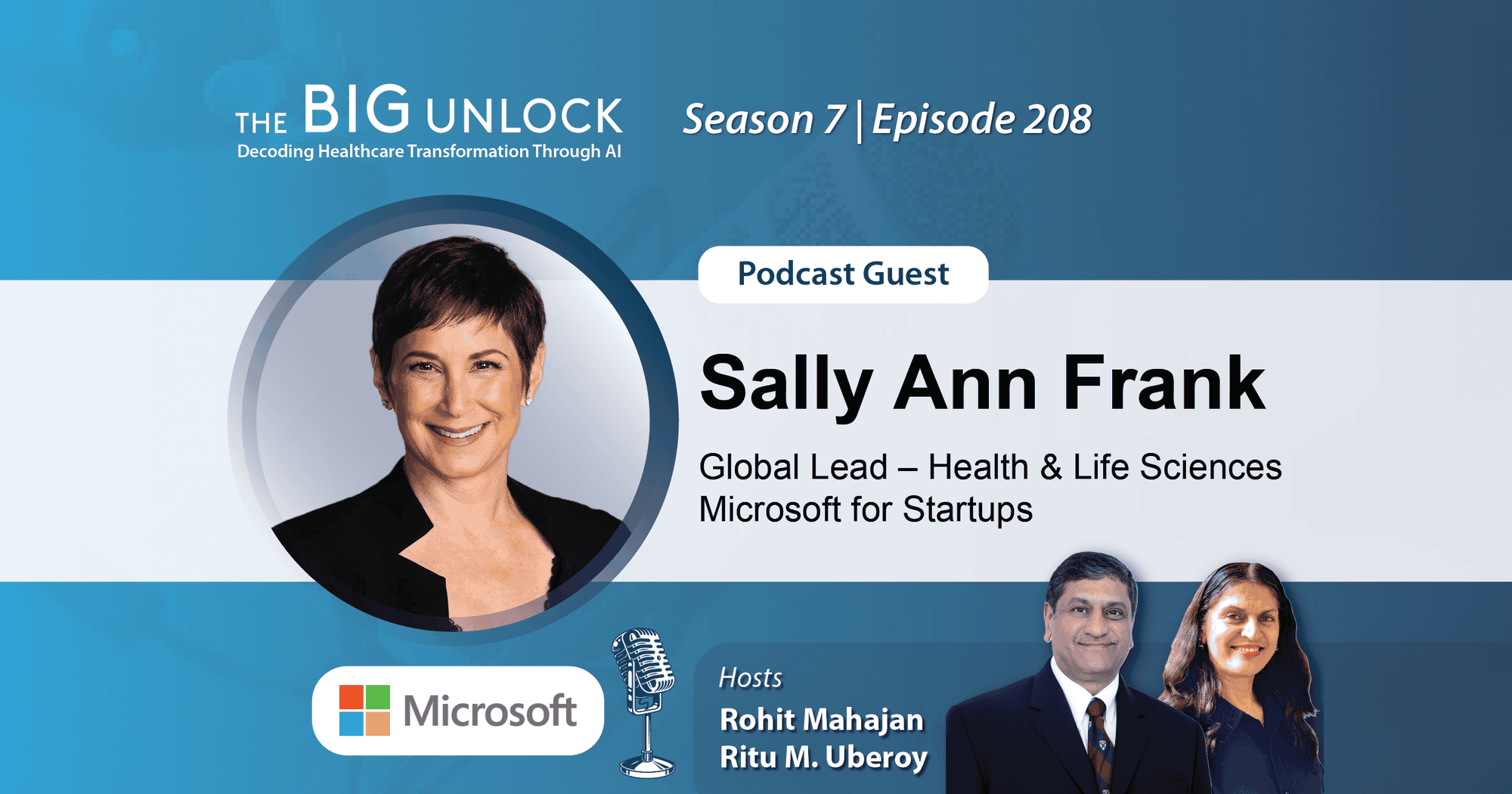
Month: May 2026

The Radical Transformation of Healthcare Through AI-Native Digital Platforms

The Radical Transformation of Healthcare Through AI-Native Digital Platforms

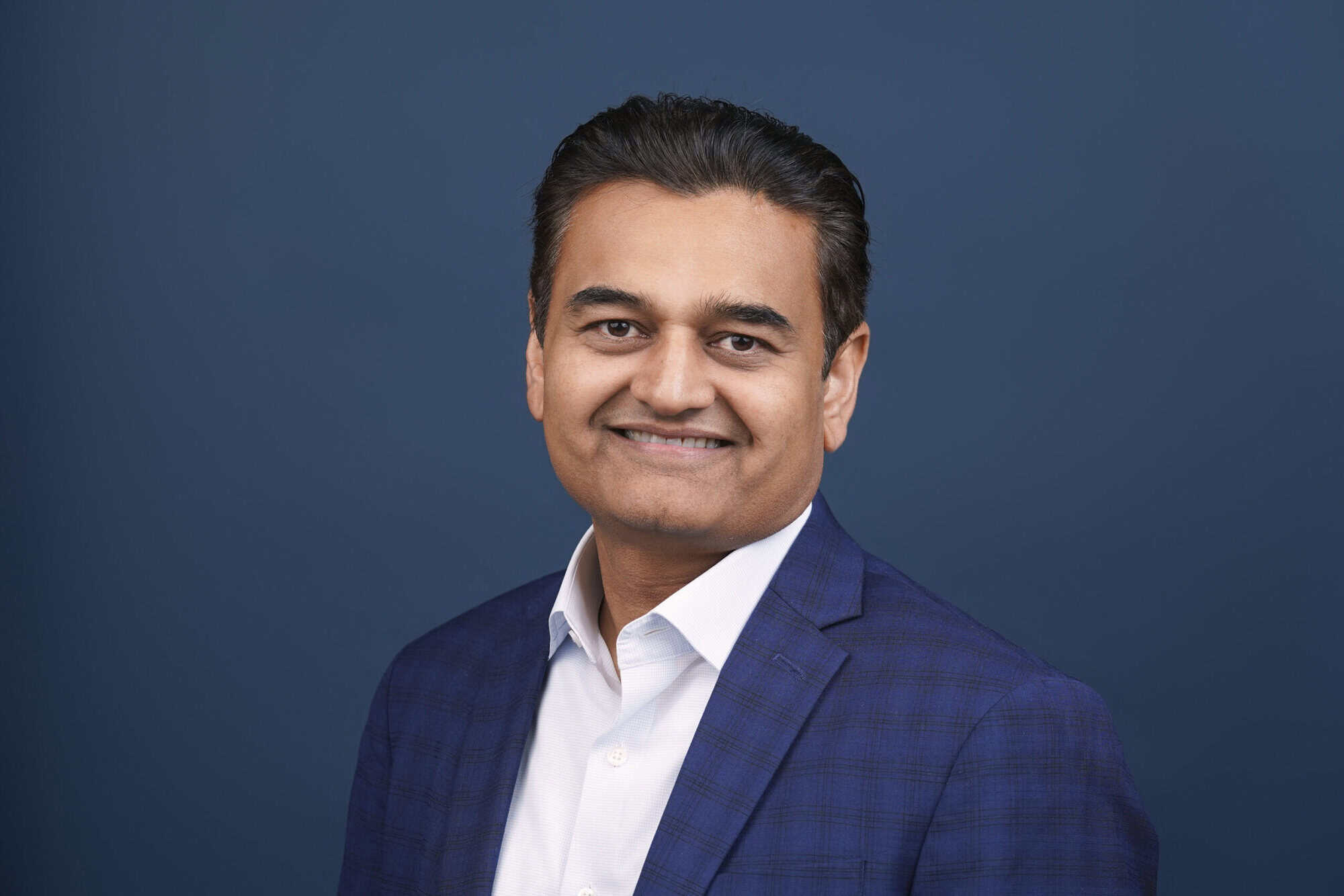
Insights by Bharat Sutariya, MD, SVP and Chief Health Officer, Oracle Health

Key Points

  • Oracle is making a bold bet that “bolt-on AI” will hit a ceiling, and that the real transformation requires rebuilding the healthcare stack with AI embedded at the foundation.
  • The next leap is moving from systems of record to systems of orchestration, where AI listens for clinical intent and queues orders, referrals, and prior authorizations.
  • Near-term value comes from reducing high-volume friction, while governance and human-in-the-loop guardrails remain essential as AI moves closer to clinical decision support.

“AI needs to do the work.”

That single line captures the urgency and ambition in this conversation with Dr. Bharat Sutariya. His core argument is not that healthcare needs more AI features. It needs a different architecture. One where AI is not bolted onto legacy workflows but embedded into the foundational layer so the system can orchestrate work across the care journey.

Dr. Sutariya’s perspective is shaped by living through every era of modern health IT. He is an emergency physician by training with 25-plus years at the intersection of healthcare and technology, including leadership roles at Detroit Medical Center, 17 years at Cerner, a stint at Deloitte, and now as Senior Vice President and Chief Health Officer at Oracle Health. He has seen healthcare move from paper to EHR documentation overload. His “origin story” into technology is simple and relatable: impatience with things that do not work, paired with a relentless drive to improve care at scale.

What makes this episode especially relevant is that it confronts the question every CIO, CMIO, and CEO is wrestling with right now: are we heading toward incremental productivity gains, or toward a fundamentally different operating model for care delivery?

Dr. Sutariya believes the answer depends on whether we keep bolting AI onto legacy systems or build platforms that treat AI as the new core of the workflow.

Listen to the full conversation

Why “Bolt-On AI” Is Only the Beginning

One of the most useful parts of this episode is the way Dr. Sutariya reframes what people blame on the EHR.

As he explained to The Big Unlock podcast host, Ritu M. Uberoy, “the EHR itself is not the only culprit. A large portion of the burden clinicians feel stems from the compounded weight of regulatory compliance, medical-legal requirements, expanded evidence requirements, and administrative demands layered onto the digital workflow over decades. The EHR became the container for all of it, so the frustration is often directed at the EHR.”

That is why he believes AI matters, but also why he believes the usual pattern of adding tools on top of legacy infrastructure will only take the industry so far.

He calls out what has become the industry norm, keeping the foundational EHR and bolt AI on top. He acknowledges that both “bolt-on” and “rebuilt” approaches can show early success, especially because the industry is still “scraping the surface” of what AI can do. But he predicts differentiation will come when AI moves from documentation and isolated agents to orchestration across workflows.

Oracle’s bet, as he told Ritu, is different. Rather than treating AI as an add-on, Oracle is rebuilding the healthcare tech ecosystem across providers, payers, and life sciences using the full Oracle stack, from database and cloud infrastructure through the AI layer to modern applications. In his words, Oracle is embedding AI into the EHR, or even more radically, embedding the EHR inside the AI.

That is not just a product story. It is a sequencing story. It says the future is not “a smarter form.” The future is a workflow engine that can interpret intent, coordinate tasks, and reduce the load clinicians carry every day.


The Shift From Documentation to Orchestration Is Already Underway

When Dr. Sutariya talks about near-term value creation, he is very specific: “reduce high-volume friction,” or the repetitive work that drives burnout. Documentation, chart review, ordering, and follow-up tasks. He argues that AI agents deployed with full chart context can meaningfully reduce burden, improve satisfaction, reduce pajama time, and improve patient interaction because clinicians are not hiding behind keyboards.

He also makes an important point about outcomes. In addition to measuring process metrics like time saved, he says Oracle is increasingly tracking clinical outcomes, financial outcomes, patient experience, and whether clinicians can operate more efficiently without sacrificing quality. That is an important evolution for the industry, because the “time saved per note” story is not enough to justify long-term platform modernization.

Then he explains what “orchestration” looks like in practice, and this is where the conversation gets concrete.

Ambient documentation is not the endpoint. It is the foundation.

As Oracle’s ambient agent listens to the clinician-patient conversation and drafts the note, it also extracts clinical intent and begins queuing actions:

  • orders mentioned by the clinician
  • prescription renewals
  • referrals to other clinicians
  • and, when appropriate, prior authorization workflows

He describes a scenario where the agent hears a clinician discuss a knee replacement. The system identifies payer requirements, retrieves prior authorization criteria, gathers relevant chart information, fills the required documentation, and presents it for clinician review or routes it to the appropriate queue for completion.

The key distinction he is drawing is that the AI is not “making medical decisions.” It is capturing clinician intent and automating downstream administrative work that normally slows care, creates delays, and drains staff capacity.

This is what he means by AI doing the work.

It is also what he means by moving from a system of record to a system of orchestration. A system that does not simply store what happened, but helps move the care journey forward.


Guardrails, Transparency, and Sequencing Are What Make This Safe

Dr. Sutariya is clear that healthcare has a different error tolerance than most industries. The “parts per million error rate” that might be acceptable elsewhere is not acceptable in patient care. Therefore, the path to AI-native orchestration cannot be reckless.

His answer combines governance, safety sequencing, and transparency.

First, he emphasizes starting with lower-risk areas, such as operational and administrative workflows. There is significant efficiency and quality improvement that can be achieved before AI moves into higher-risk clinical domains.

Second, he argues that you need trusted platforms with appropriate guardrails and governance. This is partly why he advocates moving away from a fragmented ecosystem of dozens of AI startups, each requiring data extraction and creating new cybersecurity and privacy burdens. He suggests health systems should accept that AI will be a foundational component and choose a partner or a small set of partners that can provide infrastructure, governance, and reusable services across many use cases.

Third, he describes how Oracle is thinking about transparency in assistive clinical scenarios. He gives a clear example, telling Ritu that “AI-generated chart summaries should not be opaque.” Clinicians should be able to see the source of each critical fact. He describes a workflow where clinicians can hover over a key summary element to see its source, and, with a single click, open the underlying document with the relevant text highlighted. That approach preserves clinician trust and reduces hallucination risk by making provenance visible.

This is a key theme: as AI becomes more capable, the difference between safe acceleration and unsafe automation will be traceability, explainability, and control.

Dr. Sutariya’s viewpoint is that the right platform can embed those safeguards at the infrastructure level, rather than forcing each use case to reinvent them.


The Next Chapter Is Orchestration — Not More Documentation Tools

Dr. Sutariya predicts that within a year, the conversation will move away from documentation efficiency and toward orchestration. AI should not create work. It should do work.

He also makes the North Star explicit. None of this matters unless clinicians and patients feel they get time back, are doing fewer repetitive tasks, and experience a safer path toward better care. Health systems will only win if the care delivery engine improves in a way that clinicians can sustain and patients can feel.

In his framing, AI-native orchestration is not a feature. It is the path to a connected, intelligent ecosystem where intent becomes action and administrative work no longer consumes the clinical day.


The Takeaway

Dr. Bharat Sutariya’s message is both ambitious and practical. “Bolt-on AI” can deliver early wins, but healthcare’s real transformation requires AI-native orchestration built into the foundational platform. Dr. Sutariya’s prediction is that the industry will quickly move from “documentation efficiency” conversations to “orchestration” conversations, and that winners will be the health systems and platforms that sequence safely, maintain transparency, and deliver what clinicians and patients actually want: time back, fewer repetitive tasks, and a more connected care experience.

Sitting at the intersection of emergency medicine, decades of EHR evolution, and AI-native platform strategy, Dr. Sutariya’s unique insights are especially valuable:

  • EHR “burden” is compounded by decades of compliance and administrative layering, and AI is an opportunity to unwind friction rather than add another layer.
  • Bolt-on AI will show early success, but orchestration will differentiate platforms once health systems demand end-to-end workflow impact.
  • Ambient is the beginning, not the end. The real value is when AI listens for clinician intent and automates follow-on tasks.
  • Orchestration means connecting the conversation to action: queuing orders, referrals, and prior authorization workflows while preserving human control.
  • Decision fatigue is real. Health systems should choose trusted AI partners and infrastructure rather than bolting on dozens of point solutions.
  • Transparency and provenance are essential as AI moves closer to clinical workflows, and must be designed into the platform, not patched on.

At the Intersection of AI, Healthcare, and Real-World Impact

Why We’re Heading to DHAI 2026

Healthcare transformation rarely happens in isolation. It happens when innovators, clinicians, investors, policymakers, and operators come together to ask one essential question:

How do we move from innovation to impact?

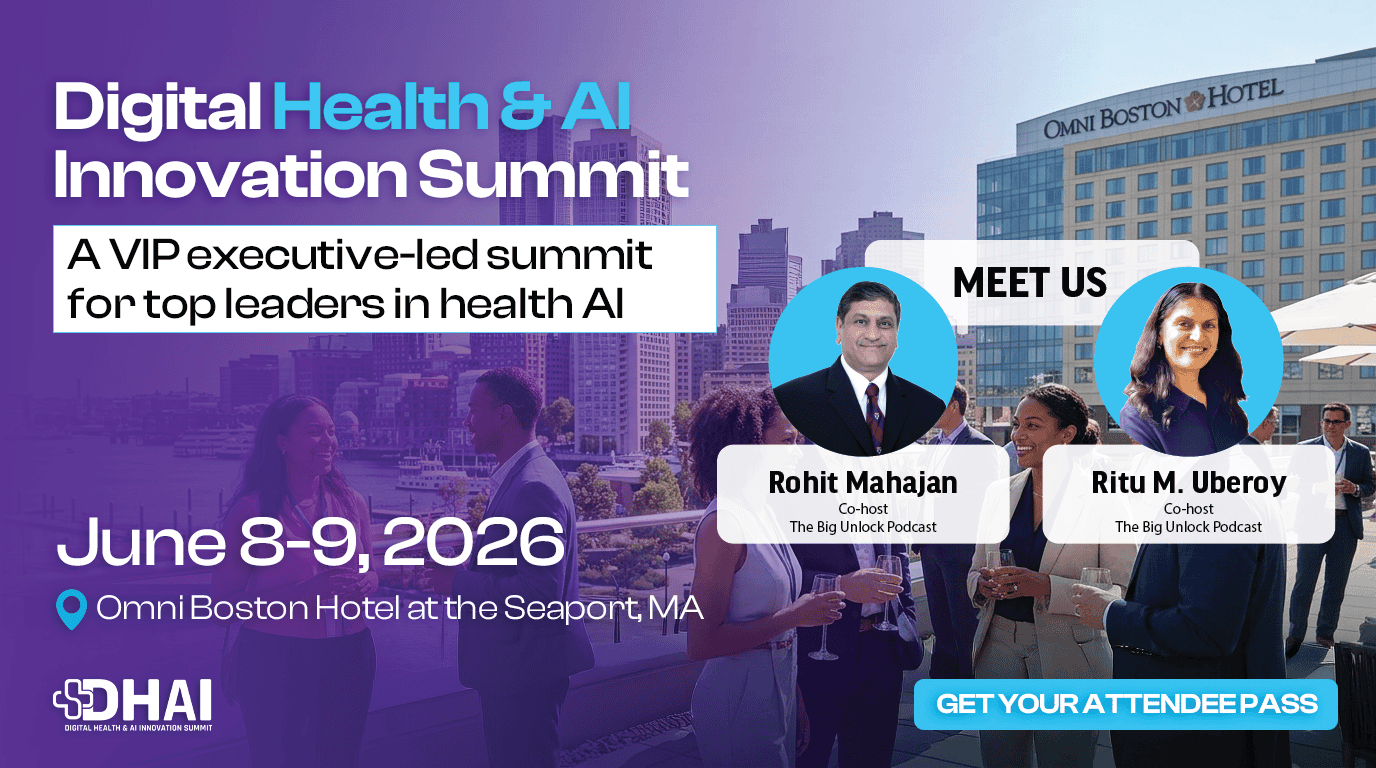
That is exactly why I’m excited that Rohit Mahajan and I will be attending the Digital Health & AI Summit (DHAI) 2026, hosted by World BI, where we’ll be covering the conversations, insights, and emerging signals for The Big Unlock Podcast.

If the past few years were about discovering AI, the next phase is clearly about deploying it responsibly and at scale.

And DHAI 2026 sits right at that inflection point.

DHAI is Bringing Together Global Healthcare Leaders

The Digital Health & AI Summit 2026 brings together global healthcare leaders, health systems, startups, pharma innovators, investors, and technology visionaries to discuss how artificial intelligence is reshaping healthcare delivery, operations, research, and patient experience.

Unlike many conferences that focus purely on technology, DHAI emphasizes something more important:

Operational reality.

The questions being asked today are no longer theoretical:

  • How do health systems deploy AI safely?
  • What does an AI-enabled workforce actually look like?
  • Can voice agents, copilots, and automation reduce clinician burden?
  • Where is real ROI emerging from AI investments?

These are the exact conversations we explore every week on The Big Unlock — and DHAI provides a live global forum where those ideas collide with real implementation stories.

From AI Pilots to AI Infrastructure

Across healthcare, we’re seeing a fundamental shift.

Healthcare organizations are moving from isolated pilots to enterprise AI platforms.

We’re witnessing:

  • AI copilots supporting clinicians
  • Voice agents transforming access and patient engagement
  • Automation redefining revenue cycle and operations
  • Predictive intelligence influencing care pathways

But success is no longer about deploying a single model.

It’s about building intelligent healthcare ecosystems.

The leaders gathering at DHAI understand that the future belongs to organizations that integrate AI across workflows — not bolt it onto existing systems.

The Big Unlock Is on a Mission

For nearly a decade, The Big Unlock has focused on one mission:

Understanding how digital innovation actually transforms healthcare organizations.

Through conversations with CEOs, CMIOs, founders, policymakers, and investors, we’ve learned an important truth:

Technology does not transform healthcare.
Leadership, strategy, and execution do.

At DHAI 2026, Rohit and I will be meeting innovators, interviewing leaders, and capturing the real stories behind AI adoption — the successes, challenges, and lessons that rarely make it into press releases.

Expect upcoming podcast episodes and insights covering:

  • AI adoption realities inside health systems
  • Startup innovation versus enterprise deployment
  • The evolving role of clinicians in an AI-augmented world
  • Global perspectives on responsible AI in healthcare


The Bigger Moment for Healthcare AI

We are entering what I believe is the second wave of digital health transformation.

The first wave digitized healthcare.
The second wave is making healthcare intelligent.

AI is no longer an emerging technology — it is becoming foundational infrastructure for care delivery.

Events like DHAI matter because they help the ecosystem align around shared priorities:

  • Better patient outcomes
  • Sustainable healthcare economics
  • Workforce resilience
  • Ethical and scalable AI adoption

And perhaps most importantly, they remind us that innovation must remain human-centered.


Join the Conversation

If you’re attending DHAI 2026, I hope you’ll connect with us.

Rohit Mahajan and I will be recording conversations, gathering perspectives, and bringing the most important insights back to the global healthcare community through The Big Unlock.

Because the real unlock in healthcare isn’t AI alone.

It’s how leaders choose to use it.

Ritu M. Uberoy
Co-Host, The Big Unlock Podcast

Rural Resilience and Balancing Clinical Care with AI Innovation

Season 7

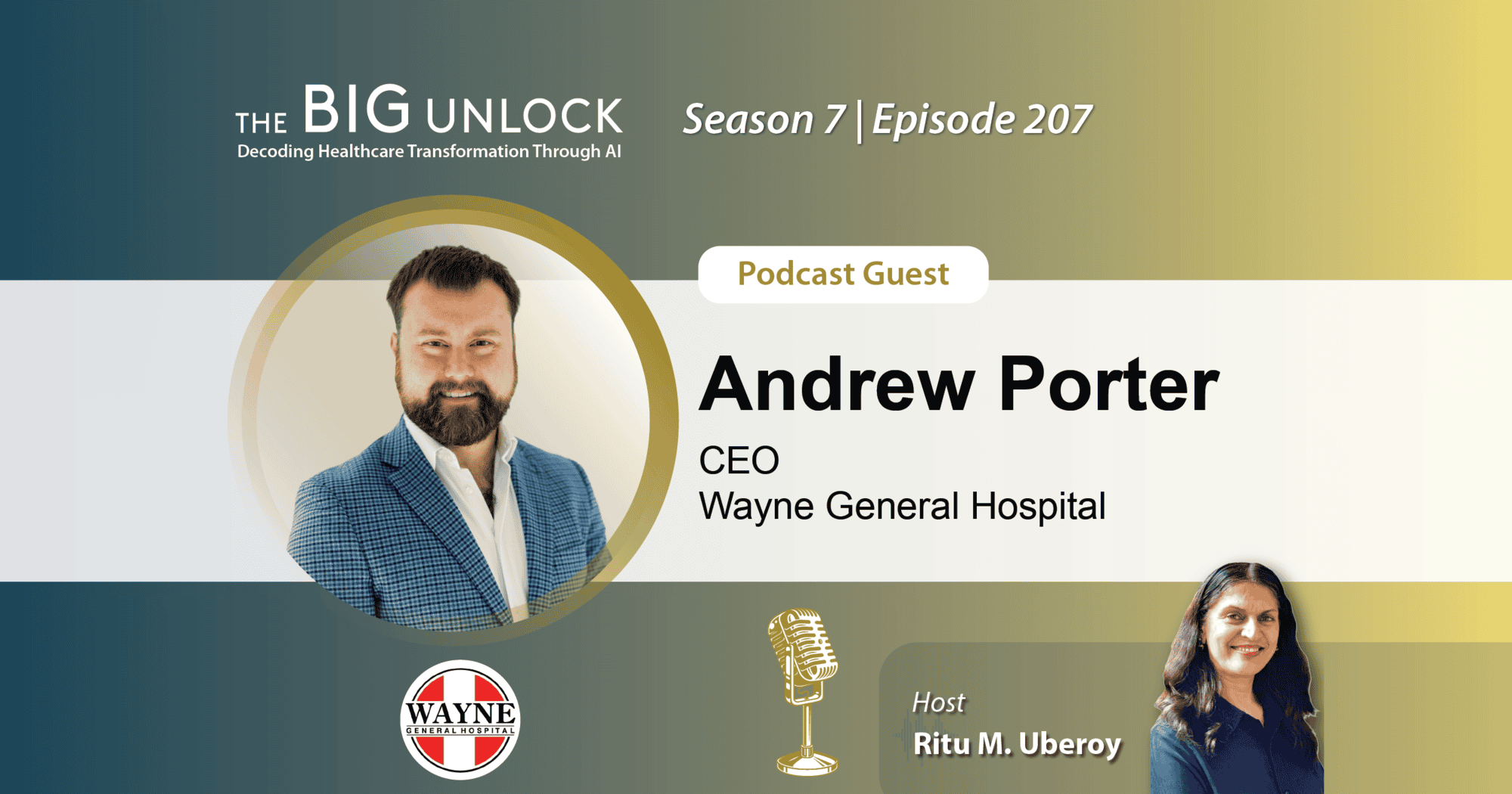
Episode 207 - Podcast with Andrew Porter, CEO, Wayne General Hospital
Rural Resilience and Balancing Clinical Care with AI Innovation

The Big Unlock
The Big Unlock
Rural Resilience and Balancing Clinical Care with AI Innovation
Loading
/

In this episode, Andrew Porter, CEO of Wayne General Hospital, shares how a community-based health system is navigating the dual pressures of financial sustainability and rural healthcare delivery. Drawing on his unique “three-legged stool” perspective as a clinician, administrator, and academic, Andrew highlights the necessity of staying nimble in a rapidly evolving market.

Wayne General is taking a pragmatic approach to AI by focusing on real problems instead of technology hype. Andrew details the successful implementation of ambient AI documentation, which has improved provider satisfaction and restored the intimacy of the patient-physician relationship. He also discusses leveraging AI partnerships to bring high-sophistication care, such as heart murmur detection, to rural populations. Andrew emphasizes the critical need for AI-driven transformation in the revenue cycle to alleviate the administrative complexity burdening small hospitals. Take a listen.

About Our Guest

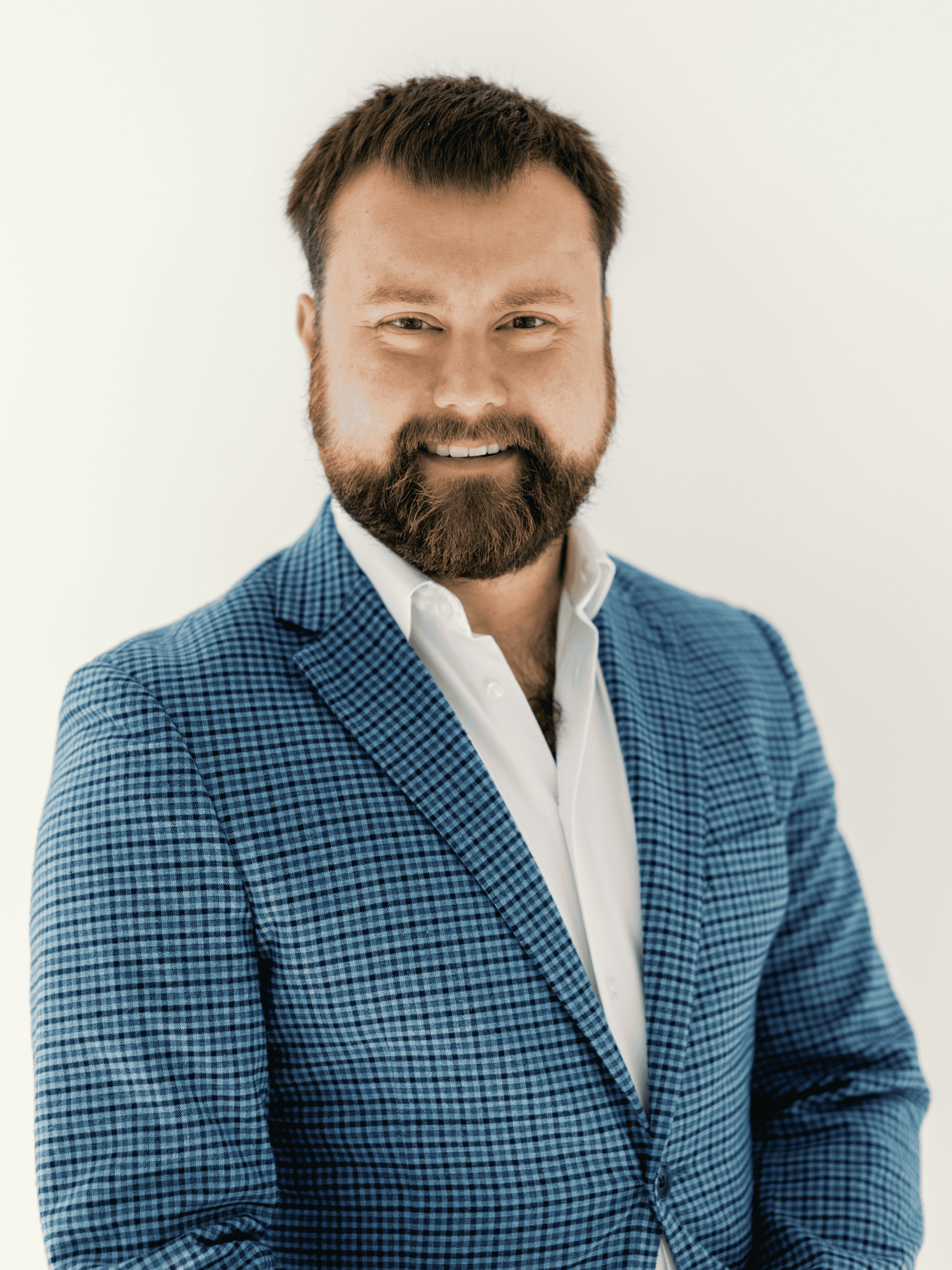
Andrew Porter is the Chief Executive Officer of Wayne General Hospital in Waynesboro, Mississippi where he leads strategic planning and daily operations. A graduate of the University of Lynchburg’s Doctor of Medical Science program as part of its second cohort, Dr. Porter continues to practice emergency medicine in the rural setting.

He is certified as a Physician Assistant by the NCCPA and holds the Emergency Medicine Certificate of Added Qualifications (EM-CAQ). Throughout his career, Dr. Porter has served on numerous advisory boards and boards of directors and has also provided expert testimony as a defense expert witness.

Dr. Porter has a special interest in public-private venture partnerships and has successfully structured and closed several collaborative initiatives designed to expand healthcare access and innovation in rural communities. In addition to his clinical and administrative experience, he completes his professional triad with a strong commitment to academics. From classroom teaching and precepting to research and program development, he finds preparing the next generation of healthcare professionals to be one of the most rewarding aspects of his work. He has previously served as an Associate Preclinical Director and held multiple adjunct faculty appointments.

Despite his professional accomplishments, Dr. Porter considers his family his greatest achievement and enjoys spending as much time as possible with his wife and three children on their tree farm.


Ritu: Hi everyone. Welcome to the Big Unlock Podcast. My name is Ritu Oberoi. I’m the managing partner here at Damo Consulting and co-host of the Big Unlock Podcast. A very warm welcome to all our listeners to Season Seven. Today we are very thrilled to have with us Andrew Porter. He serves as a key leader at Wayne General Hospital, where he’s driving forward initiatives focused on operational excellence, patient-centered care, and sustainable growth for a community-based health system. Andrew has been instrumental in advancing strategic priorities that strengthen access, improve outcomes, and enhance workforce resilience. Looking forward to a very in-depth and engaging conversation. Welcome, Andrew. Thank you.

Andrew: Thank you for having me.

Ritu: Would you like to add anything to that introduction, or shall we get started?

Andrew: I’m on y’all’s time. I’d just like to say it’s a privilege and an honor to get to chat with you all today, and for your listeners to get to know us here at Wayne General Hospital a little better. I’m excited about what we get to talk about today.

Ritu: We usually like to start with an origin story — asking our guests how they got into healthcare, and particularly into this intersection of healthcare, administration, and tech. If you can tell us a little about your background and how you came to this role, we’d love to hear that.

Andrew: Of course. It’s a winding path of how I ended up here, so I’ll give y’all the short elevator version. I actually started working here at Wayne General when I was still in high school — my first job was here as an ER tech. I did that through high school and into college. I initially went the clinical route in my education. I’m a PA by trade and practiced emergency medicine — I continue to do that to an extent even now. I did some teaching and education along the way, earned my doctorate in medical sciences with a focus on healthcare administration, and then the opportunity came along to return to my hometown to practice emergency medicine. I was able to bring that education and administrative leadership skill set with me, and the rest is history. My board of trustees put faith in me to be the CEO here at the hospital, and here we are today.

Ritu: Thank you for sharing that. You have this professional triad of clinical experience, administrative experience, and a strong commitment to academics. Which part is your personal favorite?

Andrew: I had an accounting professor once who described it beautifully using the analogy of a three-legged stool. Professionally, I have a clinical component, an academic component, and an administrative component — and for me personally, each one of those legs makes the other stronger. Continuing to work on the front lines in healthcare gives me a much better sense of the needs of the community and the pulse of my staff. There are so many times that being in the emergency department, interacting with staff at that level, allows me to catch something that could turn into a significant cultural or logistical issue before it becomes a larger problem. The adjunct teaching keeps me sharp on what the research is showing and where best practices are headed in five to ten years. Having that academic hat on makes me a better administrator. I know the practical challenges, but I also bring the academic perspective to the table. Together, all of that helps me drive our system using best practices, while keeping today’s financial challenges in mind, maintaining a strong strategic plan, and staying nimble — because the healthcare world today is essentially completely different from what it was a year ago.

Ritu: I like that analogy — it really helps visualize exactly what you’re saying, that you have to keep all three things in balance and each one makes the others stronger. Thank you for sharing that. Andrew, I wanted to hear more about Wayne General, because you operate in this challenging community hospital environment. What specific operational or financial levers have had the biggest impact in maintaining both quality and sustainability? We’ve been hearing from other health system C-suite leaders that it’s always a resource crunch and you’re constantly having to do more with less. Beyond AI, what’s top of mind and how do you face those challenges?

Andrew: A little more detail about our organization: we are the sole community hospital for our area, serving a population in excess of 50,000 people given our rural geography and how far our reach extends. We’re county-owned — which may be unique to some listeners — meaning we are actually a political subdivision of Wayne County. Even though we don’t receive any taxpayer funding, we have been financially sustainable for many, many years. At the end of the day, the reality is that we really try to embrace the idea that we’re the people’s hospital. We are owned by the people of Wayne County. We have the nonprofit designation, and I describe it to people this way: 365 days a year, our goal is high-quality patient care. We’re not a for-profit organization answering to shareholders — we answer to the people. But to meet those needs, you have to have money, so at the end of the day it’s still a business. It’s a unique business model, but you still have to get cash in the door. For small hospitals like ours, there’s been so much transition since COVID. We went through an EHR transition during that period, which is always a very big undertaking for a smaller health system. Navigating how that intertwines with the revenue cycle has been a big challenge. For a small community hospital leader, the name of the game right now is being conservative with finances, valuing our independence, and keeping the financial side right up there with patient care — because to offer a high level of patient care, we have to be in a good financial situation.

Ritu: Absolutely. Taking that further — where do you see the most practical near-term opportunities for AI and automation? How far along are you on that journey? We hear a lot about ambient documentation, voice agents, and digital front door technologies, since clinicians are still cautious about AI for diagnostics and clinical decision-making. Where is Wayne General with those technologies?

Andrew: About a year ago, I very distinctly remember having conversations of the nature of: we don’t want to get left behind. So we took a hard look at where our pain points were — but we weren’t going to go out and try to fix problems with AI that didn’t exist. We said: let’s look at the issues we’re actually having and see if AI might be part of the solution. A good example is the ambient documentation and AI-assisted documentation space — that was one of the first areas we went down that path, and it’s been very positive for us. We’ve had it active in a substantial way for about two months now, so it’s still a little early to have a complete picture of the financial implications around improved documentation. I will tell you, the timeliness of documentation has absolutely improved. But for me, the biggest factor has been provider satisfaction. Even some of our later-career providers — who are sometimes resistant to new technology — have tremendously embraced the use of AI for documentation assistance. I would argue that has added longevity to certain providers, and while I don’t yet have a way to quantify this, I believe it’s also improving the patient experience. Instead of the provider feeling rushed to get back to the keyboard and complete documentation, medicine now becomes more what it was intended to be — an intimate, conversational interaction between the patient and their physician or provider focused on the patient’s needs that day.

Andrew: So AI-assisted documentation is what comes to mind first as something we’ve implemented and are seeing really positive early results from.

Ritu: I was having a conversation a few months ago with one of our C-suite guests, and they mentioned that one important benefit of ambient documentation is that doctors are vocalizing more — and that’s great for patients because they love to hear more. Because the system is capturing everything in the background, providers are actually saying things out loud that they might otherwise have just thought, and that really helps.

Andrew: That’s a great point, and putting my clinician hat on — it’s so easy to see a patient and say something like, “I think you have pneumonia, we’re going to run a couple of tests and get a chest X-ray,” and then move on. With ambient documentation, you’re naturally encouraged to be more detailed in that conversation because you know it’s going to be populated into the note. The conversation becomes: “Here’s my concern about what we may be dealing with. I’m going to order X, Y, and Z tests. Here’s what I’m looking for. This is the initial treatment plan.” And the way I have my AI-assisted documentation tool set up, every time I go into the room it timestamps it — which is an additional encouragement to make sure that every 30 minutes, every hour, or whatever is appropriate, I’m reassessing the patient and providing updates to them. So while it may not have been the original intent, it also increases accountability — making sure you’re having those detailed, appropriate conversations with the patient and their family and checking in on them regularly. Personally, those have been some of the real positives for me.

Ritu: Going along those same lines, you mentioned some of those physicians were from an older generation and more resistant to technology. Let’s talk about change fatigue and the barriers to digital transformation. How did you break down those barriers and get everyone on board?

Andrew: For us, one of our more experienced clinicians had actually heard that this technology was becoming available. We let him do a little research, look at different vendors, and participate in the selection process — and then we let him be the first user for a couple of months. He really became our champion. The sell was easy after that because when this particular person — someone who hates technology and wishes we could still do everything on paper — starts telling his colleagues, “This is as close to charting on paper as we’re probably ever going to come again. It’s decreased my workload. I’m not staying hours after my shift or coming in on my days off” — that carries a lot of weight. So for other organizations, finding that champion early on and giving them real buy-in to the project was really key for us.

Ritu: Basically, have the change driver be someone who has a personal stake in the change and can genuinely influence others around them.

Andrew: And realizing that the right agent of change may not be the first person who comes to mind. It doesn’t need to be the newest graduate clinician. It probably needs to be someone more senior, because your senior medical staff will have those long-standing relationships with colleagues, and the trust they carry operates on a different level.

Ritu: Looking ahead, what do you believe will differentiate the community hospitals that thrive from the ones that struggle to survive? Resources are always going to be scarce. What are the key factors that will keep Wayne General — and community hospitals in general — on the path to sustainability?

Andrew: We have a saying in medicine: you often don’t want to be the first to do something, and you don’t want to be the last. For us, that meant while we may not be the very first to try something, we do want to stay on the cutting edge. If we see a product or solution that has worked for others and makes sense for us, we’re going to consider going down that path. The AI vendor market has opened up so many opportunities for relationships and solutions. One thing we’ve been very fortunate with is our relationship with Eko Health, who make the Eko stethoscope. We’ve partnered with them on various research projects using their Sensora AI tool for heart murmur detection, and that’s been a great relationship. That gets into the space of how we use AI to increase access to care — bringing a level of technology and sophistication to a population that historically would have been years behind what could be offered in a large metropolitan area. We’re passionate about bringing that cutting edge of care when it makes financial sense and when we have the capabilities to support it. We’re proud of that relationship and look forward to the research that will come out of that partnership.

Ritu: As you’ve explored AI on your own — and you mentioned you’re always doing research — what do you feel are some of your personal favorite areas you’d like to know more about? And where do you think the biggest change in healthcare is headed in the next year or so? Crystal ball?

Andrew: Putting my administrator hat on — something is going to have to change in the revenue cycle space: coding, billing. There has to be some relief at some point for our hospitals, because the current model is enormously complex. I’ll be very honest — I by no means fully understand the revenue cycle, let alone a layperson trying to make sense of it. And just the timing alone — how long it takes from when a patient is seen to when the facility receives payment — you’re often looking at 30 to 60 days at minimum. I really hope that health systems and payers can come together and find solutions with AI in coding, billing, and that whole arena. That would be huge for everyone. So while it may not be a crystal ball prediction with a definitive endpoint, that’s Andrew’s hope for what will happen.

Ritu: That’s a tough one because it involves so many players and everything is so fragmented. To build something that can communicate across all of them — that’s the barrier we’ve been hearing about from everyone. Everything is so siloed. Unless there are protocols that allow components to talk to each other — maybe with agents from each side communicating and speeding up the process — maybe that’s the future.

Andrew: That would be incredible.

Ritu: Maybe that is the future. It’s been a great conversation. Thank you so much for joining us on the Big Unlock Podcast. It’s been a pleasure having you as our guest. Thank you so much, Andrew.

Andrew: Thank you. It’s been an honor.

About the Host

Ritu M. Uberoy is a healthcare AI strategist, technology executive, educator, and author dedicated to advancing the responsible adoption of Artificial Intelligence across healthcare delivery, digital health, and life sciences. With more than twenty-five years of leadership experience spanning the United States and India, she is recognized for helping healthcare organizations move beyond experimentation to achieve scalable clinical, operational, and business transformation through AI.

She leads AI innovation initiatives, including the AI Center of Excellence at BigRio, where she works with health systems, healthcare technology companies, and life sciences organizations to operationalize Generative and Agentic AI solutions responsibly. Her work focuses on aligning AI innovation with clinical workflows, governance frameworks, workforce readiness, and patient trust—ensuring technology augments human judgment in high-consequence healthcare environments.

Ritu is the co-author of Generative AI: Unlocking the Next Chapter in Healthcare, a practical guide for healthcare executives navigating enterprise AI adoption. She also hosts The Big Unlock podcast, engaging global healthcare leaders on AI transformation and digital innovation. An active educator and speaker, she conducts executive workshops and participates in global forums like HIMSS, ViVE, Women in Tech, AI-Powered Women, RAISE, and more, shaping the future of AI-driven healthcare. Ritu holds advanced degrees in Computer Science and completed specialized AI programs at Harvard and MIT.

About the Legend

Paddy was the co-author of Healthcare Digital Transformation – How Consumerism, Technology and Pandemic are Accelerating the Future (Taylor &  Francis, Aug 2020), along with Edward W. Marx. Paddy was also the author of the best-selling book The Big Unlock – Harnessing Data and Growing Digital Health Businesses in a Value-based Care Era (Archway Publishing, 2017). He was the host of the highly subscribed The Big Unlock podcast on digital transformation in healthcare featuring C-level executives from the healthcare and technology sectors. He was widely published and had a by-lined column in CIO Magazine and other respected industry publications.

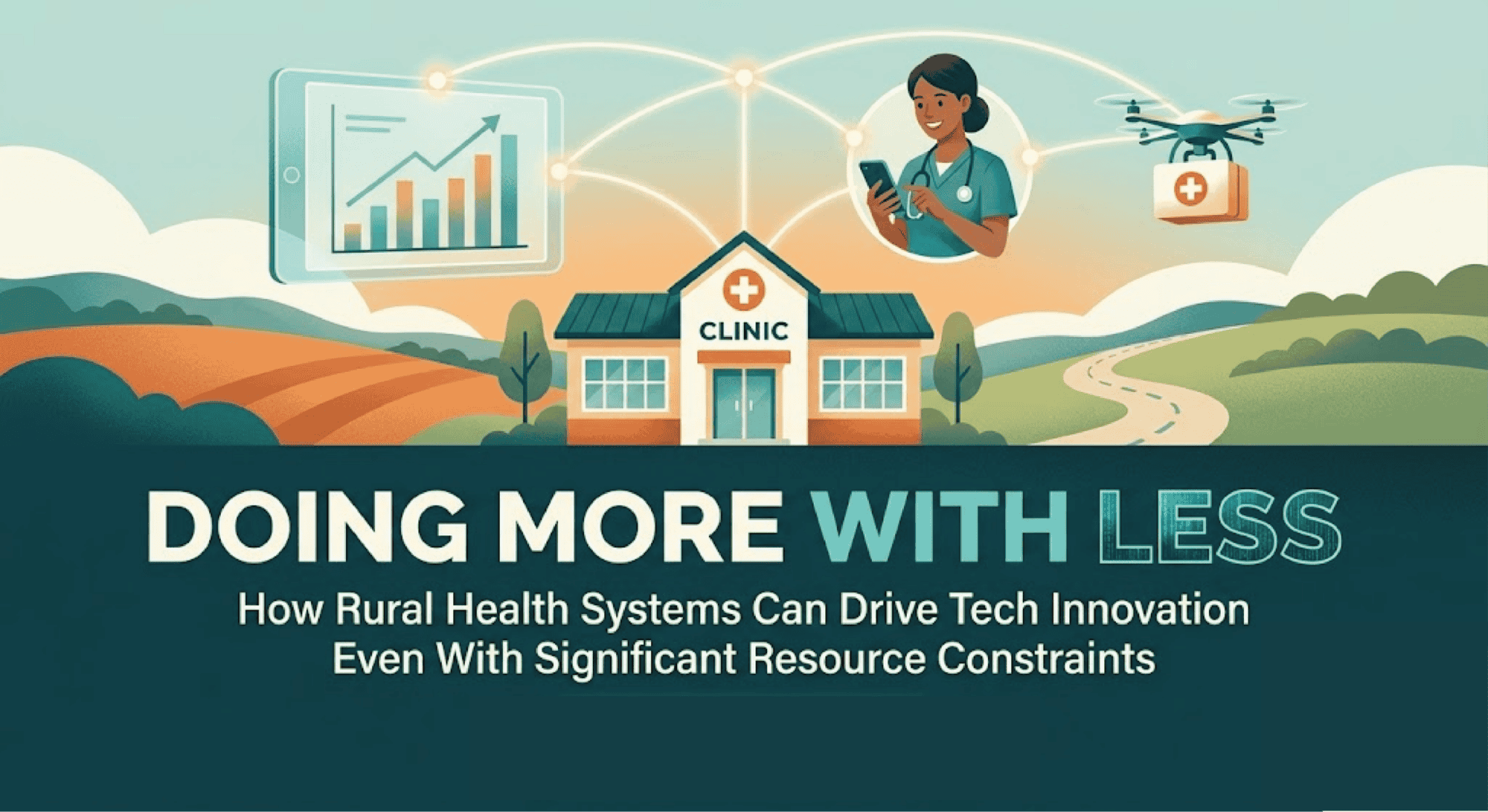
Doing More With Less: How Rural Health Systems Can Drive Tech Innovation Even With Significant Resource Constraints

Insights by Linda Stevenson, Chief Operations & Information Officer, Fisher-Titus Health

Key Points

  • Rural health innovation is an execution discipline: partnerships, workflow optimization, and outcome focus matter more than shiny tools.
  • AI is “just another tool” within a larger strategy, and leaders should start with the problem before deciding whether AI fits.
  • Interoperability and cybersecurity remain the biggest constraints in rural areas, and rural vulnerabilities weaken the entire healthcare chain.

“We’re a hundred-bed rural hospital, so we do more with less.”

That’s the context Linda Stevenson brings to this episode, and it changes the entire tone of the conversation. Fisher-Titus Health is a community-based system in Norwalk, Ohio that spans care across the full patient lifecycle, from birth to end-of-life care, including physician practices, home health, skilled nursing, and nursing home services. And as of March, Stevenson’s role expanded beyond CIO responsibilities to include COO oversight of ancillary services, facilities, and environmental services.

Her story is also a reminder that healthcare technology leadership doesn’t require a linear path. She started typing bills on a typewriter, moved into analyst work because she was always asking “why,” then progressed through project management, security, and major EHR implementations, including an early Epic rollout at Cleveland Clinic and vendor-side experience at Cerner (now Oracle Health). Her advice is simple. Say yes, even when you’re unsure. That “jump in the pool” mindset is also how she took on the COO role.

But the most important part of this episode is not her resume. It’s her operating philosophy for rural health systems: stay grounded in enterprise strategy, focus on real outcomes, and resist the temptation to treat AI as a standalone strategy.

Listen to the full conversation

Rural innovation is partnership plus pragmatism, not a single priority

When asked what a CIO should prioritize today, Linda answers with the only honest response, “all of it.”

Innovation, cost control, operational reliability, productivity, clinician experience, and patient access all compete for attention. And in a rural system with constrained budgets and staffing shortages, those trade-offs quickly become real issues.

Her way of navigating that complexity is partnership.

She repeatedly returns to the need to partner with nursing leaders, finance leaders, operations leaders, and clinical stakeholders to identify the real constraints and the real opportunities. In some areas, the problem is recruitment. She points to therapy departments that cannot find enough therapists. The strategy isn’t to cut staff. It’s to use technology to help the available staff work faster without sacrificing quality, so more patients can be seen.

In other areas, the problem is cost. Linda points toward application rationalization and optimization, using what you already pay for more effectively, consolidating where you can, and getting the best value for each dollar spent.

And sometimes the ROI is human. She highlights automation and workflow improvements not only for productivity but also to reduce daily stress and burnout for staff and to improve patient access.

The underlying point is a rural reality: you don’t get to pursue innovation as a separate track. Everything has to map back to outcomes. Everything has to be anchored in what the organization can operationalize with limited people and limited dollars.


“I don’t have an AI strategy. I have a strategy”

Linda has been in healthcare long enough to see buzzwords come and go. She remembers cloud hype, early EHR hype, and other “next big things” that were positioned as the answer to everything.

That’s why her framing of AI is so grounded.

When people started asking about “AI strategy” two years ago, her reaction was simple. AI is another tool. It might be more impactful than some past shifts, but it still needs to align with the organization’s enterprise and technology strategies.

Her overarching philosophy is one rural health leaders will recognize immediately: “the goal is not to chase shiny objects. The goal is to solve problems.”

This is why her adoption model starts with a practical sequence:

  • Partner with leaders in each area to identify the problem.
  • Define the outcome you want, i.e.: productivity, cost savings, time savings, quality improvements, or patient satisfaction.
  • Then determine whether AI is the right tool, or whether another approach solves the problem better.

She also addresses what keeps teams aligned, “explaining the why.”

Many vendors will pitch a shiny solution, and some of those will become strong partners. But not all. Linda emphasizes that leaders need to understand why certain products fit and others don’t, especially because rural systems don’t want 30 different tools solving a single category of problems.

Once stakeholders understand the reasoning, they’re often open to pursuing an integrated path rather than chasing every new option.

This is also where her perspective is quietly strategic: she’s not anti-AI. She’s anti-randomness. She wants AI used where it improves outcomes and operations, not where it creates more complexity.


Interoperability and cybersecurity are rural health’s biggest constraints

Few topics reveal the rural challenge more clearly than interoperability.

Linda notes that interoperability has been discussed for years, but even when systems are technically “connected,” the information does not always flow in a way clinicians can use. That’s the real gap. Not whether data can move, but whether it arrives in a usable, workflow-friendly format.

This problem is amplified in rural settings because rural hospitals rarely have a closed ecosystem of specialists. They refer out. They coordinate across organizations. They need continuity of care across walls.

She gives a vivid example, explaining to host Ritu M. Uberoy, how maternity records still don’t flow cleanly through standard interoperability formats. In some cases, systems still fax papers back and forth with outside OB physicians. That reality undercuts the “interoperability solved” narrative and reinforces how much work remains in real-world care coordination.

She also points to a pathway rural leaders can use to influence improvement and engagement at the state level. Linda serves on the board of Ohio’s HIE and praises the state’s progress, not only for CCDAs but for broader population health initiatives and Medicaid support. Her argument is that rural systems cannot solve interoperability alone. They need collective coordination through state infrastructure and policy.

Cybersecurity is the other constraint she highlights, and her perspective comes with unusual credibility. She testified at the Senate HELP Committee on rural healthcare and cybersecurity risk. Her message is straightforward: rural systems have smaller budgets, smaller teams, and fewer cybersecurity professionals available to recruit. That makes it harder to keep up with constant attacks and harder to manage third-party risk.

But her most important point is structural: rural systems are links in a chain. Many organizations connect through them, directly or indirectly. If a rural link is weak, the broader healthcare chain is weak.

That framing should matter to every leader, not only rural CIOs. Cyber resilience is not isolated. It is ecosystem-level.


Take a breath, stay strategy-driven, and don’t buy a million shiny objects

Linda closes with advice that feels especially relevant right now. AI is moving fast. Costs are changing. Vendor promises are everywhere. The pace can create pressure to rush, to buy, to “do something” just to keep up.

Her guidance is to take a deep breath.

Think it through. Stick to strategy. Don’t rush into a million shiny objects. Focus on where technology truly benefits outcomes. And don’t forget the human dimension, including your own well-being. When leaders run at this pace nonstop, health systems lose clarity and teams burn out.

Her message is a “rural health reality check” with broader relevance. To Linda, the organizations that win won’t be the ones that adopt the most tools. They’ll be the ones that align technology to enterprise priorities, build partnerships that scale, and strengthen interoperability and cybersecurity so care can extend beyond walls without breaking.


The Takeaway

Linda Stevenson’s message is refreshingly grounded. Rural health systems don’t need an “AI strategy,” they need a strategy, with AI used only when it clearly advances outcomes. In a 100-bed hospital with a lean IT team, innovation is less about building new tools and more about partnership, workflow optimization, and disciplined choices that reduce complexity instead of expanding it. The leaders who succeed in this environment will be the ones who stay “strategy-driven,” resist shiny object overload, and build trusted partnerships that help them do more with less while still delivering the quality and continuity their communities depend on.

Sitting at the intersection of rural operations, enterprise technology leadership, and ecosystem-level cybersecurity advocacy, Linda Stevenson’s unique insights are especially valuable:

  • Rural innovation requires practical partnership across leaders to improve outcomes with limited resources.
  • Start with the problem, then decide if AI fits; AI is a tool, not a standalone strategy.
  • Workforce shortages make productivity tooling essential, not optional, especially in therapy and clinical support areas.
  • Interoperability still fails in real workflows, and rural care coordination magnifies the pain of gaps.
  • Rural cyber vulnerabilities weaken the entire healthcare chain, making resilience an ecosystem issue.
  • The best advice in a high-velocity market is to stay disciplined: take a breath, stay aligned with strategy, and avoid shiny-object overload.

Can AI Make Healthcare Feel More Human and the Case for Why it Should

Insights by Ed Lee, MD, MPH, Chief Medical Officer, Nabla

Key Points

  • Ambient AI’s deepest ROI is not minutes saved. It’s reducing cognitive burden and restoring presence in the exam room.
  • Change management, not model quality, is the make-or-break factor in AI adoption.

“At the end of the day, AI is just technology. If we do this right, it shouldn’t feel technical. It should feel more human.”

Dr. Ed Lee’s thought is simple, but it’s also a standard that healthcare leaders can actually use. It reframes the discussion away from model capability and toward lived experience. What do clinicians and patients feel when AI shows up in the room?

Dr. Lee’s perspective comes from spending years in one of the most operationally disciplined care-delivery environments in the country. He grew as a practicing clinician at Kaiser Permanente, where integrated payer-provider delivery forced every workflow change to meet a high bar. Technology could not be adopted simply because it was new. It had to help clinicians focus on patients and reduce the friction that screens and administrative tasks introduced between people and care.

Today, as Chief Medical Officer at Nabla, Dr. Lee is applying those lessons to ambient AI and clinical copilots. He’s explicit that the end goal is not efficiency alone. It’s restoring joy in medicine, reducing cognitive burden, and rebuilding the patient-physician relationship. In his view, that’s where the real ROI lives.

Listen to the full conversation

The hardest part of AI adoption isn’t the AI

When asked about what he learned at Kaiser Permanente, Dr. Lee doesn’t start with feature sets or architecture. He starts with human interaction and clinicians’ ability to focus.

He describes how easily technology can unintentionally get in the way of personalized care, and how the right tools should remove friction rather than add it. But when the conversation shifts to adoption, his answer becomes even more direct: “The hard part is not the technology. It’s change management.”

Dr. Lee puts it plainly to our host, explaining that change management is often the hardest part of implementing new technologies. Clinicians are scientific and evidence-driven. They want to understand “the why.” They want proof that a new workflow will improve care, not simply create another layer of tasks.

That’s why he argues clinician involvement from day one is non-negotiable. If clinicians aren’t brought in from the beginning, he believes teams are “often destined to fail.” This isn’t a philosophical point. It’s an implementation reality. Even the best tool will stall if it’s introduced as something imposed on clinicians rather than built with them.

He also addresses a familiar tension in the current AI narrative. Yes, AI can perform well on standardized tests and sometimes generate outputs that look smarter than what humans could write quickly. But he insists the appropriate framing remains augmentation, not replacement. The clinician must integrate information into the clinical context and remain responsible for the decision.

In practice, Dr. Lee’s message is a reminder that the adoption playbook is not about persuading people that AI is amazing. It’s about building trust through evidence, involvement, and workflow fit.


Ambient AI’s ROI is cognitive relief and restored agency, not a stopwatch metric

The early story of ambient AI was mostly about time savings. And Dr. Lee acknowledges that’s how many organizations first evaluated it: minutes per encounter, hours per day, pajama time reduced.

But he points out something important. The data has evolved, and the experience varies. Some clinicians do save substantial time. Others save less per encounter than the early narrative suggested. Some still have after-hours work even with ambient tools.

And then he pivots to what he sees as the deeper value: agency.

Dr. Lee explains that ambient tools can help clinicians budget their time as they choose. A clinician could compress the day and finish earlier. Or they could invest the recovered capacity back into their patients, slowing down to develop relationships, think more carefully, and communicate more clearly. The key is that the clinician regains control over the time and attention economy of the clinical day.

From there, he connects ROI to something bigger than time: cognitive load, cognitive burden, and meaning.

He argues that the real gain is that clinicians can do what they went into medicine to do. Not to be a transcriptionist. Not to be glued to a computer. But to be a caregiver and scientist who applies evidence to improve lives.

That’s where he believes ambient AI becomes strategic. Burnout reduction and retention aren’t abstract. They are operational outcomes. The tool may not eliminate every after-hours minute, but if it restores attention and reduces mental strain, it can improve the clinician experience in a way that matters in the long term.

Dr. Lee also highlights an unexpected “win-win” effect: ambient AI can improve the patient experience. As clinicians verbalize more to ensure the technology captures the right context, patients often feel more engaged. They hear more explanations. They experience a more meaningful interaction. What began as a documentation tool can become a relationship tool, almost as a byproduct of how clinicians use it.

That’s a key point for leaders evaluating ROI. If you only measure time saved, you might miss the bigger transformation: better communication, stronger trust, and improved clinician-patient connection.


The next frontier is workflow-native intelligence

For Dr. Lee, ambient documentation is only the first layer.

He describes the next phase already arriving. It includes diagnosis capture, coding support, surfacing the right ICD-10 and CPT codes, and improved documentation to support the financial integrity of care delivery. He’s clear that accurate documentation can improve how organizations capture what they are doing and justify it appropriately.

But he also points beyond the financial layer into clinical workflow intelligence:

  • chart summarization that distills decades of patient history into what matters now
  • surfacing key context at the point of care
  • clinical decision support that suggests diagnoses, diagnostic tests, and treatment options
  • orders that can be staged on behalf of clinicians, as long as the trust layer is strong

He notes that adoption of decision support will depend on trust, which takes time to build. But he believes clinicians will be enthusiastic if the tool supports their workflow without adding noise.

This is also where his “friction” framing returns. It’s not just what the tool can do. It’s how it does it.

If a tool adds five extra clicks per patient, clinicians won’t use it. Usability and integration matter as much as capability. Dr. Lee emphasizes that “hope is not a strategy.” You can’t release tools and assume adoption happens. Adoption must be engineered through workflow understanding, usability design, and deliberate change management.

In his best-case vision, AI becomes invisible infrastructure. It fades into the workflow. It reduces friction and supports clinicians through the entire loop: intake, documentation, orders, summarization, and decision support.


Done right, AI shouldn’t feel technical. It should feel human.

Dr. Lee’s message is consistent across the episode. The goal of AI in healthcare is not to make clinicians type faster. It’s to help clinicians be more present with patients, to reduce administrative burdens, and to restore the human side of care.

He doesn’t deny the importance of ROI. He simply reframes it. The deeper ROI of ambient AI extends beyond minutes saved. It’s cognitive relief, restored agency, reduced burnout, better recruitment and retention, and more meaningful patient interactions.

And he grounds the future in execution reality. The next wave will bring decision support, diagnosis capture, and chart summarization deeper into workflows, but only if organizations do the hard work of clinician involvement and change management. Technology alone won’t carry adoption. Trust and usability will.


The Takeaway

Dr. Ed Lee’s view of healthcare AI is refreshingly grounded: the goal isn’t efficiency for its own sake, it’s restoring human connection in care. Ambient AI is the first major proof point because it reduces cognitive burden, gives clinicians agency over their time, and can improve the quality of clinician-patient communication as a natural byproduct. But Dr. Lee is clear that the hardest part isn’t the tool, it’s adoption: change management, workflow fit, and clinician involvement from day one. As ambient evolves into chart summarization, diagnosis capture, and decision support embedded directly into the clinical workflow, the standard should stay the same. Done right, AI shouldn’t feel technical. It should feel human.

Sitting at the intersection of integrated care delivery experience and real-world ambient AI deployment, Dr. Lee’s unique insights are especially valuable:

  • Change management is the hardest part of AI adoption, and clinician involvement from day one is non-negotiable.
  • AI outputs can be convincing, which makes clinician expertise and context essential to prevent subtle outsourcing of judgment.
  • Ambient’s deepest ROI is cognitive relief and restored agency, not just time savings per encounter.
  • The patient experience can improve as clinicians explain more in real time, making conversations more engaging and meaningful.
  • The next frontier is workflow-native intelligence: diagnosis capture, coding support, chart summarization, and decision support at the point of care.
  • Adoption depends on frictionless integration: if it adds clicks, it won’t scale, regardless of how “smart” it is.

Reimagining Healthcare Through AI-Native Orchestration and Digital Platforms

Season 7

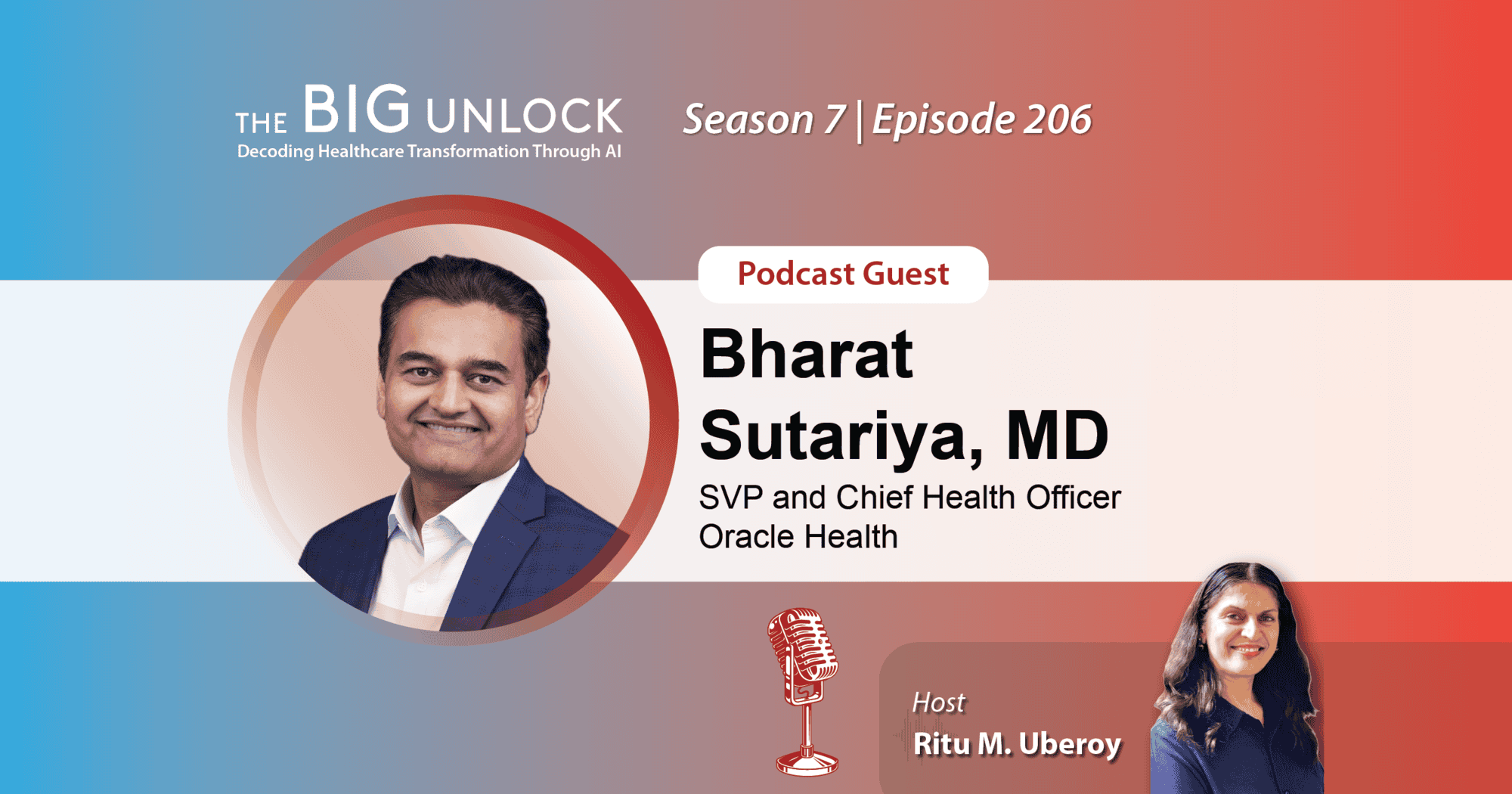
Episode 206 - Podcast with Bharat Sutariya, MD, Senior Vice President and Chief Health Officer, Oracle Health
Reimagining Healthcare Through AI-Native Orchestration and Digital Platforms

The Big Unlock
The Big Unlock
Reimagining Healthcare Through AI-Native Orchestration and Digital Platforms
Loading
/

In this episode, Dr. Bharat Sutariya, Senior Vice President and Chief Health Officer at Oracle Health, discusses the radical transformation of healthcare through AI-native digital platforms. As an emergency physician with over 25 years of experience, including leadership roles at Cerner and Deloitte, Dr. Sutariya provides a unique perspective on moving past the “burden” of legacy EHR systems.

The core of the conversation centers on Oracle’s bold bet: moving away from the industry-standard “bolt-on” AI approach. Instead, Oracle is rebuilding the healthcare stack from the ground up, embedding AI into the foundational layer. Dr. Sutariya argues that the future of healthcare technology isn’t just about capturing data but about systems of orchestration. This means AI that doesn’t just transcribe a note but listens to the clinical intent to automatically queue orders, handle referrals, and initiate prior authorizations.

Dr. Sutariya predicts that within a year, the conversation will shift from documentation efficiency to a truly connected, intelligent ecosystem that gives time back to both providers and patients. Take a listen.

This guest appearance was facilitated through conversations initiated at HIMSS.

About Our Guest

Dr. Bharat Sutariya serves as Senior Vice President and Chief Health Officer on the executive leadership team of Oracle Health & Life Sciences, where he leads enterprise strategy, customer engagement, product advisement, and industry representation for the global business. A seasoned and forward thinking healthcare leader, he is committed to advancing the use of AI and digital technologies to modernize healthcare delivery, elevate clinical and operational performance, and improve the experience of every stakeholder across the ecosystem.

Dr. Sutariya guides customer leadership collaboratives that bring together senior clinical, operational, and business executives, ensuring their insights directly shape Oracle’s next generation intelligent health platform and the connected data ecosystem that bridges research and care. In this work, he aligns market needs with product innovation across provider, payer, and life sciences domains to support a rapidly transforming industry.

His career spans extensive leadership in healthcare technology, clinical operations, and large scale transformation. Prior to Oracle, he was a leader in Deloitte’s Integrated Health practice, driving technology enabled clinical and operational modernization for health systems nationwide. Previously, as Vice President and Chief Medical Officer at Cerner, he played a central role in developing core EHR capabilities, value based care solutions, and data driven performance improvement programs.

Board certified in Emergency Medicine, Dr. Sutariya has practiced in Michigan and Kansas. He began his career at the Detroit Medical Center, where he led major clinical transformation and health IT initiatives across the integrated delivery network, and served as a clinical assistant professor at Wayne State University School of Medicine. He completed his Emergency Medicine residency at Wayne State University and the Detroit Medical Center.


Ritu: Hi everyone. A very warm welcome to all our listeners to the Big Unlock Podcast, Season Seven. Today we are very happy to have with us Dr. Bharat Sutariya, who leads Oracle Health’s clinical AI strategy. My name is Ritu, and I am the managing partner at Damo Consulting and co-host of the Big Unlock Podcast along with Rohit. Today Rohit is not here, so I’ll be in conversation with Dr. Sutariya. Dr. Sutariya is a senior healthcare leader at Oracle Health, shaping the next generation of digital platforms and how data and AI are transforming care delivery at scale. At Oracle Health, Dr. Sutariya is focused on enabling a more connected, intelligent healthcare ecosystem, and his work sits at the intersection of platform modernization, interoperability, and the emerging role of AI in re-imagining healthcare delivery. With that, I’ll hand it over to Dr. Sutariya. Welcome to the podcast. Thank you for being our guest today.

Bharat: It’s a pleasure, and thank you for the warm welcome. I look forward to our conversation.

Ritu: Thank you so much. If you’d like to add anything beyond the introduction, we’d love to hear.

Bharat: Sure. I’ve been fortunate to be at the intersection of healthcare and technology for over 25 years. I’m an emergency physician by training and practiced for 26 years — initially in Detroit, where I trained at the Detroit Medical Center and led much of the digital transformation there. Then I moved to Cerner for 17 years, did a short stint with Deloitte, and joined Seema’s executive leadership team at Oracle Health a couple of years ago. I’ve had the opportunity to witness healthcare’s journey from paper-based practice, through read-only systems, to heavy EHR documentation, and now — what I would say is the most exciting era — where we are on the verge of delivering the vision we’ve always had: allowing clinicians to practice better, patients to generate better outcomes, and the healthcare ecosystem to reach a more sustainable path. I am more bullish and excited than ever.

Ritu: Thank you, Dr. Sutariya. We always love to start with an origin story, and doctors’ origin stories are really fascinating. We always ask: what led you to tech? Being a doctor is such a full-time job — how do you manage to combine your interest in technology and medicine? Tell us a little more about that.

Bharat: What led me to tech is a relentless focus and impatience to improve healthcare — all the way back to residency, when I simply would not tolerate the green-screen CRT machines delivering lab reports, the printers not working, things just not functioning. I’ve always had very little patience for things that don’t work, and I believe patients and providers deserve better. I’ve always looked at technology as the most scalable answer to that problem. That’s what got me into technology from the early days of residency, then leading tech transformation at Detroit Medical Center, and onward from there.

Ritu: Tell us a little more about your time at Cerner, because you had a front-row seat to both the promises and limitations of large-scale EHR systems. They were supposed to make things better, but interoperability — which was always promised — was never fully there. What lessons do you bring to Oracle Health, and how do you think you can improve on that?

Bharat: I had the pleasure of working with Neal Patterson, Cerner’s founder, for nearly 15 of my 17 years there. He always stated that healthcare is too important to stay the same — meaning it needed to evolve, and faster. That was always the focus at Cerner. Cerner started as a lab company, grew into an inpatient EHR, and then into an enterprise EHR over the years. What most people don’t appreciate is this: if we had taken the way people practiced on paper 20 to 25 years ago and simply made it electronic, EHRs would actually be quite efficient. But what we don’t often talk about is 20 to 25 years of regulatory compliance, new evidence in medicine, and the overburdening of data — all of these movements stacked on top of EHRs, combined with EHRs becoming increasingly administrative. That is what led to the burden people talk about. It’s not the EHR alone. Take E&M coding, for example — it’s quite burdensome, and many times clinicians perceive that burden as coming from the EHR, when in reality it’s the E&M coding system, the medico-legal documentation requirements, or some other external task. All of it gets compounded into an EHR issue. That’s why I’m excited about the future, because I think we have much better answers going forward.

Ritu: Thank you for that insightful answer. Oracle Health is now representing a shift toward a more unified, platform-centric model. What fundamentally changes when healthcare moves from fragmented systems to a single data and workflow layer? And what do you think will get harder before it gets easier?

Bharat: There has been quite rapid adoption of AI and modern technology over the last couple of years in particular, and we made a different bet than most of the industry. The industry largely took a bolt-on approach — keep the legacy foundational EHR and bolt AI on top of it. That’s the industry norm. At Oracle, we took a different approach: AI is too important and transformative a tool to treat that way. In addition, we had the opportunity — because of Oracle’s full stack — to leverage everything from the foundational database and Oracle Cloud OCI infrastructure, through the AI layer, to the modern application layer. So we decided to reconstruct not just the EHR, but the entire healthcare tech ecosystem across provider, payer, and life sciences, to achieve a connected ecosystem vision. For us, AI is embedded into the EHR — or you could say the EHR is embedded inside the AI. There is no bolt-on. While that requires significant resources to build what the market has had for three or four decades of legacy EHR, we’re taking the bigger bet to transform the whole thing. That does require investment, but it gives us a significant advantage to innovate without legacy constraints. The industry’s bolt-on approach is having early success, as is ours, because we are still scratching the surface of what AI can bring to medicine. Where you will see differentiation going forward: we’ve already deployed AI agents on top of our legacy Millennium EHR, but we’ve just released a brand new Oracle Health ambulatory primary care EHR that is AI-embedded, cloud-first, and truly native. It looks and behaves radically different — with far fewer menus and clicks, because AI is always present as your companion with a human in the loop. The biggest movement for us is transitioning from a system of record — which is what most EHRs have been — to a true system of orchestration and workflow. That is the transformation we are leading toward.

Ritu: I totally agree. The bolt-on approach can only lead to incremental change. If you’re looking for transformational change, you have to build with AI first in mind. That’s something we’ve talked about in our voice agent webinars — companies expect more from AI but don’t see that transformation because they’re using it as a bolt-on solution, which only delivers that incremental 10 to 20% productivity gain. AI can let you do things fundamentally differently. So what are your thoughts on invisible AI versus clinician-facing tools? We’re hearing a lot about ambient and how doctors feel free to just talk directly to the patient without the documentation burden in between. Where is the real value creation happening today?

Bharat: The biggest near-term value is in reducing what I would call high-volume friction — the tasks that typically cause clinician burnout: documentation, chart review, ordering, and all the follow-up tasks. What we’ve now demonstrated with Oracle Health’s clinical AI agents, each built for these specific purposes, is that when you deploy them with access to the full chart context, you do significantly reduce that burden. We’ve seen it in time saved, clinician satisfaction, a reduction in pajama time, and even better patient interactions — because clinicians now have more face-to-face time rather than hiding behind a keyboard. And for us, outcomes aren’t only about process measures like time saved. We’re also tracking truly clinical and financial outcomes: did patient care improve? Was the provider able to see more patients efficiently? Was the patient happier with the interaction? Those things that really matter are where we’re now transitioning. Even in these early days, focusing on high-volume friction, AI has already been tremendously helpful.

Ritu: Would you say ambient has been one of the most successful use cases of AI so far? And where do you see it going further?

Bharat: Absolutely. Ambient as an assistive technology in healthcare delivery is probably the single best technology I’ve seen in my 25-plus-year career in terms of rapid adoption — and not just rapid adoption by one or two physician groups, but across the board. Every physician group you give access to embraces it, and they use it with a high degree of sustained adoption. That’s because it adds real value. It captures documentation fairly accurately and keeps the human in the loop — the draft is presented to the clinician, who validates it before committing it to the chart. But while many startups in the industry consider that the endpoint, at Oracle Health we view it as the beginning and the foundation. For example, our ambient agent, while creating the note draft and listening to the conversation between provider and patient, is constantly monitoring that conversation. Did the physician say something about orders? “Mrs. Jones, I’m going to order X, Y, Z lab tests for you. I’m going to renew your prescription.” The agent extracts the clinician’s intent and queues up orders, prescription refills, and follow-up tasks — including referrals and prior authorizations. If Mrs. Jones needs a knee replacement, the agent understands in that moment who the payer is, whether prior authorization is required based on eligibility and coverage criteria, and if so, it retrieves the authorization criteria, pulls all the relevant information from the chart, fills it automatically, and presents it to the clinician for review. If more work is needed, it goes to the queue. The ambient conversation is directly connected to the automation of a significant downstream task, done more accurately. That’s our journey — millions of agents spinning off in the background based on that ambient conversation, continuing the care journey forward.

Ritu: So you’re saying it’s going to move beyond just being a note-taker to actually taking the next step — listening and acting on what’s discussed?

Bharat: It’s already there. It’s already happening.

Ritu: Most health system CIOs and CMIOs we speak with are now genuinely overwhelmed by the pace of innovation — something new seems to emerge every single day. How should they think about sequencing platform modernization, AI adoption, and operational transformation without creating decision fatigue within their organizations?

Bharat: Let me offer a few key points. First, start with the end in mind. Be clear about the outcomes you’re trying to achieve, and recruit the right solution for that. Second, don’t look at AI as a collection of a hundred individual vendors. Look for a partner who can help you establish a platform and services framework capable of solving hundreds of problems over many years. Those are the two axes I think are most important. What I see in the marketplace — even within our customer base and beyond — is that tens, sometimes hundreds, of startups and AI companies are approaching health system leadership from every direction with different point solutions. Each of them genuinely has something to offer and can solve a specific problem. But the challenge is: how do you bolt ten or twenty different AI startups into your ecosystem? Every model requires data, which means you’re extracting and sending data to various external environments and then managing the cybersecurity, data privacy, and compliance implications of each one. AI has already proven itself enough that every health system should accept it is part of their journey. So you might as well embrace it and start forming a trusted partner framework — identifying which partner or set of partners can help you establish an AI infrastructure within your organization, connected to both your clinical and enterprise systems, to achieve clinical, operational, and financial improvement. Think from a partnership perspective. Then think with purpose — what are the highest-impact starting points? What has already been proven in the marketplace? Adopt that, but don’t wait for the next wave to perfectly emerge. Some degree of experimentation and piloting is important in this space, and in AI the pilot cycle is measured in days and weeks, not months or years, because that’s how efficiently you can deploy an AI agent and get to outcomes.

Ritu: Do you see a tension there? In most industries, the mantra is innovate fast and fail fast. But in healthcare it’s almost the opposite — you have to play it safe and not take chances. How do you reconcile those two?

Bharat: You raise an important point. In virtually any other industry, a parts-per-million error rate might be acceptable. In healthcare, it is not. So you absolutely must have guardrails — and that’s exactly why you need a trusted partner and platform with appropriate governance built in. While you may be doing early adoption of innovation, you need the right guardrails, the right governance, and the right metrics to ensure absolute patient safety. You also need to be able to test high-risk scenarios in a non-production environment. But here’s the opportunity: there is so much improvement to be made on the operational side of healthcare that you can safely deploy AI to solve a significant number of operational problems and gain efficiency before you move toward higher-stakes clinical applications. That gives everyone a meaningful runway to get started in a big way.

Ritu: Where we’re seeing most implementations right now is in the digital front door — before the patient even reaches the clinical setting. But do you think the guardrails and safety factors you described will keep humans in the loop longer? AI is progressing so rapidly — we’re already hearing about AGI, and we saw with Project Strawberry that some organizations are pausing releases to give the industry time to assess vulnerabilities. Do you think the human-in-the-loop model can hold, or will AI leapfrog that?

Bharat: That’s where careful governance and guardrails are essential, because no one can afford to simply wait. The question is how do you keep moving forward while doing so safely. I think establishing clear frameworks helps — for example, if something is purely administrative and doesn’t directly impact patient care or patient safety, it could potentially be automated. That’s the invisible AI piece. You just need the right metrics to confirm it’s achieving the intended outcome. You can do that very safely on the operational end. But the moment you inch toward anything that assists — not even makes — clinical decisions, then transparency becomes paramount. The AI must show why it’s drawing a particular conclusion, and it should be assistive and presenting facts with full transparency to the clinician rather than acting autonomously. For example, in our new EHR, every time a physician logs in, an AI-driven summary is immediately generated — one that knows the patient, knows the reason for the visit, knows the physician, and has access to the entire longitudinal record. It constructs a concise summary a clinician can consume in one to two minutes, versus clicking through fifteen tabs over ten minutes on a complex patient. But critically, we’ve embedded metadata tags throughout that summary. Anywhere there is critical information, the clinician can hover over it and see exactly where it came from — and with one click, the source document loads with the relevant text highlighted. That’s AI driving clinical efficiency in a way that’s also transparent and safe. We’re fortunate to have the full Oracle Health AI infrastructure stack combined with three to four decades of clinical system development experience. We understand the clinical significance of every data element and its metadata. A lab value isn’t just a lab value — we understand what abnormal, high, and low mean, the standard deviations, and the source context, because we’ve been living with that data on the Cerner side for decades. Combined with Oracle’s capabilities, that puts us in a stronger position to deploy AI safely.

Ritu: You made very good points — retrieval-augmented generation with traceability back to the source, and the importance of context because you have so much surrounding information to interpret each value accurately. That was a very insightful answer. Time has flown by and we’re almost at the end of the podcast. What are your predictions for the next year? If we had this conversation again in a year, what would we be talking about?

Bharat: I think we’ll be talking about the next chapter — moving away from documentation and truly into orchestration. That’s the big shift. And AI shouldn’t be creating work; AI needs to do the work. I think we’ll see more successful examples of that. At the end of the day, all of this only matters if our clinicians and patients feel they’ve gotten time back, are doing fewer repetitive tasks, and feel there’s a safer path toward better healthcare. That’s the north star. Health systems should feel they can operate a better care delivery model. Providers should feel they’re delivering safer, better care while remaining personally satisfied — not overburdened. And patients should feel that the health system they’re visiting, powered by AI, is delivering a genuinely better experience. That’s the north star we’re working toward.

Ritu: Thank you so much, Dr. Sutariya. It’s been an absolute pleasure having you on the podcast. Thank you for making the time to speak with us today.

Bharat: It’s my pleasure. Thank you for a great conversation.


————

Subscribe to our podcast series at www.thebigunlock.com and write us at [email protected]    

Disclaimer: This Q&A has been derived from the podcast transcript and has been edited for readability and clarity.

About the Host

Rohit Mahajan is an entrepreneur and a leader in the information technology and software industry. His focus lies in the field of artificial intelligence and digital transformation. He has also written a book on Quantum Care, A Deep Dive into AI for Health Delivery and Research that has been published and has been trending #1 in several categories on Amazon.

Rohit is skilled in business and IT  strategy, M&A, Sales & Marketing and Global Delivery. He holds a bachelor’s degree in Electronics and Communications Engineering, is a  Wharton School Fellow and a graduate from the Harvard Business School. 

Rohit is the CEO of Damo, Managing Partner and CEO of BigRio, the President at Citadel Discovery, Advisor at CarTwin, Managing Partner at C2R Tech, and Founder at BetterLungs. He has previously also worked with IBM and Wipro. He completed his executive education programs in AI in Business and Healthcare from MIT Sloan, MIT CSAIL and Harvard School of Public Health. He has completed  the Global Healthcare Leaders Program from Harvard Medical School.

Ritu M. Uberoy has over twenty-five years of experience in the software and information technology industry in the United States and in India. She established Saviance Technologies in India and has been involved in the delivery of several successful software projects and products to clients in various industry segments.

Ritu completed AI for Health Care: Concepts and Applications from the Harvard T.H. Chan School of Public Health and Applied Generative AI for Digital Transformation from MIT Professional Education. She has successfully taught Gen AI concepts in a classroom setting in Houston and in workshop settings to C-Suite leaders in Boston and Cleveland. She attended HIMSS in March 2024 at Orlando and the Imagination in Action AI Summit at MIT in April 2024. She is also responsible for the GenAI Center of Excellence at BigRio and DigiMTM Digital Maturity Model and Assessment at Damo.

Ritu earned her Bachelor’s degree in Computer Science from Delhi Institute of Technology (now NSIT) and a Master’s degree in Computer Science from Santa Clara University in California. She has participated in the Fellow’s program at The Wharton School, University of Pennsylvania.

About the Legend

Paddy was the co-author of Healthcare Digital Transformation – How Consumerism, Technology and Pandemic are Accelerating the Future (Taylor &  Francis, Aug 2020), along with Edward W. Marx. Paddy was also the author of the best-selling book The Big Unlock – Harnessing Data and Growing Digital Health Businesses in a Value-based Care Era (Archway Publishing, 2017). He was the host of the highly subscribed The Big Unlock podcast on digital transformation in healthcare featuring C-level executives from the healthcare and technology sectors. He was widely published and had a by-lined column in CIO Magazine and other respected industry publications.

Building Strategy-Driven Technology in Rural Health Systems

Season 7

Episode 205 - Podcast with Linda Stevenson, Chief Operations & Information Officer, Fisher-Titus Health
Building Strategy-Driven Technology in Rural Health Systems

The Big Unlock
The Big Unlock
Building Strategy-Driven Technology in Rural Health Systems
Loading
/

In this episode, Linda Stevenson, Chief Operations & Information Officer at Fisher-Titus Health, shares how rural health systems are driving innovation under significant resource constraints. Leading a 100-bed community hospital with a lean IT team, she highlights the realities of “doing more with less”—from workforce shortages to the critical need for interoperability in coordinating care beyond organizational walls.

Linda challenges the industry’s fixation on AI as a standalone strategy, advocating instead for a problem-first approach: start with the clinical or operational need, then determine if AI is the right fit. She emphasizes that true transformation comes from aligning technology with enterprise priorities, not chasing hype.

She also points to persistent gaps in interoperability and growing cybersecurity risks, particularly in rural settings where vulnerabilities can impact the broader ecosystem. Her message is clear: stay grounded in strategy, focus on outcomes, and prioritize partnership over products to drive meaningful, scalable change. Take a listen.

This guest appearance was facilitated through conversations initiated at ViVE.

About Our Guest

Energetic and passionate digital leader with a masterful track record in transforming organizations to drive greater business outcomes and empower people through technology.

Linda Stevenson is a Certified Healthcare CIO (CHCIO) and serves as Chief Information Officer at Fisher-Titus Health in Norwalk, Ohio. With over thirty-five years of experience in the healthcare sector, Ms. Stevenson has directed transformative initiatives across clinical, operational, and revenue cycle domains at institutions including The Cleveland Clinic, MetroHealth, Southwest General, and Oracle Health Corporation. Her areas of expertise encompass project management, compliance, data security and privacy, regulatory, and system implementations.

Ms. Stevenson holds an MBA from Cleveland State University and is a Project Management Professional. She has been recognized as a top CIO to watch by Becker’s, nominated for the OHA Healthcare Worker of the Year award, and awarded a CHIME Healthcare CIO Bootcamp scholarship.

She is committed to advancing collaboration and innovation within the healthcare industry, serving on the boards of CHIME and Clinisync, and leading the Ohio Users Group for Oracle Health organizations. Ms. Stevenson has coordinated statewide CIO support networks and contributed to advisory boards and committees, including the CHiME and AHA Public Policy Groups, Ohio Health Partnership (OHIP) and Northeast Ohio HIMSS. She participates in national initiatives such as the KLAS Emerging Solutions Top 20 and Gartner industry groups and represented rural healthcare at the 2025 Senate HELP Committee hearing on cyber security.

Beyond her professional responsibilities, Ms. Stevenson is a wellness coach, master yoga teacher, aromatherapist, Reiki Master, Cancer Exercise Specialist, and health advocate.


Ritu: Hi everyone. A very warm welcome to all our listeners to Season Seven of the Big Unlock Podcast. My name is Ritu, and I’m your co-host along with Rohit, who is missing from the podcast today. We are very happy to have with us Linda Stevenson. She’s the Chief Information Officer at Fisher Titus Health, where she leads enterprise technology strategy for a community-based health system. She has over 30 years in healthcare IT, and has worked across organizations like Cleveland Clinic, Cerner, and regional hospitals. Her work has focused on integrating core systems, particularly EHR and telehealth. She’s especially passionate about advancing innovation in rural and community health systems where resources are constrained but impact is critical. We are really looking forward to our conversation today. Welcome once again, Linda, to the podcast. Thank you for being here.

Linda: Thanks for having me.

Ritu: I gave an introduction, but feel free to add anything you’d like or if you feel I missed anything.

Linda: I’ll give you a little background on me and my organization. Fisher Titus Health is a rural healthcare organization in northwest Ohio, in a town called Norwalk. We’re a 100-bed hospital facility — not a large hospital, but we offer a lot across the full span of a patient’s life, all the way from birth to end-of-life care, including nursing home care, skilled nursing, and home health. We also have a large physician practice group, so we really do span a wide range of care delivery areas. I talk about doing more with less — that’s what happens in rural healthcare. We are technically a rural healthcare organization, and our job is to figure out how to do things for less money but still achieve the same outcomes and access the same technologies as larger organizations. I love being in rural healthcare because I get to work on very challenging and creative solutions. And as of the beginning of March, I am now also the COO of the organization, handling not only the technology group and cybersecurity, but also all of our ancillary services, facilities, and environmental services.

Ritu: Wow. Congratulations — that’s great to know. As I was reviewing your profile, I realized you have somewhat of an unconventional background for someone in this position. We would love to hear your origin story — what brought you into healthcare and how you got to where you are today. I remember when we spoke, one thing really hit me: you said you have to reach out and ask for things, you can’t just sit back and wait for people to tell you what to do. You have to be confident in your own abilities. Tell us a little bit more about that.

Linda: I started in healthcare as a biller, typing bills on a typewriter back in the day, before all the automation we have now. I found that my passion was asking questions — I was always asking why in that department. The technology team noticed that and said that’s the making of a good analyst, and brought me into technology for the first time very early in my career. I had no computer background from an education standpoint — my degree was in business management. I used to joke it was a useless degree, but I found it certainly helped me later in my career as I moved into project management and building stakeholder relationships across the organization. From those early analyst days, I moved into project management, data security, and then progressively larger EMR implementations. I worked on the Epic implementation when it initially rolled out at Cleveland Clinic, and then had the privilege of working for Cerner — Cerner at the time, not Oracle Health — for three and a half years, really learning what the vendor side looks like through their IT Works division. And here I am as CIO years later. I always tell people: if you’re not sure, say yes. Every single opportunity I said yes to, even when I was afraid or thought it might not be my job — every single time, it opened another door and taught me something new that got me to where I am today.

Ritu: That reminds me of something I read — just jump into the pool and figure the rest out as you go.

Linda: That’s exactly how the COO role came about. The gentleman in that role was retiring, and I just went to my boss, the CEO, and said: put my hat in the ring. I have no idea what I’m doing, but I’ll figure it out.

Ritu: Awesome. So Linda, you’ve seen the full stack of hospital operations — from billing all the way to IT leadership. How has that shaped your view of what a CIO should prioritize today? Should it be innovation? Cost control? Operational reliability? Tell us about your priorities and how you balance these competing demands.

Linda: The easy answer is: yes, it’s all of that. I don’t think we can choose one thing, and I think that’s both the challenge and the beauty of what we get to do. At the bottom line, it’s about partnership — partnering with all the other leaders, whether nursing, finance, or operations, to understand the challenges they face. In some areas the challenge might be optimization or productivity improvement. For example, our therapy departments are struggling to recruit right now. They simply cannot find therapists. So how do we use technology to allow the therapists we do have to work faster while still delivering the same quality, so they can see more patients? It’s not about wanting to reduce headcount — we can’t even find people to hire. In other areas, the question is how to cut costs, through things like application rationalization: really honing in on using the solutions we already have better and getting the most out of our investments. And then there’s automation — some of it is simply about making lives better, whether that means giving patients better access to care or giving providers tools to reduce stress and burnout in their day. It really is all of it, and you just have to understand your audience.

Ritu: You’ve talked about bringing Fisher Titus back to Most Wired status. How do you ensure that’s based on measurable clinical or operational outcomes rather than chasing shiny objects? At VIVE, we heard everyone going after AI just to make it look good.

Linda: I’m a very practical person. About two years ago when everyone was still asking “what’s your AI strategy,” I’ve been around this industry long enough to know that AI is just another tool. We’ve had lots of tools — cloud was a buzzword for a while, EMR was a big thing. Lots of things come and go. Yes, this one might be a bit more impactful than some we’ve seen in the past, but the way I look at it: I don’t have an AI strategy. I have a strategy. The organization has a strategy, and we have a technology strategy to support it. That strategy may or may not involve AI — it depends on the need. I look at it from a practicality standpoint, going back to what we just discussed: partnering with leaders in each area to ask, what problem are you trying to solve? Then we look at whether there’s an AI solution, and whether it brings productivity improvements, cost savings, time savings, patient satisfaction improvements, or quality care improvements. All of those are measurable. That’s the conversation we have: here’s what we’re trying to solve, here are some options, and here’s what we think we can achieve.

Ritu: What we’ve heard from other C-suite leaders is that this has to be cross-functional — you have to build buy-in and partnership across the organization. Are you finding the same at Fisher Titus? And how are you tackling AI literacy, given that every couple of days there’s a new release and it’s hard for anyone to keep up? You said you’re not chasing shiny objects but focusing on strategy — yet you still have to know what’s out there. How does anyone keep up with this pace of innovation?

Linda: You try, right? There are a couple of factors. On one hand, our leaders need AI education to help them understand the basic things they can already be doing to make their lives easier — whether it’s ChatGPT, transcription tools, or other things that can lighten their administrative load. They often don’t grasp those as readily as they understand a vendor coming in and saying “I can solve all your problems with this new scribe solution.” So there’s a parallel track: here’s how you can help yourselves, and here are some broader things we can bring to the organization. At the same time, we have to temper the vendor conversations. Every vendor comes in with shiny objects, and I have to help them understand our strategy. We’ll look at what they offer, but it may or may not fit into the direction we’ve chosen, because we want integration across the whole — we don’t want 30 different scribe solutions or 20 different quality solutions. Vendors are generally receptive to that once you explain the why. You have to spend time on the why — educating them on how powerful these tools can be when done well, versus just buying something random.

Ritu: I think buy-in is the key. Once you have that trust, things move forward. Without it, it gets really difficult.

Linda: And isn’t that the key — trust? They need to trust us and we need to trust them. That’s something we’ve been building for years. It’s not a new thing.

Ritu: You’ve worked both inside health systems and with vendors like Cerner, so this question feels very pertinent. Where do you think the industry still overestimates interoperability, and where are we still fundamentally constrained by vendor ecosystems? Most of these ecosystems remain fairly closed, and now everyone is asking how AI is going to suddenly change that. We heard the recent announcement from Epic about building AI agents into their workspace. What are your thoughts?

Linda: All the EMR vendors are building AI agents — they all have it at various stages of development. The ERP vendors are doing the same. Interoperability has been a conversation since about 2008 when Meaningful Use first started coming out. It’s frustrating because Fisher Titus has engaged with every opportunity to be interoperable where possible. We’re connected to CommonWell, to everything through the HIE — all of it. But that doesn’t mean the information flowing through is in a form that clinicians can actually use. That’s where we still struggle. As a rural healthcare organization it’s especially challenging, because unlike a large integrated system like Cleveland Clinic or Mayo Clinic that has all specialties and services within their own walls, we don’t. We refer a lot, so interoperability is critical for continuity of care. But not all information flows through traditional interoperability channels. A great example: maternity records. A delivery record or a nine-month care plan for a patient is not coming through on a CCDA. We still fax paper records back and forth to outside OB physicians. Interoperability still has a long way to go.

Ritu: That’s what we’ve been hearing from everyone. Even with telehealth — we expected it to drive deeper EHR integration, but we’ve still seen patchwork systems and ongoing problems with embedding telehealth into core clinical workflows. What has your experience been?

Linda: It’s very patchworked. We try to connect wherever possible. I’m actually on the board of directors for Ohio’s state HIE, and I’m very proud of the work Ohio has done — building a really robust HIE that goes well beyond just sending CCDAs, including data exchanges for population health initiatives and supporting state Medicaid. The more you can get involved at the state level, the more you can help shape the bigger picture. Working with fellow CIOs and leaders to ask what we can all do better — that’s where the real conversation needs to happen. And then taking that up to the federal level, so we can ask for exactly what we need rather than having proposals come from people who have never actually worked in healthcare.

Ritu: We’ve been hearing from other health systems and CIOs that they’re driving innovation through internal innovation arms or venture studios. Does Fisher Titus do any of that?

Linda: No. At a rural hospital you generally don’t see that. My entire IT team is 35 people — covering help desk, technology, clinical analysts, informatics, trainers, cybersecurity, everything. That’s our scope. We’re not doing a lot of in-house development. We work through vendor partnerships, and I strongly believe in developing strong relationships with those vendor partners to drive innovation.

Ritu: Linda, we saw that you recently submitted a brief for the Senate Health Committee. Tell us more about that — we would love to hear about your role.

Linda: What a wonderful experience that was. Last summer I had the privilege of going to the Senate Health Committee to talk about rural healthcare, cybersecurity, and the risks facing all of us. Every healthcare organization is exposed to this ongoing onslaught of cyberattacks. But rural healthcare has such small budgets and limited resources that it’s really hard to keep up and protect ourselves — and all organizations are connected through us in one way or another. We’re a link in a chain, and if we’re weak, the entire healthcare chain is weak. I was really trying to highlight that challenge: the difficulty of recruiting cyber professionals, the cost of managing third-party vendor risk. It was a great opportunity to speak up, and actually I’m going back to Washington this week to speak with the Healthcare Sector Cyber Working Group at an all-hands meeting. I’ll be on a panel there talking about these ongoing challenges.

Ritu: That’s great — really important work. I read the briefing you submitted and thought it was very well written. You made some really strong points. I’ve been watching a show called The Capture, and it’s shown how easy it is to use deepfakes to get into systems. Just like you said — once they find the weakest link, that’s all they need. The entire chain has to be strong.

Linda: One of the things I focus on so much is connection and networking, because who in this day and age can do it alone anymore? There’s just too much. Connecting with people like you, with my peer groups, and with CHIME — who also supported me through that Senate Health Committee process — those relationships are invaluable. Vendor relationships too. As leaders we have to stick together to raise the tide for all.

Ritu: Exactly. Time always goes by fast and we are almost at the end. Any forward-looking final thoughts you’d like to share? Where do you think this is all headed, and where do you think we’ll be a year from now?

Linda: I think it goes faster than we think it will, and it’s really hard to keep up. A year from now the conversation will look very different — we’re already starting to see the shift in what AI can actually deliver and what it will actually cost. My final piece of advice: take a deep breath. Think it through. Don’t rush into a million shiny objects. Stick to your strategy and focus on where technology will genuinely benefit you. And don’t forget to take care of yourselves — when we work at this pace, it’s really important to stop, regroup, and refocus on your own health.

Ritu: Thank you, Linda. It’s been a pleasure having you on the show. Thank you so much.

Linda: Thank you. Great to see you.

————

Subscribe to our podcast series at www.thebigunlock.com and write us at [email protected]   

Disclaimer: This Q&A has been derived from the podcast transcript and has been edited for readability and clarity.

About the Host

Rohit Mahajan is an entrepreneur and a leader in the information technology and software industry. His focus lies in the field of artificial intelligence and digital transformation. He has also written a book on Quantum Care, A Deep Dive into AI for Health Delivery and Research that has been published and has been trending #1 in several categories on Amazon.

Rohit is skilled in business and IT  strategy, M&A, Sales & Marketing and Global Delivery. He holds a bachelor’s degree in Electronics and Communications Engineering, is a  Wharton School Fellow and a graduate from the Harvard Business School. 

Rohit is the CEO of Damo, Managing Partner and CEO of BigRio, the President at Citadel Discovery, Advisor at CarTwin, Managing Partner at C2R Tech, and Founder at BetterLungs. He has previously also worked with IBM and Wipro. He completed his executive education programs in AI in Business and Healthcare from MIT Sloan, MIT CSAIL and Harvard School of Public Health. He has completed  the Global Healthcare Leaders Program from Harvard Medical School.

Ritu M. Uberoy has over twenty-five years of experience in the software and information technology industry in the United States and in India. She established Saviance Technologies in India and has been involved in the delivery of several successful software projects and products to clients in various industry segments.

Ritu completed AI for Health Care: Concepts and Applications from the Harvard T.H. Chan School of Public Health and Applied Generative AI for Digital Transformation from MIT Professional Education. She has successfully taught Gen AI concepts in a classroom setting in Houston and in workshop settings to C-Suite leaders in Boston and Cleveland. She attended HIMSS in March 2024 at Orlando and the Imagination in Action AI Summit at MIT in April 2024. She is also responsible for the GenAI Center of Excellence at BigRio and DigiMTM Digital Maturity Model and Assessment at Damo.

Ritu earned her Bachelor’s degree in Computer Science from Delhi Institute of Technology (now NSIT) and a Master’s degree in Computer Science from Santa Clara University in California. She has participated in the Fellow’s program at The Wharton School, University of Pennsylvania.

About the Legend

Paddy was the co-author of Healthcare Digital Transformation – How Consumerism, Technology and Pandemic are Accelerating the Future (Taylor &  Francis, Aug 2020), along with Edward W. Marx. Paddy was also the author of the best-selling book The Big Unlock – Harnessing Data and Growing Digital Health Businesses in a Value-based Care Era (Archway Publishing, 2017). He was the host of the highly subscribed The Big Unlock podcast on digital transformation in healthcare featuring C-level executives from the healthcare and technology sectors. He was widely published and had a by-lined column in CIO Magazine and other respected industry publications.

Why AI Won’t “Replace Doctors” But Will Redesign How Care Is Accessed and Paid For

Insights by Roy Schoenberg, M.D., CEO, Aileen, and Founder and Executive Director, Amwell

Key Takeaways

  • Telehealth failed because it replicated visits instead of redistributing expertise. 
  • AI adoption will be driven by cost incentives. 
  • Payers may launch AI-first insurance plans. 
  • Seniors need relationship-based AI, not reminder apps. 
  • AI will become healthcare’s “surround system.”

“Telehealth can be a channel, or it can be a switchboard.”

That’s how Dr. Roy Schoenberg frames one of the most important misunderstandings of virtual care. For more than a decade, telehealth has largely been implemented as a substitute for the traditional office visit, basically, the same encounter, delivered through a screen. Useful, convenient, and often necessary, but ultimately limited.

Schoenberg argues that this isn’t what telehealth was supposed to become.

A physician by training and one of the pioneers who brought telehealth into mainstream U.S. healthcare through Amwell, he has spent his career operating at the intersection of clinical care, technology, policy, and large-scale systems. After leading Amwell through its growth into a foundational platform for payers and health systems, he stepped into his next venture with a bold thesis. AI will become the primary entry point to healthcare, and its biggest early impact may come not from flashy interfaces, but from simple, relationship-driven interactions, especially for seniors.

His new venture, Aileen.ai, is built around that belief. And the story he told our host on a recent episode of the Big Unlock Podcast isn’t a “telehealth recap.” It’s a provocative forecast of how AI will reshape the economics of access, the structure of care journeys, and the missing human support that millions of seniors increasingly need.

Listen to the full conversation

Telehealth’s missed opportunity: replacing visits instead of redistributing expertise

Schoenberg’s answer to host Ritu M. Uberoy’s first question is direct: Telehealth has largely been used as another channel for the same clinical encounter. A visit or follow-up visit that used to happen in the office now happens via video. That creates convenience and some efficiency. But it doesn’t fundamentally change the healthcare system. He refers to this as “model one.” 

He then presents his “model two,” which he says is where the disruption lives. Telehealth “as a switchboard’ that reshuffles how expertise is acquired and delivered.

He offers a clear example. If you live in Boston, cancer expertise is concentrated in world-class centers. But many parts of the country don’t have that depth of specialty care. Telehealth’s deeper promise is not just letting a local doctor do a video visit; it’s enabling expertise to flow at scale, so patients and clinicians in underserved regions can access high-quality specialty care without relocating.

In his words, this would “democratize” services at a much larger scale.

So why hasn’t it happened?

Schoenberg points to the system’s protectiveness and the “muscle memory” of healthcare. Licensure, credentialing, reimbursement, and entrenched workflows make it difficult to redistribute expertise. He’s candid about underappreciating how resistant the system would be to this kind of restructuring.

But he also makes a strong claim: the train has left the station. Post-COVID, the idea that care will be redistributed through technology extends beyond any one platform or company. It may move slowly, but it’s inevitable.

That sets up his next point: AI will accelerate the switchboard model far more than traditional telehealth ever could.


AI will become the front door because of economics, not because it “beats doctors”

A lot of the public debate about healthcare AI gets stuck in a single question: can AI be a doctor?

Schoenberg doesn’t dismiss that question, but he argues it’s not the real trigger for adoption.

He believes AI will become the primary entry point to healthcare for a simpler reason: economics. AI is highly accessible and far cheaper than clinician time. That means the earliest large-scale adoption will be driven less by persuasion —“AI is better than your doctor”—and more by incentives—using AI saves you money”.

His most provocative prediction is that the true inflection point will come when payers introduce an insurance product that requires members to interact with AI first. He compares it to the gatekeeper model of the HMO era, except the gatekeeper won’t be a primary care physician. It will be AI.

He acknowledges that pure restriction won’t be popular. The product will need to be designed “smartly,” with a break-glass option to see a clinician when needed. But the direction is clear: the more you use AI, the more you save. Shared savings models and cost-driven pathways will shape behavior.

This matters because it reframes “AI adoption” as a system design and insurance design problem ,not just a clinical intelligence problem. If the payer controls the front door and aligns incentives, AI doesn’t have to win a philosophical argument. It wins by being the default.

Schoenberg also notes a reality we’re already seeing. People are using general AI tools for health questions at scale, often as a preparatory step before seeing a clinician. That creates a gradual normalization effect. Patients build comfort by asking questions, receiving explanations, and forming a first draft of what they want to discuss.

In his view, this is the beginning of AI as the “surround system” for the healthcare experience, an inevitable layer that wraps around access, triage, navigation, and follow-up.


Why “staying power” is the real breakthrough for seniors and caregiving

If the first half of the episode is about how AI will restructure the front door, the second half is about a different problem entirely. The “caregiving gap.”

Schoenberg describes a sobering demographic reality. The senior population is growing rapidly, while the availability of caregivers is shrinking. Senior care is emotionally and physically demanding and often underpaid. Many people don’t want those jobs. The gap between need and available support is widening.

His claim is blunt. “Houston, we have a problem…”

There’s already a massive “age tech” market, apps, chatbots, talking devices, pill boxes, and reminder tools. Many are well-intended, but he argues most fail for one consistent reason. They don’t create adoption or “staying power.” Seniors have a complicated relationship with technology, and tools that feel like nagging reminders create fatigue. They “die on the vine.”

His latest venture, Aileen.ai, is built around a different premise.

If technology is going to meaningfully influence a senior’s life, the first job isn’t telling them what to do. The first job is becoming a wanted presence in their day, something they choose to engage with.

Schoenberg defines staying power as something that comes from familiarity and relationship. In real life, staying power comes from people who know you, who remember your kids and grandkids, your joys, frustrations, and stories. Aileen is designed to create that kind of familiarity through AI.

And he emphasizes the real technical challenge: none of that “personal narrative” exists in a database. Nobody wrote a book about your dad. So if AI is going to know a senior deeply, it has to learn that reality over time.

He also points out a behavioral constraint. Most AI today is prompt-driven. We type something in, and AI responds. That interaction model won’t work for seniors. If you wait for seniors to prompt, you’ll wait forever. So Aileen is designed to initiate engagement.

That’s why the interface choice matters. Aileen uses the phone. It calls seniors. It doesn’t require them to download an app, log in, pair devices, or even have Wi-Fi. The “backend” may be rocket-science AI, but the front end is intentionally simple and familiar.

Schoenberg calls this combination “schizophrenic” in the best way. Delivering “science-fiction technology” behind a human, everyday interface.

He also describes another distinctive element. Aileen builds intimacy by learning from the people who already know the senior. It can call family members casually, without forms or scheduled meetings, to gather context and build an understanding of the senior’s life. Only after it crosses a threshold of “knowing enough” does it begin daily engagement with the senior. Then it loops back insights to family members. He describes it as like having a lightweight companion and monitoring layer that helps shoulder the burden families carry.

Critically, Aileen isn’t designed to talk about “healthcare” all day. It’s designed to talk about what seniors want to talk about, because relationships are what create engagement. Once that staying power exists, Aileen becomes a mouthpiece for other healthcare technologies: reminders, symptom monitoring, mood and cognitive signals, and supportive guidance.

Schoenberg’s bet is that relationship is the missing prerequisite to successful senior-facing health technology. Without it, the reminders don’t stick. With it, they do.


AI is inevitable, but it will mature through trial, error, and redesign

Schoenberg closes with a realistic forecast. AI is young. We will see a long maturation curve. There will be mistakes. There will be things to worry about. But he believes AI’s role as a foundational “surround system” in healthcare is inevitable.

His message is basically: if we know we’re going there, we have to start walking.

That’s what he believes Aileen represents: an early attempt to solve a hard problem the system can’t ignore: a widening caregiving gap and a need for technology that doesn’t just function, but persists in daily life.

He’s confident in the ambition: in his words, this could change the world “no less than what telehealth did.” Whether one agrees with the magnitude or not, the through-line is consistent: the next era of healthcare won’t be defined by a single app or a single visit channel. It will be defined by AI as the first touchpoint, the navigation layer, and perhaps for the most vulnerable among us, an ongoing relationship that helps people stay supported at home.


The Takeaway

Dr. Roy Schoenberg’s message is both pragmatic and bold. Telehealth’s real promise was never just “video visits.” It was the ability to redistribute expertise and reshape care journeys at scale, and AI will finally push healthcare toward that switchboard model by changing the economics of access. In his view, AI won’t become dominant by proving it is “better than doctors,” but by becoming the default entry point through payer-driven incentives that reward AI-first navigation while keeping a break-glass path to clinicians. 

Sitting at the intersection of telehealth platform-building and the next wave of AI-driven care navigation and companionship, Dr. Schoenberg’s unique insights are especially valuable:

  • Telehealth was mostly used as a substitute channel; its deeper potential lies in acting as a switchboard that redistributes expertise and democratizes access. 
  • AI will become healthcare’s front door primarily because of economics—accessibility and cost—not because it “proves” it’s better than doctors. 
  • The real adoption trigger will be payer products that require AI-first interaction, with shared-savings incentives and a “break-glass” path to clinicians. 
  • The senior care crisis is a demographic reality: need is rising while caregiver supply is shrinking, creating a gap that technology must help fill. 
  • Most age-tech fails because it lacks staying power; seniors disengage when tools feel like nagging reminders without a relationship. 
  • Aileen’s differentiator is relationship-driven AI delivered through simple phone calls—building familiarity first, then enabling reminders and support to stick.

The Healthcare Digital Transformation Leader

Stay informed on the latest in digital health innovation and digital transformation.

The Healthcare Digital Transformation Leader

Stay informed on the latest in digital health innovation and digital transformation

The Healthcare Digital Transformation Leader

Stay informed on the latest in digital health innovation and digital transformation.