Month: July 2026

The Future of Healthcare Lies in Connected, Evidence-Based Systems

Season 7

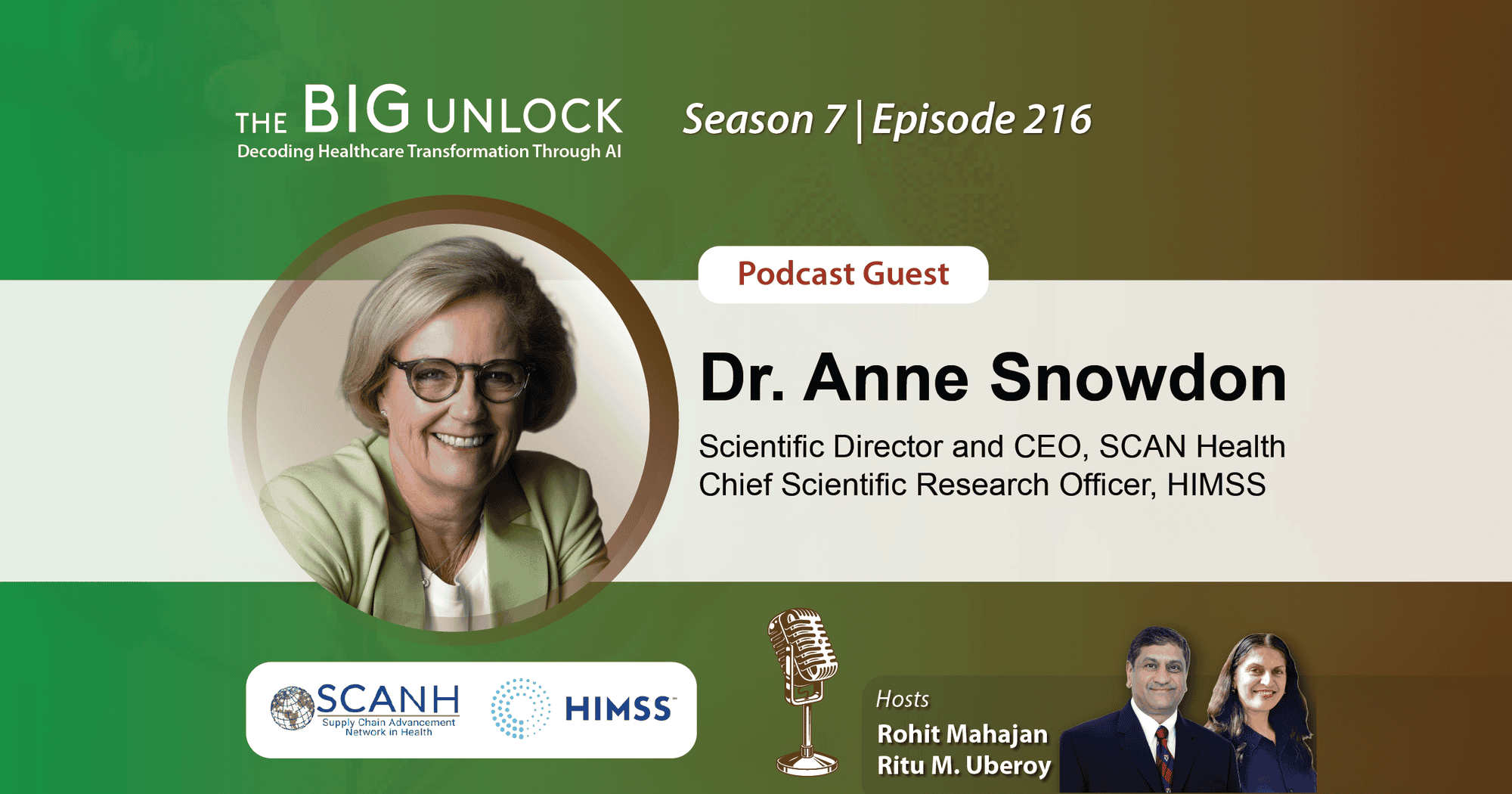
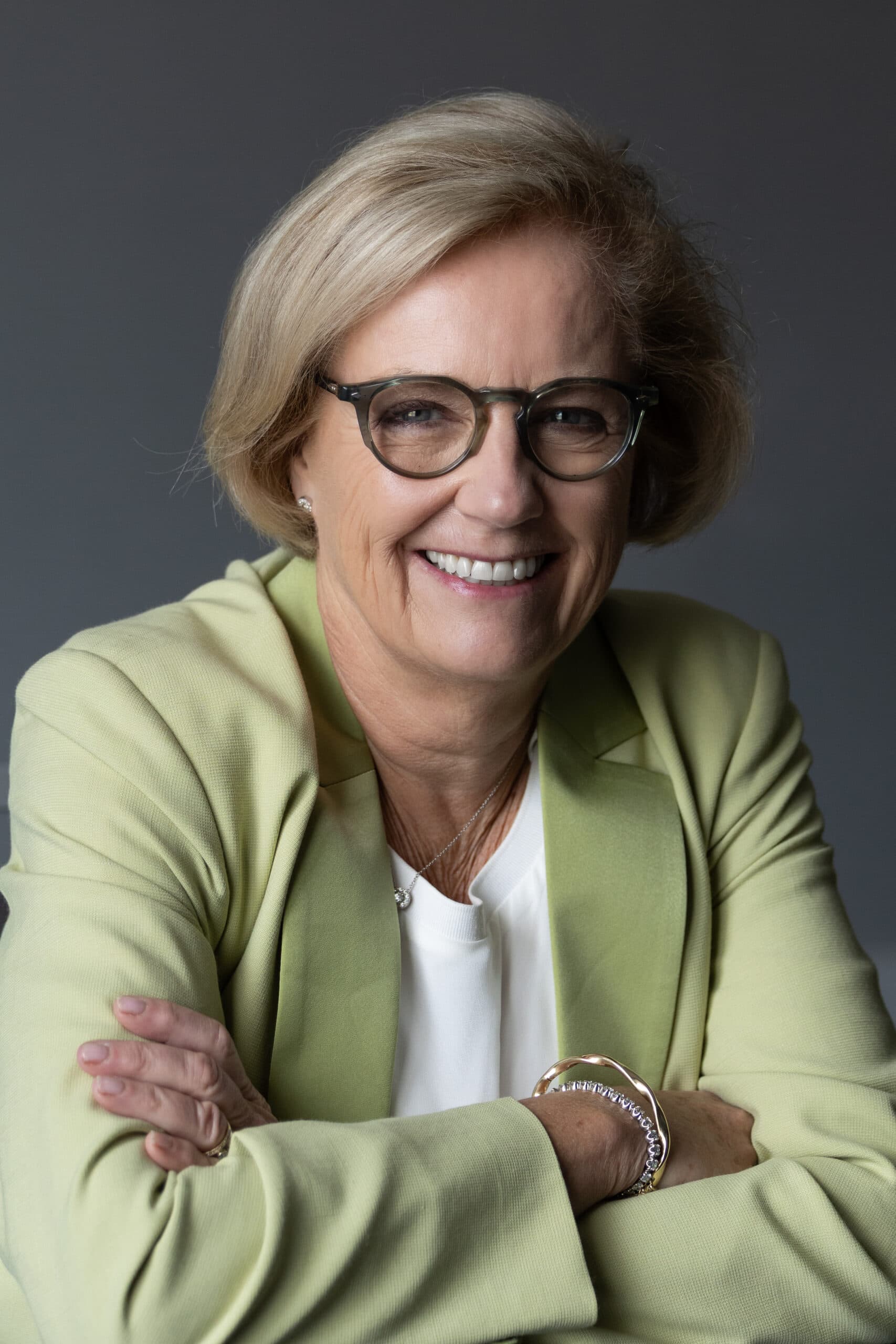
Episode 216 - Podcast with Dr. Anne Snowdon, Scientific Director and CEO, SCAN Health and
Chief Scientific Research Officer, HIMSS
The Future of Healthcare Lies in Connected, Evidence-Based Systems

The Big Unlock
The Big Unlock
Episode 216 - The Future of Healthcare Lies in Connected, Evidence-Based Systems
Loading
/
Video video

In this episode, Dr. Anne Snowdon, Scientific Director and CEO at SCAN Health and Chief Scientific Research Officer at HIMSS, explores why AI has the potential to transform healthcare, but only if health systems build the evidence, infrastructure, and workforce readiness to support it. She argues that while AI is generating tremendous excitement, most health systems are still in the early stages of adoption with many initiatives remaining in pilot phases.

Dr. Snowdon explains that healthcare must shift from deterministic decision-making toward probabilistic, predictive care, while developing new approaches to continuously evaluate AI as it learns and evolves. She also highlights the need to improve AI literacy among clinicians and establish stronger evidence before scaling enterprise-wide deployments.

Beyond clinical workflows, Dr. Snowdon makes a compelling case for reimagining digital health around patients rather than health systems. She envisions AI empowering individuals to better manage their health while seamlessly connecting them with trusted providers through interoperable, data-driven ecosystems. She also identifies digitally enabled supply chains as a critical but often overlooked foundation for safer, more personalized, and higher-quality care. She believes that the future of healthcare depends not just on adopting AI, but on creating connected, evidence-based systems that improve outcomes for patients, clinicians, and the broader health ecosystem. Take a listen.

About Our Guest

Dr. Anne Snowdon is a Professor of Strategy and Entrepreneurship at the Odette School of Business, University of Windsor in Canada. Currently, Dr. Snowdon is the Scientific Director and CEO for SCAN Health, and the Chief Scientific Research Officer for HIMSS. Dr. Snowdon leads a National Program of Research in Supply Chain and Digital Health Transformation and has published more than 150 research articles, papers and cases, has received over $25 million in research funding, holds patents and has commercialized a highly successful booster seat product for children traveling in vehicles, and is a Fulbright Scholar. She is Vice Chair of the Ontario Research Advisory Board and was recently appointed as a board member of the Alcohol Gaming Commission of Ontario. She holds a PhD in Nursing from the University of Michigan, MSc from McGill University, and BScN from Western University.


Ritu: Hello, listeners. Welcome to Season Seven of The Big Unlock Podcast. My name is Ritu Oberoi, and I’m managing partner at Damo Consulting and your co-host today along with Rohit. We are very excited to welcome Dr. Anne Snowdon to our podcast. Dr. Snowdon is a fascinating guest because she looks at healthcare through a lens that most leaders overlook — the supply chain. While many healthcare executives focus on clinical care, digital transformation, or reimbursement, Anne has spent decades demonstrating that quality, safety, and innovation all depend on the invisible infrastructure that connects products, data, clinicians, and patients. Anne is Professor of Strategy and Entrepreneurship at the University of Windsor, CEO of SCANHealth, and Chief Scientific Research Officer at HIMSS. She has spent decades studying the intersection of healthcare delivery, technology, and system resilience, and we are really happy to welcome her to our podcast today. With that, I’ll ask Rohit for a brief introduction, and then it’s all yours, Anne.

Rohit: I’ll be really brief — thank you, Ritu and Anne. Good to be here with both of you. I’m the co-host of The Big Unlock Podcast, and I look forward to an engaging conversation. Over to you, Anne.

Anne: Thank you. I’m Anne Snowdon. As Ritu has shared, I am the Chief Scientific Research Officer for HIMSS, where our mandate, mission, and vision is to ensure every human everywhere has access to their full health potential. When you really think about that, it requires an impressive flow of data right to the point of every decision, starting with patients and clinicians. I’m a nurse by training, a full professor at the Ontario Business School, with a program of research in supply chain — which is a very important infrastructure piece that most people simply don’t realize is important. I’m delighted to be here and looking forward to our discussion.

Ritu: Great. Let’s jump right in. The keyword of the day is AI, and we are all inundated with promises about its potential — that AI is going to revolutionize healthcare. But what real progress have health systems actually made toward this digital and AI transformation? And in your opinion, can we actually get there? What’s the horizon you see for real change?

Anne: Such a great set of questions. I absolutely think AI holds great promise and is probably one of the most unique groups of technologies health systems have seen in likely decades. The real catch is: what can it actually achieve right now? I think that remains to be seen. At HIMSS we are seeing impressive work across Asia-Pacific countries, North America, and Europe — and much of that work is in the pilot phase, a “try this on for size” stage. Healthcare is a very evidence-driven sector. I’m a nurse by training — if I’m going to use a new technology to deliver care to the children I used to care for, I want to be sure it will be valuable and most definitely not cause harm. I would say we’re early, Ritu, in where health systems are. Great promise, a lot of attention — but as a researcher, when I look at the hard data, it’s pretty early. There’s a lot of anecdotal evidence and impressive work around AI tools for clinicians — quality of work life, ambient listening so documentation doesn’t take so long. But beyond that, it’s early days, and things are unfolding so quickly that health systems are struggling both to understand AI’s full capability and to think through how best to integrate it into care processes to achieve what it promises for patients and the workforce.

Ritu: Thank you, Anne. You’re echoing what we’ve been hearing from C-suite leaders coming onto this podcast — health systems are investing heavily in AI transformation initiatives, but scaling innovation remains a challenge. The anecdotal evidence is there, but based on real numbers we still have some way to go. In your opinion, from everything you see, what are the biggest barriers preventing healthcare organizations from moving beyond pilots to enterprise-wide transformation?

Anne: I think there are three things. First, AI is a unique group of technology — it learns and changes over time. We are a sector accustomed to testing and evaluating, like a clinical trial of a device or a medication, and those devices and medications don’t change. We test until we’re confident they work for every patient. The challenge with AI is that where it starts and where it learns, shifts, and possibly drifts — we don’t have the methodologies to track that as directly as we would with any other kind of technology. So the first barrier is understanding that this is a technology with great promise, but it’s continually learning. It’s about building a lifecycle approach to understanding what it is, what its purpose is, for whom it is best suited, and how you track, once you implement it, that it’s achieving everything it promises. That’s a significant shift in how health systems have always operated — you’re tracking a moving target, not a fixed quality outcome.  The second barrier is the workforce and workforce confidence. Physicians, nurses, pharmacists, and allied health professionals have not been broadly educated on what AI is and is not, and what it does and can achieve — so it’s a bit of a black box for the workforce. And there’s a deeper issue: AI is about prediction. A machine learning tool predicts whether the child I’m looking after in an intensive care unit may be at risk for an infection. But we are not educated or socialized as a workforce to think about probabilities — which is what a prediction is. We’re trained on very deterministic thinking: here’s the assessment, here’s the diagnosis, here’s the best clinical pathway to care for this patient. That is a completely different way of thinking. That migration from deterministic best practice to a technology predicting probabilities and enabling us to prevent risks — we don’t have much experience doing that, and there is understandable hesitancy and many questions in the workforce.  The third barrier is the evidence. We are a very evidence-driven sector, and the evidence base on AI applications and tools is still pretty early. When you put all those things together — it’s fascinating, exciting, and compelling, but also a little daunting, because we’re being asked to think differently and make decisions differently. The system hasn’t yet built the foundations to ensure that when you spend the money on AI — which is expensive — you can be confident it will return tremendous value for patients, the workforce, and your capacity to deliver care.

Ritu: That’s an absolutely brilliant summary. The first point about AI being a moving target with new headlines every single day, the second about digital and AI literacy where people just aren’t ready and information is coming in too fast, and the third about the shift from deterministic thinking to probabilistic — you can really see how that migration would be difficult. Great answer, thank you.

Rohit: I was intently listening and thinking about the same thing — how evidence-driven this industry is, and how preventing harm and mitigating risk is always at the forefront. Anne, could you tell us more about your role at HIMSS and some of the key initiatives you’re driving this year and next? And also please share your origin story — what attracted you into healthcare and how your journey unfolded.

Anne: Let me start with what I do at HIMSS. I lead the research at the Office of Scientific Research. The basis of that work really reflects the vision of Hal Wolf, our CEO, and Reid Oakes, our COO. Because healthcare is so evidence-based and research-driven, HIMSS as a global network advancing digital health transformation needs to be the epicenter for creating the evidence of what digital health transformation actually achieves. That is very much the work I lead. We’ve published studies on what a highly digitally advanced hospital achieves for patients, for the workforce, and for performance outcomes compared to hospitals with much less progress in digital health transformation. One clear finding is that quality and safety outcomes are exponentially stronger in highly digitally advanced hospitals. How exactly those digital infrastructure systems drive those stronger outcomes is the next question we’re working to answer. We’ve also looked at the patient experience — highly digitally advanced hospitals show much stronger patient experience outcomes as well. A lot of our work at HIMSS involves measuring where hospitals are starting from in their digital health transformation journey. Many hospitals say, “We’re impressed by this AI technology — where do we start?” It’s a bit like a GPS on a road trip: where are you starting from, and where do you want to get to? We measure what digital assets and strengths a hospital already has that will serve them well as they advance AI strategies and technologies. So I lead the research and evidence base that defines what digital health transformation is, what it achieves, and for whom — and I work closely with health systems globally to define the future of digital health transformation, measured through our maturity models.  As for my story — I built my very first machine learning algorithm in around 2004 or 2005. I was leading a national child seat safety study in Canada, because road crashes are a leading cause of death in Canadian children. As an ICU nurse at the time, I cared for a lot of profoundly ill children as a result of head, neck, and spinal cord injuries from these crashes. I went to the auto industry and asked why they couldn’t better protect children, and the answer came down to how children are securely seated in vehicles. We conducted a national child seat survey and built a machine learning algorithm to predict which ways of seating children in vehicles were associated with the greatest risk of injury in a crash. If we know what puts children at risk, the auto industry can make much safer seating, seat belts, and child seat companies and policymakers can act accordingly. That’s how I first really understood the opportunity of AI and what it can achieve.  As a nurse, I also spent a lot of time focused on quality and safety outcomes. Medical error remains a problem even after two decades of healthcare technology — and that led me to supply chain. In automotive, I learned that they can track and trace a brake pad right to a vehicle owned by a citizen in any Canadian city, and can tell you exactly who made that brake pad and why it failed. Can we do that in healthcare? Can we know exactly what medication was prescribed to which patient and whether it helped, achieved nothing, or caused harm? That’s a supply chain question, and the answer is currently no. If we had that data, we could build the AI tools that predict which patients are at greatest risk, and then as a nurse I would know to find an alternative. In a nutshell, my career has been about solving these challenges by leveraging technology and transforming systems to achieve what they need to for the people they serve.

Rohit: Very interesting — thank you for sharing.

Ritu: From your unique vantage point as Chief Scientific Research Officer at HIMSS, what key areas of health and care do you see as most likely to benefit from AI-powered solutions right now, across all your research?

Anne: I can tell you what I’m seeing and what I’m not seeing — and it’s likely what I’m not seeing that I’m most anxious to pursue. What I am seeing is that health systems are generally adopting AI to optimize or automate processes. Patients can engage with an AI chatbot to book a visit or a procedure. Ambient listening for clinicians is making documentation better and smarter. There are a number of these AI technologies within health systems today that show real promise. But the common theme across almost all of them is making the system work better for the system. The gap I’m seeing — and what I’d really like to see more of — is what these technologies are achieving for patients. What are these AI tools, these agentic AI chatbots, actually doing for and with patients? How are they helping people manage their health? How are they connecting people to providers in much easier ways than making an appointment, travelling to a facility, waiting in a waiting room, and hoping to be seen within a timely manner? What I see today is that patients still have to meet the needs of the system to get care. The gap I really hope we can influence is how we can leverage AI tools to help people help themselves. If I’m a parent with a two-year-old with asthma, where are the AI tools that help me understand my son’s asthma triggers and how air quality changes put him at risk when he goes to school — tools that alert me that today is a day he should stay inside? In other words, help me help my son manage his condition. Those are the tools I’m not seeing yet. I think AI has a wonderful opportunity there. There are many AI tools in the commercial space, and that presents both opportunity and challenge. I recently had a pediatrician share this story with me: a mother came into the emergency room, the physician assessed and diagnosed the child and created a care plan, and the mother said, “My agent tells me I should be doing something different. Why are you telling me something else?” So the AI available in the commercial space is trying to help people, but it’s not connected to the health system. It potentially creates a divide between best evidence-based clinical practice and what a consumer AI agent has surfaced from the public domain. I think we need to close that gap — give people technology tools that are connected to evidence-based, talented provider teams, so they get accurate, truthful information that helps them make good decisions. That’s a space where I’m really looking for progress.

Ritu: That’s exactly why OpenAI and Anthropic have jumped directly into health — they’re seeing tens of millions of queries a month from people asking exactly these questions: how to be better prepared for a doctor’s appointment, what to ask, how to manage their own health proactively. People want to do this, they just haven’t had the right tools. Maybe now they will.

Anne: But those tools are coming from the commercial space, which isn’t connected to the reality of care delivery. That’s the gap.

Ritu: That leads naturally to the next question. Healthcare leaders often focus on clinical quality, patient experience, and financial performance as separate priorities. How can a modern digitally enabled supply chain help health systems improve all three simultaneously? And what metrics should executives actually be tracking? Why does it remain so siloed — one person looking at finance, another at patient experience, and nobody really talking to each other?

Anne: It’s very true, and I literally just gave a presentation on this. In every other business sector, supply chain is highly digitally enabled. Think about going online to buy a book — the system tells you, “You’re interested in these books; here are seven others you might consider.” It’s transparent and real-time. In healthcare, we collect all our health and safety data, and that team works with it. We have a supply chain team that knows what products they ordered but has no idea where those products were delivered, and definitely no idea who used them or what those products ultimately achieved. This is about an integrated, interoperable, near-real-time flow of data to the point of every decision. Part of this is digital infrastructure — supply chain tools and products typically live in the financial side of the organization, while patient care data lives in the electronic medical record. You have to bring those together. When you do, you know: what products do we have, what patients are we caring for, what care do they need, and what outcomes are we achieving? That transparency across a patient’s full journey of care — from the primary care physician who referred, to the surgeon who operated, to the hospital that provided care, right through to home — and tracking outcomes across that entire journey tells you exactly what patients you’re seeing, what care you’re delivering, what products you’re using, and which products are working best and for whom. When you know that, you can customize product and care delivery to what’s going to achieve the best outcomes for each individual. That’s where supply chain creates an integrated digital highway of information that informs every decision, particularly the patient’s own decisions across their care journey. That’s the real opportunity, and it’s another area where I don’t yet see AI being applied — but where I see it as a phenomenally big opportunity to advance.

Rohit: Very interesting conversation so far. Anne, anything you see in the crystal ball for next year?

Anne: With the way AI is unfolding, Rohit, your question might as well be what’s my prediction for Monday. I think predictions are always difficult to make. But I do think that in the next year or so — maybe less, maybe a little longer — health systems are going to start engaging much more directly with patients around how and where they can become very much more part of their own health ecosystem. Patients will be able to have and select the tools that work for them — particularly AI tools — rather than having to rely on whatever they find in the consumer space on one hand, and health systems on the other trying hard to deliver wonderful care but lacking the connectivity they need. I think that engagement, that opportunity to really mobilize these technologies to ensure they are working for people starting with patients — supporting their health, making sure the workforce is meaningfully connected to their patients — is where I hope we’re heading. One of the reasons so many of us go into nursing is to make a difference in people’s lives. If these technologies help us better understand what health and care means for our patients, there isn’t a nurse on the planet who doesn’t want to use that understanding to ensure every patient gets care that is meaningful and contributes to their quality of life. Maybe that’s a hope and a wish more than a crystal ball — but it’s a phenomenal opportunity, and one that HIMSS and many of our colleagues and global members are really driving to advance.

Rohit: Great. Thank you for those comments, Anne.

Ritu: It’s been an absolute pleasure to have you on our podcast, Dr. Snowdon. Thank you so much for being here today.

Anne: My pleasure. Thank you so much for having me.

Subscribe to our podcast series at www.thebigunlock.com and write us at info@thebigunlock.com    

Disclaimer: This Q&A has been derived from the podcast transcript and has been edited for readability and clarity.


About the Hosts

Rohit Mahajan is an entrepreneur and a leader in the information technology and software industry. His focus lies in the field of artificial intelligence and digital transformation. He has also written a book on Quantum Care, A Deep Dive into AI for Health Delivery and Research that has been published and has been trending #1 in several categories on Amazon.

Rohit is skilled in business and IT  strategy, M&A, Sales & Marketing and Global Delivery. He holds a bachelor’s degree in Electronics and Communications Engineering, is a  Wharton School Fellow and a graduate from the Harvard Business School. 

Rohit is the CEO of Damo, Managing Partner and CEO of BigRio, the President at Citadel Discovery, Advisor at CarTwin, Managing Partner at C2R Tech, and Founder at BetterLungs. He has completed executive education programs in AI in Business and Healthcare from MIT Sloan, MIT CSAIL and Harvard School of Public Health. He has completed  the Global Healthcare Leaders Program from Harvard Medical School.

Ritu M. Uberoy is a healthcare AI strategist, technology executive, educator, and author dedicated to advancing the responsible adoption of Artificial Intelligence across healthcare delivery, digital health, and life sciences. With more than twenty-five years of leadership experience spanning the United States and India, she is recognized for helping healthcare organizations move beyond experimentation to achieve scalable clinical, operational, and business transformation through AI.

She leads AI innovation initiatives, including the AI Center of Excellence at BigRio, where she works with health systems, healthcare technology companies, and life sciences organizations to operationalize Generative and Agentic AI solutions responsibly. Her work focuses on aligning AI innovation with clinical workflows, governance frameworks, workforce readiness, and patient trust—ensuring technology augments human judgment in high-consequence healthcare environments.

Ritu is the co-author of Generative AI: Unlocking the Next Chapter in Healthcare, a practical guide for healthcare executives navigating enterprise AI adoption. She also hosts The Big Unlock podcast, engaging global healthcare leaders on AI transformation and digital innovation. An active educator and speaker, she conducts executive workshops and participates in global forums like HIMSS, ViVE, Women in Tech, AI-Powered Women, RAISE, and more, shaping the future of AI-driven healthcare. Ritu holds advanced degrees in Computer Science and completed specialized AI programs at Harvard and MIT.

About the Legend

Paddy was the co-author of Healthcare Digital Transformation – How Consumerism, Technology and Pandemic are Accelerating the Future (Taylor &  Francis, Aug 2020), along with Edward W. Marx. Paddy was also the author of the best-selling book The Big Unlock – Harnessing Data and Growing Digital Health Businesses in a Value-based Care Era (Archway Publishing, 2017). He was the host of the highly subscribed The Big Unlock podcast on digital transformation in healthcare featuring C-level executives from the healthcare and technology sectors. He was widely published and had a by-lined column in CIO Magazine and other respected industry publications.

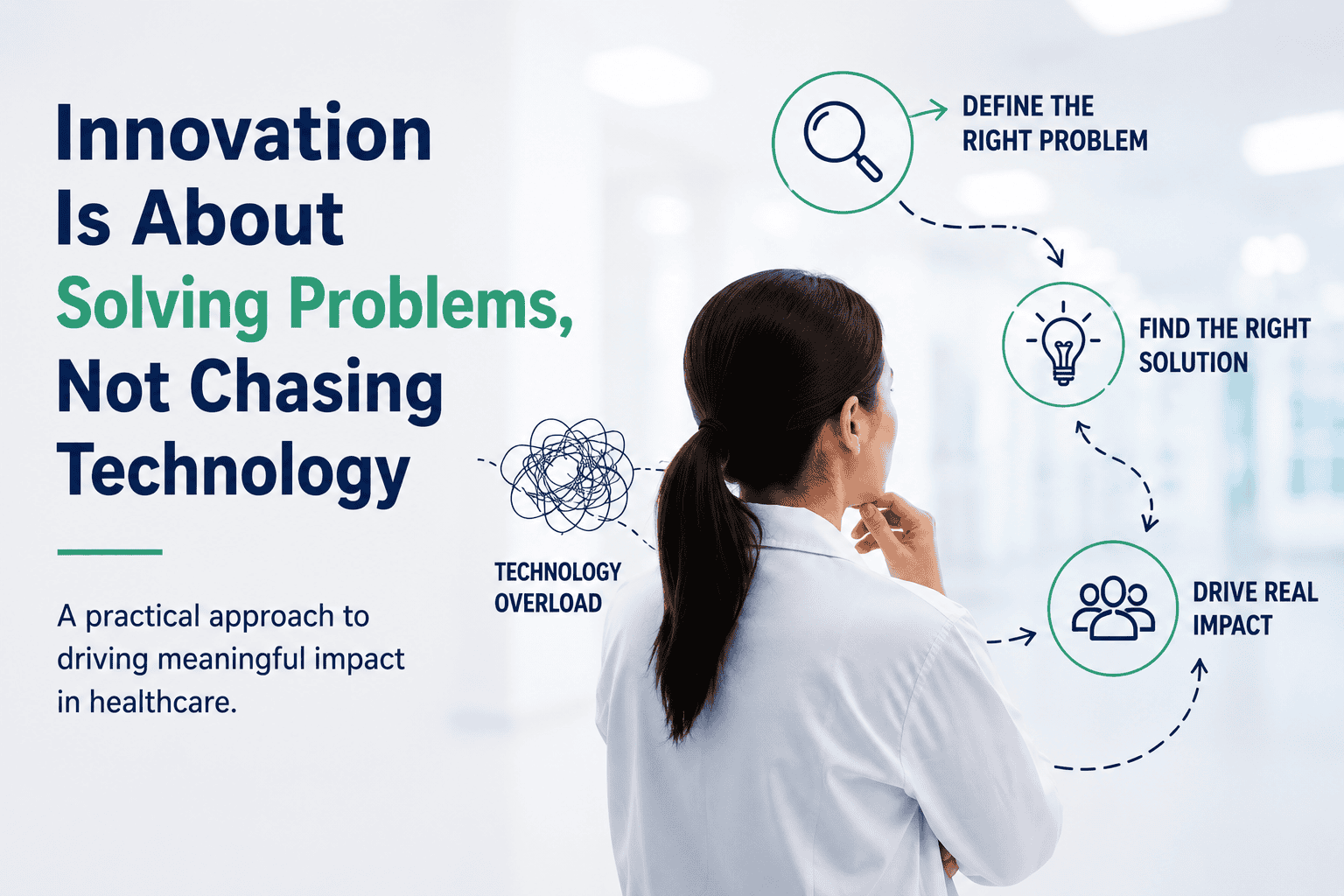
Innovation Isn’t About Buying More Technology; It’s About Solving the Right Problems First.

Insights from Julie Demaree, VP, Chief Technology and Digital Innovation Officer, St. Mary’s Healthcare

Healthcare leaders today have more technology options than ever before. Every week brings another AI platform, automation tool, ambient documentation solution, or digital health application promising to transform care delivery. Yet for many health systems, especially rural and community hospitals operating with lean teams and constrained budgets, the challenge isn’t a shortage of technology. It’s deciding which problems are actually worth solving.

That is precisely the perspective Julie Demaree, Vice President, Chief Technology and Digital Innovation Officer at St. Mary’s Healthcare, brings to healthcare innovation. As a former physician assistant turned technology executive, Julie approaches digital transformation differently. Rather than asking “What new technology should we implement?”, she starts with a much more important question:

“Should this process even exist in the first place?”

That mindset has helped St. Mary’s Healthcare improve clinician experience, patient safety, operational efficiency, and financial performance, not by constantly adding new technology, but by making better use of what they already have while introducing AI only where it creates measurable value.

Listen to the full conversation

Key Learnings

  • Clinician Engagement Drives Better Technology Adoption
  • AI Should Support Judgment, Not Replace It
  • Data Trust is the Foundation of Transformation


Innovation Starts with the Problem, Not the Technology

One of the strongest messages from Julie is that healthcare organizations often confuse innovation with purchasing new software. She argues that innovation frequently means improving existing workflows before introducing something new. When Julie joined St. Mary’s, much of her work focused on uncovering capabilities that already existed inside their electronic health record but had never been fully implemented. Instead of immediately investing in third-party applications, her team first examined:

  • Which EHR capabilities remained unused?
  • Which workflows could be optimized?
  • Which operational bottlenecks were caused by process rather than technology?

This “optimize before you buy” philosophy is especially valuable for organizations facing financial pressures. Every additional application introduces implementation costs, interfaces, maintenance overhead, vendor management, and fragmented data. Maximizing existing investments often delivers faster and more sustainable results than expanding the technology stack.


Better Patient Safety Sometimes Means Fewer Alerts

Alert fatigue has become one of healthcare’s most persistent technology challenges. Many organizations respond by simply adding more alerts in hopes of improving patient safety. Julie’s team took the opposite approach. Instead of assuming more notifications would improve outcomes, they created a multidisciplinary governance process involving physicians, pharmacists, informatics specialists, and clinical leaders to evaluate every alert. Some alerts were introduced where genuine safety gaps existed. Others were eliminated because they created unnecessary interruptions. The result was counterintuitive: Physicians ultimately received fewer—but far more meaningful—alerts.

Even more importantly, clinicians became active participants in improving the system. Their feedback helped refine alerts while encouraging better maintenance of patient problem lists, increasing the accuracy of future clinical decision support. Rather than adding complexity, St. Mary’s improved patient safety through thoughtful curation and continuous clinician engagement.

Automation Should Never Hide a Broken Process

Julie’s most refreshing insight challenges a common assumption about AI. Just because a task can be automated doesn’t mean it should be. She offers a simple example: fax processing.

Modern AI could easily classify, route, and organize incoming faxes. But automating that workflow risks making organizations more comfortable with an outdated process that shouldn’t exist. If two hospitals use the same electronic health record, why should they exchange patient information by fax at all?

Rather than automating inefficiency, Demaree believes organizations should first eliminate unnecessary work wherever possible. Automation delivers its greatest value when applied to complex, cross-platform workflows that genuinely require coordination, not when it perpetuates outdated operating models.


AI Investments Must Deliver Measurable Value

Resource constraints force rural hospitals to make difficult technology decisions. For Julie, every investment begins with a practical question: Will this improve financial sustainability, clinician experience, or patient care?

At St. Mary’s, AI initiatives have focused on areas with clear returns, including:

  • Revenue cycle automation
  • Ambient clinical documentation
  • Faster billing workflows
  • Reduced claim denials
  • Improved physician recruitment and retention

These investments weren’t driven by AI enthusiasm. They were selected because they addressed operational challenges while creating measurable organizational benefits.

This disciplined approach demonstrates that successful AI strategies are built on business priorities, not technology trends.


AI Governance Alone Isn’t Enough

Healthcare organizations have invested considerable effort developing AI governance frameworks. Julie believes another priority deserves equal attention: AI literacy among end users.

Clinicians must understand that AI outputs should be evaluated just as critically as laboratory results or diagnostic tests. If something appears incorrect, users need both the confidence and the mechanisms to question it.

AI should assist clinical judgment, not replace it. Organizations therefore need:

  • Practical AI education
  • Clear reporting pathways for unexpected outputs
  • Ongoing user training
  • A culture that encourages critical thinking

Responsible AI adoption ultimately depends on informed users as much as technical safeguards.


Strong Infrastructure Remains the Foundation of Innovation

Although conversations often focus on AI, Julie reminds healthcare leaders that innovation rests on a less glamorous foundation: modern IT infrastructure and disciplined technology management.

Reliable servers, resilient networks, scalable storage, and well-maintained systems form the backbone of every successful digital initiative. Equally important is addressing technical debt, outdated applications, legacy integrations, and deferred upgrades, that can slow innovation and increase operational risk.

Without a strong technology foundation, even the most advanced AI solutions cannot deliver sustainable value.

Her advice to healthcare executives is straightforward: don’t allow investments in core infrastructure or the modernization of legacy systems to fall behind while chasing emerging technologies. Modern AI capabilities require modern technology foundations, and maintaining those foundations is no longer just an IT responsibility, it’s a business continuity imperative.


Real Innovation Is Operational Discipline

Julie Demaree’s perspective offers an important counterbalance to today’s AI excitement. Innovation is not measured by the number of technologies deployed or the sophistication of an organization’s AI portfolio. Instead, it is reflected in an organization’s ability to remove unnecessary work, simplify clinical workflows, improve patient safety, support clinicians, and solve meaningful operational problems. Especially for rural and community health systems operating with limited resources, that mindset may be the most valuable innovation strategy of all.

As healthcare organizations continue exploring generative AI, automation, and agentic systems, Demaree’s approach serves as an important reminder: Technology creates value only when it solves the right problem. Otherwise, it simply adds another layer of complexity.

Bridging Pharma and Startups to Scale Digital Health Innovation

Season 7

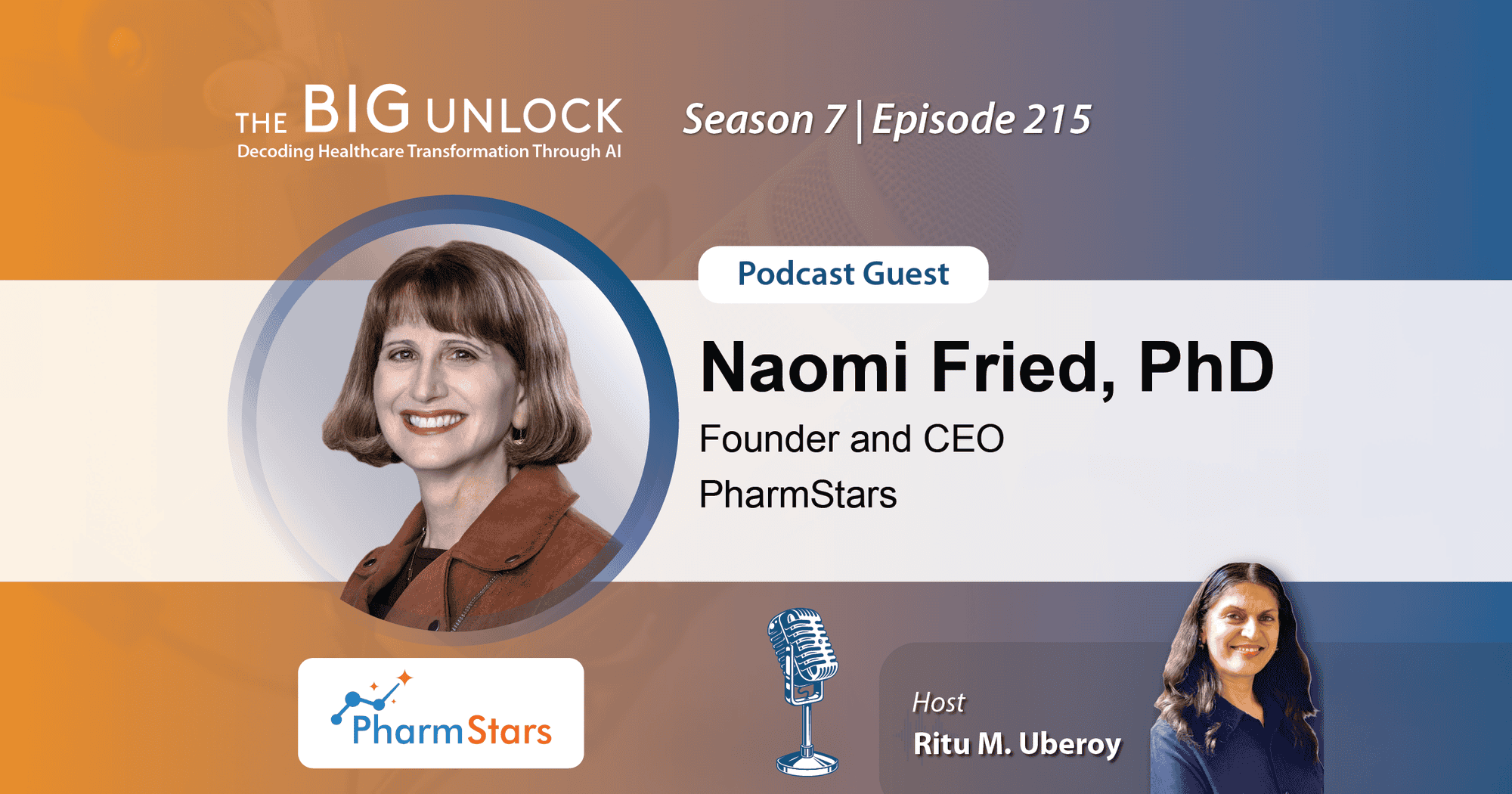
Episode 215 - Podcast with Naomi Fried, PhD, Founder and CEO, PharmStars
Bridging Pharma and Startups to Scale Digital Health Innovation

The Big Unlock
The Big Unlock
Episode 215 - Bridging Pharma and Startups to Scale Digital Health Innovation
Loading
/
Video video

In this episode, Naomi Fried, PhD, Founder and CEO of PharmStars, shares how stronger collaboration between startups and pharmaceutical companies is accelerating healthcare innovation. Drawing on leadership roles at Biogen, Kaiser Permanente, Boston Children’s Hospital, consulting work with large pharma companies, and collaboration across the digital health ecosystem, she explains why the most successful innovations are built around customer needs rather than technology alone.

Naomi discusses how PharmStars helps digital health startups, including those developing AI-powered solutions, understand the pharmaceutical industry, refine their value proposition, and build lasting partnerships with global pharma companies. She highlights AI as one of the most exciting areas of innovation, with the potential to improve patient care, support clinicians, and create new opportunities for life sciences organizations. However, Naomi emphasizes that technology alone is never enough. Successful innovators listen more than they pitch, understand customer pain points, and build trusted relationships.

Naomi also talks about the importance of clinician workflows, internal champions, and continuous product evolution. Whether leveraging AI, software, or medical devices, her message is clear: lasting innovation comes from solving meaningful problems, adapting to customer needs, and building partnerships that create real-world impact. Take a listen.

About Our Guest

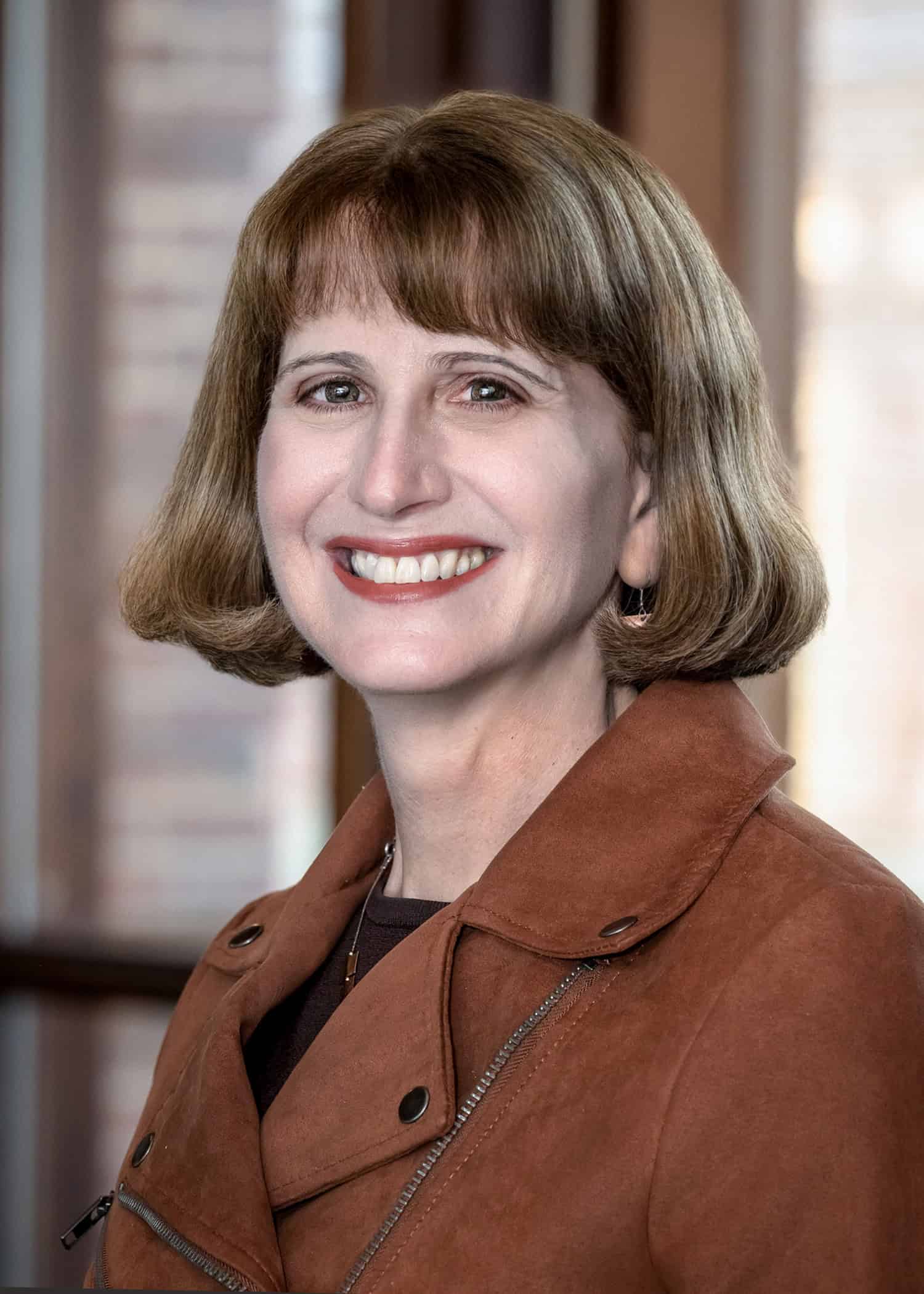
Naomi Fried, PhD, is the founder and CEO of PharmStars. An internationally recognized thought leader in healthcare innovation, Naomi brings over two decades of expertise in digital health strategy and innovation, as well as an entrepreneurial spirit.

Naomi is also the co-founder and general partner of PharmStars Ventures Fund, a venture fund which invests in PharmStars alumni companies. Previously, she was a general partner at the venture fund, Ambit Health Ventures, which invested in early-stage digital health and medical device startups. Naomi has served on a variety of startup boards of directors and advisory boards. Before founding PharmStars and Ambit, Naomi led a boutique consulting firm, Health Innovation Strategies, which advised pharma on digital health strategy and innovation activities.

Previously, Naomi was Biogen’s first VP of Innovation and External Partnerships, where she developed their “innovation beyond the molecule” strategy to deliver non-pharmacological value to patients and providers. Before her time at Biogen, Naomi served as the first Chief Innovation Officer at Boston Children’s Hospital and also the first VP of Innovation and Advanced Technology at Kaiser Permanente.

Naomi has been a member of the Governor of Massachusetts’ Innovation Council and the Board of the American Telemedicine Association. Her awards include Healthcare IT News’ “Health Information Technology (H.I.T.) Men and Women of the Year Award, Innovators.” Naomi was named “The Emerging Executive of the Year” in 2014 by the Massachusetts Technology Leadership Council and one of Medical Marketing and Media’s 40 “Healthcare Transformers” in 2016.

Naomi received her PhD in Materials Science from MIT and her BS in Chemistry, summa cum laude, from the University of California, Berkeley. When not working, Naomi can be found dancing up a storm in Zumba classes or lifting weights.


Ritu: Hello, listeners. Welcome to Season Seven of the Big Unlock Podcast. My name is Ritu Oberoi, and I’ll be your host today. We are really excited to have Naomi with us. Naomi Fried is one of healthcare’s most respected innovation leaders. She’s the founder and CEO of PharmStars, where she’s helping pharma companies engage more effectively with digital health startups to accelerate innovation and improve patient outcomes. Prior to PharmStars, Naomi served as Chief Innovation Officer at Boston Children’s, where she helped establish one of the nation’s leading pediatric digital health innovation programs. Her unique perspective across providers, startups, and life sciences gives her a front-row view into what it really takes to move healthcare innovation from promising pilots to meaningful impact. Welcome, Naomi.

Naomi: Thank you, Ritu. It’s a pleasure to be here. Thank you for having me.

Ritu: Would you like to add anything to that introduction?

Naomi: Sure, happy to share a little more about how I ended up founding PharmStars. My roots actually start out working with digital health startups a long time ago, then advising venture capitalists, and then I was the first Vice President of Innovation and Advanced Technology at Kaiser Permanente. I became really intrigued with how innovation happens in large healthcare organizations. After five years there, I moved to the East Coast and, as you mentioned, became the first Chief Innovation Officer at Boston Children’s Hospital, where we built a fabulous program helping doctors and nurses advance innovation. From there I was recruited to Biogen, and this is the most relevant part of how I ended up at PharmStars. I thought moving to Biogen would be an easy transition, since I’d been in healthcare innovation in large organizations for a long time. But I wasn’t prepared for how different the pharmaceutical industry was. When I got to Biogen, I discovered I didn’t fully understand how the company was organized, and I certainly didn’t understand how this very complicated product — a drug — actually worked. It was a very steep learning curve, and it made me appreciate how hard it is for someone outside of pharma to understand what’s happening inside of it. But I also fell in love with the potential for digital solutions to transform every part of the pharmaceutical value chain, from drug discovery through development, commercialization, and beyond the molecule for patients. That became my life’s mission, and I went on to advise other pharmaceutical companies on digital health strategy. I had a real aha moment, Ritu, when I was working with a large pharmaceutical company. They told me they were looking for a particular type of innovation, and I found a startup doing exactly what they wanted. We got everybody into the room, and we just weren’t getting anywhere. I could see connections weren’t being made, that people weren’t understanding each other. I realized I was watching the pharma-startup gap in action — that fundamentally different way that health tech companies and biopharma operate. That gap is what we set out to solve through PharmStars. We bridge the pharma-startup gap, bringing these two groups together. That was really the motivation for founding PharmStars five years ago.

Ritu: Thank you for sharing that, Naomi — really interesting to hear your perspective. That leads to my next question. PharmStars sits at the intersection of pharma companies and digital health startups, and you’ve worked on both sides — Kaiser, Biogen, and now PharmStars. What in your mind are the biggest misconceptions each group has about the other, and what separates successful partnerships from those that never move beyond the initial stage?

Naomi: Great question. Going back to the pharma-startup gap, the elements of it are that tech startups and big pharma speak a different language. They have very different cultures — I don’t have to explain that — but they also move at different speeds. They have different appetites for risk. They operate in different regulated environments. The real challenge is understanding each other, and to bridge that gap you have to understand where the other side is coming from. That’s why at PharmStars we focus on educating startups about how pharma works. Our program is called Pharma University, and it has two key components for startups. One is literally teaching them about pharma — how drugs are developed, how pharma companies are organized, the regulations they need to be concerned with, their business models. The second is personalized mentoring by former pharma executives. I think that education and understanding of the other side is what really helps build a successful relationship. You also need communication and the ability to connect — those are table stakes. That’s another way we help our startups: at the end of PharmStars, they present to our pharma members and then have one-on-one meetings with them. We always coach our startups that they have to be able to clearly explain what pharma problem they’re solving — stepping into the other side’s shoes is essential to building a relationship and getting a deal done. On the pharma side, we hope they can understand the pressures and needs of startups too. Startups want to move quickly, which isn’t something pharma typically does. They’re not heavily staffed — they won’t have a general counsel, just a lawyer they work with. Understanding that they’re operating in very different worlds matters. But when startups and pharma come together to work on innovation, the patient always benefits, the outcomes are tremendous, and it’s genuinely synergistic. We’re very excited about bringing these groups together and bridging that gap.

Ritu: I think you’re doing excellent work with PharmStars. We’ve actually applied twice ourselves, so we’ve gone through the entire website and understand the program, and it’s absolutely brilliant — really amazing what you’ve put together. We’re happy to spread the word and encourage more people to apply.

Naomi: Thank you. At this point we’ve run ten cohorts, we’re about to start our eleventh, and a hundred and twelve startups have come through the program. Because they learn product-market fit, they go on to be very successful selling to pharma — our first thirty-five startups alone have done over a hundred deals with pharma companies. Another statistic we’re very proud of is that our startups have collectively raised over a billion dollars in funding. Really understanding what your client needs is transformative for a business.

Ritu: I absolutely agree, and that leads right into the next question. We’re seeing huge pharma companies investing heavily in digital health, AI, and patient engagement technologies. Looking ahead, where do you see the greatest opportunity for startups to create value for pharma beyond the traditional patient support or adherence programs that everybody is already doing?

Naomi: Great question. There are opportunities for digital health startups across the entire pharma value chain. In the very early stages of drug discovery, people are applying AI and we’re seeing real acceleration in identifying targets for new drugs. But I think the biggest area of opportunity is still in clinical trials, because that is the slowest and most expensive part of drug development — solutions that can help pharma there are genuinely still needed. If you look in particular at Phase 3 trials, which are the longest and most expensive, finding patients, keeping them in the trials, anticipating issues, and helping with data management — it’s incredibly complicated to run a clinical trial, and that’s where I think the biggest opportunity is. There are certainly opportunities on the commercial side in marketing too, and we’ve seen some really exciting solutions there. But I’m personally most excited about the clinical trial phase, and also what we call the “beyond molecule” part of the pharma value chain — once the patient is actually taking the drug, digital tools that help with adherence or monitoring the condition. There’s a lot of opportunity there. I’m very excited about how digital and AI are helping pharma take what is a very slow and very expensive process and hopefully make it faster, cheaper, and bring more drugs to market more quickly.

Ritu: That’s something we’ve been hearing consistently across all our conversations — everyone is now having to move at warp speed. Even healthcare, traditionally one of the slowest adopters, is now learning to talk in weeks or days rather than years because the pace of innovation is so rapid.

Naomi: In pharma, time is genuinely money, Ritu, because you have a patent clock that’s ticking. If it takes fourteen years to bring your drug to market, you might have only five years left to actually sell it and recoup an investment that’s usually a couple billion dollars. Every month you can bring your drug to market earlier translates into millions and millions of dollars in additional revenue. So for pharma, anything that can shorten that drug development cycle and move the line between developing the drug and actually selling it is really important.

Ritu: When we talk to C-suite leaders across health systems, one recurring challenge is the gap between innovation and adoption — startups have promising technologies, but when they move into clinical settings they often fail to scale. In your mind, what can entrepreneurs do differently to design solutions that fit naturally into provider and patient workflows, especially in a slow-moving environment like Phase 3 trials?

Naomi: I think in the pharma world we also suffer from the problem of pilots that get started but never scale to adoption. This goes back to the fundamentals of the project: are you solving an important problem? Can you demonstrate value? Do you have clear metrics you’re aiming to achieve in the pilot, so you can convince people it’s worth scaling and that broad adoption makes sense? We advise our startups to think carefully about the pilot — to plan and discuss with their business partners what success looks like, and ideally to map out what happens next if the pilot goes well. Leaving the adoption question to a future conversation is not always advisable. Of course you can’t resolve every adoption issue in advance, but anticipating that adoption will need to happen and thinking through how it will happen ahead of time is very advantageous.

Ritu: That’s good advice — thank you for sharing that. Let’s change tracks a little. I would love to hear your origin story — how you came into science and how you landed here. What was that unique combination of skills that brought you to where you are?

Naomi: I studied chemistry as an undergrad and then got a PhD in material science and engineering at MIT. I started working at a startup in Kendall Square back when it looked very different than it does now. I was employee number four at a small startup on the tech side. Our startup was having a conversation with Boston Scientific about a possible partnership, and I found the business conversation so interesting. Even though I’d trained in science and technology, this business side was fascinating to me. When I moved to California for my husband’s job, I had the opportunity to get involved with a startup being spun out of Stanford School of Medicine — in what we used to call the e-health space, even before there was “digital health.” The technology was developed by a physician at Stanford to help doctors and nurses get quick answers to questions that came up while treating patients. This was before Google, before WebMD — a genuinely novel tool. I thought this was really cool — I loved the idea of using technology to help patients and doctors, and that was my real transition into healthcare. From there I worked with startups, went on to Kaiser, and the rest is sort of history. That transition from science to business happened organically. I never thought I’d end up in healthcare, but I fell in love with the idea and became excited about how digital solutions can help patients and doctors. Even now through PharmStars, we see all sorts of digital health solutions — medical devices, software, AI — and there are some really cool ways that patients, clinicians, and pharma can all benefit. I love what I do now.

Ritu: That’s amazing. Before we get to the latest PharmStars cohort, I want to dig a little deeper — when we ask physicians why they became doctors, we sometimes hear the most amazing answers. Did you always know you wanted to study chemistry, or when did that realization come?

Naomi: No, I didn’t know what I was going to do, basically, through most of high school. Then I took a chemistry class, I think my junior year, and I just thought, this is so cool. I fell in love with it — there’s no other way to describe it. I decided I wanted to study chemistry because it was so interesting. I went to UC Berkeley and started studying chemistry, which I really enjoyed, and I got into total organic synthesis — figuring out conceptually how to build molecules on paper. I think I like puzzles and putting things together. I did some lab work, but what I found was that in the lab — which was obviously where my future would be — we were making micrograms of things and then analyzing them, and I thought, this isn’t very practical. I’m a really practical person. I love chemistry, I love thinking about process, but this was getting too esoteric for me. So I took an engineering class — material science engineering — and thought, this is better, this is more my speed, this is applying chemistry to the real world. I got interested in metallurgy and extraction of metals, and that’s what I did my PhD in. So I’ve been on this path of trying to do practical things, and I guess I ended up wanting to help people have better health. That’s where I landed.

Ritu: Thank you for sharing that, Naomi. Now we would love to hear about your current cohort and what the theme is this time.

Naomi: Thank you for asking. We’re on our eleventh cohort now, and we’re open and looking for digital health startups that want to engage pharma as clients. We’re focused on the theme of digital innovations in immunology. These themes are always selected by our pharma members, who meet with startups and hear their pitches at the end of each cohort. Immunology is actually a really broad topic. Pharma is working a lot on immune-mediated diseases — allergy, asthma, and similar conditions — so if startups have digital solutions supporting those conditions, that’s of great interest. Immuno-oncology is also a really important and growing area for pharma, with a lot of unmet needs and digital opportunity. And then there are advanced therapies based on impacting the immune system, which is incredibly complex and affects many organs — so this theme is very broad. Immunology patients also often deal with chronic conditions and flares, so solutions around patient monitoring, patient identification, and diagnosis are all of interest to pharma, and therefore to PharmStars. It’s a very broad and exciting area, and we hope we’ll see a lot of startups apply. Our accelerator is virtual, which means startups from around the world can apply. It’s a ten-week boot camp where startups attend class virtually for most of the program, with an in-person launch event and an in-person showcase at the end. We’ve had amazing startups from about thirty-nine countries participate so far, so it’s a great gateway for international startups to find their way to global US pharma companies.

Ritu: That’s an incredible opportunity, thank you for clarifying that. I’m sure we have listeners from all over the world, so hopefully this reaches someone who applies. Let’s go back a bit to your time at Boston Children’s and Kaiser, where you were evaluating and scaling a lot of healthcare innovations. What lessons from that experience still guide how you assess startups today? And what qualities do you think the most successful healthcare innovators share?

Naomi: That’s a big question. At Kaiser Permanente, my team was innovation and advanced technology, and we were identifying emerging technologies from outside Kaiser and assessing fit with the organization. It was very important there to understand what doctors were actually looking for — to make sure solutions worked well, solved the problem, and didn’t cost the doctor more time. They needed to work within the clinician’s actual workflow. When I moved to Boston Children’s Hospital, our innovation acceleration program had a different mission — to enhance the innovation culture itself. We were helping doctors identify problems and actually building a lot of the solutions for them. We had a digital health innovation lab and funding to support it, and we did a lot to help doctors develop their own ideas, which was really exciting. There were also a lot of startups at the time who wanted to bring their innovations into the organization, and one thing I always advised them was that they would need an internal champion. Navigating even a hospital like Boston Children’s — which isn’t the largest in the country, but is certainly complex — requires finding someone inside the organization who wants to use your solution, who will be your champion and guide you through getting funding and approval, and help your product actually get used and tested. That was really important advice. To answer your question about what qualities successful startups share — the theme throughout is really understanding your client’s needs and building a genuine relationship with them, with very open communication. Listening matters enormously. Startups are very excited about their solutions, and they’ll go into a meeting wanting to do all the talking and all the pitching — but it’s really important to listen first. What does the client or potential customer actually need? We coach our startups to do a lot of research before that first meeting — to understand, in the case of pharma, what their pipeline looks like and what their pain points are, and to speak directly to that. Beyond listening, deals are relationships. The startups that are really successful understand that and build relationships that go beyond “here’s the solution, how much will you pay me” — they ask, how is it going, how can I help, what will make this successful for you? We really advise people to build relationships. The successful startups I see listen, they have a solution, they step into their client’s shoes and talk about their client’s problems, and they build genuine trust. People want to work with people they trust. People want to work with people they like. Beyond the obvious things — passion, great communication skills, love of technology — I think it really comes down to your ability to build a relationship and connect with the client.

Ritu: Great advice, thank you for sharing that. We were at another accelerator program recently, and one of the key insights they offered was that most successful startups have pivoted at least once. Has that been your experience as well? Because listening, as you said, and pivoting seem closely related.

Naomi: I think that’s exactly right. If you’re listening, chances are you’ll hear how to change and improve your product. We get a lot of startups into our program who are already selling their solution successfully elsewhere in healthcare — to providers, to payers — and they believe there might be a pharma opportunity, and we agree with them, which is why we accept them into the program. They’re not really pivoting their product, because the product is already built, but they are pivoting the application — how they package it, how they explain it, and what problem they say they’re addressing. I’d say maybe forty or fifty percent of the startups in our program aren’t pharma-first. They’re coming from elsewhere, but they’re recognizing that pharma needs their solution too, and that’s what we help them with — understanding the pharma industry, positioning their solution, and successfully selling it. So pivoting is just part and parcel of this. I’d be shocked if the product and the explanation any startup started with is exactly where they are a couple of years later, assuming they’re still in business.

Ritu: Thank you, Naomi. As usual, the time has flown by and we’re almost at the end of the podcast. Thank you for being our guest. Would you like to offer any closing thoughts for our listeners before we wrap up?

Naomi: Well, Ritu, first of all, thank you for having me on The Big Unlock — this is an awesome podcast and I’m honored to have been your guest. I just want to again invite startups to apply for our upcoming eleventh cohort. Our virtual accelerator will run in the fall of 2026. We’ll accept ten startups from around the world with a focus on digital innovations in immunology. It’s an opportunity to learn about pharma, to be mentored, and we also invest in our startups through the PharmStars Venture Fund. It’s a great accelerator, and I appreciate the opportunity to share it with you and your audience today.

Ritu: Great. Thank you so much, Naomi.

Naomi: Thank you.

Subscribe to our podcast series at www.thebigunlock.com and write us at info@thebigunlock.com    

Disclaimer: This Q&A has been derived from the podcast transcript and has been edited for readability and clarity.


About the Host

Ritu M. Uberoy is a healthcare AI strategist, technology executive, educator, and author dedicated to advancing the responsible adoption of Artificial Intelligence across healthcare delivery, digital health, and life sciences. With more than twenty-five years of leadership experience spanning the United States and India, she is recognized for helping healthcare organizations move beyond experimentation to achieve scalable clinical, operational, and business transformation through AI.

She leads AI innovation initiatives, including the AI Center of Excellence at BigRio, where she works with health systems, healthcare technology companies, and life sciences organizations to operationalize Generative and Agentic AI solutions responsibly. Her work focuses on aligning AI innovation with clinical workflows, governance frameworks, workforce readiness, and patient trust—ensuring technology augments human judgment in high-consequence healthcare environments.

Ritu is the co-author of Generative AI: Unlocking the Next Chapter in Healthcare, a practical guide for healthcare executives navigating enterprise AI adoption. She also hosts The Big Unlock podcast, engaging global healthcare leaders on AI transformation and digital innovation. An active educator and speaker, she conducts executive workshops and participates in global forums like HIMSS, ViVE, Women in Tech, AI-Powered Women, RAISE, and more, shaping the future of AI-driven healthcare. Ritu holds advanced degrees in Computer Science and completed specialized AI programs at Harvard and MIT.

About the Legend

Paddy was the co-author of Healthcare Digital Transformation – How Consumerism, Technology and Pandemic are Accelerating the Future (Taylor &  Francis, Aug 2020), along with Edward W. Marx. Paddy was also the author of the best-selling book The Big Unlock – Harnessing Data and Growing Digital Health Businesses in a Value-based Care Era (Archway Publishing, 2017). He was the host of the highly subscribed The Big Unlock podcast on digital transformation in healthcare featuring C-level executives from the healthcare and technology sectors. He was widely published and had a by-lined column in CIO Magazine and other respected industry publications.


The Healthcare Digital Transformation Leader

Stay informed on the latest in digital health innovation and digital transformation.

The Healthcare Digital Transformation Leader

Stay informed on the latest in digital health innovation and digital transformation

The Healthcare Digital Transformation Leader

Stay informed on the latest in digital health innovation and digital transformation.