Month: November 2026

The Big Unlock at Women’s HealthX 2026

The Big Unlock at Women’s HealthX 2026

By Rohit Mahajan
Co-Host, The Big Unlock Podcast

Co-host Rohit Mahajan will be in the Boston area December 3–4 to hear how healthcare leaders are turning evidence into better care for women.

What does it take to make better women’s healthcare available in the places patients already seek care? That’s one of the questions Rohit Mahajan, co-host of The Big Unlock, will bring to Women’s HealthX on December 3–4, 2026, at Encore Boston Harbor in Everett, Massachusetts. The conference brings together healthcare providers, payers, researchers, employers, investors, and innovators to discuss how to improve care across women’s lives.

Women’s HealthX will cover maternal care, fertility and reproductive health, menopause and healthy aging, brain health, and chronic disease management. These topics raise a shared question for healthcare leaders. When a new care model shows promise, what will it take to make it part of routine care? 


The conversations we’re looking forward to

  • Where digital tools can improve access. How are health systems using virtual care and remote monitoring to close gaps in maternal care and postpartum follow-up? What happens when a patient needs in-person care?
  • What evidence helps a program expand. Which outcomes give health systems, payers, and employers the confidence to invest in a women’s health program beyond the initial pilot?
  • Where AI can support care teams. Can AI help clinicians identify patients who need follow-up or help patients find the right specialist? How are teams measuring whether these tools get patients to care sooner?

These are the kinds of questions we explore on The Big Unlock with leaders who can speak candidly about what they built, how they measured its impact, and what they learned along the way.

Will you be at Women’s HealthX? If you’re building, funding, or delivering a program that improves access or outcomes in women’s health, reach out to Rohit to meet during the conference. We’d love to hear what you’re working on and what other healthcare leaders can learn from it.

Explore the Women’s HealthX agenda ->

“HLTH brings together the brightest minds in healthcare to drive real-world transformation through AI, data, and workflow innovation. The energy, collaboration, and actionable insights here are truly reshaping the future of care at scale.”

– Rohit Mahajan, Co-host of The Big Unlock Podcast

Through The Big Unlock Podcast, I will be interviewing many of these incredible minds on-site, gathering firsthand stories about the challenges, successes, and breakthroughs shaping the AI-powered future.

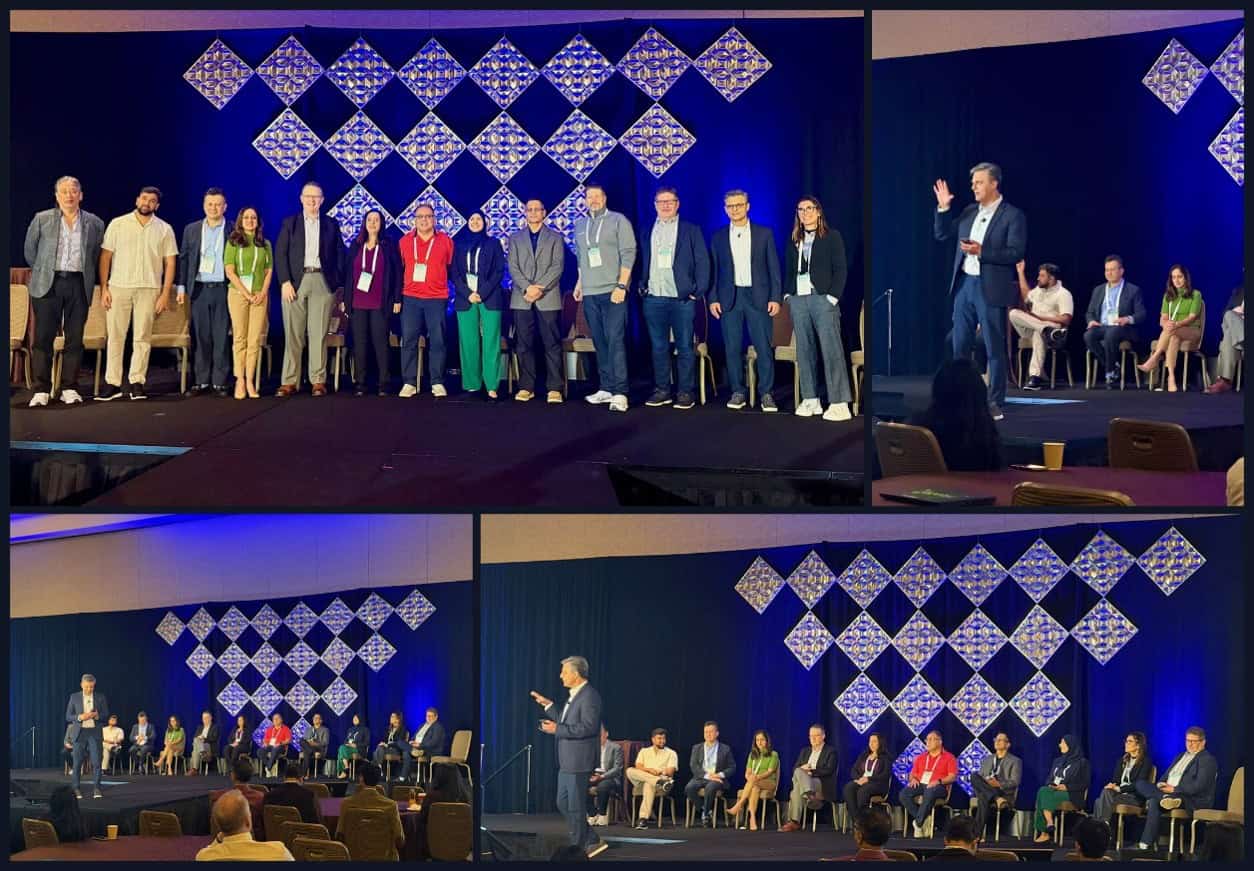
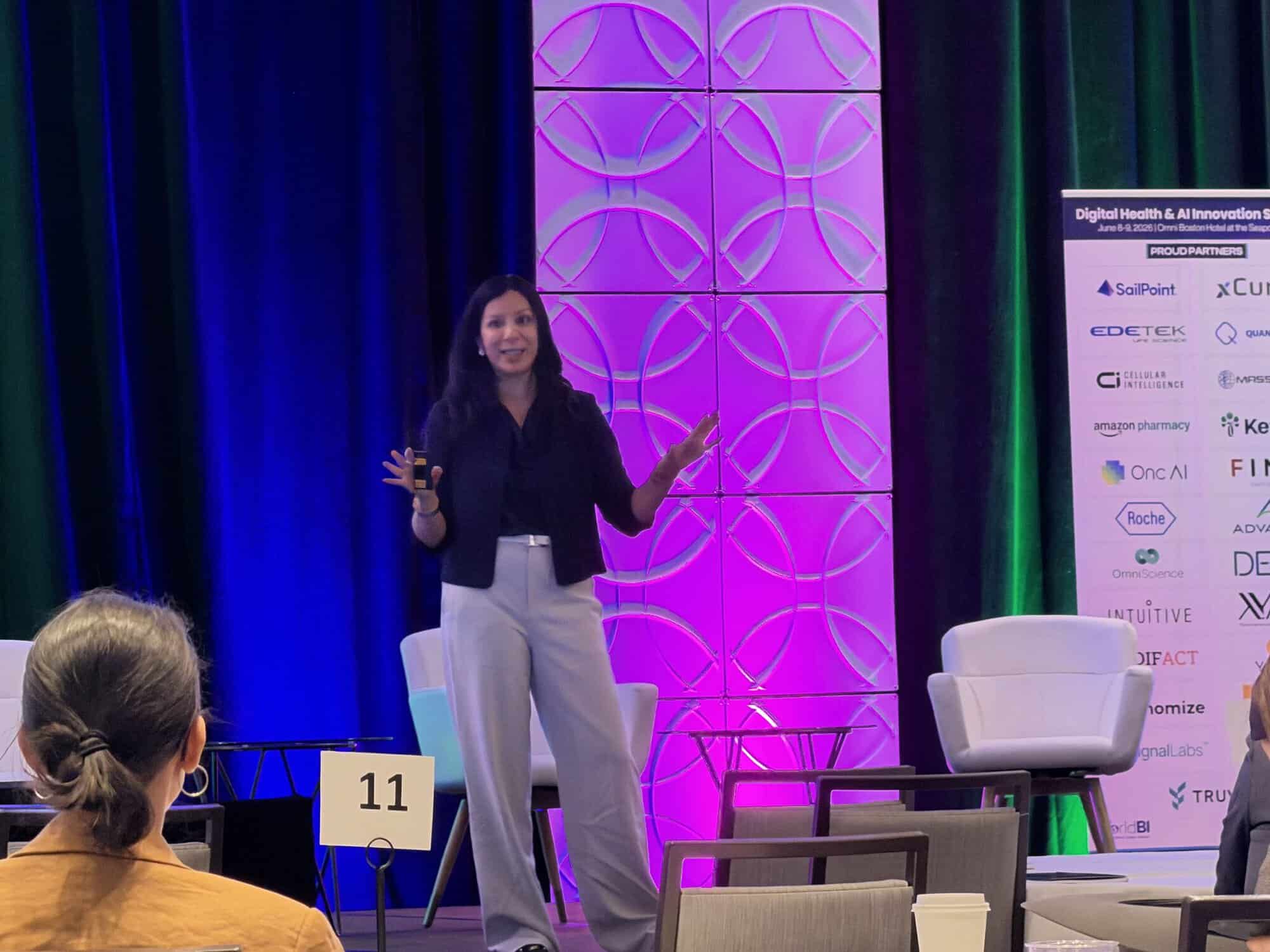
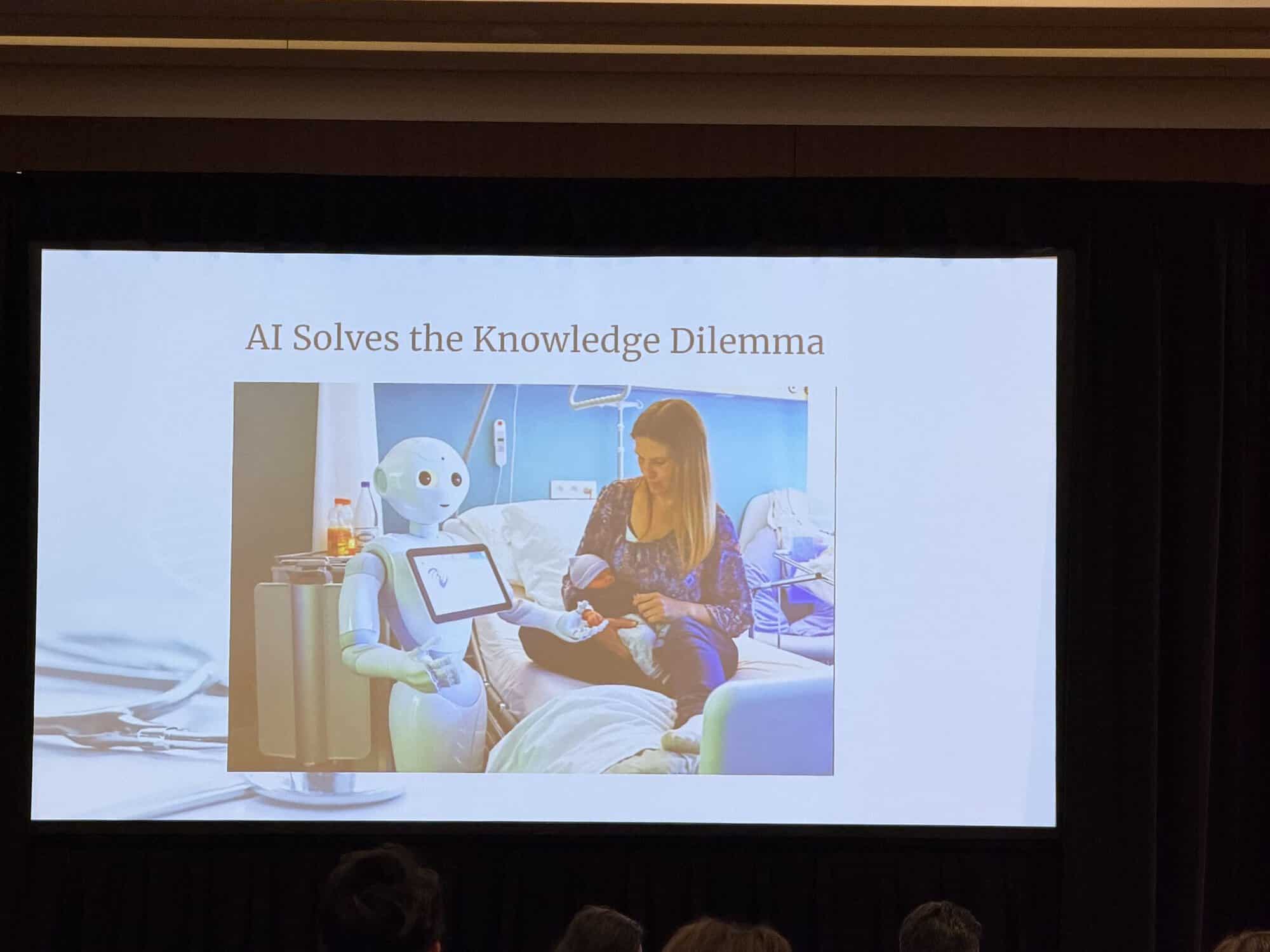
Event Gallery

Healthcare AI Success Will Be Defined by Measurable Value Rather Than the Number of Tools Deployed

Six insights from Daniel Barchi, Senior Executive Vice President and Chief Information Officer at CommonSpirit Health, on scaling AI responsibly and delivering measurable results

Healthcare organizations are rapidly expanding their investments in artificial intelligence. From clinical decision support and ambient documentation to revenue cycle automation and enterprise productivity tools, AI is becoming an increasingly important part of healthcare operations. But as health systems accelerate adoption, an important question is emerging: Does deploying more AI actually mean delivering more value?

For Daniel Barchi, Senior Executive Vice President and Chief Information Officer at CommonSpirit Health, the answer is clear. The number of AI applications an organization deploys is not an indicator of success. What matters is whether those applications improve patient care, support clinicians, strengthen operations, and generate measurable returns.

Key learnings of the episode:

  • AI Success is Not About How Many Tools You Deploy
  • Measure AI by Realized Value, Not Projected ROI
  • Healthcare Technology Is 80% People, 15% Process, and 5% Technology
Listen to the full conversation

In a recent episode of The Big Unlock Podcast, Daniel joined hosts Rohit Mahajan and Ritu M. Uberoy to discuss CommonSpirit Health’s approach to scaling AI across a complex healthcare enterprise. CommonSpirit operates across 24 states, with more than 150 hospitals and approximately 150,000 employees. Its AI portfolio has grown from around 60 applications in 2023 to approximately 260 today. Yet Daniel is particularly proud of another number: the 20 AI applications the organization has retired. That observation captures his philosophy of AI transformation. Successful adoption is not about accumulating technology. It is about making disciplined decisions, measuring actual outcomes, and knowing when to stop investing in solutions that no longer serve their intended purpose.

Drawing on more than two decades of healthcare technology leadership, including previous CIO roles at NewYork-Presbyterian, Yale New Haven Health System, and Carilion Clinic, Daniel offers a practical perspective on what enterprise AI maturity looks like. 

Here are six insights from his conversation that healthcare executives can apply as they move from AI experimentation to sustainable enterprise transformation.


1. AI Maturity Is About Knowing What to Retire, Not Just What to Deploy

Many healthcare organizations describe their AI progress through the number of applications deployed, pilots launched, or departments using intelligent automation. Daniel challenges this approach. 

CommonSpirit has significantly expanded its AI portfolio over the past three years, deploying applications across clinical operations, human resources, revenue cycle management, and technology functions. However, Daniel argues that reaching 300, 500, or even 800 AI applications should not be an organizational objective. Instead, he emphasizes the importance of selecting applications that align with CommonSpirit’s mission and demonstrate positive clinical, financial, or patient-experience outcomes.

The organization has retired approximately 20 applications and declined to proceed with roughly 20 others. Those decisions reflect an important aspect of AI maturity that is frequently overlooked. As AI capabilities evolve, previously valuable applications may become redundant. A function that once required a specialized vendor might become available within an enterprise platform. Other applications may no longer meet evolving security expectations or performance standards. Continuing to maintain such tools creates unnecessary complexity and cost.

For large health systems, this challenge is particularly significant. Every additional application introduces potential requirements for integration, vendor management, cybersecurity, user training, support, and governance. An expanding portfolio can therefore increase operational burden even when individual applications appear beneficial. Daniel’s approach suggests that AI governance should include continuous portfolio optimization, not simply approval of new technologies. Organizations need to understand which tools employees are using, what benefits they generate, what risks they introduce, and whether they remain necessary.

The strongest AI portfolios may not be the largest. They may be the ones that are continuously evaluated, simplified, and aligned with organizational priorities.


2. Strong AI Governance Creates Better Innovation Decisions

As healthcare organizations accelerate AI adoption, governance is sometimes viewed as an obstacle. Technology teams may want to deploy applications quickly, while clinical, compliance, security, and operational leaders require additional review. 

Daniel sees this tension differently. He argues that speed should never become the primary objective of healthcare innovation. A technology team might be capable of building and deploying an application in 48 hours, but that does not automatically mean the application should be deployed. The more important questions concern its purpose, integration requirements, expected benefits, and organizational impact. Daniel offers a memorable framework for understanding healthcare technology transformation:

80% people, 15% process, and 5% technology.

This perspective reflects his belief that successful implementation depends far more on organizational readiness than technical capability alone. Healthcare organizations must prepare employees, establish appropriate workflows, standardize processes, manage information responsibly, and create the conditions for technology to deliver value.

At CommonSpirit, AI governance involves stakeholders from nursing, physician leadership, finance, operations, mission, IT, compliance, and ethics. This multidisciplinary approach ensures that decisions are not made exclusively by technology and finance teams. Each stakeholder brings a different perspective. Clinicians assess whether an application supports patient care. Operational leaders evaluate workflow implications. Finance teams examine the business case. Security and compliance teams consider risks. Ethics and mission representatives help ensure alignment with organizational values.

Together, these perspectives produce more informed decisions. Daniel’s argument is particularly relevant as health systems explore agentic AI and increasingly autonomous applications. As AI systems move beyond generating information toward initiating actions, organizations need clear accountability, defined responsibilities, and appropriate safeguards. Governance should therefore be embedded in the innovation process rather than treated as a final administrative hurdle.

Responsible governance does not slow meaningful innovation. It helps organizations avoid investing in technology that cannot deliver sustainable value.


3. Healthcare AI ROI Must Be Measured Through Actual Value Captured

One of the most distinctive aspects of Daniel’s approach is his insistence on separating anticipated benefits from realized financial returns. Healthcare technology discussions frequently feature impressive ROI projections. An AI application may promise millions of dollars in savings through improved productivity, reduced administrative burden, or more efficient clinical operations. But projected savings do not always translate into measurable financial outcomes.

Daniel believes healthcare leaders must be more rigorous about this distinction. CommonSpirit uses a five-gate process to evaluate and track the value of AI investments. The process begins with an opportunity identified by a clinician or operational leader and follows that opportunity through business planning, financial validation, implementation, and actual performance measurement.

Daniel illustrates this through a hypothetical example involving an AI opportunity initially estimated to deliver $10 million in savings.

Evaluation stage

Estimated value

Initial opportunity identified

$10 million

Detailed business plan

$8 million

Finance-validated estimate

$5 million

Value feasible within implementation constraints

$2.5 million

Actual value captured

$1.5 million

The example demonstrates how an initially compelling opportunity can become significantly smaller once assumptions, implementation limitations, and actual results are considered. Rather than claiming the original $10 million opportunity as an achievement, CommonSpirit would recognize the $1.5 million actually realized.

This discipline matters because healthcare organizations operate under substantial financial pressure. AI investments must compete with other priorities, including staffing, infrastructure, clinical equipment, cybersecurity, and patient services. Daniel explains that CommonSpirit can substantiate approximately $100 million in realized AI value because the organization tracks benefits at the application level. He also acknowledges that not every important benefit is easily converted into dollars.

Ambient documentation, for example, may reduce clinician burden, improve work-life balance, and create a better care experience without producing immediately quantifiable financial savings. These outcomes remain valuable. The challenge is to develop measurement approaches that recognize both financial and nonfinancial benefits without confusing estimates with actual results. For healthcare executives, this offers an important lesson.

AI ROI should be measured through demonstrated improvements, not optimistic business cases or vendor projections.


4. Enterprise AI Strategy Requires a Thoughtful Balance Between Building and Buying

The traditional technology strategy question of whether to build or buy has become more complex in the age of AI. Healthcare organizations can purchase specialized applications, develop solutions internally, or activate AI capabilities already embedded in enterprise systems. Daniel’s experience at CommonSpirit illustrates why no single approach is appropriate for every use case.

Approximately 47% of CommonSpirit’s AI tools are internally developed, 31% are embedded within core enterprise platforms, and 22% are purchased from external vendors. These figures are notable because they challenge the assumption that large healthcare organizations must rely primarily on commercial AI products.

Daniel explains that internal development has become more practical as teams gain the ability to build lightweight applications that address specific operational needs. He describes an example involving nursing leaders who needed a specialized dataset and workflow to support length-of-stay management. An external solution would have cost approximately $5 million over three years, excluding additional integration requirements. Instead, CommonSpirit’s internal team determined that it could develop a solution in approximately three to four weeks.

The objective was not to create a permanent enterprise product. It was to address an immediate operational requirement while the organization evaluated longer-term platform decisions. This reflects a pragmatic approach to internal development. Not every application needs to become a decade-long technology investment. Some tools can serve as temporary solutions that fill operational gaps and create value while larger modernization initiatives continue. At the same time, Daniel sees significant opportunities in embedded enterprise AI.

CommonSpirit is consolidating major technology platforms, including moving from 19 electronic health record systems toward one and from nine ERP systems toward one. The organization is also standardizing other enterprise platforms. As these systems expand their AI capabilities, enabling embedded functionality may provide a faster and more economical path to value than introducing additional standalone vendors.

However, Daniel does not advocate building everything internally. For capabilities such as ambient documentation, commercially available solutions may offer stronger functionality and a more practical implementation path. The decision should depend on business requirements, integration complexity, cost, implementation timelines, and long-term strategic fit.

The most effective enterprise AI strategy is not simply build versus buy. It is determining which capabilities should be built, purchased, or enabled within existing platforms.


5. AI Transformation Depends on Workforce Education and Secure Access

Technology adoption across a workforce of more than 150,000 people presents a different challenge from implementing AI within a small team or department. Employees have different responsibilities, levels of technical familiarity, and expectations about how AI should support their work. Some may already use generative AI regularly in their personal lives. Others may have limited exposure or concerns about whether automation could threaten their jobs.

Daniel believes healthcare organizations must address these concerns directly. He emphasizes that AI should be positioned as a tool that supports employees rather than a replacement for the people delivering care. At CommonSpirit, this philosophy has shaped both technology access and workforce education. The organization developed an internal platform called Insightly, which provides employees with access to multiple large language models within a controlled environment. Rather than directing employees to public AI applications, CommonSpirit offers a centralized platform through which authorized users can interact with models from providers including OpenAI, Anthropic, and Google.

This approach supports secure access to AI capabilities while allowing the organization to manage model availability and usage costs. Daniel describes how CommonSpirit removed one model from the available catalog after identifying higher-than-desired usage costs. This illustrates another dimension of enterprise AI management. As employees increasingly use large language models, organizations need visibility into consumption, security, and financial sustainability.

Providing access is only the first step. Employees also need the skills and confidence to use AI appropriately. To address this, CommonSpirit established an AI Learning Academy. The academy offers 11 classes, with employees having completed more than 16,000 course enrollments at the time of the conversation. Importantly, the training is not limited to physicians, executives, or technology professionals. It is available to employees across the organization, including caregivers, custodial teams, food service workers, support staff, and IT professionals.

This broad approach reflects Daniel’s belief that AI literacy should be an enterprise capability. Every employee should have an opportunity to understand how intelligent technologies can support their responsibilities. For healthcare leaders, the implication is significant. AI transformation requires investment in employee education, communication, and organizational culture alongside technology infrastructure. Without these investments, even sophisticated tools may experience limited adoption or inconsistent use.

AI literacy is not simply a training initiative. It is part of the foundation required for sustainable enterprise transformation.


6. The Ultimate Purpose of Healthcare AI is to Strengthen Human Care

Despite CommonSpirit’s substantial investments in AI, Daniel consistently returns to a central principle: healthcare remains fundamentally human. Clinicians do not begin their day thinking about how many AI applications they will use. They focus on their patients, the quality of care they provide, and the demands of their clinical responsibilities. Technology should make that work easier and more effective.

Daniel describes CommonSpirit’s approach through a framework established by CEO Wright Lassiter. The organization evaluates AI through four priorities, in a deliberate order. First comes patient safety and quality. Second is the caregiver experience. Third is creating a more frictionless patient experience. Fourth is reducing costs. This ordering is important. It positions financial efficiency as an outcome of improving care and operations rather than the primary purpose of AI adoption.

Daniel provides several examples of how this philosophy influences implementation. Ambient documentation is being evaluated not only for physicians but also for its potential to support nurses. CommonSpirit has also introduced Predict PE at one of its Texas hospitals. Developed through clinical leadership, the tool automates calculation of the Wells score to support evaluation of patients who may have a pulmonary embolism.

Based on clinical information, the tool supports decisions about whether further testing, such as a D-dimer blood test or CT scan, is appropriate. The objective is to help clinicians make efficient, evidence-informed decisions while reducing unnecessary testing and radiation exposure. This example illustrates a broader principle.

The most valuable AI opportunities may emerge from clinicians who understand everyday care delivery challenges. Rather than introducing technology in search of a problem, organizations can empower frontline professionals to identify where intelligent tools could improve patient care. 

Daniel’s perspective is shaped by a career that began outside healthcare. He served as a U.S. naval officer before moving into telecommunications, business turnaround initiatives, and eventually healthcare technology leadership. That background has given him experience managing complex operations, aligning teams, and making strategic decisions under demanding circumstances. Today, he applies those lessons to healthcare transformation. For Daniel, the objective is not to make healthcare less dependent on people. It is to ensure that technology supports the professionals whose expertise, judgment, and compassion define the patient experience.

The future of healthcare AI should be measured by how effectively it enables people to deliver better care, not by how extensively it replaces human activity.

Key Principles for Healthcare AI Adoption from Daniel Barchi’s Approach

Daniel’s experience at CommonSpirit offers an important perspective on the next phase of healthcare AI adoption. The industry has moved beyond demonstrating that AI can perform useful tasks. The challenge now is determining how to deploy these capabilities responsibly across complex organizations while producing sustainable results.

Several principles emerge from his approach. First, healthcare organizations need disciplined AI portfolio management. Applications should be evaluated continuously, and tools that no longer deliver value should be retired. Second, governance must involve the people responsible for delivering care and operating the organization. AI cannot be managed as an isolated technology initiative. Third, ROI measurement needs to distinguish projected opportunities from actual outcomes. Fourth, organizations should consider internal development and embedded enterprise capabilities alongside commercial solutions. Finally, workforce education and human-centered implementation must remain central to AI strategy.

These principles are particularly relevant as agentic AI expands across healthcare. More autonomous applications will introduce new opportunities to coordinate tasks, streamline operations, and support decision-making. But they will also increase the importance of governance, accountability, integration, and measurable value.

Daniel’s approach suggests that enterprise AI maturity will depend less on technological sophistication and more on the organizational discipline required to translate AI capabilities into better performance.


The Future of Healthcare AI Will Be Measured by Outcomes, Not Adoption Numbers

Healthcare AI is entering a more demanding phase. Early experimentation demonstrated what intelligent technologies could accomplish. Now healthcare organizations must demonstrate what those technologies actually achieve. The distinction between potential value and realized value will become increasingly important as AI investments grow.

Daniel Barchi’s experience at CommonSpirit demonstrates that scaling AI successfully requires more than technical capability. It requires disciplined governance, financial accountability, enterprise architecture, workforce readiness, and a clear commitment to patient care.

Perhaps the most important lesson from his conversation is that AI success should never be reduced to the number of applications deployed. A health system with hundreds of tools is not necessarily more advanced than one with a smaller, carefully selected portfolio. What matters is whether those tools improve safety and quality, support clinicians, simplify patient experiences, and generate sustainable operational value.

As healthcare organizations move toward increasingly intelligent and autonomous systems, the leaders who succeed will be those who remain focused on these fundamentals.

The next chapter of healthcare AI will not be defined by how much technology organizations deploy, but by how much meaningful value they can demonstrate.

Listen to the Full Conversation

To hear Daniel Barchi discuss enterprise AI governance, realized ROI, internal AI development, workforce education, and CommonSpirit Health’s approach to responsible AI adoption, listen to Episode 232 of The Big Unlock Podcast.

Episode: The Real Measure of Healthcare AI Is Value, Not Volume

Guest: Daniel Barchi, Senior Executive Vice President and Chief Information Officer, CommonSpirit Health

Hosts: Rohit Mahajan and Ritu M. Uberoy

Hospitals Need More Than Smart Technology to Stay Operational

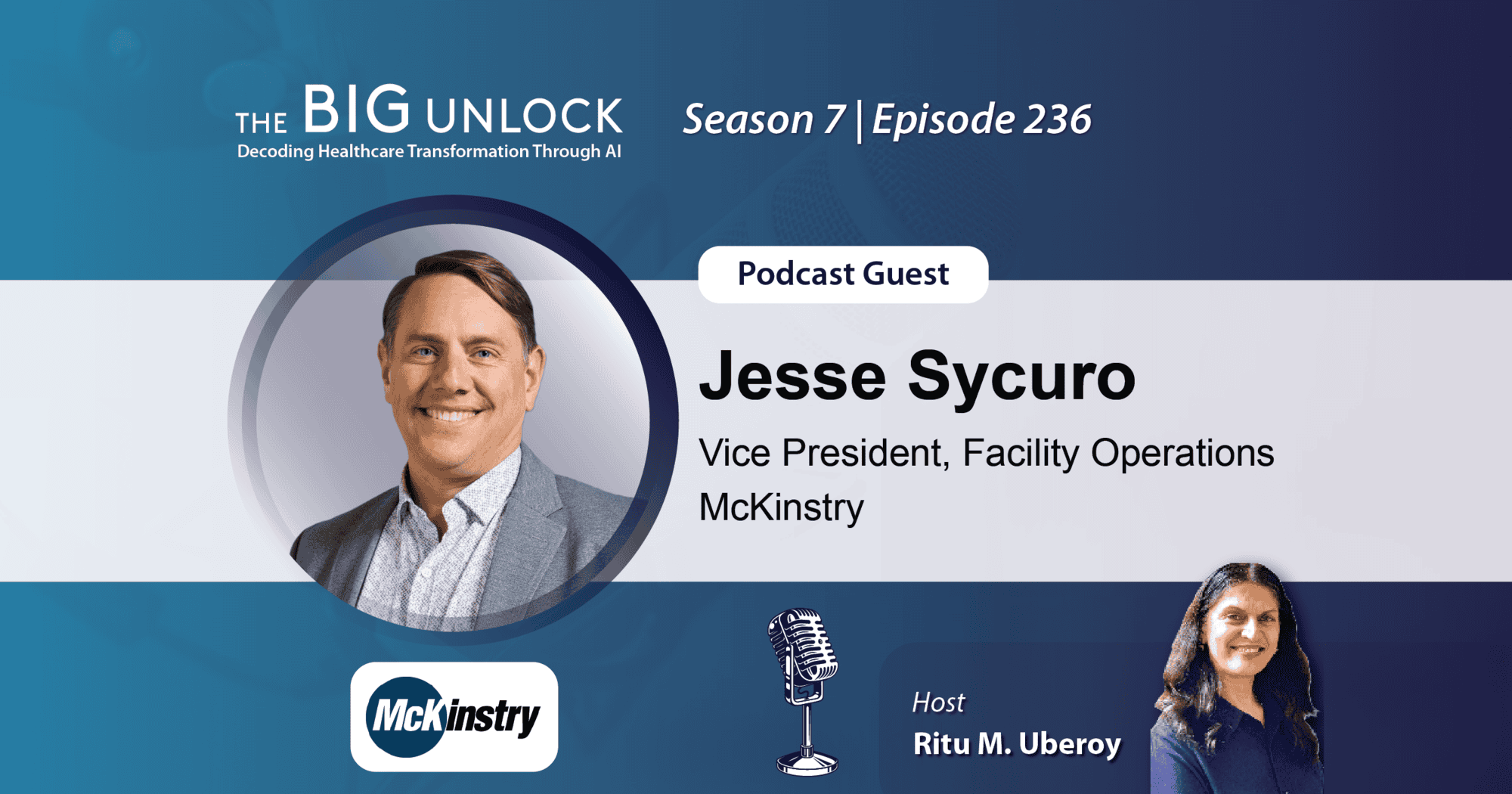
Season 7

Episode 236 - Podcast with Jesse Sycuro, Vice President, Facility Operations, McKinstry
Hospitals Need More Than Smart Technology to Stay Operational

The Big Unlock
The Big Unlock
Episode 236 - Hospitals Need More Than Smart Technology to Stay Operational
Loading
/
Video video

In this episode, Jesse Sycuro, Vice President of Facility Operations at McKinstry, discusses why healthcare digital transformation must extend beyond clinical technologies to the physical infrastructure supporting patient care.

Jesse highlights the growing challenges of aging hospital infrastructure, deferred maintenance, and rising energy demands. He explains how AI, connected building systems, and continuous monitoring can turn fragmented operational data into actionable insights, enabling predictive maintenance, greater efficiency, and more resilient facilities.

The conversation explores how smarter energy management can help hospitals respond to increasing pressure on the power grid while maintaining uninterrupted operations. Jesse also emphasizes the importance of change management, AI governance, and workforce readiness, advocating a progression from accelerating and augmenting human work toward greater automation. His message to healthcare leaders is to treat building infrastructure as a strategic priority and unlock the value of operational data to improve reliability, efficiency, and patient care. Take a listen.

About Our Guest

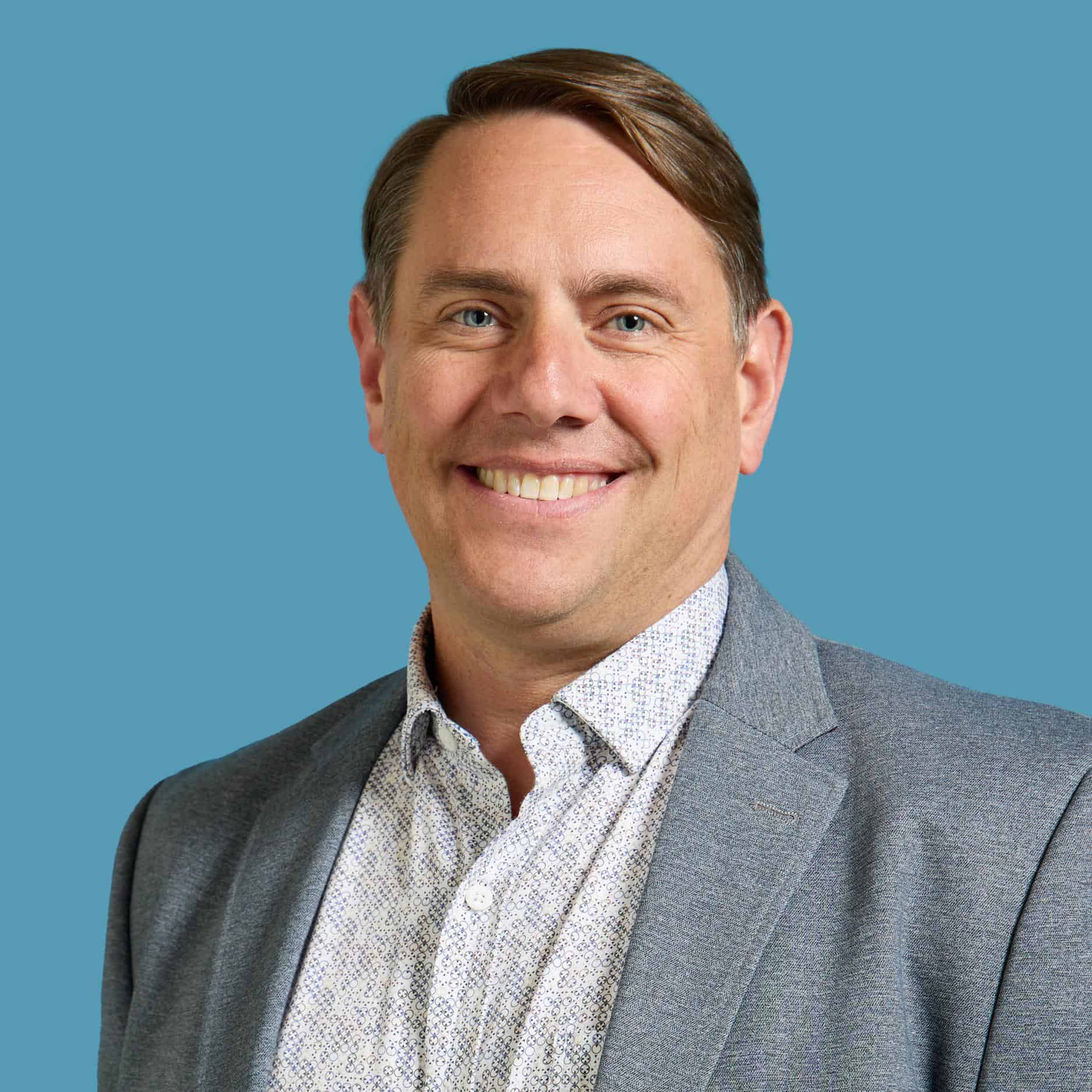
Jesse Sycuro, PE, CCP, LEED AP, is Vice President of Facility Operations at McKinstry, a national facilities and energy services firm, where he leads operations nationwide to modernize how mission-critical facilities are managed. With 25 years in the industry spanning US Navy nuclear power plants, hyperscale data centers, and hospitals, Jesse brings a rare blend of critical-environment rigor and operational strategy to healthcare — from system-wide strategic facilities planning and capital prioritization for health systems, to risk assessment of central plants and the life-safety infrastructure that keeps care environments running. He is a leading voice in applying AI and data-driven technology to facility operations, championing McKinstry's ActiveOps platform, which unifies facility condition, equipment, and energy data into a single intelligence layer that enables remote monitoring, predictive risk identification, and smarter capital planning. A past President of the Building Commissioning Association, Jesse is focused on helping healthcare leaders turn aging infrastructure and constrained budgets into resilient, high-performing environments for patient care.


Ritu: Hello, listeners. Welcome to Season Seven of our Big Unlock podcast. My name is Ritu M Uberoy, and I’m a managing partner here at BigRio and Damo Consulting, and I’ll be your host today for the podcast. Today, we are welcoming Jesse Sycuro to our podcast. Jesse is vice president of operations for technical services at McKinstry, where he helps lead the company’s work in building commissioning, asset management, energy efficiency, and building performance optimization.

He joined McKinstry in two thousand and five, and Jesse has held roles spanning engineering operations, business development, and national leadership, including significant experience with mission-critical facilities and data centers. And today, as AI automation, electrification, and increasingly sophisticated building systems converge, Jesse brings an important perspective on how we can make hospitals and other critical facilities smarter, more resilient, and more efficient, so we’re looking forward to an engaging discussion.

Welcome, Jesse, to our podcast.

Jesse: Thanks, Ritu. It’s a pleasure to be here.

Ritu: Thank you. Would you like to add anything to that super long introduction?

Jesse: That states a lot of it. Maybe if I can just put it a little bit simpler here, we’re a design, build, operate, maintain company. Yeah. We’ve been doing work for over 65 years, and we’re really focused on solving the most challenging problems with building infrastructure.

Ritu: Great. Jesse, we’re really looking forward to this discussion because generally we have people from hospitals and health systems and CIOs and CMIOs. So I think you bring a very different and, fresh perspective, and we would love to hear more about, what McKinstry does. So the first question I have is that, we’ve been having all these healthcare executives on the

Podcast, and they’re spending enormous amounts of time talking about, digital transformation inside the EHRs and all the software systems, but they’re not paying that much attention, I guess, to the physical infrastructure underneath where, care delivery. So in a hospital, like we talked about in the intro call

Where power, ventilation, temperature, and so many other systems have to work 24 by 7, then what are your perspectives on treating this also as, like, part of the healthcare, technology platform, if I might say so?

Jesse: Yeah, don’t ignore it. The thing with building infrastructure is you don’t think about it until you need to.

There’s some really big challenges with healthcare today that have been there for a while, but they’re really coming to a forefront and getting exponentially harder to solve. One example is deferred maintenance. There’s around 40 to 50% of healthcare infrastructure today that is beyond its useful life.

That’s a number that’s continuing to increase. And so systems that we used to take for granted, simple things like making sure patient rooms are comfortable and at 70, 72 degrees, and that your lights are on, and that, the building is just operating the way it needs to, are things that we can’t take for granted anymore.

And so these challenges are coming to the forefront. And, one of the thesis that we’re gonna dive into a lot more here is if we unlock the data, we can unlock the outcomes, and we really wanna drive outcomes for healthcare clients and the infrastructure that builds that resiliency and efficiency, and make sure that we’re able to address some of the big challenges ahead of us.

Ritu: Yeah. Great. So tell us more about commissioning, Jesse, because I don’t think our listeners, would know more about that. And what I know of it is that it means that it’s verifying that complex systems actually perform as intended. But now that healthcare is deploying, AI, like we were talking about the FDA

Regulation, that they just can’t keep up with the pace of change anymore. So, are you finding that as well, like you mentioned, about the hospital systems not keeping pace

Jesse: With. I think commissioning will show up in a few different ways. It is a quality control process.

Jesse: A lot of times when we talk about building commissioning, we talk about new construction, so it’s a quality control process to make sure that the building is designed and built correctly, and then ultimately is handed off to operations.

And basically drive a seamless process and generally, we see a lot of waste in how buildings are designed and built. Commissioning is one of the ways that we can address that and remove waste from how buildings are designed and built, but it doesn’t end there. And so there’s also other types of commissioning where we can address existing buildings.

That’s showing up a lot with building performance requirements and compliance requirements. So we think about efficiency requirements that are being pushed down into the built environment. Commissioning is a good way to unlock that efficiency, drive better performance of building systems in the existing environment.

When we talk about data and really where AI is starting to have a really big impact on us now is how do we maintain that efficiency? So monitoring-based commissioning is a way that we can use data and technology to basically keep things running the way that they’re supposed to once they’re in operation as well.

Ritu: Okay. So you’re saying that this is not just for new buildings, but you go in to do this for buildings that are existing as well?

Jesse: Yeah. As much as there’s waste in how we design and build buildings that we wanna tackle, there’s even more waste in how we operate and maintain. And if you think about total cost of a building, 80% or more of your total cost of that building actually comes into how you operate and maintain it for the life of that building versus the initial design build effort of that project.

And so often we just think about the initial capital expense, and we don’t think about the utility bills. We don’t think about, when we do a reactive repair on a system, if there’s a pipe that bursts or air conditioning or chiller plant that goes down. If that comes as an unexpected expense, in healthcare alone, that’s about three to four times the cost of doing a reactive repair versus being able to predict it and being able to be ahead of that from a proactive standpoint and replace that equipment before it needs to be.

And so being able to monitor, being able to leverage information about the building systems and how they’re working really allows you to get ahead of the curve and be proactive in how you’re managing it. And nobody wants to be surprised by lights flickering during an OR procedure or a patient room that is eighty-five degrees when it’s, the patient comfort is so important when they’re trying to recover as well.

Ritu: Right. So tell us a little bit more about how you think AI is going to come into this picture and make, commissioning professionals better. And now that buildings themselves are producing, so much quantities of operational data, then how do you think AI can take us towards, making this better?

And when we talk to CMIOs, they’re talking about variables and this constant stream of data that’s coming in versus, the one physical annual checkup that you used to have per year. So you have all the data, but now you need to be able to process that and find things.

Jesse: Yeah. The built environment’s been challenging from a data standpoint for a long time. A lot of us were speaking about smart buildings back in the late two thousands, and there was a lot of attention put to sensors and IoT technology that allowed us to monitor and pull information in. Some of the big challenges we’ve had over the last twenty years is a lot of these systems speak different languages.

And so being able to translate from one system to another and be able to leverage information from multiple different building systems has been a major hurdle for us. And so we’ve had a lot of siloed data as a result of that. That other piece is data overload. We have a challenge with building operators and the, number of workforce that’s available to operate and provide building engineering services for the built environment.

And that, as buildings become more technical and advanced, making sure that those staff are capable of leveraging that technology is a challenge. And so when you couple, a lot of focus on sensor technology, deploying IoT sensors into the built environment, we have a data overload issue that we’ve been

Battling. And so working with a critical environment and healthcare clients, we’ve seen the cases where we’ve seen sensors deployed and tens of thousands of data points in the hospital. And those tens of thousands of data points, we’ve had the ability to do fault detection and diagnostics.

So we do alarming, and we are able to process data in a way that creates faults and alarms for us to be able to process. But that same critical environment healthcare client that I’m talking about saw a case where there was a, an electrical issue caused by a lightning strike nearby. It caused cascading failures on both the mechanical and electrical systems.

It basically created around 2 to 3,000 alarms within a matter of 10 minutes that it was after hours, there were two building engineers, and they had to respond to 2,000 alarms and figure out what was actually the problem. And so their ability to navigate that and be able to respond quickly was really hindered by too much information, too much data.

And the example I like to use is it’s like if you were driving your car, and if I’m talking about deferred maintenance, you’re driving a car that’s already on borrowed time. So you’ve got a, a 2000 Subaru that’s got 230,000 miles on it, and you’re driving down the road, so you’re already nervous about being able to get to where you need to get to.

And then all of a sudden you get the Christmas tree effect. So you’re on the highway and you get every light on your dashboard lit up. You have no idea what’s going on. That’s the built environment and systems that we’ve been dealing with, and it’s really hard to understand in the driver’s seat what do you need to do.

Do I need to pull over right now or not?

Ritu: Yeah.

Jesse: And so when we think about AI, and what’s really exciting over the last couple years, and even in the last six months I could say, is how we’re able to leverage AI to translate what’s going on, be able to speak all the different languages that we need it to, and make sense of that data layer, and then also make sense of the information that’s coming in through that fault detection and diagnostics.

So instead of getting that Christmas tree light effect on your dashboard, you’re now getting a message on your dashboard that just says, “Hey, there’s something wrong with your catalytic converter. You can still drive, you got about 80 more miles, but you should pull over when you can, and you should get this looked at as soon as possible.”

Or, “Hey, is there a major issue with your oil in your engine and you need to pull over right now because your engine’s about to seize up.” So being able to translate all that information so that the person that’s in the driver’s seat is able to process it and understand it and take action that they need to is where we’re seeing AI having a really big effect on building technology.

Ritu: Yeah, great answer and great examples. I think, that’s one of the things we heard from the wearables company as well, separating the signals from the noise. So because you have so much coming in, you need to be able to intelligently parse that and be able to summarize, which, the LLMs and AI is great at, and then extract

The relevant information and be able to present that at a much faster speed than a human possibly can. So I think that’s a great example and great application of AI as well. We are also looking at, we’re hearing and looking at the headlines about data centers and about using, so much electricity.

So now the hospitals may be also facing this uncomfortable collision between, this rapidly growing electricity demand from-

Jesse: Mm…

Ritu: Imaging digital infrastructure, AI, and all these data-intensive operations, like you said, if there are, so many sensors and so many IoTs all over the place. If these priorities start conflicting with, reliability and patient safety, then how do the hospital systems make this trade-off?

And which are these technologies which are being promoted as green technologies today that in your opinion, healthcare organizations might find out that they don’t really make sense and they have to be more judicious about just trying to be green or sustainable?

Jesse: Yeah, that’s a lot to unpack there. We do.

First I’d say whether it’s data centers or the pace of construction or the pace of how technology is leveraging energy across the grid in general, we absolutely have a power issue across the US. And how we produce power and how we transmit power and how we manage our grid are major challenges for us, and we’re seeing it in our utility bills.

If you look at utility bills today versus what it was five years ago, 10 years ago, you’re seeing some really big increases in cost. Yeah. And part of that is to address the infrastructure challenges that we have. So, the other thing that we see a big gap in that we’re looking at how AI and data can help solve for and bridge that gap is how buildings actually work with the grid.

So utilities are providing power at a constant rate in what they produce. They can flex up and down only so much, and they can only transmit power to the extent that the grid is capable of doing that. Buildings are not constant. They’re constantly going up and down in how they’re using power on the grid.

MRI machines would be a great example within healthcare that, there is a large spike in demand when you’re leveraging the MRI machines, and there’s other processes within the healthcare facilities that are not constant. So you don’t have a constant use of power. So if you put a hospital on the grid as well as all the residential buildings that are on there, when your home does not use power regularly, you and I are at work right now, so our homes are probably not using a lot of power.

We go home at 5:00 p.m. There’s a spike in power as we’re making dinner, as we’re doing laundry, as we’re, just living in our homes. And so the grid is highly variable in how it needs to actually consume that energy. So from a data and analytics standpoint, there’s a gap here in how does the utility understand where power is being used, when it’s being used- And can it actually control how that power is being used at the end use?

And so data and technology is now at the point where demand flex or demand response, which has been a concept that’s been in practice for a while now, but what we’re at a different point now is how we’re able to leverage that information to really bridge that gap and be able to communicate what is the building doing and what is it going to need for power, and has the utility understand that and be more proactive in how they’re able to supply and produce that power to those buildings.

And even to the point where we can actually start to turn off or drift certain systems within the building, and we can do that in a way that, we’re not affecting the occupants. We can pre-cool spaces. Medical office buildings would be a great example. And so the buildings actually start to become more of a battery, and they can help start leveling off the utility demand and drive a solution where we are then able to better leverage the utility’s capabilities and their capacity across the grid in a much more effective way.

And so that’s really taking off with utilities really in trying to engage this and bridge that gap, and buildings now having the capability of interacting with the grid and with the utilities to be able to do that. So that’s, that’s one exciting area. From an efficiency standpoint, when we talk about healthcare, we’re really talking about critical environments, 24 by 7 operation.

You can’t turn off a hospital. And so when we see more of these challenges on the grid, we do see more brownouts, we see more power outages. We really wanna make sure that we’re thinking about the building systems. What is the redundancy? What is the backup power capacity there? And how do we make sure that the building systems themselves aren’t going down, and that they’re able to maintain the power and the operations that they need to at any given point.

And so from a data and technology and a solution standpoint, really focus on resiliency first, efficiency second, but both of those are very doable challenges with the building systems and technology we have today.

Ritu: Thank you, Jesse. Thank you for that answer. We’re learning a lot today in today’s podcast because this is an area that, we don’t typically really think about, and we just talk about the front end.

But when you think about what’s actually happening behind the scenes, it’s really interesting. So you raised a very important point that the building is also kind of the demand of it is variable, and it’s not constant throughout the day. And I really like that example of how, when you go home, you switch on things and you– the demand changes.

So that kind of brings in an interesting point that we see a lot of expensive platforms being deployed which are technically excellent, but they still fail because workflows and behavior doesn’t change. So now that you’re working with these complex organizations, how do you, like, go in and influence the behavioral side of it to, tell people that

Okay, think sustainability, think about, like, how you’re actually using these systems?

Jesse: I think change management is one of the core skill sets and muscles that we need to exercise in our organizations. And, I think we really need to think about the outcomes that we’re trying to drive and the reasons behind what we’re trying to do.

And we need to, Simon Sinek is very popular, start with why. And I think, oftentimes we jump to the conclusion, we jump to the technology, and we don’t really understand the impact on the people side. We don’t understand the impact on we’re fundamentally changing how people need to work.

And I think you see this a lot on the clinical side when we talk about AI and technology. It’s just as prevalent when we talk about the building systems and infrastructure that are there. One of the, I can’t take credit for this, but, key concept around AI applications, when we think about where that meets people, it’s concepts of accelerate, augment, or automate.

And I think when we, when we think about AI solutions and a lot of what’s being branded or marketed out there as a, an outcome is an automation. So fully autonomous buildings that don’t need people to operate them may be the headline, but we are still pretty far off from that, and we’re skipping some key steps to be able to get there and be able to adopt and understand how the technology applies.

And so when I think about AI and building systems, I’ll use another analogy of a carpenter. You need a carpenter to frame a house and build a house. The carpenter needs tools to be able to do that. And so way we used to do this is with a hammer and nails, which is not very effective, and the carpenter really wants to drive more acceleration in how they’re able to build that building.

So a nail gun is where we would apply AI first. Let’s get the nail gun in the carpenter’s hands so that we can build that house faster. And so building engineers with AI can accelerate their work that they’re doing. Then we get to the point where then once we understand how that applies, and we’re able to more effectively do our jobs in operating and maintaining the built environment, then we can look at where does augmentation start to come in.

Where can we start leaning more heavily on the AI and the technology? That’s where I think the smart alarming comes in, and it starts inserting into workflows. And now we’re getting into the point where, okay, we can do our jobs faster and better, and we can start leaning on certain aspects of our jobs to be able to leverage AI to augment.

I think once we solve those first two stages, then we can start talking about an autonomous operation where the carpenter then doesn’t even need to be there to build the building. We’re very far from that right now. Maybe that’s, the acceleration of AI, maybe it’s not as far as I think it is, but at the same time, we’ve gotta go through the first two steps before we really understand how do we do the last step effectively.

Ritu: Absolutely. So you brought up a very good point about change management, Jesse. So, in McKinstry, how have you been kind of dealing with this deluge of AI information that’s coming in, and how do you make sure that your people are kind of up to date with that and know like, these are the tools out there?

Because sometimes it happens that you don’t even know what these tools are capable of. And then when you’re educated on them, then you start thinking, “Oh, this is what I could use this for.” So what is your approach to digital literacy being in McKinstry, and how are you going about that?

Jesse: Yeah, that’s a great question, and I’ll tell you what McKinstry’s doing. I don’t think anyone has this perfectly solved, but I’m pretty excited by, what we’re doing as an organization.

Very early on, about a year ago, we stood up a group called our Advancing Forward Technology. Okay. So the Advancing Forward Technology group is actually a combination of technologists people that are very AI forward and really at the forefront of what’s capable with the tools and technology.

But within that team too, we’ve got legal and we’ve got HR and we’ve got other aspects of our training teams that are engaged in that to be able to understand what are the appropriate guardrails. How do we make sure that cybersecurity and the information that we’re leveraging and the solutions that we’re providing are meeting our clients’ requirements and our internal requirements for security, which is, I know, a really hot topic across any AI application.

There’s another aspect of the people side, and so having our HR engagement in that team is intentional and really to drive the people aspect of it ’cause we are changing people’s jobs, we are changing the way that we do things, and we wanna be thoughtful on how are we communicating that, how are we messaging that, and how are we making sure that our people are able to come along this journey as we’re implementing AI solutions.

And then the legal aspect is just as important to make sure that there are guardrails and there’s understanding of, what is the intellectual property requirements related to how we are providing services to our clients, and that we’re maintaining those same contractual obligations in how we’re deploying technology.

So that Advancing Forward Technology team is providing governance and is providing understanding of how we should and how we can leverage AI and technology. Which is then, once that framework is in place, it gives a lot more freedom to our people then to ad lib, create new solutions and, this is a very different world than it was when we were thinking about technology innovation five years ago.

Five years ago, it was very planned, it was very regimented, and we were able to keep pace with it because any major software change or any major technology change in what we were doing was baked, and it was a six-month to a year-long timeline. Now, and I can’t believe I’m saying this, I can go create a webpage or an app in a matter of a couple hours, and I can launch that within my team, and we can get great use and scale out of the capability of that type of solution.

And I’m not a programmer. Like, that’s… I’m an engineer by nature, but not a software engineer. And so the fact that, I can do this and many other people can take their ideas and get to a product much faster, and we can do this hundreds of times or thousands of times at scale, is a much different world.

And so we wanna make sure we’re balancing. We wanna have that governance and guardrails to do this correctly and safely, but at the same time, we also wanna make sure that we’re unlocking the potential of innovation and curiosity within our teams to be able to maximize what we can do, too.

Ritu: Yeah. I think you summarized it absolutely right, that first of all you need the cross-functional teams because people bring in all these different ideas, and it’s really important to include everybody.

So your example of including HR because they’re responsible for people change, that was really good example. And the second thing is the democratization of the technology itself, because like you said, anybody can do it once you learn. The tools are so powerful that you just need to know how to unlock the power, but it’s not like you need a team with, like, software engineers or analysts drop the specs and then something which would take three months or six months now can be done instantly.

Jesse: It’s a totally different world now.

Ritu: A totally different world. So let’s end with an origin story, Jesse. We always love to ask our, guests about how they got to where they are. Like, how did you start in this field and your technology, or how did you get into industry, and tell us a little bit more about that.

Jesse: Yeah. I think no path is a straight line, and mine definitely hasn’t been, exactly straight, but, it’s been an awesome experience and journey. I started as a Navy nuclear engineer in the US Navy. And, spent five years in the Navy and, toured all around the world, and then I got out in 2005, and I got really lucky.

I found McKinstry as my first job coming out of the Navy. And, one of the things we really believe in is being constantly curious and making a positive difference and just adopting those values at McKinstry have really kept me at the forefront of what’s the art of the possible.

How do we take some really great people and smart people at McKinstry and come together as a team to solve challenges in the built environment? And that got me into building commissioning and then into more of the analytics and monitoring-based commissioning side of how we leverage information and just continuing to think about how do we solve problems for clients.

And here I am today talking about AI in healthcare, and it’s amazing to think about where we’ve been, where I’ve been, and, what’s in the future is an unknown, but it’s an exciting unknown.

Ritu: Great. So what does a nuclear engineer do? I’m curious.

Jesse: It’s not funny, but, we used to say it was hours of boredom, seconds of excitement.

So, we have, two nuclear reactors on an aircraft carrier that we have to operate and maintain. It’s an expensive way to boil water. And you need to make sure that, power is on, lights are on, and the ship is moving forward the way it needs to. So it’s a power plant operations on a very large scale.

Ritu: Great. Okay. Any closing thoughts, Jesse? Any gazes into the crystal ball here?

Jesse: Yeah, I mean, just bring it back to where we started. This is the big unlock, and I’d say, to the audience here, unlock the data, unlock your outcomes, and definitely don’t ignore your building infrastructure ’cause it’s there, it’s critical to your operations, and there’s so much more that we can do with technology today than we used to be able to do.

So help us unlock that information so we can drive efficiency in how we build and how we operate your buildings.

Ritu: Great. Thank you for being our guest today, Jesse. Really appreciate it.

Jesse: Thanks, you too.

Ritu: Thank you so much.

—

Subscribe to our podcast series at https://thebigunlock.com/ and write us at info@thebigunlock.com    

Disclaimer: This Q&A has been derived from the podcast transcript and has been edited for readability and clarity.
About the Host

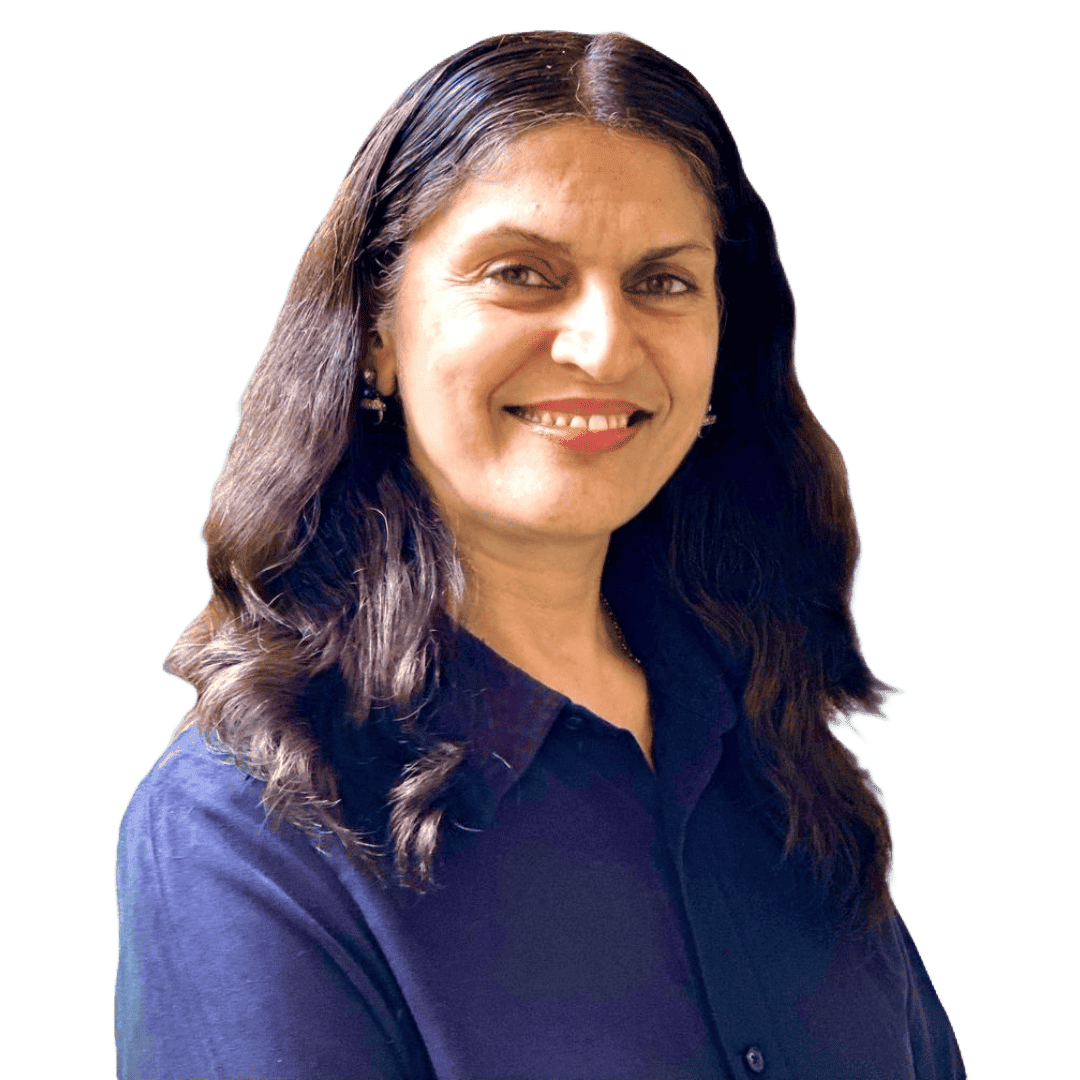
Ritu M. Uberoy is a healthcare AI strategist, technology executive, educator, and author dedicated to advancing the responsible adoption of Artificial Intelligence across healthcare delivery, digital health, and life sciences. With more than twenty-five years of leadership experience spanning the United States and India, she is recognized for helping healthcare organizations move beyond experimentation to achieve scalable clinical, operational, and business transformation through AI.

She leads AI innovation initiatives, including the AI Center of Excellence at BigRio, where she works with health systems, healthcare technology companies, and life sciences organizations to operationalize Generative and Agentic AI solutions responsibly. Her work focuses on aligning AI innovation with clinical workflows, governance frameworks, workforce readiness, and patient trust—ensuring technology augments human judgment in high-consequence healthcare environments.

Ritu is the co-author of Generative AI: Unlocking the Next Chapter in Healthcare, a practical guide for healthcare executives navigating enterprise AI adoption. She also hosts The Big Unlock podcast, engaging global healthcare leaders on AI transformation and digital innovation. An active educator and speaker, she conducts executive workshops and participates in global forums like HIMSS, ViVE, Women in Tech, AI-Powered Women, RAISE, and more, shaping the future of AI-driven healthcare. Ritu holds advanced degrees in Computer Science and completed specialized AI programs at Harvard and MIT.

About the Legend

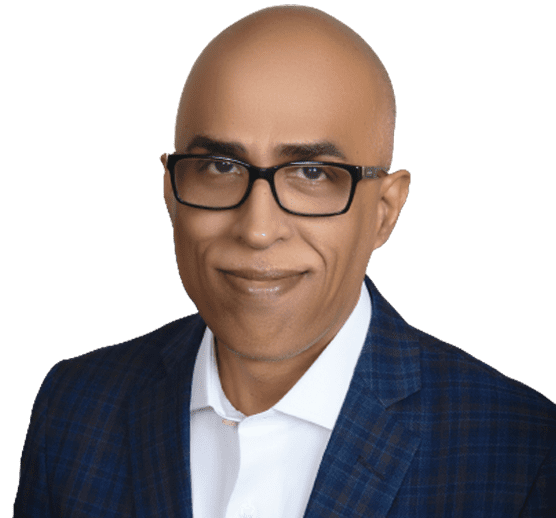
Paddy was the co-author of Healthcare Digital Transformation – How Consumerism, Technology and Pandemic are Accelerating the Future (Taylor &  Francis, Aug 2020), along with Edward W. Marx. Paddy was also the author of the best-selling book The Big Unlock – Harnessing Data and Growing Digital Health Businesses in a Value-based Care Era (Archway Publishing, 2017). He was the host of the highly subscribed The Big Unlock podcast on digital transformation in healthcare featuring C-level executives from the healthcare and technology sectors. He was widely published and had a by-lined column in CIO Magazine and other respected industry publications.

Who Owns the Hard Decisions in Healthcare AI? Reflections from AIMed 2026

Who Owns the Hard Decisions in Healthcare AI? Reflections from AIMed 2026

By Ritu M. Uberoy
Co-Host, The Big Unlock Podcast

I came out of a wonderful panel with Chief AI Officers at AIMed 2026 thinking about how quickly the role has evolved. Health systems are making decisions about where AI belongs in patient care, who should oversee it, and what evidence they need before expanding its use. The panel brought those decisions together in one conversation. The question I kept coming back to was simple: Who owns the decision when AI becomes part of the way care is delivered? 


Good governance helps teams make decisions

One of the questions on the AIMed agenda was how to protect patients while giving teams room to make progress. That balance can feel abstract until you put it in the context of a real workflow. If an AI tool flags a patient message as urgent, who reviews it? Where does it go if the first person is unavailable? Who can pause the workflow if the team sees a pattern of missed or misrouted messages? 

These are questions a team can answer before a pilot begins. Clear answers give clinicians and staff a way to raise concerns and give leadership a basis for deciding whether to expand the pilot. To me, that’s where governance earns its place in the day-to-day work.


Agentic AI puts handoffs in the spotlight

The panel also made me think about what changes when AI can take an action. Think about patient access. An agent could help a caller find the right department, confirm an appointment, or route a request to staff. Each action raises a practical question about what the agent is authorized to do and when a person needs to step in. 

I’d start by looking closely at the handoff. When a caller’s situation falls outside the agent’s scope, can they reach someone who can help? Does that person have enough context to pick up the conversation without making the caller start over? Those details tell you a great deal about whether the workflow will hold up on a busy day.


Define value with the people doing the work

The AIMed session raised another question that comes up in our work at BigRio and in conversations on The Big Unlock: what does value look like to both the board and the care team? For a patient access workflow, one place to start is to ask whether callers reach the right person with fewer transfers and whether staff spend less time untangling misrouted requests. Then ask whether those gains hold up during the busiest hours. 

My takeaway from AIMed is that ownership and measurement belong in the same conversation. Before expanding an AI workflow, I’d want to be able to name whose day it improves, how we’ll know it helped, and who can change course if it falls short. Those are the questions I’m bringing back to our work.

“HLTH brings together the brightest minds in healthcare to drive real-world transformation through AI, data, and workflow innovation. The energy, collaboration, and actionable insights here are truly reshaping the future of care at scale.”

– Rohit Mahajan, Co-host of The Big Unlock Podcast

Through The Big Unlock Podcast, I will be interviewing many of these incredible minds on-site, gathering firsthand stories about the challenges, successes, and breakthroughs shaping the AI-powered future.

Event Gallery

What Stayed With Me at HLTH 2026

What Stayed With Me at HLTH 2026

By Ritu M. Uberoy
Co-Host, The Big Unlock Podcast

Before heading to HLTH USA 2026 in Las Vegas with my co-host Rohit Mahajan, I wrote about a question I wanted to explore: How do we turn healthcare innovation into something people can benefit from in their everyday lives? Two sessions gave me different ways to think about that question. One was about the price of healthcare. The other was about what it takes to build a healthy habit.


Affordability is a test of leadership

In Fixing Healthcare’s Price Problem, Chris Klomp and Nancy G. Brown discussed one of the most difficult issues in healthcare. What stayed with me was Chris’s point about leadership. Bringing together people who already agree is relatively easy. The harder work is earning enough trust among people who disagree that they can act on a shared goal. He made the case for treating healthcare as a bipartisan issue.

I kept thinking about what that means for affordability. A patient trying to understand what a visit will cost, a clinician helping someone choose a treatment they can afford, and a policymaker trying to change incentives each see a different part of the problem. Those perspectives matter when we decide what to fix first and how to tell whether the change helped. For me, that’s where trust becomes practical. People need to see that their concerns shape the decisions being made.


Make the next healthy step easier

In a session moderated by Betty Pio, Arianna Huffington and Dr. Rachel Batterham explored how advances in obesity science, including GLP-1 medicines, fit alongside the daily realities of food, movement, sleep, stress, and social connection. I appreciated the space they made for both medical innovation and the practical support people need in their everyday lives.

Arianna described microsteps as actions small enough to feel doable. I liked the simplicity of that idea. A plan can sound entirely reasonable in a clinic and feel much harder when someone gets home from a long shift. A short walk after lunch or a few minutes to wind down before bed may be a more realistic place to begin. The question I took away was simple: How can we make the next step easier for the person who has to take it? LinkedIn


A question I’m bringing back to The Big Unlock Podcast

I think that same question applies to healthcare AI. When we talk about deploying an AI tool, I want to know whose day it will change and what will get easier. Can a patient get to the right person without repeating their story? Can a care team follow up without searching across multiple systems? Does a clinician get time back for a conversation that needs their attention?

Those are the kinds of questions Rohit and I will continue to ask on The Big Unlock Podcast. Thank you to everyone who took the time to connect with us at HLTH. I’d love to hear what stayed with you, especially an idea you can see putting into practice.

“HLTH brings together the brightest minds in healthcare to drive real-world transformation through AI, data, and workflow innovation. The energy, collaboration, and actionable insights here are truly reshaping the future of care at scale.”

– Rohit Mahajan, Co-host of The Big Unlock Podcast

Through The Big Unlock Podcast, I will be interviewing many of these incredible minds on-site, gathering firsthand stories about the challenges, successes, and breakthroughs shaping the AI-powered future.

Event Gallery

Healthcare Innovation Needs Ecosystems, Not More Point Solutions

Season 7

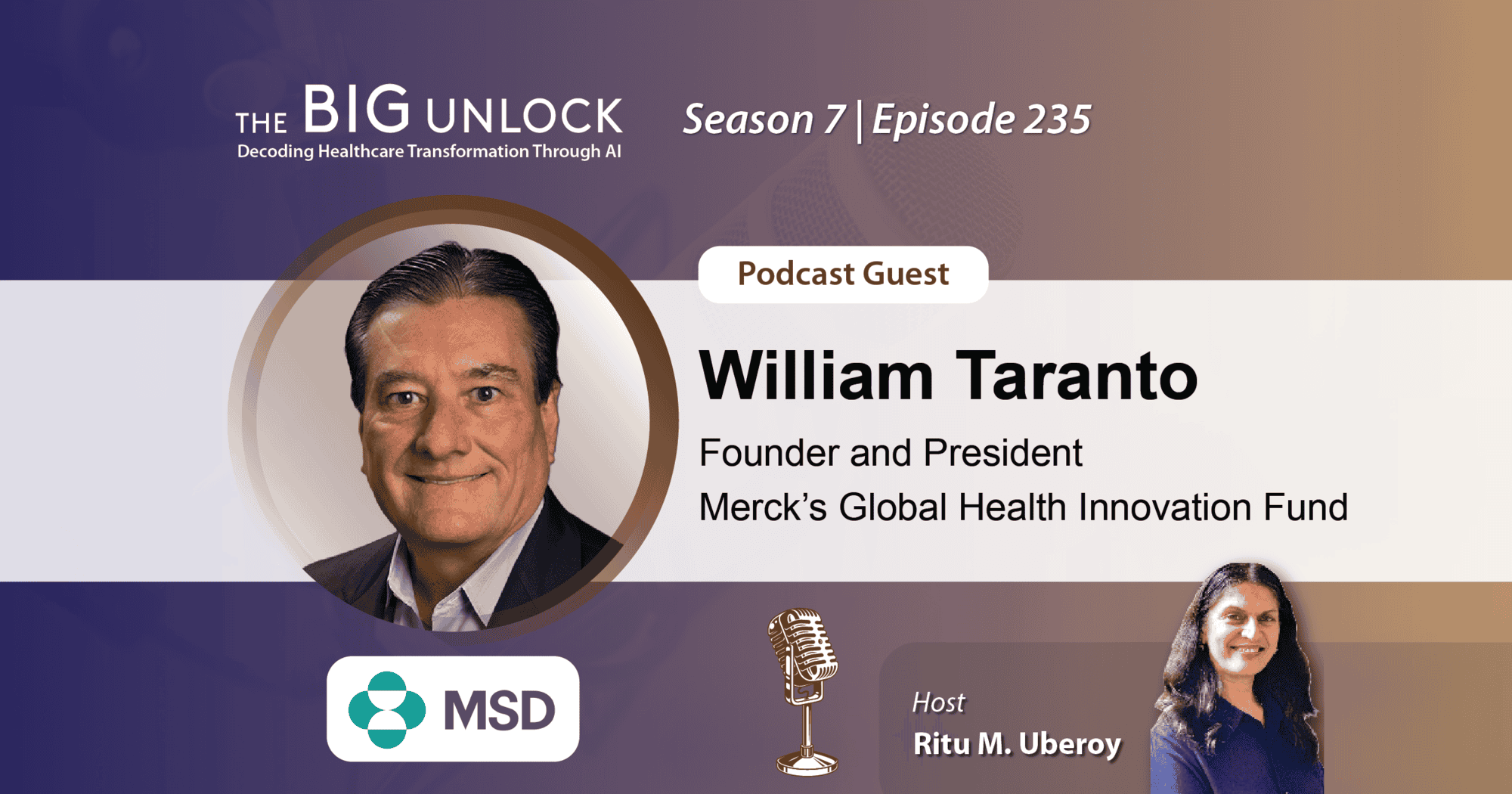
Episode 235 - Podcast with William Taranto, Founder and President, Merck Global Health Innovation Fund
Healthcare Innovation Needs Ecosystems, Not More Point Solutions

The Big Unlock
The Big Unlock
Episode 235 - Healthcare Innovation Needs Ecosystems, Not More Point Solutions
Loading
/
Video video

In this episode, William Taranto, Founder and President of Merck’s Global Health Innovation Fund, shares his perspective on how strategic investments in AI, digital health, and data-driven technologies can address critical challenges across the pharmaceutical industry.

William explains why healthcare innovation must begin with real industry problems rather than individual technologies. He discusses the importance of building connected ecosystems, where data and complementary solutions work together to create value at scale. As AI accelerates drug discovery, he highlights the need for pharmaceutical companies to strengthen clinical development, manufacturing, and supply chain capabilities to keep pace.

The conversation also explores Merck’s approach to fostering innovation through strategic partnerships, commercial collaborations, and global investment initiatives. William emphasizes that successful healthcare innovation requires a deep understanding of the industry, patience to build sustainable businesses, and a clear focus on improving patient access and outcomes. Take a listen.

About Our Guest

William Taranto is founder and president of Merck’s Global Health Innovation Fund (GHIF), known as MSD’s Global Health Innovation Fund outside the U.S. and Canada. He launched GHIF in 2010 and has built it into a $600M evergreen fund focused on digital health, AI, and data-driven life sciences. Under his leadership, GHIF has deployed more than $1B across 80+ companies, generated more than $15B in exits, and returned $2B to Merck.

Notable exits include Unnatural Products, which agreed in November 2026 to a sale to argenx valued at up to $1.15B. PathAI is set to be acquired by Roche for up to $1.05B under an agreement announced in May 2026. Bill chaired Preventice Solutions through its acquisition by Boston Scientific in a deal worth up to $1.2B. GHIF was an early backer of Livongo Health and sold its stake at the company’s 2019 IPO for a profit of more than $140M.

GHIF began investing in AI in 2011 and now holds 15 AI-enabled companies across drug discovery, clinical trials, supply chain, and patient access. Beyond financial returns, about 65 active engagements connect portfolio companies with MSD business units, partnerships valued at more than $300M. Bill brings more than 30 years of public and private board experience. A past chairman of Global Corporate Venturing, he writes the COMPASS column for GCV and was named to the GCV Titans 2026 list.


Ritu: Hello, listeners. Welcome to season seven of our Big Unlock podcast. My name is Ritu M Uberoy, and I’m a managing partner here at BigRio and Damo Consulting, and I’ll be your host today for this episode of our Big Unlock podcast. today, we are delighted to welcome Bill Taranto to our podcast. He’s the founder and president of Merck’s Global Health Innovation Fund, known as MSD’s Global Health Innovation Fund outside the US and Canada.

He launched this fund in twenty ten, and he has built it into a six-hundred-million-dollar evergreen fund focused on digital health, AI, and data-driven life sciences. Notable exits include Preventice Solutions, Livongo Health, and PathAI. And we are really looking forward to this conversation and to hear Bill’s perspective.

So welcome to our podcast, Bill. Thank you for being here today.

William: Well, thank you very much, for inviting me, Ritu. Pleasure to be here. And for the audience that don’t know me, I know you said a little bit, but, my name’s Bill Taranto, and as you said, I’m President of the Merck Global Health Innovation Fund.

We’re a fund, just to give you a little more clarity on what we do, we’re focused on, pharma services most. And what I mean by that is what we try to do is look at the most critical issues facing a pharmaceutical company today, not just Merck, but the industry as well. And it usually covers four sort of broad areas.

We focus on the R&D space, so we’re invested quite a bit in AI and ML and drug discovery, novel platforms like radiology and pathology, blood platforms. Just novel ways, the way that we think about doing R&D. Then on the critical development side, which is, I think, one of the more growing new spaces for pharma, anything that we can do to better the clinical trial experience, whether it’s site selection, patient management, a- any of the components that make up that piece is important to us.

Another big bucket for us is kind of lumped into what we call IT, manufacturing, and supply chain. On the IT side, it’s just infrastructure. Things  like data aggregation, integration and harmonization, data analytics and informatics, cybersecurity, those type of things. On the supply chain side, most people don’t realize that pharma loses quite a bit of their product, almost 10% or more, to theft, fraud, damaged good, lost good.

We ship it the wrong way. Should’ve got by plane, we might’ve sent it by boat. So, using data and AI really to help us understand how do we better track and trace in making sure that our product gets to the right place and to the right patient the way it was supposed to be. On the manufacturing side, that’s new to us.

We haven’t done a lot yet, but we’re looking at robotics quite a bit, lab in the cloud. just kinda new areas of AI that we think are gonna have an impact on us, but I would say that’s a newer area for us. The next bucket is around patient impact or access. We’re a pharma-owned pharmaceutical company, so we have to be very careful about any stick- kickback statutes where we can’t be in the corporate practice of medicine, so we can have to be very careful where we invest in that space.

But we do things like clinical decision support tools, care coordination, better management of how patients get access to medicines, but that’s really the way to kinda think about it. And then the last bucket is real world evidence and data. We’re trying to give You know, Merck and the industry access to better data and better ana- analytics and informatics on top of it.

And so that’s kind of where we focus as a fund, which makes up the whole idea of pharma services, and then where does enabling technologies, digital, and all these other types of technology solutions impact that? The last thing I’ll say is, we’re a growth investor for the most part. We’ll do A and B rounds occasionally, but we’re not chartered to do startup or seed capital.

We try to be more on the growth side of investing. And finally, today, we have about 60 investments in our main portfolio, and we have a couple of accelerators and idea studios that h- host a number 30-some odd companies. So it’s a pretty large portfolio, but it’s been quite successful strategically and financially. But that just gives you kind of a 30,000 view of the fund.

Ritu: Thank you, Bill. You know, I have a couple of follow-up questions right there, but thank you for that introduction. And, let’s start with the first one. You know, you’ve talked a lot about this ecosystem investing. You know, you’ve said that you should have data flowing across these complementary companies rather than, you know, building these isolated products.

So can you tell us how do you actually assemble this ecosystem? Because rather than just backing the best individual company, you’re always looking to not do these point solutions or create more fragmentation or complexity. So tell us how you kind of visualize or imagine. You said you have 60 companies.

William: Yeah. We do a couple different things. First is, as I mentioned, we start with a use case. Okay. So unlike other investors, we don’t start with a company. We actually start with something, what are we trying to solve in the industry, or what’s the most critical clinical trial? We need more patients to be in the clinical trial.

That could be something we’re trying to solve. In AI and ML, how do we get a target ID? How do we target assets quicker than we could in the past by using AI? So whatever this, you know, the problem is, that’s what we start with From that, we then look for a company. And our primary premise is a quote that I always say is, “Data’s the currency we’re gonna use to transact in a future healthcare market,” which means we want all of our companies to be data companies.

An AI company doing drug discovery is a data company in the end. It’s creating data that’s important. A monitoring company is a data company. A supply chain tracking company is a data company. The tool they’re using is things like AI, but we want all of our companies to be data companies. That’s the core asset that we’re looking for.

And then how does that data provide an outcome, ultimately, to help solve that use case? The other thing we look at is the ecosystem. One of the problems you have in digital health is point solutions really don’t work, but everything kind of starts as a point solution. Pharma wants scale, and we want an integrated solution, so we have to think in terms of, well, how do these companies work together, and what would be the mix and match of companies?

It doesn’t mean you have to acquire all of them and put them into a single company. But what we try to do is say, okay, if I’m investing over here, what are the gaps that I have? It’s, you know, it’s not solving 100% of the use case. If I can help that company partner with another company within my portfolio, even outside my portfolio, it then brings that broader integrated solution together in an ecosystem fashion.

It does a couple of things. It builds the scale that we’re looking for, it provides pharma at least with a better solution, and then ultimately it leads to a better exit because we’re building a bigger, more viable company over time. So kind of the process is starting with a use case, identifying the company that we think can solve that, and then thinking in broader terms of the ecosystem of what’s the different mix and match of portfolio companies that we have to think about in order to build this out to have the appropriate solution.

And that’s, you know, partly why the portfolio is the size it is, ’cause we have lots of companies mixing and matching that are providing solutions not only to Merck, but to the pharma industry.

Ritu: Great answer. Thank you. So, you know, you’ve said that this healthcare AI conversation is now finally moving from what AI might do to, you know, what it can actually deliver.

And like you said, you know, GHI has invested in so many companies which are using AI across biology, chemistry, vaccines, and target identification, lead optimization. But given all these claims that are being made around AI drug discovery, you know, what convinces you that this AI platform is actually, you know, changing the economics of this probability of drug development rather than just simply accelerating one tiny step along this process?

William: I think that’s a great question. I think there’s a couple different answers. Well, one of the questions I get is, “Well, you’ve invested in some 15, 18 different companies around, across, you know, biology, chemistry, vaccines. Why’d you do that?” Partly because we wanted to spread our bets. They all do it slightly different.

And at the time, when you’re starting to invest, you’re not sure if they work. And what you’re starting to see though, not only as an industry, is, you know, the first is can they identify a target that’s something of interest to… And that’s happened a lot. That’s really robust in our industry. But the next is now moving through the stages, right?

Can you get through phase one? Can you get through phase two? Can you get through phase three? And then can you be a product in the market? What we’ve started to see over the last three or four years is we’ve gotten through past phase one. There’s a bunch in phase two, and now there’s a bunch in phase three.

I don’t know for sure. I, you know, I could be wrong, but I don’t believe anything’s made it to market yet from, AI, but we’re close. And that’s the progression you’re seeing. And once one makes it, right, we begin to understand what did that platform do? And then all the other platforms that are moving through each phase, what are they doing that’s different than the ones that didn’t go past just a target?

And then that’s where you start to see what’s becoming winners, what type of the technology with AI works better, and it’ll keep evolving. You know, AI will not stop evolving, so we have to keep investing in newer things. But it’s beginning to show us a pattern now for the last three or four years, what’s the right things to invest in, what’s working, and then ultimately what’s going to be the impact.

Now, like I said, getting something to market, that’s the ultimate goal. We’ve done really well with our portfolio of getting lots of products into phase one, phase two. I don’t believe we’ve got something to phase three yet, but we’re close. So it’s doing all the right things that- pharma wants. Because the fa- we are doing it faster.

I would say, you know, it’s hard maybe to calculate the true cost savings as of yet, but they are saving and creating efficiencies because we are doing it at a speed we weren’t doing it before, and we’re moving things through the pipe faster than we did before. You know, the interesting conundrum, I know you didn’t ask this, but I’ll just kind of throw it out there to you for- this for all the Pharma’s.

If AI begins to work really well, we’re gonna have the problem of too many products and not the ability for pull-through to manufacture it all and get them all to market, right? If you start all of a sudden, you know, maybe you were probably doing it five a year, now you’ve got 15 a year and they’re all coming to market.

Yep. What’s the throughput to get everything to market? Yeah. It’s a good dilemma to have, but it’s an interesting conundrum that the industry’s got to think through because- This is changing, right? And we could also have all these products that we gotta get to market, but we don’t have the infrastructure-

Ritu: Yeah

William: to get them to market. And so it’s, it’s kind of an, a great thing to have, but wow, we gotta think through the n- So one thing that I’m pointing out is what’s important is you’ve gotta invest in all these areas, ’cause you’ve gotta think you also then, well, if you’re creating all this, well, how’s your manufacturing?

How’s your supply chain? How’s your sales and marketing, you know, your post-market? All that stuff has to be invested in, at least from my viewpoint, to make this all successful. It’s not binary to one area.

Ritu: Yeah. I think you’ve spotlighted a very important conundrum, that the speed and the pace of change also requires underlying systems to kind of change at the same time.

You know, maybe you’ll need synthetic data, or maybe you’ll need some new types of testing. We had a very similar conversation with Heather Vereb, you know, he’s with ARPA-H, and they were doing, talking about this moonshot program. And they were saying, like, you can’t be in that era where, you know, the FDA regulation takes, like, a year to approve, because, in a year everything has changed already.

So they’ll have to basically rewrite those rules as well, get FDA to move faster so that the products get approved in time. So that’s an interesting point. Thank you, Bill, for highlighting that. So, I want to circle back to something you mentioned, you know, as part of your introduction where you talked about the Idea Studios.

So tell us a little bit more about that, and I think the Idea Studios take Merck further upstream into, you know, even earlier stage innovation. So tell us why, you know, Merck thought that was important, and why you need to get in, like, further upstream with Idea Studios. Yeah.

William: So we have two different things that we do. We do something called our Merck Digital Design Studio, which is a true accelerator. And that’s located in New Jersey, Boston, and Montreal. And that focuses on one thing, our Merck research, and it focuses on AI and ML and drug discovery. And we’re on our third cohort, so I think about 90 companies have gone through it.

Okay. but it’s really focused on one small area, and, it was AI, ML, and drug discovery. We did that one because, to your point, the fund is a growth fund, in A rounds and B, but we’re not doing that startup capital. How do we take a step to look at sort of that fourth horizon, but be able to invest early where the general fund wasn’t structured to do that?

But we could start these, this thing called a Merck Digital Design Studio. Okay. So that’s what that purpose is. Then we decided, well, you know, we’re a global company. And though we’ve always invested outside the US, it’s not easy being located in the US without having personnel and infrastructure outside the US.

But we really wanted to expand in Asia Pacific and Europe And then we came up with this idea where we said, “Well, let’s start a studio in a sense.” And what the studio does… So what makes a difference than MDSS is MDSS is simple. We put in a safe note with other investors, and that money goes to the company, and it converts or doesn’t work or whatever happens, but we’re kinda hands-off.

The difference with the studios is it’s a partnership actually with our MSD companies. Okay. So in Asia Pacific, what we’ll do is we’re working with 10 markets, and what we do is we committed a certain amount of capital- approximately $10 million of capital, and they committed around 5 million of commercial money.

And what we do is we identify a use case- that’s prevalent to their local area. So it could be something just in India, and maybe they’re working on a way to help get better access or another way to help with payment of goods, whatever the solution we’re trying to solve for. What we do is, with our local company, we find the right asset.

We’ll do the equity invest with other investors, but they’ll commit a certain amount of money to a commercial agreement to help test and grow it locally. Okay. And then if it’s works, what’s our ability to then to transport it to another local area, you know, moving, let’s say, from India to Taiwan to Korea to Indonesia to wherever.

And so the whole idea was to build locally, but also allow us to invest earlier in a geography we didn’t have a good presence in. We did the same thing in Europe that covers five markets. The same concept. We committed a little more money because it was a little bigger market, 15 million from GHI for equity, and then they committed 10 million for commercial agreements, but it works the same way.

We identify a problem. Is there a local company? Okay, this company is in France, it’s helping our French MSD organization, but can we move it to UK? Can we move it to Italy? Can we move it to Spain, et cetera, et cetera. So it gave us a couple of things. It gave us the ability to expand the GHI sort of name globally.

Allow us to invest a little easier with help from our local MSD organizations because they can help with some on the ground stuff that we don’t have personnel to do- like we do in the US, and then really help us solve healthcare problems that aren’t in the US, and that was kind of the idea, and it’s really worked out extremely well.

We’re three years into Asia and Europe Idea Studio. We’re in our sixth year for MDSS, doing the AI and ML in drug discovery, and we’ve had a number graduate where we’ve reinvested. They’ve raised money so that they’re performing. The studios are still a little early. We- we’re now starting to see the results of those and then the next question is, do we re-up again where we commit another batch of money and then MSD commits their piece and we do another set of investing again?

But it’s not really a cohort like the MDSS is, like a traditional accelerator. But it’s really given us an ability to have a global picture on healthcare.

Ritu: Great. So Bill, I’m really interested in understanding, you know, Merck itself is investing so much into AI and all the new technologies. So how does that kind of work with these portfolio companies?

Like, what are the companies getting from Merck and what is Merck getting from these companies, and the whole build versus buy? Like, are you just buying these companies to get access to these new, you know, innovative solutions? What’s your viewpoint on that? Would love to hear more about that.

William: Yeah, so really interesting.

Not only Merck, but sort of the pharma venture world- has an interesting view on all these assets where we want them to exist in the world. We don’t necessarily have to own them. It’s different with AI and ML in drug discovery. That’s probably the one area that’s very competitive and if somebody gets a target, probably the pharma’s gonna buy it.

That’s okay. All the other areas that we’re working in, there’s no competitive necessary advantage to own it, but we need it to exist in the world and scale. So I co-invest with a lot of our pharmaceutical brethren because we’re trying to build these ecosystems. So your primary question of what does Merck get out of it and what do we get out of it, well, the main goal for us is for Merck or another pharma, but obviously Merck, that being my parent, to partner with one of these portfolio companies and start with a pilot and learn, and then move that pilot into a longer term commercial agreement where the pilot was successful, now let’s expand and we’ve learned and moved in. So it helps Merck learn, it helps Merck create what they’re trying to create from an AI infrastructure. Now, like anything, if they choose to want to buy something, they can certainly bid like anybody else, but then they don’t have any rights, they just bid like someone else.

But the real reason is let it exist and you work with it, and the secret sauce is what you do with it, Merck. ‘Cause J&J has a different secret sauce, and Pfizer has a different secret sauce. But we want you to work with it. What’s happened over time is we now have over 100 commercial agreements with our portfolio companies valued at over $400 million. Merck is heavily engaged. And what’s turned out is we’re picking such good companies, our renewal rates are moving from a pilot to a full commercial agreement is around 72%. Wow. So we’re getting a ton of renewal where Merck’s saying, “This is the right company for us”. And a lot of times people say, “Well, why isn’t something renewed?” It’s not that anything went bad, right? Sometimes we as a pharma are ahead of the company. Sometimes the company is actually ahead of pharma, and that- Right… it might take a future engage- like, maybe time, maybe more investment, and maybe a year from now we re-engage again.

You know, and then of course sometimes it just doesn’t work, and that’s what happens, right? But you can see the success rate that we’re having with getting Merck a partnership. And what that then does is it gets the organization really learning and understanding how to use these tools, and then integrating those tools into their daily way they do pharma R&D- Right

or any other part of pharma that it’s being applied to, and it becomes then part of their daily lives. But they’re really taking the active approach of piloting first and then moving into a broader commercial agreement, and it’s, it’s been pretty successful.

Ritu: Great. So you’ve been doing this for such a long time, Bill, you know, you’ve led this for years, and you’ve always talked about maintaining this consistent purpose through, you know, change and not just following what’s fashionable.

So do you have, like, an overarching, like, guiding principle? Like, how do you pick these companies and what, you know, kind of makes you… Like, you must be getting so many pitches every single day. So how do you kind of distinguish and what, like, really appeals to you? You know, our listeners would love to hear that.

William: As a pharmaceutical company, ultimately it’s about the patient and the patients we serve. So are we investing in things that ultimately benefit the patient? If we’re investing in good R&D, that hopefully leads to a good product which gets to you and I, the patient, that’s helping the patient. If we’re investing in the right supply chain, we’re getting the product to the right place at the right time-

to the right patient. If we’re investing in access, how are we making sure people get access to not only our medicine, but other people’s medicines, right? It’s the whole continuum of serving the patient, and that’s what drives ultimately the investment we make. When we work back from that and saying, “Well, is the solution work for that point solution or,” excuse me, “the use case we’re trying to solve, does that ultimately lead to that if we do it correctly?”

Okay. Yeah, that’s right. And then are we better serving Merck or the industry to get to that solution that helps the patient in the end? If that’s a yes, then this is the right company. Then if it does all the other things we like, is it a data company? Does it fit our ecosystem? Can we come to terms? You know, all the other things you work with as an investor.

Is there a right syndicate? But it really starts with us is we’re here to serve the patient. And ultimately, that’s what all our investments ultimately try to do in a direct or indirect way, and that’s what makes it work.

Ritu: Yeah. Great answer. Thank you so much. Just changing tracks a little bit here, Bill.

You know, our listeners always love to hear an origin story, and sometimes we hear such interesting anecdotes, so we would love to hear how you got into, you know, pharma, and how did you come to Merck, and what was your background before, and what led you to Merck?

William: It’s funny. I… So I graduated college in 1985, and back then there were more jobs than people.

Everybody was getting jobs, and I actually wanted to be in the advertising industry and for whatever reason didn’t get placed in. But Wall Street was hiring and banking was hiring, so I got into, banking, and from that it led to me getting hired by Johnson & Johnson to do investing for them. And I was there almost 20 years, and it was great, you know, because J&J at the time, you know, this is, was a, you know, a while ago, were very forward-thinking as a company.

Our group was actually asked to look five years out into the future, predict what the healthcare future was gonna be, and try to invest in that to make J&J prepared for that future. And we built this really fascinating portfolio of companies and a practice that was doing that. And one of our first big investments was Surescripts, which is the big e-prescribing hub that exists today, right?

We did it for certain reasons to help, you know, the industry. But what was great about J&J for me was a great place to learn, make mistakes, and get really good at what I do. I think for Merck got the benefit of people that were really experienced and walked right in the door and could do this job without blinking.

But that’s what happened. So out of the blue in 2010, I got a call from Merck, and they said, “We love what you’re doing at J&J. Would you ever come over and-” Conversation was really nice. I said, “Well, have you done investing before?” “No, not in technology.” And I’m saying, “Well, do you have a therapeutic fund?”

They didn’t even have a therapeutic fund officially. And I was like, “Well, that’s interesting. You wanna do technology before you do therapeutic?” And they’re like, “Yeah.” And, had, you know, basically a whiteboard. They said, “We’ll, we’ll give you what you want.” So I brought my team over, I could structure the fund the way…

I had a lot of lessons learned, and I said, “Well, if you let me do this in a way that I think venture capital could be done, I think I can make you successful and not successful.” And they were like, “Yeah.” So I brought my team over, and we came over in April of ’10, and been at it, you know, almost 17 full years now and…

But I, you know, like I said, I think Merck got the benefit of a lot of years at J&J, of trial and error- of building the right kind of way to invest in digital, but that’s the way it works. But yeah, I kind of fell into this, and been in it for my whole career, and it’s been wonderful. I’ve been very blessed to work for two fantastic companies.

You know, J- I still love J&J, and Merck’s been wonderful to me as well, and I hope, you know, when I look back at the time after retiring, just look at all the companies we invested in that are existing in the world, and we gave back.

Ritu: Yeah. Thank you. Thank you for sharing that with our listeners.

Sure. So as usual, you know, time’s flown by and we are almost at the end. So would you like to share any closing thoughts and, you know, any advice for our listeners from all your years of experience? And, you know, we would love to share any tips- Sure… with the listeners or anybody who’s thinking- Oh,

William: Sure. You know, for the entrepreneurs out there, I would say, if you’re gonna invest in healthcare, understand healthcare. It’s one of the most complicated, complex industries that are out there. We laugh at, like, if we’re going to get a prescription, 10 different entities or people touch that prescription before you, and I may not even get that prescription.

You need to know all that. You need to know how the system works if you’re gonna be a entrepreneur in healthcare ’cause it’s so complicated. But you can learn that. If you know that, then you’ll know where your product fits, and then you’ll understand also how the ecosystem works because healthcare is really an ecosystem.

Ritu: Yes.

William: It all relies on other moving parts, and not one part works by itself. And so the first thing I would just say to any entrepreneur is really understand that, and then where does your product fit in that? And then the second piece is, are you solving a use case that wants, people want solved?

People will pay for it, whether it’s out of pocket or reimbursed, if it’s solving a problem that the industry needs to have solved. So focus your thinking, you know, on that. And just, the last piece, if you’re gonna be an investor and/or an entrepreneur, healthcare is long. It’s not the quick wins you see in the tech side-

of the world, right? It takes time in healthcare to build a company, to scale it. Just play the long game and you’ll be successful, but if you think it’s gonna be a two-year and someone’s buying, I mean, not that it can’t happen, it’s very rare when it happens. Just think long game. It’s the one industry that just takes time.

And if you have patience, you can be successful, and that’s what I would tell that group.

Ritu: Yeah. Thank you, Bill. Thank you so much for being on our podcast today. It was a pleasure having you as our guest. Thank you.

William: I enjoyed it very much

—

Subscribe to our podcast series at https://thebigunlock.com/ and write us at info@thebigunlock.com    

Disclaimer: This Q&A has been derived from the podcast transcript and has been edited for readability and clarity.
About the Host

Ritu M. Uberoy is a healthcare AI strategist, technology executive, educator, and author dedicated to advancing the responsible adoption of Artificial Intelligence across healthcare delivery, digital health, and life sciences. With more than twenty-five years of leadership experience spanning the United States and India, she is recognized for helping healthcare organizations move beyond experimentation to achieve scalable clinical, operational, and business transformation through AI.

She leads AI innovation initiatives, including the AI Center of Excellence at BigRio, where she works with health systems, healthcare technology companies, and life sciences organizations to operationalize Generative and Agentic AI solutions responsibly. Her work focuses on aligning AI innovation with clinical workflows, governance frameworks, workforce readiness, and patient trust—ensuring technology augments human judgment in high-consequence healthcare environments.

Ritu is the co-author of Generative AI: Unlocking the Next Chapter in Healthcare, a practical guide for healthcare executives navigating enterprise AI adoption. She also hosts The Big Unlock podcast, engaging global healthcare leaders on AI transformation and digital innovation. An active educator and speaker, she conducts executive workshops and participates in global forums like HIMSS, ViVE, Women in Tech, AI-Powered Women, RAISE, and more, shaping the future of AI-driven healthcare. Ritu holds advanced degrees in Computer Science and completed specialized AI programs at Harvard and MIT.

About the Legend

Paddy was the co-author of Healthcare Digital Transformation – How Consumerism, Technology and Pandemic are Accelerating the Future (Taylor &  Francis, Aug 2020), along with Edward W. Marx. Paddy was also the author of the best-selling book The Big Unlock – Harnessing Data and Growing Digital Health Businesses in a Value-based Care Era (Archway Publishing, 2017). He was the host of the highly subscribed The Big Unlock podcast on digital transformation in healthcare featuring C-level executives from the healthcare and technology sectors. He was widely published and had a by-lined column in CIO Magazine and other respected industry publications.

AI Is Redefining Clinical Roles and the Future of Healthcare Delivery

Six insights from Hal Wolf, President and CEO of HIMSS, on how AI is transforming digital maturity, clinical practice, and healthcare operations

Artificial intelligence is rapidly becoming part of healthcare’s operating environment. From clinical decision support and predictive analytics to patient monitoring and intelligent automation, AI is creating opportunities to improve how healthcare organizations deliver care, manage resources, and support their workforce. But as AI capabilities expand, an important question is emerging: Are healthcare organizations simply adopting more technology, or are they fundamentally changing how healthcare is delivered?

For Hal Wolf, President and CEO of HIMSS, the answer lies in rethinking digital maturity, workforce responsibilities, and the relationship between technology and clinical expertise. In a recent episode of The Big Unlock Podcast, Hal joined hosts Rohit Mahajan and Ritu M. Uberoy to discuss how AI is reshaping healthcare organizations and why its long-term impact could extend well beyond automation.

Key learnings of the episode:

  • Digital Maturity is About Outcomes, Not just Technology Adoption
  • People, Processes and Technology are the Three Pillars of Digital Maturity
  • The U.S. is Doing Many Wide AI Pilots, While APAC is Doing Fewer, Deeper Pilots
  • AI Can Find Anomalies in Continuous Health Data and Help Clinicians Practice at a Higher Level of Their License
Listen to the full conversation

With nearly 35 years of experience spanning healthcare technology, operations, digital transformation, and innovation, Hal brings a distinctive global perspective. His leadership experience at Kaiser Permanente, The Chartis Group, and HIMSS has given him firsthand exposure to how healthcare organizations adopt emerging technologies, navigate organizational change, and translate digital investments into operational improvements. His central argument is that AI could eventually drive a significant change in clinical scope of practice, allowing healthcare professionals to spend more time applying their expertise to complex patient needs while intelligent systems support routine monitoring, prediction, and decision-making.

However, realizing this opportunity will require more than deploying AI applications. It will demand new approaches to governance, digital maturity, clinical workflows, and workforce transformation.


1. AI Could Drive a Fundamental Change in Clinical Scope of Practice

One of Hal’s most compelling predictions is that AI could reshape how responsibilities are distributed across the healthcare workforce. Historically, changes in clinical scope of practice have helped healthcare systems expand capacity and respond to growing patient needs. Hal points to the evolution of responsibilities between physicians and nurse practitioners as an example. As nurse practitioners gained greater authority to perform certain clinical activities, physicians could devote more attention to patients requiring specialized expertise. At the same time, nurses were able to take on more advanced responsibilities. He believes AI could create a comparable shift. 

Today, healthcare professionals spend considerable time collecting information, reviewing records, monitoring routine measurements, and processing data that may not always require their highest level of clinical expertise. AI-enabled systems could increasingly support some of these activities, allowing clinicians to focus on complex decision-making, patient relationships, and higher-acuity care. 

Consider blood pressure monitoring. Traditionally, a patient might have their blood pressure measured during an annual physical or a scheduled clinical visit. Hal describes wearing a prototype smart ring that measures his blood pressure hourly. Such technologies, if clinically validated and appropriately integrated, could provide clinicians with longitudinal information rather than an isolated reading. This could change how certain routine clinical activities are performed. Instead of relying exclusively on in-person measurements, clinicians could review trends, identify abnormalities, and determine when intervention is necessary.

The broader implication is not that AI will replace healthcare professionals. Rather, it could change how their time and expertise are used. This distinction is especially important given global workforce challenges. During the conversation, Hal referenced the World Health Organization’s projection of an approximately 11-million-person health workforce shortage by 2030. As healthcare demand increases, organizations will need new ways to expand clinical capacity without assuming that workforce supply can grow at the same pace.

AI could become an important part of that solution. However, Hal also recognizes that changes in clinical responsibilities require careful evaluation, appropriate regulation, professional collaboration, and strong evidence. The opportunity is not simply to automate clinical tasks, but to redesign how human expertise is deployed across the healthcare system.


2. Digital Maturity Is No Longer About How Much Technology a Hospital Has

For many years, healthcare digital maturity was closely associated with technology adoption. Organizations were evaluated on whether they had implemented electronic health records, digitized clinical processes, and adopted specific information systems. Hal believes that approach is no longer sufficient. At HIMSS, digital maturity models have been evolving to place greater emphasis on how effectively organizations use technology and whether their investments produce measurable improvements. He argues that simply checking boxes to confirm the presence of technology provides limited insight into an organization’s actual capabilities.

A health system may have sophisticated EHR infrastructure, multiple AI applications, and extensive digital tools without demonstrating meaningful improvements in access, quality, or operational performance. The presence of technology does not automatically translate into digital maturity. Instead, Hal emphasizes the importance of aligning three fundamental elements: people, processes, and technology.

Healthcare organizations need employees who understand how to use digital tools, workflows designed to support those tools, and governance structures that ensure responsible implementation. They also need the ability to measure results. During the discussion, Hal referenced HIMSS’s evolving maturity models and their growing emphasis on analytics. He described work involving 121 data points across multiple maturity models, reflecting a more comprehensive approach to evaluating how organizations access information, use analytics, and measure operational and clinical outcomes.

This evolution is particularly relevant in the age of AI. As organizations introduce increasingly autonomous systems, maturity cannot be determined simply by counting the number of applications deployed. Leaders must assess whether AI improves care delivery, strengthens decision-making, reduces operational friction, and supports better patient outcomes. For healthcare executives, this suggests a shift in strategic priorities. Rather than asking how many AI solutions an organization has implemented, the more important questions are whether those solutions are integrated, governed, adopted, and delivering measurable value.

A digitally mature health system is not necessarily the one with the most advanced technology. It is the one that translates technology into demonstrably better healthcare.


3. AI Could Eventually Narrow the Digital Divide in Healthcare

AI promises to improve healthcare access, but it also raises concerns about widening inequalities between well-funded institutions and resource-constrained organizations. Large academic medical centers and integrated health systems often have the financial resources, technical expertise, and infrastructure needed to experiment with emerging technologies. Rural hospitals, smaller providers, and safety-net organizations may face significantly greater barriers. 

Hal acknowledges this challenge but offers a perspective shaped by decades of observing technology adoption. He compares the current AI landscape with the early adoption of electronic health records. When EHR systems first emerged, large organizations were better positioned to invest in them. Smaller and financially constrained providers faced greater difficulties. Over time, however, technology adoption expanded as solutions became more standardized, competition increased, and implementation approaches matured.

Hal believes AI could follow a similar trajectory. Early adopters are often able to absorb the risks and costs associated with experimentation. Their experiences help identify successful applications, establish best practices, and create opportunities for standardization. As technologies become more widely available, their costs may decline and their capabilities may become embedded in mainstream platforms. This is already happening across consumer technologies, where AI functionality is increasingly integrated into everyday devices and applications.

Hal sees similar potential in healthcare. Clinical decision-support tools, operational analytics, and AI-enabled monitoring capabilities may gradually become more accessible to organizations that cannot afford extensive custom technology investments. Importantly, he cautions against viewing the digital divide exclusively through a rural-versus-urban lens.

Patients living near world-class medical institutions may still face substantial barriers to accessing high-quality care. The challenge is therefore broader than geography. It involves affordability, infrastructure, organizational readiness, and the ability to translate technology into meaningful access. Through HIMSS’s work with global organizations, including the WHO and the Gates Foundation, Hal sees an opportunity to support more equitable adoption of digital capabilities. However, technology becoming less expensive does not automatically eliminate inequality. Healthcare leaders and policymakers must also address workforce readiness, connectivity, implementation support, and sustainable funding.

AI could eventually become an equalizer in healthcare, but achieving that outcome will require deliberate efforts to ensure smaller and underserved organizations are not left behind.


4. Healthcare Must Move From AI Experimentation to Deep Operational Integration

Healthcare organizations have become increasingly enthusiastic about AI experimentation. New applications are being tested across clinical documentation, patient engagement, scheduling, revenue cycle management, clinical decision support, and administrative operations. But Hal identifies an important difference between experimenting with AI and transforming healthcare through AI. He describes the United States as a market characterized by extensive experimentation but relatively limited depth of integration.

Health systems may have numerous pilots underway simultaneously, with individual departments and clinicians testing different applications. While these initiatives can generate valuable insights, they do not necessarily create enterprise-wide transformation. Hal contrasts this approach with patterns HIMSS has observed in the Asia-Pacific region. According to research discussed during the episode, organizations in that region have generally pursued fewer AI pilots but demonstrated deeper integration into clinical and operational processes. This distinction matters because the value of AI depends heavily on how it interacts with existing workflows, information systems, and organizational responsibilities.

An AI application that performs well in isolation may deliver limited value if its outputs are not incorporated into everyday decision-making. For example, a predictive analytics tool might identify patients at risk of deterioration. But unless that information reaches the appropriate clinical team, triggers a defined response, and becomes part of a coordinated workflow, its impact may remain limited. Similarly, an AI agent might automate a portion of a patient interaction without improving the overall experience if downstream processes remain fragmented.

Hal points to HIMSS’s AI Operations Framework Program as an effort to better understand how organizations can evaluate and measure deeper AI integration. The initiative, as described in the conversation, began with participating organizations across multiple Asia-Pacific countries. Its focus includes defining frameworks, establishing measures of success, and understanding the operational requirements of AI implementation. The broader lesson for healthcare leaders is clear.

Pilots are valuable for learning, but they should not become the endpoint of innovation. Organizations need pathways for moving successful applications into governed, scalable workflows. That requires coordination across technology teams, clinical leadership, operations, compliance, and executive management. The next stage of healthcare AI transformation will be defined by the depth of integration, not the volume of experimentation.


5. Continuous Data and AI Could Transform Preventive Healthcare

Another important theme in Hal’s conversation is the transition from episodic healthcare encounters toward more continuous health monitoring. Traditional healthcare delivery relies heavily on periodic interactions. Patients visit physicians, undergo diagnostic tests, receive treatment recommendations, and return for follow-up appointments. While these encounters remain essential, they provide only limited snapshots of a patient’s health.

Hal believes emerging monitoring technologies and AI could significantly expand the information available between visits. Wearables can already collect data related to physical activity, sleep, heart rate, and other health indicators. As these technologies evolve, they may support additional measurements and more sophisticated analysis. AI could help interpret continuous data streams, identify patterns, and highlight changes that warrant clinical attention.

This creates an opportunity to shift portions of healthcare from reactive intervention toward earlier identification of potential problems. Instead of relying solely on symptoms reported during an appointment, clinicians could potentially review longitudinal information that reveals changes over time. For patients managing chronic conditions, this could support more personalized monitoring and timely follow-up. For healthcare organizations, it could create new opportunities to prioritize resources based on patient needs.

However, Hal does not suggest that continuous monitoring should eliminate traditional clinical encounters. He emphasizes that experienced clinicians can recognize important signs through physical observation and personal interaction that may not appear in a digital data stream. The future is therefore likely to involve combining continuous information with human clinical judgment. AI may also help clinicians manage another growing challenge: the enormous volume of medical research. 

Hal contrasts an earlier era, when physicians could reasonably follow a relatively small number of major medical publications, with today’s environment of rapidly expanding research. No individual clinician can continuously review every relevant study, guideline, and emerging finding. AI could help synthesize this information and surface evidence relevant to an individual patient’s circumstances. Together, continuous monitoring and AI-assisted knowledge synthesis could provide clinicians with a more comprehensive view of patient health. The opportunity is not to replace the clinical encounter but to make it more informed and effective.

Healthcare could evolve from a system built primarily around occasional measurements toward one supported by continuous insight and more timely clinical intervention.


6. Responsible AI Requires Clear Boundaries, Governance, and Human Oversight

While Hal is optimistic about AI’s potential, he is equally clear about the need for responsible implementation. As healthcare organizations explore increasingly autonomous AI agents, governance becomes more complex. Traditional software generally operates within predefined rules and workflows.  AI agents may be capable of interpreting information, making decisions, and initiating actions within the boundaries established for them. This creates new questions about accountability, transparency, reliability, and oversight. 

Hal emphasizes that healthcare organizations must carefully define what AI agents are being asked to accomplish and how much independence they should receive. Broadly defined objectives can introduce unexpected behavior, particularly when systems are allowed to act across multiple processes without adequate constraints. For this reason, he supports a measured approach in which AI applications operate within defined environments, using specific datasets and performing clearly established functions. This allows organizations to evaluate performance, identify risks, and determine when human intervention is necessary.

He also highlights the importance of understanding the perspective embedded within AI applications. Every AI system reflects choices made during its design and development, including the data it uses, the objectives it prioritizes, and the problems it is intended to solve. Healthcare leaders must therefore look beyond functionality and examine how AI systems are developed, integrated, governed, and monitored. 

Regulatory approaches also differ across regions. Hal points to Europe’s AI Act as an example of efforts to establish guardrails around transparency, accountability, and responsible deployment. For health systems, the practical implications are significant. AI governance should not be treated as a one-time approval process. It must evolve alongside the technology and include ongoing performance monitoring, defined escalation pathways, appropriate clinical oversight, and measurable outcomes. The goal is not to prevent innovation. It is to create the conditions under which innovation can be deployed safely and effectively.

Healthcare organizations must understand where AI can act independently, where human expertise remains essential, and how both can work together to improve care.


Why Hal Wolf’s Perspective Matters for the Future of Healthcare

What makes Hal’s perspective particularly valuable is the breadth of his experience across industries, technologies, and healthcare systems. His career did not begin in healthcare. During the early development of video-on-demand technology at Time Warner, he worked on one of the foundational initiatives that helped shape modern digital entertainment. That experience taught him an important lesson about innovation: successful transformation requires translating business needs into technical requirements and technical capabilities into practical business outcomes.

He later brought that approach to healthcare, joining Kaiser Permanente in 2003 and contributing to large-scale initiatives involving care delivery, information management, and organizational transformation. Today, as President and CEO of HIMSS, Hal works with healthcare leaders and organizations across global markets. This combination of technology experience, operational leadership, and international perspective informs his view that AI adoption must be understood as a broader transformation of healthcare systems.

He has seen technology move from expensive experimentation to widespread adoption. He has seen how professional responsibilities evolve as new capabilities become available. And he has seen why successful innovation depends on organizational readiness rather than technology alone. His observations suggest that healthcare’s next transformation will require leaders to think beyond individual AI applications. They will need to reconsider how clinical work is distributed, how digital maturity is measured, how information flows across care settings, and how technology can improve access without increasing inequality.


The Future of Healthcare AI Is About Redesigning How Care Is Delivered

Healthcare AI is approaching a critical stage in its evolution. The industry has demonstrated that intelligent systems can analyze information, identify patterns, automate tasks, and support clinical decision-making. The next challenge is determining how these capabilities should reshape healthcare delivery.

Hal Wolf’s insights point toward a future in which AI becomes an increasingly integrated part of the healthcare operating model. Clinical professionals may spend less time on routine monitoring and information processing and more time applying their expertise to complex patient needs. 

Health systems may evaluate digital maturity based on measurable improvements rather than the number of technologies deployed. Continuous monitoring may provide more timely information about patient health. And AI-enabled capabilities may become more accessible to organizations with limited resources as technologies mature and standardize. But these possibilities will not materialize through technology adoption alone. They require strong governance, redesigned workflows, workforce readiness, careful measurement, and a continued commitment to human-centered care.

Perhaps the most important insight from Hal’s conversation is that AI should not be viewed simply as another technology added to healthcare. It represents an opportunity to reconsider how healthcare professionals, information systems, and patients interact.

The organizations that lead the next phase of healthcare AI will be those that use intelligent technology not merely to automate existing work, but to fundamentally improve how care is organized, delivered, and experienced.


Listen to the Full Conversation

To hear Hal Wolf discuss digital maturity, clinical scope of practice, AI governance, continuous monitoring, and healthcare workforce transformation, listen to Episode 230 of The Big Unlock Podcast.

Clinical Intelligence Begins Where Documentation Ends

Season 7

Episode 234 - Podcast with Caroline Zhang, CEO and Co-Founder, Knowtex
Clinical Intelligence Begins Where Documentation Ends

The Big Unlock
The Big Unlock
Episode 234 - Clinical Intelligence Begins Where Documentation Ends
Loading
/
Video video

In this episode, Caroline Zhang, CEO and Co-Founder of Knowtex, shares how understanding frontline clinical workflows is essential to building AI solutions that deliver meaningful value in healthcare.

Caroline discusses Knowtex’s journey from working alongside physicians as medical scribes to securing a major enterprise contract with the Department of Veterans Affairs. She explains why AI pilots must be designed for scale, with security, specialty-specific workflows, and seamless integration built in from the outset. She also highlights the importance of earning clinician trust through intuitive technology, personalized implementation, and ongoing support. The conversation also explores why healthcare AI must be evaluated on real-world outcomes rather than marketing claims.

Caroline envisions healthcare AI evolving beyond ambient documentation and automation to AI agents and clinical intelligence, connecting patient encounters with research insights to support better clinical decisions and accelerate the translation of medical research into patient care. Take a listen.

About Our Guest

Caroline Zhang is the CEO and Co-Founder of Knowtex, the frontier AI Lab for healthcare. Caroline brings 15+ years of experience across AI, healthcare innovation, and public policy. Prior to Knowtex, she worked firsthand in biomedical cancer research at the Salk Institute of Biological Studies, software technology investment banking at Morgan Stanley, AI safety research and government affairs at Schmidt Futures, and policy initiatives in the U.S. Senate. Caroline obtained a M.S. in Computer Science with concentration in AI, along with a B.A. in Economics and minor in International Relations from Stanford University. She is a UCSF Rosenman Innovator, co-author of an ASCO 2025 Journal of Clinical Oncology publication on the impact of integrated AI scribes, and co-inventor on a U.S. patent for a machine-learning-based clinical workflow platform.

Her research was advised by Professor Mykel Kochenderfer, co-director of the Stanford Center for AI Safety and focused on AI decision-making under uncertainty in high-stakes applications like healthcare to incorporate evaluation methods for safety, performance, and reinforcement learning for continuous improvement. She applies AI safety expertise, clinical insight, and financial rigor to bridge breakthrough technology innovation for real-world healthcare delivery challenges at scale.


Ritu: Hi, listeners. Welcome to season seven of our Big Unlock podcast. My name is Ritu M Uberoy, and I’m a managing partner here at BigRio and Damo Consulting, and I’ll be your host today for the Big Unlock podcast, along with Rohit. Today, we are really thrilled to welcome Caroline Zhang to our podcast.

Caroline is the CEO and co-founder of Knowtex, the frontier AI lab for healthcare. She brings fifteen plus years of experience across AI, healthcare innovation and public policy. And she’s the co-inventor on a US patent for a machine learning-based clinical workflow platform. She applies AI safety expertise, clinical insight and financial rigor to bridge breakthrough technology innovation for real world healthcare delivery challenges at scale.

And we are really looking forward to this conversation because, Knowtex has had, a remarkable journey, and I remember meeting Caroline at HIMSS, a couple years ago, and I think so much has happened since then. So we are really thrilled to welcome you to the Big Unlock podcast, Caroline.

Thank you for joining us today.

Caroline: Thank you for having me. It’s exciting to be on here.

Rohit: Hi, everyone. I’m Rohit Mahajan. I’m the CEO at BigRio and also the co-host at the Big Unlock podcast. We are looking forward to having a very engaging conversation with you, Caroline. So back to you, Ritu.

Ritu: Thank you.

Caroline, would you like to add anything to that introduction?

Caroline: I think, Ritu, you did a wonderful job. So nothing to add on my personal background, just excited to share about what we’ve been building at Knowtex.

Ritu: Yeah. Thank you so much. So let’s jump right into it, Caroline. you guys did something really unusual when you started Knowtex because you actually worked as medical scribes while building the first product.

So, our listeners would love to hear what did you really learn sitting inside this clinical workflow that you think that, technologists who are looking at this from outside didn’t understand, and maybe that contributed to the success of Knowtex,? And as you’ve grown it from the– those first workflows to such a huge launch with VA, how do you make sure that you don’t lose that same, understanding of what clinicians actually need?

Caroline: Sure. So I think the journey of Knowtex starts from a technologist’s perspective- .. that is really learning from the experts from this existing system. So my co-founder and I are Stanford AI scientists. That is what I studied my master’s in, what I did my AI research and policy work in. But we very early on spent the first year of Knowtex as medical scribes, dressed up in scrubs, embedding ourselves into the clinical workflow, and actually just following, shadowing doctors around and walking what I say a mile in the user’s shoes, so that we can understand the entire end-to-end clinical workflow and where AI can support the gaps that the system has today.

So from those learnings, I think we understood what makes a good note, what is the value of documentation that supports coding, order entry, the insights in decision-making and the patient care experience, and really the evidence, the real-world evidence that the patient visit is actually representing. So that experience was invaluable, both from the value understanding, but also the workflow and user experience design.

And I think that’s enabled us to build a market-winning product today. Beyond that, I’d say what that looks like in a practice scale four years later is we’ve just recently been very proud to partner with the VA on a seven hundred and seventy-five million dollar enterprise contract award for our ambient AI, clinical AI platform solution.

But we still use this technique today. So what that looks like at scale is that we can go to hospitals, we do site visits. We have ourselves, our engineers, our clinical team members really map the workflow of the hospital system and then really tailor that to their use case, their specialty, their organization, and their technology system.

So I think it’s still really being willing to go deep and diagnose and really embody the workflow of the users whenever possible.

Ritu: Thank you for that answer, Caroline. Lots to unpack there, and huge congratulations on the VA contract. That’s, an amazing story. So I think the listeners would like to know a little bit more about that because you went from this twenty-twenty-four AI TechSprint to, a fifteen million dollar deployment to becoming, an awardee on this huge contract.

So we talked to so many CIOs, CMIOs, and everybody, is so wary of this pilot purgatory now. So what did you think was the secret sauce to prove between the successful pilot and this enterprise scale adoption that you’re now doing with VA? what are some of the pitfalls that people should look out for, and what makes a successful pilot?

Caroline: Sure. I think the path from pilot hell, just endless pilots to true enterprise-scale deployment for long-term impact is really a partnership. So it’s not just from us, the vendor side, but really working with the customer to understand how do we design pilots for scale, not just pilots for the sake of pilots.

And I really like to point to the fact that the VA is the largest US healthcare system, and they have an integrated system, so they were able to think thoughtfully from day one. what is the opportunity that even though we’re piloting Knowtext for one year, that we can think through with the enterprise contract how this just maps directly and with the flip of a switch can service the rest of the clinical population or use cases.

So number one, I do think security and technology, having a strong posture that enables, large processing of the data, of the workflows is important. So at the VA, that looked like, for us, just meeting the highest bar there, FedRAMP, so three hundred-plus security controls. I think number two is just building very production-grade workflows.

So as we rolled out the pilot, we weren’t just doing primary care. We did thirteen specialties. We looked at oncology, urology, orthopedics, psychology, social work. So we really had a representation of what it might look like to scale across a diversity of use cases. And then of course, I think third is just, the integration.

Mapping that out upfront on can this solution work with the system today? We integrate with the VA historic EHR system, CPRS. We were the first to pioneer integration there and did that within ninety days and two weeks into production. But then also that as, VA goes through an EHR transition, we’re also integrating with Oracle Cerner.

So we have been able to also prove that out in the production environment. So thinking through integration, I think EHR is the first thing that comes to mind for CIOs, but really this can mean a number of things, like working with the patient intake solution or working with just generally other workflows or systems that might be involved so that you’re unified with the infrastructure.

So I think those three things, like number one, the security posture and really making sure, you pass those core critical standards for enterprise deployment. And then number two, the product suite and, really mimicking the breadth of use cases. And then third is really just thinking through the depth of integration and where the solution can go with you as you expand the access for different types of users or technologies.

Rohit: Caroline, I was thinking about this ambient listening landscape, and we all know that there are, some large players in that space. And, even companies like Epic and may perhaps even Oracle are thinking of bringing their own solutions. So what is your long-term strategy or what is your strategy to kind of distinguish from becoming a commodity in this environment and, kind of like provide so much additional value?

Or what is the moat? I mean, that this whole curious question about, we have everyone from Abridge to Microsoft, Dragon copilot and-

Caroline: Right. Right…

Rohit: Ambient Healthcare and so many other players in the mix here in the Ambient space.

Caroline: Right. Yeah. I think for us, this is the trillion-dollar question that everyone’s very excited is the promise of healthcare clinical AI, and what is the landscape going to look like ultimately.

For us, we can only answer it from a perspective that we’re very much an AI native team. So we started in ’22 in the LLM era, large language model era, and that’s an order of magnitude difference in how technology shapes the way companies are built, the speed of product iteration, and even the way we integrate or think about traditional healthcare IT blockers.

So for our company The scribe category I think is very interesting because it’s a natural entry point, and it’s really the number one use case of AI adoption in clinical workflows. But what is the longer company positioning? For NoteText, it is to be a frontier AI lab for healthcare and really think through what does intelligence that is reflecting the valuable clinical workflows, the clinical patient data at the point of care represent in terms of better patient care, long-term cost efficiency for the system and for patients, and then really bridging the gaps between research and treatment to actual patient care today.

So those are our three North Stars is better quality, better care, and then obviously lower cost, and then obviously being able to advance research and treatment as a whole for healthcare. So I think, when you talk about how do we compete against these other solutions, number one, it’s happening already.

That’s part of what the VA did, is they put all of us in a national AI evaluation. They called it a Tech Sprint in twenty twenty-four, and so we were head-to-head against Microsoft, Abridge, Cameo, all these different players. I think even the EHR solutions could have submitted their options too. And on those merits, we were evaluated as a leading AI solution winner.

So I think being able to demonstrate your best-in-class capabilities on AI accuracy, AI product innovation, AI integration, those are areas we continue to want to push forward. But other people can catch up on those areas, so then I would say for us, it’s about always maintaining our speed of iteration and speed of deployment.

Yes. So that’s the true advantage in the AI age. Is there a real moat to what you can do when technology is in the LLM era? I think the real moat there is that, you always maintain your speed and your focus, and then in healthcare actually it’s really preserving and maximizing the trust and the network effect of the solution too.

So I think those two things are key, is one, like we are an AI native solution, so what we do in three months or one year may take an EHR system five years, ten years to innovate. And so that can be just a very different calculus for a CIO, CMIO now, where I say, “What is the time value of my investment in an AI solution versus an EHR solution?”

And I could be s- realizing benefits and cost savings today, not in five years. And then the second thing, of course, is the trust and the network effects. We are plugged in at a very sensitive part of the workflow, the clinician user adoption and the patient experience. Yeah. And so being first there, having a delightful user experience, we have over eighty-five percent product adoption and seeing patient satisfaction increase from ninety-two to ninety-five percent, I think that is important to get right first, and then the network effects expand there from clinician and patient satisfaction.

So we’ve rarely seen that. There’s been such a delightful user solution experience in healthcare for a while, so I think that’s really core as well in terms of a moat versus- Yeah… generally being very jaded with healthcare technology.

Rohit: Yes, of course. And an associated question, Caroline, is that you do have your very strong grounding in AI safety and AI patient safety, and you just mentioned trust as well as a part of the equation, one of the key pillars of the equation.

Can you give some more color around that and explain that, how do you build this trust? Is it a part of the product? Is it part of the process? Is it part of your relationship? Where does this trust come from, and how do you-

Caroline: Yeah…

Rohit: increasingly build on top of it?

Caroline: I think you are thinking about all the right components.

So it is part of the product, the process of implementation, and also in how we operate as a company. I believe that has to be part of our DNA. Everything moves in healthcare at the speed of trust. So, when we think about the product, we make sure that it’s purposefully something that’s easy to use, almost consumer-like in its experience, and that it’s AI that works quite simply the way AI is supposed to work.

And that means it integrates, it means it abstracts away all the extra information. It’s just showing you what you need to see, so it should be intuitive. And on the process side, this is where I really am very proud of what our clinical deployment team has been able to do, is really work in partnership to map out the implementation timeline and the process and really meet clinicians where they are.

Because it’s very true that doctors traditionally are not the fastest to change their approach. So yes, like AI scribing, ambient AI, clinical AI has experienced like almost an abnormally, a positive response because it tackles burnout, but there are still like at least thirty, forty percent of clinicians that need to have a more tailored experience.

So I think being forward deployed is very important here. You cannot just have a one-size-fits-all or just the generic B2B SaaS approach. And then third, in the company side, we have something called first responder mentality, and I do think this is about we have a golden opportunity as an AI company to innovate on user support for the clinician, and also on what I like to call is like the user experience of an assistant, an AI assistant.

So you can customize the aftermath of what Knowtext produces, and never before has a user had so much experience to be able to tailor the solution to their own needs too. So custom prompts, specialty-specific edits. I think we have more opportunity than ever to have a personalized AI solution for different types of users today.

So I do think that trust is built on all those three levels, in the product design, in the implementation, and then also in the long-term support and company development of personalization.

Rohit: That’s great insight. Yeah.

Ritu: Thank you, Caroline. I think our listeners would love to know more about NoBench because, you have said that Knowtext is basically trying to create its own science of evaluation.

But tell us a little bit more about that and how you think Knowtext wants to move out of ambient to, doing more and actually becoming this clinical intelligence layer.

Caroline: Sure. So- NoBench is about really just concretizing what we’ve heard from our enterprise health system partners about what is moving the needle, and that is reduction of clinician effort first.

So today, on the NoBench benchmark, we evaluated across a million plus signed visit encounters in thirteen specialties, and really were able to show that there’s ninety-eight percent reduction of clinician effort in deploying the product. So that means, for a first draft of a notes, codes, orders, decision recommendation, ninety-eight percent of it passes the clinician’s review, and then if there’s any remaining edits or modifications, those are the opportunities to improve.

So that’s a very high bar, and I think that’s the difference between doing a simulation of clinical AI on artificial data versus actually measuring this, what does the expert sign off inside- .. a production live clinical day environment. As we think through these benchmarks, our goal is to have the evaluation science be adopted more broadly across the board and for health systems to be able to rigorously evaluate and share these kinds of learnings so that buyers can compare AI tools on outcomes instead of marketing.

And so I think those types of measurements are really about holding trust To an external benchmark versus just saying, like, “Trust us,” but have the data also back it up as well. And with regards to how our company is developing, and this is really part of evals and benchmarks, we always view that as a frontier AI lab for healthcare.

We should own our own evals for healthcare, not just have general AI evals for very real healthcare challenges. But then also that we should own our own harness and also our own models too, so that we’re really experiencing what’s best in class for healthcare.

Ritu: Great. So I’ll just ask one more follow-on question to this, Caroline.

You said you started with these specialties and then moved on. I think you started with oncology. What do you think are the limits of these general purpose AI healthcare models? And do you think that was one of the reasons why you went into this approach to do this frontier AI lab where you’re, building in this knowledge and intelligence?

Caroline: Yeah, absolutely. So we did start in complex specialties like oncology for continuity of care, orthopedics for surgical workflows, looking at EDs, and not just outpatient, but inpatient as well too. And it was important for us to start there because that is where I think we have to test some of the hardest challenges for the model.

There’s a technical solution. So whether it’s vocabulary, like the medications captured, or it’s the workflow where you get, in the ED data that’s added throughout the night, it’s not just a clean pull from the medical record. It’s how do you dynamically incorporate new patient- Mm… fractured, disparate data sources?

We start from there, and then we can map out the family tree of specialties, and then also, right, covers primary care, and we do two hundred plus specialties today. So this is about solving the edge cases of healthcare, and that’s where our overall AI accuracy can be leading for industry standards. And as we think through this too, it’s important that you don’t just have a general model, but that you have specialty-specific models.

Because when you look at healthcare, and if you spent a day, a year walking in a healthcare user’s shoes, you can see that- In one specialty like oncology, you’re thinking very deeply through clinical trials or chemotherapy. But say like you’re in a procedural specialty like gastroenterology, you might just be doing lots of colonoscopies, and it might be very short visits sometimes.

So you really do have to build an end-to-end model that incorporates the complete workflow from the visit type, the vocabulary, the different types of things you wanna keep in the note, but also the way these flow into coding and billing, and also the orders as well as the research aspect. So it’s really about designing architecture and models that scale well with how healthcare actually works in reality.

And so I think that’s made a huge difference in how our solution has a much higher adoption across the board of different specialty types, and then that translates into impact as well.

Ritu: So over the last six months, Caroline, we’ve seen this complete shift towards agentic, and, everyone’s now talking about agents with Muse and, Wonder and all these new things that are coming out every day.

So what are your thoughts on this shift, and how are you incorporating this into NoteDex?

Caroline: Agents is a very exciting advancement that is still percolating through healthcare. And when I think about it, the healthcare buyer is buying in three phases. First, it’s automations, second, it’s agents, and then third, it’s intelligence.

So in the agents layer, this is about what else can you do with your existing systems? Maybe it’s the EHR, maybe it’s the practice management system. And it’s how can agents start to surface the next step, evidence or trial or help with prior auth and coding across the board. So I think this is a really great opportunity to help really broaden the aspect of what AI is as, not a point solution, but how does you work across the platform.

And then I think as we move beyond agents, intelligence is this layer that is the next opportunity to unlock too. So With where we are now, naturally, we need to see the adoption first here still. I think there’s more to be done with the automations and the agents to have a critical foothold in clinician user experience and that quality of data.

But then when you think about intelligence, there’s an opportunity for every patient encounter to be advancing medicine and to be able to have a clinician give better care to each patient. And what I mean by that is, once you start to have the conversation capture there, you have the EHR data pulled by all these agents, then you can really start to pattern-match.

Every clinician-patient conversation is not just reliant on that doctor’s own knowledge, but you can work with an organization, say, like, across all the other patients that might have this condition seen by other doctors using, for example, the Knowtex platform, is there a best-in-class, practice-based evidence treatment plan that you can go forward with?

So I think that’s what’s really exciting to unlock, is on the foundation of agents and AI, that we can really start to do clinical intelligence and what I call R&D in the exam room.

Ritu: Great answer. Thank you so much, Caroline. I think we’re almost at the end of the podcast. So before we wrap up, our listeners love to hear origin stories, and they love to hear what brought you into healthcare because you’re a technologist, you did AI at Stanford.

So why did you choose healthcare? And what does that mean to you? We’d love to know about that.

Caroline: Sure. Yeah. So I think for me, healthcare has always been home. I grew up in San Diego. I grew up where there’s so much research, pharma, very large health systems, and I was always thinking about how we can improve healthcare and improve humanity.

And I think AI is a very natural opportunity to accelerate healthcare experience and improve the way care delivery happens. And so I actually started working in cancer research at age fourteen at the Salk Institute, published nature work, and it was always fascinating to me, what is the frontier of human biology?

And so fortunately for me, found my way to Stanford, met my co-founder there. And as we specialized in AI, this is what we saw really as the generational opportunity to really start to accelerate, the iteration on healthcare research and also start to bring together the healthcare research industry and actual patient care.

So I think now at Knowtex, the golden opportunity is, like, building frontier AI for healthcare is We don’t need to have seventeen years be the gap between research from a lab to- .. actual patient care treatment delivery. We can start to tear down that wall because the AI models can really start to see every disease as a data pattern problem, and across, millions of patient encounters, the models can start to surface insights that no doctor could surface alone.

So I think the origin story for me, working in cancer research, studying AI, it’s all melded together where I really believe that AI can save lives- .. and that AI can help build a world where every patient can be matched to its potential cure inside the exam room real time.

Ritu: Thank you, Caroline.

Now we kinda really understand why you picked oncology to do your first-

Caroline: Absolutely. Yes. Yeah. I think it’s not limited oncology, but it was a natural foothold for me.

Ritu: Yeah. Great. Thank you so much for being on our podcast today, Caroline. It was a pleasure having you on The Big Unlock podcast. Thank you.

Caroline: Thank you both for having me. It was a pleasure being on here.

—

Subscribe to our podcast series at https://thebigunlock.com/ and write us at info@thebigunlock.com    

Disclaimer: This Q&A has been derived from the podcast transcript and has been edited for readability and clarity.
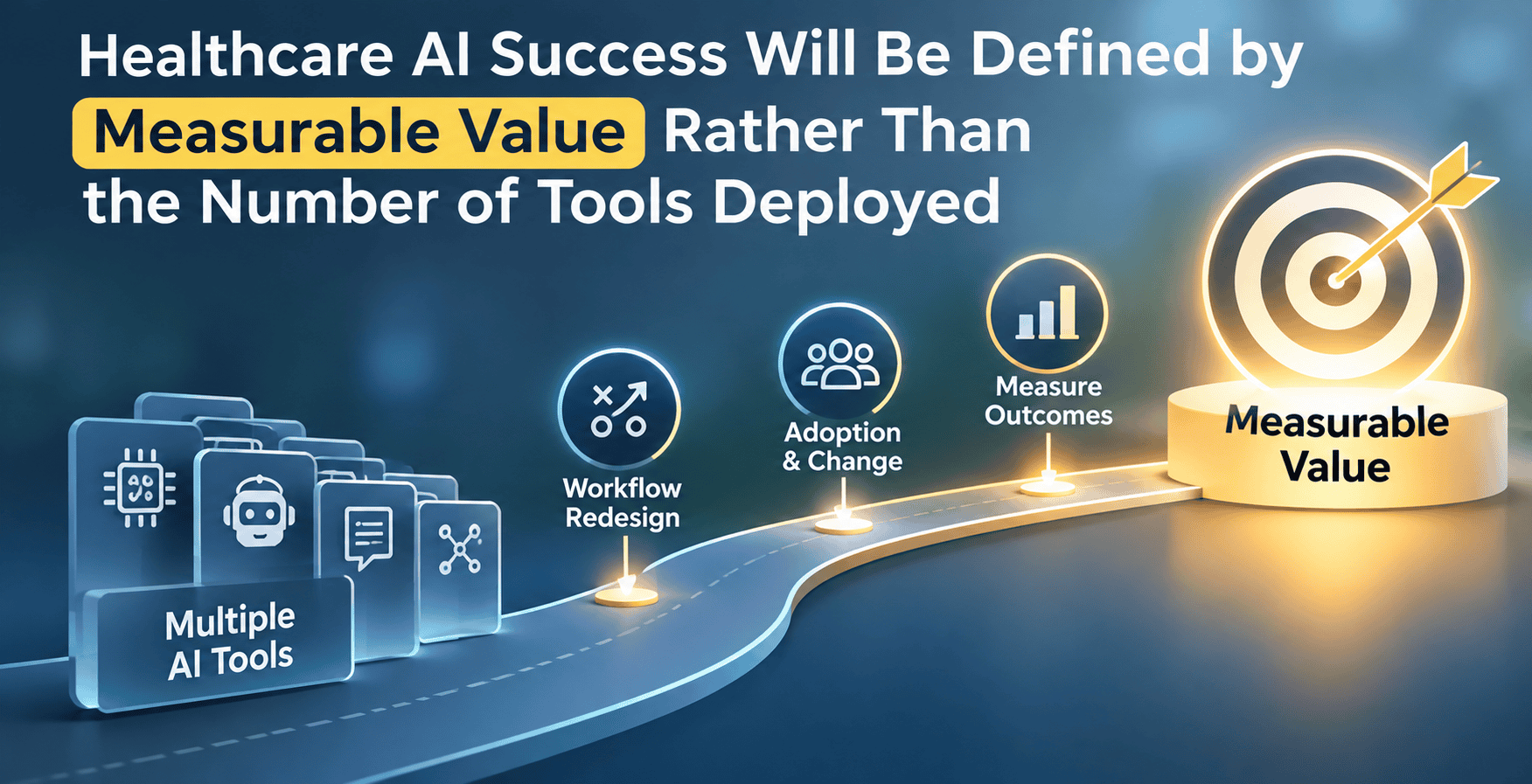
About the Hosts

Rohit Mahajan is an entrepreneur and a leader in the information technology and software industry. His focus lies in the field of artificial intelligence and digital transformation. He has also written a book on Quantum Care, A Deep Dive into AI for Health Delivery and Research that has been published and has been trending #1 in several categories on Amazon.​

Rohit is skilled in business and IT  strategy, M&A, Sales & Marketing and Global Delivery. He holds a bachelor’s degree in Electronics and Communications Engineering, is a  Wharton School Fellow and a graduate from the Harvard Business School. ​

​Rohit is the CEO of Damo, Managing Partner and CEO of BigRio, the President at Citadel Discovery, Advisor at CarTwin, Managing Partner at C2R Tech, and Founder at BetterLungs. He has completed executive education programs in AI in Business and Healthcare from MIT Sloan, MIT CSAIL and Harvard School of Public Health. He has completed  the Global Healthcare Leaders Program from Harvard Medical School.

Ritu M. Uberoy is a healthcare AI strategist, technology executive, educator, and author dedicated to advancing the responsible adoption of Artificial Intelligence across healthcare delivery, digital health, and life sciences. With more than twenty-five years of leadership experience spanning the United States and India, she is recognized for helping healthcare organizations move beyond experimentation to achieve scalable clinical, operational, and business transformation through AI.

She leads AI innovation initiatives, including the AI Center of Excellence at BigRio, where she works with health systems, healthcare technology companies, and life sciences organizations to operationalize Generative and Agentic AI solutions responsibly. Her work focuses on aligning AI innovation with clinical workflows, governance frameworks, workforce readiness, and patient trust—ensuring technology augments human judgment in high-consequence healthcare environments.

Ritu is the co-author of Generative AI: Unlocking the Next Chapter in Healthcare, a practical guide for healthcare executives navigating enterprise AI adoption. She also hosts The Big Unlock podcast, engaging global healthcare leaders on AI transformation and digital innovation. An active educator and speaker, she conducts executive workshops and participates in global forums like HIMSS, ViVE, Women in Tech, AI-Powered Women, RAISE, and more, shaping the future of AI-driven healthcare. Ritu holds advanced degrees in Computer Science and completed specialized AI programs at Harvard and MIT.

About the Legend

Paddy was the co-author of Healthcare Digital Transformation – How Consumerism, Technology and Pandemic are Accelerating the Future (Taylor &  Francis, Aug 2020), along with Edward W. Marx. Paddy was also the author of the best-selling book The Big Unlock – Harnessing Data and Growing Digital Health Businesses in a Value-based Care Era (Archway Publishing, 2017). He was the host of the highly subscribed The Big Unlock podcast on digital transformation in healthcare featuring C-level executives from the healthcare and technology sectors. He was widely published and had a by-lined column in CIO Magazine and other respected industry publications.

In the Age of AI, Healthcare Privacy Goes Beyond HIPAA

Season 7

Episode 233 - Podcast with Lucia C. Savage, Founder and CEO, Savage Healthcare Strategies
In the Age of AI, Healthcare Privacy Goes Beyond HIPAA

The Big Unlock
The Big Unlock
Episode 233 - In the Age of AI, Healthcare Privacy Goes Beyond HIPAA
Loading
/
Video video

In this episode, Lucia Savage, Founder and CEO of Savage Healthcare Strategies, examines how AI and consumer health technologies are challenging traditional approaches to healthcare privacy and regulation.

Lucia explains why HIPAA alone cannot address the evolving digital health landscape and how state privacy laws are expanding consumer protections. She emphasizes the importance of understanding the entire health data lifecycle, particularly as AI models introduce new risks around data reuse and re-identification.

The conversation explores patient consent, transparency in AI-enabled interactions, and the responsibility of developers to build appropriate safeguards into their solutions. Lucia also advocates empowering patients to use AI tools with guidance from healthcare professionals. Her message to healthcare leaders is that thoughtful regulation and responsible innovation can coexist, with privacy and trust becoming competitive advantages. Take a listen.

About Our Guest

Lucia C. Savage is a nationally-recognized expert on health care regulation, digital health and health information privacy. Using strategic advice to advance digital technology to deliver health care, she drives organizations’ health care innovation while helping them adhere to the highest standards for privacy, security, clinical fidelity, and patient safety. She retired from Omada Health, Inc. in March of 2026 after helping Omada go public (OMDA) in June 2025. She currently serves on the Boards of Directors of Tidepool, Inc., and Academy Health, and is an Advisor at Claimable, Inc. In April 2026 she launched Savage Healthcare Strategies, whose mission is to help innovators implement smart ideas to fix healthcare. Current work focuses on ensuring consumers can get their own data without special effort, and helping pre-seed through A round sized companies navigate the complexities of healthcare regulation.

Lucia is Rock Health’s 2021 “Top 50 in Digital Health” for her policy acumen and digital health advocacy, and is a contributing author to Amazon bestsellers “Mobile Medicine: Overcoming People, Culture and Governance,” and “Advanced Health Technology: Managing Risk While Tackling Barriers to Rapid Acceleration. She has testified before the United States Senate Committee on Health, Education, Labor and Pensions on health information interoperability and digital health, and published with colleagues on safe, responsible, and private use of individuals’ data to develop AI for healthcare.

Prior to joining Omada, she served the Obama Administration as Chief Privacy Officer at the U. S. Department of Health and Human Services Office of the National Coordinator for Health IT. Lucia has a B.A. with Honor from Mills College and received her Juris Doctor summa cum laude from New York University School of Law.


Ritu: Hi, listeners. Welcome to Season Seven of our Big Unlock Podcast. My name is Ritu M Uberoy, and I’m the managing partner here at Damo Consulting. I’ll be your host today for the Big Unlock. Today we are welcoming Lucia Savage to our podcast, and really happy to have her here. She’s a nationally recognized expert on healthcare regulation, digital health, and health information privacy. Using strategic advice to advance digital technology to deliver the highest healthcare, she drives the organization’s innovation while helping them adhere to the highest standards for privacy, security, clinical fidelity, and patient safety. She retired from Omada Health in March of 2026 after helping Omada go public in June, and she currently serves on the boards of directors of Tidepool Inc. and Academy Health and is an advisor at Claimable Inc. We are really excited to welcome Lucia to the podcast today because we are going to be talking about privacy, which is a really hot topic, and every other LinkedIn post is about privacy, security, and governance. So welcome, Lucia, to the podcast, and looking forward to a great discussion.

Lucia: Thanks so much for having me. I’m very excited to be here.

Ritu: Thank you. Would you like to add anything to that introduction I read out for you?

Lucia: No, I think we should just hop right in.

Ritu: Okay, great. Lucia, I think the first thing we need to discuss is what are these privacy rules that are applying to these consumer health apps versus the traditional healthcare companies? Because we’re seeing it firsthand — we’ve built a prototype of an application on Replit, and when we wanted to scale it, we thought, “Oh my god, this is not covered by any BAAs. What’s happening if we try to port it to another place?” We have the cloud, we have the place where we store the data, we have the Replit code itself. So talk to us a little bit about that. How are those models changing, and what are your thoughts on that?

Lucia: Sure. I’m going to take you down a little history path. From 2014 to 2016, I served in the Obama administration, and I was the chief privacy officer at the Office of the National Coordinator for Health IT. Now, that agency primarily writes rules for how the EHRs operate. But when Congress created HITECH and all the funding, they also created the chief privacy officer within ONC, whose specific obligation was advising ONC specifically and the agency generally about how to maintain privacy when we had even more digital data.

If you go even farther back in time, you’ll remember that HIPAA itself was a law about digitizing the claims data. The A is for accountability there. And at that time, Congress asked ONC to write a report about this problem, the state of how health information was regulated when it wasn’t within a HIPAA-covered entity. I’m not going to get into what HIPAA-covered entities are. There’s tons of information out there about that. And so we did. We published that report in 2016, so ten years ago — ten years ago July, so literally a decade. What we said was there’s some FTC law. There’s this thing called the Health Breach Notification Rule that Congress created that is about when you have a consumer application and there’s a breach of the data, what do you have to do? But there wasn’t really law specifically addressed at digital health information within states. There were obviously medical confidentiality laws, and those precede HIPAA by decades. Those are very old-fashioned, so your therapist and your doctor are specifically regulated.

Fast-forward ten years, and with repeated failures of Congress to do something nationwide that would address the problem of privacy outside of HIPAA-covered entities, states have taken action. Colorado was one of the first, but some of the more famous states here are, surprisingly, Texas, which has a very robust law. Washington State has a law called My Health My Data Act, which is specifically about health data. California has the California Consumer Privacy Act and multiple subsequent amendments. Ten years down the path, 23 states have these laws now that are about very particularized protections for consumers in the space where data is collected by a consumer-oriented app — a personal app that you download from the App Store that’s not from your health system. They also regulate things like data brokers and the whole data industry that’s happening behind the scenes with those apps.

The last thing I would say, it’s really important to understand the tech here, because Facebook famously doesn’t sell data. Facebook famously profiles you and sells an ad to you, but they actually are not selling the data. That’s not true of many companies — many, many companies actually have part of their business plan monetizing the data they’ve collected from people. It’s kind of buyer beware from the consumer side. HIPAA is a law that has incredible brand recognition and very little understanding. Everybody knows it. They know it so well they can misspell it with two Ps instead of two As, but they don’t really understand how it works. I wrote about this recently with Devin McGraw. It’s in Hospitalology. It’s very specifically designed for the problem of data being moved around within the traditional healthcare system. It’s not designed for other things, and we have that in the US. They have different methods in Europe and South America. But in America, we have what we call sectoral privacy, specific rules for specific economic sectors, so healthcare, education, et cetera. It’s not really designed to apply in the consumer setting.

I think the debate we’re going to see coming forward in Congress is whether we actually need congressional action at all, because we have these 23 states — and by the way, two years ago it was 17 states, so to add six states in two years is pretty remarkable. Some legislatures don’t even meet every year. Or we can look to our federalized system where states pick the laws that are right for them. For whatever you’ve done, the approach would be, and I’ll tie this up, you have to figure out what law applies to you in terms of where you’re incorporated and what your revenue is. That’s one trigger for these laws. And then you have to figure out where your users are. That’s why these Washington, Texas, and California laws are so remarkable — their users are everywhere. Texas and California are the two most populous states. When they do something and companies have to comply with that thing, it has this beneficial ripple effect everywhere.

Ritu: You’ve raised some very interesting points, Lucia, about HIPAA and this counterintuitive argument that we should not simply extend HIPAA to these consumer health apps because they’re now covered by these new privacy laws. But why do you believe consumers would actually have less control if HIPAA was extended, why isn’t HIPAA the right framework, and why should states have these different privacy laws to cover these consumer apps?

Lucia: Sure. Back on the history train. If you’re digitizing the claims data, which was the original intent, and you have a developing quality measurement infrastructure — remember the original HEDIS measures were based on simple math about claims. The example that I learned many years ago was if a physician has 100 women in their panel that are eligible for mammograms, did you get 100 mammogram claims? That’s a perfect score for a mammogram screening. So we always had this concept of using the data for more than just the simple act of payment, and that’s why HIPAA has all these specialized rules about what you can de-identify and what you can’t de-identify and also sharing between the covered entities. If you’re a hospital or a physician practice and the health plan needs to do their HEDIS measurements — HEDIS is a specific example in that early 2002 regulation. It’s right in there, H-E-D-I-S. So the plan was always to be able to do population-level analytics, always to be able to de-identify the data for research or take a lot of the identifiable information out of it and render a limited data set. That idea is part of what makes HIPAA appropriate for what it’s for, but it also has this side effect: it has this rule where the covered entity can allow somebody else to de-identify it, and there’s a standard for that, and then do whatever they want with it, because when it’s de-identified, it’s not protected by HIPAA anymore.

If you take that concept of de-identification and plunk it down in these state laws, the first thing you get is a conflict, because the state laws don’t typically allow that kind of de-identification without a person opting into that de-identification. That’s one problem. The second problem is the state laws have these other protective features, like delete my data. You’re not allowed to ask a covered entity to delete your data. But you are allowed to ask a consumer app that’s regulated by one of these laws to delete your data. From my perspective, I think delete your data is a pretty strong right. I’ve exercised it myself in California with the creepy unauthorized ambient scribes that show up on your Zoom calls. We’ve all had that experience. I say, “Delete my data.” You get a back and forth, and finally they realize they couldn’t have emailed you the transcript if they didn’t have your email, and you get your data deleted. But we don’t have that right in healthcare. If you go to a doctor’s office and you have one appointment, and it turns out that’s not the right doctor for you and they have to refer you to somebody else, you can’t say, “Please delete my data.” That’s a medical record of the doctor. It’s about their practice. They need to keep it for various other documentary reasons, and you can’t have it deleted. So that’s a really big difference in the rights.

Ritu: I think you’ve spotlighted a really good example about what HIPAA was originally designed for, which was a healthcare system where we could reasonably identify the provider, the payer, the patient, and the business associate. But now with generative AI, these clinical interactions are potentially involving multiple things which we talked about — the EHR, the cloud provider, an AI model, ambient, the third-party data sources, multiple downstream agents. So I guess what we’re realizing is that this architecture is exposing a fundamental limitation in the way we are currently regulating this health data. Do you think these organizations need to start governing the life cycle of the entire data rather than simply the type of organization that’s holding it?

Lucia: Having been the privacy officer in a digital health company where the complete operations are 100% digital, with a fully digital stack and a large engineering team, I can tell you that you can’t do that job and comply with the law unless you understand the complete data flow. The right way to do this when you’re advising a company, even if you’re just the CISO, is to ask what is the data, and follow its chain of custody until it becomes unregulated data. That’s one thing. And people are just careless about that. That’s how we get into this world where they don’t realize that their pixels are feeding data back to Facebook. There’s lots of litigation about that for the tracker technology. They don’t realize that they haven’t negotiated terms with their LLM developer to prevent the LLM from reusing that data for learning, which would be really important if you were doing a deal with Anthropic or OpenAI. They don’t do the full process, and the full process is the right way to do this.

The other thing I would say is that there are rules that are, I’m going to say, left lying on the table is the simplest way to put it. For example, in HIPAA, when you give somebody a de-identified data set, or you can sell it to them for the cost of data prep, so that’s kind of a blank check, you’re supposed to contractually require that they not re-identify it. You’ll see that as language in all the agreements. But I’ve been doing this 30 years since HIPAA was passed, and I’ve never heard of a single lawsuit for somebody breaching a BAA because they re-identified the data. And with AI, we have to admit that re-identification is a lot easier. When you take a large data set from a health system, it’s legally de-identified, it goes over to biopharma, they start adding other information to it, their AI gets a hold of it, and pretty soon, predictively, they know it’s you and they know it’s me. You’re not supposed to do that. As I look ahead, I’m thinking, when is that going to show up in court? Because it will show up in court. The plaintiffs’ lawyers have gotten really smart about this.

Ritu: Transparency and honesty are fundamental to deploying AI responsibly in healthcare. But what does this transparency actually look like for a patient? You’re mentioning these LLMs and these systems and this AI which can do so much, and if the AI is summarizing their chart, it’s actually influencing what the clinician sees. Should we be asking for consent for every AI-enabled interaction? But then won’t it become extremely burdensome? Like you mentioned the ambient where the data is going from one doctor to the other, or when you get a referral, how does that work?

Lucia: Ambient scribes are a great situation. I’m a patient in the Kaiser system here in northern California, so best health system in the country, yay me, and they use ambient scribes. When I go to the doctor, I get asked, “Do you mind if I record this?” It’s an oral consent, and they record what I’ve said. It takes like 15 seconds. I didn’t have questions about what recording meant. And you can capture it orally; it doesn’t require paperwork. All that’s in the regulations. The actual process of asking, to me, fosters patient engagement and fosters trust. My doctor is looking out for me because they’re asking me this question. And then of course the health system has some obligation to make sure that recording is handled in the right way, and I think there are many issues at the granular level to be sorted out. For example, there are scribe companies, and I understand that they don’t retain the recordings. Well, if you’re a malpractice attorney, wouldn’t you want to see the raw recording instead of the transcript? If you’re really trying to get to what went on. By the way, I’ve been in healthcare a long time, and in the ’70s and ’80s, doctors dictated onto a microcassette, shipped the microcassette off to a transcriptionist, and a transcript was offered. But if you were representing that doctor in a lawsuit, you had in your evidence pile the actual microcassette, so you could check the original. That’s a thing that will just get sorted out over time.

I also think there are other things. Within these state laws, not only have some states taken an activist approach to privacy, but they’re also taking an activist approach to AI. For example, there are some states that require that you tell the patient, not just through a watermark, but when they’re interacting with an AI. In California, you’re supposed to tell people, and it’s not just a healthcare rule, it’s an AI rule. If you’re on the phone and it’s an ambient voice chatbot, you’re supposed to know as a consumer that it’s an AI. And I’m not in the bowels of dozens and dozens of companies, but when you look at what companies are developing versus what seems to be emerging law that is then regulating them, some of those things make me ask: why did you do that thing? Because we didn’t need that law, and you did a thing badly, and now we have a new law to deal with. So there’s a measure of responsibility. A really responsible developer will figure out how to do it with adherence to the law, but with the new technology. A lot of the law, particularly HIPAA, but other law as well, is a little bit technologically neutral. Here’s a really great example. We know already in healthcare that only humans can get licenses. We know that’s how the law works. So why would you not train your AI to guardrail against asserting that it’s a human or that it’s a licensed professional? I’m using that term technically, I think I’m using it properly. For example, if you were building a nutrition education AI, you might train it to say, “I’m not a dietician, but here’s what I understand from reading dietetic literature.” But we don’t have that. We have companies that build AIs that say, “Well, as your therapist…” And so now we have another layer of laws saying thou shalt not let your AI assert that it’s a licensed professional. We kind of didn’t need that, but we got it anyway. If we don’t plan our development with full spectrum consideration of the environment, then we actually get more barriers to innovation.

Ritu: I think both your points are very good. The point about going back to the original recording is so important, especially because of AI hallucinations. As we’ve read so many times, physicians are not saving that much time on ambient. I read the most recent study, which said 16 minutes per day because they still have to review the transcripts and make sure there are no errors in there, nothing unintentional has crept in. Those things can still happen because AI does hallucinate. If you don’t have the original recording, then what makes that true? And the second point, asserting that it’s an AI bot and not pretending to be a licensed therapist, which a lot of the mental health companies are facing flak for, because that’s how they develop dependency — they are trying to take the place of the therapist or saying they’re almost like a therapist. So we can switch tracks a little bit, Lucia. We’re always interested in an origin story. Tell us how you got into this field of healthcare and data privacy. You said you’ve been here for 30 years, so we would love to hear what the original motivation was and how you got started.

Lucia: Well, my one-liner is I’ve been practicing law since before Al Gore invented the internet. I got my license in 1989. It’s an interesting story. My early career was litigating employee benefits. This is before HIPAA was even a law. But we have this other law, ERISA, that gives people certain rights to due process and fairness in the way their employee benefits are supplied, and there are also informational rights embedded in there. I had a little subspecialty in my firm of long-term disability claims, which are all about how sick are you. At that time, interestingly, we had chronic fatigue, and now we know it’s virally caused, but in 1992 we did not know that. We had a lot of litigation where my clients’ disability was being cut short because chronic fatigue was deemed psychosomatic, in air quotes, and we had to come up with a medical strategy to prove it wasn’t psychosomatic in a time when there wasn’t appropriate science. Then I got pregnant with my second kid and realized that my husband is also a courtroom lawyer, and that was unsustainable. Two kids in not-law-firm jobs, just unsustainable.

So I took a position at Stanford University, where I worked half-time for eight years, and I was there when HIPAA was passed. It was also that first Silicon Valley bubble, 1995 to 2003, and most of the ERISA professionals at that time were really involved in deferred compensation, stock plans, that kind of thing. But I was there watching not only the first Silicon Valley bubble, but the very first modern pendular swing against managed care. We had HMOs failing. We had really crude prior authorizations. People were getting deprived of care. Many of the stories of the last three years are like, “Oh, I think I heard that story in 1994.” I got very interested in the problem of healthcare as a legal problem. You can’t solve the legal problems without understanding the public policy and the economics. And then you have to learn a little bit of the science as well.

So I got an opportunity in 2003 to go work full time at Pacific Business Group on Health, which is now the purchaser Business Group on Health, where I was general counsel for five years. That was a great launchpad. HIPAA was brand new. We were building out quality measurements, so really understanding those tools within HIPAA for population health studies, really trying to help the large purchasers understand the new rules and how they could take advantage of them in their planning for their employees. We also, at that time, ran a small group purchasing pool for the State of California, which in many ways is the foundation model for the Affordable Care Act exchanges. I was general counsel for that. We had to close the exchange because it was in a death spiral. It’s a long, separate story, and I can give you some articles other people wrote about it for your show notes.

I went from there to UnitedHealthcare. My job at United was 100% supporting United’s planning for what was emerging to be health information exchange — e-prescribing, health information exchange, medical home, supported by digital infrastructure, data back and forth between United and the physician practices. I worked there for six and a half years. My husband’s job moved to DC, and I was in DC, and Joy Pritts, the first chief privacy officer at ONC, had just left. I was talking to some friends, and my friend said, “Would you like that job?” I said, “I would love that job.” And the rest is history. Obviously that was a political appointment back then, so my job ended in January of 2017, and I started at Omada shortly after that.

Ritu: Thank you for sharing that. That’s always so interesting to hear, the different ways people got to where they are. With all your experience in healthcare over these three decades, tell us about the top three regulatory issues in healthcare innovation that confuse people.

Lucia: Well, we spent a lot of time talking about HIPAA versus health apps. The second thing, which is related, is that we can have a lot of policy and legal debates about what we need to do to make healthcare have better outcomes for less cost — that’s what we’ve been trying to do for a long time. But within that is the role of the patient. If we really want patients to take charge of their own health, we have to support their use of these tools. Now, I’m not an “ask ChatGPT about my health” person. Luckily, I’m very healthy. I don’t manage a chronic condition. But I support people who do that because they are getting the help they need from a place that works for them. They could be asking their doctor neighbor, their nurse neighbor, a child, whatever. We can’t just treat the patient as a place that professionals give information to. We have to treat it as an interactive conversation so patients are managing their health, about everything from high blood pressure and what you eat, to how much you exercise, to a complicated disease like cancer. I have a friend who is a many, many years survivor of stage four cancer, and she’s learned to read the scientific journals because she wants to read about where the science is going. We have to support that, and that means the healthcare professional infrastructure needs to support it. We need to give patients their data. We need to accept the fact that they’re going to use AI.

I saw on LinkedIn, somebody said, I think it was Graham Walker, but I’m not sure, “If you really want this, you should spend some time creating a catalog for the patients in your practice of the prompts they should use with AI, or help them figure out how to prompt AI.” Even if it was just a doctor making one YouTube video that would then be available for people. Imagine if it was an endocrinologist or a urologist, one of these really complicated specialties — I’m not saying primary care isn’t complicated, I’m saying it’s general, but something really specific. That would be so helpful for patients to know how to use these tools. I have a lot of doctor friends, and they say, “I don’t have time. I don’t get paid for that.” There’s actually a CPT code for teaching your patient about online tools. Whether your insurance company will process it, I don’t know, but there is a code. So that’s two. And three, to me, healthcare is such a liberty issue. People approach it really differently, everything from Seventh-day Adventists to hypochondriacs. We really need to trust the science and let adult patients figure things out for themselves. We’re getting there, but I think people’s personal values spill over into other people’s healthcare in a way that probably isn’t helpful.

Ritu: I loved the second point you made. I was talking to one of the C-suite leaders the other day, and it’s almost like patients are coming to the doctors for a second opinion because they’ve done so much research at home, they’ve prepared themselves, they know what questions to ask. When they’re actually coming to the physician, they’re so much better prepared, and they’re actually validating—

Lucia: Right, but it’s just an iteration on Dr. Google, though. I know Dr. Google is really annoying for some doctors. I get that. I’ve heard that. But it is kind of an iteration on that.

Ritu: True. It’s because everyone’s doing it individualistically, without the guidance which you mentioned or any standard prompts or standard guidance from the doctors. So people are just doing the best they can and using the system the best they can and hoping to find something.

Lucia: Right, and the developers — I understand this approach — are just putting it on the table and letting people use it, because maybe they’re worried that if they give more direction on an effective way to use a Claude or an OpenAI for healthcare, they’ll end up doing what they’re not supposed to do, which is providing healthcare. There’s a little bit of tension there about how we empower the patient to be smarter about the information they’re getting while at the same time maintaining whatever swim lanes we decide as a society are right for who gets to supply diagnostics and treatment.

Ritu: As usual, the time has flown by, and we’re almost at the end of the podcast. I think we can close with a general prediction. With your decades of experience, what do you feel? Innovation is moving so much faster in healthcare. Regulation is having a hard time keeping up. AI systems are now changing after deployment, which usually didn’t happen before. So traditional entities like HIPAA and these other regulatory bodies are having a tough time. From all your decades of experience, what are you optimistic about, and what are some of the good things we can take into the future, and which are some things you would happily see change completely for the better?

Lucia: Well, I do think there is a lot of savings in the baseline cost of healthcare administration to be had with AI, and I think there probably will be job displacements because of that, and I’m not even talking about the clinical uses. I think AI in healthcare is here to stay. But I also think a lot of people have their hair on fire because AI in healthcare is unregulated. I personally don’t think that’s true. I think there are a lot of laws, and who can be a licensed professional is just one example. The secret of a good lawyer is looking at old law and new facts and trying to figure out if they fit together, if you can analogize. That’s why I said cassette tape equals ambient scribe. That’s a good analogy. That’s what a really creative lawyer will do for you. You can look at all the healthcare laws and think about that. The laws prohibit double billing and fraudulent billing and up-coding. All of that is already prohibited in law. So your AI shouldn’t do that. We’re in this place where there’s kind of a race to up-code and to find the up-coding, and that’ll sort itself out. So I have a lot of hope for innovation, but my experience at Omada and at ONC, and even before that, was: do it the right way and you will succeed. That right way can actually be a moat. Nobody should want to aspire to be the company that has a giant launch and then a giant liability because they did it wrong. A giant check you have to write to whoever it is. Flo is a great example. Flo did a couple things wrong, and every conversation I have about health information privacy mentions Flo in a negative way. Is that the branding you want? I don’t know.

Ritu: Great. Thank you so much, Lucia. I think it’s been very enlightening, and thank you for educating our listeners. It was a pleasure to have you on the podcast today.

Lucia: Thank you for having me, Ritu. Happy to come on again. We’re at a very important time in healthcare, and we all have to be creative, but be thoughtful.

Ritu: Thank you so much.

—

Subscribe to our podcast series at https://thebigunlock.com/ and write us at info@thebigunlock.com    

Disclaimer: This Q&A has been derived from the podcast transcript and has been edited for readability and clarity.
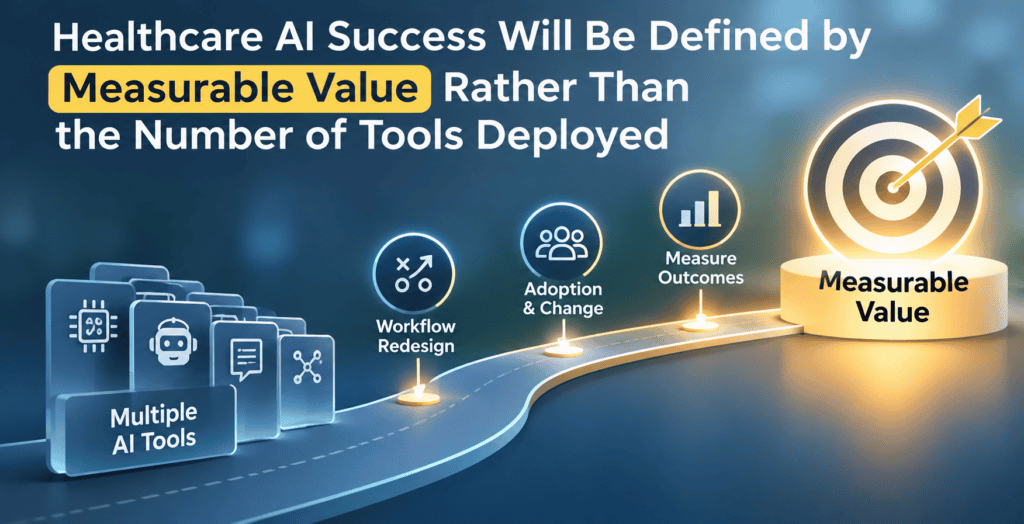
About the Host

Ritu M. Uberoy is a healthcare AI strategist, technology executive, educator, and author dedicated to advancing the responsible adoption of Artificial Intelligence across healthcare delivery, digital health, and life sciences. With more than twenty-five years of leadership experience spanning the United States and India, she is recognized for helping healthcare organizations move beyond experimentation to achieve scalable clinical, operational, and business transformation through AI.

She leads AI innovation initiatives, including the AI Center of Excellence at BigRio, where she works with health systems, healthcare technology companies, and life sciences organizations to operationalize Generative and Agentic AI solutions responsibly. Her work focuses on aligning AI innovation with clinical workflows, governance frameworks, workforce readiness, and patient trust—ensuring technology augments human judgment in high-consequence healthcare environments.

Ritu is the co-author of Generative AI: Unlocking the Next Chapter in Healthcare, a practical guide for healthcare executives navigating enterprise AI adoption. She also hosts The Big Unlock podcast, engaging global healthcare leaders on AI transformation and digital innovation. An active educator and speaker, she conducts executive workshops and participates in global forums like HIMSS, ViVE, Women in Tech, AI-Powered Women, RAISE, and more, shaping the future of AI-driven healthcare. Ritu holds advanced degrees in Computer Science and completed specialized AI programs at Harvard and MIT.

About the Legend

Paddy was the co-author of Healthcare Digital Transformation – How Consumerism, Technology and Pandemic are Accelerating the Future (Taylor &  Francis, Aug 2020), along with Edward W. Marx. Paddy was also the author of the best-selling book The Big Unlock – Harnessing Data and Growing Digital Health Businesses in a Value-based Care Era (Archway Publishing, 2017). He was the host of the highly subscribed The Big Unlock podcast on digital transformation in healthcare featuring C-level executives from the healthcare and technology sectors. He was widely published and had a by-lined column in CIO Magazine and other respected industry publications.

The Healthcare Digital Transformation Leader

Stay informed on the latest in digital health innovation and digital transformation.

The Healthcare Digital Transformation Leader

Stay informed on the latest in digital health innovation and digital transformation

The Healthcare Digital Transformation Leader

Stay informed on the latest in digital health innovation and digital transformation.