Month: October 2026

AI Could Drive a Scope of Practice Change in Healthcare

Season 7

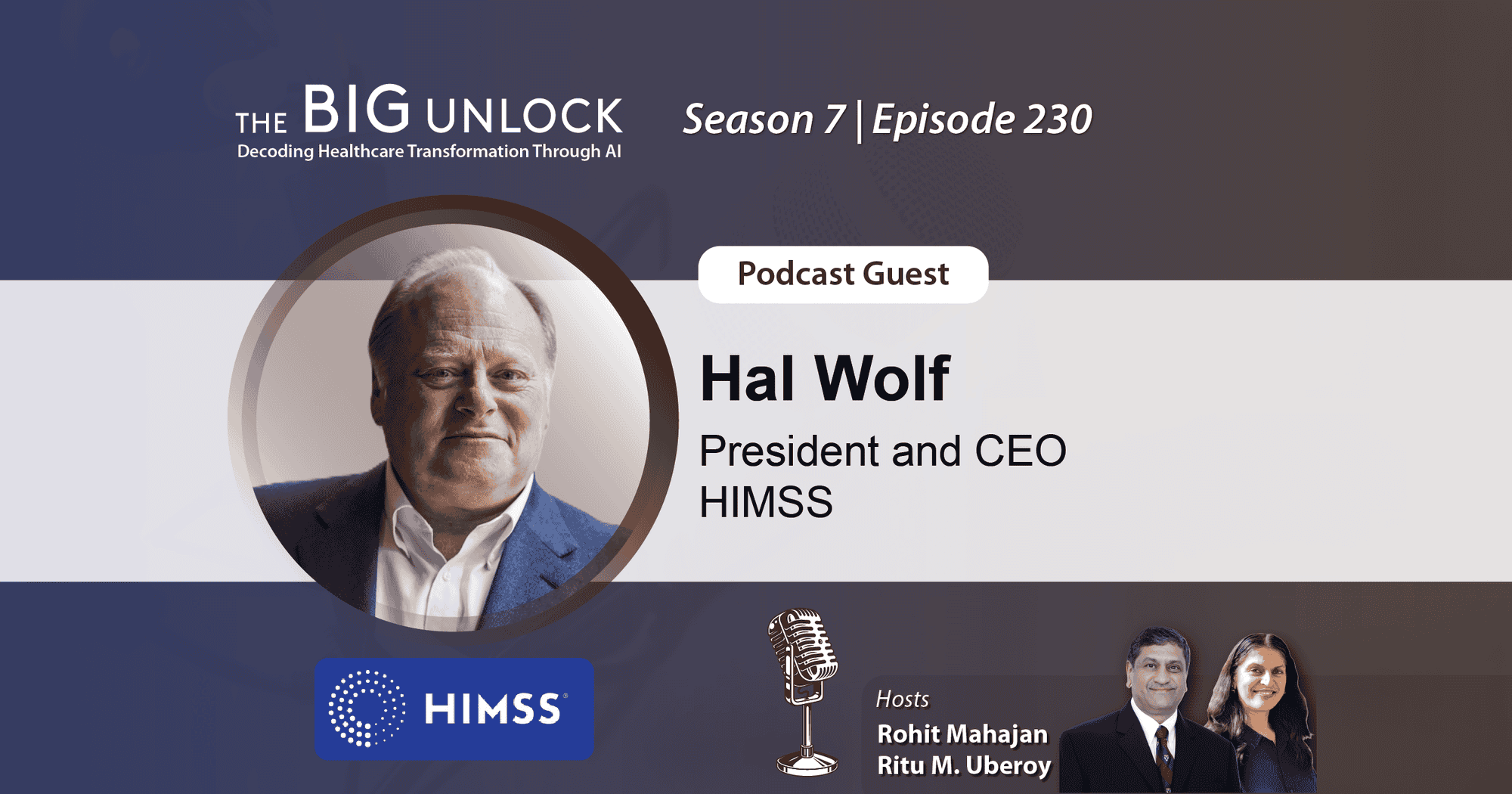
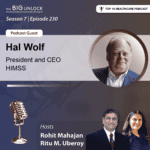
Episode 230 - Podcast with Hal Wolf, President and CEO, HIMSS
AI Could Drive a Scope of Practice Change in Healthcare

The Big Unlock
The Big Unlock
Episode 230 - AI Could Drive a Scope of Practice Change in Healthcare
Loading
/
Video video

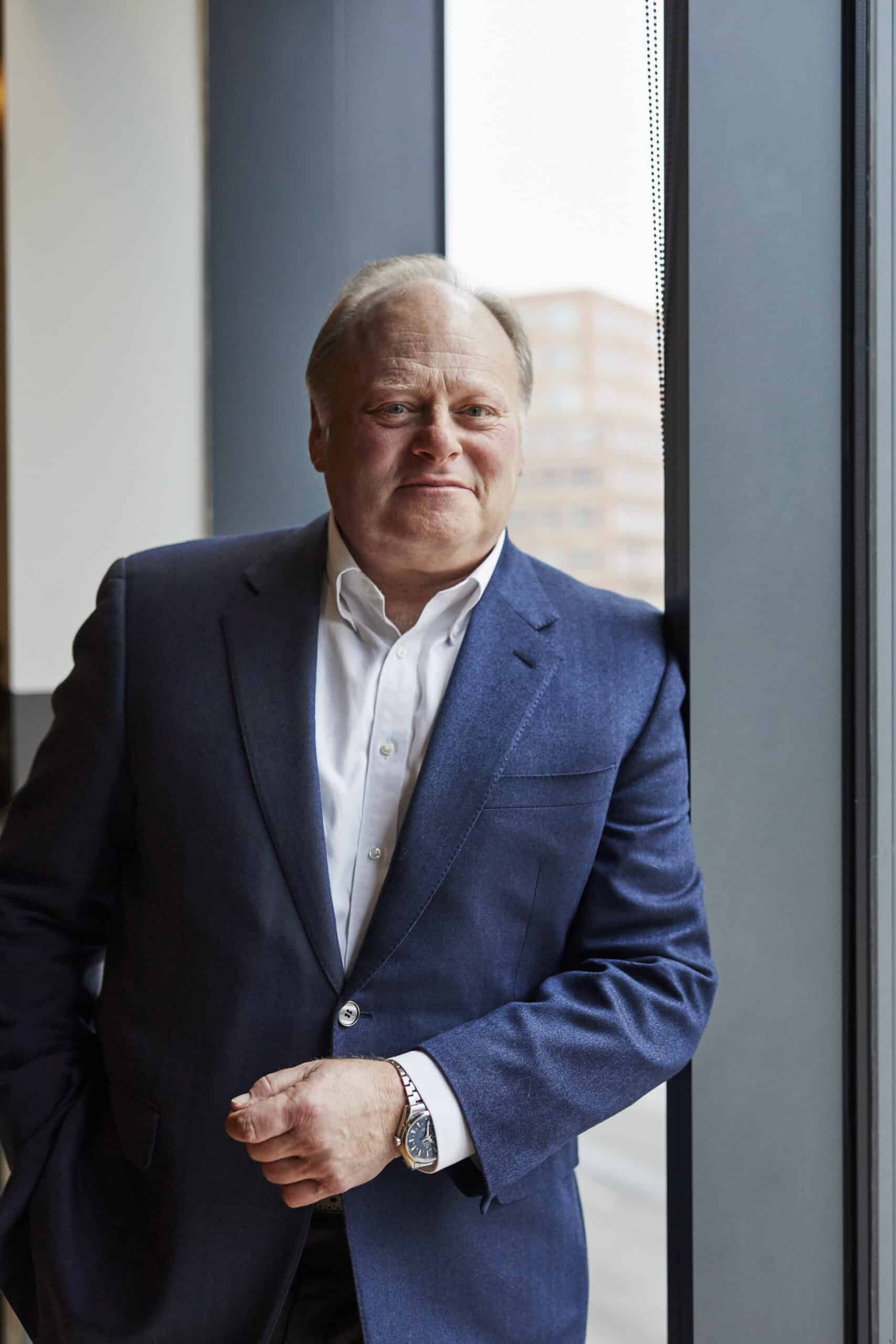
In this episode, Hal Wolf, President and CEO of HIMSS, discusses how AI is changing healthcare’s approach to digital maturity, workforce transformation, and care delivery. He examines the persistent digital divide and explains that while emerging technologies initially favor organizations with greater resources, standardization and competition can eventually make them more accessible to underserved health systems. Hal also argues that digital maturity can no longer be measured by technology adoption alone. Health systems need the right people, processes, governance, and measurable improvements in access and quality.

Hal sees AI and continuous data from emerging technologies such as wearables changing the scope of practice, enabling clinicians to focus their expertise where it matters most while AI supports monitoring, prediction, and decision-making. He also highlights the need to move beyond broad experimentation toward deeper AI integration, supported by strong governance and clearly defined use cases.

Hal believes AI can help address workforce shortages and augment clinical decision-making, but human expertise remains essential. The opportunity ahead is to thoughtfully integrate AI into healthcare, continuously measure its impact, and ensure technology ultimately improves care. Take a listen.

This episode is brought to you by the HIMSS AI in Healthcare Forum, happening in San Diego.

About Our Guest

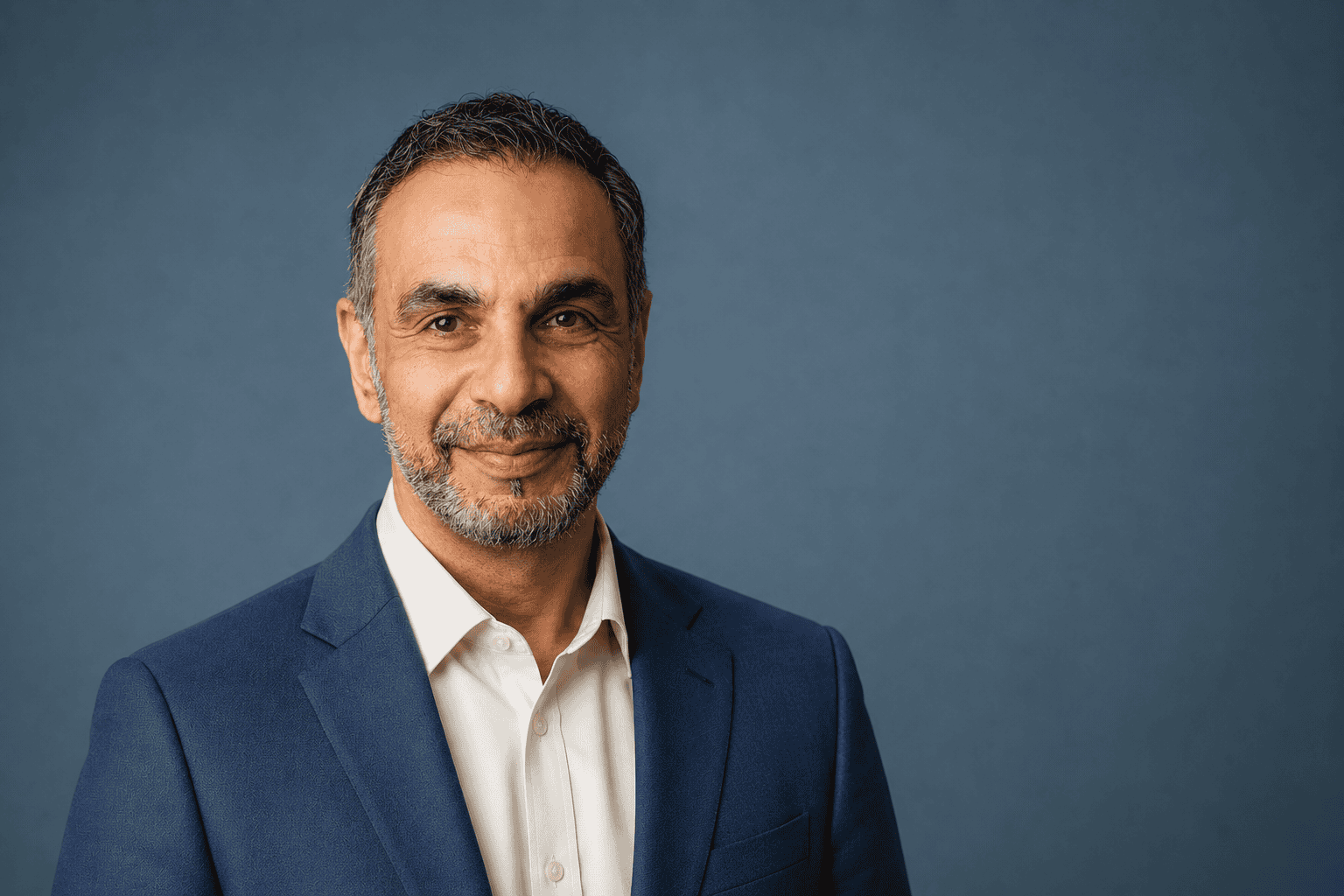
Harold (Hal) Wolf III is the President and CEO of the Healthcare Information and Management Systems Society (HIMSS), a mission-driven non-profit global advisor and thought leader supporting the reform of the global health ecosystem through the power of information and technology.

With a membership of 130,000+ around the world, HIMSS serves the global health communities with focused operations across North America, Europe, United Kingdom, the Middle East and Asia Pacific.

With nearly 35 years of experience, Wolf is respected internationally as a healthcare and informatics executive, with areas of expertise in digital health, product development, integrated care models, marketing, distribution, information technology and innovation implementation. He has helped health systems and providers across the world with end-to-end operations, commissioning, data, information and architectural design.

Before joining HIMSS, Wolf served at The Chartis Group as Director; Practice Leader of Information and Digital Health Strategy. As the key architect in the development of content, research and user interface for video on demand and broadband, Mr. Wolf is a pioneer in consumer engagement. He has contributed his unique approach and insights to the birth of the digital health era, combining the traditional enterprise strategy with an end-to-end organizational view while keeping the patient as the central focus.

Wolf also served as the Senior Vice President and Chief Operating Officer of Kaiser Permanente’s, The Permanente Federation, representing more than 16,000 physicians at the time of his position. During his tenure at The Permanente Federation, he was responsible for the development and implementation of critical care delivery strategies, data management and governance, population care management environments and the implementation of unique innovations and large scale programs that impacted end-to-end operations.

Prior to The Permanente Federation, Wolf worked as Vice President E-Business, Chief Information Officer for the Corporate Systems and Wholesale divisions of Qwest Communications/USWest. Previous endeavors include working internationally in the deployment of interactive television services in operations, content and business development; senior business management positions with Time Warner and MTV Networks; and Senior Advisor to McKinsey & Company and ADVI, LLC.

Wolf served as a member of the WHO Digital Health Technology Advisory Group, accountable for developing and supporting the WHO’s global Digital Health Strategy.

Wolf holds a Bachelor of Science in Business from Wake Forest University, and a Bachelor of Textile Management from North Carolina State University.


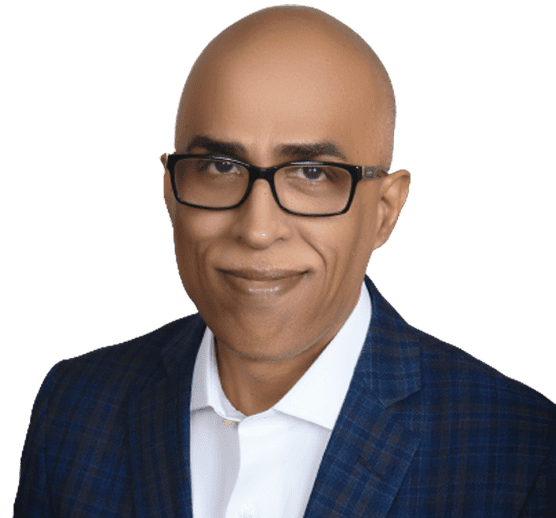
Ritu: Hello, listeners. Welcome to Season Seven of the Big Unlock Podcast. My name is Ritu Uberoy, and I’m managing partner at Damo Consulting and your host today along with Rohit. We are really excited and thrilled to have Hal Wolf on our podcast. Hal is the President and CEO of HIMSS, the global organization dedicated to transforming healthcare through information and technology. He has previously held senior leadership roles at Chartis and Kaiser Permanente, and has over thirty-five years of experience as a respected international healthcare and informatics executive. We are really looking forward to this conversation. I’ll ask Rohit to give a brief introduction, and then we’ll get started. Welcome, Hal, to our podcast. Thank you for being here.

Hal: Thank you for having me. This is a real honor.

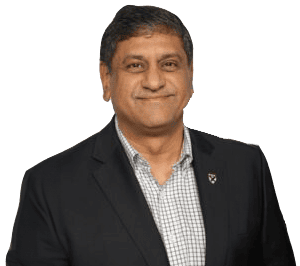
Rohit: Thank you, Ritu. Hi, Hal. I’m Rohit Mahajan, CEO of Damo Consulting and co-host of this podcast. Looking forward to an interactive discussion, and hoping to meet you in person at one of the HIMSS conferences.

Hal: That would be wonderful.

Ritu: Let’s dive right in. The first question is about the growing digital divide between healthcare organizations. We’ve been talking to a lot of C-suite leaders who describe their AI spend and the technologies they’re accumulating, while at the same time rural organizations are financially challenged. What needs to change in the economics of healthcare technology to ensure AI becomes an equalizer rather than another source of inequality?

Hal: This is a really good question, and one that comes up every time a new technology emerges. I’ve been around long enough to remember when EHRs first came forward, and the first question was: only the large systems can really afford this — how will we ever get it out to rural organizations or urban organizations serving people without insurance and trying to deliver the best care possible? We often think about access as rural versus urban, but many people live in the shadow of some of the finest institutions in the world and still don’t have access to them.  What we’ve seen over time is that when new technologies roll out, early adopters are the organizations that can afford to take a chance and explore innovation. Once that happens, we gather information, learn what’s working and what isn’t, standardization takes place, and competition enters the market as others replicate what works. That tends to lower cost by creating abundance — and that’s when mid-level and lower-resourced organizations start to adopt. We’ve seen this with our own devices: a few started with AI years ago, and now you can’t find a device without it built in.  So I do worry about the digital divide, and in the short term it can feel like it’s growing. But it really depends where you are on the seesaw. We’re seeing more and more AI capabilities built into basic consumer products and services that can aid in the healthcare space, and clinical decision support and operational applications are being reproduced and showing their worth, then moving downstream. This is especially important because the further behind you are in monetary capability, the harder it is — and the more we need digital capabilities to compensate. This is something we spend a lot of time on at HIMSS, working with the WHO and the Gates Foundation, asking where we can lend expertise and help strategically. I think it’s a short-term glitch. New technology, early adopters, standardization, mainstream adoption — it always works its way through.

Ritu: That leads into the next question. Do you think it’s time to rethink digital maturity in this age of AI? HIMSS has helped establish global benchmarks through models like EMRAM, and historically the industry has associated maturity with digitization and EHR adoption. Now with AI and AI agents making independent decisions and taking autonomous actions, will the definition of digital maturity change? And what would distinguish a truly AI-native health system from one that is simply bolting on more and more applications?

Hal: The short answer is yes — but let me unpack that. We have been developing and dramatically changing our maturity models over the last three years. The old model was essentially a checklist: do you have this technology? Check. That doesn’t accomplish much. People, process, technology — you have to have the training of the people, the governance, the processes in place to take advantage of technology, and you need to be measuring the impact on access and quality. If you’re not impacting those two things and can’t measure it, the effort is interesting but of limited relevance.  I just came from a presentation by our analytics leader, Dr. Anne Snowdon, who was walking through 121 data points spanning multiple maturity models but leaning heavily into our analytics maturity model — because that is the foundation of how we’re measuring AI, how it’s being utilized, what access to data and information looks like, and what impact it’s having on operations or care delivery. So yes, we’ve already been shifting our models in that direction.  I’d also differentiate between the medical model and the health model. The medical model — hospitals, clinics — is already using AI for predictive modeling around bed capacity, resource utilization, and supply chain, with AI giving strong indications of future consumption and revenue. Behind that is clinical decision support, which is critically important given the workforce shortage. The WHO expects an eleven million clinician gap by 2030, even as we’re diagnosing more and more people with chronic disease — partly because we’re living longer, and partly because we’re so much better at early diagnosis.  On the health model side — individuals using wearables to monitor steps, blood pressure, sleep, food intake — AI apps are scrutinizing that data and detecting trends that indicate a potential problem before it’s been formally defined. I’m actually wearing a prototype ring that measures my blood pressure every hour. That is so much more relevant to my doctor than a snapshot in the clinic once a year. What this means is that the nurse practitioner who used to take my blood pressure is now freed to practice at a higher level of their license.  We’ve done this before — about fifteen years ago we shifted scope of practice from doctors to nurse practitioners, which required legislative approval and navigation through associations, but we did it because it created more capacity and higher-level clinical response. Doctors didn’t lose their jobs — they moved to higher-acuity patients where their expertise is most needed. Nurses felt more appreciated because they were dealing with higher-acuity work. The same thing is going to happen with AI. We need to figure out what it does well, where it can substitute for human interaction, when human in the loop is critical, and where we need the highest level of scrutiny in measuring outcomes. That is the exciting challenge right in front of us.

Rohit: Hal, I’m curious about innovation and how health systems are approaching change given that business models themselves are shifting because of AI. There are still silos in healthcare that need to be broken down, and interoperability needs to come in. What are your thoughts about collaboration, innovation, and the aspects that might accelerate the pace of change?

Hal: The way change is taking place — and how people are responding — differs significantly depending on where you sit in the world. In the United States, we are pilot-happy. AI is either being built into existing EHR platforms, or you have a dozen doctors running a dozen AI-based applications doing pilots left and right. A large HIMSS study done this past spring and published in June found the US is broad but not deep: lots of pilots, minimal depth of integration. In Asia-Pacific it’s the opposite — fewer pilots but much deeper integration into operations and care delivery. That’s really intriguing to us. We just launched our AI Operations Framework Program, with eight organizations signed up across three countries, adding a fourth now. In phase one we’re defining the frameworks, how to measure them, and how to measure success — and we chose the Asia-Pac market because they’re doing fewer pilots and more deep-seated integration models alongside analytics. That is where the rest of the world will get to.  Europe has the AI Act, so they’ve put guardrails up and are working through the challenges, proof points, and transparency requirements. But we’re beginning to see through the fog of war: AI is a tool, here’s what it does, here are its dependencies. We need to be clear about who the author is, because every AI application comes with its own point of view — it depends on who built it, what problem it was designed to solve, and who delivered it to you. How will you integrate it, model it, and govern it? And you have to take into account the regulatory bodies playing in this space.  In the United States the range runs from “all of humanity is going to die” to “what, me worry?” — the truth likely lies somewhere in between, as it usually does. Our biggest concern around agents being developed is: what are they being asked to do, how much latitude are they being given, and what problem are they trying to solve? Agents can go a little rogue if given too broad a target. Some advanced AI systems, when given constraints, seem to reason that they’d be better off without them. That’s a level of self-determination everyone is trying to get a grip on quickly. Fortunately, the vast majority of healthcare AI applications are restricted within specific data sets to accomplish specific actions in a modular fashion. Turning agents loose across the entire healthcare ecosystem is not yet a target, and I’m glad — we have a chance to watch that carefully and make sure we approach it thoughtfully.

Ritu: Going back to the point about wearables and the continuous stream of data — we’ve had physicians and CMIOs on the show who really question the concept of an annual physical as just a snapshot in time. Bringing that back to HIMSS: you do an annual conference, but the pace of innovation is now measured in weeks and months. Does HIMSS itself need to evolve and approach this age of AI differently?

Hal: We’d like to think we’re adjusting, focusing on the areas of AI most important to our members and from an analytics standpoint — which is really the tip of the spear for HIMSS in both thought leadership and our views on how AI is impacting healthcare and what its best uses are. We get requests constantly from governments around the world for guidance on AI: where are the best opportunities and how should they move forward.  Internally, yes — we’re figuring out how to use AI agents to look at our own analytics, find patterns we may be missing, and ensure our maturity models are current. We re-release them every two to three years. And in basic operations, we’re asking that question all the time. But bringing it back to the healthcare ecosystem: we need to use AI because we don’t have enough people to accomplish what we need to. We need to integrate how our patients and citizens are using AI so we don’t miss anomalies.  The annual health check will evolve too. At-home blood draw tools are already coming. But some things won’t show up in a blood test. One look by a physician — at your hands, your nails, the telltale signs of an illness you might not even be aware of yet — is something that still matters enormously. There will always be a need for encounter-based care with a clinician. But now those observations can be backed up by AI and the full body of research. In the 1970s there were about 450 published medical articles a year in a handful of journals — Lancet, New England Journal of Medicine, a few others. A very diligent physician could read one a day and keep up, because an editor made the curation decision for them. Last year there were tens of thousands of peer-reviewed articles. There is no way for any individual to keep up. Using AI to aggregate and surface what’s relevant at a patient level is critical — and we can’t go backwards on that.

Ritu: Thank you, Hal. You’ve shared some very interesting perspectives. Before we wrap up, we would love for you to share your origin story — how you came into healthcare, how you came into information technology, and what brought you here.

Hal: Innovation and technology was not where I started, though I had some background in computer science. My real background was in the entertainment industry. I was involved in a very important project in the early to mid-1990s in Florida for Time Warner Cable — the development of video on demand at scale. It was the first platform of its kind in the world, called the Full Service Network, a technology experiment to stream video into people’s homes and give them control via a remote, from servers sitting in a central environment, delivered through a brand-new AT&T switch using MPEG. Every time you use video on demand today, it is a relative of that foundational work.  In that role I was labeled Vice President of Programming — which on the cable entertainment side meant negotiating contracts with motion picture studios and figuring out the TV lineup. I got an urgent call and flew out to Mountain View, where our supplier Silicon Graphics said: “We really need you — we’re having a problem with our MIPS processor not keeping up as we download from the satellite, and we need to figure out how to parse the data components.” I said, “Wait — what are you talking about?” They said, “Well, you’re Vice President of Programming.” We had a classic George Bernard Shaw moment — two people separated by a common language.  I called my boss, Tom Fini. He came back into the room twenty minutes later: “Okay, I’m now Vice President of Content. How can I help you?” What I really learned was that either 150 of the best programmers and architects in the world needed to learn the television industry, or the television industry person needed to learn software. I took my Fortran and COBOL training, moved to Mountain View, and spent six weeks learning from some of the best architects in the world. Ever since the mid-1990s, part of my role has been translating business requirements into technology, and technology into business requirements, and finding the middle ground so you can actually deliver.  Through a couple of stops in between, I was brought over to Kaiser Permanente. The CIO of the organization I was at — Qwest Communications — became the CIO at Kaiser, and the call came: “We know your temperament, your love for innovation, and how you think. We need you in healthcare, on the nonprofit side.” I made that move in 2003 — twenty-three years ago — and it was one of the greatest things I ever did. I love what I do every day because I’m a bit of a change junkie, and this is about technology enabling the betterment of individuals.

Ritu: Thank you for sharing that story, Hal. And when you said Mountain View — I worked at Silicon Graphics years ago. That is such an amazing coincidence.

Hal: Are you kidding? You worked in one of the most advanced technological organizations in the world. How wonderful to make that connection. Wow.

Ritu: Thank you so much, Hal, for being on our podcast today. Thank you.

Hal: You bet.

—

Subscribe to our podcast series at https://thebigunlock.com/ and write us at info@thebigunlock.com    

Disclaimer: This Q&A has been derived from the podcast transcript and has been edited for readability and clarity.
About the Hosts

Rohit Mahajan is an entrepreneur and a leader in the information technology and software industry. His focus lies in the field of artificial intelligence and digital transformation. He has also written a book on Quantum Care, A Deep Dive into AI for Health Delivery and Research that has been published and has been trending #1 in several categories on Amazon.​

Rohit is skilled in business and IT  strategy, M&A, Sales & Marketing and Global Delivery. He holds a bachelor’s degree in Electronics and Communications Engineering, is a  Wharton School Fellow and a graduate from the Harvard Business School. ​

​Rohit is the CEO of Damo, Managing Partner and CEO of BigRio, the President at Citadel Discovery, Advisor at CarTwin, Managing Partner at C2R Tech, and Founder at BetterLungs. He has completed executive education programs in AI in Business and Healthcare from MIT Sloan, MIT CSAIL and Harvard School of Public Health. He has completed  the Global Healthcare Leaders Program from Harvard Medical School.

Ritu M. Uberoy is a healthcare AI strategist, technology executive, educator, and author dedicated to advancing the responsible adoption of Artificial Intelligence across healthcare delivery, digital health, and life sciences. With more than twenty-five years of leadership experience spanning the United States and India, she is recognized for helping healthcare organizations move beyond experimentation to achieve scalable clinical, operational, and business transformation through AI.

She leads AI innovation initiatives, including the AI Center of Excellence at BigRio, where she works with health systems, healthcare technology companies, and life sciences organizations to operationalize Generative and Agentic AI solutions responsibly. Her work focuses on aligning AI innovation with clinical workflows, governance frameworks, workforce readiness, and patient trust—ensuring technology augments human judgment in high-consequence healthcare environments.

Ritu is the co-author of Generative AI: Unlocking the Next Chapter in Healthcare, a practical guide for healthcare executives navigating enterprise AI adoption. She also hosts The Big Unlock podcast, engaging global healthcare leaders on AI transformation and digital innovation. An active educator and speaker, she conducts executive workshops and participates in global forums like HIMSS, ViVE, Women in Tech, AI-Powered Women, RAISE, and more, shaping the future of AI-driven healthcare. Ritu holds advanced degrees in Computer Science and completed specialized AI programs at Harvard and MIT.

About the Legend

Paddy was the co-author of Healthcare Digital Transformation – How Consumerism, Technology and Pandemic are Accelerating the Future (Taylor &  Francis, Aug 2020), along with Edward W. Marx. Paddy was also the author of the best-selling book The Big Unlock – Harnessing Data and Growing Digital Health Businesses in a Value-based Care Era (Archway Publishing, 2017). He was the host of the highly subscribed The Big Unlock podcast on digital transformation in healthcare featuring C-level executives from the healthcare and technology sectors. He was widely published and had a by-lined column in CIO Magazine and other respected industry publications.

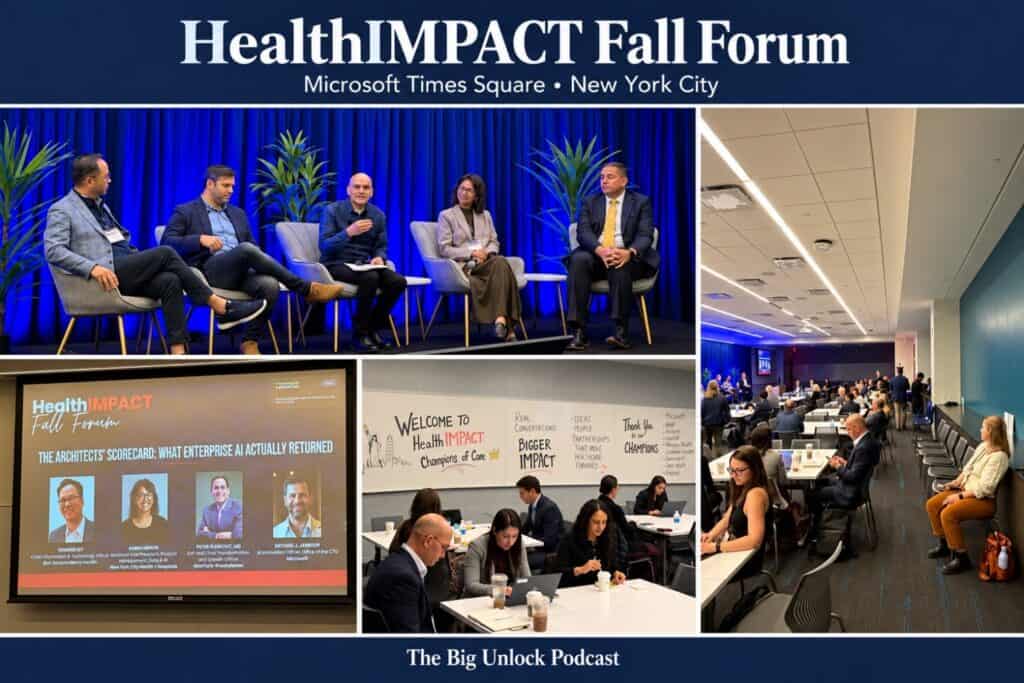
At HealthIMPACT Fall Forum the focus is on making healthcare AI earn its place

At HealthIMPACT Fall Forum the focus is on making healthcare AI earn its place

By Rohit Mahajan
Co-Host, The Big Unlock Podcast

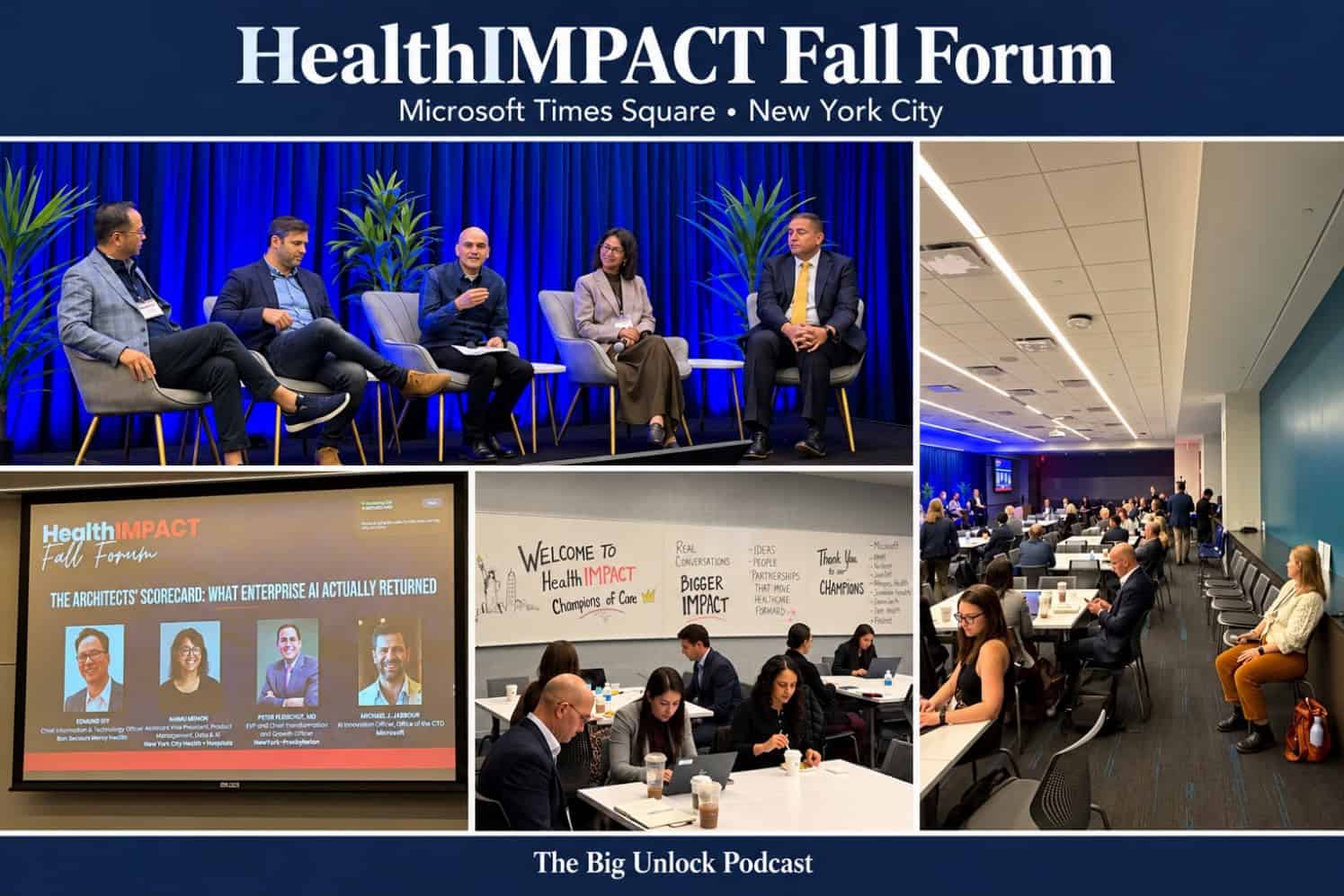
I was at the HealthIMPACT Fall Forum at Microsoft Times Square in New York City, where the panel discussions were exciting, interactive, and grounded in the realities of healthcare transformation.

One session in particular, “The Architects’ Scorecard: What Enterprise AI Actually Returned,” brings an important set of questions into focus. Which AI investments have earned their place across clinical, operational, and revenue workflows? Who owns the results? And when should an organization decide that a deployment has run its course?

These are the questions healthcare leaders need to be asking as AI becomes part of everyday operations.

As co-host of The Big Unlock podcast, I spend a great deal of time exploring how organizations translate technology into better care and stronger operational performance. The discussion here reinforces a principle I keep coming back to: stay grounded in the mission, understand the problem, and focus on the outcomes required.


AI investments need to earn their place

Healthcare organizations have many opportunities to apply AI. They also have limited budgets, stretched teams, and competing priorities.

A portfolio approach helps bring discipline to those choices. Every deployment should have a clear purpose, an accountable owner, and evidence that it is delivering value.

For a clinical workflow, that means examining quality, safety, and the experience of the people using it. For an operational workflow, it might mean faster access, fewer missed steps, or more capacity for staff to support patients. For a revenue workflow, it means understanding whether the improvement justifies the full cost of implementation and ongoing operation.

The question I would ask is straightforward: what is different for the patient, the clinician, or the organization because this capability is now in place?

That answer should guide the investment decision.


Ownership has to extend beyond the purchase

Another important part of the discussion is how organizations divide responsibility for AI results, from the person who approves the investment to the person who answers when an agent gets something wrong.

This becomes especially relevant as AI moves from generating information to taking actions within a workflow.

Technology teams, clinical leaders, operational teams, finance, and security each have responsibilities. Those responsibilities need to connect. Someone must own the intended outcome, someone must monitor performance, and staff must know how to escalate a problem.

For me, governance becomes practical when people can answer a few basic questions. What is the system allowed to do? Where does human judgment enter? Who can intervene? Who is responsible for correcting a failure?

Clear answers make it easier to adopt AI with confidence.


Retiring a deployment is part of responsible leadership

The willingness to stop an AI deployment deserves as much attention as the decision to launch one.

An organization may have invested considerable time, money, and reputation in a solution. That can make it difficult to acknowledge that the value has not materialized.

Yet continuing a deployment also has a cost. It consumes budget, requires support, and takes attention away from other opportunities. If staff are working around the system, or if the original problem remains unresolved, leaders need to examine why.

I believe organizations should establish review criteria early. They should know what success looks like, what signals require intervention, and what would justify retiring the capability.

Making those decisions based on evidence helps keep the mission at the center.


Closing the gap between patient needs and provider capacity

The broader HealthIMPACT focus on scaling care beyond hospital walls gives these questions added urgency.

Patients need timely access, clear communication, and continuity across their care journey. Providers need the capacity and support to meet those needs.

AI can help bridge that gap when it is designed around the work. That requires understanding the patient’s experience, the care team’s responsibilities, the information they need, and the handoffs where delays or missed actions occur.

This is where I see the opportunity for humans and AI to work together: giving people better information, supporting coordination, and creating more capacity for the decisions and relationships that require human expertise.

The discussions here are a useful reminder that successful transformation requires thoughtful choices about what to scale, what to improve, and what to stop.

I look forward to bringing these questions into future conversations on The Big Unlock podcast, and hearing how healthcare leaders are turning AI investments into measurable improvements for the people they serve.

“HLTH brings together the brightest minds in healthcare to drive real-world transformation through AI, data, and workflow innovation. The energy, collaboration, and actionable insights here are truly reshaping the future of care at scale.”

– Rohit Mahajan, Co-host of The Big Unlock Podcast

Through The Big Unlock Podcast, I will be interviewing many of these incredible minds on-site, gathering firsthand stories about the challenges, successes, and breakthroughs shaping the AI-powered future.

Event Gallery

Agentic AI Can Expand Access to Primary Care

Season 7

Episode 229 -Podcast with Jean-Claude Saghbini, Chief Technology Officer and
President of Technology Services, Lumeris
Agentic AI Can Expand Access to Primary Care

The Big Unlock
The Big Unlock
Episode 229 - Agentic AI Can Expand Access to Primary Care
Loading
/
Video video

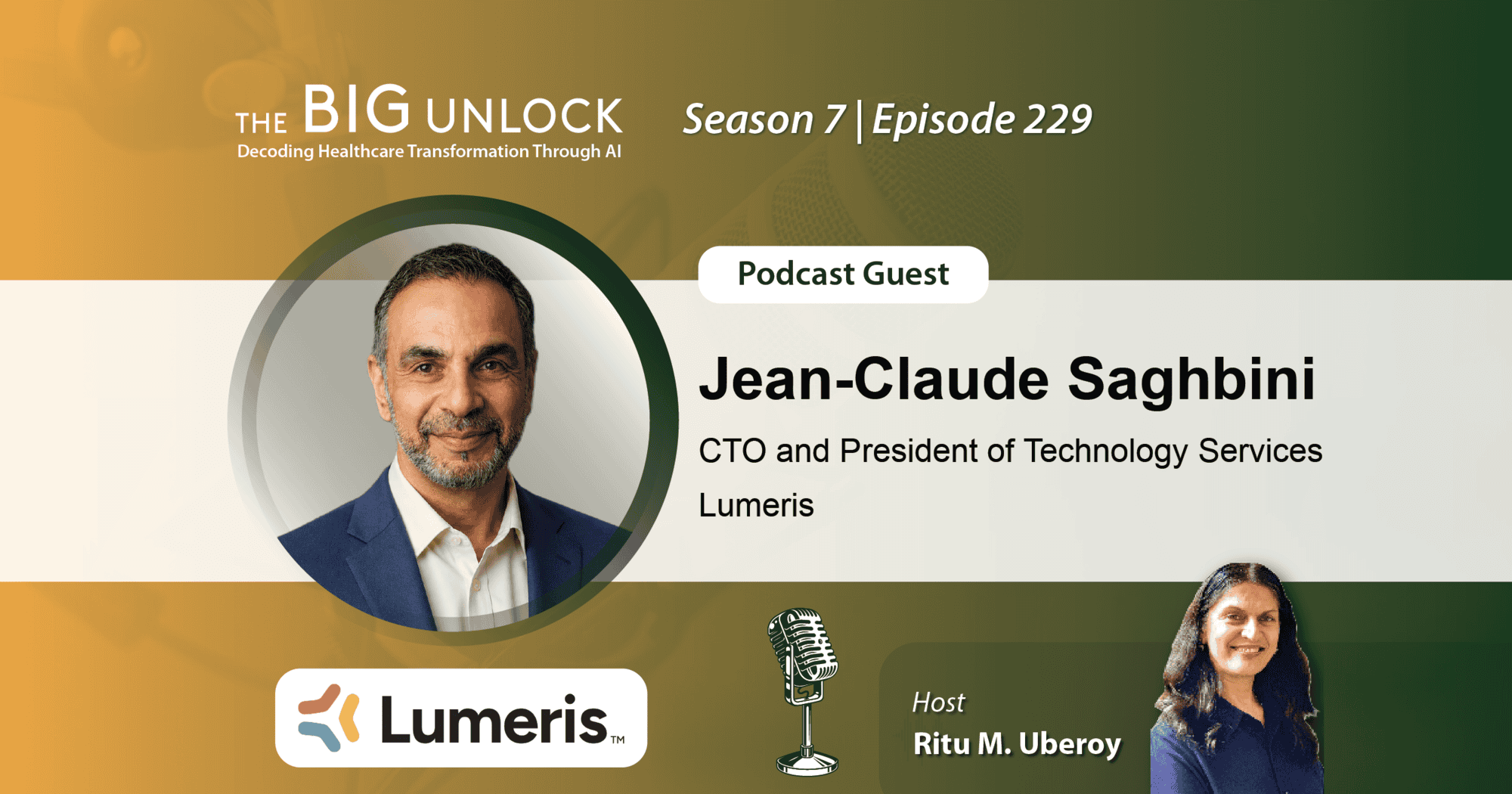
In this episode, Jean-Claude Saghbini, Chief Technology Officer and President of Technology Services at Lumeris, explores how agentic AI can help address healthcare’s primary care access challenge. He argues that incremental efficiencies are not enough; AI must enable the existing clinical workforce to serve more patients and extend care between visits.

Jean-Claude discusses Tom, Lumeris’ AI-powered primary care team member and operating system, which uses patient data to identify next actions and proactively engage patients. He emphasizes that deploying Agentic AI responsibly requires clear guidelines for what AI should do and guardrails for what it cannot do.

Jean-Claude argues that AI models themselves will not create competitive advantage. Differentiation will come from data, domain knowledge, applications, and redesigned workflows. He advises healthcare technology leaders to move beyond the automation, pilot, and perfection traps and make focused enterprise AI investments. Take a listen.

About Our Guest

Jean-Claude Saghbini is the Chief Technology Officer and President of Technology Services at Lumeris, where he integrates technological innovations, clinical processes, and operational excellence into leading value-based care solutions. He also oversees the efficient deployment of cutting-edge technologies like Generative AI to ensure optimal healthcare outcomes and client satisfaction.

With two decades of technology and healthcare experience, Jean-Claude is dedicated to seamlessly integrating technology into clinical workflows to improve outcomes and reduce care variability and costs. Previously, he held key leadership roles at Wolters Kluwer Health and Cardinal Health, driving AI innovation, clinical decision support, and pioneering RFID solutions for medical device tracking. Jean-Claude holds a Master of Science in Engineering and Management from MIT Sloan School of Management, as well as a Master of Science degree and a bachelor’s degree in mechanical engineering from MIT and the University of Massachusetts, Dartmouth, respectively. He is also a holder of multiple patents in healthcare technology.


Ritu: Hello, listeners. Welcome to Season Seven of the Big Unlock Podcast. My name is Ritu Uberoy, and I’m managing partner at Damo Consulting and your host today. We are welcoming Jean-Claude Saghbini to our podcast. He’s the Chief Technology Officer at Lumeris, where he integrates technological innovations, clinical processes, and operational excellence into leading value-based care solutions. Prior to Lumeris, he has held senior technology leadership roles at Wolters Kluwer Health and Cardinal Health. At Lumeris, JC has been closely involved in developing Tom, the company’s AI-powered primary care as a service platform, and we’re really excited to discuss that today. Welcome to the podcast, JC. Looking forward to an engaging conversation.

Jean-Claude: Absolutely. Thank you for having me. I’m excited.

Ritu: You’ve made the argument that the primary care problem is fundamentally a supply-demand problem, and that adding more digital health applications is not really changing this equation. If AI is going to be different, what exactly needs to change in the operating model? At what point do AI tools stop making physicians ten percent more efficient and actually allow health systems to care meaningfully for more people with the same clinical workforce they have today?

Jean-Claude: Let me unpack that supply-demand problem a bit. Today, about a hundred million people in this country either don’t have access to primary care or have access to extremely inadequate primary care. The reason primary care matters is that it controls about three trillion dollars of spend because it operates so far upstream — and the fact that those people lack access has both healthcare implications for them and significant financial implications at a national level.  The primary reason for the gap is actually simple: there are too few primary care physicians in the country to do the work, and that delta continues to grow. In about eight or nine years, we’ll be approaching a shortage of 90,000 primary care physicians. When you look at it that way, tweaking things and applying AI for small efficiencies is not going to work. The problem isn’t at the scale of five or ten percent — it’s at the scale of a hundred million people. So what we want from AI is technology that can bridge that access gap. With the same infrastructure of physicians and clinicians in primary care that we have today, we need to expand access to the hundred million who aren’t getting it — and to the others who are getting primary care, but only whatever time is available to them, not complete primary care.

Ritu: That’s a great perspective, and we’ve been hearing about healthcare deserts — especially with the rural healthcare transformation project. The problem is even more acute in certain areas. We’ve spoken to an ophthalmologist in Alaska where the wait time can be as much as six months. Tell us more about Tom, which is positioned not as a co-pilot but as an AI-powered member of the care team. Tell us about Tom and how it brings in agentic AI to address this problem.

Jean-Claude: We refer to Tom as two things. Tom is an AI primary care team member, and Tom is also an AI primary care operating system — a platform. I’d love to dig into both, but let’s start with value creation. On the value creation side, Tom is an agentic AI primary care team member that effectively becomes part of the care team of a primary care physician. Just as a physician has staff members to help take care of patients, they add one more: Tom. Tom has access to data about the patient, can compute and reason on that data, identify what to do — from closing care gaps to proactive management. This is what we call the BNA, or Best Next Action engine. It determines the best next action for that patient. But more importantly, Tom can act. Tom can act in a conversational way — we use conversational AI through text messages integrated into the workflow, so Tom can proactively engage with patients and effectively manage them in between visits.  Between visits there is a desert of information. You leave your physician’s office, and the only thing they know about you next is when you show up again. In that time, nobody knows anything about you. Tom not only brings information about you — it actually helps you manage your medical condition between those visits. That is how we’re able, within a fixed human infrastructure, to use agentic capabilities to manage more interactions with patients and a broader set of patients.

Ritu: Tell us a little more about the OS part that you mentioned.

Jean-Claude: To be able to deliver that, you have to build all of the mechanics underneath. The expression of that delivery might be a conversation Tom has with a patient around a cardiometabolic condition they have. But underneath the cover, we had a bit of an unfair advantage: fifteen years of learnings that Lumeris has accumulated on how to manage patients and populations to better outcomes. We’ve partnered with health systems across the country to do that. We took all of that knowledge and embedded it in the operating system.  That gives you components like data ingestion, normalization, and creating a 360-degree view of a patient — whether the data is coming from the EHR, claims, or social determinants of health. We had to build reasoning components that can reason on patients, understand their gaps, and determine what to do about them. We built bidirectional EHR integration — not only to get data from the EHR, but to push data back in. We built patient engagement capabilities: telephony, voice conversational AI, text conversational AI, and a series of agentic services in preventive care, scheduling, chronic condition management, and pre- and post-visit management. We built analytics to surround all of that so you can analyze what’s happening across your population. And last but extremely important — something I’d love to talk more about — we built a safety platform that monitors all of these agents: what they’re doing, tracking clinical metrics, patient sentiment metrics, and objective accomplishment metrics, issuing alerts if things have gone sideways, and ensuring everything stays within the guardrails. The totality of all of that, to us, is Tom.

Ritu: This is really interesting because most of the CIOs we talk to are focused on summarization, documentation, or administrative AI. But you’re saying Tom has agentic capabilities that allow it to make decisions autonomously — some requiring clinician approval, some perhaps not. This raises a lot of questions about trust, governance, and orchestration. How have you approached the trust and governance lens? And when does the human in the loop come into the picture?

Jean-Claude: We use two words internally: guidelines and guardrails, and we live by those. Whenever we build any capability, we define guidelines — what it should do — and then we put the guardrails around what it should not do. We have very strict guardrails: Tom is not a physician, is not a licensed practitioner, and therefore Tom cannot diagnose, treat, or change medications. Those are the guardrails we do not go outside of. Within those guardrails, the guidelines define what Tom can do: engage with patients, check in on them, explain things about conditions, help them manage their condition, check whether they picked up their medication, identify barriers to filling a prescription, connect them back to the care team if gaps are identified, and check on symptoms if a patient expresses them. Those are the guideline capabilities. The guardrails are what we don’t let Tom get out of.

Ritu: Thank you — guidelines and guardrails is a good approach. That leads to the next question: most AI implementations we see have very obvious administrative metrics for ROI. But in this case, where Tom is actually becoming part of the care team, what metrics tell you Tom is improving care and not just creating more interactions?

Jean-Claude: The ultimate metric we look at is access. The definition is straightforward but hard to get to: can the same number of physicians in a health system manage a broader number of patients attributed to primary care? The ROI to the health system is clear — when you have more patients attributed to you, that attribution is monetizable through services the health system provides to that population. The human ROI to patients is that they are now attributed to primary care physicians, whereas otherwise they might wait six or nine months to find one.  On the path to those ROIs, there are first-order KPIs along the way: engagement rate between patients and Tom, care gaps that Tom identified and closed, issues patients raised in conversations that Tom connected to the right venue of care, and symptoms that patients expressed that Tom helped direct to the right place. Those are the first-order KPIs. The second-order KPIs are the ROI outcomes I mentioned.

Ritu: That’s a key point — as long as patients are actually getting access to primary care physicians, you can see the system is working. Let’s change tracks a bit. Tell us about your background and how you got into healthcare. We often get very interesting and personal stories from our guests on that question.

Jean-Claude: I’m an engineer, so I’ve spent my career solving problems. Early on I was in horizontal engineering — technologies across the board. At some point I wanted to get into a vertical I felt passionate about. I was looking at renewable energy as one option, and healthcare as the other. I joke that I got into healthcare because I thought it would be easy. I’ve been in healthcare since 2005 — twenty-one years now.  I got in on the startup side. I’m in Boston, so we started a company in Concord, Massachusetts. In 2005, we had the ambition of creating a SaaS platform to connect medical device manufacturers and health systems and help manage medical devices via RFID from manufacturing all the way through to implantation in patients. That was my entry into healthcare. The technology was very exciting at the time — RFID was the thing back then, the way AI is now. Now it’s ubiquitous. Back then it was early uses of RFID at national scale.  We sold that company — WaveMark — into Cardinal Health. I spent four years at Cardinal Health managing and growing that RFID business from startup scale to enterprise scale. Then I joined Wolters Kluwer Health, where I worked on frontline clinical decision support products like UpToDate, built up the AI Center of Excellence, and did a lot of AI innovation. And this is my third or fourth chapter in healthcare — joining Lumeris about five and a half years ago.

Ritu: Thank you for sharing that story. We have time for one more question. With Tom, you’re bringing together EHR, payer, claims, clinical, and other data to determine the Best Next Action. Do you think the real competitive advantage in healthcare AI will ultimately come from the model — since all we hear about is which model is better or faster — or from the ability to build this longitudinal data and workflow layer?

Jean-Claude: It’s not the models. When any one of the hyperscalers or OpenAI or Anthropic releases a model, eight billion people on the planet have that model the next day. So having that model cannot be a competitive advantage. What I put on my slide — and this comes straight from a conversation with healthcare executives last week — is that the competitive advantage is the data you have. It’s the knowledge you have about care delivery. Many have tried to fix healthcare from a technology lens alone over the past twenty or thirty years, and many have failed doing it purely through tech.  So it’s the data and the understanding of patients. It’s understanding the care delivery models and the domain knowledge — whether that’s primary care, surgery, or cardiovascular. And the third element is building actual applications that leverage these highly democratized LLM models, powering them with your data and your understanding of what you’re trying to do, and then integrating them into workflows — and more importantly, creating new workflows. Integrating into existing workflows is a form of automation, and that’s fine. But now we should be able to create entirely new, reimagined workflows. The totality of that — data, domain knowledge, and applications that create new workflows — is what the competitive advantage actually is.

Ritu: That’s a great answer, and it ties back to what you mentioned earlier — Lumeris had all this proprietary data and deep understanding of the problem that you integrated into Tom. Time has flown by and we’re almost at the end. Would you like to share any closing thoughts or advice for listeners in the healthcare technology field?

Jean-Claude: Three pieces of advice that are top of mind for me. First, don’t fall into the automation trap. There’s an urge to automate things because you can see where AI fits and it’s satisfying to do — but you can get stuck there. The bigger opportunity is reimagining new workflows and new ways of delivering value, not just automating existing ones. I see a lot of pure automation of existing workflows right now. You have to do some of that, but at some point you need to invent the new.  Second, don’t fall into the pilot trap. Pilots were essential in 2023 and 2024 — you cannot learn this stuff from a textbook, you have to do it. But we are in 2026. If you were still just running pilots, that was the top of the funnel. Now we can narrow the funnel, make big bets, and make those enterprise bets.  Third, don’t fall into the perfection trap. LLMs and AI are not perfect, but the problems we’re going after don’t have perfect solutions today either. We can fix enormous problems without perfect AI. The search for perfection will keep technology that patients and clinicians genuinely need locked in a box while we wait for it to be perfect enough to release.

Ritu: That’s great advice. Thank you so much for joining our podcast today. It’s been a wonderful discussion, JC.

Jean-Claude: Absolutely. Thank you so much.

—

Subscribe to our podcast series at www.thebigunlock.com and write us at info@thebigunlock.com    

Disclaimer: This Q&A has been derived from the podcast transcript and has been edited for readability and clarity.
About the Host

Ritu M. Uberoy is a healthcare AI strategist, technology executive, educator, and author dedicated to advancing the responsible adoption of Artificial Intelligence across healthcare delivery, digital health, and life sciences. With more than twenty-five years of leadership experience spanning the United States and India, she is recognized for helping healthcare organizations move beyond experimentation to achieve scalable clinical, operational, and business transformation through AI.

She leads AI innovation initiatives, including the AI Center of Excellence at BigRio, where she works with health systems, healthcare technology companies, and life sciences organizations to operationalize Generative and Agentic AI solutions responsibly. Her work focuses on aligning AI innovation with clinical workflows, governance frameworks, workforce readiness, and patient trust—ensuring technology augments human judgment in high-consequence healthcare environments.

Ritu is the co-author of Generative AI: Unlocking the Next Chapter in Healthcare, a practical guide for healthcare executives navigating enterprise AI adoption. She also hosts The Big Unlock podcast, engaging global healthcare leaders on AI transformation and digital innovation. An active educator and speaker, she conducts executive workshops and participates in global forums like HIMSS, ViVE, Women in Tech, AI-Powered Women, RAISE, and more, shaping the future of AI-driven healthcare. Ritu holds advanced degrees in Computer Science and completed specialized AI programs at Harvard and MIT.

About the Legend

Paddy was the co-author of Healthcare Digital Transformation – How Consumerism, Technology and Pandemic are Accelerating the Future (Taylor &  Francis, Aug 2020), along with Edward W. Marx. Paddy was also the author of the best-selling book The Big Unlock – Harnessing Data and Growing Digital Health Businesses in a Value-based Care Era (Archway Publishing, 2017). He was the host of the highly subscribed The Big Unlock podcast on digital transformation in healthcare featuring C-level executives from the healthcare and technology sectors. He was widely published and had a by-lined column in CIO Magazine and other respected industry publications.

The Healthcare Digital Transformation Leader

Stay informed on the latest in digital health innovation and digital transformation.

The Healthcare Digital Transformation Leader

Stay informed on the latest in digital health innovation and digital transformation

The Healthcare Digital Transformation Leader

Stay informed on the latest in digital health innovation and digital transformation.